Author

admin

Browsing

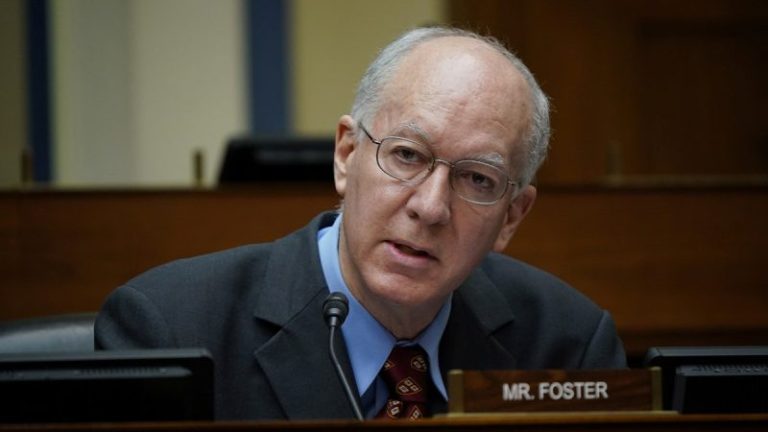
A House Democrat with a background in physics is sounding the alarm over what he views as a lack of a plan to deal with Iran’s nuclear sites during the U.S. offensive campaign.

After a classified briefing Tuesday with top administration officials, Rep. Bill Foster, D-Ill., said lawmakers were not presented with a clear plan to secure or neutralize Iran’s stockpile of enriched uranium.

‘We have heard that they never had a plan for that nuclear stockpile of enriched uranium — to destroy that, to seize it or to put it under international inspection,’ he said.

The U.S. intervention was publicly justifiedby the Trump administration as a necessary step to stop Iran from developing a nuclear weapon. 

U.S. forces have struck more than 1,700 targets across Iran, including ballistic missile launch sites, air defenses, naval assets and command centers. Core nuclear facilities, however, have not been among the primary targets.

‘Until that happens, Iran will be very, very close to making — as many observers have pointed out in a nonclassified situation — Iran can use that material to make a handful of Hiroshima-style nuclear devices,’ Foster told Fox News Digital. ‘Not the sort you can put on a missile, but the sort you can deliver by a number of other ways and are very hard to stop.’ 

Foster was referring to Iran’s stockpile of highly enriched uranium, material that, if weaponized, could be used to build a nuclear explosive device.

Experts note that building a compact warhead that fits on a ballistic missile is technically complex and requires advanced engineering. But a simpler, larger nuclear device — similar in basic concept to the bomb the U.S. dropped on Hiroshima, Japan, in 1945 — would not need to be miniaturized to fit on a missile. Such a device could not be delivered by long-range rocket but could theoretically be transported by other means.

Foster argued that containing Iran’s nuclear materials, most of which are buried deep underground, would likely require U.S. forces to enter Iran.

Recent satellite imagery shows damage to support buildings and access points at Iran’s Natanz enrichment site, though the deepest underground infrastructure at key nuclear facilities has not been confirmed as a primary target in the current campaign.

U.S. and international officials previously have acknowledged that while strikes can damage enrichment infrastructure, stockpiled enriched uranium stored underground may remain intact and potentially retrievable unless physically secured or removed.

‘You have to go in there with boots on the ground and grab a bunch of equipment,’ Foster said. ‘You have to go underground into those facilities and lose a lot of soldiers’ lives doing that.

‘They’re unwilling to do that, or they’ve decided not to or they’ve decided it’s impossible. In any case, they did not present to us any plan that would actually get the material under control.’

Without securing the nuclear material, he argued, military operations may push Iran closer to a nuclear weapon than diplomatic negotiations would have.

‘The only positive thing about the ayatollah is that he had a fatwa against building nuclear weapons,’ Foster said. ‘Who knows what the next generation of ayatollahs are going to feel? They’re going to be under a lot of pressure from the IRGC, which was not so much against having a nuclear weapon.’

Ayatollah Ali Khamenei, who was killed in the joint U.S.-Israeli operations, had previously issued a fatwa, a religious edict, opposing the pursuit of nuclear weapons. Analysts have long debated how binding or durable that ruling was.

At a White House briefing Wednesday, press secretary Karoline Leavitt said the administration believes Iran ‘wanted to build nuclear weapons to use against Americans and our allies,’ framing the strikes as necessary to prevent Tehran from advancing its nuclear ambitions.

‘The US military has more than enough munitions, ammo, and weapons stockpiles to achieve the goals of Operation Epic Fury laid out by President Trump — and beyond. Nevertheless, President Trump has always been intensely focused on strengthen our Armed Forces and he will continue to call on defense contractors to more speedily build American-made weapons, which are the best in the world,’ she said in a follow up statement to Fox News Digital. 

Missile suppression strategy faces ‘math problem’

Senior administration officials have emphasized that the current phase of the campaign is aimed at dismantling Iran’s ability to project force with missiles, drones and naval assets. 

Defense Secretary Pete Hegseth has highlighted strikes on Iran’s ballistic missile systems, air defenses and naval capabilities, describing the effort as a push to degrade the conventional tools Tehran uses to threaten U.S. forces and regional allies. 

Secretary of State Marco Rubio similarly has said the United States is working to ‘systematically take apart’ Iran’s missile program, so it could not ‘hide behind’ it to develop a nuclear weapon. 

While the broader justification for intervention centered on preventing a nuclear-armed Iran, the most immediate threat facing U.S. troops and partners has been Iran’s ongoing missile and drone launches. Administration officials contend Iran’s missile buildup was meant to create a deterrent buffer, shielding its broader strategic ambitions, including its nuclear program, from outside attack.

Lawmakers emerging from classified briefings said the campaign has become, in part, a question of sustainability.

‘We do not have an unlimited supply,’ Sen. Mark Kelly, D-Ariz., said of U.S. and allied interceptor inventories. He warned the conflict could become a ‘math problem,’ balancing launch volumes against finite air defense munitions and the ability to replenish them without weakening readiness in other theaters.

‘At some point — and we’re probably already in this — this becomes a math problem,’ Kelly added.

He said he pressed defense officials on how interceptor stocks are being replenished and whether diverting munitions to the Middle East could strain U.S. readiness elsewhere.

‘How can we resupply air defense munitions? Where are they going to come from? How does that affect other theaters?’ he said. ‘The math on this currently seems to be an issue.’

Sen. Andy Kim, D-N.J., said he also sought clarity on interceptor inventories but did not receive detailed answers.

‘I am very concerned about that,’ Kim said. ‘I did not get any specificity today. … Something akin to ‘trust us’ is not good enough for me.’

Republicans, however, pushed back on the notion that interceptor supplies are strained. 

Sen. Markwayne Mullin, R-Okla., said officials told lawmakers U.S. forces are ‘in great shape,’ dismissing concerns about shortages.

Ehud Eilam, a former Israeli defense official and national security analyst, said that while a nuclear weapon remains the most serious long-term threat, missile and drone systems pose the most immediate danger if intelligence assessments conclude Iran is not on the verge of assembling a device.

‘As long as it is estimated Iran cannot produce a nuclear weapon soon, then the focus moves to missiles and drones,’ Eilam said, noting that ballistic missiles would ultimately be required to deliver any future nuclear warhead. Suppressing mobile launchers, crews and command networks can reduce Iran’s firing tempo, conserving interceptor supplies while degrading Tehran’s broader military capacity, he said.

The concern is not theoretical. 

During the intense June 2025 Iran–Israel conflict, U.S. forces reportedly fired more than 150 Terminal High Altitude Area Defense interceptors, roughly a quarter of the global inventory, along with large numbers of ship-based Standard Missile interceptors to shield allies. 

Analysts note that replenishing high-end air defense systems such as Patriot, THAAD and SM-3 interceptors could take more than a year under current production rates.

The Pentagon also is balancing competing demands. The same missile defense systems used to protect U.S. bases and Gulf partners are being supplied to Ukraine to defend against Russian cruise missile attacks, creating what some analysts describe as a ‘zero-sum’ competition for inventory between Europe and the Middle East.

‘There is a limit to how many THAAD missiles can be used,’ Eilam said. ‘These are not systems you can reproduce overnight.’

Related Article

Rubio says in ‘simple English’ Iran run by ‘lunatics,’ defends Trump strike as ‘right decision’
This post appeared first on FOX NEWS

Iran’s tyrannical and ruthless regime is disintegrating. After yet again massacring thousands of its own citizens for voicing their dreams for liberty and better governance, the Iranian regime meantime resumed pursuing nuclear capability and its aggressive ICBM program. The regime’s overconfidence in U.S. inaction cost it its leader and its core military capabilities are going up in smoke. Against this backdrop, the conflict has spread to the Gulf, threatening the Strait of Hormuz, a chokepoint for roughly one-fifth of the world’s petroleum, and forcing the rest of the world to rethink how it prices energy risk and political alignment.

This is not another regional flare-up. This is a rupture of an old equilibrium in which sanctioned oil, shadow fleets and calibrated escalation kept markets stable enough to function. That equilibrium is now breaking. A rapid political-military shift in the Middle East is unfolding alongside a restructuring of the global energy order.

When I was in Afghanistan during the surge, Tehran’s active support for the insurgency fighting the United States and Afghan forces fomented instability and amplified violence for which civilians paid the biggest price, a dynamic that so many across several nations have tragically encountered for decades. But Iran was never a contained regional problem.

While its terrorism was widely perceived as a Middle East issue, its cyber and intelligence operations spanned continents, with assassination plots that included the American president. As to global effects, Iran’s energy has always made its regime globally significant.

At this stage of the conflict, the most economically significant and immediate geography is the Strait of Hormuz which Iran is working to choke off. Roughly one-fifth of global petroleum and a substantial portion of liquefied natural gas move through that narrow corridor. As strikes intensified, vessels paused transit, insurers reassessed exposure and operators rerouted cargoes. Markets adjusted immediately. Energy security and geopolitical stability are now inseparable; maritime risk has become the pressure valve through which regional conflict spills into global consequence. 

This realignment did not begin in the Gulf this weekend. It started with U.S. actions in Venezuela. Caracas holds the world’s largest proven crude reserves — about 303 billion barrels — and even marginal normalization under a more U.S.-cooperative government alters the supply calculus for Washington and its allies.

The new U.S.–Venezuela arrangement has already generated roughly $2 billion in transactions in just weeks, pulling Venezuelan barrels back into wider circulation and altering the discount ecosystem Moscow had grown accustomed to. Stack that with a post-crisis Iran re-entering markets on different terms, and the shadow ecosystem of discounted, sanctioned crude — Russia, Iran, Venezuela — begins to fracture and reprice simultaneously.

But the most consequential energy recalibration runs through Beijing. China is essentially Iran’s oil export market. In 2025, China bought more than 80% of Iran’s shipped oil, averaging ~1.38 million barrels per day, about 13.4% of China’s seaborne crude imports—meaning Beijing is simultaneously Tehran’s economic lifeline and its strategic choke chain.

By turning a sanctioned producer into a quasi-captive supply relationship — sustained through gray-market routing, reflagging and intermediary hubs — Beijing secured discounted barrels in normal times and leverage in crisis. Any sustained disruption of Iranian flows forces China into replacement buying that tightens global markets and exposes China’s own energy security; Iran exports about 1.6 million bpd mainly to China and such disruptions pushes Beijing to pivot to alternatives.

The relationship is therefore best understood as a dependency loop: Iran needs China for revenue and sanctions relief-by-proxy; China uses Iran as a discount supplier and as a pressure valve in the sanctioned crude system — one that can be tightened or loosened depending on Beijing’s broader negotiation posture with Washington and its appetite for risk in the Gulf. That Iran-China dependency is no longer stable.  With Iranian oil flows disrupted, China faces a choice between turning to alternative suppliers at higher cost or even tapping strategic reserves. Tightening global crude markets resulting from U.S. actions in Venezuela and now Iran give Washington leverage in energy pricing.

Beyond the tanker decks, this shift underscores the larger theme of reconfiguration: resources once bundled to manage sanctions are now subject to heightened geopolitical risk, forcing China to rethink dependencies while the U.S. and its partners are positioning to shape the post-conflict energy order. Energy supply patterns will restructure global power relations. And where China is recalibrating exposure, Russia is recalculating opportunity.

The same forces reshaping China’s calculations are altering Moscow’s. As India trims Russian purchases, Moscow has been pushing more barrels into China, and Reuters reports China’s Russian crude imports hitting new records in February while Russian sellers widened discounts to keep demand — Urals trading roughly $9–$11 below Brent for China deliveries, and other Russian grades also cutting hard as sellers chase Chinese refiners.

The new U.S.–Venezuela arrangement has already generated roughly $2 billion in transactions in just weeks, pulling Venezuelan barrels back into wider circulation and altering the discount ecosystem Moscow had grown accustomed to. 

This matters because China is also the anchor buyer for sanctioned Iranian crude; the ‘discount market’ is not infinite, so Russia and Iran are now competing for the same limited pool of Chinese buyers, driving deeper concessions and leaving cargoes idling — exactly the kind of sanctions-economy dynamic.

Add the West’s tightening focus on Russia’s ‘shadow fleet’ and the risk of seizures or insurance denial, and you get an energy chessboard where coercion moves from rhetoric to logistics: who can ship, insure and clear payments reliably becomes as strategic as who can produce.

In that context, Russia’s loud warnings about Hormuz disruption are not just diplomacy, they are a reminder that Moscow profits from volatility, but also needs a functioning gray-market channel to China, and Iran’s crisis threatens to scramble the very discount ecosystem Russia has used to finance its war in Ukraine. Structural realignment threatens the very gray-market architecture on which Moscow has relied.

Energy is only one layer of a global shift. Strategic minerals remain critical. The Trump administration has increased economic and maritime pressure on Cuba, tightening an effective oil blockade that choked off fuel imports. President Donald Trump has authorized tariffs targeting countries supplying oil to Havana.

This is not simply punitive policy. It reflects a broader strategic doctrine: deny adversarial regimes energy lifelines while repositioning the Western Hemisphere’s resource base toward U.S. leverage. Oil is only one domain. Rare earth elements are a strategic asset. Cuba’s nickel and cobalt output, combined with China’s tightening grip through rare-earth export controls indicates that leverage is not just oil fields but also supply chains. America achieving rare earth elements sovereignty will remain a strategic goal and such a global realignment on this front is much needed.

By the close of the first weekend, Iran appeared intent on accelerating its own collapse by compounding strategic error with strategic error. Iran felt it wise to respond to U.S. and Israeli strikes by pushing a half dozen other nations against it. On Saturday afternoon, Feb. 28, Iran launched attacks on seven sovereign nations – Bahrain, Saudi Arabia, UAE, Kuwait, Qatar, Jordan and Israel. It added Oman shortly after.

These nations now have a legal and political basis to deepen security ties with the U.S. and Israel that they could never have justified domestically before today. Iran has arguably done more to consolidate the anti-Iran regional architecture in one afternoon than a decade of American diplomacy. Watch for accelerated Abraham Accords-adjacent normalization with Saudi Arabia in the coming weeks.

Any sustained disruption of Iranian flows forces China into replacement buying that tightens global markets and exposes China’s own energy security…

After massacring thousands of its own citizens for demanding better governance, the regime’s long-standing presumption of U.S. inaction cost the 1979 Revolution its dream of ruling over Iranians perpetually. After 47 years, its leader is gone, and its core military capabilities are being dismantled.

The lesson is not simply that the Iranian regime is falling. It is that when it falls amid energy chokepoints and great-power competition, supply chains, alliances and leverage structures shift simultaneously. Iran’s collapse is not the end of the story; it is the catalyst for a broader redistribution of power across energy, alliances, and great-power leverage. America should exploit these shifting dynamics fully. 

The views expressed here are his and do not reflect the policy or positions of the Department of Homeland Security, Homeland Security Advisory Council, U.S. Army or Department of Defense. 

Related Article

Gas prices could jump as Middle East tensions threaten global oil supply
This post appeared first on FOX NEWS

First Majestic Silver (TSX:AG,NYSE:AG) CEO Keith Neumeyer’s silver price prediction of over US$100 per ounce came true in 2026. When will silver prices make a more lasting hold in triple digit territory?

The silver price was up over 189 percent year-on-year as of March 2, 2026, on the back of economic uncertainty and ongoing geopolitical tensions, as well as support from long-term demand fundamentals.

The silver price broke through its previous all-time high in October 2025, blasting through the US$50 per ounce mark. From then, it rallied to new highs again and again.

Only a few weeks into 2026, the price of silver finally hit triple digits when it overtook the US$100 level. It went on to rise to its latest all-time high of US$121.62, which it set on January 29, 2026.

The catalysts for silver’s price surge above the critical US$100 level included the trade tensions between the US and Europe following US President Donald Trump’s renewed bid for Greenland; Trump’s public statements about possible military airstrikes on Iran; and a significant structural supply deficit exacerbated by increased institutional investment demand.

Well-known figure Keith Neumeyer, CEO of First Majestic, had frequently said he believes the white metal could hit the US$100 mark or even reach as high as US$130 per ounce.

Neumeyer has voiced this opinion often over the past decade. He put up a US$130 price target in a November 2017 interview with Palisade Radio, when silver was just US$17 per ounce. He reiterated his triple-digit silver price forecast in multiple interviews with Kitco over the years, including one in March 2023.

In 2024, Neumeyer made his US$100 silver call in a conversation with ITM Trading’s Daniela Cambone at the Prospectors & Developers Association of Canada (PDAC) convention, and in April of that year he acknowledged his reputation as the ‘triple-digit silver guy’ on the Todd Ault Podcast.

Speaking with Chris Marcus of Arcadia Economics on January 16, 2026, a day after the price of silver had broken through US$93 per ounce for the first time, Neumeyer stated that “triple digits is definitely on its way.” He was finally proven right less than two weeks later.

At times Neumeyer has been even bolder, suggesting in 2016 that silver could reach US$1,000 if gold were to hit US$10,000.

In order to better understand where Neumeyer’s opinion comes from and why a triple-digit silver price finally materialized, it’s important to take a look at the factors that affect the metal’s movements, as well as where prices have been in the past and where other industry insiders think silver could be headed.

First, let’s dive a little deeper into Neumeyer’s US$100 silver prediction.

In this article

    Why has Neumeyer called for a US$100 silver price?

    Neumeyer’s belief that silver could hit US$100 is based on a variety of factors, including its consistent deficit, its industrial demand and how undervalued it is compared to gold.

    When he first made the prediction more than a decade ago, there was significant distance for silver to go before it could reach the success Neumeyer had boldly predicted.

    Neumeyer expected a triple-digit silver price in part because he believed the market cycle could be compared to the year 2000, when investors were sailing high on the dot-com bubble and the mining sector was down. He believed it was only a matter of time before the market corrected, like it did in 2001 and 2002, and commodities would see a big rebound in pricing. It was during 2000 that Neumeyer himself invested heavily in mining stocks and came out on top.

    “I’ve been calling for triple-digit silver for a few years now, and I’m more enthused now,” Neumeyer said at an event in January 2020, noting that there are multiple factors behind his reasoning. “But I’m cautiously enthused because, you know, I thought it would have happened sooner than it currently is happening.”

    Another factor driving Neumeyer’s position is his belief that the silver market is in a deficit at a time when demand is rising from new industrial sectors. In a December 2023 interview with Kitco, Neumeyer stressed that silver is more than just a poor man’s gold and he spoke to silver’s important role in electric vehicles and solar cells.

    In line with this view on silver, First Majestic is a member of a consortium of silver producers that in January 2024 sent a letter to the Canadian government urging that silver be recognized as a critical mineral.

    Silver’s inclusion on the list would allow silver producers to accelerate the development of strategic projects with financial and administrative assistance from the government.

    In this 2024 PDAC interview, Neumeyer once again highlighted what he says is a sizable imbalance in the silver’s supply-demand picture. “We’re six years into this deficit. The deficit in 2024 looks like it’s gonna be bigger than 2023, and why is that? Because miners aren’t producing enough silver for the needs of the human race,” he said.

    More controversially, Neumeyer is of the opinion that the white metal will eventually become uncoupled from its sister metal gold, and should be seen as a strategic metal due to its necessity in many everyday appliances, from computers to electronics, as well as the technologies mentioned above. He has also stated that silver production has gone down in recent years, meaning that contrary to popular belief, he believes the metal is actually a rare commodity.

    Neumeyer’s March 2023 triple-digit silver call was a long-term call, and he explained that while he believed gold would break US$3,000 that year, he thought silver will only reach US$30. However, once the gold-silver ratio is that unbalanced, he believes that silver will begin to take off, and it would just need a catalyst.

    ‘It could be Elon Musk taking a position in the silver space,’ Neumeyer said. ‘There’s going to be a catalyst at some time, and headlines in the Wall Street Journal might talk about the silver supply deficit … I don’t know what the catalyst will be, but investors and institutions will wake up to the fundamentals of the metal, and that’s when it will start to move.’

    In 2024, gold experienced a resurgence in investor attention as the potential for US Federal Reserve interest rate cuts came into view. In an interview with Cambone at PDAC 2024, Neumeyer countered that perception, stating, “There’s a rush into gold because of the de-dollarization of the world. It has nothing to do with the interest rates.”

    In an April 2025 Money Metals podcast, Neumeyer reiterated his belief that silver is in an extreme supply deficit and that eventually silver prices will have to rise in order to incentivize silver miners to dig up more of the metal.

    ‘You need triple-digit silver just to motivate the mining companies to start investing again because the mining companies aren’t going to make the investment because there’s just so much risk in it,’ he said.

    After the price of silver surged from the US$50 level up into more than US$70 per ounce in late December 2025, Neumeyer actually cautioned investors not to get too excited about a potential quick run to US$100 during an interview with The Deep Dive.

    “I’m crossing my fingers that it doesn’t go to US$100 on this move. I don’t think that would be particularly healthy at all. I would prefer to see it start to slow down here and chalk a little bit sideways for two to three months and find a level that people can get use to. It’s going to take sometime for people to get used to US$70 silver,” he advised.

    While he admitted high silver prices are great for silver producers such as First Majestic and their shareholders, he said “personally, I’d rather see some stability,” and have silver reach triple digits in 12 to 24 months out so that the mining sector has more time to react and better take advantage of higher silver prices.

    A month later, when silver was above US$100 per ounce, during an interview with Kitco at the 2026 Vancouver Resource Investment Conference (VRIC), Neumeyer said, “calling triple digit silver and it’s actually happening is pretty interesting,” but he believes it’s still early stages in this new bull market and he’s done predicting metals prices.

    “What we do know is that we’ve created a new pricing paradigm, we’re not going back to the old pricing that we’re all used to over the past 20 or 30 years,” he added.

    What factors affect the silver price?

    In order to glean a better understanding of the precious metal’s chances of breaching the US$100 range again, it’s important to examine the elements that could push it to that level or pull it further away.

    The strength of the US dollar and Fed rate changes are factors that will continue to affect the precious metal, as are geopolitical issues and supply and demand dynamics.

    Although Neumeyer believes that the ties that bind silver to gold need to be broken, the reality is that most of the same factors that shape the price of gold also move silver.

    For that reason, it’s helpful to look at gold price drivers when trying to understand silver’s price action. Silver is, of course, the more volatile of the two precious metals, but nevertheless it often trades in relative tandem with gold.

    First, it’s useful to understand that higher interest rates are generally negative for gold and silver, while lower rates tend to be positive. That’s because when rates are higher, investment demand shifts to products that can accrue interest.

    The Fed’s rate moves have played a key role in pumping up silver prices over the past year. However, Trump doesn’t think Fed Chair Jerome Powell is lowering rates fast enough.

    Trump’s feud with the Fed over interest rates escalated in early January 2026 when the US Department of Justice served the Fed with grand jury subpoenas targeting Powell with a criminal indictment. The uncertainty over Fed independence is driving gold prices higher as investors expect a weaker dollar.

    While central bank actions are important for gold, and by extension silver, another key price driver lately has been geopolitical uncertainty. The past decade has been filled with major geopolitical events such as the Israel-Hamas conflict, the Russia-Ukraine war, and rising tensions between the US and other countries including Russia, China and Iran, and more recently Venezuela, Canada and Denmark.

    Trump’s tariffs have also rattled stock markets and ratcheted up the level of economic uncertainty pervading the landscape in 2025 and continuing into this year. This has proved price positive for gold and silver, with silver outperforming gold in the last year.

    However, silver’s industrial side can not be ignored. In an economically uncertain environment, the industrial case of silver could weaken in the short term, but in the longer term silver’s demand side is still highly prospective for larger gains.

    Samuelson explained in March 2025 that silver is particularly vulnerable to a supply shock as the London Bullion Market Association’s physical silver supplies had already decreased by 30 to 40 percent, while gold had only lost 3 to 4 percent.

    The next month, Smirnova explained that silver has been in a supply deficit of 150 million to 200 million ounces annually, but production has been stagnant or declining over the past decade.

    Looking at the runup in silver prices into the triple digits that occurred in late 2025 to early 2026, this structural supply-demand deficit, magnified by an explosion in industrial demand for solar energy and AI data centers, played an outsized role. Further adding fuel to the fire was record-low physical inventory levels in COMEX and Shanghai vaults, which caused a shift from ‘paper’ silver to physical hoarding.

    Higher industrial demand from emerging sectors due to factors like the transition to renewable energy and the emergence of AI technology will be highly supportive for the metal over the next few years. Solar panels are an especially exciting sector as manufacturers have found increasing the silver content increases energy efficiency.

    Frank Holmes of US Global Investors (NASDAQ:GROW) said in a December interview that silver’s “ability to be a transformative part of renewable energy,” particularly in solar panels, is an outsized factor in the latest run in the silver price. “And I don’t think that is going to go away,” he added.

    Could silver hit US$100 per ounce again?

    It seems likely that we will reach a US$100 per ounce silver price again in 2026 as there is plenty of support for Neumeyer’s belief that the metal is undervalued and that “ideal conditions are present for silver prices to rise.”

    For much of 2025, silver and gold rose higher on factors including persistent inflationary pressures brought on by Trump’s aggressive tariff announcements and the ongoing geopolitical risks in the Middle East. The commodity’s price uptick also came on the back of very strong silver investment demand.

    In the fourth quarter, silver rapidly outpaced gold’s gains, and by early January silver reached US$95, more than doubling in value from its Q3 close of US$46. It continued higher to breach US$120 by the end of the month.

    While silver and gold prices both pulled back significantly over the following days, silver spent February consolidating and stabilized above the US$80 mark in the second half of the month.

    On March 1, the silver price once again approached the US$100 mark as the US started a war with Iran, peaking at US$96.40 before seeing a smaller pull back.

    As silver’s momentum continues upwards and the price stabilizes at these higher values, silver market experts are agreeing with Neumeyer’s triple-digit silver hypothesis that the price of silver still has further room to grow.

    “You know, whether in the short term or the long term, one way or another, we’re going to run into a supply demand brick wall. And when that day happens, we could see triple-digit silver prices in a very, very short period of time,” he said. “I figure it’s going to be US$200 to US$400 an ounce, at least, before this is all over.”

    This set up bodes well for those not only invested in physical silver, but in silver mining stocks as well.

    “I have to be honest, I was not necessarily expecting triple-digit silver this quite this fast,” he said. “I was saying, if and when we break through US$54 silver, then the path of least resistance becomes a conservative, measured move target of US$96 or within a few pennies … So, I’m not really surprised at all, and in fact, I think we’re headed higher in the fullness of time.’

    Penny sees Fed policy actions as a potential catalyst for silver’s next leg up.

    “I think it’ll be the Fed’s response to the next crisis that causes the big move, the 1979 moment where you go up,” he explained, noting that in 1979, the price of silver went up 700 percent in 12 months. “I think that that moment still lies ahead. It’ll be the Fed’s response to the next crisis that is the catalyst for that huge move.”

    Eugenia Mykuliak, founder and executive director of B2PRIME Group, shared another reason she believes Fed rate cuts are bullish for silver.

    In late January, Citigroup (NYSE:C) analysts upgraded their silver forecast to US$150 per ounce in the second quarter of 2026. ‘We expect the bullish factors to stay intact in the very near term, supporting strong investment/speculation demand and likely leading to further physical tightening in major ex-US trading hubs,’ said the firm.

    FAQs for silver

    Why is silver so cheap?

    The primary reason that silver is sold at a significant discount to gold is supply and demand, with more silver being mined annually. While silver does have both investment and industrial demand, the global focus on gold as an investment vehicle, including countries stockpiling gold, can overshadow silver.

    Additionally, jewelry alone is a massive force for gold demand.

    There is an abundance of silver — according to the US Geological Survey, to date 1,740,000 metric tons (MT) of silver have been discovered, while only 244,000 MT of gold have been found, a ratio of about 1 ounce of gold to 7.1 ounces of silver. In terms of output, 26,000 MT of silver were mined in 2025 compared to 3,300 MT for gold.

    Looking at these numbers, that puts gold and silver production at about a 1:7.88 ratio last year, while the price ratio on March 3, 2026, was around 1:62 — a huge disparity.

    Can silver hit $1,000 per ounce?

    As things are now, it seems unlikely, and at the same time almost a possibility, that silver will ever reach highs of US$1,000 per ounce, which Keith Neumeyer predicted in 2016 could happen if gold ever climbed to US$10,000 per ounce.

    This is related to the gold to silver production ratio discussed above. At the time of the 2016 prediction, this ratio was around 1 ounce of gold to 9 ounces of silver, or 1:9.

    If silver was priced according to production ratio today, when gold is at US$5,000 per ounce, then silver should be around US$555. However, the gold to silver pricing ratio today is around 1:62, although that’s a bit lower than the typical range of 1:70 to 1:90. In early March 2026, gold is trading around US$5,100 per ounce and silver is about US$82 per ounce.

    Is silver really undervalued?

    Many experts believe that silver is undervalued compared to fellow currency metal gold. As discussed, their production and price ratios are currently incredibly disparate.

    While investment demand is higher for gold, silver has seen increasing time in the limelight in recent years, including a 2021 silver squeeze that saw new entrants to the market join in.

    Another factor that lends more intrinsic value to silver is that it’s an industrial metal as well as a precious metal. It has applications in technology and batteries — both growing sectors that will drive demand higher.

    Silver’s two sides have remained prominent as the market navigates persistent supply shortages and shifting investor sentiment. Following a record high in 2022, according to data from the Silver Institute, silver demand reached 1.16 billion ounces in 2024, supported by a fourth consecutive year of record industrial fabrication at 680.5 million ounces. However, total 2024 demand saw a 3 percent decline due to a 22 percent drop in physical investment, which hit a five-year low as Western investors took profits at higher prices.

    Is silver better than gold?

    There are merits for both metals, especially as part of a well-balanced portfolio. As many analysts point out, silver has been known to outperform its sister metal gold during times of economic prosperity and expansion.

    On the other hand, during economic uncertainty silver values are impacted by declines in fabrication demand.

    Silver’s duality as a precious and industrial metal also provides price support. As a report from the CPM Group notes, “it can be seen that silver in fact almost always (but not always) out-performs gold during a gold bull market.”

    At what price did Warren Buffet buy silver?

    Warren Buffett’s Berkshire Hathaway (NYSE:BRK.A) bought up 37 percent of global silver supply between 1997 and 2006. Silver ranged from US$4 to US$10 during that period.

    In fact, between July 1997 and January 1998 alone, the company bought about 129 million ounces of the metal, much of which was for under US$5. Adjusted for inflation, the company’s purchases in that window cost about US$8.50 to US$11.50.

    How to invest in silver?

    There are a variety of ways to get into the silver market. For example, investors may choose to put their money into silver-focused stocks by buying shares of companies focused on silver mining and exploration, or even precious metals royalty stocks. As a by-product metal, investors can also gain exposure to silver through some gold companies.

    There are also silver exchange-traded funds that give broad exposure to silver companies and the metal itself, while more experienced traders may be interested in silver futures. And of course, for those who prefer a more tangible investment, purchasing physical bullion in silver bar and silver coin form is also an option.

    Securities Disclosure: I, Melissa Pistilli, hold no direct investment interest in any company mentioned in this article.

    This post appeared first on investingnews.com

    Sranan Gold Corp. (CSE: SRAN,OTC:SRANF) (OTCQB: SRANF) (‘Sranan’ or the ‘Company’) continues to work towards the filing of its annual audited financial statements, management’s discussion and analysis, and CEO and CFO certifications for the fiscal year ended September 30, 2025 (the ‘Required Filings’). The Company has obtained approval from the Alberta Securities Commission to extend the Management Cease Trade Order (‘MCTO’) under National Policy 12-203 Management Cease Trade Orders (‘NP 12-203’) until March 15, 2026.

    The additional delay in filing is attributable to the timing of certain outstanding third-party confirmations, including from an international vendor and the Company’s bank in Suriname, which were received later than anticipated. As a result, completion of the audit was deferred by approximately one week. The audit is now in its final stages, with only minor outstanding items remaining. Sranan remains in ongoing communication with its auditor to confirm any remaining documentation requirements and has committed to providing any outstanding materials promptly upon request. Sranan anticipates that the Required Filings will be completed on or before March 13, 2026. The interim first-quarter financial statements are expected to be filed within 48 hours thereafter, and in any event no later than March 15, 2026.

    The Required Filings were due to be filed by January 28, 2026. In connection with the anticipated delays in making the Required Filings, the Company made an application for a Management Cease Trade Order (‘MCTO‘) under National Policy 12-203 Management Cease Trade Orders (‘NP 12-203‘) to the Alberta Securities Commission, as principal regulator for the Company, and the MCTO was issued on January 29, 2026. The MCTO restricts all trading by the Company’s CEO and CFO in securities of the Company, whether direct or indirect. The issuance of the MCTO does not affect the ability of persons who are not directors, officers or insiders of the Company to trade their securities. The MCTO will remain in effect until the Required Filings are filed or until it is revoked or varied.

    Both the Company and its auditors are working diligently towards the completion and filing of the Required Filings, and the Company will provide additional updates.

    The Company confirms that it intends to satisfy the provisions of the alternative information guidelines described in NP 12-203 by issuing bi-weekly default status reports in the form of a news release until it meets the Required Filings requirement. The Company has not taken any steps towards any insolvency proceeding and the Company has no material information relating to its affairs that has not been generally disclosed.

    For further information with respect to the MCTO, please refer to the Company’s news releases dated January 21, 2026, February 4, 2026, and February 18, 2026, available for viewing on the Company’s SEDAR+ profile at www.sedarplus.ca.

    About Sranan Gold
    Sranan is engaged in the business of mineral exploration and the acquisition of mineral property assets in Suriname. The Company’s flagship Tapanahony Project covers 29,000 hectares in one of Suriname’s most prolific artisanal gold mining districts and Sranan recently announced the acquisition of the 18,468-hectare Lawatino Project situated in southeastern Suriname along the Central Guiana Shear Zone.

    For more information, please visit http://www.sranangold.com.

    For further information, please contact:
    Oscar Louzada, CEO
    +31 6 25438975

    THE CANADIAN SECURITIES EXCHANGE HAS NOT APPROVED NOR DISAPPROVED THE CONTENT OF THIS PRESS RELEASE.

    Forward-looking statements
    Certain statements made and information contained herein may constitute ‘forward-looking information’ and ‘forward-looking statements’ within the meaning of applicable Canadian and United States securities legislation. These statements and information are based on facts currently available to Sranan and there is no assurance that the actual results will meet management’s expectations. Forward-looking statements and information may be identified by such terms as ‘anticipates,’ ‘believes,’ ‘targets,’ ‘estimates,’ ‘plans,’ ‘expects,’ ‘may,’ ‘will,’ ‘could’ or ‘would.’

    This news release contains forward-looking statements, including, but not limited to, statements regarding management’s expectations about obtaining the MCTO and completing the Required Filings within the anticipated timeline. Forward-looking statements are subject to various risks, uncertainties, and other factors that could cause actual results or events to differ materially from those expressed or implied by such statements. Sranan does not undertake any obligation to update forward-looking statements or information, except as required by applicable securities laws. For more information on the Company, investors should review the Company’s continuous disclosure filings that are available at www.sedarplus.ca.

    To view the source version of this press release, please visit https://www.newsfilecorp.com/release/286289

    News Provided by TMX Newsfile via QuoteMedia

    This post appeared first on investingnews.com

    The Justice Department’s endeavor to break up Live Nation, Ticketmaster’s parent company, has officially made its way to the courtroom.

    The antitrust case, which began with jury selection Monday, is unfolding in federal court in New York. Opening statements are scheduled to start Tuesday, with the trial expected to last six weeks.

    The lawsuit, filed in 2024 by the Justice Department and dozens of state attorneys general, as well as Washington, D.C., alleges that Live Nation has illegally dominated the live concert industry by monopolizing ticketing, concert booking, venues and promotions.

    The complaint, which was filed in the Southern District of New York, accuses the company of engaging in ‘anticompetitive conduct’ that leads fans to pay more in fees, artists to get fewer opportunities to play concerts and venues to have limited choices for ticketing services.

    Ticketmaster has for years been the target of scrutiny by music fans who reported frustrations with buying tickets through the platform.

    Live Nation directly manages more than 400 musical artists and owns or controls more than 265 concert venues in North America. And through Ticketmaster, the lawsuit says, it controls around 80% of major concert venues’ ticketing — as well as a growing share of the resale market.

    “Through interconnected agreements associated with Live Nation’s various roles as ticketer, promoter, artist manager, and venue owner,” the complaint says, “Live Nation has created a feedback loop that pushes ticketing and ancillary fees higher while allowing Live Nation to be on all sides of numerous transactions and thereby double-dip from the pockets of fans, artists, and venues.”

    Here’s what else to know.

    Attempts to advocate for ticketing reform have spanned decades. The rock band Pearl Jam tried to push the issue forward 30 years ago when its members testified before Congress, saying Ticketmaster had refused to agree to low concert ticket prices and fees. The case was dismissed a year later, and Ticketmaster’s dominance has persisted over the decades that followed.

    But frustration over Ticketmaster began to boil over when it incurred the wrath of one of the country’s largest fan bases: Swifties, aka followers of Taylor Swift.

    In late 2022, overloaded presale queues for the domestic leg of Swift’s 2023 Eras Tour caused the site to crash and led Ticketmaster to cancel the sale. The fiasco even drew the attention of Swift herself, who called it “excruciating” to watch.

    Soon afterward, in January 2023, the Senate Judiciary Committee held a hearing examining Ticketmaster’s dominance in the industry. During the bipartisan hearing, which probed whether Ticketmaster’s outsize control has unfairly hurt customers, even senators couldn’t refrain from making references to Swift.

    The Swifties also brought their own lawsuits against Ticketmaster in December 2022. One class-action suit was dropped by the end of 2023, while another suit, filed together by 355 individual ticket buyers, still awaits trial.

    Live Nation Entertainment has denied that it’s a monopoly.

    The company has told NBC News that the Justice Department’s lawsuit “won’t solve the issues fans care about relating to ticket prices, service fees, and access to in-demand shows.”

    “Calling Ticketmaster a monopoly may be a PR win for the DOJ in the short term, but it will lose in court because it ignores the basic economics of live entertainment, such as the fact that the bulk of service fees go to venues, and that competition has steadily eroded Ticketmaster’s market share and profit margin,” the company said.

    Last week, Live Nation asked U.S. District Judge Arun Subramanian to pause the case so it could appeal his decision denying the case’s dismissal.

    Subramanian, who was appointed by President Joe Biden, declined to delay the trial and ruled to allow the Justice Department’s claims to proceed.

    Potential witnesses for the trial include: musician Kid Rock (whose real name is Robert Ritchie), Minnesota Timberwolves CEO Matthew Caldwell, Roc Nation CEO Desiree Perez, Live Nation Entertainment CEO Michael Rapino and Mumford & Sons keyboardist Ben Lovett.

    Kid Rock is expected to testify about ‘competitive conditions for concert promotions and primary ticketing, including the impact of Defendants’ actions on artists and fans,’ according to the potential witness list provided by the plaintiffs’ attorneys. In January, he told the Senate Commerce Committee at a hearing that the ticketing industry is ‘full of greedy snakes and scoundrels.’ (It appears Kid Rock is still partnering with Live Nation for his “Freedom 250” tour, with tickets currently being sold exclusively through the platform.)

    Lovett’s testimony, meanwhile, would be likely to address ‘artist preferences and competitive dynamics associated with the promotions and amphitheaters markets,’ according to the plaintiffs’ potential witness list document. He’s also listed on the defendants’ potential witness list document.

    Live Nation CEO Michael Rapino and former Ticketmaster CEO Irving Azoff are also expected to take the stand. They were instrumental figures in the 2010 merger.

    Azoff, who represents major artists such as Harry Styles, is ‘likely to testify about industry trends, dynamics, and competition, the selection of live event promotion companies, and tour and show routing and venue selection, as well as ticketing provider preferences,’ according to the potential witness list provided by the defendants’ attorneys.

    Rapino’s expected testimony would focus on ‘the company’s business, its corporate structure, strategy, and finances, including the different lines of business and how they interact, as well as industry trends, dynamics, and competition.’ The defendants’ attorneys also said he would be likely to ‘rebut the plaintiff’s allegations of misconduct and anticompetitive effects.’

    Last year, the Federal Trade Commission separately sued Live Nation and Ticketmaster over allegations of illegal and deceptive business practices that it says caused consumers to pay ‘significantly more’ than the face value of a ticket.

    Seven states — Colorado, Florida, Illinois, Nebraska, Tennessee, Utah and Virginia — joined the FTC’s suit, which was filed in U.S. District Court for the Central District of California.

    This post appeared first on NBC NEWS

    Modern society has a metals problem. The demands of modern consumer culture, the energy transition and the emergence of artificial intelligence (AI) and robotics have created a dilemma.

    As demand rises, the supply of many metals is at a bottleneck brought about by a number of factors, from government red tape to civil unrest, as well as lack of capital expenditures leading to fewer new discoveries and mines.

    On top of this, mining companies focused on essential metals like copper are facing additional challenges, as in many cases the easy discoveries have already been made and existing mines are seeing declining grades, causing further constraints to supply.

    BHP (ASX:BHP,NYSE:BHP,LSE:BHP) Digital Officer Mikko Tepponen suggests that the very technologies that rely on metals and mining can be the answer in his presentation at the 2026 Prospectors and Developers Association of Canada conference.

    Addressing data fragmentation in exploration

    Once companies open up capital expenditures to the exploration side of the mining sector, several questions arise, most notably: Where are the minerals?

    At its core, exploration relies on the geosciences, with a geologist in the field, sampling rocks, conducting surveys and using the data gathered to estimate where the best place is to put a drill for a look below the surface.

    Mining is a data-driven enterprise, and depending on the project, the information can come from a range of methods, from modern techniques to historic observations, meaning the data is fragmented across a variety of sources and formats.

    AI and machine learning can be good at processing and interpolating large quantities of information. However, data accessibility creates another roadblock.

    “Across our industry, vast volumes of exploration data are sealed in archive rooms, and legacy systems can’t read through third-party data sets,” Tepponen said. “That data is neither structured, searchable nor interoperable. That means AI cannot make easy sense of it, and in many cases, that data was never extracted.”

    For Tepponen, one of the challenges the mining industry needs to overcome is data fragmentation. Without enough data or proper information, there is an increased risk of making the wrong exploration decisions.

    “Time matters because capital is finite. Drill meters are expensive, and decisions about capital allocation have multi-year impacts down the line,” he said.

    The way BHP has implemented a data-centric approach is building a central data platform that integrates the decades of exploration data, standardizes it and makes it accessible through a central team within the company.

    Tepponen says the platform supports 52 standardized core geoscience types, backed by more than 100 years of data, helping its exploration teams save months of time.

    “Our geoscientists can access more than 4 million drill hole cores and 9,000 geophysical surveys through one portal,” he added.

    Using BHP’s in-house AI extraction tool, one team of geoscientists obtained data from thousands of drill holes from 30,000 legacy document records. They then used the central data platform to combine that with modern drilling data.

    According to Tepponen, the team completed the work in a few hours, while doing so manually would have taken months, and results were higher quality than the previous method.

    However, he stressed that the integration of AI into its workflow wasn’t about replacing geoscience teams, but about “amplifying the work of geoscientists by creating a digital tool that enables them to focus on higher value.”

    Additionally, the information in the platform is not limited to BHP’s data. Tepponen explained that the entire system is built on an open-source database designed to break down data silos and enable cross-sector collaboration.

    Using targeted optimizations to avoid disruptions

    While exploration poses a bottleneck to the development of new projects for future supply, disruptions to existing operations significantly impact current output.

    It’s often impossible to predict major events like extreme weather, civil unrest or regulatory changes. However, operators can foresee some disruptions that result in hundreds of hours of downtime throughout the industry every year.

    Tepponen outlined one persistent problem: oversized rocks and foreign objects making their way through processing plants.

    “If an uncrushable rock or piece of metal gets into the crusher, it can cause blockages, damage belts and create significant downtime,” he said. “If it travels downstream, it can damage equipment and create critical bottlenecks.”

    In Western Australia, BHP employs a hub-and-spoke model that connects five mines to a central processing facility. If one of the hazards disrupts operations at the facility, it can affect operations at the mines connected to it.

    Additionally, fixing these issues exposes maintenance teams to higher-risk tasks, so eliminating the problem in the first place improves both productivity and safety.

    Tepponen explained that historically, workers would be used to identify the hazards before they were loaded onto the truck, but once they reached the conveyor, they became much harder to remove.

    The company now employs a real-time monitoring system that detects objects, alerts controllers and can automatically stop the conveyor.

    “These are actually very simple technologies available commercially off the shelf. Cameras and machine learning control systems applied to a real world operational constraint,” he said.

    In the prior three years, these incidents had caused over 1,000 hours of downtime, according to Tepponen. However, since it installed the monitoring system, the company hasn’t experienced any major disruptions or destruction events caused by oversized rocks, a change that he said amounts to hundreds of thousands of metric tons per year of increased processing.

    “It’s a small system-level optimization that can deliver outsized returns on the AI journey. This is not a massive program. This is identifying simple constraints, applying proven technology,” he said, and emphasized the process of controlled testing, iteration and then deploying at scale. ‘That’s how systematic innovation actually happens.’

    Testing scenarios with digital twin simulations

    In his third use case example, he turned to BHP’s semi-autogenous grinding (SAG) mill at its Escondida operation in Chile, at which differing particle size and hardness in ore feed was impacting production.

    The company used AI to create a digital twin of the value chain, which included everything that was known about the operation, such as ore body knowledge, processing behavior and operational constraints.

    “That digital simulation enabled scenario testing and gave us the ability to inform blasting and blending strategies to predict granularity,” Tepponen said, noting that monthly production losses attributed to the problem fell by around 70 percent.

    “The lesson, when the ore body knowledge is connected directly to the processing decisions, the system becomes more stable and predictable.”

    BHP has since applied the approach to other operations, including ones in Australia and Chile.

    “The Gen AI integration is multicultural, so non-technical users and the technical users can run scenarios in their first language,” he said, an aspect that he said is very important for the local companies at its operations.

    Building foundations, collaboration key to AI usefulness

    Tepponen was emphatic that AI alone wasn’t a “superhero.” BHP needed to specifically design these AI platforms in order to achieve these results.

    “One of the most important lessons we have learned is we don’t actually get value from AI by starting with AI. The value comes from the foundations, consistent data standards, interoperability. You need to start at the bottom and make your way to the top.”

    Tepponen also stressed the value of collaboration, noting that companies tend to be protective of their intellectual property, but opportunities are being missed that could be mutually beneficial.

    “The hard truth is, no company can solve this problem of data fragmentation and system integration,” he said, and the industry would benefit from a collaborative approach on standards, interoperability and data throughout the value chain.

    Securities Disclosure: I, Dean Belder, hold no direct investment interest in any company mentioned in this article.

    This post appeared first on investingnews.com
    President Donald Trump on Tuesday insisted Israel did not pressure him to conduct joint military strikes on Iran, claiming that he believed Iran’s Supreme Leader Ayatollah Ali Khamenei ‘was going to attack first.’

    Days after the regime leaders were killed and war erupted in Iran, Trump addressed the decision to conduct a joint U.S.-Israel attack on the country, explaining he ‘might have forced Israel’s hand.’

    ‘I might have forced their hand,’ Trump said from the White House Oval Office on Tuesday. ‘You see, we were having negotiations with these lunatics, and it was my opinion that they were going to attack first. … If we didn’t do it, they were going to attack first. I felt strongly about that. … So, if anything, I might have forced Israel’s hand.’

    Although sources previously told Fox News the timeline of the attack was moved up to seize an opportunity to strike regime leaders in downtown Tehran, Trump said both the U.S. and Israel were ready.

    ‘We’ve had a very, very powerful impact because virtually everything they have has been knocked out,’ the president said. ‘Now, their missile count is going way down. Amazingly, they’re hitting countries that were, let’s call them neutral … I think they were surprised. I was surprised, I think. Now those countries are all fighting against them and fighting strongly against them.’

    Trump’s comments came after Democrats criticized his decision to launch strikes with Israel in Iran without congressional approval.

    Administration officials said they provided congressional notification to the ‘Gang of Eight,’ a bipartisan group of top congressional intelligence leaders, ahead of the strikes, but Congress did not hold a vote to approve them.

    The Trump administration has argued the U.S. was facing an ‘imminent threat,’ prompting military action.

    Secretary of State Marco Rubio said the U.S. was not going to ‘sit there and absorb a blow’ from Iran, while War Secretary Pete Hegseth said the operation was not a ‘so-called regime change war’ or an open-ended conflict like that in Iraq.

    Trump said he believes regardless of whether the U.S. took part in the strikes on Iran, Democrats would have been unhappy with his decision.

    ‘If I didn’t do this, guys like [Senate Minority Leader Chuck] Schumer who — losers, the Democrats [are] losers — … would say, ‘well, you should have done this.’ In other words, if I did it, it’s no good. If I didn’t do it, they would have said the opposite, ‘that you should have done this.’’

    He added he has ‘never had more compliments’ on presidential action he has taken, noting ‘people felt that something had to be done.’

    ‘We [might] have a little high oil prices for a little while, but as soon as this ends, those prices are going to drop, I believe lower than even before,’ Trump said.

    Fox News Digital’s Emma Colton contributed to this report.

    Related Article

    Trump slams Starmer as ‘not Winston Churchill’ for refusal to back Iran strikes
    This post appeared first on FOX NEWS

    Iran is waging a mass drone campaign across the Middle East, unleashing waves of low-cost, one-way attack drones also known as unmanned aerial vehicles (UAVs), against Western-linked targets to impose ‘exponential cost on the U.S.,’ a defense expert has warned.

    As Tehran reportedly launched thousands of Shahed drones across the region and Iranian state media shared footage of underground stockpiles, Cameron Chell, CEO of drone maker and tech company Draganfly, said Iran’s strategy is designed to force high-end defenses to counter cheap aerial threats.

    ‘Even a hundred of these drones in the hands of a decentralized unit can cause terror in a neighboring state like never before imagined,’ Chell told Fox News Digital. ‘The Iranians cannot win the war with these drones, but like the [communist] Viet Cong [during the Vietnam War], they have an asymmetric capability that can prolong this war and create political pressure.’

    ‘Iran can drive terror in unimaginable ways and drive exponential costs on the U.S. side, having to target these small, very hard-to-detect drone units,’ he added.

    Chell’s warning comes as tensions spiraled following Saturday’s joint U.S.-Israel strikes on Iran targeting nuclear sites, missile facilities and leadership that killed Supreme Leader Ayatollah Ali Khamenei and several commanders.

    The Iranian drones have proved deadly, having killed six U.S. service members in an attack on a tactical center in Kuwait earlier this week.

    A CIA station in the U.S. Embassy in the Saudi capital of Riyadh was struck in an Iranian drone attack Tuesday, causing a limited fire but no reported injuries.

    In Bahrain, drones reportedly identified as Iranian Shahed models smashed into the upper floors of the Era View Tower in Manama, about one mile from a U.S. Navy base.

    An Iranian drone also struck a parking lot outside the U.S. Consulate in Dubai, while the United Arab Emirates said it intercepted Iranian missiles and drone attacks targeting the country.

    ‘Based on the engine sound, the apparent attack angle and the implied speed, to the best of my knowledge, this was a Shahed-class one-way attack drone,’ Chell said of the Dubai consulate attack video before suggesting the drone footage showed ‘a Shahed 191.’

    Fars News Agency also released footage purporting to show scores of attack drones stockpiled in vast underground tunnels in Iran.

    The video appeared to show rows of triangular-shaped drones on rocket launchers, missiles lined up, four to a launcher vehicle and walls adorned with Iranian flags and photographs of Khamenei. Outlets noted that the video’s timing and location remain unverified.

    ‘It is hard to confirm that Iran has the capability now to produce these drones in these volumes during wartime,’ Chell said of the stockpiling footage.

    ‘To the extent they were producing these in those numbers, a more-than-significant portion would have been for delivery to Russia — which does not seem impossible. That said, the drones in the underground propaganda video are Shahed 191 drones.’

    A new report from the Carnegie Endowment for International Peace also underscored Chell’s comments on expense and range.

    ‘Right now, Iran is using a mixture of ballistic missiles and attack drones,’ said senior fellow Dara Massicot. ‘The methods are effective, but targeting drones in this way is resource-intensive and expensive, and it will drain certain types of interceptors quickly.’

    ‘Ground-based air defense interceptor missiles are not infinite, and the United States and its partners and allies have had stockpile challenges in this area for years,’ she added.

    Another senior fellow, Steve Feldstein, added, ‘An important point is that the world is entering a new age of drone war as unmanned aircraft are proliferating on the battlefield in major conflicts and smaller ones.’

    Related Article

    Gulf states intercept hundreds of Iranian missiles and drones, issue joint condemnation with US
    This post appeared first on FOX NEWS

    – James Talarico, a Democratic state lawmaker from Texas with a surging national profile, defeated Rep. Jasmine Crockett, a nationally known politician, progressive firebrand, and vocal critic and foil of President Donald Trump, to win the Democratic Senate primary in Texas, according to the Associated Press.

    Talarico, 36, will now try to become the first Democrat in nearly four decades to win a Senate election in Texas, as he faces off against the winner of a bruising Republican primary runoff between longtime incumbent Sen. John Cornyn and Texas Attorney General Ken Paxton.

    This year’s Senate showdown in Texas is one of a handful across the country that could determine if Republicans hold their majority in the chamber in the midterm elections. The GOP currently controls the chamber 53-47.

    In the final weeks leading up to Tuesday’s Democratic primary, race became a key factor in the showdown between Talarico, a former middle school teacher and Presbyterian seminarian who is considered a rising star among Democrats, and Crockett, a civil rights attorney first elected to Congress in 2022.

    Talarico, who is White, was accused a month ago by an influencer of calling former Rep. Colin Allred, a former rival for the 2026 Senate nomination, a ‘mediocre Black man.’ 

    Allred, the 2024 Democratic Senate nominee, was making a second straight run after losing two years ago to Republican Sen. Ted Cruz by eight points.

    He ended his Senate campaign late last year, just before Crockett announced her candidacy. Allred, a former college football star who played professionally in the NFL and later became a civil rights attorney, is now running for his old House seat.

    Morgan Thompson, the influencer who goes by the username @morga_tt on TikTok, in a social media post claimed Talarico told her in a private conversation that he had ‘signed up to run against a mediocre Black man, not a formidable, intelligent, Black woman.’

    Pushing back against Thompson’s characterization of their conversation, Talarico said in a statement, ‘In my praise of Congresswoman Crockett, I described Congressman Allred’s method of campaigning as mediocre — but his life and service are not. I would never attack him on the basis of race.’

    Allred, responding in a social media video on Monday, said: ‘James, if you want to compliment Black women, just do it. Just do it. Don’t do it while also tearing down a Black man.’

    The 44-year-old Crockett, who is Black, said in a statement that Allred ‘drew a line in the sand.’

    ‘He made it clear that he did not take allegations of an attack on him as simply another day in the neighborhood, but more importantly, his post wasn’t about himself,’ Crockett, who was endorsed by Allred, said. ‘It was a moment that he decided to stand for all people who have been targeted and talked about in a demeaning way as our country continues to be divided.’

    A couple of weeks later, Crockett claimed that a Talarico-aligned super PAC had darkened her skin tone in an ad and said it was ‘straight up racist.’

    She also argued late last month that talk that she wasn’t electable statewide was a ‘dog whistle’ that was ‘tearing down a Black woman,’ and that she was the ‘most qualified’ candidate.

    Talarico, who was first elected to the Texas House in 2018 by flipping a red district in northeast Austin and surrounding suburbs, highlighted his ability to win over Republican voters. And he questioned whether Crockett could run a competitive general election campaign.

    While dramatically outraising and outspending Crockett the past two months, Talarico cast himself as the underdog in the primary battle against the better-known congresswoman.

    Talarico, who speaks openly about his faith and how it shapes his progressive policy agenda, last year started garnering national attention through a slew of social media appearances that went viral. Also boosting his profile were his TikTok videos, which have grabbed millions of views, and his appearance last July on Joe Rogan’s top-rated podcast.

    Rogan suggested during the interview that Talarico should run for president.

    A month later, Talarico was a regular on the cable news networks, conducting dozens of national media interviews, as he and dozens of his fellow Democrats in the Texas House fled the state for weeks, to delay the eventual Trump-led redistricting push in Texas to create up to five more right-leaning congressional seats

    Talarico launched his Senate campaign a month later, in September.

    Last month, Talarcio grabbed even more national attention when his appearance on ‘The Late Show with Stephen Colbert’ was bumped off broadcast TV and instead appeared on YouTube. Colbert accused his network, CBS, of blocking the interview by citing guidelines from the Federal Communications Commission (FCC).

    The controversy appeared to boost Talarico, with his campaign saying they hauled in $2.5 million in fundraising in the 24 hours ‘following his censored’ interview.

    Related Article

    Polls close in Texas, North Carolina and Arkansas as high-stakes midterm primaries enter counting phase
    This post appeared first on FOX NEWS