Author

admin

Browsing

This story discusses suicide. If you or someone you know is having thoughts of suicide, please contact the Suicide and Crisis Lifeline at 988 or 800-273-TALK (8255).

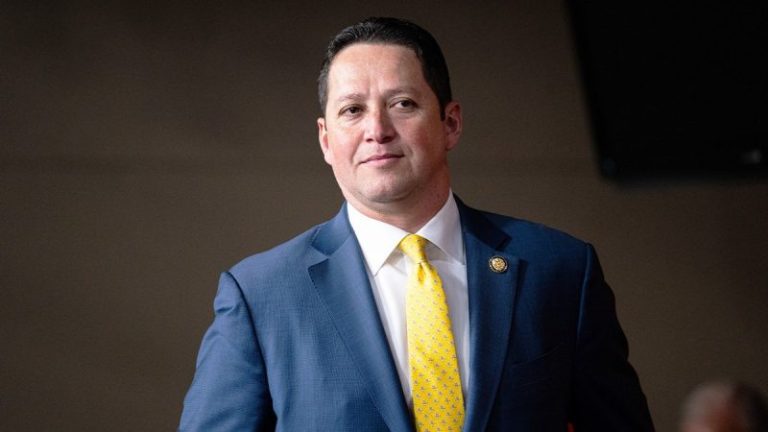
Rep. Tony Gonzales, R-Texas, announced Thursday evening he will not seek re-election amid a House Ethics investigation into an affair he admitted to having with a former staffer.

Gonzales, a married father of 6, admitted to the affair for the first time during an appearance on a conservative talk radio show on Wednesday – a day after advancing to the GOP primary runoff for his congressional district.

‘At 18, I swore an oath to defend our nation against all enemies, foreign and domestic. During my 20 years in the military and three terms in Congress, I have fought for that cause with absolute dedication to the country that I love,’ Gonzales said in a statement.

‘From overcoming the border crisis to taking a stand with my communities after the worst school shooting in Texas’ history, my philosophy has never changed: do as much as you can, and always fight for the greater good,’ he continued.

‘After deep reflection and with the support of my loving family, I have decided not to seek re-election while serving out the rest of this Congress with the same commitment I’ve always had to my district,’ he added. ‘Through the rest of my term, I will continue fighting for my constituents, for whom I am eternally grateful.’

‘I made a mistake, and I had a lapse in judgment, and there was a lack of faith, and I take full responsibility for those actions,’ he said on ‘The Joe Pags Show’ Wednesday night. ‘Since then, I’ve reconciled with my wife, Angel. I’ve asked God to forgive me, which he has, and my faith is as strong as ever.’

The House Ethics Committee also launched an investigation into Gonzales on Wednesday to determine if he engaged in sexual misconduct with a female member of his staff and whether he doled out special favors or privileges as a result.

The former staffer, Regina Santos-Aviles, died after setting herself on fire outside her home late last year.

House GOP leaders called on the embattled representative to drop his re-election bid.

‘The Ethics Committee has announced an investigation into Congressman Tony Gonzales’s conduct, and we urge them to act expeditiously. Congressman Gonzales has said he will fully cooperate with the investigation,’ Speaker Mike Johnson, R-La., and other top Republicans said in a statement this week.

‘We have encouraged him to address these very serious allegations directly with his constituents and his colleagues. In the meantime, Leadership has asked Congressman Gonzales to withdraw from his race for re-election,’ they added.

Gonzales’ departure paves the way for challenger Brandon Herrera to take the nomination. Herrera narrowly edged Gonzales by a 43.33% – 41.73% margin in Texas’ GOP primary for the 23rd congressional district on Tuesday, causing a runoff due to neither candidate earning 50% of the vote.

Herrera called his opponent’s withdrawal from the race the ‘appropriate decision.’

‘I appreciate Tony Gonzales for making the appropriate decision,’ Herrera wrote on X. ‘I look forward to being the voice of TX23 that our district deserves. From the border, to oil theft, water rights, data centers, and many other issues. It’s an honor to be chosen and together we will make Texas proud.’

Gonzales initially said he would not step down in the face of the accusations, telling reporters in late February ‘what you’ve seen is not all the facts.’

Fox News Digital’s Anders Hagstrom and Elizabeth Elkindcontributed to this report.

Related Article

Mike Johnson asks embattled House Republican Tony Gonzales to drop re-election bid
This post appeared first on FOX NEWS
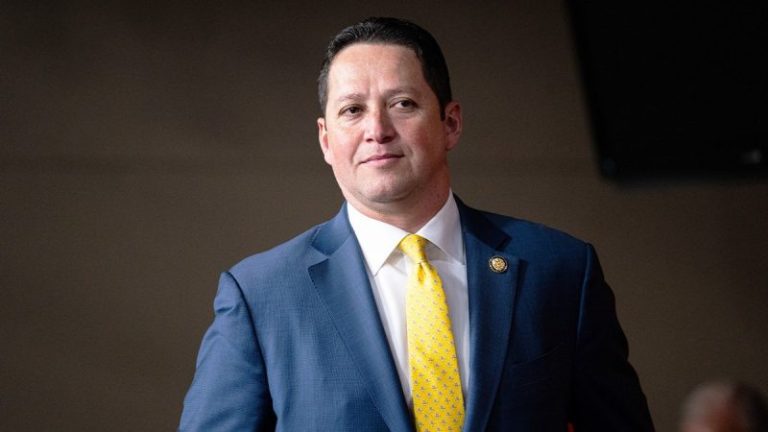
Rep. Tony Gonzales, R-Texas, announced Thursday evening he will not seek re-election amid a House Ethics investigation into an affair he admitted to having with a former staffer.

Gonzales, a married father of 6, admitted to the affair for the first time on Wednesday – a day after advancing to the GOP primary runoff for his congressional district.

‘At 18, I swore an oath to defend our nation against all enemies, foreign and domestic. During my 20 years in the military and three terms in Congress, I have fought for that cause with absolute dedication to the country that I love,’ Gonzales said in a statement.

‘From overcoming the border crisis to taking a stand with my communities after the worst school shooting in Texas’ history, my philosophy has never changed: do as much as you can, and always fight for the greater good,’ he continued.

‘After deep reflection and with the support of my loving family, I have decided not to seek re-election while serving out the rest of this Congress with the same commitment I’ve always had to my district,’ he added. ‘Through the rest of my term, I will continue fighting for my constituents, for whom I am eternally grateful.

Gonzales confessed to the affair during an appearance on a conservative talk radio show one day after advancing to a runoff election in his congressional district’s GOP primary.

The House Ethics Committee also launched an investigation into Gonzales on Wednesday to determine if he engaged in sexual misconduct with a female member of his staff and whether he doled out special favors or privileges as a result.

Related Article

Mike Johnson asks embattled House Republican Tony Gonzales to drop re-election bid
This post appeared first on FOX NEWS

Investor Insight

Oreterra Metals is focused on the discovery of large-scale porphyry copper-gold systems in Canada and the US, led by a management team with a proven track record delivering multi-million dollar exits in the same world-class mining jurisdictions.

Overview

Oreterra Metals (TSXV:OTMC) is a focused mineral exploration company dedicated to delivering for its shareholders large-scale discoveries and the capital gains opportunities that typically come with such discoveries. The company’s strategy centers on copper-gold porphyry systems in North America, chosen for their scale, relatively low finding and resource proving costs in relation to high grade vein systems, and their high attractiveness to major mining operators as potential long-life mines. Oreterra emerged early in February 2026 following the comprehensive restructuring and rebranding of its predecessor company, a restructuring warranted by the exceptional prospectivity of the Trek South prospect.

Oreterra’s flagship asset is the wholly owned Trek South porphyry copper-gold prospect, located on the 6,379-hectare Trek property situated in the heart of British Columbia’s Golden Triangle. Effectively new to modern geological science, the prospect has emerged due to rapid glacial ice retreat. First identified in 2019, all of the work required to reveal it as a highly prospective porphyry copper-gold prospect and to bring it to drill-ready status has occurred only in the period since 2021.

The company is led by a veteran management team with over 100 combined years of experience in mineral exploration, finance, and corporate governance. With a lean share structure and strong institutional support following its recent $9.7 million financing, Oreterra is fully funded and ideally positioned to test its high-conviction targets, starting with the first-ever drill of Trek South commencing in the approaching 2026 field season.

Company Highlights

  • Fully Funded for 2026 Exploration: Recently completed a massively oversubscribed $9.7 million financing to support the first-ever drilling this summer of the wholly owned, large-scale Trek South prospect, only recently revealed by glacial ice melt.
  • Drill‑Ready Flagship: The Trek South target has everything one seeks in a new porphyry copper-gold discovery prospect: i.e. large scale, terrific rock exposure, intense porphyry-style changes and metal values on surface in those rocks, and stacked (coincident), strongly positive, magnetic and geophysical anomalies directly below.
  • Infrastructure Advantage: The Trek South prospect is just 3 kilometres up-slope from the nearest work camp, bridges and road presently under construction by the Teck/Newmont GCMC joint venture, and 12 kilometers from their proposed mill site.
  • Proven Management: Led by CEO Kevin Keough, founding CEO of GT Gold Corp. which delivered the Saddle North porphyry copper-gold discovery (Dec. 13, 2017), later sold to Newmont for $523 million cash in current dollars following just $16.7 million of exploration outlays (Saddle North only).
  • Asset Portfolio: Beyond the flagship, Oreterra holds high-grade gold and porphyry copper-gold assets in Nevada and Ontario.

Key Projects

Trek Project – Golden Triangle, British Columbia

Potential for a Major Discovery in the First Few Drill Holes

A large-scale porphyry copper-gold prospect ready for its first-ever drilling, in 2026

The wholly owned Trek property spans 6,379 hectares in the heart of BC’s Golden Triangle, one of North America’s geologically most fertile copper‑gold-silver belts. Within the property, the Trek South target represents a very large, entirely new, porphyry system identified in the period since 2021 by mapping, sampling and geophysical programs.

Strategically positioned approximately 10 km from Teck–Newmont’s rich Galore Creek porphyry copper-gold project and just 3 km up slope from partially completed road access, Trek South is poised for its maiden drilling program in 2026. The project is supported by a National Instrument 43‑101 technical report delivered on January 20, 2026.

The property also hosts additional exploration targets that provide district‑scale upside under a single land package.

Kinkaid Project – Nevada

An Emerging Porphyry Copper-Gold Project on a Proven Nevada Mining Trend

Kinkaid comprises 131 claims covering 1,101 hectares in Mineral County, Nevada, an attractive mining jurisdiction with established infrastructure. The project is subject to a 2% net smelter returns royalty. Exploration has identified two distinct mineralization styles: epithermal to mesothermal veins, and garnet skarns, with evidence for buried porphyry centres.

Oreterra is planning further exploration at Kinkaid, including both airborne and ground geophysical surveys. These programs are intended to refine drill targets ahead of planned diamond drilling on the most prospective areas of the property.

Lundmark Project – Ontario

Emerging copper-gold in northwestern Ontario and an extensive drilling-defined mineral system

The 5,386‑hectare Lundmark property adjoins the Musselwhite gold mine in northwestern Ontario and is subject to a 3 percent NSR royalty. Drilling since 2019 has outlined a significant volcanogenic massive sulphide (VMS) system characterized by multiple mineralizing events.

These include individual high-grade gold-bearing quartz–pyrrhotite veins, broad zones of stockwork-style copper–gold vein mineralization, and three VMS-style gold–silver–enriched base metal zones. In total, the alteration and mineralization system identified to date now extends for approximately 11 kilometres along strike.

Scossa Project – Nevada

Scossa, a 541‑hectare property, encompasses the historic high‑grade Scossa gold mine, active in the 1930s and 1940s. The epithermal gold system features five known veins, with historical mining limited to the 400‑foot level. Exceptional grades from historical records and previous drilling by the company in the 2003 timeframe, indicates meaningful potential remains.

Management Team

Kevin M. Keough — Chief Executive Officer & Director

A geologist by training, Mr. Keough brings 45 years global exploration, corporate leadership, and capital markets experience, and has founded and led exploration companies that delivered major discoveries of the type Oreterra seeks, later sold for considerable profit.

Stephen Burega — President & Director

With 25+ years in mining and resources, Mr. Burega specializes in corporate development, fundraising, and stakeholder engagement and played an instrumental role in Oreterra’s strategic repositioning.

Brian Crawford — Chief Financial Officer

A chartered professional accountant with deep public company finance and governance experience, Mr. Crawford has co‑founded several TSXV and CSE‑listed companies and continues to support growth‑stage exploration entities.

John Biczok — Vice‑President, Exploration

A professional geologist with over 45 years of field and discovery experience, Mr. Biczok has been involved in significant discoveries globally and brings robust technical leadership to Oreterra’s exploration programs.

Ashley Nadon — Corporate Secretary

Ashley Nadon, a Chartered Professional Accountant, supports governance and financial reporting with a depth of expertise in public company compliance.

Get access to more exclusive Gold Investing Stock profiles here

This post appeared first on investingnews.com

(TheNewswire)

Provides Drilling Update at Silver King

Vancouver, British Columbia, March 5th, 2025 TheNewswire – Prismo Metals Inc. (‘Prismo’ or the ‘Company’) (CSE: PRIZ,OTC:PMOMF) (OTCQB: PMOMF) is pleased to announce the closing of its previously announced transaction with Blade Resources Inc. (‘Blade’) pursuant to which Prismo has assigned all of its rights, interests and obligations in the Hot Breccia copper project, located  in the heart of the Arizona copper belt (the ‘Transaction’), to Blade.

Alain Lambert, CEO of Prismo, commented: ‘In our opinion, Hot Breccia is one of the most compelling copper exploration opportunities in North America. We remain committed to advancing it toward drilling. The principals and financial backers of Blade have a long history and strong track record in raising significant capital for exploration programs of the scale required at Hot Breccia. We expect this will result in Hot Breccia being drilled this year.’

For additional commentary on the Transaction, please watch the interview Alain Lambert gave to Radius Research:

Drilling Update at Silver King

Dr. Craig Gibson, Chief Exploration Officer of Prismo provided an update on the current drill program at the Company’s Silver King project located in Arizona: ‘The first drill hole at Silver King, SK-26-01 was drilled vertically and was successful in traversing the mineralized body as projected from the historic workings and reached a total depth of 477 feet (145 meters). Two small voids that are likely underground workings were intersected near the elevation of the 114′ level and quartz veining extended from this level for about 100 feet down hole. Visible sulfide minerals are present in several intervals and the presence of silver minerals, including native silver, was confirmed through visual identification and with a handheld XRF analyzer. Freibergite (Ag bearing tetrahedrite), stromeyerite (AgCuS) and probably acanthite (AgS) are also present. The second hole, SK-26-02 is currently at a depth of 155 feet.’

Phase 1 Drill Program Highlights:

  • 1,000 meters of diamond drilling to test the upper portion of the steeply plunging, pipe-like Silver King mineralized body 

  • Fully funded program 

  • Additional drilling to test lower down in the mineralized structure and mineralized areas adjacent to the historic mine may also be completed 


Click Image To View Full Size

Fig. 1.  Permitted drill sites planned for initial Phase I drilling at the Silver King mine shown by white dots.  The orange line indicates the approximate location of the cross section in Fig. 2.  View looking south-easterly.

Drilling is currently focused on testing the upper portion of the steeply west-dipping pipelike stockwork and breccia zone that historically produced high-grade silver and base metals (Fig. 2), as well as targets adjacent to and beneath historic workings. Initial drilling is estimated at 1,000 meters in nine holes. A second phase of drilling will be dedicated to testing at deeper levels and areas adjacent to the historic mine.  The silver mineralization at Silver King is similar to that of portions of the nearby Magma Mine, and exploration for nearby copper mineralization is warranted.

The Magma Mine and Silver King Mine share a common regional geological framework in the Superior Mining District, characterized by a Precambrian to Paleozoic stratigraphic sequence including Pinal Schist basement, diabase sills, the Apache Group sediments, and Paleozoic limestones like the Martin Formation, all tilted eastward and intruded by Laramide-age igneous bodies such as quartz diorite stocks and andesite sills. While both exhibit fault-controlled mineralization—east-trending faults and veins with hydrothermal alteration like silicification and potassic zoning—Silver King features epithermal-mesothermal silver-dominant veins in porphyry with minerals like stromeyerite, tetrahedrite, and acanthite, contrasting Magma’s mesothermal copper-focused veins and limestone replacement ores (mantos) rich in chalcopyrite and bornite. This vertical zoning suggests Silver King’s shallower silver-enriched system may transition into deeper copper styles like Magma’s, with overlapping sulfides indicating potential for untapped polymetallic extensions, especially given Magma’s link to the underlying Resolution Copper porphyry deposit.


Fig. 2.  Cross section through Silver King mine showing workings and first four planned drill holes.


Click Image To View Full Size

Chief Exploration Officer Dr. Craig Gibson supervising drilling at Silver King


Click Image To View Full Size

Core logging at Silver King, hole SK-26-01

Additional Information on the Transaction

In consideration for the Transaction, Prismo was issued 6,755,000 common shares of Blade and received a cash payment of $185,000. Following completion of the Transaction, Prismo owns approximately 24% of Blade’s issued and outstanding shares and is Blade’s largest single shareholder (see additional early warning disclosure below).

Strategic Rationale of the Transaction

The Transaction provides several strategic benefits:

  • Value Creation: Prismo is leveraging its investments in Hot Breccia into a significant stake in a company dedicated to advancing the Hot Breccia project. 

  • Access to Capital with Limited Dilution: The structure provides enhanced access to capital for the Hot Breccia drill program through Blade, without direct dilution to Prismo shareholders. 

  • Strategic Focus: Prismo will focus on advancing its remaining Arizona projects — Silver King and Ripsey Gold — while Blade dedicates its efforts to advancing Hot Breccia. 

  • Enhanced Attractiveness to Strategic Partners: With the potential for 100% ownership of Hot Breccia, Blade will be in a better position to possibly attract majors or strategic buyers. 

Additional Prismo Rights under the Transaction

Under the terms of the Transaction:

  • Prismo has the right to nominate one representative to Blade’s board of directors. The Company has not yet determined its initial nominee. 

  • Blade has granted Prismo participation rights in future equity offerings, allowing Prismo to subscribe for shares on substantially the same terms as other investors in order to maintain its undiluted ownership percentage in Blade. 

Early Warning Disclosure

This news release is issued in accordance with National Instrument 62-103 – The Early Warning System and Related Take-Over Bid and Insider Reporting Issues. Prior to the Transaction, Prismo did not own any common shares of Blade. The common shares of Blade were acquired by Prismo for a total consideration of $2,364,250 and were acquired for investment purposes with a view to Blade’s potential listing on a Canadian stock exchange.

Except as described in this news release, Prismo has no present plans or intentions that relate to or would result in any of the matters enumerated in paragraphs (a) through (k) of Item 5 of Form 62-103F1.

Prismo will file an early warning report in accordance with applicable securities laws, which will be available under Blade’s profile on SEDAR+ at www.sedarplus.ca . A copy of the early warning report may be obtained by contacting Gordon Aldcorn at the contact details below.

Qualified Person

Dr. Craig Gibson, PhD., CPG., a Qualified Person as defined by NI-43-01 regulations and Chief Exploration Officer and a director of the Company, has reviewed and approved the technical disclosures in this news release.  

About Prismo Metals Inc.

Prismo (CSE: PRIZ,OTC:PMOMF, OTCQB: PMOMF) is a mining exploration company focused on advancing its Silver King, Ripsey and Hot Breccia projects in Arizona and its Palos Verdes silver project in Mexico.

About Blade Resources Inc.

Blade Resources is a private mining exploration company focused on development of North American copper and precious metals projects.

Please follow @PrismoMetals on , , , Instagram, and

Prismo Metals Inc.

1100 – 1111 Melville St., Vancouver, British Columbia V6E 3V6  Phone: (416) 361-0737

Contact:

Alain Lambert, Chief Executive Officer alain.lambert@prismometals.com

Gordon Aldcorn, President gordon.aldcorn@prismometals.com

Cautionary Note Regarding Forward-Looking Information

This release includes certain statements and information that may constitute forward-looking information within the meaning of applicable Canadian securities laws. Forward-looking information relates to future events or future performance and reflect the expectations or beliefs of management of the Company regarding future events. Generally, forward-looking statements and information can be identified by the use of forward-looking terminology such as intends’ or anticipates‘, or variations of such words and phrases or statements that certain actions, events or results may’, could’, should’, would’ or occur’. This information and these statements, referred to herein as ‘forward‐looking statements’, are not historical facts, are made as of the date of this news release and include without limitation, statements regarding discussions of future plans, estimates and forecasts and statements as to management’s expectations and intentions with respect to, among other things: the anticipated closing and closing date of the Transaction; the strategic rationale and potential upside of the transaction with Blade,  the future development of the Hot Breccia project and Blade’s ability of Blade to successfully implement its strategic and business objectives, including potentially attracting majors or strategic buyers; and the ability of Prismo to fund its exploration activities on its other projects.

These forward‐looking statements involve numerous risks and uncertainties, and actual results might differ materially from results suggested in any forward-looking statements. These risks and uncertainties include, among other things: that the Transaction may not close as anticipated, or at all; delays incurred by Blade in obtaining or failure to obtain appropriate funding to finance the exploration program at Hot Breccia; the inability of Blade to successfully acquire a 100% interest on the Hot Breccia project; delays incurred by the Company in obtaining or failure to obtain appropriate funding to finance exploration programs for its other projects; the risk that mineralization will not be as anticipated at the Hot Breccia project or at the Company’s other projects; metal prices; market uncertainty; and other risks and uncertainties application to exploration activities and the Company’s business as set forth in the Company’s disclosure documents available for viewing under the Company’s profile on SEDAR+ at www.sedarplus.com.

In making the forward-looking statements in this news release, the Company has applied several material assumptions, including without limitation, that: the ability to raise capital to fund exploration programs at Hot Breccia or on the Company’s other projects, and the timing of such exploration programs; the ability of Blade to complete the option to acquire a 100% interest in the Hot Breccia project and to successfully carry out its business and strategic objectives following completion of the transaction; and that the Hot Breccia project and the Company’s other projects will have the anticipated mineralization and other qualities.

Although management of the Company has attempted to identify important factors that could cause actual results to differ materially from those contained in forward-looking statements or forward-looking information, there may be other factors that cause results not to be as anticipated, estimated or intended. There can be no assurance that such statements will prove to be accurate, as actual results and future events could differ materially from those anticipated in such statements. Accordingly, readers should not place undue reliance on forward-looking statements and forward-looking information. Readers are cautioned that reliance on such information may not be appropriate for other purposes. The Company does not undertake to update any forward-looking statement, forward-looking information or financial out-look that are incorporated by reference herein, except in accordance with applicable securities laws. We seek safe harbor.

Copyright (c) 2026 TheNewswire – All rights reserved.

News Provided by TheNewsWire via QuoteMedia

This post appeared first on investingnews.com

Oreterra Metals (TSXV:OTMC) is a mineral exploration company focused on delivering large-scale discoveries and the shareholder value that typically follows. Its strategy targets copper-gold porphyry systems in North America, selected for their scale, comparatively lower discovery costs versus high-grade vein systems, and strong appeal to major mining companies as potential long-life operations. The company emerged in February 2026 following the restructuring and rebranding of its predecessor, driven by the exceptional potential of the Trek South prospect.

Oreterra’s flagship asset is the wholly owned Trek South copper-gold porphyry prospect on the 6,379-hectare Trek property in British Columbia’s Golden Triangle. The prospect has only recently become accessible due to glacial retreat and remains effectively new to modern geological exploration. First identified in 2019, work conducted since 2021 has advanced the project to drill-ready status.

A large-scale porphyry copper-gold prospect ready for its first-ever drilling, in 2026

The company is led by a veteran management team with more than 100 years of combined experience in exploration, finance, and governance. Following a recent $9.7 million financing and supported by a lean share structure, Oreterra is fully funded to test its high-conviction targets, with the first-ever drill program at Trek South planned for the 2026 field season.

Company Highlights

  • Fully Funded for 2026 Exploration: Recently completed a massively oversubscribed $9.7 million financing to support the first-ever drilling this summer of the wholly owned, large-scale Trek South prospect, only recently revealed by glacial ice melt.
  • Drill‑Ready Flagship: The Trek South target has everything one seeks in a new porphyry copper-gold discovery prospect: i.e. large scale, terrific rock exposure, intense porphyry-style changes and metal values on surface in those rocks, and stacked (coincident), strongly positive, magnetic and geophysical anomalies directly below.
  • Infrastructure Advantage: The Trek South prospect is just 3 kilometres up-slope from the nearest work camp, bridges and road presently under construction by the Teck/Newmont GCMC joint venture, and 12 kilometers from their proposed mill site.
  • Proven Management: Led by CEO Kevin Keough, founding CEO of GT Gold Corp. which delivered the Saddle North porphyry copper-gold discovery (Dec. 13, 2017), later sold to Newmont for $523 million cash in current dollars following just $16.7 million of exploration outlays (Saddle North only).
  • Asset Portfolio: Beyond the flagship, Oreterra holds high-grade gold and porphyry copper-gold assets in Nevada and Ontario.

This Oreterra Metals profile is part of a paid investor education campaign.*

Click here to connect with Oreterra Metals (TSXV:OTMC) to receive an Investor Presentation

This post appeared first on investingnews.com

The global platinum market is expected to remain in deficit for a fourth consecutive year in 2026, even as supply begins to stabilize and demand moderates following a sharp rally in the metal’s price.

New projections from the World Platinum Investment Council (WPIC) show a deficit of about 240,000 ounces for 2026 following a significantly larger shortfall of 1.082 million ounces in 2025.

That’s the deepest deficit recorded in the group’s Platinum Quarterly data series since it began in 2014. According to data, the cumulative deficit since 2023 will approach 3 million ounces by the end of 2026.

As a result, aboveground platinum stocks are expected to remain historically low, falling to about 2.613 million ounces, which is equivalent to just over four months of global demand for the precious metal.

WPIC CEO Trevor Raymond said the factors that fueled platinum’s strong performance last year are expected to remain.

“The key drivers of platinum’s price rally in 2025, namely strong supply/demand fundamentals, a depletion of above ground stocks, and macropolitical uncertainty-driven precious metals demand, are expected to persist in 2026,” he said.

“Consequently, market tightness is likely to continue, maintaining investor interest in platinum, and further supporting bar and coin and ETF demand throughout the year.”

Platinum investment strength offsets softer overall demand

The forecast marks a shift from earlier expectations that the platinum market would return to balance in 2026.

Instead, strong investment sentiment and resilient exchange-traded fund holdings have pushed the market back into deficit territory. Even so, total demand for platinum is expected to decline moderately this year.

The WPIC projects overall demand will fall about 8 percent year-on-year to roughly 7.619 million ounces.

Much of that drop reflects a normalization in investment demand after a surge in 2025, when inflows into platinum exchange-traded funds and physical investment products climbed sharply.

However, demand for physical platinum bars and coins is expected to continue growing.

The WPIC forecasts that bar and coin investment will jump 35 percent in 2026 to 725,000 ounces, reaching the highest level recorded in the Platinum Quarterly dataset.

Investment purchases of platinum are increasing as the metal gains attention as a lower-priced alternative to gold, and as retail investment products become more widely available.

Supply growth lags as platinum deficit persists

While demand patterns shift across sectors, platinum supply growth remains limited.

Total platinum supply is expected to rise just 2 percent in 2026 to about 7.379 million ounces.

Mine output is forecast to remain essentially flat at roughly 5.553 million ounces, with production gains in South Africa and Zimbabwe offset by declines in North America and Russia.

The modest increase in supply will largely come from recycling. Higher platinum prices have encouraged the recovery of spent autocatalysts and recycled jewelry, pushing recycling supply up about 10 percent in 2025. That trend is expected to continue this year, with recycled metal rising another 10 percent to approximately 1.827 million ounces.

Still, the additional recycled material is unlikely to fully offset the underlying market tightness. As Raymond noted, another factor that could further deepen the deficit has yet to be fully reflected in current forecasts.

“One item not yet captured in the supply/demand balance is any exchange stocks warehoused with the Guangzhou Futures Exchange, which could potentially deepen the deficit versus current projections once these are made publicly available,” he said. For platinum investors, the persistence of deficits suggests that the market’s underlying fundamentals remain supportive even as demand moderates from last year’s highs.

“The price rally we’ve seen this year has not solved the deficit,” he said.

“Normally, in a deficit market, you would expect the price to increase. Clearly, the elevated prices we’ve experienced is still insufficient to attract more supply into the market or drag more metal out of aboveground stocks.”

With supply growth limited and inventories shrinking, the platinum market is likely to remain structurally tight, sustaining investor interest through 2026.

Securities Disclosure: I, Giann Liguid, hold no direct investment interest in any company mentioned in this article.

This post appeared first on investingnews.com

An Iranian refugee held at gunpoint at school before fleeing Iran during the 1979 revolution is calling for hope, democracy and prayers for his homeland as the U.S. joins Israel in targeting Iran’s ruling clerical regime.

David Nasser, now an American pastor, spoke to Fox News Digital six days after Operation Epic Fury was launched in Iran — an event that reignited haunting memories for him and of the time when he was 9 years old.

‘As a child, my family and I were forced to escape Iran and run for our lives,’ Nasser, President and CEO of David Nasser Outreach recalled.

‘We found safe harbor as refugees granted political asylum here in the United States,’ Nasser said, before describing how his father had been a high-ranking officer in Iran’s military, meaning ‘his family became targets as the government collapsed.’

‘One of my most vivid memories of realizing that nothing was ever going to be the same again was at a school assembly on a military base – a soldier called out three names and mine was called first,’ he said.

‘When I got to the front, the soldier dropped a piece of paper, took a gun out of his holster and put it to my head and quoted the Quran. He told me that he was sent to make an example out of me,’ Nasser added.

The principal intervened, but the message he relayed was unmistakable. Nasser recalled.

‘They’re killing everybody who’s anybody. They’re trying to make an example out of people like our family, and they’re using fear,’ he remembered hearing at the time.

‘That’s one of my first memories of the revolution, but really just being completely scared for my life.’

Soon after, Nasser’s family devised an escape plan. They would pretend Nasser’s mother needed emergency heart surgery in Switzerland and buy round-trip tickets to avoid raising suspicion.

‘We bought round-trip airline tickets, like we were going and coming back, but we weren’t coming back. We were running for our lives,’ he said.

At the airport, Nasser remembers gripping his father’s hand tightly and hearing words he will never forget.

”If they find out we’re escaping, they’re going to kill us right here on the spot,” my father said as his hands shook, holding mine, he said. ‘The last time I was in Iran, I was a 9-year-old little boy running for my life,’ he said.

Now, watching events unfold in Iran from the safety of the U.S., Nasser said his heart remains with millions of desperate Iranians facing uncertainty.

‘We see them — I see them, I hear them. My heart is beating really fast for them right now, with hope and with prayers for their protection and their provision,’ Nasser said.

‘Protection. I’m praying for protection for them. I want to be a part of the provision for them. If Iran transitions from a theocracy to a democracy,’ he said, ‘I want to help rebuild.’

‘If this moment actually comes, and they go from a theocracy to a democracy, I want to be a part of the solution — for that 9-year-old little boy that I once was. I want to do this for him.’

Beyond political change, Nasser, who is also Teaching Pastor at New Vision Baptist Church, said he takes solace in what he describes as spiritual transformation already underway, calling it ‘the fastest-growing church in the world right now, or the underground church in Iran.’

‘We know there’s at minimum 4 million, at maximum 8 million Christians right now in Iran,’ he said.

‘In Iran, if you convert from Islam to Christianity, that can be a death sentence. If they come into your home and you’re gathering for Christian worship, they will take your home title, you will lose your home.’

‘They’re in prison. They’re being tortured. They’re being ridiculed. They’re being mocked,’ he added.

‘Above all, I came to America, and it was a land of opportunity, and I was given the gift of democracy, so I would love to see democracy in Iran, where all the boys and girls are afforded what I was afforded when I managed to escape.’

Related Article

Exiled Iranian crown prince says US strikes mark ‘beginning of the very end’ for regime
This post appeared first on FOX NEWS

Minnesota Gov. Tim Walz and Attorney General Keith Ellison faced a barrage of tough questions from Republicans during a Wednesday House hearing on the massive fraud scandal in the state, with most of the questions focused on one key theme: What did they know, and when did they know it?

Walz and Ellison were asked multiple times for specifics regarding when they were first made aware of the fraud problems and faced sharp rebukes from Republican members, including Rep. Virginia Foxx.

‘You did not do your job, you did not do your job,’ Foxx told Walz. ‘You did not protect taxpayer dollars. You allowed massive fraud. You and Mr. Ellison allowed massive fraud to go on in the state of Minnesota. It is unfortunate, as somebody said, that you can’t be held personally responsible at this stage in the game.’

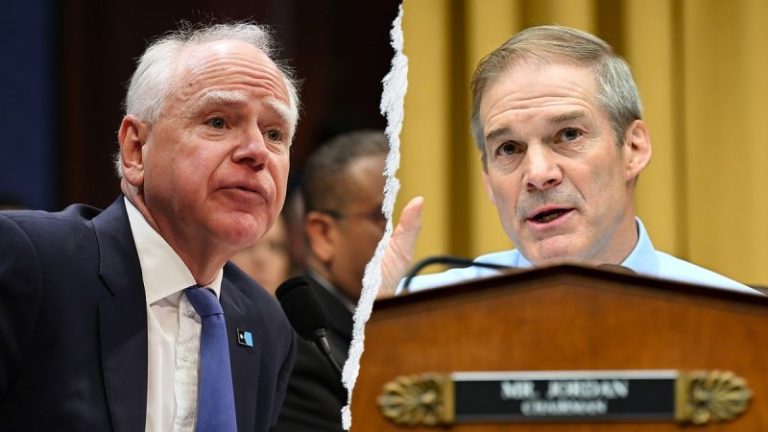
An exchange between GOP Rep. Jim Jordan and Walz sparked immediate pushback from conservatives on social media. 

‘Why didn’t you tell the truth about why you restarted the payments?’ Jordan asked during a House Oversight Committee hearing on Minnesota fraud on Wednesday.

The exchange centered on Walz’s past public statements that a judge ordered the Minnesota Department of Education to continue reimbursements in April 2021 after the agency had halted payments over fraud concerns.

Jordan pointed to a 2022 court-authorized news release from then-Ramsey County District Court Judge John H. Guthmann that disputed the governor’s characterization of the events.

‘So either you’re lying or the court’s lying. And I’m just asking you which one is it?’ Jordan said.

One of the most contentious exchanges came during questioning from GOP Rep. Nancy Mace when she pressed Walz for specific numbers on how many children are in his state, the massive increase in autism care spending and why that occurred without getting specific numbers back from Walz.

‘Ok, so your excuse before — that you didn’t know what the 2017 autism numbers were — because you were not governor, and today you can’t answer the numbers about 2024 as governor, and you still said you prepared for this hearing today. It’s unbelievable.’

Walz shot back that he wouldn’t be a ‘prop’ for Mace, and she eventually said, ‘I expect you to know this information. Thank God you’re not vice president of the United States.’

GOP Rep. Clay Higgins confronted Ellison in another heated moment asking him to say he was ‘leading’ the fight against rooting out corruption without getting the specific answer he was looking for, prompting him to call for Ellison’s resignation. 

‘I’m not talking about Medicaid fraud, don’t hide behind that,’ Higgins said, interrupting Ellison. ‘You have the authority to prosecute anything criminally that the governor asks you to, and this thing is big. I’m giving you an opportunity sir, are you leading the criminal investigative effort into this massive fraud across the board…or not?’ Higgins pressed.

‘We are following the law,’ Ellison said before Higgins cut him off again.

‘You are not leading, I’m going to say, Mr. Chairman, that the attorney general of the state of Minnesota should resign,’ Higgins said.

At the close of the hearing, things became tense again when GOP Rep. Nick Langworthy suggested that Walz, who is still serving as governor despite dropping out of his re-election bid due to the fraud scandal, should be impeached for ‘malfeasance,’ citing Minnesota’s own state Constitution. 

Fox News Digital’s Ashley Carnahan contributed to this report.

Related Article

Walz accused by Jordan of trying to ‘hide behind’ court order in Feeding Our Future payments
This post appeared first on FOX NEWS

A House Democrat with a background in physics is sounding the alarm over what he views as a lack of a plan to deal with Iran’s nuclear sites during the U.S. offensive campaign.

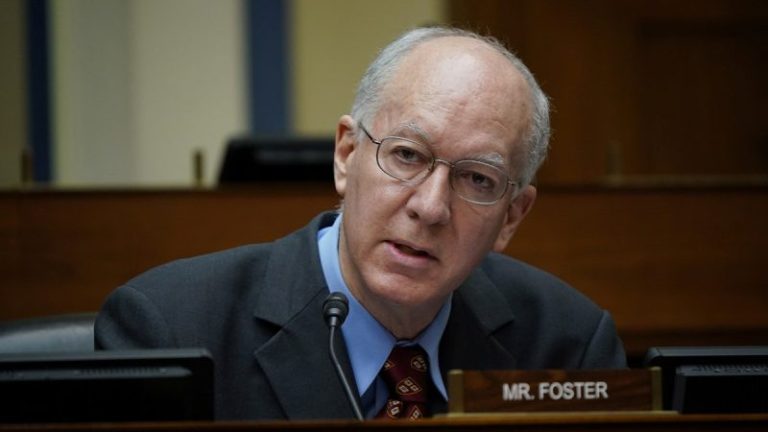
After a classified briefing Tuesday with top administration officials, Rep. Bill Foster, D-Ill., said lawmakers were not presented with a clear plan to secure or neutralize Iran’s stockpile of enriched uranium.

‘We have heard that they never had a plan for that nuclear stockpile of enriched uranium — to destroy that, to seize it or to put it under international inspection,’ he said.

The U.S. intervention was publicly justifiedby the Trump administration as a necessary step to stop Iran from developing a nuclear weapon. 

U.S. forces have struck more than 1,700 targets across Iran, including ballistic missile launch sites, air defenses, naval assets and command centers. Core nuclear facilities, however, have not been among the primary targets.

‘Until that happens, Iran will be very, very close to making — as many observers have pointed out in a nonclassified situation — Iran can use that material to make a handful of Hiroshima-style nuclear devices,’ Foster told Fox News Digital. ‘Not the sort you can put on a missile, but the sort you can deliver by a number of other ways and are very hard to stop.’ 

Foster was referring to Iran’s stockpile of highly enriched uranium, material that, if weaponized, could be used to build a nuclear explosive device.

Experts note that building a compact warhead that fits on a ballistic missile is technically complex and requires advanced engineering. But a simpler, larger nuclear device — similar in basic concept to the bomb the U.S. dropped on Hiroshima, Japan, in 1945 — would not need to be miniaturized to fit on a missile. Such a device could not be delivered by long-range rocket but could theoretically be transported by other means.

Foster argued that containing Iran’s nuclear materials, most of which are buried deep underground, would likely require U.S. forces to enter Iran.

Recent satellite imagery shows damage to support buildings and access points at Iran’s Natanz enrichment site, though the deepest underground infrastructure at key nuclear facilities has not been confirmed as a primary target in the current campaign.

U.S. and international officials previously have acknowledged that while strikes can damage enrichment infrastructure, stockpiled enriched uranium stored underground may remain intact and potentially retrievable unless physically secured or removed.

‘You have to go in there with boots on the ground and grab a bunch of equipment,’ Foster said. ‘You have to go underground into those facilities and lose a lot of soldiers’ lives doing that.

‘They’re unwilling to do that, or they’ve decided not to or they’ve decided it’s impossible. In any case, they did not present to us any plan that would actually get the material under control.’

Without securing the nuclear material, he argued, military operations may push Iran closer to a nuclear weapon than diplomatic negotiations would have.

‘The only positive thing about the ayatollah is that he had a fatwa against building nuclear weapons,’ Foster said. ‘Who knows what the next generation of ayatollahs are going to feel? They’re going to be under a lot of pressure from the IRGC, which was not so much against having a nuclear weapon.’

Ayatollah Ali Khamenei, who was killed in the joint U.S.-Israeli operations, had previously issued a fatwa, a religious edict, opposing the pursuit of nuclear weapons. Analysts have long debated how binding or durable that ruling was.

At a White House briefing Wednesday, press secretary Karoline Leavitt said the administration believes Iran ‘wanted to build nuclear weapons to use against Americans and our allies,’ framing the strikes as necessary to prevent Tehran from advancing its nuclear ambitions.

‘The US military has more than enough munitions, ammo, and weapons stockpiles to achieve the goals of Operation Epic Fury laid out by President Trump — and beyond. Nevertheless, President Trump has always been intensely focused on strengthen our Armed Forces and he will continue to call on defense contractors to more speedily build American-made weapons, which are the best in the world,’ she said in a follow up statement to Fox News Digital. 

Missile suppression strategy faces ‘math problem’

Senior administration officials have emphasized that the current phase of the campaign is aimed at dismantling Iran’s ability to project force with missiles, drones and naval assets. 

Defense Secretary Pete Hegseth has highlighted strikes on Iran’s ballistic missile systems, air defenses and naval capabilities, describing the effort as a push to degrade the conventional tools Tehran uses to threaten U.S. forces and regional allies. 

Secretary of State Marco Rubio similarly has said the United States is working to ‘systematically take apart’ Iran’s missile program, so it could not ‘hide behind’ it to develop a nuclear weapon. 

While the broader justification for intervention centered on preventing a nuclear-armed Iran, the most immediate threat facing U.S. troops and partners has been Iran’s ongoing missile and drone launches. Administration officials contend Iran’s missile buildup was meant to create a deterrent buffer, shielding its broader strategic ambitions, including its nuclear program, from outside attack.

Lawmakers emerging from classified briefings said the campaign has become, in part, a question of sustainability.

‘We do not have an unlimited supply,’ Sen. Mark Kelly, D-Ariz., said of U.S. and allied interceptor inventories. He warned the conflict could become a ‘math problem,’ balancing launch volumes against finite air defense munitions and the ability to replenish them without weakening readiness in other theaters.

‘At some point — and we’re probably already in this — this becomes a math problem,’ Kelly added.

He said he pressed defense officials on how interceptor stocks are being replenished and whether diverting munitions to the Middle East could strain U.S. readiness elsewhere.

‘How can we resupply air defense munitions? Where are they going to come from? How does that affect other theaters?’ he said. ‘The math on this currently seems to be an issue.’

Sen. Andy Kim, D-N.J., said he also sought clarity on interceptor inventories but did not receive detailed answers.

‘I am very concerned about that,’ Kim said. ‘I did not get any specificity today. … Something akin to ‘trust us’ is not good enough for me.’

Republicans, however, pushed back on the notion that interceptor supplies are strained. 

Sen. Markwayne Mullin, R-Okla., said officials told lawmakers U.S. forces are ‘in great shape,’ dismissing concerns about shortages.

Ehud Eilam, a former Israeli defense official and national security analyst, said that while a nuclear weapon remains the most serious long-term threat, missile and drone systems pose the most immediate danger if intelligence assessments conclude Iran is not on the verge of assembling a device.

‘As long as it is estimated Iran cannot produce a nuclear weapon soon, then the focus moves to missiles and drones,’ Eilam said, noting that ballistic missiles would ultimately be required to deliver any future nuclear warhead. Suppressing mobile launchers, crews and command networks can reduce Iran’s firing tempo, conserving interceptor supplies while degrading Tehran’s broader military capacity, he said.

The concern is not theoretical. 

During the intense June 2025 Iran–Israel conflict, U.S. forces reportedly fired more than 150 Terminal High Altitude Area Defense interceptors, roughly a quarter of the global inventory, along with large numbers of ship-based Standard Missile interceptors to shield allies. 

Analysts note that replenishing high-end air defense systems such as Patriot, THAAD and SM-3 interceptors could take more than a year under current production rates.

The Pentagon also is balancing competing demands. The same missile defense systems used to protect U.S. bases and Gulf partners are being supplied to Ukraine to defend against Russian cruise missile attacks, creating what some analysts describe as a ‘zero-sum’ competition for inventory between Europe and the Middle East.

‘There is a limit to how many THAAD missiles can be used,’ Eilam said. ‘These are not systems you can reproduce overnight.’

Related Article

Rubio says in ‘simple English’ Iran run by ‘lunatics,’ defends Trump strike as ‘right decision’
This post appeared first on FOX NEWS