Author

admin

Browsing

President Donald Trump on Friday said the U.S. is ‘doing very well’ in Iran, nearly a week after the military coordinated with Israel on airstrikes in Tehran that left its supreme leader, Ayatollah Ali Khamenei, dead.

‘Somebody said, ‘How would you score it from zero to 10?’ I said, ‘I’d give it a 12 to a 15.’ Their army is gone. Their navy is gone. Their communications are gone. Their leaders are gone,’ Trump said. ‘Two sets of their leaders.’

The president made the remarks after Fox News senior White House correspondent Peter Doocy asked at the end of a White House college sports roundtable what was motivating Trump to hold the roundtable ‘because there is a lot of other stuff going on in the world.’

‘That’s right,’ Trump agreed, adding that Iran’s air force has been ‘wiped out entirely. Think of it. They have 32 ships. All 32 are at the bottom of the ocean. Other than that, they’re doing very well.’

‘Our military is doing phenomenally,’ he said. ‘The situation with a very bad and very sick group of leaders who were killing a lot of people. A lot of our people were being killed or were being maimed. … And we had a choice. We could take it and go on like that for years or do something about it. And we did something about it.’

Trump added that ‘people are very impressed with our military, and they admire our military with what happened in Venezuela, what’s happening now, what’s happened with the B-2 bombers before this, where they took out the nuclear capability or potential of Iran.

‘I think we’re, right now, we’re a country that’s more respected than we’ve ever been respected before.’

Doocy also told the president earlier, ‘It sounds like the Russians are helping Iran target and attack Americans now.’

‘That’s an easy problem compared to what we’re doing here,’ Trump said, referring to college sports, calling it a ‘stupid question to be asking at this time. We’re talking about something else.’

Earlier Friday, Trump wrote on Truth Social that the U.S. won’t accept any deal with Iran ‘except UNCONDITIONAL SURRENDER!’

‘After that, and the selection of a GREAT & ACCEPTABLE Leader(s), we, and many of our wonderful and very brave allies and partners, will work tirelessly to bring Iran back from the brink of destruction, making it economically bigger, better, and stronger than ever before,’ Trump wrote. 

‘IRAN WILL HAVE A GREAT FUTURE. ‘MAKE IRAN GREAT AGAIN (MIGA!).’’

Related Article

After the strikes, how would the US secure Iran’s enriched uranium?
This post appeared first on FOX NEWS

We also break down next week’s catalysts to watch to help you prepare for the week ahead.

In this article:

    This week’s tech sector performance

    The tech-heavy Nasdaq Composite (INDEXNASDAQ:.IXIC) navigated a volatile week.

    Early week caution gave way to a rebound by Monday’s close (March 2), with the Nasdaq eking out a small gain led by defense and tech stocks. On Tuesday (March 3), the Trump administration’s plans to secure the Strait of Hormuz shipping lanes helped pare losses, with major indexes closing down but less severely.

    US services PMI on Wednesday (March 4) showed the fastest expansion since mid-2022, supporting gains; however, the Nasdaq rose only slightly, with gains capped by lingering oil price worries.

    Markets plunged on Thursday (March 5) after an Iranian missile strike on an oil tanker in the Persian Gulf intensified concerns of conflict longevity and supply constraints. The price of oil surged to its biggest weekly gain since 2022, with analysts forecasting further increases if the Strait of Hormuz stays disrupted beyond 3 – 4 weeks.

    Also on Thursday, reports surfaced that the administration was considering new rules requiring US approval for AI chips shipped abroad, which hit Nasdaq heavyweights NVIDIA (NASDAQ:NVDA) and Advanced Micro Devices (NASDAQ:AMD). This revelation followed earlier reports that officials were considering limiting purchases of Nvidia’s H200 chips and AMD’s MI325 chips, which have similar capabilities, to Chinese companies, capping them at 75,000 chips per firm.

    Friday’s (March 6) jobs report for February boosted rate-cut odds but fueled recession fears. The report showed nonfarm payrolls dropped by 92,000, a stark contrast to the forecasted 50,000 to 60,000 added jobs. Additionally, unemployment increased to 4.4 percent, signaling that the labor market is cooling faster than expected.

    These macroeconomic pressures and geopolitical uncertainty exerted a palpable weight on financial markets, heavily impacting volatility-sensitive tech stocks.

    3 tech stocks moving markets this week

    1. Intuit (NASDAQ:INTU)

    Intuit had a strong week, finishing up 25.08 percent as investors rotated into defensive fintech and software amid weakness in the capital-intensive and cyclical semiconductor sector.

    Zacks Investment Research explained Intuit’s stock rise as a gain driven by analyst upgrades and price target hikes. Piper Sandler raised its price target on Intuit to US$780 and maintained an Overweight rating. Susquehanna also raised its target to US$850 and kept a Positive rating. Meanwhile, TD Cowen cut its target to US$633 but reiterated Buy.

    Analysts cited Intuit’s strong AI-driven results from last week’s Q2 earnings and highlighted growth in the company’s GBS Online Ecosystem, Desktop Ecosystem and Credit Karma.

    2. Palantir Technologies (NASDAQ:PLTR)

    Palantir gained alongside other defense stocks as Mideast tensions boosted demand for defense AI. Shares rose more than five percent on Monday, while analysts at Wedbush named it a top pick on Thursday with a US$75 price target. Palantir gained 17.22 percent for the week.

    2. AppLovin (NASDAQ:APP)

    AppLovin ranked third for this week’s gainers, closing 16.29 percent higher on Arete’s upgrade to neutral from sell, with an adjusted price target down to US$340 From US$458. Speculation about AppLovin potentially launching a competing app to rival TikTok may have further contributed to the gains.

    Intuit, Palantir Technologies and AppLoving stock performance, March 2 to 6, 2026.

    Chart via Google Finance.

    Top tech news of the week

              • Shares of Lumentum Holdings and Coherent jumped on Monday after NVIDIA said it would invest US$2 billion in each company to accelerate the development of advanced optics and laser technologies for AI data centers.

                    Tech ETF performance

                    Tech exchange-traded funds (ETFs) track baskets of major tech stocks, meaning their performance helps investors gauge the overall performance of the niches they cover.

                    This week, the iShares Semiconductor ETF (NASDAQ:SOXX) declined by 5.91 percent, while the Invesco PHLX Semiconductor ETF (NASDAQ:SOXQ) lost five percent.

                    The VanEck Semiconductor ETF (NASDAQ:SMH) also decreased by 4.21 percent.

                    Tech news to watch next week

                    Investors face a pivotal week ahead, headlined by Monday’s (March 9) release of the NY Fed’s one-year inflation expectations and the highly anticipated February CPI report on Wednesday (March 11), which could provide a key signal for the Fed’s next move.

                    Later in the week, Thursday’s (March 12) jobless claims will be under the microscope to see if February’s labor trends hold steady. On the corporate side, it’s a big week for software and cloud infrastructure, with Oracle, Hewlett Packard Enterprise, and Constellation Software reporting Monday, followed by Adobe (NASDAQ:ADBE) on Thursday.

                    Securities Disclosure: I, Meagen Seatter, hold no direct investment interest in any company mentioned in this article.

                    This post appeared first on investingnews.com

                    Brien Lundin, editor of Gold Newsletter and New Orleans Investment Conference host, shares his stock-picking strategy at a time when high metals prices are beginning to lift all boats.

                    In his view, gold and silver equities may still only be in the second inning.

                    Securities Disclosure: I, Charlotte McLeod, hold no direct investment interest in any company mentioned in this article.

                    This post appeared first on investingnews.com

                    Peter Krauth, editor of Silver Stock Investor and Silver Advisor, shares his thoughts on silver price activity and where the white metal is in the cycle.

                    He believes the awareness phase is just beginning, with mania still relatively far in the future.

                    Securities Disclosure: I, Charlotte McLeod, hold no direct investment interest in any company mentioned in this article.

                    This post appeared first on investingnews.com

                    Adrian Day, president of Adrian Day Asset Management, shares his latest thoughts on what’s moving the gold price, emphasizing that its bull run isn’t over yet.

                    ‘It’s monetary factors that are driving gold — that’s what’s fundamentally driving gold,’ he said. ‘Monetary factors, lack of trust in governments and particularly lack of trust in fiat currencies.’

                    Securities Disclosure: I, Charlotte McLeod, hold no direct investment interest in any company mentioned in this article.

                    This post appeared first on investingnews.com

                    The Government of New Brunswick announced a new comprehensive mineral strategy on Tuesday (March 3), at the 2026 Prospectors and Developers Association of Canada conference in Toronto.

                    The plan calls for a streamlined permitting process that will ensure clear communication and transparent timelines. Additionally, it promises a collaborative partnership with First Nations, science-based decision-making and a community-based approach to jobs, procurement and infrastructure.

                    Oil prices jumped significantly this week following the start of the US-led war against Iran. West Texas Intermediate has surged more than 25 percent since March first, climbing to over US$90 per barrel in trading on Friday, the first time since October 2022.

                    The most significant gains came on Friday, after Iran effectively stopped traffic through the Strait of Hormuz. More than 20 percent of the world’s liquefied natural gas and 25 percent of oil shipments travel through the strait.

                    The price rise has had a downstream effect on gas prices in Canada and the US, increasing by up to C$0.10 per liter and US$0.27 per gallon, respectively.

                    Over the past week, US producers have activated four additional rigs, bringing the total rig count to 411, although that total is down by 75 from the same period last year. Most companies are unlikely to rush to restart operations shuttered due to low oil prices until there is a more sustainable rise in oil prices.

                    Meanwhile, the war caused turmoil in bond markets as concerns over inflation and rising central bank interest rates seeped into the market. US two-year bonds rose by 18 basis points, while Britain’s rose by 43 basis points.

                    For more on what’s moving markets this week, check out our top market news round-up.

                    Markets and commodities react

                    Canadian equity markets were largely down this week.

                    The S&P/TSX Composite Index (INDEXTSI:OSPTX) fell 3.87 percent over the week to close Friday (March 6) at 33,083.72, while the S&P/TSX Venture Composite Index (INDEXTSI:JX) slipped 4.54 percent to 1,057.04.

                    However, the CSE Composite Index (CSE:CSECOMP) gained 1.27 percent to 178.51.

                    The gold price fell 3.31 percent to close at US$5,170.63 per ounce on Friday at 4:00 p.m. EST. The silver price fared worse, closing the week down 6.4 percent at US$84.30 on Friday.

                    In base metals, the Comex copper price recorded a 2.01 percent decrease this week to US$5.85 per pound.

                    The S&P Goldman Sachs Commodities Index (INDEXSP:SPGSCI) was up 16.14 percent to end Friday at 700.62.

                    Top Canadian mining stocks this week

                    How did mining stocks perform against this backdrop? Take a look at this week’s five best-performing Canadian mining stocks below.

                    Stocks data for this article was retrieved at 4:00 p.m. EST on Friday using TradingView’s stock screener. Only companies trading on the TSX, TSXV and CSE with market caps greater than C$10 million are included. Mineral companies within the non-energy minerals, energy minerals, process industry and producer manufacturing sectors were considered.

                    1. Adex Mining (TSXV:ADE)

                    Weekly gain: 100 percent
                    Market cap: C$128.67 million
                    Share price: C$0.19

                    Adex Mining is an exploration company that holds a 100 percent stake in the Mount Pleasant project in Southwest New Brunswick, Canada. The property contains two main deposits: the Fire Tower zone, which hosts tungsten and molybdenum mineralization, and the North zone, which hosts tin, zinc and indium.

                    The asset consists of 102 mineral claims covering 1,600 hectares, as well as equipment and facilities from historic mining operations conducted by BHP (ASX:BHP,NYSE:BHP,LSE:BHP) between 1983 and 1985.

                    According to its most recent investor presentation released on June 11, the property hosts the world’s largest indium reserve and North America’s largest tin deposit. Indicated resources for the North zone demonstrate contained metal values of 47 million kilograms of tin, and 789,000 kilograms of indium from 12.4 million metric tons with average grades of 0.38 percent tin and 64 parts per million indium.

                    Adex Mining has not released news since it published its interim management discussion and analysis on November 18.

                    In a mid-February interview, New Brunswick Natural Resources Minister John Herron revealed that a deal “is due imminently with a well-known company in the Canadian mining community” for Adex’s Mount Pleasant project.

                    While the company did not release news this week, the project may benefit from the freshly announced New Brunswick Comprehensive Mineral Strategy. The report highlights Mount Pleasant’s indium, tin and tungsten mineralization.

                    2. Southern Energy (TSXV:SOU)

                    Weekly gain: 91.67 percent
                    Market cap: C$29.3 million
                    Share price: C$0.115

                    Southern Energy is an oil and gas company with assets located in Mississippi, US. The majority of its production is natural gas.

                    Its operations are centered around the state’s Interior Salt Basin, in the northeastern Gulf Coast Region. Southern has an interest in producing wells spread across several assets, including Gwinville, Mechanicsburg and Mount Olive East.

                    According to a February 2026 corporate presentation, current production from the company’s wells is about 11 million cubic feet of natural gas equivalent per day, with 27.9 million barrels of oil equivalent in reserves.

                    The company’s most recent news came on February 12, when Southern closed a non-brokered private placement that generated proceeds of US$23.5 million. The company said the funds will be used to repay the balance of a US$12.9 million senior credit facility, with the rest being directed to development capital, including the completion of two wells in Gwinville.

                    The share price gains also come amid volatility in the energy market.

                    3. Africa Energy (TSXV:AFE)

                    Weekly gain: 86.67 percent
                    Market cap: C$165.31 million
                    Share price: C$0.42

                    Africa Energy is a South Africa focused oil and gas exploration and development company.

                    Its flagship asset is Block 11B/12B located approximately 175 kilometers off the south coast of South Africa. The block covers an area of 18,734 square kilometers and depths between 200 meters and 1,800 meters.

                    It holds a 4.9 percent interest in the asset through its investment in Main Street 1549, a 49/51 joint venture with Arostyle Investments. The three other partners in the asset announced plans to withdraw from the Block 11B/12B joint venture in July 2024, and announced a definitive agreement for the new ownership structure of the Block 11B/12B asset in May 2025.

                    The restructuring would result in Africa Energy owning a direct 75 percent stake in the block, with Arostyle holding the remainder. This is contingent on the asset being granted the production rights, which itself requires approval of its environmental and social impact assessment. The report must be submitted by May 2026.

                    Shares of Africa Energy posted gains this week amid energy market volatility.

                    The company has not released any news since January 26, when it announced the resignation of Dr. Phindile Masangane as Director and Head of Strategy and Business Development. She will still assist Africa Energy as a consultant.

                    4. Gabriel Resources (TSXV:GBU)

                    Weekly gain: 60 percent
                    Market cap: C$41.58 million
                    Share price: C$0.16

                    Gabriel Resources is a precious metals explorer and developer focused on advancing its Rosia Montana gold project. Based in Transylvania, Romania, Rosia Montana is in a region that has seen significant historic mining. Covering 2,388 hectares, the site is host to a mid-to-shallow epithermal system containing deposits of gold and silver.

                    The most recent resource estimate from a 2012 technical report shows proven and probable quantities of 10.1 million ounces of gold and 47.6 million ounces of silver. Gabriel has invested more than US$760 million into Rosia Montana, but has undertaken little development at the site since the early 2010s, as Romania blocked further development.

                    In 2015, the company entered into arbitration through the World Bank’s International Center for Settlement of Investment Disputes (ICSID) over permitting at the site and suggested that Romania was in violation of bilateral investment treaties. In March 2024, Gabriel issued a press release with an update saying that its case against Romania had been dismissed by the ICSID, which also awarded Romania US$10 million in legal fees and expenses. Gabriel said it would review the decision with its legal team and evaluate its options.

                    In March 2025, Gabriel announced that the committee had ruled that a stay of enforcement of the Award would continue if Gabriel guaranteed the proven solvency of the US$10 million.

                    The committee was scheduled to hold hearings on January 22 and 23 of this year, but on January 19, Gabriel reported that the hearings would be postponed to a later date. A new date for the hearing has not been announced.

                    The company did not release news in the past week.

                    5. Rio Silver (TSXV:RYO)

                    Weekly gain: 48.05 percent
                    Market cap: C$41.58 million
                    Share price: C$1.14

                    Rio Silver is an exploration company advancing its Maria Norte project in Peru. The property changed hands several times in the 18 years prior to Rio Silver’s acquisition in March 2025, but saw little exploration during that time.

                    However, in a February 5 release, the company noted that historic mining occurred as the site hosts a reclaimed waste dump. In that announcement, the firm said it plans to advance surface mapping and sampling in the third quarter of 2026.

                    Throughout January, Rio Silver made several announcements regarding its exploration and development timeline. On January 6, the company reported results from technical work at the site, confirming the presence of silver mineralization with grades up to 991 g/t in a 0.7 meter channel sample.

                    To end the month, the company said it was launching a metallurgical program at the site to assist in determining the project’s potential value.

                    The most recent news came last week in a pair of releases.

                    The first on February 25, the company announced a new private placement to raise proceeds of up to C$3 million. Funds will be used to advance work at the Maria Norte project. The placement is being led by Sprott (TSX:SII,NYSE:SII) Founder Eric Sprott.

                    The second release came on February 26 when Rio reported it secured permission from the local community to begin site activities at Maria Norte. The company said it will continue working with the community to develop a formal definitive agreement for long-term exploration and mining activities.

                    FAQs for Canadian mining stocks

                    What is the difference between the TSX and TSXV?

                    The TSX, or Toronto Stock Exchange, is used by senior companies with larger market caps, and the TSXV, or TSX Venture Exchange, is used by smaller-cap companies. Companies listed on the TSXV can graduate to the senior exchange.

                    How many mining companies are listed on the TSX and TSXV?

                    As of December 2025, 898 mining companies and 71 oil and gas companies are listed on the TSXV, combining for more than 60 percent of the 1,531 total companies listed on the exchange.

                    As for the TSX, it is home to 175 mining companies and 51 oil and gas companies. The exchange has 2,089 companies listed on it in total.

                    Together, the TSX and TSXV host around 40 percent of the world’s public mining companies.

                    How much does it cost to list on the TSXV?

                    There are a variety of different fees that companies must pay to list on the TSXV, and according to the exchange, they can vary based on the transaction’s nature and complexity. The listing fee alone will most likely cost between C$10,000 to C$70,000. Accounting and auditing fees could rack up between C$25,000 and C$100,000, while legal fees are expected to be over C$75,000 and an underwriters’ commission may hit up to 12 percent.

                    The exchange lists a handful of other fees and expenses companies can expect, including but not limited to security commission and transfer agency fees, investor relations costs and director and officer liability insurance.

                    These are all just for the initial listing, of course. There are ongoing expenses once companies are trading, such as sustaining fees and additional listing fees, plus the costs associated with filing regular reports.

                    How do you trade on the TSXV?

                    Investors can trade on the TSXV the way they would trade stocks on any exchange. This means they can use a stock broker or an individual investment account to buy and sell shares of TSXV-listed companies during the exchange’s trading hours.

                    Article by Dean Belder; FAQs by Lauren Kelly.

                    Securities Disclosure: I, Dean Belder, hold no direct investment interest in any company mentioned in this article.

                    Securities Disclosure: I, Lauren Kelly, hold no direct investment interest in any company mentioned in this article.

                    This post appeared first on investingnews.com

                    Listen up, flyers: United Airlines said it will start removing passengers from flights who refuse to wear headphones while listening to content on their personal devices, and such behavior could lead to a permanent ban.

                    The airline revised its contract of carriage on Feb. 27 to include the new provision, which sits under the ‘refusal of transport’ section that outlines the instances in which United can boot its passengers from flights.

                    According to the document, United reserves the right to refuse transport — on a permanent basis — to any passenger who listens to their entertainment on speaker.

                    It also states that any passenger who causes United ‘any loss, damage or expense of any kind,’ may be responsible for reimbursing the airline.

                    ‘We’ve always encouraged customers to use headphones when listening to audio content — and our Wi-Fi rules already remind customers to use headphones,’ United said in a statement. ‘With the expansion of Starlink, it seemed like a good time to make that even clearer by adding it to the contract of carriage.’

                    Passengers who forgot their headphones at home can request a free pair on their flight, if they’re available, according to United’s in-flight entertainment information.

                    The move inspired a strong reaction online.

                    ‘One would think this is common sense and airlines would have in their rules,’ said one Reddit user. ‘Now let’s have the same rule for airline lounges.’

                    Others complained that this has become increasingly common on flights, especially among those with small children.

                    ‘As a flight attendant; we have to tell people literally every flight,’ another person said on Reddit. ‘It makes our jobs harder when we’re stuck policing common courtesy instead of just focusing on service & safety.’

                    This post appeared first on NBC NEWS

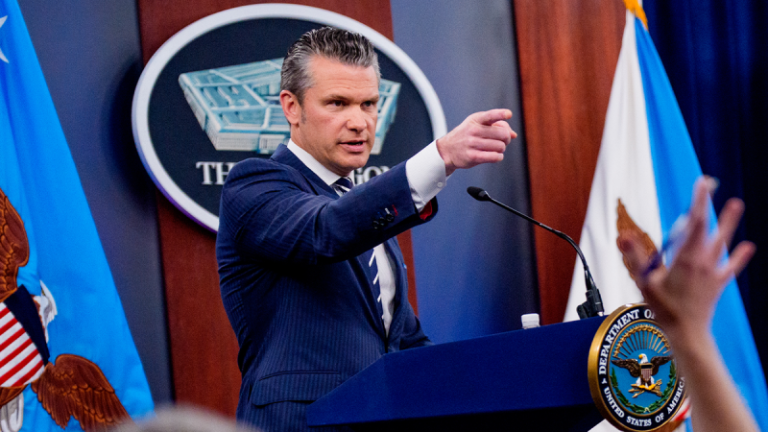
                    War Secretary Pete Hegseth said Wednesday that Iran’s decision to strike neighboring countries has backfired strategically, driving Gulf states that had hoped to stay out of the conflict ‘into the American orbit’ as the U.S. prepares to dramatically increase firepower over Tehran.

                    ‘What Iran is doing by targeting allied countries that would otherwise want to stay out of this, they’ve actually pulled them into the American orbit,’ Hegseth said during a briefing at U.S. Central Command headquarters in Tampa, Florida.

                    He cited the United Arab Emirates, Qatar, Bahrain, Saudi Arabia and Kuwait as countries now offering expanded cooperation, arguing that Tehran’s retaliatory campaign has strengthened regional alignment with Washington rather than weakened it.

                    U.S. military officials say Iran has launched strikes against a growing number of countries in the region since the conflict began, with CENTCOM Commander Adm. Brad Cooper noting Tehran has targeted at least a dozen nations.

                    Rather than isolating the United States, Hegseth suggested Iran’s actions are consolidating support for the campaign.

                    ‘The amount of firepower over Iran and over Tehran is about to surge dramatically,’ he said, pointing to additional base access and increased bomber operations.

                    Hegseth also addressed allied base access, including the United Kingdom’s initial hesitation to grant U.S. forces early access to strategic facilities. He said the issue has since been resolved and that British-controlled bases are now part of the expanding U.S. air campaign.

                    ‘It was unfortunate that … the Brits didn’t, from day one say, ‘Hey, go ahead and have access,’’ he said. ‘But we got there, we got there. And that’s now part of the way that we’re operationalizing bomber runs. … The amount of firepower over Iran and over Tehran is about to surge dramatically, and part of it is that we’re going to have even more basing.’

                    Gulf and Arab governments have publicly condemned Iranian missile and drone strikes on their territories as violations of sovereignty and threats to regional security, while stopping short of criticizing U.S. military action.

                    Saudi Arabia, Qatar, Bahrain, Kuwait, the United Arab Emirates and Jordan issued a joint statement strongly condemning Iran’s ‘indiscriminate and reckless’ missile and drone attacks against sovereign territory in the region, reaffirming their right to self-defense.

                    Regional leaders have framed Iran’s actions as dangerous escalations rather than legitimate retaliation, underscoring a rare moment of unified public opposition among Gulf Cooperation Council members.

                    Beyond the Gulf, Azerbaijan has also protested what it says were Iranian drone strikes on its Nakhchivan exclave, which injured civilians and damaged the international airport. Baku summoned Tehran’s ambassador and said it reserved the right to take retaliatory measures in defense of its territory, even as Tehran denied responsibility for the incident.

                    Some regional analysts say Iran appears to have miscalculated by striking at U.S. assets in third-party nations.

                    ‘It was absolutely inevitable that the Iranians would seek to lash out, to widen the conflict … but all they’ve really done is made everybody quite mad, and that was a really bad calculation on their part,’ said Danielle Pletka, a senior fellow at the American Enterprise Institute.

                    Peter Doran, a senior fellow at the Foundation for Defense of Democracies, noted the shift in regional alignment.

                    ‘It would have been unbelievable just one year ago to see Saudi Arabia and the Gulf states lining up with the United States and Israel against the Islamic Republic,’ he said.

                    Hegseth dismissed suggestions that the war is spiraling outward, arguing that Iran’s actions are instead clarifying the battlefield and strengthening U.S. partnerships.

                    ‘This idea that it’s expanding or going — no,’ he said. ‘It’s actually simplifying in a number of ways exactly what we need to achieve and how we’ll achieve it.’

                    Pentagon officials say U.S. bombers have struck nearly 200 targets in the past 72 hours, destroyed more than 30 Iranian naval vessels and significantly reduced missile and drone attacks since the opening days of the operation.

                    Officials maintain that the campaign’s objectives remain limited to degrading Iran’s ability to threaten Americans and its neighbors, even as the president has suggested he needs to have a say in who becomes Iran’s next leader.

                    ‘I think the president’s having a heck of a say in who runs Iran, given the ongoing operation we have,’ Hegseth said.

                    Related Article

                    The future of war? US-Israel blitz on Iran unveils next-gen allied combat
                    This post appeared first on FOX NEWS

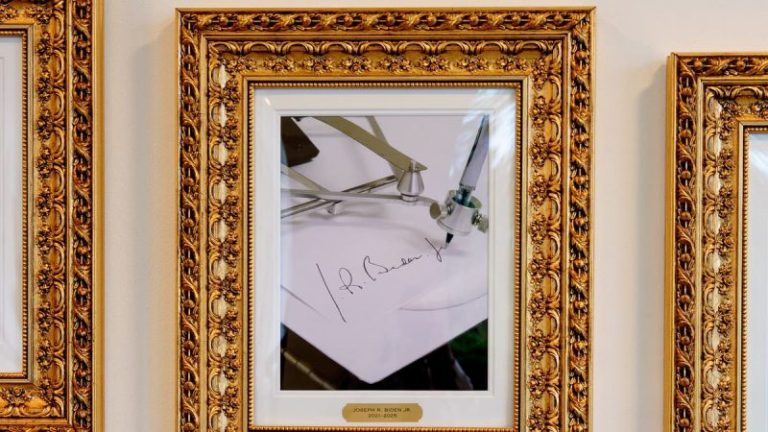
                    The Department of Justice (DOJ) is continuing its investigation into former President Joe Biden’s use of an autopen in the final months of his administration — focusing on pardons and commutations — though a senior official said Biden is unlikely to face criminal exposure.

                    A senior DOJ official told Fox News the autopen investigation is ongoing and not closed, adding investigators are reviewing clemency actions taken in the final months of the Biden administration.

                    The official also pointed out, however, that the use of an autopen by a sitting president is ‘established law.’

                    The issue under review is whether the autopen was used in violation of the law, specifically, whether Biden personally approved each name included on pardon and commutation lists.

                    ‘These types of cases are tough. Executive privilege issues come into play,’ the official said.

                    What is also clear, the official indicated, is that the target of any potential prosecution would not likely be Biden.

                    ‘It’s hard to imagine how [Biden] could be criminally liable for pardon power,’ the senior DOJ official said.

                    The official noted that one reason the former president would be unlikely to face charges stems from a 2024 Supreme Court ruling that originally involved current President Donald Trump but would also apply to Biden.

                    ‘We conclude that under our constitutional structure of separated powers, the nature of Presidential power requires that a former President have some immunity from criminal prosecution for official acts during his tenure in office,’ the Supreme Court ruled in Trump v. United States in 2024. 

                    ‘At least with respect to the President’s exercise of his core constitutional powers, this immunity must be absolute.’

                    Sources familiar with the matter told Fox News Digital that U.S. Attorney Jeanine Pirro’s team continues to review the Biden White House’s reliance on an autopen, contradicting a recent New York Times report that indicated the investigation had been paused.

                    Trump has pushed for consequences over the autopen controversy, alleging on social media that aides acted unlawfully in its use and raising the prospect of perjury charges against Biden.

                    Biden has rejected those claims, saying in a statement last year he personally directed the decisions in question.

                    ‘Let me be clear: I made the decisions during my presidency,’ Biden said. ‘I made the decisions about the pardons, executive orders, legislation and proclamations. Any suggestion that I didn’t is ridiculous and false.’

                    The House Oversight Committee has homed in on Biden’s clemency actions, including five controversial pardons for family members in the final days of his presidency, citing what it described as a lack of ‘contemporaneous documentation’ confirming that Biden directly ordered the pardons.

                    The committee asked the DOJ to investigate ‘all of former President Biden’s executive actions, particularly clemency actions, to assess whether legal action must be taken to void any action that the former president did not, in fact, take himself.’

                    Fox News Digital’s Ashley Oliver contributed to this report.

                    Related Article

                    Top Biden officials questioned and criticized how his team issued pardons, used autopen: report
                    This post appeared first on FOX NEWS

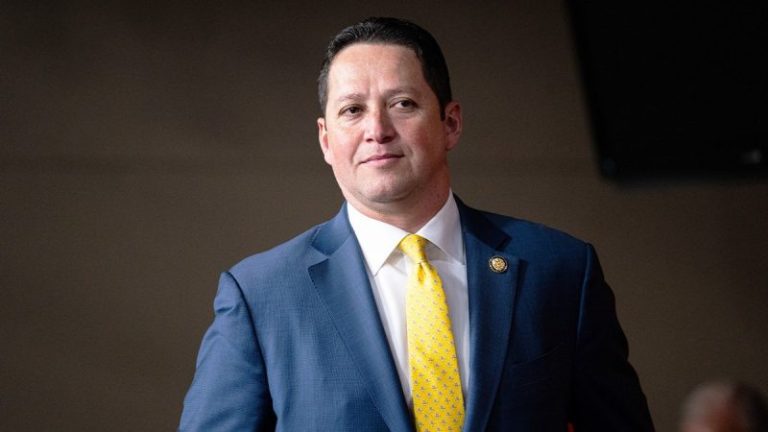
                    Rep. Tony Gonzales, R-Texas, announced Thursday evening he will not seek re-election amid a House Ethics investigation into an affair he admitted to having with a former staffer.

                    Gonzales, a married father of 6, admitted to the affair for the first time on Wednesday – a day after advancing to the GOP primary runoff for his congressional district.

                    ‘At 18, I swore an oath to defend our nation against all enemies, foreign and domestic. During my 20 years in the military and three terms in Congress, I have fought for that cause with absolute dedication to the country that I love,’ Gonzales said in a statement.

                    ‘From overcoming the border crisis to taking a stand with my communities after the worst school shooting in Texas’ history, my philosophy has never changed: do as much as you can, and always fight for the greater good,’ he continued.

                    ‘After deep reflection and with the support of my loving family, I have decided not to seek re-election while serving out the rest of this Congress with the same commitment I’ve always had to my district,’ he added. ‘Through the rest of my term, I will continue fighting for my constituents, for whom I am eternally grateful.

                    Gonzales confessed to the affair during an appearance on a conservative talk radio show one day after advancing to a runoff election in his congressional district’s GOP primary.

                    The House Ethics Committee also launched an investigation into Gonzales on Wednesday to determine if he engaged in sexual misconduct with a female member of his staff and whether he doled out special favors or privileges as a result.

                    Related Article

                    Mike Johnson asks embattled House Republican Tony Gonzales to drop re-election bid
                    This post appeared first on FOX NEWS