Author

admin

Browsing

E-Power Resources Inc. (CSE: EPR) (FSE: 8RO) (‘E-Power’ or the ‘Company’) announces that William Pfaffenberger has retired from the Board of Directors (‘Board’), effective immediately.

The Company wishes to thank Dr. Pfaffenberger for his dedicated service and valuable contributions to the Company, as well as for waiting until a successor was confirmed. We wish him all the best in his retirement.

The company is pleased to announce the appointment of Alexis de la Renaudière to the Board, effective immediately.

Mr. de la Renaudière, until recently, coordinated investor relations at E3 Lithium, leading communications strategy with institutional investors and ensuring compliance with Stock Exchange and NI 43-101 standards. He has extensive experience in investor relations and capital markets, with a focus on small and mid-cap public companies. He served as Managing Director at Peterson Capital, where he was the firm’s top performer, successfully raising over $200 million for multiple companies while expanding the retail advisory network by 300%. His experience includes organizing investor conferences across Canada and Europe, managing relationships with institutional investors and fund managers, and developing comprehensive investor communications programs. His bilingual capabilities and proven track record in capital raising and investor relations will be instrumental in advancing the Company’s growth objectives as well as enhancing shareholder value.

E-Power Stakes Additional Claims at Graphi-Centre

The Company is also pleased to announce the acquisition of 4 additional claims covering favorable airborne survey conductive trends. The new claims are contiguous with Graphi-Centre, a priority flake graphite surface target on the Tetepisca Property.

About E-Power Resources Inc.

E-Power Resources Inc. is an exploration stage company engaged principally in the acquisition, exploration, and development of graphite properties in Quebec. Its flagship asset, the Tetepisca Graphite Property, is located in the Tetepisca Graphite District of the North Shore Region of Quebec, approximately 215 kilometers from the Port of Baie-Comeau. For further information, please refer to the Company’s disclosure record on SEDAR (www.sedarplus.ca) or contact the Company by email at info@e-powerresources.com.

On Behalf of the Company

James Cross
President & CEO
+1 (438) 701-3736
info@e-powerresources.com

Disclaimer for Forward-Looking Information

This news release contains certain forward-looking statements within the meaning of applicable securities laws. All statements that are not historical facts, including without limitation, statements regarding future estimates, plans, programs, forecasts, projections, objectives, assumptions, expectations, or beliefs of future performance are ‘forward-looking statements’. These forward-looking statements reflect the expectations or beliefs of management of the Company based on information currently available to it. Forward-looking statements are subject to a number of risks and uncertainties, including those detailed from time to time in filings made by the Company with securities regulatory authorities, which may cause actual outcomes to differ materially from those discussed in the forward-looking statements. These factors should be considered carefully and readers are cautioned not to place undue reliance on such forward-looking statements. The forward-looking statements and information contained in this news release are made as of the date hereof and the Company undertakes no obligation to update publicly or revise any forward-looking statements or information, whether as a result of new information, future events or otherwise, unless so required by applicable securities laws.

The CSE has not reviewed, approved, or disapproved the contents of this news release.

To view the source version of this press release, please visit https://www.newsfilecorp.com/release/264280

News Provided by Newsfile via QuoteMedia

This post appeared first on investingnews.com

  • 12,000 – 15,000 m diamond drill program to expand gold zones and advance toward a maiden Mineral Resource Estimate at the Kossou Gold Project
  • New strategic advisor appointed to support technical execution and identify regional growth opportunities in Côte d’Ivoire and across West Africa

Kobo Resources Inc. (‘ Kobo ‘ or the ‘ Company ‘) ( TSX.V: KRI ) is pleased to announce that it will commence up to 10,000 – 15,000 metre (‘ m ‘) of diamond drill program at its 100%-owned Kossou Gold Project (‘ Kossou ‘) in Côte d’Ivoire on September 4, 2025, with two diamond drill rigs mobilized to site. In addition, the Company is strengthening its strategic and technical capabilities through the appointment of a highly experienced industry veteran as a consultant and advisor to support its growth initiatives across West Africa.

Edward Gosselin, CEO and Director of Kobo commented: ‘The recommencement of our 2025 diamond drill program at Kossou, comprising between 12,000 – 15,000 m of drilling, marks a meaningful step forward in our strategy to define a compelling gold resource within one of West Africa’s most prospective regions. We’ve built strong momentum through the systematic advancement of multiple zones at the Kossou Gold Project, and this next phase is designed to deepen our understanding of the mineralized system while positioning us for future resource growth.’

He continued: ‘We’re also very pleased to welcome Dr. Clay Postlethwaite as a strategic advisor. His extensive experience in exploration business development and structural geology across Africa will provide valuable insight as we continue to execute our future growth plans. Additionally, the increased interest in our recent financing reflects growing recognition of the opportunity we’re pursuing, both at Kossou and across our broader regional footprint in Côte d’Ivoire.’

Upcoming Drill Program to Advance Resource Definition and Grow Gold Targets at Kossou

The upcoming drill program at Kossou is expected to include between 12,000 – 15,000 m of diamond drilling, targeting key zones of mineralization to build on previous exploration success. The Company will prioritize systematic step-out and deeper drilling at the Jagger Zone to support preliminary resource modelling, while also continuing expansion efforts at the Road Cut Zone and following up along the interpreted structural corridor connecting both targets.

In parallel, the Company plans to advance the Contact Zone with targeted drilling informed by recent structural mapping and begin testing new targets on the western side of the permit, where soil geochemical surveys have identified a strong northwest-trending gold anomaly. This expanded program is designed to support the Company’s goal of advancing toward a maiden Mineral Resource Estimate and unlocking further value across its prospective targets at Kossou.

Appointment of Industry Veteran to Technical Advisory Role

Kobo is also pleased to announce the appointment of Dr. Clay E. Postlethwaite, Ph.D., P.Geo., to the role of Technical Advisor. Dr. Postlethwaite brings over 30 years of exploration and structural geology expertise across North America and Africa, including senior technical and business development roles with Newmont Corporation (‘ Newmont ‘). As Africa/Europe Exploration Business Development Manager at Newmont (2016–2025), he led the identification and evaluation of regional growth opportunities that aligned with Newmont’s development model, assessed exploration upside potential of M&A targets, and developed regional growth strategies. Previously, he served as Chief Geologist–Africa for Newmont Ghana Gold, where he was responsible for technical oversight, geologic modelling, and early-stage project evaluations across West Africa. Dr. Postlethwaite holds a Ph.D. in Structural Geology and has deep familiarity with the structural and orogenic settings of the Birimian belt. He will assist Kobo in identifying and evaluating new regional opportunities and provide strategic technical guidance on the Company’s exploration programs.

Expanding Regional Growth Strategy Across Côte d’Ivoire

In parallel with advancing Kossou, the Company continues to execute on its broader regional exploration strategy, with active field programs underway at both the 100%-owned Kotobi Gold Project (‘ Kotobi ‘) and the Agnibilékrou Gold Project (‘ Agnibilékrou ‘), one of the two recently secured earn-in agreements with NESDAVE MINING SARL (‘ Nesdave ‘) ( see press release dated March 4, 2025 ).

At Kotobi, the Company has completed extensive geochemical coverage to date in 2025, including 2,705 infill and regional-scale soil samples, 46 termite mound samples, and approximately 446 rock, pit, and trench samples across priority target areas. This work is designed to refine target delineation across the project’s most prospective zones.

At Agnibilékrou (permit PR0970), the Company has collected 2,781 soil geochemical samples since July 2025 across a regional-scale grid aimed at identifying anomalous gold trends for future follow-up and prioritization.

AGM Results

The Company held its Annual General Meeting of Shareholders on August 21, 2025, during which all matters presented to shareholders were approved, including the appointment of directors and auditors. The Company appreciates the continued support and engagement of its shareholders.

About Kobo Resources Inc.

Kobo Resources is a growth-focused gold exploration company with a compelling new gold discovery in Côte d’Ivoire, one of West Africa’s most prolific and developing gold districts, hosting several multi-million-ounce gold mines. The Company’s 100%-owned Kossou Gold Project is located approximately 20 km northwest of the capital city of Yamoussoukro and is directly adjacent to one of the region’s largest gold mines with established processing facilities.

With over 18,500 metres of diamond drilling, nearly 5,900 metres of reverse circulation (RC) drilling, and 5,900 metres of trenching completed since 2023, Kobo has made significant progress in defining the scale and prospectivity of its Kossou’s Gold Project . Exploration has focused on multiple high-priority targets within a 9+ km strike length of highly prospective gold-in-soil geochemical anomalies, with drilling confirming extensive mineralisation at the Jagger, Road Cut, and Kadie Zones. The latest phase of drilling has further refined structural controls on gold mineralisation, setting the stage for the next phase of systematic exploration and resource development.

Beyond Kossou , the Company is advancing exploration at its Kotobi Permit and is actively expanding its land position in Côte d’Ivoire with prospective ground, aligning with its strategic vision for long-term growth in-country. Kobo remains committed to identifying and developing new opportunities to enhance its exploration portfolio within highly prospective gold regions of West Africa. Kobo offers investors the exciting combination of high-quality gold prospects led by an experienced leadership team with in-country experience.

Kobo’s common shares trade on the TSX Venture Exchange under the symbol ‘KRI’. For more information, please visit www.koboresources.com .

NEITHER THE TSXV NOR ITS REGULATION SERVICES PROVIDER (AS THAT TERM IS DEFINED IN THE POLICIES OF THE TSXV) ACCEPTS RESPONSIBILITY FOR THE ADEQUACY OR ACCURACY OF THIS RELEASE.

Cautionary Statement on Forward-looking Information:

This news release may contain ‘forward-looking information’ and ‘forward-looking statements’ (collectively, ‘forward-looking statements’) within the meaning of the applicable Canadian securities legislation. All statements, other than statements of historical fact, are forward-looking statements. Any statement that involves discussions with respect to predictions, expectations, beliefs, plans, projections, objectives, assumptions, future events or performance (often but not always using phrases such as ‘expects’, or ‘does not expect’, ‘is expected’, ‘anticipates’ or ‘does not anticipate’, ‘plans’, ‘budget’, ‘scheduled’, ‘forecasts’, ‘estimates’, ‘believes’ or ‘intends’ or variations of such words and phrases or stating that certain actions, events or results ‘may’ or ‘could’, ‘would’, ‘might’ or ‘will’ be taken to occur or be achieved) are not statements of historical fact and may be forward-looking statements, including statements related to the Offering or to the exploration program of the Company. Forward-looking statements are necessarily based upon a number of estimates and assumptions that, while considered reasonable as at the date of this news release, are subject to known and unknown risks, uncertainties, and other factors which may cause the actual results and future events to differ materially from those expressed or implied by such forward-looking statements. Such factors include, but are not limited to: general business, economic, competitive, political and social uncertainties; the inherent risks involved win the exploration and development of mineral properties; unanticipated costs and expenses; the delay or failure to receive board, shareholder or regulatory approvals; and other risk factors listed from time to time in our documents filed with Canadian securities regulators on SEDAR+ at www.sedarplus.ca . There can be no assurance that such statements will prove to be accurate, as actual results and future events could differ materially from those anticipated in such statements. Accordingly, readers should not place undue reliance on the forward-looking statements and information contained in this news release. Except as required by law, Kobo assumes no obligation and/or liability to update the forward-looking statements of beliefs, opinions, projections, or other factors, should they change, except as required by law.

View source version on businesswire.com: https://www.businesswire.com/news/home/20250828979376/en/

For further information, please contact:
Edward Gosselin
Chief Executive Officer and Director
1-418-609-3587
ir@kobores.com

Twitter: @KoboResources | LinkedIn: Kobo Resources Inc.

News Provided by Business Wire via QuoteMedia

This post appeared first on investingnews.com

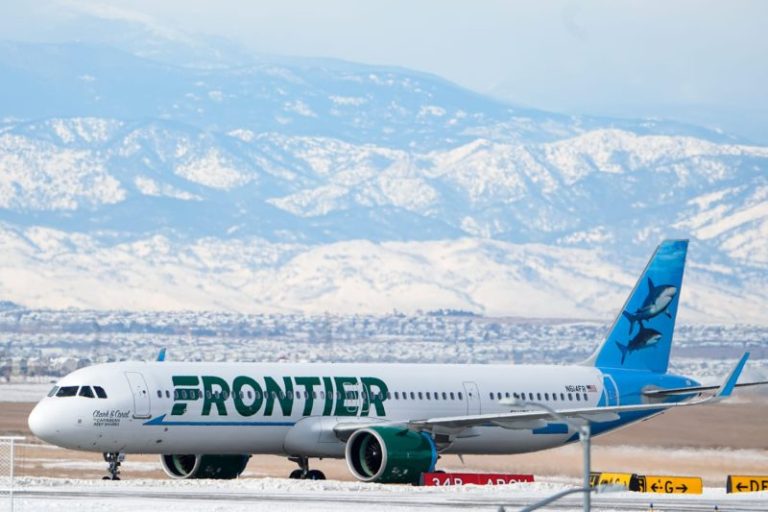
Frontier Airlines is going after customers of Spirit Airlines, whose financial footing has gotten so shaky in recent weeks that it warned earlier this month it might not be able to survive another year without more cash.

Frontier on Tuesday announced 20 routes it plans to start this winter, many of them in major Spirit markets like its base at Fort Lauderdale International Airport in Florida. Frontier overlaps with Spirit on 35% of its capacity, more than any other airline, according to a Monday note from Deutsche Bank airline analyst Michael Linenberg.

Some of Frontier’s new routes from Fort Lauderdale include flights to Detroit, Houston, Chicago and Charlotte, North Carolina. It’s also rolling out routes from Houston to New Orleans; San Pedro Sula, Honduras; and Guatemala City.

Frontier had tried and failed to merge with its budget airline rival several times since 2022.

“I’m not here to talk about M&A,” Frontier CEO Barry Biffle said in an interview with CNBC on Tuesday when asked whether Frontier would buy Spirit. Biffle said he expects that Frontier would pick up the majority of Spirit’s market share if Spirit collapsed.

Both carriers have struggled from changing customer tastes for more upmarket seats and trips abroad, an oversupply of domestic capacity, and higher labor and other costs. Spirit’s situation has become more dire however, after it emerged from four months of bankruptcy protection in March facing many of the same problems.

Ultra-low-cost airlines are also challenged by larger rivals like United Airlines, American Airline and Delta Air Lines that have rolled out their own no-frills basic economy tickets but also offer customers bigger choices of destinations and other perks onboard like snacks and beverages.

Stock prices of rival airlines surged after Spirit’s warning earlier this month.

Biffle said the carrier wants to become the country’s largest budget airline and has rolled out loyalty matching programs to grab more customers. Frontier’s capacity was slightly smaller than Spirit’s in the second quarter, through the latter had slashed its flying by nearly 24% from a year earlier, while Frontier was down only 2%.

Spirit last week said it drew down the entire $275 million of its revolver and while it reached a two-year extension on its credit card processing agreement with U.S. Bank N.A., it agreed that it would hold back up to $3 million a day from the carrier.

The airline lost $245.8 million in the second quarter. Frontier lost $70 million.

Spirit has been looking for ways to slash costs, including furloughing and demoting hundreds more pilots and cutting unprofitable routes. Hundreds of flight attendants are on unpaid leaves of absence.

Spirit CEO Dave Davis said in an Aug. 12 staff memo after its “going concern” warning that “the team and I are confident that we can build a Spirit that will continue to provide consumers the unmatched value that they have come to expect for many years to come.”

The carrier reached a deal with bondholders who agreed to convert debt to equity in its Chapter 11 bankruptcy, but it didn’t cut other costs like renegotiating aircraft leases. Leasing firms have been reaching out to rivals in recent weeks to gauge whether competitors would take any of the Airbus planes that are in Spirit’s hands, according to people familiar with the matter, who asked to speak anonymously because the talks were private.

— CNBC’s Phil LeBeau contributed to this report.

This post appeared first on NBC NEWS

U.S. taxpayers are now the largest shareholders in Intel. What comes next isn’t so clear.

The Trump administration announced Friday that the government had taken a 10% stake in the California-based computer chipmaker, which has fallen behind rivals Nvidia and AMD in the artificial intelligence race. Over the past five years, Intel’s share price has declined more than 50%.

The administration has not provided any details about when or under what circumstances it would sell the Intel shares — or whether it would sell them at all. Nor did it say whether the United States would benefit from any dividends, although Intel has not paid out any since last year. The administration does not plan to take any board seats and has said it will vote against the company only in “limited” circumstances.

While Commerce Secretary Howard Lutnick suggested Friday that national security was a key motivator for taking the stake, President Donald Trump focused Monday more on the prospect of financial gains.

“I will make deals like that for our Country all day long,” Trump said on Truth Social. “I love seeing their stock price go up, making the USA RICHER, AND RICHER. More jobs for America!” he added.

Intel’s shares have climbed about 4% since the transaction was announced. Some experts said that while there is a potential upside to the agreement, it represents another norm-shattering expansion of presidential authority by Trump into the business world — and most likely not the last.

Already, the Trump administration has taken a “golden share” in Japan’s Nippon Steel as part of a deal granting approval to that company’s bid for U.S. Steel and giving the government a say in future Nippon transactions. Last month, the Defense Department announced it had purchased $400 million in rare earth miner MP Materials, making it the company’s largest shareholder. The White House also plans to take a cut of the sales that chipmakers Nvidia and AMD make to China.

Trump told reporters Monday that he hopes to see “many more” deals like Intel’s, adding that nobody “realizes how great it will be.” Kevin Hassett, director of Trump’s National Economic Council, said similar deals could help form the basis of a sovereign wealth fund, an idea that the administration had floated earlier as a way of giving U.S. taxpayers direct stakes in companies but had yet to fully develop.

“At some point there’ll be more transactions, if not in this industry, in other industries,” Hassett said on CNBC.

The U.S. stake in Intel does not amount to a complete government takeover. While the federal government has assumed total control of private corporations before, such incidents have usually happened during times of crisis — and not with the direct intention of trying to play the markets.

“He’s doing all this in a spooky, controversial way,” said Clyde Wayne Marks, a fellow in regulatory studies at the Competitive Enterprise Institute, a libertarian think tank. “Right now there is no crisis.”

President Woodrow Wilson nationalized railroads, as well as the telegraph, telephone, radio and wireless stations, during World War I. Nearly two decades ago, the government bailed out a host of private firms during the 2008-09 global financial crisis.

While the bailout involved holding corporate assets on the U.S. government’s books with the goal of returning earnings to taxpayers, there was never any serious intention to own them over the long term. And a Government Accountability Office study concluded in 2023 that the program ultimately came at a net cost of about $31 billion.

The U.S. government has long provided subsidies to private corporations in the form of loans and grants, to varying degrees of success. Two high-profile examples came during the Obama administration, when the Energy Department provided loans to a solar power company called Solyndra and to electric vehicle maker Tesla. Solyndra ultimately went bankrupt, while today Tesla is worth $1.2 trillion on the stock market.

Some have argued that the United States would have benefited from having taken a stake in Tesla. Yet at the time Tesla received the loan, in 2010, beliefs about the free market and the need to limit the government’s role in it prevailed not just among Republicans, but among Democrats, as well, experts say.

“Our system has not typically been built that way — it’s not how free enterprise is typically run,” said Dan Reicher, a former Energy Department official under Presidents Bill Clinton and Barack Obama. “History has proven that the more free-market approach, making the bottom line the bottom line for the companies running these operations, is a smarter way to go.”

Intel’s fortunes have sagged. Its manufacturing segment lost $3.2 billion in the second quarter, and last month it said it would lay off 15% of its workforce by year’s end while canceling billions in planned investments and delaying the completion date for a $28 billion chip plant near Columbus, Ohio.

In a securities filing Monday, Intel warned investors of the potential risks involved in the U.S. investment, among them that the arrangement may actually limit its ability to secure grants down the road, depending on its future performance. It could also harm international sales and make Intel subject to additional regulations and restrictions, both at home and abroad, it said.

On Monday, Trump was asked whether the Intel investment represented a new way of doing industrial policy.

“Yeah. Sure it is,” Trump said. “I want to try to get as much as I can.”

This post appeared first on NBC NEWS

Google has eliminated more than one-third of its managers overseeing small teams, an executive told employees last week, as the company continues its focus on efficiencies across the organization.

“Right now, we have 35% fewer managers, with fewer direct reports” than at this time a year ago, said Brian Welle, vice president of people analytics and performance, according to audio of an all-hands meeting reviewed by CNBC. “So a lot of fast progress there.”

At the meeting, employees asked Welle and other executives about job security, “internal barriers” and Google’s culture after several recent rounds of layoffs, buyouts and reorganizations.

Welle said the idea is to reduce bureaucracy and run the company more efficiently.

“When we look across our entire leadership population, that’s mangers, directors and VPs, we want them to be a smaller percentage of our overall workforce over time,” he said.

The 35% reduction refers to the number of managers who oversee fewer than three people, according to a person familiar with the matter. Many of those managers stayed with the company as individual contributors, said the person, who asked not to be named because the details are private.

Google CEO Sundar Pichai weighed in at the meeting, reiterating the need for the company “to be more efficient as we scale up so we don’t solve everything with headcount.”

Google eliminated about 6% of its workforce in 2023, and has implemented cuts in various divisions since then. Alphabet finance chief Anat Ashkenazi, who joined the company last year, said in October that she would push cost cuts “a little further.” Google has offered buyouts to employees since January, and the company has slowed hiring, asking employees to do more with less.

Regarding the buyouts, executives at the town hall said that a total of 10 product areas have presented “Voluntary Exit Program” offers. They’ve applied to U.S.-based employees in search, marketing, hardware and people operations teams this year.

Fiona Cicconi, Google’s chief people officer, said at last week’s meeting that between 3% and 5% of employees on those teams have accepted the buyouts.

“This has been actually quite successful,” she said, adding “I think we can continue it.”

Pichai said the company executed the voluntary buyouts after listening to employees, who said they preferred that route to blanket layoffs.

“It’s a lot of work that’s gone into implementing the VEP program, and I’m glad we’ve done it,” Pichai said. “It gives people agency, and I’m glad to see it’s worked out well.”

Cicconi said one of the main reasons employees are taking the buyouts is because they want to take time off from work.

“It’s actually quite interesting to see who’s taking a VEP, and it’s people sort of wanting a career break, sometimes to take care of family members,” she said.

CNBC previously reported that the layoffs hurt morale as the company was downsizing while at the same time issuing blowout earnings and seeing its stock price jump. Alphabet’s shares are up 10% this year after climbing 36% in 2024 and 58% the year prior.

At another point in the town hall, employees asked if Google would consider a policy similar to Meta’s “recharge,” a month-long sabbatical that employees earn after five years at the company.

“We have a lot of leaves, not least our vacation, which is there for exactly that — resting and recharging,” said Alexandra Maddison, Google’s senior director of benefits.

She said the company is not going to offer paid sabbatical.

“We’re very confident that our current offering is competitive,” Maddison said.

Meta didn’t immediately respond to a request for comment.

Other executives jumped in to compare the two companies’ benefits.

“I don’t think they have a VEP at Meta by the way,” Cicconi said.

Pichai then asked, to some laughs from the audience, “Should we incorporate all policies of Meta while we’re at it? Or should we only pick and choose the few policies we like?”

“Maybe I should try running the company with all of Meta’s policies,” he continued. “No, probably not.”

This post appeared first on NBC NEWS

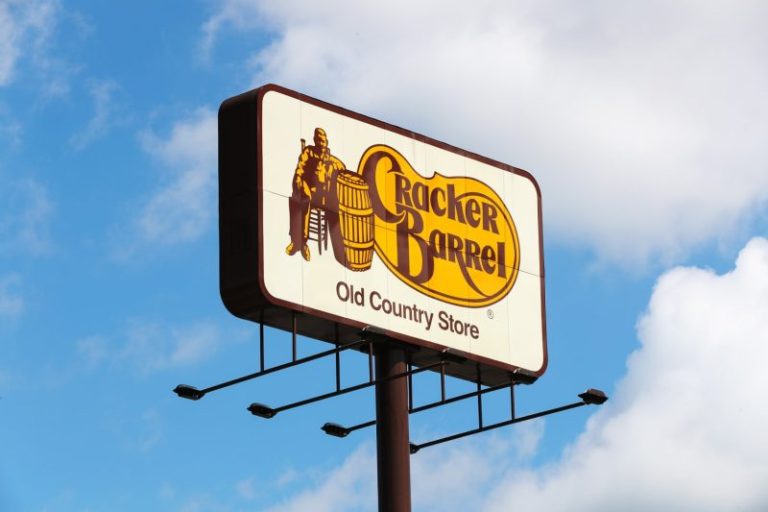
Uncle Herschel is returning to the Cracker Barrel chair.

After online outrage by conservatives who accused the country-themed restaurant chain of changing its values or going “woke” when it rolled out a new logo, the company said Tuesday that it was returning to its old branding.

‘We thank our guests for sharing your voices and love for Cracker Barrel. We said we would listen, and we have. Our new logo is going away and our ‘Old Timer’ will remain,’ Cracker Barrel said on Facebook.

‘At Cracker Barrel, it’s always been — and always will be — about serving up delicious food, warm welcomes, and the kind of country hospitality that feels like family,’ the company said. ‘As a proud American institution, our 70,000 hardworking employees look forward to welcoming you to our table soon.’

The new Cracker Barrel logo on a menu in a restaurant in Homestead, Fla., on Thursday.Joe Raedle / Getty Images file

Cracker Barrel, which has restaurants in 43 states, on Aug. 18 announced its new ‘All the More’ campaign and logo change, which removed the old man perched on a chair and the barrel from Cracker Barrel signs.

The new logo did not go over well in some spheres, and on social media, conservative critics accused the restaurant chain of abandoning its traditional values or of being ‘woke.’

President Donald Trump weighed in on the matter earlier Tuesday, writing on his social media platform, Truth Social, that the company should return to the old logo.

After Cracker Barrel announced the reversal Tuesday, Trump said on the platform: ‘Congratulations ‘Cracker Barrel’ on changing your logo back to what it was. All of your fans very much appreciate it.’ Trump also wished the company good luck.

Paul Weaver / SOPA Images/LightRocket via Getty Images

Taylor Budowich, a deputy White House chief of staff, claimed on X that he’d spoken with people at Cracker Barrel by phone Tuesday about the issue and said, ‘They thanked President Trump for weighing in on the issue of their iconic ‘original’ logo.’

Cracker Barrel did not immediately respond to a request for comment about a White House call.

Shares of Cracker Barrel jumped sharply Tuesday night after it announced the reversal. Since the debut of the new logo on Aug. 18, shares are down nearly 13%.

Cracker Barrel tried to tamp down the controversy Monday by admitting ‘we could’ve done a better job sharing who we are and who we’ll always be’ and issuing reassurances that its values had not changed.

The change was part of a “strategic transformation” that started in 2024 to revitalize the brand, CNBC reported when the new logo was introduced. The company has said that the initiative included ‘refreshing the brand identity’ and making changes to its menu.

Other companies have been met with right-wing outrage for advertising or other business decisions, including when Bud Light had a branded content partnership with transgender TikToker Dylan Mulvaney.

This post appeared first on NBC NEWS

Flowers, succulents and Formula One race cars helped fuel a 12% revenue bump for Lego during the first half of the year.

The company reported a record 34.6 billion Danish kroner, or $5.4 billion, in revenue as part of its biannual earnings report on Wednesday. Operating profit rose 10% year over year to 9 billion Danish kroner, or $1.4 billion, the company said.

“It’s the best first half ever,” Lego CEO Niels Christiansen told CNBC. “It’s a record on revenue, a record on operating profit, it’s a record on net profit. … So, we are very happy.”

The brick maker launched 314 new sets during the first six months of the year, another record high. Lego has steadily added new product to its portfolio, branching out into home decor with wall art sets. It has also added new license partners and released sets tied to animated children’s program “Bluey” and fan-favorite anime “One Piece.”

Up next is a multiyear partnership with Pokemon, due to hit shelves in 2026.

“You can always find something that you really like, the pop culture you’re into or the passion point you have,” Christiansen said. “That works really well.”

In expanding its catalog of product, Lego has also grown its consumer base. Gateways into the brand such as its line of botanicals — plants, flower bouquets and succulents — and its ongoing partnership with Epic Games — which brings Lego to the digital space and elements from the popular video game Fortnite into the physical world — have encouraged newcomers into the brick-building space, Christiansen said.

“Then they figure out what it is and what it does for them, how it kind of allows them to express themselves, but also de-stress and focus on stuff in a different way,” he said. “So botanicals sets turn out to be good at recruiting new consumers into the brand, and then as soon as they build their botanical set, they may move on to building something else.”

Lego opened 24 new stores globally during the first six months of the year. The company has been opening more physical retail locations in areas that, unlike the U.K. and the U.S., did not grow up with the iconic colored bricks. This includes countries such as China and India.

Having brick-and-mortar places where kids and adults can get their hands on Legos and see the available sets has previously helped bolster sales.

This post appeared first on NBC NEWS