Author

admin

Browsing

President Donald Trump on Monday sent an official notification to Congress about the U.S. strikes against Iran, in which he attempted to justify the military action in the now expanding conflict in the Middle East.

In a letter obtained by FOX News, Trump told Senate President Pro Tempore Chuck Grassley, R-Iowa, that ‘no U.S. ground forces were used in these strikes’ and that the mission ‘was planned and executed in a manner designed to minimize civilian casualties, deter future attacks, and neutralize Iran’s malign activities.’

This comes after joint U.S.-Israeli strikes against Iran on Saturday as part of Operation Epic Fury, triggering a response from Tehran and a wider conflict in the region. The strikes killed the Islamic Republic’s Supreme Leader Ali Khamenei and other military leaders.

Trump wrote that it is not yet possible to know the full scope of military operations against Iran and that U.S. forces are prepared to take potential further action.

‘Although the United States desires a quick and enduring peace, not possible at this time to know the full scope and duration of military operations that may be necessary,’ Trump wrote. ‘As such, United States forces remain postured to take further action, as necessary and appropriate, to address further threats and attacks upon the United States or its allies and partners, and ensure the Government of the Islamic Republic of Iran ceases being a threat to the United States, its allies, and the international community.’

‘I directed this military action consistent with my responsibility to protect Americans and United States interests both at home and abroad and in furtherance of United States national security and foreign policy interests,’ he added. ‘I acted pursuant to my constitutional authority as Commander in Chief and Chief Executive to conduct United States foreign relations.’

Trump said he was ‘providing this report as part of my efforts to keep the Congress fully informed, consistent with the War Powers Resolution,’ as some Republican and Democrat lawmakers attempt to restrain the president’s military action, which they affirm is unconstitutional without congressional approval.

The president also accused Iran of being among the largest state sponsors of terrorism in the world and purported that the ‘Iranian regime continues to seek the means to possess and employ nuclear weapons,’ even after the White House said in June that precision strikes at the time ‘obliterated’ Iran’s nuclear enrichment facilities.

‘As I previously communicated to the Congress, Iran remains one of the largest, if not the largest, state-sponsors of terrorism in the world,’ Trump said in the letter on Monday. ‘Despite the success of Operation MIDNIGHT HAMMER, the Iranian regime continues to seek the means to possess and employ nuclear weapons. Its array of ballistic, cruise, anti-ship, and other missiles pose a direct threat to and are attacking United States forces, commercial vessels, and civilians, as well as those of our allies and partners.’

‘Despite my Administration’s repeated efforts to achieve a diplomatic solution to Iran’s malign behavior, the threat to the United States and its allies and partners became untenable,’ he continued.

Fox News’ Tyler Olson contributed to this report.

Related Article

Trump admin warned lawmakers Israel was ‘determined to act with or without us’ before massive Iran strikes
This post appeared first on FOX NEWS

With technology, energy and society set to undergo massive transformations over the next few decades, the mining sector may never have been more important than it is today.

Globally, demand for consumer electronics such as mobile phones, air conditioners and refrigerators is on the rise. Additionally, the energy needs and technological advancement associated with artificial intelligence (AI) and data centers are driving even more demand from commercial sectors.

However, the mining industry has been known for its heavy environmental footprint and complex relationships with local communities. As much of the world pushes towards a greener future, mining companies are increasingly integrating environmental and social responsibility as they operate mines and projects around the world.

In the opening keynote speech at the 2026 Prospectors & Developers Association of Canada convention in Toronto, Vale (NYSE:VALE) CEO Gustavo Pimenta, who joined the company in 2021 following one of the worst mining accidents in Brazil’s history, spoke about these challenges and the importance of addressing them.

Electrification continues driving minerals demand

Since the start of the third millennium, there has been a broad societal shift.

Not only has the Earth’s population exploded from about 6 billion in 2001 to over 8 billion today, but the needs of both developing and developed nations are changing and growing.

Increasingly, the populations in many developing nations are urbanizing, driving demand for the materials necessary to build and modernize the infrastructure, including electricity grids, needed to adequately support them.

Likewise, western desires and demands are also changing. Consumers are driving a transition to low-carbon and sustainable industries, while also moving toward more service- and tech-reliant economies.

These shifts in both developed and developing economies have one thing in common: they are not possible without the mining sector. However, it’s struggling to match the pace of demand growth.

“We’ll have to increase the supply of minerals in general by effect of five to six times, vis-a-vis everything with mining to date,” Pimenta said. He pointed out that without mining, there is no AI and no energy transition.

“Electrification is a massive theme and trend, the electrification of everything, that is driving so much of the copper excitement lately,” he added. However, Pimenta said it isn’t just copper demand that is increasing — he pointed to rising demand for other metals such as nickel, iron and rare earths.

Although demand for these commodities has been high, it’s only recently that more consumers are becoming aware of the important role they play in how electricity is delivered or how mobile phones are made.

For Pimenta, this has led to a disconnect, with NVIDIA (NASDAQ:NVDA) and its US$4.3 trillion market cap exceeding the US$3.8 trillion captured by the top 300 mining companies.

However, he sees some balance returning.

“That is certainly something that is imbalanced, and we started to see a little bit of that rebalance today with money moving away from tech into real, important assets like the commodity assets,” he said.

Evolving economic and environmental strategies for mining

As awareness increases alongside demand, there has been a greater pressure on mining companies to move beyond their checkered pasts and to recognize their own role in creating a sustainable, responsible industry.

Pimenta emphasized this point.

“We can’t just stand and have a conversation where we are telling people, ‘I’m sorry that you have to buy from me.’ We have to go beyond that. We have to move from being essential to something else,” he said.

He noted that his company, Vale, isn’t just focused on its operations in Canada or Brazil; it has operations in 31 countries, and the scope of its responsibility is global.

Pimenta suggested that the future of mining will require a different way of operating, and that some of the needed changes are already being implemented today, citing the adoption of technology and greater automation.

In terms of how Vale is progressing this at its own operations, the company’s use of these technologies led to its Brucutu mine in Brazil being awarded the Shingo prize for operational excellence.

This marked the first time the prize has been awarded to an operation in Latin America.

“That classification shows that moving towards that future not only is the right thing because it’s safe, but also it’s more productive and more efficient. I think we have to make sure we continue to accelerate that,” Pimenta said.

Another area of focus for Pimenta is for Vale to develop what he sees as the workforce of the future.

“They have to be able to deal with AI and find ways to be more productive,” he said. “So there’s a new workforce needed that coexists with the senior, experienced workforce that is already in the companies.”

While automation addresses some core safety and business case aspects of mining’s future, Pimenta also focused on environmental concerns as a central concern. Using the example of Vale’s Carajás operation, he explained how mining companies can offer protection to the lands on which they operate.

The site covers about 800,000 hectares, but because of an agreement it made with the Brazilian government in the 1980s, the company uses only 2 percent of the total area for its mining operations, and preserves everything else.

“What has happened to that area? Everything outside the area we protect has been devastated. We protect with technology, guards, a partnership with the Brazilian Federal Police, and a lot of investment,” Pimenta said.

He acknowledged that mines will impact the environment, and it may seem counterintuitive that companies like Vale can be stewards of the land in ways that governments can’t.

However, Vale’s own past hasn’t been without incident. In 2019, a tailings dam collapsed at its Brumadinho operation, sending 13 million cubic meters of mud and mining waste downstream, killing 272 people.

For his part, Pimenta didn’t shy away from this, and said it forced the company to reassess its operations.

“Today 5 percent of our production is without dams, dry stack infiltration, and that’s the way we will continue to move. We are doing more use of circularity. It’s cheaper, less environmental impact,” he said, noting the use of reprocessing of mine waste to gather more resources.

Additionally, Vale has also been working to reduce its carbon footprint. Pimenta stated that the company had been looking at several ways to do this including using ethanol in its trucks at its Brazilian mines instead of diesel.

However, mines are only one part of the equation for decarbonization, as even more carbon dioxide is emitted during the production of steel.

“The steel industry is still very dependent on fossil fuel, coal, and that’s how most of the production is based. We are working on two main fronts. The first is green solutions, new products that will help our clients to decarbonize,” he said.

One of these solutions is a new iron ore briquette that Pimenta says uses a cold agglomeration process that can reduce the carbon footprint when used in a blast furnace.

The second front Vale is focused on is the development of mega hubs to produce steel in regions that have cheap access to lower-carbon fuels like hydrogen.

Supporting local communities is key

Beyond the economics and the environmental concerns with mining, Pimenta says that mining companies hold social commitments to the communities in which they operate.

“Back in 2021, when I joined the company, we announced a target to lift 500,000 people out of poverty,” he said.

This goal drew a lot of questions from Vale shareholders who asked how much it would cost, and if this meant putting people on payroll. Pimenta explained Vale co-developed a methodology to help them address the specific needs of different communities where they operate.

“Sometimes it’s education, sometimes it’s job opportunities, sometimes they just need to eat to have another day,” he explained. “Today we can measure, we know the social security number of each one of the 52,000 people that, from international standards measurement, have been lifted out of poverty.”

Operations should go beyond mining and making money; they should also contribute positively to the community. If they do so, Pimenta says there could be a shift in how mining companies are perceived. Rather than being pariahs, he hopes they can become welcomed for the value they bring to people.

The company also has the goal of increasing the percentage of women in its workforce. “Diversity is another element that, despite people not talking about it, is important. It was important before, and it continues to be important,” he said.

Investor takeaway

Pimenta addressed early in his keynote that demand for resources is there, but access requires money — it’s started to flow, but he suggested that changing perceptions and approaches within the mining industry is critical.

While there has been a push from some to move away from initiatives like ESG, or diversity, equity and inclusion, the reality is that they’ve permeated the mining industry for a long time now.

Throughout the presentation, Pimenta laid out how these goals have not only become foundational to the way Vale operates, but they can also provide long-term economic benefits to mining companies.

Initiatives, such as greater automation, have made Vale’s operations more efficient, driving cost-effectiveness, while dry tailings have enabled the reprocessing of mining waste and the maximization of output.

Social programs can drive community involvement and help make the operations more desirable to the communities where they operate. This alone has been a bottleneck in permitting in many jurisdictions; if communities welcome mines, it can reduce significant red tape.

Likewise, a diversified workforce can create more jobs in the community while opening the industry to people who haven’t been accepted in the past, helping address another industry challenge: finding new workers.

Securities Disclosure: I, Dean Belder, hold no direct investment interest in any company mentioned in this article.

This post appeared first on investingnews.com

Vice President JD Vance confirmed Monday that negotiations with Iran over its nuclear program collapsed after U.S. officials concluded Tehran’s claims did not ‘pass the smell test,’ prompting President Donald Trump to authorize Operation Epic Fury.

Speaking on ‘Jesse Watters Primetime,’ Vance said U.S. envoys — including Steve Witkoff, Secretary of State Marco Rubio and Jared Kushner — had conducted rounds of ‘deliberate’ talks in Geneva with the Iranian delegation.

The discussions were aimed at curbing Tehran’s nuclear program in exchange for sanctions relief and averting a broader conflict, he said, but ultimately broke down.

‘But the Iranians would come back to us, and they’d say, ‘Well, you know, having enrichment for civilian purposes, for energy purposes, is a matter of national pride,’’ Vance said.

‘And so we would say, ‘OK, that’s interesting, but why are you building your enrichment facilities 70 feet underground? And why are you enriching to a level that’s way beyond civilian enrichment and is only useful if your goal is to build a nuclear bomb?’’ he said.

‘Nobody objects to the Iranians being able to build medical isotopes; the objection is these enrichment facilities that are only useful for building a nuclear weapon,’ Vance clarified.

‘It just doesn’t pass the smell test for you to say that you want enrichment for medical isotopes, while at the same time trying to build a facility 70 to 80 feet underground,’ he explained.

Vance spoke as Operation Epic Fury ended its third day. Launched on Feb. 28, U.S. and Israeli forces carried out coordinated precision strikes deep inside Iran aimed at crippling Tehran’s missile arsenal and nuclear infrastructure.

A key issue had been Iran enriching uranium to high levels, including material around 60% purity — a fraction of weapons-grade but far above limits set under the 2015 nuclear deal — keeping international alarm high over proliferation risks.

‘We destroyed Iran’s ability to build a nuclear weapon during President Trump’s term,’ Vance told Watters. ‘We set them back substantially. But I think the President was looking for the long haul,’ he said.

‘Trump was looking for Iran to make a significant long-term commitment that they would never build a nuclear weapon, that they would not pursue the ability to be on the brink of a nuclear weapon.’

‘He wanted to make sure that Iran could never have a nuclear weapon, and that would require fundamentally a change in mindset from the Iranian regime.’

‘The president is not going to rest until he accomplishes that all-important objective of ensuring that Iran can’t have a nuclear weapon, not just for the next few years, not just because we obliterated Fordow or some other enrichment facility.’

‘There’s just no way that Donald Trump is going to allow this country to get into a multiyear conflict with no clear end in sight and no clear objective,’ Vance added while describing that the administration would prefer to see ‘a friendly regime in Iran, a stable country, a country that’s willing to work with the United States.’

Related Article

Why Trump invoked regime change in attacking Iran, and the media must learn from past mistakes
This post appeared first on FOX NEWS

Blackrock Silver Corp. (TSXV: BRC,OTC:BKRRF) (OTCQX: BKRRF) (FSE: AHZ0) (‘Blackrock’ or the ‘Company’) is pleased to announce the issuance by the Nevada Department of Environmental Protection (NDEP), through the Bureau of Air Pollution Control, the Class II Air Quality and Surface Disturbance Permit (the ‘Permit’) for the Company’s Tonopah West mineral project (‘Tonopah West’) located along the Walker Lane Trend in Nye and Esmeralda Counties, Nevada, USA.

The Permit allows for the disturbance of up to 150 acres (60.7 Hectares) at Tonopah West with appropriate dust control measures and an ongoing program using the best practical methods to prevent particulate matter from becoming airborne. The term of the Permit is five (5) years, which can be extended and modified as Tonopah West moves toward permitting and construction of its proposed exploration decline, test mining and bulk sample extraction programs.

Data collection continues for the hydrogeological and geochemical programs that will form the basis for the Water Pollution Control Permit. Five humidity cells are in process to review acid generating potential of the waste and mineralized lithologies that will be encountered and transported to the surface during the tunneling and construction of the exploration decline including stockpiles for mineralized material mined as part of the bulk sample program.

The hydrogeological program is designed to understand the groundwater dynamics focused on potential flow and volumes to support required management and disposal as needed during the test mining and bulk sample phase of the program. Waste dump, stockpiles and portal entry engineering designs are on schedule and will be completed and used to calculate surface disturbance that will be the cornerstone for the Modification to the Nevada Reclamation Permit. The permitting process is on schedule with all permits anticipated by mid-2027. Once all permits are in hand, the Company will decide when to commence with the exploration decline, test mining and bulk sample extraction programs at Tonopah West.

Qualified Persons

Blackrock’s exploration activities at Tonopah West are conducted and supervised by Mr. William Howald, Executive Chairman of Blackrock. Mr. William Howald, AIPG Certified Professional Geologist #11041, is a Qualified Person as defined under National Instrument 43-101 – Standards of Disclosure for Mineral Projects. He has reviewed and approved the contents of this news release.

About Blackrock Silver Corp.

Blackrock Silver Corp. is an American-focused emerging primary silver developer systematically advancing the high-grade Tonopah West Project, situated in the historic ‘Queen of the Silver Camps’ in a jurisdiction consistently ranked as one of the top mining regions globally. The Company is backstopped by a veteran board and technical team with a proven track record of discovering, financing, and building major precious metal mines in Nevada and globally. Blackrock is committed to establishing a secure, high-margin, domestic supply of silver and gold.

Additional information on Blackrock Silver Corp. can be found on its website at www.blackrocksilver.com and by reviewing its profile on SEDAR+ at www.sedarplus.ca.

Cautionary Note Regarding Forward-Looking Statements and Information

This news release contains ‘forward-looking statements’ and ‘forward-looking information’ (collectively, ‘forward-looking statements‘) within the meaning of Canadian and United States securities legislation, including the United States Private Securities Litigation Reform Act of 1995. All statements, other than statements of historical fact, are forward-looking statements. Forward-looking statements in this news release relate to, among other things: the Company’s strategic plans; the Company’s permitting initiatives at Tonopah West, including the anticipated receipt of all permits by mid-2027; the proposed commencement of an exploration decline, test mining and bulk sample extraction programs at Tonopah West; the Company’s de-risking initiatives at Tonopah West; estimates of mineral resource quantities and qualities; estimates of mineralization from drilling; geological information projected from sampling results; and the potential quantities and grades of the target zones.

These forward-looking statements reflect the Company’s current views with respect to future events and are necessarily based upon a number of assumptions that, while considered reasonable by the Company, are inherently subject to significant operational, business, economic and regulatory uncertainties and contingencies. These assumptions include, among other things: conditions in general economic and financial markets; accuracy of assay results; geological interpretations from drilling results, timing and amount of capital expenditures; performance of available laboratory and other related services; future operating costs; the historical basis for current estimates of potential quantities and grades of target zones; the availability of skilled labour and no labour related disruptions at any of the Company’s operations; no unplanned delays or interruptions in scheduled activities; all necessary permits, licenses and regulatory approvals for operations are received in a timely manner; the ability to secure and maintain title and ownership to properties and the surface rights necessary for operations; and the Company’s ability to comply with environmental, health and safety laws. The foregoing list of assumptions is not exhaustive.

The Company cautions the reader that forward-looking statements involve known and unknown risks, uncertainties and other factors that may cause actual results and developments to differ materially from those expressed or implied by such forward-looking statements contained in this news release and the Company has made assumptions and estimates based on or related to many of these factors. Such factors include, without limitation: the timing and content of work programs; results of exploration activities and development of mineral properties; the interpretation and uncertainties of drilling results and other geological data; receipt, maintenance and security of permits and mineral property titles; environmental and other regulatory risks; project costs overruns or unanticipated costs and expenses; availability of funds; failure to delineate potential quantities and grades of the target zones based on historical data; general market and industry conditions; and those factors identified under the caption ‘Risks Factors’ in the Company’s most recent Annual Information Form.

Forward-looking statements are based on the expectations and opinions of the Company’s management on the date the statements are made. The assumptions used in the preparation of such statements, although considered reasonable at the time of preparation, may prove to be imprecise and, as such, readers are cautioned not to place undue reliance on these forward-looking statements, which speak only as of the date the statements were made. The Company undertakes no obligation to update or revise any forward-looking statements included in this news release if these beliefs, estimates and opinions or other circumstances should change, except as otherwise required by applicable law.

Neither the TSX Venture Exchange nor its Regulation Services Provider (as that term is defined in the policies of the TSX Venture Exchange) accepts responsibility for the adequacy or accuracy of this release.

For Further Information, Contact:

Andrew Pollard
President and Chief Executive Officer
(604) 817-6044
info@blackrocksilver.com

To view the source version of this press release, please visit https://www.newsfilecorp.com/release/286059

News Provided by TMX Newsfile via QuoteMedia

This post appeared first on investingnews.com

CALGARY, AB / ACCESS Newswire / March 3, 2026 / Valeura Energy Inc. (TSX:VLE,OTC:VLERF)(OTCQX:VLERF) (‘Valeura’ or the ‘Company’) acknowledges that Thailand’s Ministry of Energy has, by way of a press release, requested that domestic oil producers cooperate in supporting national energy security in Thailand, in light of disruptions to the normal supply of oil from the Middle East region. This request includes postponing any planned downtime of oil production facilities and temporarily suspending crude oil exports.

Valeura is seeking further clarification from the Ministry of Energy to ensure compliance with the request and to continue supporting Thailand’s economy with domestically-produced energy. Valeura anticipates that this new government action will not interfere with the Company’s ongoing operations in Thailand, and production is continuing as usual and in accordance with Valeura’s high standards for health, safety, and environmental stewardship.

Thailand’s local network of crude oil purchasers constitutes a viable market for Valeura’s crude oil, and includes both refiners and blenders who have direct experience with the Company’s particular crude oil streams. Typically, approximately one third of Valeura’s oil is sold into the domestic Thai market, and from time to time, each of Valeura’s oil streams have been sold within the domestic market.

Thailand is a net importer of oil, with approximately 92% of its daily crude oil requirements coming from foreign sources, predominantly the Middle East region (2025 data, Energy Policy and Planning Office, Ministry of Energy). Thailand has issued similar requests in response to geopolitical developments in the past, to support national energy security by temporarily mandating that domestically-produced petroleum remains within Thailand. Valeura is well-versed in responding to such requests and intends to comply, to support Thailand’s energy needs.

For further information, please contact:

Valeura Energy Inc. (General Corporate Enquiries) +65 6373 6940
Sean Guest, President and CEO
Yacine Ben-Meriem, CFO
Contact@valeuraenergy.com

Valeura Energy Inc. (Investor and Media Enquiries) +1 403 975 6752 / +44 7392 940495
Robin James Martin, Vice President, Communications and Investor Relations
IR@valeuraenergy.com

Contact details for the Company’s advisors, covering research analysts and joint brokers, including Auctus Advisors LLP, Beacon Securities Limited, Canaccord Genuity Ltd (UK), Cormark Securities Inc., Research Capital Corporation, Roth Canada Inc., and Stifel Nicolaus Europe Limited, are listed on the Company’s website at www.valeuraenergy.com/investor-information/analysts/.

About the Company

Valeura Energy Inc. is a Canadian public company engaged in the exploration, development and production of petroleum and natural gas in Thailand and in Türkiye. The Company is pursuing a growth-oriented strategy and intends to re-invest into its producing asset portfolio and to deploy resources toward further organic and inorganic growth in Southeast Asia. Valeura aspires toward value accretive growth for stakeholders while adhering to high standards of environmental, social and governance responsibility.

Additional information relating to Valeura is also available on SEDAR+ at www.sedarplus.ca.

Advisory and Caution Regarding Forward-Looking Information

Certain information included in this news release constitutes forward-looking information under applicable securities legislation. Such forward-looking information is for the purpose of explaining management’s current expectations and plans relating to the future. Readers are cautioned that reliance on such information may not be appropriate for other purposes, such as making investment decisions. Forward-looking information typically contains statements with words such as ‘anticipate’, ‘believe’, ‘expect’, ‘plan’, ‘intend’, ‘estimate’, ‘propose’, ‘project’, ‘target’ or similar words suggesting future outcomes or statements regarding an outlook. Forward-looking information in this news release includes, but is not limited to, the Company’s belief that the new government action will not interfere with the Company’s ongoing operations in Thailand; and the Company’s intent to comply with the government’s request, subject to further clarification.

Forward-looking information is based on management’s current expectations and assumptions regarding, among other things: political stability of the areas in which the Company is operating; continued safety of operations and ability to proceed in a timely manner; continued operations of and approvals forthcoming from governments and regulators in a manner consistent with past conduct; future drilling activity on the required/expected timelines; the prospectivity of the Company’s lands; the continued favourable pricing and operating netbacks across its business; future production rates and associated operating netbacks and cash flow; decline rates; future sources of funding; future economic conditions; the impact of inflation of future costs; future currency exchange rates; interest rates; the ability to meet drilling deadlines and fulfil commitments under licences and leases; future commodity prices; the impact of the Russian invasion of Ukraine; royalty rates and taxes; future capital and other expenditures; the success obtained in drilling new wells and working over existing wellbores; the performance of wells and facilities; the availability of the required capital to funds its exploration, development and other operations, and the ability of the Company to meet its commitments and financial obligations; the ability of the Company to secure adequate processing, transportation, fractionation and storage capacity on acceptable terms; the capacity and reliability of facilities; the application of regulatory requirements respecting abandonment and reclamation; the recoverability of the Company’s reserves and contingent resources; future growth; the sufficiency of budgeted capital expenditures in carrying out planned activities; the impact of increasing competition; the ability to efficiently integrate assets and employees acquired through acquisitions; global energy policies going forward; future debt levels; and the Company’s continued ability to obtain and retain qualified staff and equipment in a timely and cost efficient manner. In addition, the Company’s work programmes and budgets are in part based upon expected agreement among joint venture partners and associated exploration, development and marketing plans and anticipated costs and sales prices, which are subject to change based on, among other things, the actual results of drilling and related activity, availability of drilling, offshore storage and offloading facilities and other specialised oilfield equipment and service providers, changes in partners’ plans and unexpected delays and changes in market conditions. Although the Company believes the expectations and assumptions reflected in such forward-looking information are reasonable, they may prove to be incorrect.

Forward-looking information involves significant known and unknown risks and uncertainties. Exploration, appraisal, and development of oil and natural gas reserves and resources are speculative activities and involve a degree of risk. A number of factors could cause actual results to differ materially from those anticipated by the Company including, but not limited to: the ability of management to execute its business plan or realise anticipated benefits from acquisitions; the risk of disruptions from public health emergencies and/or pandemics; competition for specialised equipment and human resources; the Company’s ability to manage growth; the Company’s ability to manage the costs related to inflation; disruption in supply chains; the risk of currency fluctuations; changes in interest rates, oil and gas prices and netbacks; potential changes in joint venture partner strategies and participation in work programmes; uncertainty regarding the contemplated timelines and costs for work programme execution; the risks of disruption to operations and access to worksites; potential changes in laws and regulations, the uncertainty regarding government and other approvals; counterparty risk; the risk that financing may not be available; risks associated with weather delays and natural disasters; and the risk associated with international activity. See the most recent annual information form and management’s discussion and analysis of the Company for a detailed discussion of the risk factors.

The forward-looking information contained in this new release is made as of the date hereof and the Company undertakes no obligation to update publicly or revise any forward-looking information, whether as a result of new information, future events or otherwise, unless required by applicable securities laws. The forward-looking information contained in this new release is expressly qualified by this cautionary statement.

This news release does not constitute an offer to sell or the solicitation of an offer to buy securities in any jurisdiction, including where such offer would be unlawful. This news release is not for distribution or release, directly or indirectly, in or into the United States, Ireland, the Republic of South Africa or Japan or any other jurisdiction in which its publication or distribution would be unlawful.

Neither the Toronto Stock Exchange nor its Regulation Services Provider (as that term is defined in the policies of the Toronto Stock Exchange) accepts responsibility for the adequacy or accuracy of this news release.

This information is provided by Reach, the non-regulatory press release distribution service of RNS, part of the London Stock Exchange. Terms and conditions relating to the use and distribution of this information may apply. For further information, please contact rns@lseg.com or visit www.rns.com.

SOURCE: Valeura Energy Inc.

View the original press release on ACCESS Newswire

News Provided by ACCESS Newswire via QuoteMedia

This post appeared first on investingnews.com

Proceeds to be used to Accelerate Procurement and Component Assembly for Demonstration Facility Deployment in Iceland

Syntholene Energy CORP. (TSXV: ESAF,OTC:SYNTF) (FSE: 3DD0) (OTCQB: SYNTF) (the ‘Company’ or ‘Syntholene’) is pleased to announce that it has closed its previously announced non-brokered private placement for aggregate gross proceeds of $3,750,000 (the ‘Financing’).

We are thrilled to have successfully closed this financing, which reflects strong investor confidence in Syntholene’s technology and vision,’ said Daniel Sutton, Chief Executive Officer. ‘These proceeds will accelerate the development of our demonstration facility in Iceland as we continue to advance our mission of delivering cost-competitive, carbon-neutral synthetic fuel.’

An aggregate of 8,333,333 units (each, a ‘Unit‘) were issued at a price of $0.45 per Unit pursuant to the Financing, with each Unit comprised of one common share of the Company (a ‘Common Share‘) and one non-transferable common share purchase warrant (a ‘Warrant‘). Each Warrant is exercisable into one additional Common Share at an exercise price of $0.63 for a period of two years from the date of issuance, subject to an acceleration provision whereby the Company may accelerate the expiry date of the Warrants if the daily trading price of the Common Shares equals or exceeds $0.90 on the TSX Venture Exchange for a period of ten consecutive trading days, in which case the Warrants will expire on the 30th day after the date on which notice is given by news release (the ‘Acceleration Provision‘).

Gross proceeds from the Financing are expected to be used toward the procurement and assembly of components for the Company’s planned demonstration facility in Iceland, and toward corporate marketing initiatives, investor relations and working capital.

In connection with the Financing, the Company entered into a fiscal advisory agreement dated February 11, 2026 with Canaccord Genuity Corp. ( ‘Canaccord‘), pursuant to which the Company and Canaccord agreed to extend the right of first refusal under the agency agreement between the Company, Canaccord and other agents dated September 18, 2025 to a period ending 18 months from closing of the Financing, and for the Company to pay certain fees to Canaccord in connection with the Financing. On closing of the Financing, Canaccord was paid a cash commission of $112,032, issued 248,960 non-transferable broker warrants, 111,111 corporate finance shares and 111,111 non-transferrable corporate finance warrants. Each broker warrant is exercisable into one Common Share at $0.45 per share for a period of two years from the date of issuance. Each corporate finance warrant is exercisable into one Common Share at $0.63 per share for a period of two years from the date of issuance, subject to the Acceleration Provision.

In addition, the Company entered into a finders’ fee agreement dated March 2, 2026 with Haywood Securities Inc. (‘Haywood‘), pursuant to which the Company agreed to pay certain fees to the Canaccord in connection with the Financing. On closing of the Financing, Haywood was paid a cash commission of $7,992 and issued 17,760 non-transferrable broker warrants. Each broker warrant is exercisable into one Common Share at $0.45 per share for a period of two years from the date of issuance.

All securities issued pursuant to the Financing are subject to a statutory hold period of four months and one day from the date of issuance, in accordance with applicable securities laws. The securities offered pursuant to the Financing have not been and will not be registered under the United States Securities Act of 1933, as amended, and may not be offered or sold in the United States absent registration or an applicable exemption from the registration requirements. This news release does not constitute an offer to sell or a solicitation of an offer to buy securities in any jurisdiction in which such offer, solicitation or sale would be unlawful.

The Financing constitutes a related party transaction within the meaning of Multilateral Instrument 61-101 – Protection of Minority Security Holders in Special Transactions (‘MI 61-101‘), as certain related parties of the Company participated in the Financing as follows: John Kutsch, director and officer acquired 1,455,556 Units for $655,000, Grant Tanaka, Chief Financial Officer acquired 111,111 Units for $50,000, and Anna Pagliaro, director acquired 22,222 Units for $10,000. Pursuant to Sections 5.5(b) and 5.7(1)(a) of MI 61-101, the Financing is exempt from the requirement to obtain a formal valuation and minority shareholder approval in respect of this transaction as the Company is not listed on the specified markets set out in MI 61-101 and the fair market value of the consideration from the related parties participating in the Financing is not greater than 25% of the market capitalization of the Company. The aforementioned directors disclosed their interest in the Financing to the board of directors of the Company, and the disinterested members of the board approved the Financing and related party transactions under applicable corporate law. In connection with the Financing, each investor in the Financing entered into a standard form of subscription agreement with the Company containing customary terms for a private placement of the nature of the Financing. The Company did not file a material change report in respect of the Financing at least 21 days before the closing of the Financing, which the Company deems reasonable in the circumstances in order to complete the Financing in an expeditious manner.

Early Warning Disclosure – Acquisition by John Kutsch

John Kutsch, a director of the Company, acquired 1,455,556 Units pursuant to the Financing for aggregate consideration of $655,000 representing a price of $0.45 per Unit. Immediately prior to closing of the Financing, Mr. Kutsch beneficially owned, directly or indirectly, 15,583,467 Common Shares, 543,400 Options, 100,000 RSUs and 2,386,755 deferred consideration shares (‘DCSs‘), representing approximately 22.6% of the issued and outstanding Common Shares on a non-diluted basis and, assuming the settlement of all RSUs into Common Shares, exercise of all Options into Common Shares and issuance of all DCSs, approximately 25.86% of the issued and outstanding Common Shares on a partially diluted basis. Immediately following closing of the Financing, Mr. Kutsch beneficially owns, directly or indirectly, 17,039,023 Common Shares, 543,400 Options, 100,000 RSUs, 2,386,755 DCSs and 1,455,556 Warrants, representing approximately 21.96% of the issued and outstanding Common Shares on a non-diluted basis and, assuming the settlement of all RSUs into Common Shares, exercise of all Options and Warrants into Common Shares and issuance of all DCSs, approximately 26.23% of the issued and outstanding Common Shares on a partially diluted basis. The Common Shares held by Mr. Kutsch are held for investment purposes and were acquired for investment. Mr. Kutsch has a long-term view of the investment and may acquire additional securities of the Company either on the open market, through private acquisitions or as compensation or sell the securities on the open market or through private dispositions in the future depending on market conditions, general economic and industry conditions, the Company’s business and financial condition, reformulation of plans and/or other relevant factors. Certain securities held by Mr. Kutsch as subject to Tier 2 escrow in accordance with TSXV policies, as described in the Filing Statement dated November 30, 2025, a copy of which is filed on the Company’s profile on SEDAR+.

A copy of John Kutsch’s early warning report will be filed on the Company’s profile on SEDAR+ (www.sedarplus.ca) and may also be requested by mail at Syntholene Energy Corp. Suite 1723, 595 Burrard Street, Vancouver, BC V7X 1J1, Attention: Corporate Secretary or phone at 604-684-6730.

About Syntholene

Syntholene is actively commercializing its novel Hybrid Thermal Production System for low-cost clean fuel synthesis. The target output is ultrapure synthetic jet fuel, manufactured at 70% lower cost than the nearest competing technology today. The company’s mission is to deliver the world’s first truly high-performance, low-cost, and carbon-neutral synthetic fuel at an industrial scale, unlocking the potential to produce clean synthetic fuel at lower cost than fossil fuels, for the first time.

Syntholene’s power-to-liquid strategy harnesses thermal energy to power proprietary integrations of hydrogen production and fuel synthesis. Syntholene has secured 20MW of dedicated energy to support the Company’s upcoming demonstration facility and commercial scale-up.

Founded by experienced operators across advanced energy infrastructure, nuclear technology, low-emissions steel refining, process engineering, and capital markets, Syntholene aims to be the first team to deliver a scalable modular production platform for cost-competitive synthetic fuel, thus accelerating the commercialization of carbon-neutral eFuels across global markets.

For further information, please contact:
Dan Sutton, CEO
comms@syntholene.com
www.syntholene.com
+1 608-305-4835

Investor Relations
KIN Communications Inc.
604-684-6730
ESAF@kincommunications.com

Neither TSX Venture Exchange nor its Regulation Services Provider (as that term is defined in policies of the TSX Venture Exchange) accepts responsibility for the adequacy or accuracy of this release.

Forward-Looking Statements

This press release contains forward-looking statements within the meaning of applicable securities laws. The use of any of the words ‘expect’, ‘anticipate’, ‘aims’, ‘continue’, ‘estimate’, ‘objective’, ‘may’, ‘will’, ‘project’, ‘should’, ‘believe’, ‘plans’, ‘intends’ and similar expressions are intended to identify forward-looking information or statements. All statements, other than statements of historical fact, including but not limited to statements regarding the proposed use of proceeds of the Financing, development of the test facility, commercial scalability, technical and economic viability, anticipated geothermal power availability, anticipated benefit of eFuel, and future commercial opportunities, are forward-looking statements.

The forward-looking statements and information are based on certain key expectations and assumptions made by the Company, including without limitation the assumption that the Company will be able to execute its business plan, including that it will use the proceeds of the Financing, if any, as described herein, that the Company will be able to advance its planned test facility, that the eFuel will have its expected benefits, that there will be market adoption, and that the Company will be able to access financing as needed to fund its business plan. Although the Company believes that the expectations and assumptions on which such forward-looking statements and information are based are reasonable, undue reliance should not be placed on the forward-looking statements and information because the Company can give no assurance that they will prove to be correct. Since forward-looking statements and information address future events and conditions, by their very nature, they involve inherent risks and uncertainties.

Actual results could differ materially from those currently anticipated due to a number of factors and risks, including, without limitation, Syntholene’s ability to meet production targets, realize projected economic benefits, overcome technical challenges, secure financing, maintain regulatory compliance, manage geopolitical risks, and successfully negotiate definitive terms. Syntholene does not undertake any obligation to update or revise these forward-looking statements, except as required by applicable securities laws.

Readers are advised to exercise caution and not to place undue reliance on these forward-looking statements.

NOT FOR DISSEMINATION IN THE UNITED STATES OR THROUGH U.S. NEWSWIRE SERVICES

To view the source version of this press release, please visit https://www.newsfilecorp.com/release/286066


News Provided by TMX Newsfile via QuoteMedia

This post appeared first on investingnews.com

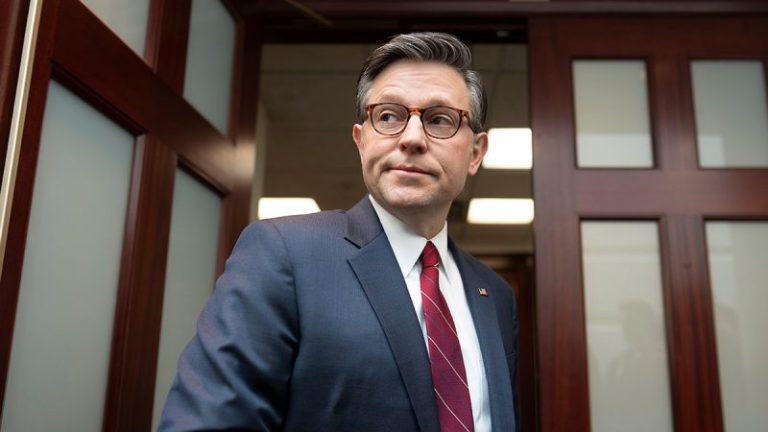
Several House Republicans are pushing Speaker Mike Johnson, R-La., to go to war with the Senate GOP over an election security bill that has little chance of passing the upper chamber under current circumstances.

House GOP leaders convened a lawmaker-only call on Sunday in the wake of a massive military operation against Iran launched by the U.S. and Israel.

After leaders briefed House Republicans on how the chamber would respond to the ongoing conflict — including a vote on ending Democrats’ weeks-long government shutdown targeting the Department of Homeland Security (DHS) — Fox News Digital was told that several lawmakers raised concerns about the Senate not yet taking up the Safeguarding American Voter Eligiblity (SAVE America) Act. Among other provisions, the act would require voters in federal elections to produce valid ID and proof of citizenship.

Rep. Derrick Van Orden, R-Wis., was among those pushing the House to reject any bills from the Senate until the measure was taken up, telling Johnson according to multiple sources on the call, ‘If we don’t get this done, or at least show that we’ve got some backbone, we’re done. The midterms are over.’

At least three other House Republicans shared similar concerns. Sources on the call said Rep. Brandon Gill, R-Texas, argued that GOP voters were ‘not enthused’ heading into November and that ‘the single biggest thing’ to turn that around would be forcing the Senate to pass the SAVE America Act.

The SAVE America Act passed the House last month with support from all Republicans and just one Democrat, Rep. Henry Cuellar, D-Texas.

Republicans have pointed out on multiple occasions that voter ID measures have bipartisan support across multiple public polls and surveys. But Democrats have dismissed the legislation as an attempt at voter suppression ahead of the 2026 midterms.

The legislation would require 60 votes in the Senate to break filibuster, which it’s likely not to get given Democrats’ near-uniform opposition. But House Republicans have pressured Senate Majority Leader John Thune to use a mechanism known as a standing filibuster to circumvent that — which Thune has signaled opposition to, given the vast amount of time it would take up in the Senate and potential unintended consequences in the amendment process.

It also comes as Congress grapples with the fallout from the strikes on Iran and the need to ensure safety for the U.S. domestically and for service members abroad, both of which will require close coordination between the two chambers.

Johnson told Republicans several times on the Sunday call that he was privately pressuring Thune on the bill but was wary of creating a public rift with his fellow GOP leader, sources said.

‘If we’re going to go to war against our own party in the Senate, there may be implications to that,’ Johnson said at one point, according to people on the call. ‘So we want to be thoughtful and careful.’

At another point in the call, sources said Rep. Andrew Clyde, R-Ga., suggested pairing a coming vote on DHS funding with the SAVE America Act in order to force the Senate to take it up.

But both Johnson and House Homeland Security Committee Chairman Andrew Garbarino, R-N.Y., were hesitant about such a move given the enhanced threat environment in the wake of the U.S. operation in Iran.

Both spoke out in favor of the SAVE America Act, people told Fox News Digital, but warned the current situation merited leaving the DHS funding bill on its own in a bid to end the partial shutdown, so the department could fully function as a national security shield.

Related Article

Sen Lee dares Democrats to revive talking filibuster over SAVE Act, slamming criticism as ‘paranoid fantasy’
This post appeared first on FOX NEWS

Most congressional precedents emanate from Capitol Hill.

Most presidential precedents emerge from 1600 Pennsylvania Ave.

But a precedent which may echo around the halls of Congress and the White House for years materialized in recent days in the snow-covered, wooded village of Chappaqua, New York.

That’s where former President Bill Clinton testified under subpoena to the House Oversight Committee as part of its investigation into Jeffrey Epstein. Lawmakers said the panel’s ability to compel testimony from a former president could establish a new precedent going forward — including in matters involving President Trump and the Epstein files.

According to congressional historians, never before has a congressional committee deposed a former president. It was rare enough to have former First Lady and former Secretary of State Hillary Clinton testify the day before. Republicans noted that former President Clinton had previously acknowledged knowing Epstein and traveling on trips that included him.

‘I do not recall ever encountering Mr. Epstein. I never flew on his plane or visited his island, homes or offices,’ said Hillary Clinton after nearly six hours of closed-door testimony before the panel.

House Oversight Committee Chairman James Comer, R-Ky., said Hillary Clinton declared ‘‘You’ll have to ask my husband,’’ more than ‘a dozen’ times during her deposition ahead of Bill Clinton’s the following day.

There are no accusations of wrongdoing against either of the Clintons in connection with Epstein. But the former president’s past ties to Jeffrey Epstein have spurred questions from lawmakers.

‘It’s very difficult to get people in for these depositions of great power and great wealth,’ said Comer. ‘It took seven months, seven months to get the Clintons in here. But we’ve got them in here.’

‘Here’ was Chappaqua, about an hour north of New York City. The Clintons have resided in Chappaqua since President Clinton left office in 2001 and when Hillary Clinton ran for Senate from New York in 2000. Hillary Clinton served as a senator from New York from 2001 until 2009, when she became President Obama’s first Secretary of State.

More specifically, the ‘here’ for the Clintons’ testimony was not a bland office in the Rayburn House Office Building. House members questioned the Clintons at the Chappaqua Performing Arts Center, known locally as ‘ChappPAC,’ a white structure with simple arcades and Greek columns atop a hillside above the Saw Mill River.

The Epstein inquiry is serious, and the unusual venue underscored the extraordinary nature of the proceeding.

Rep. Lauren Boebert, R-Colo., appeared to snap a photo of Hillary Clinton during the deposition, then shared it with conservative media outlets.

‘I admire (Hillary Clinton’s) blue suit. So I wanted to capture that for everyone,’ said Boebert outside the venue.

‘Why did you send the picture?’ asked a reporter.

‘Why not?’ retorted Boebert.

‘We are sitting through an incredibly unserious, clown show of a deposition, where Members of Congress and the Republican Party are more concerned about getting their photo op of Secretary Clinton than actually getting to the truth and actually holding anyone accountable,’ charged Rep. Yassamin Ansari, D-Ariz.

After concluding her testimony, Hillary Clinton told reporters she found the ‘end’ of the deposition to be ‘quite unusual because I started being asked about UFOs and a series of questions about Pizzagate, one of the most vile, bogus conspiracy theories that was propagated on the internet.’

That is a reference to a conspiracy theory that emerged during the 2016 presidential campaign between Hillary Clinton and President Trump. Proponents falsely claimed Democrats operated a child sex trafficking ring out of the Comet Ping Pong pizza shop in Washington. A North Carolina man later drove to Washington, D.C., and fired shots inside the restaurant, telling authorities he was there to rescue children.

Rep. Nancy Mace, R-N.C., asserted that Hillary Clinton was ‘screaming’ at lawmakers during the deposition.

‘She was unhinged,’ said Mace. ‘And I hope that President Clinton is less unhinged today than his wife was yesterday.’

Rep. Anna Paulina Luna, R-Fla., emerged from the Chappaqua Performing Arts Center about 90 minutes into former President Clinton’s deposition to speculate about what may have been behind Epstein and his sex trafficking operation. Luna noted she was speaking only for herself and not other members of the committee.

‘It has become very evident even in the last 24 hours in lines of questioning that Jeffrey Epstein was running an intelligence gathering operation,’ said Luna. ‘I do believe it was a honey pot operation.’

Luna added that it was possible a U.S. intelligence ally was involved, though she provided no evidence for the claim.

One of the five agreed-upon areas of questioning for the Clintons was how Epstein used his connections with powerful figures to hide his crimes. That is why individuals such as former President Clinton and President Trump have surfaced in previously released Epstein-related documents.

The presidency is a unique office, and even President Trump expressed some sympathy for Bill Clinton’s appearance before the Oversight Committee.

‘I don’t like seeing him deposed. But they certainly went after me a lot more than that,’ said the president.

When pressed on Friday, President Trump said he was unfamiliar with the Epstein files.

‘I don’t know anything about the Epstein files. I’ve been totally exonerated,’ said President Trump.

Oversight Committee Republicans were asked whether they agreed with that claim.

‘From all the evidence I’ve seen he’s been exonerated for a long time,’ replied Comer.

‘The Epstein victims have exonerated President Trump. This is a trope that you guys are — a rabbit hole you guys are going down. But he’s been exonerated over and over again by Epstein victims,’ said Mace.

But Democrats questioned why the committee sought testimony from former President Clinton and not President Trump.

‘There is a lot of email correspondence that included President Clinton,’ said Comer.

Rep. Robert Garcia, D-Calif., the top Democrat on the Oversight panel, argued the move set a broader standard.

‘There’s a precedent now,’ said Garcia. ‘We now want President Trump to come in and to testify under oath in front of the Oversight Committee. We want the First Lady, who we know had a relationship as well with Jeffrey Epstein, to come under oath and testify to the Oversight Committee. That is the new precedent that Republicans wanted to set here.’

Garcia added that President Trump ‘has not been exonerated, and we have serious questions for President Trump.’

Rep. Suhas Subramanyam, D-Va., argued that the committee spoke ‘to the wrong president.’

It is unclear whether the panel will seek testimony from President Trump. Democrats have indicated they would consider doing so if they gain control of the House in the fall midterm elections.

Separation of powers is a key component of America’s constitutional system. Only a handful of presidents have ever testified before Congress — and none had previously been deposed as a former president.

The nation’s history includes small communities that have taken on outsized political significance. Lawmakers and legal observers say Chappaqua could now join that list if presidential testimony before Congress becomes more common.

Related Article

Why keeping lawmakers in DC during shutdown may have caused more harm than good
This post appeared first on FOX NEWS

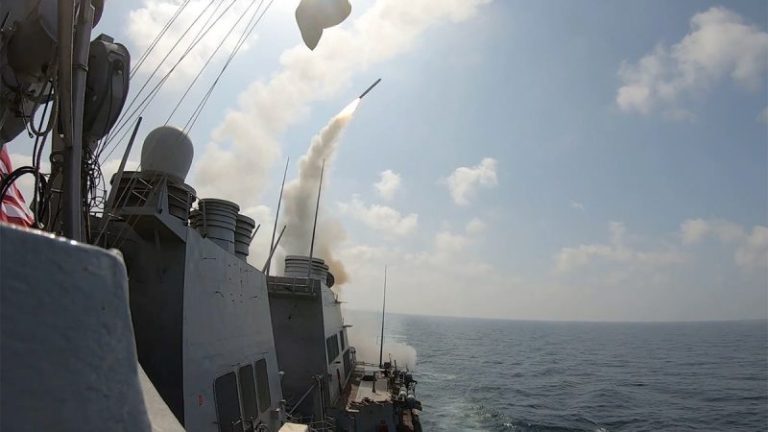
U.S. forces launched a sweeping military assault on Iranian targets on Saturday, unleashing overwhelming air, sea and missile power in a coordinated operation with Israel.

The mission — dubbed ‘Operation Epic Fury’ — began at 1:15 a.m. and struck more than 1,000 sites across Iran within its first 24 hours, according to U.S. Central Command (CENTCOM). Iranian Supreme Leader Ali Khamenei and dozens of senior regime officials were eliminated in the strikes.

The barrage featured B-2 stealth bombers, F-22 and F-16 fighter jets, A-10 attack aircraft, EA-18G electronic warfare planes, and an array of airborne early warning and communications platforms, CENTCOM said.

Missile defense systems, including Patriot interceptors and THAAD anti-ballistic missile defenses, were deployed as part of the operation.

Other assets included RC-135 reconnaissance aircraft, MQ-9 Reaper drones, HIMARS rocket systems, nuclear-powered aircraft carriers, guided-missile destroyers, refueling tankers, and C-17 and C-130 transport aircraft, CENTCOM said.

The command also released images of Tomahawk cruise missiles, as well as F-18 and F-35 fighter jets roaring into combat, according to Reuters.

CENTCOM additionally confirmed it deployed one-way attack drones in combat for the first time.

The Low-Cost Unmanned Combat Attack System — known as LUCAS — is modeled after Iran’s Shahed drones.

‘CENTCOM’s Task Force Scorpion Strike — for the first time in history — is using one-way attack drones in combat during Operation Epic Fury,’ CENTCOM wrote on X. ‘These low-cost drones, modeled after Iran’s Shahed drones, are now delivering American-made retribution.’

Developed by Arizona-based engineering firm SpektreWorks, the LUCAS drone can be launched from catapults, vehicles or mobile ground platforms, according to Business Insider. 

The drones cost roughly $35,000 each, Reuters reported.

The strikes targeted command and control centers, the Islamic Revolutionary Guard Corps (IRGC) Joint Headquarters and Aerospace Forces Headquarters, integrated air defense systems, ballistic missile sites, Iranian Navy ships and submarines, anti-ship missile sites and military communications infrastructure, according to CENTCOM.

Iran retaliated by launching waves of missiles across the Middle East, targeting major U.S. bases in Qatar, Bahrain, Kuwait and the United Arab Emirates, Business Insider reported.

Three U.S. service members were killed and five others were ‘seriously wounded’ as part of Operation Epic Fury, CENTCOM said Sunday morning. The joint military operation is expected to carry on for days.

CENTCOM did not immediately respond to Fox News Digital’s request for comment.

Reuters and Fox News Digital’s Michael Dorgan contributed to this report.

Related Article

Sustained war with Iran could drain US missile stockpiles, test escalation control
This post appeared first on FOX NEWS

The Strait of Hormuz region became a flashpoint Sunday after U.S.-Israeli strikes on Iran under Operation Epic Fury triggered electronic warfare activity and multiple ‘attacks’ on vessels along one of the world’s most critical energy waterways, according to reports.

The sudden escalation followed a Feb. 28 warning from U.S. maritime authorities urging commercial vessels to avoid strategic waterways if possible, including the Persian Gulf, Gulf of Oman and Arabian Sea, citing heightened security risks.

‘It is recommended that vessels keep clear of this area if possible,’ the advisory warned.

‘The Persian Gulf, Strait of Hormuz and adjacent waters are the most dangerous place right now for commercial shipping,’ Jakob P. Larsen, head of maritime security at BIMCO, told Fox News Digital.

‘Ships in the Persian Gulf are under threat from Iranian attacks,’ Larsen said.

‘To protect themselves, most ships stay as far away from Iran as they can,’ he added before describing how ships are ‘trying to depart from the Persian Gulf to get away from the threat.’

The United Kingdom Maritime Trade Operations (UKMTO) and regional authorities reported multiple maritime incidents listed as ‘attacks’ Sunday.

One vessel west of Sharjah, UAE, was rocked by an explosion from an unknown projectile that detonated close alongside, and another tanker north of Muscat, Oman, was struck above the waterline, sparking a fire that was later brought under control, according to data.

A third vessel northwest of Mina Saqr, UAE, was also hit by a projectile that ignited a blaze aboard, the organization reported.

Compounding the physical threats is a surge in electronic warfare with maritime intelligence firm Windward reporting widespread GPS and Automatic Identification System (AIS) interference, impacting 1,000-plus ships.

Windward cited widespread navigation disruption near Iran’s Bandar Abbas port, with ships falsely appearing at airports, a nuclear power plant and inland locations.

Several new AIS jamming clusters were also identified across Emirati, Qatari, Omani and Iranian waters, Windward said.

Major shipping company Maersk announced it would reroute some services away from the region, citing crew and cargo safety.

Roughly 20% of global oil and gas exports pass through the Strait, and traffic has already thinned, with some tankers reversing course or switching off AIS signals.

Industry groups also warned of Houthi retaliation in the Red Sea and Gulf of Aden, while analysts cautioned that Iran could seize vessels tied to U.S. or Israeli interests.

‘The Houthis have threatened to resume attacks on ships in the Red Sea, Bab el-Mandeb Strait and Gulf of Aden,’ Larsen explained.

Ships with business connections to U.S. or Israeli interests are considered more likely targets, though others could be struck deliberately or in error, he said.

Tanker owners’ association Intertanko also warned members that ‘the expectation is that the Houthis may respond and recommence attacks on shipping,’ although immediate intelligence remained unclear.

‘There are no signs of Iranian attempts to close the Strait with sea mines or naval mines, although this can change at short notice,’ Larsen added before confirming that GPS interference has ‘increased significantly following the initiation of hostilities.’

Related Article

Historic US-Israel strikes on Iran underway as Tehran faces regime survival test
This post appeared first on FOX NEWS