
Author

admin

Browsing

TSX-V: WLR

Frankfurt: 6YL

 Walker Lane Resources Ltd. (TSXV: WLR,OTC:CMCXF) (Frankfurt: 6YL) (the ‘Company’) announces that the Company continues to work diligently toward the completion and filing of the Company’s annual audited financial statements and management’s discussion and analysis for the fiscal year ended September 30, 2025 (the ‘Required Filings’). The Company is actively working on various strategies that they expect will resolve the preparation of the Required Filings as quickly as possible.

The Required Filings are due to be filed by March 30, 2025. In connection with the anticipated delays in making the Required Filings, the Company made an application for a Management Cease Trade Order (‘MCTO‘) under NP 12-203 to the BC Securities Commission, as principal regulator for the Company, and the MCTO was issued on January 29, 2026. The MCTO restricts all trading by the Company’s CEO and CFO in securities of the Company, whether direct or indirect. The MCTO does not affect the ability of persons who are not directors, officers or insiders of the Company to trade their securities. The MCTO will remain in effect until the Required Filings are filed or until it is revoked or varied.

The Company expects to proceed with the filing of its interim first-quarter financial statements shortly after the Required Filings have been completed and submitted.

The Company confirms that it intends to satisfy the provisions of the alternative information guidelines described in NP 12-203 by issuing bi-weekly default status reports in the form of a news release until it meets the Required Filings requirement. The Company has not taken any steps towards any insolvency proceeding and the Company has no material information relating to its affairs that has not been generally disclosed.

About Walker Lane Resources Ltd.

Walker Lane Resources Ltd. is a growth-stage exploration company focused on the exploration of high-grade gold, silver and polymetallic deposits in the Walker Lane Gold Trend District in Nevada and the Rancheria Silver District in Yukon/B.C. and other property assets in Yukon. The Company intends to initiate an aggressive exploration program to advance its projects through drilling programs with the aim of achieving resource definition in the near future.

For more information, please consult the Company’s filings, available at www.sedarplus.ca.

ON BEHALF OF THE BOARD OF DIRECTORS

Kevin Brewer
President, CEO and Director
Walker Lane Resources Ltd.

Forward Looking Statements

This news release contains certain statements that constitute ‘forward looking information under Canadian securities laws (‘forward-looking statements’). The use of words such as ‘anticipates’, ‘expected’, ‘projected’, ‘pursuing’, ‘plans’ and similar expressions identify forward-looking statements. Forward-looking statements in this news release include statements regarding the application for the MCTO and the completion of the Required Filings and the timing thereof. Since forward-looking statements address future events and conditions, by their very nature they involve inherent risks and uncertainties. Many factors could cause actual future events to differ materially from the forward-looking statements in this press release. The forward-looking statements included in this news release are expressly qualified by this cautionary statement. The forward-looking statements and information contained in this news release are made as of the date hereof and the Company undertakes no obligation to update publicly or revise any forward-looking statements or information, whether as a result of new information, future events or otherwise, unless so required by applicable laws. The reader is cautioned not to place undue reliance on forward-looking statements.

SOURCE Walker Lane Resources Ltd

View original content to download multimedia: http://www.newswire.ca/en/releases/archive/February2026/13/c0056.html

News Provided by Canada Newswire via QuoteMedia

This post appeared first on investingnews.com

Albemarle (NYSE:ALB) is raising its long-term lithium demand outlook after a breakout year for stationary energy storage, underscoring a shift in the battery materials market that is no longer driven solely by electric vehicles.

The US-based lithium major reported fourth quarter 2025 net sales of US$1.4 billion, up 16 percent year-over-year, with adjusted EBITDA rising 7 percent to US$269 million.

For the full year, Albemarle delivered US$5.1 billion in revenue and US$1.1 billion in adjusted EBITDA, results that CEO Kent Masters said were supported by “strong growth in energy storage and significant cost and productivity improvements.”

But the most consequential update came in the company’s demand outlook.

“We are seeing a diversification of lithium end markets, with stationary storage becoming an increasingly significant demand driver,” Masters told investors during a February 12 conference call, adding that Albemarle has increased its 2030 global lithium demand forecast by 10 percent to a range of 2.8 million to 3.6 million metric tons.

Storage steps into the spotlight

Global lithium demand reached 1.6 million metric tons in 2025, up more than 30 percent year-over-year and in line with Albemarle’s prior projections. Demand growth outpaced supply, tightening inventories and lifting prices into year-end.

For 2026, Albemarle now expects global lithium demand to rise to between 1.8 million and 2.2 million metric tons — growth of 15 to 40 percent — driven by both EV adoption and accelerating deployments of stationary energy storage systems (ESS).

While global EV sales climbed 21 percent in 2025, energy storage was the standout. ESS demand surged more than 80 percent year-over-year, with strong growth across China, North America and Europe.

China, which accounted for roughly 40 percent of ESS shipments, saw demand rise 60 percent. North American shipments jumped 90 percent, reflecting grid stability needs and rising electricity consumption linked to data centers and artificial intelligence. European shipments more than doubled as countries expanded renewables and sought greater energy security.

Demand outside the three major regions grew 120 percent and represented more than 20 percent of global ESS shipments, with Southeast Asia, the Middle East and Australia emerging as key growth markets.

The shift is already visible in Albemarle’s financials. In 2025, energy storage volumes reached 235,000 metric tons of lithium carbonate equivalent, up 14 percent year-over-year and above the high end of the company’s guidance range.

Fourth quarter energy storage net sales rose 23 percent from a year earlier, while segment EBITDA climbed 25 percent, supported by higher lithium pricing and cost improvements.

CFO Neal Sheorey said Albemarle’s updated 2026 scenarios reflect both pricing and operational gains.

Cost discipline, portfolio reset

After weathering a sharp downturn in lithium prices over the past two years, Albemarle has focused on strengthening its balance sheet and lowering its cost base.

In 2025, the company delivered approximately US$450 million in run-rate cost and productivity improvements and is targeting an additional US$100 million to US$150 million in 2026.

Albemarle also announced it will idle operations at its Kemerton lithium hydroxide plant in Western Australia, citing a structural cost gap between Western and Chinese conversion assets.

“There is a gap there between China and the West,” Masters said, pointing to higher labor, power and waste management costs in Australia. Idling the plant is expected to improve adjusted EBITDA beginning in the second quarter, with no impact on sales volumes.

At the same time, Albemarle is streamlining non-core assets.

The company closed the sale of its stake in the Eurocat joint venture in January and expects to complete the sale of a majority stake in its refining catalysts business in the first quarter. Together, the transactions are expected to generate approximately US$660 million in pre-tax proceeds.

“We are committed to maintaining our investment-grade credit profile,” Masters said, adding that deleveraging and disciplined capital allocation remain priorities.

Growth with limited new capital

Despite pulling back on large-scale capital spending, Albemarle expects to deliver a five-year compound annual growth rate of roughly 15 percent in energy storage sales volumes, building on a 25 percent CAGR over the past four years.

Incremental expansions at the Greenbushes mine in Australia, yield improvements at the Salar de Atacama in Chile and higher utilization at the Wodgina joint venture are expected to support growth with minimal additional capital.

Looking ahead, Masters said the company is better positioned to navigate lithium’s still-maturing cycle.

“We’ve been through two cycles since the advent of EVs,” he said, describing the market as early in its development from a commodity perspective.

With stationary storage now emerging as a second structural demand pillar alongside EVs, Albemarle’s revised outlook suggests the lithium market’s next phase will be shaped as much by grid resilience and energy security as by transportation electrification — broadening the base of demand for years to come.

Lithium prices rebound sharply in early 2026

Lithium prices have surged since the start of 2026, underscoring the market’s renewed volatility.

According to Fastmarkets, spot battery-grade lithium carbonate on the seaborne market climbed from about US$11 per kilogram in early December to more than US$16 per kilogram by early January, a jump of nearly 50 percent in a matter of weeks.

The rally has been driven by tightening supply, including delays to the reopening of CATL’s (SZSE:300750,HKEX:3750) Jianxiawo lepidolite mine and maintenance at other production facilities, alongside aggressive restocking tied to long-term contract negotiations.

Speculative buying has amplified the move, with bullish sentiment and geopolitical risk adding to momentum. At the same time, thin spot liquidity reflects a cautious market, as buyers and sellers hesitate to commit amid rapid price swings.

Spodumene prices have followed suit, rising above US$2,000 per metric ton in January, levels not seen since October 2023. The rebound has improved margins for Australian producers, many of whom curtailed output when prices fell below US$900 per metric ton. Sustained pricing at current levels could prompt a wave of mine restarts, potentially easing supply tightness later this year.

Still, Fastmarkets cautioned that prices may be running ahead of fundamentals.

“Lithium prices appear to have moved ahead of the fundamentals, propelled by speculative buying, bullish sentiment and a backdrop of heightened geopolitical risk,” wrote Paul Lusty. “The key takeaway is to brace for more volatility.”

Securities Disclosure: I, Georgia Williams, hold no direct investment interest in any company mentioned in this article.

This post appeared first on investingnews.com

CHICAGO — Cardi B was part of Bad Bunny’s Super Bowl halftime show. What she did exactly, well, that turned into a perplexing question for two major prediction markets.

At least one Kalshi trader filed a complaint with the Commodity Futures Trading Commission over how the prediction market handled Sunday’s appearance by the Grammy-winning rapper. The result of a similar event contract on Polymarket also drew the ire of some users on that platform.

Prediction markets provide an opportunity to trade — or wager — on the result of future events. The markets are comprised of typically yes-or-no questions called event contracts, with the prices connected to what traders are willing to pay, which theoretically indicates the perceived probability of an event occurring.

The buy-in for each contract ranges from $0 to $1 each, reflecting a 0% to 100% chance of what traders think could happen.

More than $47.3 million was wagered on Kalshi’s market for “ Who will perform at the Big Game? ” A Polymarket contract had more than $10 million in volume.

Celebrities including Pedro Pascal, Karol G and Cardi B during the Super Bowl halftime show on Sunday.Kevin Mazur / Getty Images for Roc Nation

Cardi B joined singers Karol G and Young Miko and actors Jessica Alba and Pedro Pascal on a starry front porch during the halftime spectacle. She danced to the music, but it was unclear whether she was singing along during the show, which included performances by Ricky Martin and Lady Gaga.

Due to “ambiguity over whether or not Cardi B’s attendance at the 2026 Super Bowl halftime show constituted a qualifying ‘performance,’” Kalshi cited one of its rules in settling the market at the last price before trading was paused: $0.74 for No holders and $0.26 for Yes holders. The platform returned all the money to its users.

Polymarket’s contract was resolved as Cardi B had performed, but the yes was disputed. A final decision on the contract is expected to be announced on Wednesday.

In the CFTC complaint — first reported by the Event Horizon newsletter and posted by Front Office Sports — the trader alleges that Kalshi violated the Commodity Exchange Act with how it resolved the Cardi B contract. The trader — a Yes holder — is seeking $3,700.

A CFTC spokesman declined comment on Wednesday.

The Super Bowl capped a big NFL season for prediction markets.

Kalshi reported a daily record high of more than $1 billion in total trading volume on the day of the game, an increase of more than 2,700% compared to last year’s Super Bowl. The season-long total for all Super Bowl winner futures was $828.6 million, up more than 2,000% from last year.

The increased activity on Sunday caused some deposit issues. Kalshi co-founder Luana Lopes Lara posted on X on Monday that the “traffic spike was way bigger than our most optimistic forecasts.” She said the platform had reimbursed processing fees on the effected deposits and added credits to users who experienced delays.

Robinhood Markets highlighted the strength of its prediction markets when it announced its financial results for the fourth quarter and full 2025 on Tuesday.

“I think we are just at the beginning of a prediction market super cycle that could drive trillions in annual volume over time,” CEO Vlad Tenev said during an earnings call. “This year is going to be a big year. Olympics are going on right now. World Cup coming in the summer.”

This post appeared first on NBC NEWS

Iran dominated the agenda in Wednesday’s White House meeting between President Donald Trump and Israeli Prime Minister Benjamin Netanyahu, with both leaders signaling that diplomacy with Tehran remains uncertain and that coordination will continue if talks fail.

In a post on Truth Social following the meeting, Trump said he pushed for continued negotiations but left open other options.

‘There was nothing definitive reached other than I insisted that negotiations with Iran continue to see whether or not a deal can be consummated. If it can, I let the Prime Minister know that will be a preference. If it cannot, we will just have to see what the outcome will be… Last time Iran decided that they were better off not making a deal, and they were hit with Midnight Hammer — That did not work well for them.’

Netanyahu’s office said the leaders discussed Iran, Gaza and broader regional developments and agreed to maintain close coordination, adding that the prime minister emphasized Israel’s security needs in the context of negotiations.

Earlier in the day, Netanyahu formally joined the U.S.-backed Board of Peace, signing onto the initiative ahead of the meeting after weeks of hesitation. The move places Israel inside a forum that includes Western partners as well as Turkey and Qatar, whose involvement in Gaza has drawn criticism in Jerusalem.

Experts say the decision reflects strategic calculations tied to both Gaza and Iran.

Dr. Dan Diker, president of the Jerusalem Center for Security and Foreign Affairs, said Netanyahu’s participation is directly linked to cooperation with Washington and to shaping postwar arrangements in Gaza.

‘It is in Israel’s interest for Prime Minister Benjamin Netanyahu to join the Board of Peace. He needs a place at that table even alongside adversarial powers such as Muslim Brotherhood-aligned countries Qatar and Turkey. Netanyahu’s membership in the Board of Peace is an important element in his cooperation with President Trump to help implement the 20-point plan, with deradicalization, disarming Hamas and demilitarization as the first three non-negotiable actions.’

Diker said the decision is also tied to Iran. ‘More strategic reason that Netanyahu’s membership on the Board of Peace is important is that it represents an element of cooperation to counter the Iranian regime. Netanyahu is likely counting on action against the Iranian regime from the Iranian people themselves and from the United States in the coming weeks. In exchange, Netanyahu continues to cooperate in implementing the 20-point plan in Gaza as part of a quid pro quo.’

Blaise Misztal, vice president for policy at the Jewish Institute for National Security of America, described Israel’s move as a pragmatic choice shaped by the incomplete implementation of the Gaza deal and the broader regional threat environment.

‘The implementation of the Gaza peace deal leaves much to be desired. Hamas, despite being given 72 hours to release all hostages, took over 100 days to do so; Hamas has still not disarmed; there is neither an International Stabilization Force nor any countries jumping at the chance to join it; and the Board of Peace comprises countries that have shown themselves enemies of peace with Israel.’

He said Israel ultimately chose engagement over isolation. ‘Proceeding with the deal — including joining the Board of Peace — is Israel’s least bad option. Israel has a better chance of countering or balancing Turkish and Qatari influence on the Board of Peace by being in the room with them, rather than outside it.’

Misztal also linked the timing to Iran. ‘With the United States having a real chance to disarm, or even topple, the Iranian regime and the risk that Tehran might yet lash out at Israel, there is no interest in doing anything that would risk restarting the war in Gaza.’

This post appeared first on FOX NEWS

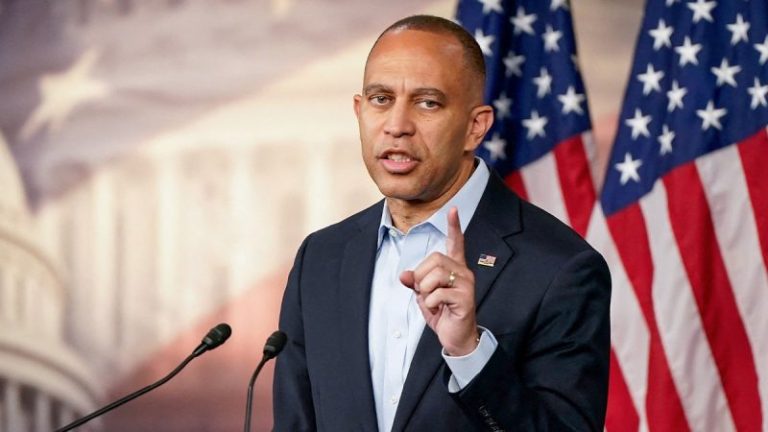
The House of Representatives passed a massive election integrity overhaul bill on Wednesday despite opposition from the vast majority of Democrats.

The House passed Rep. Chip Roy’s SAVE America Act, legislation that’s aimed at keeping non-citizens from voting in U.S. federal elections. 

It is an updated version of the Safeguarding American Voter Eligibility (SAVE) Act, also led by Roy, R-Texas, which passed the House in April 2025 but was never taken up in the Senate.

Whereas the SAVE Act would create a new federal proof of citizenship mandate in the voter registration process and impose requirements for states to keep their rolls clear of ineligible voters, the updated bill would also require photo ID to vote in any federal elections.

It would also require information-sharing between state election officials and federal authorities in verifying citizenship on current voter rolls and enable the Department of Homeland Security (DHS) to pursue immigration cases if non-citizens were found to be listed as eligible to vote.

Democrats have attacked the bill as tantamount to voter suppression, while Republicans argue that it’s necessary after the influx of millions of illegal immigrants who came to the U.S. during the four years of the Biden administration.

‘If we want to rebuild confidence again in American elections, we need to pass the SAVE Act,’ Rep. Mike Haridopolos, R-Fla., told Fox News Digital. ‘What better way to eliminate that distrust than to make sure that whoever votes in an American citizen who is truly eligible to vote?’

House Minority Whip Katherine Clark, D-Mass., accused Republicans of trying to make it harder for women to vote. She argued that the legislation would make it more difficult for married women to cast ballots if their surname is different from their maiden name on their birth certificate.

‘Republicans aren’t worried about non-citizens voting. They’re afraid of actual American citizens voting. Why? Because they’re losing among women,’ Clark said during debate on the House floor. ‘This is a minefield of red tape that you have put in front of women and American citizens and their right to vote.’

But House GOP Policy Committee Chairman Kevin Hern, R-Okla., emphasized that it was about keeping illegal immigrants from voting in U.S. elections.

‘This really is about feeding the narrative that Democrats want illegally from all over the world to come here to support them,’ Hern said of Democrats’ opposition.

If implemented, the bill could see new requirements imposed on voters in this year’s November midterm elections.

But it would have to pass the Senate, where current rules dictate that at least several Democrats are needed to meet the 60-vote threshold to overcome a filibuster.

This post appeared first on FOX NEWS

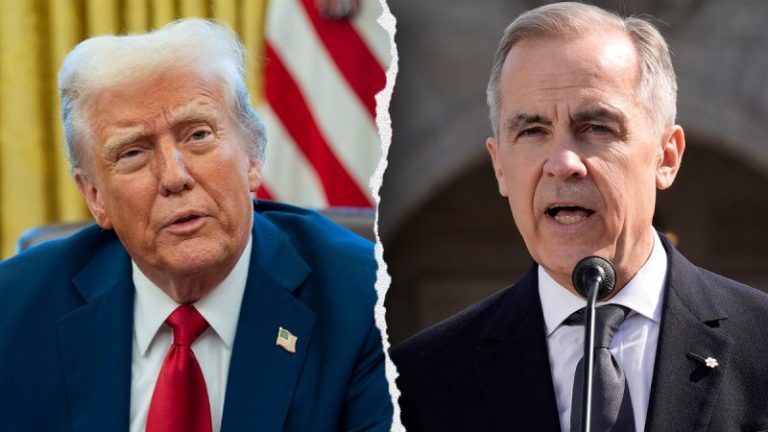
The House of Representatives passed legislation on Wednesday aimed at reversing President Donald Trump’s tariffs on Canada after several Republicans joined Democrats for a rare rebuke of the GOP commander-in-chief.

Democrats successfully got a vote on a measure to reverse Trump’s national emergency at the northern border using a mechanism for forcing votes over the objections of House majority leadership, called a privileged resolution.

Trump signed an executive order in February 2025 implementing an additional 25% tariff on most goods from Canada and Mexico. Energy from Canada was subject to an additional 15% tariff.

At the time, the White House said it was punishment for those countries’ unwillingness to do more to stop the flow of illegal immigrants and illicit drugs into the U.S.

Opponents of Trump’s tariff strategy have criticized his moves against Canada in particular, arguing it was unjustly harming one of the U.S.’s closest allies and trading partners to the detriment of Americans themselves.

‘In the last year, tariffs have cost American families nearly $1,700. And that cost is expected to increase in 2026,’ Rep. Gregory Meeks, D-N.Y., who is leading the legislation, said during debate on Wednesday.

‘And since these tariffs were imposed, U.S. exports to Canada have fallen by more than 21%. When I go home, my constituents aren’t telling me that they have an extra $1,700 to spare. They’re asking me to lower grocery prices, lower the price of healthcare, and make life more affordable.’

Meeks also said, ‘Canada is our friend. Canada is our ally. Canadians have fought alongside Americans, whether it was in World War II or the war in Afghanistan, where 165 Canadians gave their lives after our country was attacked. There is no national emergency, there is no national security threat underpinning these threats.’

House Foreign Affairs Committee Chairman Brian Mast, R-Fla., argued the text of the resolution itself would end a national emergency related to fentanyl.

‘The gentleman over here, 5,000 people per year die in his state alone from fentanyl,’ Mast said of Meeks. ‘So if he wants to beg the question of who’s going to pay the price of him trying to end an emergency, that actually, for the first time, has Canada dealing with fentanyl because of the pressure being put on them — who’s going to pay the price? It’s going to be 5,000 more of his state’s residents. That’s who’s going to pay the price.’

He said the resolution was ‘not a debate about tariffs’ but rather Democrats trying to ‘ignore that there is a fentanyl crisis.’

The resolution was filed by Democrats months ago but was put on hold by an active measure by House GOP leaders that blocked the House from reversing Trump’s emergency declarations.

The president has used emergency declarations to bypass Congress on the subject of tariffs, a move that has drawn mixed reviews from Capitol Hill.

But that measure expired last month, and House GOP leaders’ bid to extend it through July 31 crashed and burned on Tuesday night when three Republicans joined Democrats to oppose it.

‘It is time for Congress to make its voice heard on tariffs,’ Rep. Don Bacon, R-Neb., one of the Republicans who voted in opposition to the Trump policy both on Tuesday and Wednesday, told Fox News Digital.

The legislation now heads to the Senate, which has voted in the past to restrict Trump’s tariff authority.

Even if it succeeds there, however, it’s likely to be hit with a veto from the president.

This post appeared first on FOX NEWS

President Donald Trump is threatening to back election challengers against the six House Republicans who joined Democrats in voting to reverse his tariffs on Canada.

The president sent out an ominous warning to GOP lawmakers in the House and Senate just before his agenda suffered a blow on Capitol Hill Wednesday evening.

‘Any Republican, in the House or the Senate, that votes against TARIFFS will seriously suffer the consequences come Election time, and that includes Primaries!’ Trump posted on Truth Social.

He argued that the trade deficit was reduced significantly while U.S. financial markets hit significant high points because of his tariff policies.

‘In addition, TARIFFS have given us Great National Security because the mere mention of the word has Countries agreeing to our strongest wishes,’ Trump continued. 

‘TARIFFS have given us Economic and National Security, and no Republican should be responsible for destroying this privilege.’

Democrats successfully got a vote on a measure to reverse Trump’s national emergency at the northern border using a mechanism for forcing votes over the objections of House majority leadership called a privileged resolution.

The six Republicans who voted in favor of the measure are Reps. Dan Newhouse, R-Wash., Kevin Kiley, R-Calif., Don Bacon, R-Neb., Jeff Hurd, R-Colo., and Brian Fitzpatrick, R-Pa. 

One Democrat, Rep. Jared Golden, D-Maine, voted with the majority of Republicans on the matter. It passed 219-211.

It’s not clear how much impact Trump’s threat will have, however.

Both Newhouse and Bacon are not running for re-election in the 2026 midterms, and Trump is already endorsing a primary challenger against Massie.

Kiley, whose district was severely impacted by California Democrats’ new congressional map, has not yet said whether he will run for re-election or where he will do it.

Fitzpatrick and Hurd are both well-liked incumbents in their districts, which are top targets for Democrats come November.

Trump signed an executive order in February 2025, enacting an additional 25% tariff on most goods from Canada and Mexico. Energy from Canada was subject to an additional 15% tariff.

At the time, the White House said it was punishment for those countries’ unwillingness to do more to stop the flow of illegal immigrants and illicit drugs into the U.S.

Opponents of Trump’s tariff strategy have criticized his moves against Canada in particular, arguing it was unjustly harming one of the closest allies of the U.S. and trading partners to the detriment of Americans themselves.

But Republicans who voted against the legislation pointed out that Trump said the fentanyl crisis was the reason for issuing the emergency in the first place, and said the drug was still killing Americans.

The legislation now heads to the Senate, where Republicans have voted to rebuke Trump’s tariff strategy in the past despite similar warnings from the president.

This post appeared first on FOX NEWS

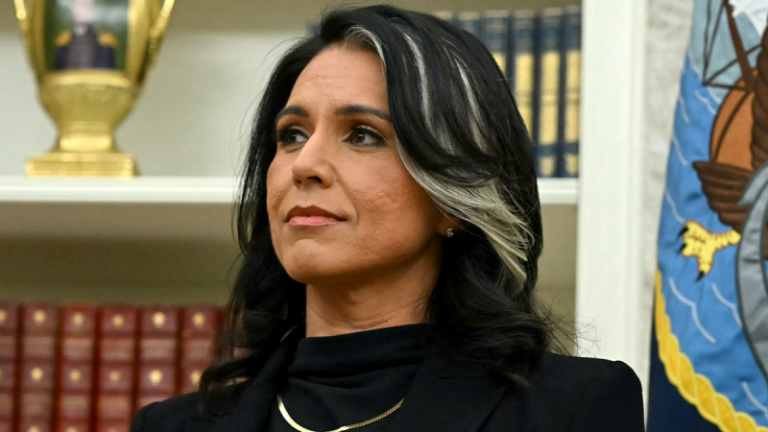
Director of National Intelligence Tulsi Gabbard announced she was ending the work of a task force that sought to reform the U.S. intelligence community, including rooting out what she described as the politicization of intelligence gathering, after less than a year since its creation.

Gabbard established the group in April, when it was also tasked with probing ways to reduce spending on intelligence and whether reports on high-profile topics such as COVID-19 should be declassified.

In a statement on Wednesday, Gabbard said the task force’s work was always intended to be temporary after she was tapped to oversee coordination of the 18 U.S. intelligence agencies.

‘In less than one year, we’ve brought a historic level of transparency to the intelligence community,’ Gabbard said in her statement. ‘My commitment to transparency, truth, and eliminating politicization and weaponization within the intelligence community remains central to all that we do.’

The number of officers assigned to the task force, as well as their identities, are classified, according to Gabbard’s office.

The officers will now return to other intelligence agencies to continue the work the group started, her office added.

The group sparked criticism against Gabbard after its creation, with Democrats and some intelligence insiders raising questions about whether it would be used to undermine intelligence agencies and bring them under tighter control of President Donald Trump.

Sen. Mark Warner, D-VA, vice chairman of the Senate Intelligence Committee, said last year that the group appeared to be a ‘pass for a witch hunt’ designed to target intelligence officers deemed disloyal to Trump.

‘This seems to be just a pass for a witch hunt and that’s going to further undermine our national security,’ Warner told Reuters at the time.

Gabbard has implemented significant changes to the country’s intelligence gathering in the last year, including by using agencies to back up Trump’s claims about alleged interference in the 2016 and 2020 elections.

In August, she revealed plans to cut her office’s workforce and slash more than $700 million from its annual budget. She also fired two top intelligence officials in May after concluding that they opposed Trump.

Since Gabbard took over as director, the federal government has revoked the security clearances of dozens of former and current officials, including high-profile political opponents of the president, which critics have panned as being a punishment for siding against Trump rather than posing security risks.

Gabbard’s presence for a recent FBI search of a Georgia election office in connection to the 2020 election has led to criticism from Democrats who argue she is blurring the traditional lines between foreign intelligence collection and domestic law enforcement.

The CIA has also released additional information about its investigations into the origins of COVID-19, such as an assessment released last year that affirmed the position that it most likely originated in a lab in China.

The Associated Press contributed to this report.

This post appeared first on FOX NEWS

Tartisan Nickel (CSE:TN,OTCQX:TTSRF,FSE: 8TA) is a Canadian exploration and development company focused on advancing high-quality critical mineral assets in Ontario. Its flagship asset, the Kenbridge nickel project in Northwestern Ontario, is an advanced-stage nickel sulphide deposit containing nickel, copper and cobalt.

Management’s strategy for Kenbridge is clear and execution-driven: expand and upgrade the resource through drilling, extend potential mine life, and continue systematically de-risking the project.

Tartisan Nickel has been engaging with Treaty # 3 First Nations since May 2007.

At the same time, Tartisan holds the Sill Lake silver project, a past-producing silver-lead property near Sault Ste. Marie, Ontario. Supported by strong fundamentals for nickel, copper and silver, management positions Tartisan as a multi-asset story—providing investors with exposure to several value drivers within a single platform.

Company Highlights

  • Clear focus on drilling-driven value creation, with active programs designed to upgrade inferred resources, expand the deposit at depth, and extend mine life into the mid-teens
  • Low-capex development profile relative to many peer nickel projects, supported by a historic shaft, road access, and established infrastructure
  • Sill Lake Silver Project provides additional, underappreciated value, offering exposure to silver through a brownfields, past-producing asset with a defined historic resource
  • Experienced leadership team with deep capital markets and mine development experience, focused on disciplined capital allocation and unlocking value from opportunity-acquired assets

This Tartisan Nickel profile is part of a paid investor education campaign.*

Click here to connect with Tartisan Nickel (CSE:TN,OTCQX:TTSRF,FSE: 8TA) to receive an Investor Presentation

This post appeared first on investingnews.com

Here’s a quick recap of the crypto landscape for Wednesday (February 11) as of 9:00 p.m. UTC.

Get the latest insights on Bitcoin, Ether and altcoins, along with a round-up of key cryptocurrency market news.

Bitcoin (BTC) was priced at US$67,551.42, down 18 percent over the last 24 hours.

Bitcoin price performance, February 11, 2026.

Chart via TradingView.

“Bitcoin appears to be entering a stabilization phase before its next directional move. In the near term, prices are likely to consolidate around the US$70,000 level as the market digests recent volatility and continued profit-taking, but the broader setup points to a gradual recovery toward the US$85,000 to US$95,000 range by mid-2026.

“The key driver is institutional behavior: ETF outflows are slowing rather than accelerating, suggesting that forced selling pressure is easing and longer-term allocators are becoming more selective instead of exiting outright. At the same time, regulatory progress — particularly around stablecoin frameworks and clearer market structure — continues to strengthen Bitcoin’s position as a maturing asset within global portfolios, especially as investors look for inflation hedges amid ongoing macro uncertainty.

“While short-term price action may remain uneven, innovation across DeFi and tokenized assets is reinforcing the underlying crypto ecosystem, creating conditions that have historically supported post-correction recoveries and attracted long-term capital back into Bitcoin.”

Ether (ETH) was priced at US$1,955.33, down by 2.8 percent over the last 24 hours.

Altcoin price update

  • XRP (XRP) was priced at US$1.38, down by 1.2 percent over 24 hours.
  • Solana (SOL) was trading at US$79.64, down by 3.5 percent over 24 hours.

Today’s crypto news to know

Robinhood shares Q4 earnings

Robinhood Markets (NASDAQ:HOOD) released its latest quarterly report on Wednesday, revealing net income totaling US$605 million for Q4 2025 and US$1.9 billion for the year.

The company reported a record US$1.28 billion in quarterly revenue, a 27 percent increase year-on-year, but shy of estimates of about US$1.36 billion. Its full‑year 2025 revenue reached US$4.5 billion, up 52 percent.

However, crypto revenue fell 38 percent to US$221 million in Q4.

Despite a fundamentally solid quarter, with record earnings per share of US$0.66 in Q4 and US$2.05 for 2025, shares dropped between 7 and 12 percent after the print and closed 9 percent lower on the day.

In other news, Robinhood launched a public testnet for Robinhood Chain, an Ethereum Layer 2 built on Arbitrum technology and designed to support tokenized real‑world and digital assets.

Developers can begin building and testing apps on it ahead of a future mainnet launch. The testnet offers network access, developer docs and compatibility with standard Ethereum tools, plus early support from infrastructure providers such as Alchemy, Chainlink and LayerZero. Robinhood also said it is committing US$1 million to the 2026 Arbitrum Open House program to encourage developer activity on the testnet and eventual mainnet.

Banks dig in on stablecoin yield as CLARITY Act stalls

US banks are hardening their position on stablecoin rules, escalating a policy clash that has left the long-awaited CLARITY Act stuck in Congress. During a White House-hosted meeting led by the administration’s crypto council, banking groups circulated a proposal calling for an outright ban on paying interest or other incentives to stablecoin holders.

The draft language states: “No person may provide any form of financial or non-financial consideration to a stablecoin holder” in connection with holding or using a payment stablecoin.

Banking groups warned that allowing yield on stablecoins could “drive deposit flight that would undercut Main Street lending,” while crypto advocates argued innovation should not be stifled. The dispute centers on whether stablecoin rewards resemble bank deposits, potentially siphoning funds from traditional lenders.

‘As we noted during the meeting, that framework can and must embrace financial innovation without undermining safety and soundness, and without putting the bank deposits that fuel local lending and drive economic activity at risk. We look forward to ongoing discussions to move market structure legislation forward,’ the American Bankers Association said in a statement following the meeting.

The standoff has become the main obstacle preventing the CLARITY Act from advancing, despite earlier passage of the GENIUS Act, which created a federal framework for dollar-backed stablecoins.

Goldman Sachs maintains US$1 billion Bitcoin ETF exposure

Goldman Sachs (NYSE:GS) disclosed in its latest US Securities and Exchange Commission filing that it holds just over US$1 billion in exposure to Bitcoin through exchange-traded funds (ETFs).

The exposure is split across products, including BlackRock’s iShares Bitcoin Trust ETF (NASDAQ:IBIT) and Fidelity’s Wise Origin Bitcoin ETF (NEO:FBTC). Bitcoin has dropped roughly 47 percent from its high and is trading near US$67,000, part of a broader US$2 trillion drawdown across the crypto market. ETF flows have been volatile, with more than US$6 billion exiting spot Bitcoin funds since November, according to industry data.

Despite the slump, Goldman has also expanded into Ether, XRP and Solana ETFs.

Monad launches Nitro accelerator

Blockchain company Monad announced Tuesday (February 10) launch of a new three month accelerator program, Nitro, supported by notable firms including Paradigm, Electric Capital, Dragonfly and Castle Island Ventures.

According to commentary provided in a media briefing accompanying the announcement, “The program is designed to address a common issue in crypto venture funding: teams often raise capital quickly but struggle to ship production-ready products or reach product-market fit. Nitro is structured around execution, shipping cadence, and validation, rather than short-term growth metrics or token-driven incentives.”

The press release notes that the Monad ecosystem has already seen US$108 million raised by projects.

The three month program includes an in-person first month in New York City, and will be followed by two months of focused execution, concluding with a Demo Day for crypto and tech investors.

Interactive Brokers adds Coinbase nano contracts

Interactive Brokers said it is adding “nano contracts’ from Coinbase Global’s (NASDAQ:COIN) derivatives arm to its trading platform. These contracts control fractions of a Bitcoin or Ether coin and require less upfront investment.

Clients can trade these futures, some with set expiry dates and others that track the current price over time, 24/7 within Interactive Brokers’ standard brokerage environment, alongside stocks and options.

The move is meant to make it easier and cheaper for people to get exposure to crypto prices and manage risk, while still using a regulated broker and exchange.

Securities Disclosure: I, Meagen Seatter, hold no direct investment interest in any company mentioned in this article.

Securities Disclosure: I, Giann Liguid, hold no direct investment interest in any company mentioned in this article.

This post appeared first on investingnews.com