Author

admin

Browsing

Thanks to exchange-traded funds (ETFs), investors don’t have to be tied to one specific stock. When it comes to biotech ETFs, they give sector participants exposure to many biotech companies via one vehicle.

ETFs are a popular choice as they allow investors to enter the market more safely compared to investing in standalone stocks. A key advantage is that even if one company in the ETF takes a hit, the impact will be less direct.

All other figures were also current as of that date. Read on to learn more about these investment vehicles.

1. ProShares Ultra NASDAQ Biotechnology ETF (NASDAQ:BIB)

AUM: US$89.54 million

The ProShares Ultra NASDAQ Biotechnology ETF, launched in April 2010, is leveraged to offer twice daily long exposure to the broad-based NASDAQ Biotechnology Index, making it an ideal choice “for investors with a bullish short-term outlook for biotechnology or pharmaceutical companies.” However, analysts also advise investors with a low risk tolerance or a buy-and-hold strategy against investing in this fund due to its unique nature.

Of the 263 holdings in this ETF, the top biotech stocks are Gilead Sciences (NASDAQ:GILD) at a 6.78 percent weight, Amgen (NASDAQ:AMGN) at 6.23 percent and Vertex Pharmaceuticals (NASDAQ:VRTX) at 6.17 percent.

2. Direxion Daily S&P Biotech Bear 3x Shares (ARCA:LABD)

AUM: US$68.18 million

The Direxion Daily S&P Biotech Bear 3X Shares is designed to provide three times the daily return of the inverse of the S&P Biotechnology Select Industry Index, meaning that the ETF rises in value when the index falls and falls in value when the index rises.

Leveraged inverse ETFs are designed for short-term trading and are not suitable for holding long-term. They also carry a high degree of risk as they can be significantly affected by market volatility.

Unlike the other ETFs on this list, LABD achieves its investment objective through holding financial contracts such as futures rather than holding individual stocks.

3. Tema Heart and Health ETF (NASDAQ:HRTS)

AUM: US$56.55 million

Launched in November 2023, the Tema Heart and Health ETF tracks biotech stocks with a focus on diabetes, obesity and cardiovascular diseases. The fund was renamed on March 25 from Tema Cardiovascular and Metabolic ETF, and again on June 27 from the GLP-1 Obesity and Cardiometabolic ETF.

There are 46 holdings in this biotechnology fund, with about 75 percent being large-cap stocks and 22 percent mid-cap. About three-quarters of its holdings are based in the US.

This Tema ETF’s top biotech holdings are Eli Lilly and Company (NYSE:LLY) at a 10.04 percent weight, Roche Holding (OTCQX:RHHBY,SWX:ROG) at a 5.42 percent weight and Johnson & Johnson (NYSE:JNJ) at a 4.8 percent weight.

4. Global X Genomics & Biotechnology ETF (NASDAQ:GNOM)

AUM: US$51.53 million

The Global X Genomics & Biotechnology ETF tracks the Solactive Genomics Index, focusing on companies involved in gene editing, genomic sequencing, genetic medicine, computational genomics and biotech.

The ETF holds 50 stocks, with about 90 percent in the pharmaceuticals, biotechnology and life sciences sector. Its top three holdings are Moderna (NASDAQ:MRNA) at 6.33 percent, Arrowhead Pharmaceuticals (NASDAQ:ARWR) at 6.14 percent and Praxis Precision Medicines (NASDAQ:PRAX) at 5.98 percent.

5. Virtus LifeSci Biotech Products ETF (ARCA:BBP)

AUM: US$44.8 million

The Virtus LifeSci Biotech Products ETF tracks the LifeSci Biotechnology Products Index, focusing on US-listed biotech companies with at least one FDA-approved drug therapy.

Launched in December 2014 by Virtus Investment Partners, it provides targeted exposure to firms in the product stage, from startups to large players, through passive, equal-weighted holdings rebalanced semi-annually.

Its top holdings include ImmunityBio (NASDAQ:IBRX) at a weight of 3.98 percent, Mirum Pharmaceuticals (NASDAQ:MIRM) at 2.4 percent and Moderna at 2.16 percent.

Securities Disclosure: I, Meagen Seatter, hold no direct investment interest in any company mentioned in this article.

This post appeared first on investingnews.com

NOT FOR DISTRIBUTION TO U.S. NEWSWIRE SERVICES OR DISSEMINATION IN THE UNITED STATES

Questcorp Mining Inc. (CSE: QQQ,OTC:QQCMF) (OTCQB: QQCMF) (FSE: D910) (the ‘Company’ or ‘Questcorp’) is pleased to announce an upsize to its previously announced non-brokered private placement to up to 15,000,000 units (each, a ‘Unit’) at a price of $0.20 per Unit for gross proceeds of up to $3,000,000 (the ‘Offering’). Each Unit will consist of one common share of the Company (each, a ‘Share’) and one-half-of-one share purchase warrant (each whole share purchase warrant, a ‘Warrant’). Each Warrant will entitle the holder to acquire an additional common share of the Company at a price of $0.30 for a period of thirty-six months following closing of the Offering, provided that holders will not be permitted to exercise Warrants until 60 days following closing of the Offering.

The Company expects to utilize the proceeds of the Offering for exploration work at the Company’s La Union Gold and Silver Project and North Island Copper Project, and for general working capital purposes.

The Units to be issued under the Offering will be offered for sale pursuant to the listed issuer financing exemption under Part 5A of National Instrument 45-106 – Prospectus Exemptions, as amended by CSA Coordinated Blanket Order 45-935 – Exemptions from Certain Conditions of the Listed Issuer Financing Exemption (collectively, the ‘Listed Issuer Financing Exemption‘), in all provinces of Canada, except Quebec, and other qualifying jurisdictions, including the United States. The Units offered under the Listed Issuer Financing Exemption will be immediately ‘free-trading’ under applicable Canadian securities laws.

There is an offering document (the ‘Offering Document‘) related to this Offering that can be accessed under the Company’s profile at www.sedarplus.ca and at the Company’s website at https://questcorpmining.ca/. Prospective investors should read this Offering Document before making an investment decision.

In connection with completion of the Offering, the Company may pay finders’ fees to eligible third-parties who have introduced subscribers to the Offering. Completion of the Offering remains subject to receipt of regulatory approvals.

This press release is not an offer to sell or the solicitation of an offer to buy the securities in the United States or in any jurisdiction in which such offer, solicitation or sale would be unlawful prior to qualification or registration under the securities laws of such jurisdiction. The securities being offered have not been, nor will they be, registered under the United States Securities Act of 1933, as amended, and such securities may not be offered or sold within the United States or to, or for the account or benefit of, U.S. persons absent registration or an applicable exemption from U.S. registration requirements and applicable U.S. state securities laws.

About Questcorp Mining Inc.

Questcorp Mining Inc. is engaged in the business of the acquisition and exploration of mineral properties in North America, with the objective of locating and developing economic precious and base metals properties of merit. The Company holds an option to acquire an undivided 100% interest in and to mineral claims totaling 1,168.09 hectares comprising the North Island Copper Property, on Vancouver Island, British Columbia, subject to a royalty obligation. The Company also holds an option to acquire an undivided 100% interest in and to mineral claims totaling 2,520.2 hectares comprising the La Union Project located in Sonora, Mexico, subject to a royalty obligation.

Contact Information

Questcorp Mining Corp.

Saf Dhillon, President & CEO

Email: saf@questcorpmining.ca
Telephone: (604) 484-3031

This news release includes certain ‘forward-looking statements’ under applicable Canadian securities legislation. Forward-looking statements include, but are not limited to, statements with respect to the intended use of proceeds from the Offering; closing of the Offering; and filing of the Offering Document. Forward-looking statements are necessarily based upon a number of estimates and assumptions that, while considered reasonable, are subject to known and unknown risks, uncertainties, and other factors which may cause the actual results and future events to differ materially from those expressed or implied by such forward-looking statements. Such factors include, but are not limited to general business, economic, competitive, political and social uncertainties, uncertain capital markets; and delay or failure to receive board or regulatory approvals. There can be no assurance that such forward-looking statements will prove to be accurate, as actual results and future events could differ materially from those anticipated in such statements. Accordingly, readers should not place undue reliance on forward-looking statements. The Company disclaims any intention or obligation to update or revise any forward-looking statements, whether as a result of new information, future events or otherwise, except as required by law.

Neither the Canadian Securities Exchange nor its Regulation Services Provider (as that term is defined in the policies of the Canadian Securities Exchange) accepts responsibility for the adequacy or accuracy of this release.

To view the source version of this press release, please visit https://www.newsfilecorp.com/release/283532

News Provided by TMX Newsfile via QuoteMedia

This post appeared first on investingnews.com

Rising geopolitical tensions, intensifying competition for critical minerals and the accelerating breakdown of the postwar global order were some of the key themes at the Vancouver Resource Investment Conference (VRIC) in late January, as investors grappled with what a volatile world means for capital, commodities and security of supply.

In a wide-ranging panel moderated by Jesse Day, legendary mining financier Frank Giustra joined retired US Army Colonel Douglas Macgregor and geopolitical analyst Dr. Pascal Lottaz to examine flashpoints from Iran to Greenland, and why resource investors can no longer separate geopolitics from the metals that underpin modern economies.

Giustra, president and CEO of Fiore Group and co-chair of the International Crisis Group, opened the discussion by warning that tensions with Iran are approaching a critical threshold, driven by competing US and Israeli objectives.

“Israel would like to see Iran taken out as a major regional power,” Giustra said. “The US would like to see a different Iran — one it could do business with and that has stable relations with its neighbours. Those objectives are not the same.”

He added that the presence of a US carrier strike group in the region underscores the risk of escalation, but questioned whether military action would achieve Washington’s goals. “Iran is simply too large for a strike to have the intended effect,” he said, pointing to the absence of a coherent long-term policy.

Colonel Macgregor was more blunt, warning the US is “on the precipice of war” with Iran and arguing that Washington’s strategic thinking mirrors failed efforts elsewhere.

“This is the same mindset that committed us to war in Ukraine,” Macgregor said. “Destroy the country, divide it, dominate it, and take its resources. It failed there, and it will fail in Iran.”

Dr. Lottaz, an adjunct researcher at Waseda University in Tokyo and host of the ‘Neutrality Studies’ channel, said unpredictability has become the defining feature of US foreign policy.

“What Israel does is done in conjunction with the US — they are effectively one team,” Lottaz said. “Carrier groups sitting offshore are not just deterrence. They are also sitting ducks. Ships can sink.”

Greenland, minerals and power politics

The panel then turned to Greenland, a region increasingly viewed through the lens of critical minerals and Arctic security.

Giustra dismissed claims that Greenland poses an immediate security risk from Russia or China, arguing instead that resource competition is the real driver. “Greenland has always been open for business,” he said.

“The idea that the US needs to own it to access minerals is simply false.”

Instead, Giustra described Washington’s posture as coercive. “It’s essentially putting a gun to Greenland’s head and saying, ‘We want to buy you.’”

For mining investors, Greenland represents both opportunity and risk.

The island hosts significant deposits of rare earth elements, graphite and other strategic metals essential to clean energy technologies, defence systems and advanced manufacturing. But political uncertainty, including pressure from major powers, complicates development timelines and capital allocation.

Macgregor argued that US ambitions in Greenland and Venezuela reflect more optics than strategy. “This administration loves big gestures,” he said. “But unless you control what happens on the ground, nothing really changes.”

Europe’s energy crisis and deindustrialization

Lottaz traced Europe’s economic strain, particularly Germany’s deindustrialization, back to energy policy decisions, including the shutdown of nuclear power and the loss of Russian gas supplies.

“Political leadership in Europe is increasingly detached from national interests,” he said. “What matters more is positioning within EU and transatlantic institutions.”

That disconnect has direct consequences for resource markets, particularly energy-intensive industries such as metals refining, steel production and battery manufacturing, which depend on stable, affordable power.

Macgregor added that many global institutions, including NATO and the European Union, are approaching “block obsolescence,” forcing investors to rethink long-held assumptions about stability.

Critical minerals and the risk of conflict

As the discussion widened, Giustra pointed to critical minerals as one of the most dangerous fault lines in the emerging world order.

“The intense competition between China and the West over critical minerals is a major factor,” he said. “These are not just economic assets — they’re strategic weapons.”

China currently dominates processing of rare earth elements, lithium chemicals and battery-grade materials, giving it leverage over Western supply chains. Efforts by the US, Europe and allies to secure alternative sources — from Greenland to Africa to South America — are reshaping investment flows across the mining sector.

Giustra warned that history shows transitions between declining and rising powers are rarely peaceful. “The danger of conflict during a shift in world order is extremely high,” he said. “We may already be setting the stage for something far worse.”

Is there room for optimism?

Despite the grim outlook, Lottaz offered cautious optimism, arguing that even strained international systems retain some restraining influence.

“Everyone still claims to operate under the UN Charter, even when they violate it,” he said. “That tells us the idea of international law still matters.”

He also pointed to restraint in conflicts such as Ukraine, noting that NATO has avoided direct war with Russia. “There is still rationality at work. No one wants Armageddon.”

Macgregor closed with a stark reminder for investors and policymakers alike. “Rules only exist if someone enforces them,” he said. “As American power recedes, we’re entering a far more competitive and uncertain world.”

For the resource sector, that uncertainty translates into higher geopolitical risk, but also strategic opportunity. As governments scramble to secure supply chains for energy transition metals, defence materials and critical infrastructure, mining projects once considered peripheral are moving to the centre of global power politics.

Securities Disclosure: I, Georgia Williams, hold no direct investment interest in any company mentioned in this article.

This post appeared first on investingnews.com

(TheNewswire)


Drill Hole LBX25-101 — Highlights

  • 1.50 m @ 0.88 g/t Au, 13.60 g/t Ag, 0.24% Cu, 5.61% Zn (159.20 m to 160.70 m) 

    • Including 0.50 m @ 2.06 g/t Au, 31.10 g/t Ag, 0.53% Cu, 12.35% Zn (159.70 m to 160.20 m) 

  • 1.60 m @ 1.16 g/t Au, 10.21 g/t Ag, 0.30% Cu, 4.39% Zn (187.70 m to 189.30 m) 

  • 3.00 m @ 0.97 g/t Au, 4.04 g/t Ag, 0.14% Cu, 2.21% Zn (190.50 m to 193.50 m) 


Drill Hole LBX25-102 — Highlights

  • 0.50 m @ 3.89 g/t Au, 38.70 g/t Ag, 0.42% Cu, 5.37% Zn (45.00 m to 45.50 m) 

  • 1.00 m @ 2.04 g/t Au, 0.80 g/t Ag, 0.01% Cu, 0.02% Zn (108.50 m to 109.50 m) 

  • 2.04 m @ 2.63 g/t Au, 2.38 g/t Ag, 0.02% Cu, 0.17% Zn 205.96 m to 208.00 m) 

    • Including 1.00 m @ 5.14 g/t Au, 4.60 g/t Ag, 0.04% Cu, 0.30% Zn (207.00 m to 208.00 m) 

  • 0.50 m @ 2.60 g/t Au, 13.60 g/t Ag, 0.10% Cu, 6.75% Zn (230.30 m to 230.80 m) 


Toronto, Ontario – February 11, 2026 TheNewswire – Laurion Mineral Exploration Inc. (TSX-V: LME | OTCQB: LMEFF | FSE: 5YD) (‘LAURION’ or the ‘Company’) reports assay results from drill holes LBX25-101 and LBX25-102 from the Company’s recent Fall diamond drilling program totalling 1,821 metres completed in 8 drill holes at the A-Zone/McLeod/CRK Zone at the Ishkōday Project, located in the Beardmore–Geraldton Greenstone Belt of north-western Ontario, approximately 220 kilometres northeast of Thunder Bay.

Drill holes LBX25-101 and LBX25-102 were planned as part of LAURION’s model-guided A-Zone program to test interpreted mineralized horizons and strengthen continuity across the northeastern portion of the zone. (See Image DDH Cross Section.) The drill holes were positioned to validate structural interpretations and increase confidence in zones where both historical drilling and more recent Company-led drill programs have identified broad anomalous gold mineralization with localized higher-grade intervals. The assay results provide additional technical data that will support the refinement of future targeting and improve predictability for the Company’s subsequent drill campaigns. (See Image of Drill Locations of Fall Diamond Drilling.)


‘We are advancing the A-Zone through disciplined, high-confidence drill targeting designed to create measurable project value,’ said Cynthia Le Sueur-Aquin, President and CEO of LAURION. ‘Our objective is to complete drilling that answers specific geological questions, strengthens continuity, and improves predictability — because better technical clarity today supports stronger outcomes tomorrow for our shareholders.’


Geological Context


Drill hole LBX25-101 is situated approximately 265 m southwest of LBX25-100, with LBX25-102 positioned an additional 335 m southwest, extending drill coverage along the interpreted A-Zone mineralized corridor into a sparsely drilled area. LBX25-101 was established as a step-back collar to test projected mineralized horizons and structural continuity beyond the denser drill grid. Targeting incorporated projected intercept positions from holes LBX22-055, LBX22-056, LBX22-056A, LBX22-057, and historic hole K56 to improve geological and structural constraint across this portion of the zone.


Drill hole LBX25-102 was collared adjacent to the access road approximately 1.0 km south of the River Road, located north of the McLeod Zone and southwest of drill hole LBX21-041, to support continued drill coverage along this portion of the interpreted mineralized trend. This collar location enabled efficient drill access while extending geological coverage into a less densely tested portion of the corridor.


Hole ID

From

(m)

To

(m)

Core Length (m)

Au (g/t)

Ag (g/t)

Cu (%)

Zn (%)

LBX25-101

7.90

11.80

3.90

0.200

2.88

0.03

0.65

including

7.90

8.60

0.70

0.146

9.80

0.06

2.94

LBX25-101

120.2

120.80

0.60

0.224

4.80

0.12

1.54

LBX25-101

159.20

196.50

37.30

0.209

2.06

0.05

0.87

including

159.20

160.70

1.50

0.883

13.60

0.24

5.61

including

159.70

160.20

0.50

2.060

31.10

0.53

12.35

including

187.70

189.30

1.60

1.159

10.21

0.30

4.39

including

188.20

193.50

5.30

0.872

5.11

0.16

2.53

including

190.50

193.50

3.00

0.971

4.04

0.14

2.21

LBX25-102

45.00

45.50

0.50

3.890

38.70

0.42

5.37

LBX25-102

52.80

53.30

0.50

0.617

3.90

0.03

3.25

LBX25-102

82.90

83.70

0.80

0.511

0.50

0.01

LBX25-102

108.50

109.50

1.00

2.040

0.80

0.01

0.02

LBX25-102

205.96

208.00

2.04

2.630

2.38

0.02

0.17

Including

207.00

208.00

1.00

5.140

4.60

0.04

0.30

LBX25-102

212.00

213.00

1.00

0.339

0.25

0.04

LBX25-102

222.80

223.30

1.20

0.292

9.58

0.02

1.10

including

222.80

223.30

0.50

0.457

20.60

0.03

2.55

LBX25-102

226.00

245.00

19.00

0.355

2.63

0.03

0.58

including

230.30

233.60

3.30

1.114

6.35

0.07

1.78

including

230.30

230.80

0.50

2.600

13.60

0.10

6.75

NOTE: Intervals represent core length. The interval widths reported are down-hole widths. The true widths of the mineralized zones are not known at this time as there is insufficient information to determine the orientation of the mineralization.


Name

Elevation

(m)

Azimuth

Dip

Easting

Northing

Depth

(m)

LBX25-101

321

127

-50

446328

5513024

276

LBX25-102

323

115

-50

446200

5512713

300

Total


576


Sampling and QA/QC Protocols


All drill core is transported and stored inside the core facility located at the Ishkōday Project in Greenstone, Ontario. LAURION employs an industry standard system of external standards, blanks and duplicates for all of its sampling, in addition to the QA/QC protocol employed by the laboratory. After logging, core samples were identified and then cut in half along core axis in the same building and then zip tied individually in plastic sample bags with a bar code. Approximately five or six of these individual bags were then stacked into a ‘rice’ white material bag and stored on a skid for final shipment to the laboratory. All core samples were shipped to the ALS facility in Thunder Bay, Ontario, which were then prepared by ALS Global Geochemistry in Thunder Bay and analyzed by ALS Global Analytical Lab in North Vancouver, British Columbia. Samples are processed by 4-acid digestion and analyzed by fire assay on 50 g pulps and ICP-AES (Inductively Coupled Plasma – Atomic Emission Spectroscopy). Over limit analyses are reprocessed with gravimetric finish. A total of 5% blanks and 5% standard are inserted randomly within all samples. 5% of the best assay result pulps were sent for re-assays. All QA/QC were verified, and no contamination or bias have been observed. The remaining half of the core, as well as the unsampled core, is stored in temporary core racks at the core logging facility in Beardmore and moved to the core storage facility at the Ishkōday Project. Note: QA/QC review of standards and duplicates indicates analytical results are reliable. One zinc standard adjacent to a high-grade zinc interval returned elevated values consistent with expected analytical behaviour following high-grade samples.


Qualified Person


The technical contents of this release were reviewed and approved by Pierre-Jean-Lafleur P. Eng, a consultant to LAURION and a Qualified Person as defined by National Instrument 43-101 – Standards of Disclosure for Mineral Projects.


About LAURION Mineral Exploration Inc.


Laurion Mineral Exploration Inc. is a mid-stage junior mineral exploration company listed on the TSX Venture Exchange under the symbol LME and on the OTC Pink market under the symbol LMEFF. The Company currently has 278,716,413 common shares outstanding, with approximately 73.6% held by insiders and long-term ‘Friends and Family’ investors, reflecting strong alignment between management, the Board, and shareholders.


LAURION’s primary focus is the 100%-owned, district-scale Ishkōday Project, a 57 km² land package hosting gold-rich polymetallic mineralization. The Company is advancing Ishkōday through a disciplined, milestone-driven exploration strategy focused on strengthening geological confidence, defining structural continuity.


LAURION’s strategy is centered on deliberate value creation. The Company is prioritizing systematic technical advancement, integrated geological and structural modeling, and the evaluation of optional, non-dilutive pathways, including historical surface stockpile processing, that may support flexibility in LAURION’s exploration plans without diverting the Company’s focus from its core exploration objectives.


The Company’s overarching objective is to build project value before monetization, ensuring that any future strategic outcomes are supported by technical clarity, reduced execution risk, and demonstrated scale. While the Board remains attentive to strategic interest that may arise, LAURION is not driven by transaction timing. Instead, the Company is focused on advancing the Ishkōday Project in a manner that strengthens long-term shareholder value.


LAURION will continue to communicate updates through timely disclosure and will issue press releases in accordance with applicable securities laws should any material information arise.


FOR FURTHER INFORMATION, CONTACT:

Laurion Mineral Exploration Inc.

Cynthia Le Sueur-Aquin – President and CEO

Tel: 1-705-788-9186 Fax: 1-705-805-9256


Douglas Vass – Investor Relations Consultant

Email: info@laurion.ca

Website: http://www.LAURION.ca

Follow us on: X (@LAURION_LME), Instagram (laurionmineral) and LinkedIn ()


Caution Regarding Forward-Looking Information


This press release contains forward-looking statements, which reflect the Company’s current expectations regarding future events including with respect to LAURION’s business, operations and condition, management’s objectives, strategies, beliefs and intentions, the Company’s ability to advance the Ishkōday Project, the nature, focus, timing and potential results of the Company’s exploration, drilling and prospecting activities, including the Company’s diamond drill program referenced in this press release and the Company’s other planned activities for the Ishkōday Project for the remainder of 2026, and the statements regarding the Company’s exploration or consideration of any possible strategic alternatives and transactional opportunities, as well as the potential outcome(s) of this process, the possible impact of any potential transactions referenced herein on the Company or any of its stakeholders, and the ability of the Company to identify and complete any potential acquisitions, mergers, financings or other transactions referenced herein, and the timing of any such transactions. The forward-looking statements involve risks and uncertainties. Actual events and future results, performance or achievements expressed or implied by such forward-looking statements could differ materially from those projected herein including as a result of a change in the trading price of the common shares of LAURION, the TSX Venture Exchange or any other applicable regulator not providing its approval for any strategic alternatives or transactional opportunities, the interpretation and actual results of current exploration activities, changes in project parameters as plans continue to be refined, future prices of gold and/or other metals, possible variations in grade or recovery rates, failure of equipment or processes to operate as anticipated, the failure of contracted parties to perform, labor disputes and other risks of the mining industry, delays in obtaining governmental approvals or financing or in the completion of exploration, as well as those factors disclosed in the Company’s publicly filed documents. Investors should consult the Company’s ongoing quarterly and annual filings, as well as any other additional documentation comprising the Company’s public disclosure record, for additional information on risks and uncertainties relating to these forward-looking statements. The reader is cautioned not to rely on these forward-looking statements. Subject to applicable law, the Company disclaims any obligation to update these forward-looking statements. All sample values are from grab samples and channel samples, which by their nature, are not necessarily representative of overall grades of mineralized areas. Readers are cautioned to not place undue reliance on the assay values reported in this press release.


NEITHER THE TSX VENTURE EXCHANGE NOR ITS REGULATION SERVICE PROVIDER (AS THAT TERM IS DEFINED IN THE POLICIES OF THE TSX VENTURE EXCHANGE) ACCEPTS RESPONSIBILITY FOR THE ADEQUACY OR ACCURACY OF THE CONTENT OF THIS NEWS RELEASE.


Copyright (c) 2026 TheNewswire – All rights reserved.

News Provided by TheNewsWire via QuoteMedia

This post appeared first on investingnews.com

LOS ANGELES — The world’s biggest social media companies face several landmark trials this year that seek to hold them responsible for harms to children who use their platforms. Opening statements for the first, in Los Angeles County Superior Court, begin this week.

Instagram’s parent company Meta and Google’s YouTube will face claims that their platforms deliberately addict and harm children. TikTok and Snap, which were originally named in the lawsuit, settled for undisclosed sums.

“This was only the first case — there are hundreds of parents and school districts in the social media addiction trials that start today, and sadly, new families every day who are speaking out and bringing Big Tech to court for its deliberately harmful products,” said Sacha Haworth, executive director of the nonprofit Tech Oversight Project.

At the core of the case is a 19-year-old identified only by the initials “KGM,” whose case could determine how thousands of other, similar lawsuits against social media companies will play out. She and two other plaintiffs have been selected for bellwether trials — essentially test cases for both sides to see how their arguments play out before a jury and what damages, if any, may be awarded, said Clay Calvert, a nonresident senior fellow of technology policy studies at the American Enterprise Institute.

It’s the first time the companies will argue their case before a jury, and the outcome could have profound effects on their businesses and how they will handle children using their platforms.

KGM claims that her use of social media from an early age addicted her to the technology and exacerbated depression and suicidal thoughts. Importantly, the lawsuit claims that this was done through deliberate design choices made by companies that sought to make their platforms more addictive to children to boost profits. This argument, if successful, could sidestep the companies’ First Amendment shield and Section 230, which protects tech companies from liability for material posted on their platforms.

“Borrowing heavily from the behavioral and neurobiological techniques used by slot machines and exploited by the cigarette industry, Defendants deliberately embedded in their products an array of design features aimed at maximizing youth engagement to drive advertising revenue,” the lawsuit says.

Executives, including Meta CEO Mark Zuckerberg, are expected to testify at the trial, which will last six to eight weeks. Experts have drawn similarities to the Big Tobacco trials that led to a 1998 settlement requiring cigarette companies to pay billions in health care costs and restrict marketing targeting minors.

“Plaintiffs are not merely the collateral damage of Defendants’ products,” the lawsuit says. “They are the direct victims of the intentional product design choices made by each Defendant. They are the intended targets of the harmful features that pushed them into self-destructive feedback loops.”

The tech companies dispute the claims that their products deliberately harm children, citing a bevy of safeguards they have added over the years and arguing that they are not liable for content posted on their sites by third parties.

“Recently, a number of lawsuits have attempted to place the blame for teen mental health struggles squarely on social media companies,” Meta said in a recent blog post. “But this oversimplifies a serious issue. Clinicians and researchers find that mental health is a deeply complex and multifaceted issue, and trends regarding teens’ well-being aren’t clear-cut or universal. Narrowing the challenges faced by teens to a single factor ignores the scientific research and the many stressors impacting young people today, like academic pressure, school safety, socio-economic challenges and substance abuse.”

A Meta spokesperson said in a recent statement that the company strongly disagrees with the allegations outlined in the lawsuit and that it’s “confident the evidence will show our longstanding commitment to supporting young people.”

José Castañeda, a Google Spokesperson, said that the allegations against YouTube are “simply not true.” In a statement, he said, “Providing young people with a safer, healthier experience has always been core to our work.”

The case will be the first in a slew of cases beginning this year that seek to hold social media companies responsible for harming children’s mental well-being.

In New Mexico, opening statements begin Monday for trial on allegations that Meta and its social media platforms have failed to protect young users from sexual exploitation, following an undercover online investigation. Attorney General Raúl Torrez in late 2023 sued Meta and Zuckerberg, who was later dropped from the suit.

Prosecutors have said that New Mexico is not seeking to hold Meta accountable for its content but rather its role in pushing out that content through complex algorithms that proliferate material that can be harmful, saying they uncovered internal documents in which Meta employees estimate that about 100,000 children every day are subjected to sexual harassment on the company’s platforms.

Meta denies the civil charges while accusing Torrez of cherry-picking select documents and making “sensationalist” arguments. The company says it has consulted with parents and law enforcement to introduce built-in protections to social media accounts, along with settings and tools for parents.

A federal bellwether trial beginning in June in Oakland, California, will be the first to represent school districts that have sued social media platforms over harms to children.

In addition, more than 40 state attorneys general have filed lawsuits against Meta, claiming it is harming young people and contributing to the youth mental health crisis by deliberately designing features on Instagram and Facebook that addict children to its platforms. The majority of cases filed their lawsuits in federal court, but some sued in their respective states.

TikTok also faces similar lawsuits in more than a dozen states.

This post appeared first on NBC NEWS

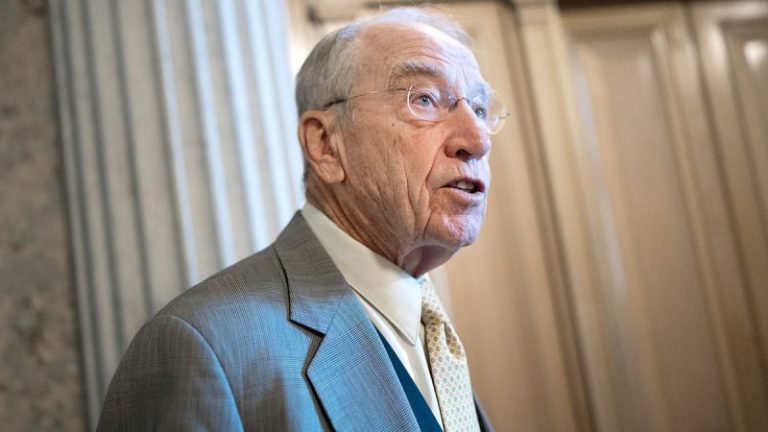
Senate Judiciary Committee Chairman Chuck Grassley and Sen. Amy Klobuchar introduced a bipartisan measure to crack down on money laundering by increasing penalties and ensuring laws apply to systems used by drug traffickers and terrorists.

Grassley, R-Iowa, and Klobuchar, D-Minn., introduced the ‘Combating Money Laundering, Terrorist Finance and Counterfeiting Act’ Friday to enhance criminal money laundering statutes.

The bill would update counterfeiting laws to prohibit state-of-the-art counterfeiting methods and increase penalties for bulk cash smuggling.

The bill would also ensure money laundering laws apply to informal value transfer systems that are often used by drug traffickers and terrorists.

The introduction of the bill comes as Trump administration officials warn that hostile actors, like cartels and terrorists, are funding operations through complex financial channels across the U.S. border. 

Grassley and Klobuchar also said the bill would prohibit the cross-border shipment of blank checks for the purpose of evading reporting requirements.

‘Criminal enterprises and terrorist organizations depend on ill-begotten cash to carry out their dark deeds. As money laundering methods have evolved over time, so must the government’s efforts to exact justice,’ Grassley said, adding that their bill would ensure law enforcement ‘has the tools they need to track down dirty money, hold criminals accountable and prevent further crimes.’

Klobuchar added that as criminals and terrorist organizations ‘develop new methods to launder money, we must provide our law enforcement with the tools they need to keep American communities safe.’

‘This bipartisan legislation makes necessary updates to anti-money laundering statutes and counterfeiting laws, ensuring the law enforcement community can stay one step ahead of those working to undermine our nation’s safety and security,’ she said.

The bill also would establish a new money laundering violation that would prohibit the transfer of funds into or out of the United States — funds specifically being transferred with the intent to violate U.S. income tax laws.

The bill would also prohibit conspiracies to create illegal money services businesses; grant wiretapping authority to investigate currency reporting, bulk cash smuggling, illegal money services businesses and counterfeiting offenses; and grant the U.S. Secret Service the explicit authority to investigate ransomware crimes and other uses of unlicensed money transmitting; and would ensure compliance with financial institutions. 

The measure has wide support in the law enforcement community and has been endorsed by the Fraternal Order of Police, the National Association of Assistant U.S. Attorneys, the National Association of Police Organizations and the National District Attorneys Association.

‘By clarifying the law in response to recent court decisions, strengthening penalties and expanding investigative authorities, this legislation will restore critical law enforcement tools and help disrupt transnational criminal organizations,’ Patrick Yoes, president of the Fraternal Order of Police said, adding that the organization ‘strongly supports this bill, which would prevent criminals and terrorists from profiting from their crimes and protect public safety and national security.’

The National Association of Assistant U.S. Attorneys also endorsed the bill saying the ‘targeted reforms will strengthen investigations, improve prosecutorial clarity and better reflect how modern money-laundering schemes actually operate.’

This post appeared first on FOX NEWS

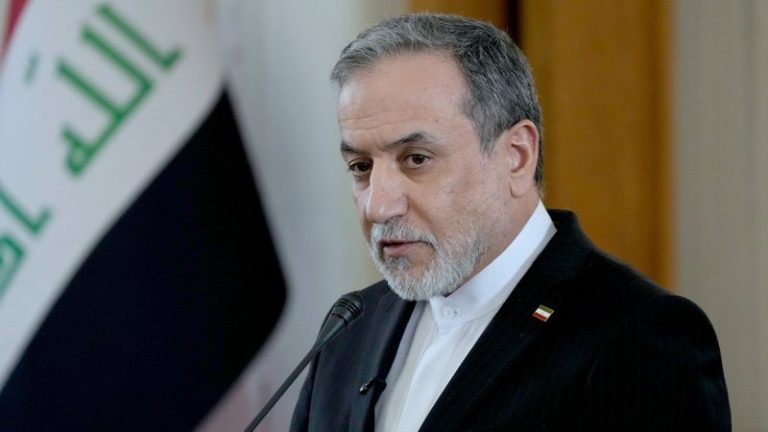
Iranian Foreign Minister Abbas Araghchi said his country would not negotiate on its ballistic missile program, rejecting a core U.S. demand and further dimming prospects for a breakthrough deal.

He again warned in an interview with Al Jazeera that Tehran, Iran, would target U.S. bases in the Middle East if provoked, calling Iran’s missile program ‘never negotiable.’

The warnings came as U.S. and Iranian negotiators met in early February in Oman, even as Washington continued to build up military forces across the region — a posture U.S. officials say is meant to deter further escalation but which analysts argue also underscores how far apart the two sides remain.

Despite the imbalance in military power, analysts say Iran believes it can withstand U.S. pressure by signaling greater resolve — and by betting that Washington’s appetite for war is limited.

While the U.S. possesses overwhelming military capabilities, Defense Priorities analyst Rosemary Kelanic said Iran is relying on the logic of asymmetric conflict.

‘One country is much stronger, but the weaker country cares more,’ Kelanic said. ‘And historically, the country that cares more often wins by outlasting the stronger one.’

‘Iran is trying to signal resolve as strongly as it can, but it likely doubts U.S. resolve — because from Tehran’s perspective, the stakes for Iran are existential, while the stakes for the United States are not,’ she added.

Behnam Taleblu, a senior fellow at the Foundation for Defense of Democracies, said Tehran’s primary leverage is its ability to threaten wider regional instability, even if it cannot win a prolonged conflict.

‘The Islamic Republic’s leverage is the threat of a region-wide war,’ Taleblu said, noting that while U.S. and Israeli defenses could intercept most attacks, ‘something will get hit.’

Iran buying time

Analysts across the spectrum agree that Iran is using negotiations less as a path to compromise than as a way to delay decisive action.

Oren Kessler, analyst at global consulting firm Wikistrat, said Iran is using talks to stabilize its position internally while avoiding concessions on core security issues.

‘Both sides want a deal, but their red lines are very hard for the other side to overcome,’ Kesler said. ‘The talks are going well in the sense that they’re happening, but they’re not really going anywhere.’

Taleblu echoed that assessment, arguing that Tehran is treating diplomacy as a shield rather than a solution.

‘The regime is treating negotiations as a lifeline rather than a way to resolve the core problem,’ he said.

Taleblu added that Iran’s leadership sees talks as a way to deter a strike in the short term, weaken domestic opposition in the medium term, and eventually secure sanctions relief to stabilize its economy.

Secretary of State Marco Rubio has insisted that limits on Iran’s ballistic missiles must be part of any agreement to avoid military action.

‘At the end of the day, the United States is prepared to engage, and has always been prepared to engage with Iran,’ Rubio said in early February. ‘In order for talks to actually lead to something meaningful, they will have to include certain things, and that includes the range of their ballistic missiles. That includes their sponsorship of terrorist organizations across the region. That includes the nuclear program. And that includes the treatment of their own people.’

Anti-government protests beginning at the start of 2026 led to a brutal crackdown in Iran. The regime has admitted to 3,117 deaths linked to the demonstrations, though human rights groups and Iranian resistance organizations peg the death toll as much higher. 

The U.S. also has demanded that Iran give up all enriched uranium stockpiles, which can be used for civilian energy at low levels but for nuclear weapons at higher concentrations.

Araghchi told Al Jazeera that Iran is willing to negotiate on nuclear issues but insisted enrichment is an ‘inalienable right’ that ‘must continue.’

‘We are ready to reach a reassuring agreement on enrichment,’ he said. ‘The Iranian nuclear case will only be resolved through negotiations.’

Iran’s atomic chief said Monday that Tehran would consider diluting its 60% enriched uranium — a level close to weapons-grade — but only in exchange for the lifting of all sanctions.

As negotiations unfolded, the U.S. continued to expand its military footprint in the Middle East.

In late January, the U.S. dispatched a carrier strike group centered on the USS Abraham Lincoln to the North Arabian Sea, accompanied by multiple destroyers and other naval assets. Additional F-15E strike aircraft and air defense systems have also been repositioned at bases across the region, alongside thousands of U.S. troops.

Taleblu said the administration may be using diplomacy to buy time of its own.

‘The charitable interpretation is that the president is buying time — moving assets, strengthening missile defense, and preparing military options,’ he said. ‘The less charitable interpretation is that the United States is taking Iran’s threats as highly credible and still chasing the optics of a deal.’

In 2025, five rounds of talks similarly stalled over U.S. demands that Iran abandon enrichment entirely — talks that ultimately collapsed into Operation Midnight Hammer, a U.S.-led bombing campaign against Iranian nuclear facilities.

This post appeared first on FOX NEWS

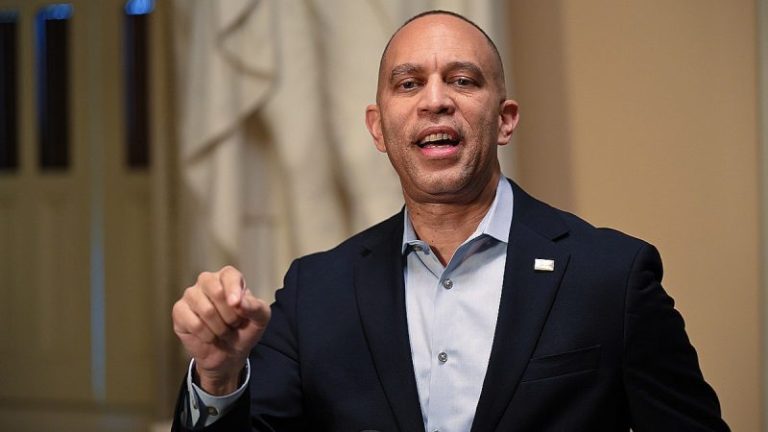
The House of Representatives’ top Democrat claimed Republicans’ election security bill was tantamount to ‘voter suppression’ on Monday.

House Majority Leader Hakeem Jeffries, D-N.Y., criticized the House GOP-led SAVE America Act during his weekly press conference ahead of an expected vote on the bill coming as early as Wednesday.

‘Republicans have adopted voter suppression as an electoral strategy. That’s what the so-called SAVE Act is all about,’ Jeffries said.

He said the bill getting a vote this week is ‘worse than’ a previous iteration simply called the Safeguarding American Voter Eligibility (SAVE) Act, which passed the House in April 2025 with support from all Republicans and four Democrats.

The main thrust of the SAVE Act was implementing a new proof of citizenship requirement in the voter registration process in all 50 states.

The new bill, led by Rep. Chip Roy, R-Texas, and Sen. Mike Lee, R-Utah, would also create a federal voter ID standard at the polls, requiring people to show a form of identification when casting a ballot in national elections.

Jeffries also pointed to a provision that would require information-sharing between state election officials and federal authorities in verifying citizenship on current voter rolls, accusing Republicans of trying to give Americans’ data to Immigration and Customs Enforcement (ICE).

‘This version, as I understand it, will actually give [the Department of Homeland Security] the power to get voting records from states across the country. Why would these extremists think that’s a good idea?’ Jeffries said.

‘Who’d want DHS and ICE, who have been brutally, viciously and violently targeting everyday Americans, to have more data about the American people? It’s outrageous. Something is really wrong with these folks. I think they’re trying to lose elections at this point.’

There is no validated evidence to date that non-citizen voting has swayed the results of any federal election.

But Republicans have argued that the influx of illegal immigrants under the Biden administration has made the problem a real possibility in coming elections.

Nevertheless, voter ID provisions have proven popular in multiple public surveys.

A Pew Research Center poll released in August 2025 showed a whopping 83% of people supported government-issued photo ID requirements for showing up to vote, compared to just 16% of people who disapproved of it.

Jeffries also said the bill would die in the Senate, where at least some Democrats are needed under current rules to overcome a filibuster and advance the legislation.

‘It’s not going to pass. If it squeaks by the House, it’s dead on arrival in the Senate. They’re wasting time,’ he said.

The real possibility of the bill failing in the Senate is why a group of House conservatives are pushing for Senate Majority Leader John Thune, R-S.D., to upend the chamber’s rules on the filibuster to get rid of the 60-vote threshold needed to overcome one. Thune has not committed to any route.

This post appeared first on FOX NEWS

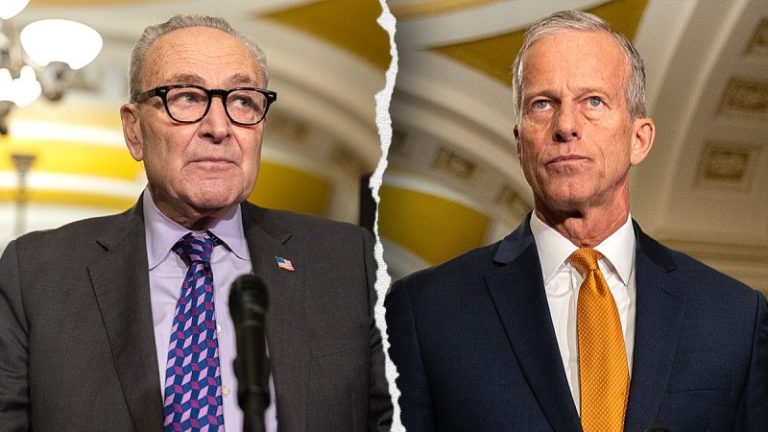
The Senate is scrambling to avoid a third government shutdown under President Donald Trump, and after negotiations seemingly appeared to hit a brick wall, lawmakers are cautiously optimistic that a deal could be made. 

Senate Republicans received Senate Democrats’ ‘partisan wishlist’ of demands over the weekend, sources familiar with negotiations told Fox News Digital. The White House sent over its own counter-proposal, but several lawmakers weren’t clear what was in package as of Monday night. 

Some, including Senate Majority Leader John Thune, R-S.D., wouldn’t say, but noted that congressional Democrats and the White House were ‘trading papers,’ and signaled that the back and forth activity was a good sign of negotiations moving forward. 

But lawmakers aren’t out of the woods yet, a reality that Thune warned of since Senate Democrats demanded a two-week funding extension for the Department of Homeland Security (DHS). Congress has until Friday to avert a shutdown and little time to actually move a short-term patch from one side of the building to the other. 

Republicans are mulling another short-term extension, known as a continuing resolution (CR), to avert a partial shutdown. Thune said whether Democrats would sign off depended on how well background negotiations were going, but hinted that so far, things were moving toward a solution. 

‘I think, based on what I’m familiar with about the discussion so far, I think there is, but we’ll know more when the proposal comes back,’ Thune said. ‘Let’s have a chance to evaluate it.’ 

Thune later said that he planned to tee up another CR on Tuesday, but noted that the length would ‘have to be negotiated. But let’s see what the next day brings and we’ll go from there.’

Democrats’ prime objective is reining in Immigration and Customs Enforcement (ICE), following the fatal shootings of Alex Pretti and Renee Nicole Good. 

The proposal they submitted included items that are a bridge too far for Republicans, including requiring ICE agents to get judicial warrants, de-mask and have identification ready — some in the GOP warn doing so would lead to more agents being doxxed, or when a person’s private information is made public, like their address. 

Senate Minority Leader Chuck Schumer, D-N.Y., warned that the ‘clock is ticking’ for Republicans to respond. 

‘We have sent you our proposals, and they are exceedingly reasonable,’ Schumer said on the Senate floor. ‘I hope our colleagues on the other side, many of whom, at least here in the Senate, recognize that things need to change, show they’re ready to act in a meaningful way.’

Prior to Democrats finally handing over the legislative version of their demands on Saturday, Republicans publicly questioned if they actually wanted to have serious negotiations. That changed over the weekend. 

A White House official told Fox News that ‘President Trump has been consistent, he wants the government open and the Administration has been working with both parties to ensure the American people don’t have to endure another drawn-out, senseless, and hurtful shutdown.’

Meanwhile, the scope and scale of a possible third closure would be limited to just the DHS, but would really only have an effect on FEMA, TSA, the Coast Guard and other priorities under the agency’s umbrella. That’s because ICE and immigration operations are flush with billions from Trump’s ‘big, beautiful bill.’ 

‘To say that the security of Americans is not paramount, I think, would be a huge mistake for the Democrats, and I certainly hope that they’ll continue to operate in good faith,’ Sen. Katie Britt, R-Ala., and the chair of the Homeland Security spending panel, said.

‘Because you do realize, ICE and [Customs and Border Patrol] would continue to be funded,’ she continued. 

Things are also about to get complicated quickly in the upper chamber. Lawmakers are set to leave Washington, D.C., for a weeklong recess this Thursday, and many are headed overseas to the Munich Security Conference. 

That starts on the day of the deadline and lasts through the weekend. Thune warned that it was possible he would cancel the upcoming recess, especially if there was little progress toward avoiding a DHS shutdown. 

Still, Senate Democrats believe that the ball is in the GOP’s court and are waiting for their counterparts to act. 

‘I mean, I think they’re pretty reasonable,’ Sen. Chris Murphy, D-Conn., and the top Democrat on the Senate Homeland Security Appropriations panel, said.

‘I mean, we did not ask for the moon,’ he continued. ‘We asked for targeted but impactful changes in the way that ICE is terrorizing American cities. So obviously we’re willing to negotiate.’

This post appeared first on FOX NEWS

President Donald Trump vowed to impose ‘very severe consequences’ on Russia in 2025 if it didn’t commit to a deal to end its war on Ukraine.

As the war nears its four-year anniversary in late February, national security experts tell Fox News Digital that Russia is facing tangible consequences for the war. Those are through its network of proxy countries that have directly endured the might of the U.S. military and subsequently left Russia with fewer streams of revenue and resources, they say. 

‘The President’s moves as it pertains to Russia are really strategic,’ Morgan Murphy, who previously served as the senior public diplomacy advisor to the president’s special envoy to Ukraine in 2025, told Fox News Digital. ‘So if you look at what he’s done with Iran and with Venezuela, these are two Russian proxies, right? Iran is a close ally of Russia.’

‘They sell a lot of drones to Russia,’ Murphy, who is running as a GOP Senate candidate to represent Alabama, continued. ‘Venezuela was again a proxy of Russia here in our hemisphere, and Trump is in the process of taking Iran off the table. He’s certainly taken Venezuela off the chessboard, and that that has to change Putin’s calculus, because he sees in President Trump a president who follows what he says he’s going to do.’ 

Russia’s war on Ukraine has persisted since Feb. 24, 2022, about a year after Trump’s first administration ended and during President Joe Biden’s presidency. Trump campaigned on ending the war upon his second inauguration in 2025, but ending the war has proven more difficult than anticipated as the U.S. continues negotiations. 

A White House official who spoke to Fox Digital said Trump is driven by humanitarian concerns and wants the conflict ended to stop the needless loss of life. The official added that in recent months his team has made major headway toward a settlement, pointing to Trump’s own remarks that ‘very good things’ are developing between Ukraine and Russia.

According to the official, recent negotiations in Abu Dhabi, United Arab Emirates, were substantive and constructive, with U.S., Ukrainian and Russian delegations agreeing to a 314-person prisoner exchange — the first in five months. While more work is ahead, the official argued that breakthroughs like this show sustained diplomacy is producing real, measurable progress toward ending the war.

Trump launched a series of strikes on Iran in June 2025 that hobbled the country’s covert nuclear program. Massive protests swept Iran in December 2025 as citizens spoke out against the government and its cratering economy. 

Iran violently cracked down on the nationwide protests, with thousands of citizens reportedly killed and the Trump administration warning Iran that it would face U.S. military action if the executions and killings continued. 

The U.S. and Iran held discussions in Oman Friday as Tehran, Iran, continues to obscure its nuclear ambitions, with military intervention on the table as the U.S. seeks to prevent Iran from having nuclear weapons capabilities. 

Iran and Russia have grown into a tighter wartime partnership in recent years, with U.S. and allied officials citing Iran’s supply of armed drones and other defense cooperation that has helped power Russia’s attacks in Ukraine — drawing the two heavily sanctioned regimes closer economically and militarily.

Ret. Air Force Gen. Bruce Carlson pointed to the Trump administration’s actions on Iran and Venezuela as evidence of how Trump is strategically pressuring Russia via its proxies to end the war in Ukraine. 

‘In any campaign, you don’t just target command centers — you cut supply lines and logistics,’ Carlson said. ‘Pressuring Russian proxies does exactly that. Venezuela, Iran, and the shadow fleet are key arteries feeding Russia’s war in Ukraine. Additionally, by pressing Europe to increase NATO spending and move off Russian oil and gas, we are directly altering Moscow’s decision-making.’

Carlson argued that, strategically, the trend lines are moving against Moscow as the U.S. ramps up pressure on Russia’s partners — leaving Putin with fewer backers, tighter resources and less flexibility, and undermining any assumption that dragging out the war comes without a cost. 

The retired Air Force general added that Putin and his proxies operate as a single ecosystem: Russia’s campaign relies on outside suppliers and sanctions-busting networks, so hitting any link in that chain can weaken Russia’s revenue and its ability to sustain attacks on Ukrainian civilians.

‘But ensuring a lasting and fair peace is not solely about pressuring Russia. As the cold winter continues in Ukraine, there are increasing concerns on Ukraine’s energy needs and air defense systems. U.S. and European support remain vital,’ he added. 

As tensions with Iran heighten, the Trump administration successfully captured Venezuelan dictator Nicolás Maduro on sweeping narco-trafficking charges in January. 

Venezuela is another Russian ally, publicly backing Moscow and maintaining high-level diplomatic ties, while giving Russia a Western Hemisphere foothold through military-technical cooperation and deep dependence on Russian arms — a relationship that has triggered U.S. sanctions actions tied to Venezuela’s oil sector and Russian-linked firms.

‘The removal of Maduro stripped Moscow of a key client in our hemisphere, and the increased pressure on Iran threatens the weapons and drone supply chain that Russia uses against Ukrainian civilians,’ Carrie Filipetti, executive director of foreign policy group the Vandenberg Coalition, told Fox News Digital. ‘This is how we have to change Putin’s long-term calculus.’

‘For the first time, the United States has used the power of American diplomacy to bring Ukraine and Russia into trilateral diplomatic talks,’ Filipetti added. ‘Combined with the threat of additional sanctions reliance and increased pressure on the countries that buy Russian energy, these steps are critical to shaking Russia’s assumption that time is on its side.’ 

Ret. Air Force Lt. Gen. Richard Newton told Fox News Digital that when Trump warned Russia of severe consequences in 2025 if Moscow did not end the war, the threat was followed by tangible consequences that reverberated through the Kremlin. 

‘Deterrence and leverage requires our adversaries (to) believe we will act,’ Newton said. ‘President Trump is doing just that by disrupting the systems that fund and sustain Putin’s war. The capture of Maduro and the just announced trade deal with India’s Prime Minister Modi — that forces India off of Russian oil — is a major blow to Russia’s war machine.’

The White House said in February that it struck with India to increase U.S. energy imports and stop buying Russian oil. The U.S. tops the world in daily oil production, with Saudi Arabia and Russia following behind. 

Filipetti argued that peace in Ukraine is only obtained by forcing Russia to face ‘real consequences.’

‘Vladimir Putin is responsible for a war of aggression marked by atrocities against Ukrainian civilians, and any lasting peace must impose real consequences on Russia itself. And weakening Russia’s proxies and isolating Putin is one of the most effective ways to reduce his ability to wage war,’ Filipetti said.

‘When it comes to China, North Korea, and Iran — without question these authoritarians are facing a very different calculus than just a few months ago,’ she said. 

While Newton pointed to a shadow-fleet sanctions package and another sanctions package that are moving through Congress, along with higher NATO spending and a tougher allied military posture, as key pressure points he says could help drive a peace deal.

Republican South Carolina Sen. Lindsey Graham is promoting a sweeping Russia sanctions bill that would tighten the screws on Moscow by punishing countries and companies that keep buying Russian energy with secondary sanctions and tariffs, while a separate bipartisan ‘shadow fleet’ package would target the tankers, insurers and shell networks Russia uses to move oil and evade sanctions.

Murphy argued that Trump already has sketched what he sees as a realistic off-ramp for Moscow — one he says even some Democrats would recognize as the best deal Putin is likely to get — including restoring Russia’s seat at the top diplomatic table, reopening some Western commercial access, and acknowledging Russia’s current occupation of Ukrainian territory without formally recognizing sovereignty. 

Murphy likened that offer to a ‘golden bridge’ for Putin to exit the war, but said the Kremlin has so far declined it, making the next move ultimately Russia’s choice — and raising the question of how many more casualties Moscow is willing to absorb with no clear endpoint in sight.

The war underscores a Russian worldview U.S. negotiators often misread through a Western lens, Murphy said, explaining Russia is shaped by catastrophic losses in World War I and World War II and a deep-seated suspicion that invasion is a recurring threat. He said that unpredictability is why the U.S. military has long used the ‘Crazy Ivan’ moniker for Russian behavior. 

Trump is meanwhile putting himself in the Russians’ shoes, Murphy argued, and meeting the moment with a clearer-eyed read of Moscow’s mindset and history. 

‘It is a decision that the Russians are going to have to make. How many more lives do they want to feed into this meat grinder? How many more deaths are they willing to endure?’ Murphy said. 

Ukrainian President Volodymyr Zelenskyy told reporters in February that the U.S. set a June deadline for Moscow and Kyiv to strike an agreement to end the war, teeing up heightened tensions ahead of the U.S. midterms in November. 

This post appeared first on FOX NEWS