
Author

admin

Browsing

Rio Tinto (ASX:RIO,NYSE:RIO,LSE:RIO) and Glencore (LSE:GLEN,OTCPL:GLCNF) said they will no longer be pursuing a merger, with Rio Tinto noting that the combination of the businesses would not deliver value to its shareholders.

Glencore responded to Rio Tinto by saying that under the terms of the proposal, the Rio Tinto executive group would retain both the chair and CEO roles, which would undervalue Glencore’s contribution to the combined company.

The deal would have created the world’s largest mining company with a combined market cap of US$260 billion. While the collapse of the proposed merger is drawing headlines, it comes at an accelerated pace for mergers and acquisitions in the industry, as majors seek to replenish their project pipelines and mid-cap producers look to grow their businesses.

Among other notable mergers still on the books is Anglo American’s (LSE:AAL,OTCQX:NGLOY) merger with Canada-based Teck Resources (TSX:TECK.A,TECK.B,NYSE:TECK). That deal is currently working its way through regulatory approvals, with the most recent update that it is heading toward antitrust clearance in Europe.

On Wednesday (February 11), Indonesia’s resources ministry ordered Eramet (EPA:ERA,OTCPL:ERMAF) and its joint venture partners, Tsingshan Holding Group, to slash production at the world’s largest nickel mine.

Under the new work and budget plan, PT Weda Bay Nickel has been granted an initial quota of 12 million metric tons, down from the 42 million metric tons it was allowed in 2025.

Nickel has been elevated this year, trading as high as US$18,725 on February 2. Although prices have fallen since that high, the announcement gave nickel some momentum, pushing prices to US$17,720 per metric ton on the London Metal Exchange on Wednesday. Prices eased again on Thursday (February 12), but remain well above 2025 averages.

For more on what’s moving markets this week, check out our top market news round-up.

Markets and commodities react

Canadian equity markets were mixed this week.

The S&P/TSX Composite Index (INDEXTSI:OSPTX) gained 2.88 percent over the week to close Friday (February 13) at 33,073.71, while the S&P/TSX Venture Composite Index (INDEXTSI:JX) shed 0.48 percent to 991.99.

The CSE Composite Index (CSE:CSECOMP) dropped 2.7 percent to 163.24

The gold price was largely flat, losing just 0.07 percent to close at US$5,032.68 per ounce on Friday at 4:00 p.m. EST. The silver price fared worse, closing the week down 8.43 percent at US$76.92 on Friday.

In base metals, the Comex copper price recorded a 2.35 percent decrease this week to US$5.83.

The S&P Goldman Sachs Commodities Index (INDEXSP:SPGSCI) was down 0.13 percent to end Friday at 583.86.

Top Canadian mining stocks this week

How did mining stocks perform against this backdrop?

Take a look at this week’s five best-performing Canadian mining stocks below.

Stocks data for this article was retrieved at 4:00 p.m. EST on Friday using TradingView’s stock screener. Only companies trading on the TSX, TSXV and CSE with market caps greater than C$10 million are included. Mineral companies within the non-energy minerals, energy minerals, process industry and producer manufacturing sectors were considered.

1. Trinity One Metals (TSXV:TOM)

Weekly gain: 104.55 percent
Market cap: C$12.83 million
Share price: C$0.45

Trinity One Metals is a silver exploration and development company with a portfolio of mineral projects, including the recently acquired Silver 1 project in Ecuador.

The property consists of the Silver-1 mine concession, which covers an area of 3,108 hectares and lies within the same mineral belt as Lundin Gold’s (TSX:LUG,OTCQX:LUGDF) Fruta Del Norte mine. Past mining at the site occurred between 1989 and 1994 and included 3,600 meters of underground development, along with a historic resource of 200,000 to 700,000 metric tons of ore averaging 400 to 800 grams per metric ton (g/t) silver and 3 g/t gold.

The company announced the closing of the property acquisition on February 4 for a total consideration of US$540,000. In the release, the company said it will work swiftly to confirm the historic resource to modern standards.

The news was followed on Tuesday (February 10), when the company announced a C$3.3 million non-brokered private placement, which was upsized to C$5.3 million on Thursday. The company said it will use proceeds from the placement to advance exploration projects across its portfolio.

2. Cordoba Minerals (TSXV:CDB)

Weekly gain: 74.68 percent
Market cap: C$123.82 million
Share price: C$1.38

Cordoba Minerals is an explorer whose flagship project is Alacran in Colombia. The asset is a 50/50 joint venture with JCHX Mining Management (SHA:603979). The 20,000 hectare property hosts copper, gold and silver mineralization across five deposits: Alacran, Alacran North, Montiel East, Montiel West and Costa Azul.

A feasibility study for the project released in February 2024 demonstrates an after-tax net present value of US$360 million with an internal rate of return of 23.8 percent and a payback period of three years.

The resource estimate for the Alacran deposit and historical tailings shows an indicated resource of 99.46 million metric tons of ore with an average grade of 0.41 percent copper, 0.24 g/t gold and 2.65 g/t silver. Contained metal totals 904.53 million pounds of copper, 765,400 ounces of gold and 8.47 million ounces of silver.

Following the completion of JCHX’s earn in for 50 percent of the project in July 2025, Cordoba said it had entered into a definitive agreement to sell its remaining 50 percent interest in Alacran.

However, on January 2, the company reported that not all conditions for the sale had been met, and on Tuesday, announced that it had entered into an amended agreement.

Under the new terms, the closing payment was increased to US$128 million from US$88 million, payable in a lump sum at closing. The release states that the bulk of the cash payment will be distributed to shareholders after settling liabilities and obligations, with the company retaining US$10 million for corporate purposes.

3. Rio Silver (TSXV:RYO)

Weekly gain: 52.38 percent
Market cap: C$23.74 million
Share price: C$0.64

Rio Silver is an exploration company advancing its Maria Norte project in Peru.

The property has changed hands several times in the 18 years prior to Rio’s acquisition in March 2025, but has seen little exploration during that time. However, in a February 5 release, the company notes that historic mining occurred at the site due to the presence of a reclaimed waste dump. The property covers the western portion of the Tangana West vein system, and although it has not yet completed an economic assessment for the property. In the announcement, the company said it plans to advance surface mapping and sampling in the third quarter of 2026.

Throughout January, the company made several announcements regarding its exploration and development timeline. On January 6, the company reported results from technical work at the site, confirming the presence of silver mineralization with grades up to 991 g/t in a 0.7-meter channel sample.

The company also announced on January 29 that it was launching a metallurgical program at the site, which it said will assist the company in determining the project’s potential value.

4. Barksdale Resources (TSXV:BRO)

Weekly gain: 48.15 percent
Market cap: C$28.04 million
Share price: C$0.2

Barksdale Resources is a copper explorer focused on advancing its Sunnyside asset in Arizona, US. The property covers approximately 21 square kilometers, south of Tucson, Arizona. It hosts an intrusive complex that the firm believes to be an extension of the copper-zinc-lead-silver system found at South32’s (ASX:S32,OTCPL:SOUHY) Taylor deposit.

In 2025, the company achieved several milestones under its earn-in agreement and completed the initial 51 percent in September following a C$1 million cash payment. Prior to the payment in June, Barksdale said it would work toward increasing its interest in the property to 67.5 percent.

On January 21, the company announced plans to raise C$5 million to fund a Phase 2 drill plan required to increase its ownership stake in the Sunnyside project.

On Wednesday, Barksdale announced the opening of an additional private placement to raise C$930,000. Funds raised from this round will also be used to fund exploration activities at Sunnyside.

5. Pirate Gold (TSXV:YARR)

Weekly gain: 48 percent
Market cap: C$129.48 million
Share price: C$0.37

Formerly Sokoman Minerals, Pirate Gold is a discovery-oriented company with a portfolio of gold projects and one of the largest land positions in Newfoundland and Labrador, Canada.

It also owns a 40 percent stake in the Killick lithium project, a 40/40/20 joint venture with Benton Resources (TSXV:BEX,OTCPL:BNTRF) and Piedmont Lithium.

In October, the company combined its Moosehead and Crippleback claims to form the Treasure Island project, which hosts the largest mineral license and longest strike length along the Valentine Lake fault.

Along with new claims, Pirate Gold’s land holdings in the area cover approximately 58,775 hectares and host multiple untested anomalies identified through historic data and exploration efforts by Pirate Gold.

On Friday, Pirate Gold announced the initiation of project-scale surveys at Treasure Island, as well as the advancement of a 50,000 meter drill program, with two rigs mobilized to the site.

Additionally, the company also said it had received drill permits to operate at the Crippleback Lake and Stony Lake areas, which would allow it to extend its exploration beyond the current footprint at Moosehead and test other high-priority targets along the fault zone.

FAQs for Canadian mining stocks

What is the difference between the TSX and TSXV?

The TSX, or Toronto Stock Exchange, is used by senior companies with larger market caps, and the TSXV, or TSX Venture Exchange, is used by smaller-cap companies. Companies listed on the TSXV can graduate to the senior exchange.

How many mining companies are listed on the TSX and TSXV?

As of December 2025, 898 mining companies and 71 oil and gas companies are listed on the TSXV, combining for more than 60 percent of the 1,531 total companies listed on the exchange.

As for the TSX, it is home to 175 mining companies and 51 oil and gas companies. The exchange has 2,089 companies listed on it in total.

Together, the TSX and TSXV host around 40 percent of the world’s public mining companies.

How much does it cost to list on the TSXV?

There are a variety of different fees that companies must pay to list on the TSXV, and according to the exchange, they can vary based on the transaction’s nature and complexity. The listing fee alone will most likely cost between C$10,000 to C$70,000. Accounting and auditing fees could rack up between C$25,000 and C$100,000, while legal fees are expected to be over C$75,000 and an underwriters’ commission may hit up to 12 percent.

The exchange lists a handful of other fees and expenses companies can expect, including but not limited to security commission and transfer agency fees, investor relations costs and director and officer liability insurance.

These are all just for the initial listing, of course. There are ongoing expenses once companies are trading, such as sustaining fees and additional listing fees, plus the costs associated with filing regular reports.

How do you trade on the TSXV?

Investors can trade on the TSXV the way they would trade stocks on any exchange. This means they can use a stock broker or an individual investment account to buy and sell shares of TSXV-listed companies during the exchange’s trading hours.

Article by Dean Belder; FAQs by Lauren Kelly.

Securities Disclosure: I, Dean Belder, hold no direct investment interest in any company mentioned in this article.

Securities Disclosure: I, Lauren Kelly, hold no direct investment interest in any company mentioned in this article.


This post appeared first on investingnews.com

Here’s a quick recap of the crypto landscape for Friday (February 13) as of 9:00 p.m. UTC.

Get the latest insights on Bitcoin, Ether and altcoins, along with a round-up of key cryptocurrency market news.

Bitcoin (BTC) was priced at US$68,987.01, up 5.2 percent over the last 24 hours.

Bitcoin price performance, February 13, 2026.

Chart via TradingView.

A constructive scenario over the next three to six months depends on gradual improvement in global liquidity, moderation in yields and steady exchange-traded fund (ETF) inflows.

According to Tran, if financial conditions tighten or additional liquidity stress occurs, the market may need another washout to rebalance leverage. Ultimately, the return of confidence, reflected through durable and sustainable capital inflows, is what matters most for the transitional phase.

Ether (ETH) was priced at US$2,054.76, up by 7 percent over the last 24 hours.

Altcoin price update

  • XRP (XRP) was priced at US$1.41, up by 4.7 percent over 24 hours.
  • Solana (SOL) was trading at US$85.01, up by 10.2 percent over 24 hours.

Today’s crypto news to know

Coinbase posts US$667 million Q4 loss

Coinbase Global (NASDAQ:COIN) reported a fourth quarter net loss of US$667 million as falling crypto prices weighed on its revenue and the value of its investment portfolio. The company’s revenue came in at US$1.78 billion, below analysts’ expectations, making a 22 percent decline from a year earlier.

The firm attributed much of the loss to a US$718 million drop in portfolio value, largely unrealized, alongside weaker transaction activity. Shares slid ahead of the release and have fallen more than 55 percent over the past six months as cryptocurrencies retreated. Despite the surprise slide, CEO Brian Armstrong sought to reassure investors, saying the firm remains “deliberately well capitalized” with US$11.3 billion in cash and equivalents.

He added that retail customers are largely holding rather than selling, even as volatility persists.

Bitcoin ETFs lose US$410 million

Spot Bitcoin ETFs saw US$410 million in outflows on Thursday (February 12), extending a rocky stretch that has drained nearly US$1.5 billion over two weeks.

The iShares Bitcoin Trust ETF (NASDAQ:IBIT) led the pullback, followed by Fidelity and Grayscale products, as institutional investors recalibrated positions amid macro uncertainty.

Treasury chief pushes CLARITY Act as crypto selloff deepens

US Secretary of the Treasury Scott Bessent urged Congress to pass the Digital Asset Market CLARITY Act this spring, arguing that it will provide stability to markets rattled by volatility.

Speaking on CNBC and later before the Senate Banking Committee, Bessent said the bill will give “great comfort to the market,” and warned that parts of the crypto industry are resisting what he called “very good regulation.”

“There seems to be a nihilist group in the industry who prefers no regulation over this very good regulation,” he told lawmakers, drawing support from Senator Mark Warner.

The legislation has stalled amid disputes over stablecoin yield, DeFi oversight and token classifications, with critics — including Coinbase CEO Brian Armstrong — raising objections. Bessent cautioned that a bipartisan coalition backing the bill could fracture if Democrats retake the House in November. Warner, meanwhile, stressed unresolved concerns around illicit finance and national security risks tied to DeFi.

HIVE’s BUZZ HPC platform secures US$30 million in AI cloud contracts

BUZZ High Performance Computing (HPC), a Hive Digital Technologies (TSXV:HIVE,NASDAQ:HIVE) platform, announced that it has signed customer agreements valued at approximately US$30 million over two year fixed terms for artificial intelligence (AI) cloud contracts. The new contracts will support the initial phase of BUZZ’s AI-optimized GPU deployment at its Canada West location in Manitoba, with compute capacity expected to be online during the quarter ending on March 31, 2026. This phase consists of 504 liquid-cooled Dell Technologies (NYSE:DELL) server-based GPUs.

This initial phase is expected to generate about US$15 million in annual recurring revenue (ARR) to BUZZ’s cloud business once fully operational, increasing HIVE’s total annualized HPC segment revenue to roughly US$35 million.

HIVE said it aims to scale its HPC GPU AI cloud business toward approximately US$140 million in ARR over the next year. The company is using vendor financing and strategic partnerships to scale efficiently and pursue a “dual-engine strategy” of hashrate services and GPU-accelerated AI computing across its facilities in Canada, Sweden and Paraguay.

Taurus and Blockdaemon partner to expand institutional staking

Taurus, a Swiss fintech firm that provides digital asset infrastructure for banks and financial institutions, announced an agreement with blockchain infrastructure company Blockdaemon that will allow banks to offer staking yields to their clients without having to move those assets out of tightly controlled, regulated custody.

Taurus will integrate Blockdaemon’s staking infrastructure into its custody product, Taurus‑PROTECT, which is designed to keep digital assets safe inside banks’ own systems under financial regulator rules.

Taurus also has an agreement to provide digital asset custody, tokenization and node management technology that State Street uses to power its full‑service digital asset platform for institutional investors. Additionally, BNY Mellon (NYSE:BK) is broadening its digita asset platforms by partnering with infrastructure providers, including Blockdaemon.

Securities Disclosure: I, Meagen Seatter, hold no direct investment interest in any company mentioned in this article.

Securities Disclosure: I, Giann Liguid, hold no direct investment interest in any company mentioned in this article.
This post appeared first on investingnews.com

White House press secretary Karoline Leavitt is making an example of former President Barack Obama for encouraging voters and lawmakers to reject adopting national voter ID laws. 

‘You know how badly the Democrats are panicking when they bring out Obama to spread lies about voter ID,’ Leavitt posted to X Thursday. ‘The fact is that nearly 90% of voters support’ voter ID laws, she continued before posting two screenshots showing two polls reflecting Americans support such laws at around 83% support to 84% support. 

Leavitt’s comments follow the House passing a massive election integrity overhaul bill Wednesday, which includes requiring voters to show a photo ID when casting ballots in federal elections. The bill overall aims to prevent noncitizens from voting in U.S. federal elections, with all but one Democrat, Rep. Henry Cuellar, D-Texas, voting against it. 

Obama was among prominent Democrats encouraging House lawmakers to vote against the measure, claiming it will disenfranchise voters. 

‘Republicans are still trying to pass the SAVE Act—a bill that would make it harder to vote and disenfranchise millions of Americans,’ he posted to X Wednesday evening. ‘Join @RedistrictAct and tell your member of Congress to vote no.’ 

Democrats have argued that voter ID laws can disenfranchise eligible voters because they often require specific, current government-issued IDs that may be a struggle to obtain due to costs, paperwork hurdles or limited DMV access. Republicans have rejected that argument, calling the requirement a common-sense safeguards that would boost confidence in elections, while simultaneously noting that most Americans already need IDs for everyday tasks.

In another post, Leavitt shared that Obama presented his own driver’s license to vote in the 2012 election. Obama voted early that cycle and was seen on camera pulling his Illinois driver’s license from his wallet to flash to poll workers. 

‘Here is Barack Obama showing his photo ID to vote in a past election,’  Leavitt posted. ‘Why are Democrats in Congress so opposed to making this a requirement across the country? Voter ID laws are common sense.’ 

White House spokeswoman Taylor Rogers added that IDs are frequently used by Americans to buy alcohol or get on a plane, which she said shows the hypocrisy of Democrats pushing against the election security overhaul. 

‘Barack Obama and the rest of the Democrats think Americans are stupid, which is why they are blatantly lying about the commonsense election integrity provisions in the popular SAVE Act,’ Rogers told Fox News Digital. 

‘Americans need to show ID to buy alcohol, get on a plane, and even get into the Democratic National Convention — but these hypocrite Democrats don’t want voters to show their ID to cast a ballot. Congressional Democrats’ opposition to the SAVE America Act is indefensible and wildly out of step with the views of the American people.’ 

Fox News Digital reached out to Obama’s office Thursday for comment but did not immediately receive a reply. 

Called the SAVE Act, the legislation would additionally require information-sharing between state election officials and federal authorities in verifying citizenship on current voter rolls, as well as enable the Department of Homeland Security to pursue immigration cases if non-citizens were found to be listed as eligible to vote.

If passed, the new requirements could be implemented for the November midterm elections. It must first pass the Senate before it could land on President Donald Trump’s desk. 

This post appeared first on FOX NEWS

Lawmakers are jetting from Washington, D.C., without a deal to prevent a partial government shutdown. 

Their departure comes after the Senate was unable to send a full-year funding bill for the Department of Homeland Security (DHS) to President Donald Trump’s desk. 

Senate Democrats doubled down on their demands for stringent reforms to immigration enforcement and bucked multiple attempts Thursday to keep the agency open.

With both chambers now on their way to a weeklong recess, the agency is expected to shutter at midnight Friday. Unless a deal is struck before lawmakers return, DHS will be shut down for at least that period of time.

Senate Majority Leader John Thune, R-S.D., made the call to send lawmakers home and noted that if negotiations made a breakthrough, they would be on 24-hour notice to return. But talks, for now, are somewhere between baby steps and stuck. 

‘What it appears to me, at least at this point, is happening is the Democrats, like they did last fall, they really don’t want the solution,’ Thune said. ‘They don’t want the answer. They want the political issue.’ 

Senate Minority Leader Chuck Schumer, D-N.Y., and his caucus blocked an attempt to pass the original DHS funding bill and a subsequent two-week funding extension. 

Their resistance comes after the White House unveiled the legislative text of the administration’s counteroffer, which several Senate Democrats balked at Thursday morning. 

‘The administration doesn’t actually want to reform ICE,’ Schumer said. ‘They never do it on their own. That is why we need — we are fighting for — legislation to rein in ICE and stop the violence.’

Senate Democrats have demanded a stringent list of reforms to Immigration and Customs Enforcement (ICE). They weren’t persuaded by border czar Tom Homan that operations in Minneapolis would be drawn down as negotiations continue.

It was a déjà vu moment from months earlier, when Thune repeatedly tried to peel Democrats away from Schumer during the longest government shutdown in U.S. history but failed to break their blockade.

While there was optimism that negotiations were moving in a positive direction earlier this week, those hopes appeared to have shattered. 

‘At this point, it seems clear that the Democrats are going to walk away from that bipartisan conversation,’ a senior White House official said. ‘They’re going to shut the department down. They’re going to deprive Americans of critical services such as FEMA, such as TSA and what will be the third partial government shutdown of this Congress.’

Senate Democrats received the legislative version of Republicans and the White House’s counteroffer Wednesday night, but many said it was ‘not sufficient,’ and several Democrats leaving a closed-door meeting Thursday morning said a deal remained out of reach.

Given the stagnation in talks, Thune opted to go ahead with the scheduled recess, but made clear to lawmakers that if there was a breakthrough they would need to return.

‘Obviously, we’ve made it clear to people that they have to be available to come back and vote,’ Thune said. 

Talks of another counteroffer to the White House are in the works. Some Senate Democrats hope that the upcoming recess and likely closure of DHS will serve as a wake-up call to Republicans. 

Complicating matters is that several members of the House and Senate are expected to travel to Germany for the annual Munich Security Conference.

‘I still think the Republicans are in a bubble and do not understand the depth of the anger out there in the world,’ Sen. Brian Schatz, D-Hawaii, told Fox News Digital. 

‘And maybe this break will allow them to go home and get yelled at, not just by people who are progressive, but everybody who thinks that this agency is out of control and needs to be reined in.’

This post appeared first on FOX NEWS

: A trio of Republican senators are moving to overhaul how federal childcare funds are distributed after what they call ‘mass fraud’ in Minnesota exposed a system that paid providers before verifying children were ever in the room.

Sen. Ted Cruz, R-Texas, joined by Sens. Mike Lee, R-Utah, and Rick Scott, R-Fla., is introducing the Payment Integrity Act, legislation that would require states to distribute federally funded childcare dollars based on verified attendance — not enrollment claims.

‘Programs in Minnesota for welfare and childcare were designed to channel resources into protecting vulnerable children, but were treated like an open ATM by criminals,’ Cruz told Fox News Digital.

‘The mass fraud in Minnesota shows that American taxpayers can no longer rely on local and state politicians to prevent abuses, because those politicians often have electoral and partisan incentives to look the other way. My legislation reduces the risk of the waste and fraud we’ve seen and ensures that resources are provided to children and families who need it.’

The bill would reverse a 2024 Biden administration rule requiring states to pay childcare providers before attendance verification. Under Cruz’s proposal, providers would be paid only after services are confirmed — shifting from enrollment-based payments to attendance-based billing.

Cruz’s bill comes as the outspoken Texan led a Senate Judiciary Subcommittee hearing on alleged Somali fraudsters last week. There, lawmakers heard directly from David Hoch — a journalist seen accompanying blogger Nick Shirley to addresses proclaimed to be Somali daycares.

‘There are few crimes more morally repugnant than stealing from vulnerable children. Every dollar stolen is a meal not eaten, a doctor’s visit missed, and a future diminished,’ Cruz said, adding that such fraud ‘plunders our children’s potential.’

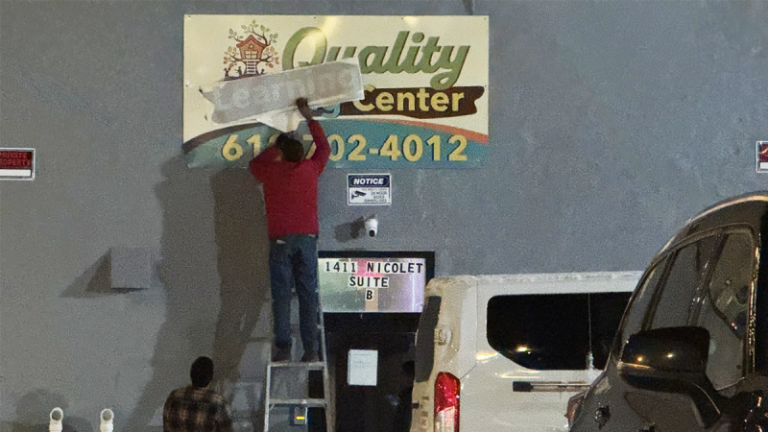
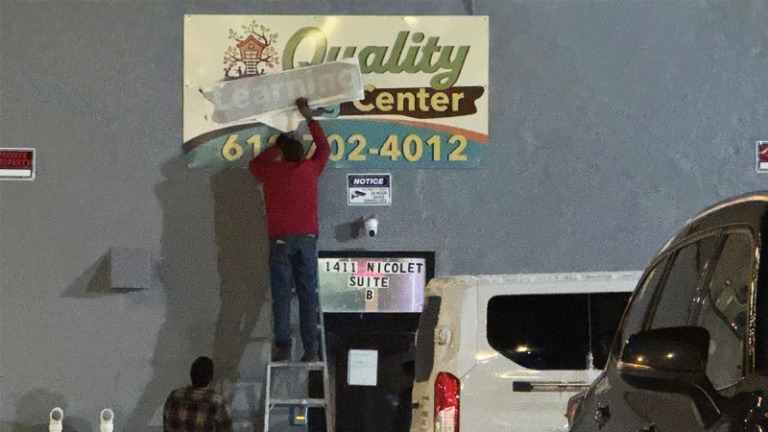
Gesturing towards a photo of the ‘Quality Learing Center’ in Minneapolis during the hearing, an allegedly fraudulent childcare provider Cruz called ’emblematic’ of the crisis, he said the fraud was occurring not in ‘some distant or lawless place, but in the heart of America’s Midwest.’

Co-sponsor Lee said that support for childcare should ‘go to real kids, not empty rooms.’

‘Fake childcare operations are stealing funding from the ones who are actually taking care of America’s children in need. Our bill will address this massive fraud by granting funding based on actual attendance rather than reported enrollment, and allowing states to pay retroactively instead of in advance,’ Lee said, adding such ‘diligence’ should have been the law all along.

The Payment Integrity Act also puts into law January rule from Health and Human Services that established attendance-based billing procedures

That rule, according to Secretary Robert F. Kennedy’s deputy Jim O’Neill was also spurred on by what has been happening in Minnesota.

‘We’ve seen credible and widespread allegations of fraudulent daycare providers who were not caring for children at all. The reforms we are enacting will make fraud harder to perpetrate,’ O’Neill said in a statement.

The Payment Integrity Act officially amends the Child Care and Development Block Grant Act signed into law by President George Herbert Walker Bush, to include such ‘attendance-based billing.’

‘Nothing in this subchapter shall be construed to require a lead agency to make a payment to a child care provider prior to the provision of child care services,’ the bill reads, a direct reversal of the pre-payment system Cruz says allowed fraud to flourish.

This post appeared first on FOX NEWS

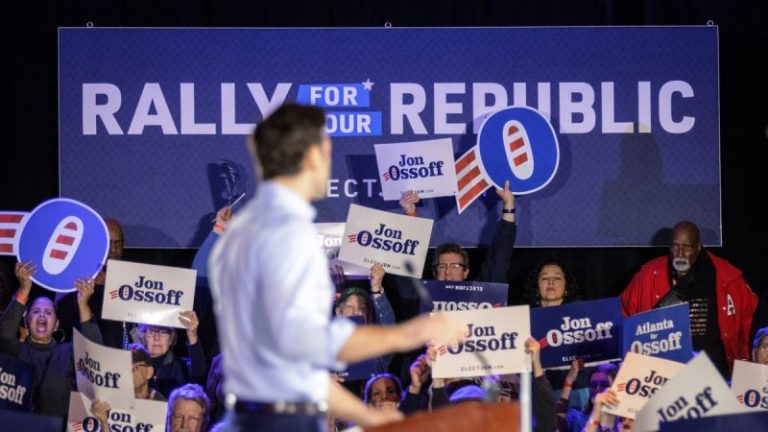
A new attack ad from Republicans targeting U.S. Sen. Jon Ossoff, D-Ga., is slamming the vulnerable Democrat senator for requiring entrants at his political rallies to show proof of identification, but arguing that identification requirements for voting are a form of voter suppression. 

Want to get into a Jon Ossoff rally?’ the advertisement’s narrator begins, before it goes into a montage of staffers at Ossoff’s Feb. 7 rally asking for entrants’ IDs.

‘Don’t forget your ID’ rally staff can be heard saying as folks walked into the Georgia International Convention Center located in metro Atlanta.

‘Also, do you have your ID with you?’ another staffer can be heard asking entrants in the video captured by a GOP tracker. ‘I’ll just grab your ID from you. Thank you so much,’ another said. Please have your IDs ready, please, thank you.’

Meanwhile, Ossoff has referred to attempts to establish stricter photo-identification rules for voting and voter registration in federal elections as ‘nakedly partisan, totally unworkable, [and] bad faith.’

Ossoff’s team declined to comment for this story. 

On Wednesday, Republicans in the House of Representatives passed the latest iteration of a voter integrity law aiming at requiring stricter in-person documentation requirements, such as needing a photo-ID to vote. This bill is a broader and stricter version of the 2025 version of the bill which focused predominantly on registering to vote as opposed to the act of voting itself.

Ahead of the vote’s passage, one of Ossoff’s Republican challengers in the upcoming U.S. Senate race in Georgia, Rep. Buddy Carter, R-Ga., called out the incumbent Democrat Senator for ‘once [saying] that voter ID was ‘right and appropriate,’ [but] now supports his party as reframing it as ‘voter suppression.”

‘The law didn’t change. Public opinion didn’t change. What changed was he – and other Democrat politicians like him – realized that illegal immigrants could no longer vote to keep Democrats in office,’ Carter asserted. ‘They oppose this bill because it chips away at their voting base; plain and simple.’

Despite Ossoff’s previous opposition to voter integrity laws, his campaign event framed the requirement for photo ID as a security measure.

‘Due to security requirements … be ready to show ID that matches our RSVP list and these arrival instructions (printed or on your phone),’ the campaign event’s confirmation email said.

Fox News Digital’s Leo Briceno contributed to this report.

This post appeared first on FOX NEWS

Latvian startup Deep Space Energy announced it has raised approximately US$1.1 million in a combination of private investment and public funding to advance a radioisotope-based power generator designed to operate on the Moon.

The company closed a US$416,500 pre-seed round led by Outlast Fund and angel investor Linas Sargautis, a former co-founder of NanoAvionics. It also secured an additional US$690,200 in public contracts and grants from the European Space Agency (ESA), NATO’s Defense Innovation Accelerator for the North Atlantic (DIANA), and the Latvian government.

Deep Space Energy is building a compact power system that uses radioisotopes, which are materials derived from nuclear waste that generate heat through natural decay, to produce electricity.

Founder and CEO Mihails Ščepanskis said the system converts that heat into electrical power while using significantly less fuel than conventional radioisotope thermoelectric generators (RTGs) currently deployed in space.

“Our technology, which has already been validated in the laboratory, has several applications across the defense and space sectors.

“First, we’re developing an auxiliary energy source to enhance the resilience of strategic satellites. It provides the redundancy of satellite power systems by supplying backup power that does not depend on solar energy, making it crucial for high-value military reconnaissance assets,” Ščepanskis said.

The company emphasized that the generator is not designed for weapons applications. Instead, it is targeting dual-use satellites operating in Medium Earth Orbit (MEO), Geostationary Orbit (GEO) and Highly Elliptical Orbit (HEO), all of which focus on communications, early warning systems, and reconnaissance capabilities.

These satellites support defense functions including synthetic aperture radar for detecting troop movements, signal intelligence systems, and missile-launch detection platforms.

According to Ščepanskis, recent geopolitical events have underscored their importance.

The war in Ukraine demonstrated the decisive role of satellite-based reconnaissance data. In 2025, Ukraine lost its beachhead in Russia’s Kursk Oblast during a period when the US temporarily halted the sharing of satellite intelligence.

“As Europe is trying to become more independent, it is imperative to produce satellites with advanced capabilities on our own. Our technology provides an auxiliary energy source for satellites, which makes them more resilient to non-kinetic attacks and malfunctions,” he added.

Beyond defense, Deep Space Energy is positioning its technology for lunar exploration. The company says its generator could support upcoming programmes such as NASA and ESA’s Artemis and Argonaut initiatives, as well as future lunar rover missions and the Moon Village framework.

On the Moon, temperatures can fall below minus 150 degrees Celsius during night cycles that last roughly 354 hours, making solar power unreliable.

Deep Space Energy estimates that about two kilograms of Americium-241 could generate 50 watts of power for a rover, compared with around 10 kilograms required by legacy RTG systems for similar output.

By reducing fuel requirements, the company argues it could extend rover lifetimes across multiple lunar day-night cycles, potentially lasting years.

Securities Disclosure: I, Giann Liguid, hold no direct investment interest in any company mentioned in this article.
This post appeared first on investingnews.com

: A trio of Republican senators are moving to overhaul how federal childcare funds are distributed after what they call ‘mass fraud’ in Minnesota exposed a system that paid providers before verifying children were ever in the room.

Sen. Ted Cruz, R-Texas, joined by senators Mike Lee, R-Utah, and Rick Scott, R-Fla., is introducing the Payment Integrity Act, legislation that would require states to distribute federally funded childcare dollars based on verified attendance, not enrollment claims.

‘Programs in Minnesota for welfare and childcare were designed to channel resources into protecting vulnerable children but were treated like an open ATM by criminals,’ Cruz told Fox News Digital.

‘The mass fraud in Minnesota shows that American taxpayers can no longer rely on local and state politicians to prevent abuses because those politicians often have electoral and partisan incentives to look the other way. My legislation reduces the risk of the waste and fraud we’ve seen and ensures that resources are provided to children and families who need it.’

The bill would reverse a 2024 Biden administration rule requiring states to pay childcare providers before attendance verification. Under Cruz’s proposal, providers would be paid only after services are confirmed, shifting from enrollment-based payments to attendance-based billing.

Cruz’s bill comes as the outspoken Texan led a Senate Judiciary Subcommittee hearing on alleged Somali fraudsters last week. There, lawmakers heard directly from David Hoch, a journalist who accompanied blogger Nick Shirley to sites claiming to be Somali daycare centers.

‘There are few crimes more morally repugnant than stealing from vulnerable children. Every dollar stolen is a meal not eaten, a doctor’s visit missed and a future diminished,’ Cruz said, adding that such fraud ‘plunders our children’s potential.’

Gesturing toward a photo of the ‘Quality Learing Center’ in Minneapolis during the hearing, an alleged fraudulent childcare provider Cruz called ’emblematic’ of the crisis, he said the fraud was occurring not in ‘some distant or lawless place, but in the heart of America’s Midwest.’

Co-sponsor Lee said support for childcare should ‘go to real kids, not empty rooms.’

‘Fake childcare operations are stealing funding from the ones who are actually taking care of America’s children in need. Our bill will address this massive fraud by granting funding based on actual attendance rather than reported enrollment and allowing states to pay retroactively instead of in advance,’ Lee said, adding such ‘diligence’ should have been the law all along.

The Payment Integrity Act also puts into law the January rule from Health and Human Services that established attendance-based billing procedures.

That rule, according to Secretary Robert F. Kennedy’s deputy, Jim O’Neill, was also spurred by what has been happening in Minnesota.

‘We’ve seen credible and widespread allegations of fraudulent daycare providers who were not caring for children at all. The reforms we are enacting will make fraud harder to perpetrate,’ O’Neill said in a statement.

The Payment Integrity Act amends the Child Care and Development Block Grant Act signed into law by President George H.W. Bush, to include such ‘attendance-based billing.’

‘Nothing in this subchapter shall be construed to require a lead agency to make a payment to a child care provider prior to the provision of child care services,’ the bill states in a direct reversal of the prepayment system Cruz says allowed fraud to flourish.

This post appeared first on FOX NEWS

Copper Quest Exploration Inc. (CSE: CQX,OTC:IMIMF; OTCQB: IMIMF; FRA: 3MX) (‘Copper Quest’ or the ‘Company’) announces that it has entered into a securities for debt settlement agreement dated February 11, 2026 (the ‘Agreement’) with a professional advisor of the Company.

Pursuant to the Agreement, the Company has agreed to settle debt in the amount of $113,405.28 through the issuance of 872,348 units (each, a ‘Unit‘) at a deemed price of $0.13 per Unit, whereby each Unit shall be comprised of one (1) common share in the capital of the Company (each a ‘Share‘) and one (1) Share purchase warrant (each whole, being a ‘Warrant‘). Each Warrant will be convertible into an additional Share (a ‘Warrant Share‘) at an exercise price of $0.165 per Warrant Share and will expire on the date that is two (2) years following the date of issuance (the ‘Expiry Date‘). The Expiry Date shall be subject to acceleration should the closing price of the Shares on the Canadian Securities Exchange (or any such other stock exchange in Canada as the Shares may trade at the applicable time) equal or exceed $0.50 for ten (10) consecutive trading days at any time from the date which is 4 months following their date of issue, the Company may accelerate the expiry date of the Warrants such that the Warrants shall expire on the date which is 30 calendar days following the date a news release is issued by the Company announcing the accelerated expiry date of the Warrants.

The Agreement and the issuance of the securities thereunder are subject to the approval of the CSE. The securities will be subject to a hold period of four months and one day pursuant to CSE policies and applicable securities laws.

About Copper Quest

The company’s land holdings comprise 7 projects that span over 45,000 hectares in great mining jurisdictions of Canada and the USA. Copper Quest is committed to building shareholder value through acquisitions, discovery-driven exploration, and responsible development of its North American critical mineral portfolio of assets. The Company’s common shares are principally listed on the Canadian Stock Exchange under the symbol ‘CQX’. For more information on Copper Quest, please visit the Company’s website at www.copper.quest.

Copper Quest has a 100% interest in the past-producing Alpine Gold Mine located approximately 20 kilometers northeast of the City of Nelson British Columbia, spanning 4,611.49 hectares with a 2018 National Instrument 43-101 Standards of Disclosure for Mineral Projects historical inferred resource of 268,000 tonnes, estimated using a cut-off grade of 5.0 g/t Au and an average grade of 16.52 g/t Au, that represents an inferred resource of 142,000 oz of gold (McCuaig & Giroux, 2018)*. Apart from the Alpine Mine itself the property hosts 4 other less explored significant vein systems including the past-producing King Solomon vein workings, the Black Prince and the Cold Blow veins system, and the Gold Crown vein system. *The Company has not yet completed sufficient work to verify the 2018 historic inferred resource results.

Copper Quest has a 100% interest in the road accessible Stars Porphyry Copper-Molybdenum Property, spanning 9,693 hectares in central British Columbia’s Bulkley Porphyry Belt with Tana Zone discovery drill intersection highlights of 0.466% Cu over 195.07m* in drill hole DD18SS004 from 23.47m, 0.200% Cu over 396.67m* in drill hole DD18SS010 from 29.37m, and 0.205% Cu over 207.27m* in drill hole DD18SS015 from 163.98m. This highly prospective, approximately 5 X 2.5 kilometer annular magnetic anomaly is interpreted to represent an altered monzonite intrusion and surrounding hornfels.

Copper Quest has a 100% interest in the road accessible Kitimat Copper-Gold Property, spanning 2,954 hectares within the Skeena Mining Division of northwestern British Columbia located northwest of the deep-water port community of Kitimat, British Columbia. The property benefits from exceptional infrastructure, being within 10 km of tidewater, 1.5 km of rail, and 6 km of high-voltage hydroelectric transmission lines. Exploration on the Kitimat property dates to the late 1960s, with the most significant historical work conducted by Decade Resources Ltd. (2010), which completed 16 diamond drill holes totaling 4,437.5 meters in the Jeannette Cu-Au Zone, and drill intersection highlights of 1.03 g/t Au, 0.54% Cu over 117.07 m in Hole J-7 from 1.52 m, 1.00 g/t Au, 0.55% Cu over 103.65m in Hole J-1 from 9.15 m, 0.80 g/t Au, 0.45% Cu over 107.01m in Hole J-2 from 6.10 m, and 0.41 g/t Au, 0.33% Cu over 112.20m in Hole J-8 from 11.89 m.

Copper Quest has a 100% interest in the Nekash Copper-Gold Project, a porphyry exploration opportunity located in Lemhi County, Idaho, USA, along the prolific Idaho-Montana porphyry copper belt that hosts world-class systems such as Butte and CUMO. The project is fully road-accessible via maintained U.S. highways and forest service roads and consists of 70 unpatented federal lode claims covering 585 hectares.

Copper Quest has a 100% interest in the road accessible Stellar Property, spanning 5,389-hectares in British Columbia’s Bulkley Porphyry Belt contiguous to the Stars Property.

Copper Quest has a 100% interest in the Thane Project located in the Quesnel Terrane of Northern British Columbia spanning over 20,658 hectares with 10 priority targets identified demonstrating significant copper and precious metal mineralization potential.

Copper Quest has an earn-in option of up to 80% and joint-venture agreement on the road accessible Rip Porphyry Copper-Molybdenum Project, spanning 4,700-hectares located in the Bulkley Porphyry Belt in central British Columbia.

On behalf of the Board of Copper Quest Exploration Inc.

Brian Thurston, P.Geo.
Chief Executive Officer and Director
Tel: 778-949-1829

For further information contact:
Investor Relations
info@copper.quest

https://x.com/CSECQX
https://ca.linkedin.com/company/copper-quest

Forward Looking Information

This news release contains certain ‘forward-looking information’ and ‘forward-looking statements’ (collectively, ‘forward-looking statements‘) within the meaning of applicable securities legislation. All statements, other than statements of historical fact included herein, including without limitation, future operations and activities of Copper Quest, are forward-looking statements. Forward-looking statements are frequently, but not always, identified by words such as ‘expects’, ‘anticipates’, ‘believes’, ‘intends’, ‘estimates’, ‘potential’, ‘possible’, and similar expressions, or statements that events, conditions, or results ‘will’, ‘may’, ‘could’, or ‘should’ occur or be achieved. Forward-looking statements reflect the beliefs, opinions and projections on the date the statements are made and are based upon a number of assumptions and estimates based on or related to many of these factors. Such factors include, without limitation, risks associated with possible accidents and other risks associated with mineral exploration operations, the risk that the Company will encounter unanticipated geological factors, risks associated with the interpretation of exploration results, the possibility that the Company may not be able to secure permitting and other governmental clearances necessary to carry out the Company’s exploration plans, the risk that the Company will not be able to raise sufficient funds to carry out its business plans, and the risk of political uncertainties and regulatory or legal changes that might interfere with the Company’s business and prospects. Readers should not place undue reliance on the forward-looking statements and information contained in this news release concerning these items. The Company does not assume any obligation to update the forward-looking statements of beliefs, opinions, projections, or other factors, should they change, except as required by applicable securities laws.

The Canadian Securities Exchange has not reviewed, approved or disapproved the contents of this press release, and does not accept responsibility for the adequacy or accuracy of this release.

News Provided by GlobeNewswire via QuoteMedia

This post appeared first on investingnews.com

TSX-V: WLR

Frankfurt: 6YL

 Walker Lane Resources Ltd. (TSXV: WLR,OTC:CMCXF) (Frankfurt: 6YL) (the ‘Company’) announces that the Company continues to work diligently toward the completion and filing of the Company’s annual audited financial statements and management’s discussion and analysis for the fiscal year ended September 30, 2025 (the ‘Required Filings’). The Company is actively working on various strategies that they expect will resolve the preparation of the Required Filings as quickly as possible.

The Required Filings are due to be filed by March 30, 2025. In connection with the anticipated delays in making the Required Filings, the Company made an application for a Management Cease Trade Order (‘MCTO‘) under NP 12-203 to the BC Securities Commission, as principal regulator for the Company, and the MCTO was issued on January 29, 2026. The MCTO restricts all trading by the Company’s CEO and CFO in securities of the Company, whether direct or indirect. The MCTO does not affect the ability of persons who are not directors, officers or insiders of the Company to trade their securities. The MCTO will remain in effect until the Required Filings are filed or until it is revoked or varied.

The Company expects to proceed with the filing of its interim first-quarter financial statements shortly after the Required Filings have been completed and submitted.

The Company confirms that it intends to satisfy the provisions of the alternative information guidelines described in NP 12-203 by issuing bi-weekly default status reports in the form of a news release until it meets the Required Filings requirement. The Company has not taken any steps towards any insolvency proceeding and the Company has no material information relating to its affairs that has not been generally disclosed.

About Walker Lane Resources Ltd.

Walker Lane Resources Ltd. is a growth-stage exploration company focused on the exploration of high-grade gold, silver and polymetallic deposits in the Walker Lane Gold Trend District in Nevada and the Rancheria Silver District in Yukon/B.C. and other property assets in Yukon. The Company intends to initiate an aggressive exploration program to advance its projects through drilling programs with the aim of achieving resource definition in the near future.

For more information, please consult the Company’s filings, available at www.sedarplus.ca.

ON BEHALF OF THE BOARD OF DIRECTORS

Kevin Brewer
President, CEO and Director
Walker Lane Resources Ltd.

Forward Looking Statements

This news release contains certain statements that constitute ‘forward looking information under Canadian securities laws (‘forward-looking statements’). The use of words such as ‘anticipates’, ‘expected’, ‘projected’, ‘pursuing’, ‘plans’ and similar expressions identify forward-looking statements. Forward-looking statements in this news release include statements regarding the application for the MCTO and the completion of the Required Filings and the timing thereof. Since forward-looking statements address future events and conditions, by their very nature they involve inherent risks and uncertainties. Many factors could cause actual future events to differ materially from the forward-looking statements in this press release. The forward-looking statements included in this news release are expressly qualified by this cautionary statement. The forward-looking statements and information contained in this news release are made as of the date hereof and the Company undertakes no obligation to update publicly or revise any forward-looking statements or information, whether as a result of new information, future events or otherwise, unless so required by applicable laws. The reader is cautioned not to place undue reliance on forward-looking statements.

SOURCE Walker Lane Resources Ltd

View original content to download multimedia: http://www.newswire.ca/en/releases/archive/February2026/13/c0056.html

News Provided by Canada Newswire via QuoteMedia

This post appeared first on investingnews.com