Author

admin

Browsing

Nevada Sunrise Metals Corporation (TSXV: NEV,OTC:NVSGF) (OTC Pink: NVSGF) (‘Nevada Sunrise’ or the ‘Company’) announced today that it has granted a total of 3,250,000 stock options to directors, officers and consultants of the Company, exercisable at a price of $0.05 per share for a period of five years from the date of grant. The stock options have been granted in accordance with the Company’s stock option plan.

About Nevada Sunrise

Nevada Sunrise is a junior mineral exploration company with a strong technical team based in Vancouver, BC, Canada, that holds interests in gold, copper and lithium exploration projects located in the State of Nevada, USA.

Nevada Sunrise holds the right to purchase a 100% interest in the Griffon Gold Mine Project, located approximately 50 kilometers (33 miles) southwest of Ely, NV.

Nevada Sunrise holds the right to earn a 100% interest in the Coronado Copper Project, located approximately 48 kilometers (30 miles) southeast of Winnemucca, NV.

Nevada Sunrise owns 100% interests in the Gemini West, Jackson Wash and Badlands lithium projects, all of which are located in the Lida Valley in Esmeralda County, NV.

As a complement to its exploration projects in Esmeralda County, the Company owns Nevada Water Right Permit 86863, also located in the Lida Valley basin, near Lida, NV.

For Further Information Contact:
Warren Stanyer, President and Chief Executive Officer
email: warrenstanyer@nevadasunrise.ca
Telephone: (604) 428-8028
Website: www.nevadasunrise.ca

FORWARD-LOOKING STATEMENTS

This release may contain forward‐looking statements. Forward-looking statements are statements that are not historical facts and are generally, but not always, identified by the words ‘expects’, ‘plans’, ‘anticipates’, ‘believes’, ‘intends’, ‘estimates’, ‘projects’, ‘potential’ and similar expressions, or that events or conditions ‘will’, ‘would’, ‘may’, ‘could’ or ‘should’ occur and include disclosure of anticipated exploration activities. Although the Company believes the expectations expressed in such forward‐looking statements are based on reasonable assumptions, such statements are not guarantees of future performance and actual results may differ materially from those in forward looking statements. Forward‐looking statements are based on the beliefs, estimates and opinions of the Company’s management on the date such statements were made. The Company expressly disclaims any intention or obligation to update or revise any forward‐looking statements whether as a result of new information, future events or otherwise.

Such factors include, among others, risks related to future plans for the Company’s Nevada mineral properties; reliance on technical information provided by third parties on any of our exploration properties; changes in mineral project parameters as plans continue to be refined; current economic conditions; future prices of commodities; possible variations in grade or metallurgical recovery rates; failure of equipment or processes to operate as anticipated; the failure of contracted parties to perform; labor disputes and other risks of the mining industry; delays due to pandemic; delays due to weather; delays in obtaining governmental approvals, financing or in the completion of exploration, as well as those factors discussed in the section entitled ‘Risk Factors’ in the Company’s Management Discussion and Analysis for the Nine Months ending June 30, 2025, which is available under Company’s SEDAR+ profile at www.sedarplus.ca.

Although Nevada Sunrise has attempted to identify important factors that could cause actual actions, events or results to differ materially from those described in forward-looking information, there may be other factors that cause actions, events or results not to be as anticipated, estimated or intended. There can be no assurance that such information will prove to be accurate as actual results and future events could differ materially from those anticipated in such statements. Nevada Sunrise disclaims any intention or obligation to update or revise any forward-looking information, whether as a result of new information, future events or otherwise. Accordingly, readers should not place undue reliance on forward-looking information.

Neither TSX Venture Exchange nor its Regulation Services Provider (as that term is defined in the policies of TSX Venture Exchange) accepts responsibility for the adequacy or accuracy of this release.

To view the source version of this press release, please visit https://www.newsfilecorp.com/release/278754

News Provided by Newsfile via QuoteMedia

This post appeared first on investingnews.com

Statistics Canada released November’s consumer price index (CPI) data on Monday (December 15). The data showed all-items inflation rose 2.2 percent compared to November 2024 and 0.1 percent on a monthly basis compared to October.

One contributor to the rise was a 4.7 percent year-over-year increase in grocery prices, higher than the 3.4 percent annual increase in October and the biggest since the 4.7 percent increase in December 2023.

On the other hand, gasoline prices decreased 7.8 percent year-over-year and natural gas decreased by 16.5 percent, although both drops were slightly lower than their respective 9.4 percent and 17 percent declines recorded in October.

StatsCan also released October’s monthly mineral production survey on Friday (December 19). The data reported that mineral production increased across a wide range of metals month-on-month, with iron concentrate the only one seeing a slight decline.

Gold production increased to 18,470 kilograms compared to 16,978 kilograms in September. Meanwhile, copper production rose to 41.34 million kilograms from 36.23 million kilograms, and silver production jumped to 31,522 kilograms from 28,384 kilograms.

Shipments, however, decreased broadly in October. Gold shipments fell to 15,563 kilograms from 19,025 kilograms, and silver shipments sank to 31,502 kilograms from 33,296. Copper shipments fell more considerably to 36.22 million kilograms from 44.04 million kilograms.

Also this week, the Canadian Government approved the merger between mining giants Teck Resources (TSX:TECK.A,TECK.B,NYSE:TECK) and Anglo American (LSE:AAL,OTCQX:NGLOY) on Monday.

The move clears a major regulatory hurdle for the C$70 billion deal. Federal Industry Minister Mélanie Joly said that as part of the approval process, the companies agreed to spend C$4.5 billion in Canada over five years and employ 4,000 Canadian workers.

Once the deal is finalized, the combined company will be called Anglo-Teck and will be headquartered in Vancouver, making it the largest company in British Columbia’s history.

For more on what’s moving markets this week, check out our top market news round-up.

Markets and commodities react

Canadian equity markets were mixed this week.

The S&P/TSX Composite Index (INDEXTSI:OSPTX) was little changed, gaining just 0.14 percent over the week to close Friday at 31,755.77, while the S&P/TSX Venture Composite Index (INDEXTSI:JX) fared a little better, rising 1.04 percent to 977.98.

On the other hand, the CSE Composite Index (CSE:CSECOMP) fell 8.37 percent to close at 168.68 after rising significantly last week.

The gold price continued an upward trend following last week’s rate cut from the US Federal Reserve. It gained 1.36 percent on the week to reach US$4,338.24 per ounce on Friday at 4 p.m. EST.

Meanwhile, the silver price continued to set new records with another substantial weekly gain of 5.75 percent, reaching a new high of US$67.45 per ounce in morning trading on Friday before slipping to end the day at US$67.18.

In base metals, the COMEX copper price ended the week up 0.73 percent at US$5.50 per pound.

The S&P Goldman Sachs Commodities Index (INDEXSP:SPGSCI) fell 1.47 percent to end Friday at 542.19.

Top Canadian mining stocks this week

How did mining stocks perform against this backdrop?

Take a look at this week’s five best-performing Canadian mining stocks below.

Stocks data for this article was retrieved at 4:00 p.m. EST on Friday using TradingView’s stock screener. Only companies trading on the TSX, TSXV and CSE with market caps greater than C$10 million are included. Mineral companies within the non-energy minerals, energy minerals, process industry and producer manufacturing sectors were considered.

1. Pacific Empire Minerals (TSXV:PEMC)

Weekly gain: 200 percent
Market cap: C$30.36 million
Share price: C$0.15

Pacific Empire is a gold and copper exploration company focused on its flagship Trident property in central British Columbia, Canada.

Trident consists of a land package covering 6,618 hectares within the Quesnel Terrane and has a history of exploration dating back to its discovery in 1969. The property hosts porphyry mineralization of copper, gold, and silver, with historic drill results at the site including one 102 meter interval grading 0.59 percent copper and 0.24 grams per metric ton (g/t) gold.

Shares in the company gained significantly this week after it released assay results from the upper portion of the first hole of its 2025 winter diamond drill program.

Results from the hole started at a depth of 9 meters and hosted continuous copper-gold mineralization to a depth of 192 meters.

The broad 183 meter interval returned average grades of 0.77 percent copper, 0.51 g/t gold and 3.4 g/t silver over 183 meters. Within that were intervals of 71 meters grading 1.06 percent copper, 0.83 g/t gold and 4.6 g/t silver, and 14.8 meters grading 1.23 percent copper, 0.75 g/t gold and 5.5 g/t silver.

Pacific Empire said the result was the most substantial copper-gold mineralization recorded at Trident to date and that it advances the geological understanding and exploration model for what could be significant porphyry system.

Assays for the lower portion of the first hole and the remaining five holes drilled as part of the campaign are pending.

2. US Copper (TSXV:USCU)

Weekly gain: 72.22 percent
Market cap: C$17.75 million
Share price: C$0.155

US Copper is an exploration company working to advance its Moonlight-Superior project in Northeast California, United States.

The project covers approximately 13 square miles of patented and unpatented federal mining claims in the Lights Creek Copper District, near the Nevada border.

A preliminary economic assessment released on January 6 demonstrated a post-tax net present value of US$1.08 billion with an internal rate of return of 23 percent and a payback period of 5.3 years, assuming a copper price of US$4.15 per pound.

The included mineral resource estimate shows a total indicated resource of 2.5 billion pounds of copper, 21.7 million ounces of silver and 140,042 ounces of gold from 402.83 million metric tons of ore with a grade of 0.31 percent copper, 1.85 parts per million (ppm) silver and 0.012 ppm gold. The majority is hosted at its Moonlight and Superior deposits.

US Copper has not released news since October 14 when it announced the closing of a non-brokered private placement for gross proceeds of C$750,000.

3. Euromax Resources (TSXV:EOX)

Weekly gain: 66.67 percent
Market cap: C$18.87 million
Share price: C$0.025

Euromax Resources is a development and exploration company working to advance its Ilovica-Shtuka copper project in the southeast of North Macedonia, Europe.

The advanced stage project is composed of two concession agreements that cover 17.1 square kilometers and hosts mineralized deposits of copper and gold.

The most recent feasibility study for the Ilovica-Shtuka project, released in 2016, demonstrated a sulphide mineral resource with measured and indicated quantities of 2.6 million ounces of gold and 1.2 billion pounds of copper, with additional oxide quantities of 280,000 ounces of gold.

Shares in Euromax gained this week after it announced on Monday its intention to issue 122.1 million common shares through a non-brokered private placement, generating proceeds of C$3.97 million.

4. Lode Gold Resources (TSXV:LOD)

Weekly gain: 54.67 percent
Market cap: C$10.61 million
Share price: C$0.325

Lode Gold Resources is an exploration company with projects located in Canada and the United States, including its Fremont gold project in California, US, which hosts a past-producing high-grade gold mine.

The mine sits on 3,351 acres in Mariposa County, which has been mined since the start of the California gold rush in the 1840s.

On March 5, Lode Gold released a technical report for the property, which included an updated mineral resource estimate demonstrating an indicated resource of 120,000 ounces with an average grade of 4.13 g/t gold from 910,000 metric tons of ore, with an additional inferred resource of 1.9 million ounces with a grade of 3.96 g/t from 8.53 million metric tons of ore.

The most recent news from the project came on December 9, when Lode announced that it had entered into a letter of intent with an unnamed mining company to begin work advancing the Freemont project toward production.

As part of the deal, the parties agreed to a 45 day standstill period during which Lode will work to raise capital and repay outstanding debts.

Additionally, Lode announced on December 12 that it was appointing David Swetlow as Lode’s new CFO. He has previously worked as CFO for Lode’s subsidiary, Gold Orogen, which was created to spin off its Yukon and New Brunswick properties.

The spin-off was announced in July 2024 as part of Lode’s restructuring bid and would include its Golden Culvert, Win, and McIntyre Brook properties.

5. Canadian Chrome (CSE:CACR)

Weekly gain: 50 percent
Market cap: C$24.71 million
Share price: C$0.015

Formerly KWG Resources, Canadian Chrome is a chromite and base metals exploration company focused on moving forward at its Ring of Fire assets in Northern Ontario, Canada. It does business as the Canadian Chrome Company.

The firm’s properties consist of the Fancamp and Big Daddy claims, along with the Mcfaulds Lake, Koper Lake and Fishtrap Lake projects. All are located within a 40 kilometer radius, and according to the company are home to feeder magma chambers containing chromite, nickel and copper deposits.

Canadian Chrome is currently working with local First Nations to improve transportation to the region by developing road and rail links. The company announced on November 7 that it had signed a memorandum of agreement with AtkinsRéalis Canada in its capacity as a contractor representing the Marten Falls and Webequie First Nations.

The agreement will allow AtkinsRéalis temporary access rights over some mineral exploration claims in support of work permits for an environmental assessment for the design, construction and operation of a multi-use, all-season road between the proposed Marten Falls community access road and the proposed Webequie supply road.

Once completed, the link will provide improved access to communities and mining companies in the region.

On September 11, Canadian Chrome signed an additional agreement with AtkinsRéalis that will provide the firm access rights to parts of the claims for 13 borehole locations for geotechnical investigations and aggregate source testing.

The most recent news from the company came on December 11, when it set the terms of a C$25 million non-brokered private placement originally proposed on August 26. Changes to the original terms were made following the inclusion of chromium as a critical mineral in the Canadian federal budget announced on November 4, which allows investments in chromium projects to qualify for additional tax credits.

The new terms state that, with every 10 flow-through shares subscribed, five flow-through share purchase warrants will be issued, each entitling the holder to purchase one additional flow-through share for C$2.50 at any time within one year.

FAQs for Canadian mining stocks

What is the difference between the TSX and TSXV?

The TSX, or Toronto Stock Exchange, is used by senior companies with larger market caps, and the TSXV, or TSX Venture Exchange, is used by smaller-cap companies. Companies listed on the TSXV can graduate to the senior exchange.

How many mining companies are listed on the TSX and TSXV?

As of May 2025, there were 1,565 companies listed on the TSXV, 910 of which were mining companies. Comparatively, the TSX was home to 1,899 companies, with 181 of those being mining companies.

Together, the TSX and TSXV host around 40 percent of the world’s public mining companies.

How much does it cost to list on the TSXV?

There are a variety of different fees that companies must pay to list on the TSXV, and according to the exchange, they can vary based on the transaction’s nature and complexity. The listing fee alone will most likely cost between C$10,000 to C$70,000. Accounting and auditing fees could rack up between C$25,000 and C$100,000, while legal fees are expected to be over C$75,000 and an underwriters’ commission may hit up to 12 percent.

The exchange lists a handful of other fees and expenses companies can expect, including but not limited to security commission and transfer agency fees, investor relations costs and director and officer liability insurance.

These are all just for the initial listing, of course. There are ongoing expenses once companies are trading, such as sustaining fees and additional listing fees, plus the costs associated with filing regular reports.

How do you trade on the TSXV?

Investors can trade on the TSXV the way they would trade stocks on any exchange. This means they can use a stock broker or an individual investment account to buy and sell shares of TSXV-listed companies during the exchange’s trading hours.

Article by Dean Belder; FAQs by Lauren Kelly.

Securities Disclosure: I, Dean Belder, hold no direct investment interest in any company mentioned in this article.

Securities Disclosure: I, Lauren Kelly, hold no direct investment interest in any company mentioned in this article.

This post appeared first on investingnews.com

As the world races to meet rising power demand driven by artificial intelligence and advanced computing, cleantech is stepping into a new era of opportunity.

Developing and scaling innovative energy technologies has never been more accessible or cost-efficient, thanks to breakthroughs in AI-driven design, automation and data analytics that are speeding up everything from materials science to grid optimization.

While US climate finance leadership appears uncertain, Canada is emerging as a strong contender for global influence, backed by supportive policy frameworks, abundant natural resources and a deep bench of innovation-focused companies.

Here’s a look at the best-performing Canadian cleantech stocks on the TSX 2025 by year-to-date gains. CSE-listed companies were considered, but none made the list at this time.

Data for this article was gathered on December 16, 2025, using TradingView’s stock screener. Only companies with market capitalizations greater than C$50 million were considered.

1. Anaergia (TSX:ANRG)

Year-to-date gain: 187.23 percent
Market cap: C$472.75 million
Share price: C$2.70

Anaergia is a global company that specializes in converting waste, including wastewater and agricultural and municipal solid waste, into renewable energy, clean water and organic fertilizer.

The company has operations in 17 countries spanning North America, Africa, Asia and Europe. In 2025, Anaergia has expanded its global reach through partnerships with companies in Italy and Spain, as well as through a partnership agreement to build a biogas facility in South Korea.

In July 2024, Anaergia closed the third tranche of a C$40.8 million investment deal with Marny Investissement that gave Marny a controlling interest of about 60 percent in Anaergia, supporting the company’s pivot to employ a greater focus on technology sales and operations and maintenance contracts.

The company’s September investor presentation highlights its new strategy of streamlined operations, expanding through global partnerships and selective Build-Own-Operate delivery.

In its Q3 2025 results, the company reported strong financials, with revenue increasing 77 percent year-over-year to C$51.4 million, gross margins expanding to 28.8 percent and adjusted earnings before interest, taxes, depreciation and amortization (EBITDA) of C$2.6 million.

2. Tantalus Systems (TSX:GRID)

Year-to-date gain: 150.53 percent
Market cap: C$250.03 million
Share price: C$4.76

Tantalus Systems provides technology that gives utilities greater control and insight into their electric grids.

This includes advanced metering infrastructure (AMI), load management systems and grid analytics, all of which contribute to a more efficient and reliable power grid.

One of its key products, TRUConnect AMI, provides real-time data on energy consumption and grid conditions. The TRUFlex Load+DER Management system helps manage energy demand and integrate distributed energy resources like solar power, while TRUGrid Automation optimizes grid operations and improves response to events like power failures.

On July 7, Tantalus announced that it was extending its partnership with EPB in Chattanooga, Tennessee, to deploy 20,000 TRUSense Ethernet Gateways over the next five years, integrating with EPB’s fiber network to enhance grid modernization and operational efficiency.

The company’s annual recurring revenue has grown at an approximate compound annual growth rate of 18 percent since 2016, according to its October presentation.

Its Q3 revenue hit C$14.2 million, up 22.5 percent year-over-year, driven by growth of 30 percent in connected devices and 10 percent in software and services. Its adjusted EBITDA doubled year-over-year to C$1.2 million.

3. Ballard Power Systems (TSX:BLDP)

Year-to-date gain: 50.21 percent
Market cap: C$1.09 billion
Share price: C$3.65

Ballard Power Systems is a hydrogen fuel cell technology company that develops, manufactures and sells proton exchange membrane (PEM) fuel cell products that convert hydrogen into clean electricity with zero emissions. The company targets heavy-duty applications like buses, trucks, trains, marine vessels and stationary power.

Recent deals include a December memorandum of understanding with Kolon Industries for fuel cell components and market expansion and a May multi-year agreement for 50 fuel cell engines with Egypt’s MCV to power its intercity buses.

In Q3 2025, Ballard’s revenue surged 120 percent year-over-year to C$32.5 million led by bus and rail deliveries, with gross margins improving to 15 percent and cash reserves at C$525.7 million. The company also cut total operating expenses by 36 percent.

4. Algonquin Power & Utilities (TSX:AQN)

Year-to-date gain: 32.29 percent
Market cap: C$613 billion
Share price: C$8.48

Algonquin Power & Utilities operates regulated electric, water, wastewater and natural gas utilities across the US, Canada, Bermuda and Chile, alongside a retained Hydro Group after divesting its larger renewables business as part of its pure-play regulated utility pivot.

The company completed the sale of its renewable energy assets, excluding hydro, to LS Power in January 2025 for approximately US$2.5 billion. The company declared a Q4 2025 dividend of US$0.065 per common share.

5. Brookfield Renewable Partners (TSX:BEP.UN)

Year-to-date gain: 15.41 percent
Market cap: C$11.41 billion
Share price: C$38.27

Brookfield Renewable Partners owns and operates a global portfolio of hydroelectric, wind, solar and energy storage assets. It also offers sustainable solutions such as nuclear services and carbon capture. The company’s strategy emphasizes long-term power purchase agreements and asset recycling.

Major 2025 deals include a hydropower framework with Brookfield Asset Management (TSX:BAM,NYSE:BAM) and Alphabet (NASDAQ:GOOGL) for up to 3 gigawatts of hydroelectricity capacity, starting with US$3 billion in contracts for 670 megawatts capacity in Pennsylvania.

Securities Disclosure: I, Meagen Seatter, hold direct investment interest in one or more companies mentioned in this article.

This post appeared first on investingnews.com

Senate Republicans confirmed nearly 100 of President Donald Trump’s nominees, leapfrogging previous administrations and his own first term in the process in their sprint to finish off the year. 

The confirmation of 97 of Trump’s picks on Thursday with a 53-43 vote marked one of the final bits of floor action in the upper chamber following a blistering pace set out by Senate Majority Leader John Thune, R-S.D., once Republicans gained control of the Senate in January.

Senate Republicans overcame several obstacles throughout the year, including mending intra-party rifts to pass the president’s signature legislation, the ‘one big, beautiful bill,’ and reopening the government after the longest shutdown in history.

But it was confirming Trump’s nominees that proved near impossible within the confines of Senate rules, given that Senate Democrats laid out a blanket objection to even the lowest level positions throughout the government.

Senate Majority Whip John Barrasso, R-Wyo., noted that Republicans kicked off the year by confirming Trump’s Cabinet at a breakneck pace, but they soon slammed into a wall of ‘unprecedented obstruction from the Democratic minority.’

‘We began the year by confirming President Trump’s Cabinet faster than any Senate in modern history,’ Barrasso said. ‘And by week’s end, President Trump will have 417 nominees confirmed by the Senate this year. That’s far more than the 365 that Joe Biden had in his first year in office.’

In response, Republicans turned to the nuclear option in September and changed the vote threshold for confirming sub-Cabinet-level positions, and have since confirmed 417 of Trump’s picks.

Thune argued that Senate Democrats, led by Senate Minority Leader Chuck Schumer, D-N.Y., were engaging in ‘nothing more than petty politics,’ not allowing nominees through the typical fast-track processes, like voice votes or unanimous consent, to install low-level presidential nominations.

‘Democrats cannot deal with the fact that the American people elected President Trump, and so they’ve engaged in this pointless political obstruction in revenge,’ Thune said.

With the latest batch of confirmations, Senate Republicans have nearly cleared the backlog of nominees that over the summer had ballooned to nearly 150 picks awaiting lawmakers’ decision. Now, there are only 15 picks left to be confirmed.

Among the list of now-confirmed nominees are former Rep. Anthony D’Esposito, R-N.Y., to serve as inspector general at the Department of Labor and two picks for the National Labor Relations Board, James Murphy and Scott Mayer, along with several others in nearly every federal agency.

Lawmakers are set to tee up another nominee, Joshua Simmons, who Trump tapped to be the CIA’s special counsel, before the night is over. And they’re still working to move forward with a colossal spending package that ties five appropriations bills together. 

But some Senate Democrats are objecting to the minibus spending package, jeopardizing its chances of hitting the floor before lawmakers flee Capitol Hill. Conversations between Republicans and Democrats are ongoing, and could go deep into the night on a path forward. 

Thune, as he walked onto the Senate floor Thursday night, said that the plan was to at least knock out the nominees package first. 

‘We’ll see where it goes from there,’ he said.

This post appeared first on FOX NEWS

Joint Task Force Southern Spear forces struck two alleged narco-terrorist vessels moving along a major drug corridor in the Eastern Pacific on Thursday, killing five militants without suffering any U.S. casualties.

U.S. Southern Command (SOUTHCOM) released a video on X showing the opening strike and the aftermath, with the targeted boat engulfed in flames.

‘On Dec. 18, at the direction of [Secretary of War] Pete Hegseth, Joint Task Force Southern Spear conducted lethal kinetic strikes on two vessels operated by Designated Terrorist Organizations in international waters,’ the post read. ‘Intelligence confirmed that the vessels were transiting along known narco-trafficking routes in the Eastern Pacific and were engaged in narco-trafficking operations.

‘A total of five male narco-terrorists were killed during these actions — three in the first vessel and two in the second vessel,’ SOUTHCOM added. ‘No U.S. military forces were harmed.’

Joint Task Force Southern Spear was established to help unify Navy, Coast Guard, intelligence and special operations assets to rapidly strike time-sensitive targets at sea.

The Pentagon has not released the identities of the four narco-terrorists killed or the specific terrorist organization involved.

The U.S. has conducted dozens of strikes on suspected drug-trafficking vessels in the Eastern Pacific and Caribbean to dismantle narco-terrorist networks, targeting groups such as Venezuela’s Tren de Aragua and Colombia’s Ejército de Liberación Nacional.

The campaign began Sept. 2 with a strike that killed 11 alleged members of Tren de Aragua, followed by additional operations that reportedly eliminated dozens more across known trafficking routes.

U.S. forces have reportedly hit various types of vessels, including submersibles, fishing boats and high-speed vessels.

Earlier this month, the Trump administration launched its ‘Fentanyl Free America’ plan, with the Drug Enforcement Administration (DEA) reporting that strikes on suspected Caribbean drug vessels are helping curb the flow of illegal drugs into the U.S.

Fox News Digital’s Bonny Chu contributed to this report.

This post appeared first on FOX NEWS

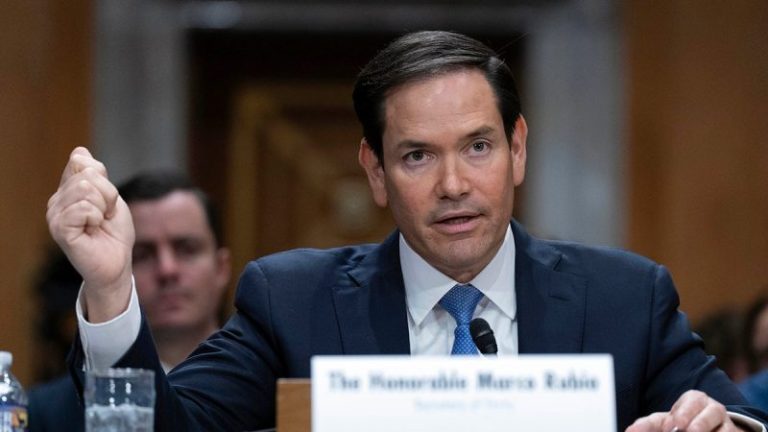
Those worried about shuttering the U.S. Agency for International Development (USAID) were wrong, according to Secretary of State Marco Rubio, who touted the agency’s record in delivering support in the wake of Hurricane Melissa that ravaged the Caribbean in October. 

Although USAID historically functioned as an independent agency to deliver aid to impoverished countries and development assistance, the State Department announced in March that it would absorb remaining operations and functions in an effort to streamline operations to deliver foreign assistance amid concerns that USAID did not advance U.S. core interests. The move resulted in cuts for thousands of USAID employees. 

Critics including Sen. Bernie Sanders, I-Vt., said that upending the agency would ‘lead to millions of preventable deaths,’ while a group of House Democrats wrote a letter to President Donald Trump in February as USAID cuts got underway that changes would lead to increased maternal and child mortality. 

But Rubio now claims those skeptics’ fears were unfounded. 

‘Alarmists in politics and the media forecasted that the closure of USAID would result in catastrophe. Now, nearly a year later, they’ve been proven wrong,’ Rubio said in a statement to Fox News Digital. ‘The State Department has realigned foreign assistance with the interests of the American people, streamlined disaster response capabilities, and leveraged the ingenuity of American companies to save lives.’ 

Specifically, Rubio pointed to the assistance the State Department provided in the aftermath of Hurricane Melissa, which hit Jamaica as a Category 5 hurricane and was the strongest to strike Kingston since the island started tracking its storms 174 years ago.

The State Department deployed a regional disaster assistance response team (DART) and activated U.S.-based urban search and rescue (USAR) teams to support response efforts in the region as part of recovery efforts. 

Likewise, the State Department allocated roughly $1 million to go toward administering food and other resources to those in need, using predesignated supplies housed in 12 different warehouses across the region. Ultimately, the State Department coordinated with the United Nations World Food Program to distribute 5,000 family food packs to families in Jamaica. 

‘This new era of foreign assistance eliminates extreme ideological projects that previous administrations forced the American people to subsidize, cuts out the wasteful NGO industrial complex, and puts the American people first,’ Rubio said. 

Sanders’ office did not respond to a request for comment from Fox News Digital. 

The Department of Government Efficiency (DOGE) targeted USAID in its push to eliminate wasteful spending during a review earlier in 2025. The agency attracted scrutiny for a series of funding choices, including allocating $1.5 million for a program that sought to ‘advance diversity, equity and inclusion in Serbia’s workplaces and business communities’ and a $70,000 program for a ‘DEI musical’ in Ireland.

USAID was officially closed down in July — a move that attracted criticism from Democrats and former Presidents George W. Bush and Barack Obama. 

‘Gutting USAID is a travesty, and it’s a tragedy,’ Obama said in a video that was shown to departing USAID employees, according to The Associated Press. ‘Because it’s some of the most important work happening anywhere in the world.’

Obama labeled the decision to upend USAID ‘a colossal mistake,’ and said, ‘sooner or later, leaders on both sides of the aisle will realize how much you are needed.’

Meanwhile, the State Department is undergoing its own transformation. In addition to absorbing USAID, the State Department has undergone a massive overhaul as part of the largest restructuring for the agency since the Cold War. 

Additionally, it rolled out an America First Global Health Strategy in September to deliver health aid worldwide by working directly with recipient country’s governments instead of through non-governmental organizations and other aid programs.

In December, Kenya became the first country to sign a five-year, $2.5 billion Health Cooperation Framework agreement with the U.S. in alignment with this new strategy, which also aims for recipient countries to eventually bear more responsibility for their own health expenditures. 

Fox News’ Emma Colton contributed to this report. 

This post appeared first on FOX NEWS

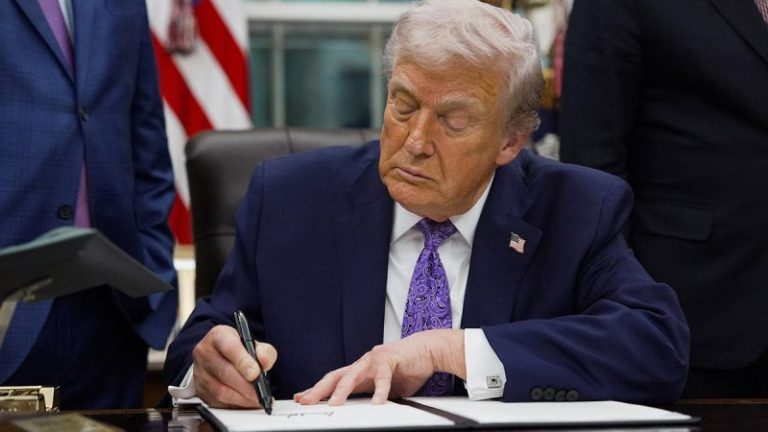
President Trump signed into law a nearly $1 trillion defense policy bill Thursday and approved what looks to be the largest military spending package in U.S. history.

The fiscal 2026 National Defense Authorization Act authorizes $901 billion in military spending, roughly $8 billion more than the administration requested, according to Reuters.

It also delivers a nearly 4% pay raise for troops, provides new funding for Ukraine and the Baltic States and includes measures designed to scale back security commitments abroad.

In a release shared online, Rep. Rick Allen, R-Ga., said, ‘With President Trump’s signature, the FY2026 NDAA officially delivers on our peace-through-strength agenda with a generational investment in our national defense.

‘Not only does this bipartisan bill ensure America’s warfighters are the most lethal and capable fighting force in the world, but it also improves the quality of life for our service members in the 12th District and nationwide.’

As previously reported by Fox News Digital, the Senate passed the NDAA Wednesday, sending the compromise bill approved with bipartisan support to the president’s desk. 

Trump signed it quietly Thursday evening, according to Reuters.

The NDAA includes $800 million for Ukraine over the next two years as part of the Ukraine Security Assistance Initiative, which pays U.S. firms for weapons for Ukraine’s military.

It also includes $175 million for the Baltic Security Initiative, which supports Latvia, Lithuania and Estonia.

The bill prohibits reducing U.S. troop levels in Europe below 76,000 for more than 45 days without formal certification by Congress.

The legislation also restricts the administration from reducing U.S. forces in South Korea below 28,500 troops.

Trump ultimately backed the bill in part because it codifies some of his executive orders, including funding the Golden Dome missile defense system and getting rid of diversity, equity and inclusion programs, per Reuters.

‘Under President Trump, the U.S. is rebuilding strength, restoring deterrence and proving America will not back down. President Trump and Republicans promised peace through strength. The FY26 NDAA delivers it,’ House Speaker Mike Johnson had said in a statement Dec. 7 on the new measures.

Fox News Digital has reached out to the White House for comment.

This post appeared first on FOX NEWS

Maria Shriver slammed President Donald Trump on Thursday after the Kennedy Center’s board voted unanimously to rename the institution to the ‘Trump-Kennedy Center,’ accusing him of trying to attach his name to a memorial dedicated to her uncle, President John F. Kennedy.

Shriver, a high-profile member of the Kennedy family, said it is ‘beyond comprehension’ to change the center’s name, accusing Trump of staining JFK’s legacy in art, culture and education.

‘It is beyond comprehension that this sitting president has sought to rename this great memorial dedicated to President Kennedy,’ Shriver wrote on X. ‘It is beyond wild that he would think adding his name in front of President Kennedy’s name is acceptable. It is not.’

Kennedy Center vice president of public relations Roma Daravi told Fox Digital Thursday that the unanimous vote ‘recognizes’ Trump’s work to pull the center out of financial straits while working to also update the building originally constructed in the 1960s, and opened in 1971.

Shriver argued that adding Trump’s name was not ‘dignified’ or ‘funny,’ and ‘is way beneath the stature of the job.’

‘Just when you think someone can’t stoop any lower, down they go,’ she said.

The former First Lady of California quipped that Trump might want to rename JFK Airport or make other changes, including the ‘Trump Lincoln Memorial,’ ‘Trump Jefferson Memorial’ and ‘Trump Smithsonian.’

‘Can we not see what is happening here?’ Shriver said. ‘C’mon, my fellow Americans! Wake up!’

President Trump said on Thursday he was ‘honored’ and ‘surprised’ by the update. 

‘We’re saving the building. We saved the building. The building was in such bad shape, physically, financially, in every other way. And now it’s very solid, very strong. We have something going on television, I guess on the 23rd December. I think it’s going to get very big ratings and the Kennedy Center is really, really back strongly,’ he told reporters.

Other members of the Kennedy family, including JFK’s great-nephew, Joe Kennedy III, weighed in on the name change, arguing that federal law protects the center’s name from being changed.

‘It can no sooner be renamed than can someone rename the Lincoln Memorial, no matter what anyone says,’ he wrote on X.

The name change follows recent precedent, a Kennedy Center official told Fox News Digital, noting that the State Department’s decided earlier this month to add Trump’s name to the U.S. Institute of Peace and to past presidential administrations that have renamed military bases.

Fox News Digital has reached out to the White House for comment.

Fox News Digital’s Ashley Carnahan and Emma Colton contributed to this report.

This post appeared first on FOX NEWS