
Author

admin

Browsing

IRIS Metals Limited (ASX: IR1, “IRIS” or “the Company”) is pleased to announce it has executed a binding Heads of Agreement (HOA) with Finley Mining Inc for the exclusive right to farm-in to the Finley Basin Tungsten Project (Tungsten Project) located in Granite County, Montana, USA. This strategic farm-in opportunity further expands IRIS’ exposure to critical minerals beyond lithium, positioning the Company in a key tungsten district with historical production potential and untapped high-grade tungsten potential in a jurisdiction primed for revival under U.S. critical minerals policies.

HIGHLIGHTS

  • IRIS Metals has signed a binding Heads of Agreement with Finley Mining Inc and its shareholders, granting IRIS an exclusive right to farm-in to the high-grade Finley Basin Tungsten Project, located in Granite County, Montana, USA, subject to the execution of full form farm-in agreements to be negotiated in good faith on the agreed key terms within 40 business days (unless extended).
  • Due to the transaction materialising during a proposed capital raising program, the Company decided not to raise capital at this point in time, having regard to the strategic merits of the Tungsten acquisition.
  • Limited drilling undertaken by Union Carbide in the late 1970s–early 1980s resulted in a historical, non-JORC compliant tungsten reserve, 850,000 tons at an average grade of 0.68% WO₃1, which is considered high-grade relative to many global tungsten deposits.
  • The farm-in provides IRIS with exposure to tungsten, a critical mineral with strategic importance for defense, energy, and industrial applications, complementing IRIS’ existing critical minerals portfolio.
  • The farm-in structure allows IRIS to earn up to a 100% interest in the project through staged exploration expenditure of up to USD$2,000,000 over 4 years and delivery of a JORC- compliant Inferred Resource.
  • Exploration activities to commence at the Finley Basin Project in early 2026, focusing on resource definition, expansion, and development studies.
  • The transaction aligns with IRIS’ strategy to expand its critical minerals footprint in the USA, leveraging incentives for domestically sourced materials.
IRIS Metals Executive Chairman Peter Marks commented:

‘This binding agreement marks an exciting step for IRIS as we grow and diversify our critical minerals portfolio into tungsten, a vital component for the defense and technology industries. The Finley Basin Project offers significant upside with its prospective geology and location in a mining-friendly jurisdiction. Combined with our existing South Dakota portfolio, this positions IRIS to capitalise on significantly growing demand for US-sourced critical minerals.’

Montana Portfolio Expansion and Development

IRIS is actively evaluating additional critical mineral opportunities to complement its core South Dakota holdings. This farm-in to the Finley Basin Tungsten Project diversifies IRIS’ assets into tungsten, a critical mineral essential for military energetics, alloys, electronics, and renewable energy technologies, with U.S. demand surging amid defense initiatives and clean energy goals, yet vulnerable to geopolitical supply disruptions.

The expansion of IRIS’ mineral portfolio to tungsten was measured in approach with a number of projects reviewed and compared. The Company selected the Finley Basin Project due to its high-grade characteristics when compared other tungsten occurrences in the US2, historical exploration results, favourable jurisdiction, potential for expansion of known mineralisation, local milling capabilities, and reasonable proximity to the Company’s South Dakota operations.

IRIS’ primary focus remains on advancing its South Dakota lithium and rubidium projects toward near- term development under its “Hub & Spoke” strategy, which emphasises centralized processing across multiple sites.

Recent expansions, including the September 2025 acquisition of the Ingersoll Project from Rapid Critical Metals have significantly grown IRIS’ Black Hills footprint and private land holdings. IRIS is rapidly expanding mineral resources and progressing studies to support a multi-mine production model, with economic analysis targeted for 2026.

This strategic diversification importantly aligns with broader U.S. incentives for domestically sourced critical minerals and supports resilient supply chains under frameworks such as the Australia-U.S. Climate, Critical Minerals and Clean Energy Transformation Compact.

Click here for the full ASX Release
This post appeared first on investingnews.com

Uranium prices stayed fairly steady in 2025, but experts agree its long-term outlook is compelling,

Demand picked up from reactor restarts, new nuclear construction projects and growing interest in small modular reactors. Meanwhile, supply constraints continued as miners faced issues ramping up.

1. Trump Admin Pushes for Uranium Stockpile Boost to Secure Nuclear Power Future

Publish date: September 16, 2025

In September, the Trump administration zeroed in on its plan to reduce uranium reliance on Russia.

A report by Bloomberg outlined that Russia still accounts for approximately a quarter of the fuel used in America’s 94 nuclear reactors, which generate roughly 20 percent of the nation’s electricity.

Secretary of Energy Chris Wright said that the Department of Energy was working to reduce that dependence by rebuilding domestic uranium and enrichment supply chains.

The concept of a federal uranium reserve dates back to 2020, when the first Trump administration sought US$150 million to begin direct purchases from US producers, though Congress approved only half the amount.

Supply concerns sharpened after Russia briefly restricted uranium exports to the US in late 2024, underscoring Washington’s exposure to geopolitical risks.

A law signed in May 2024 requires US utilities to phase out Russian uranium by 2028, with future stockpile levels expected to rise in line with new reactor construction, including small modular reactors.

“We’re moving to a place — and we’re not there yet — to no longer use Russian enriched uranium,” Wright said, adding that the US needs significantly more domestic uranium and enrichment capacity.

2. China Achieves World’s First Thorium-to-Uranium Conversion

Publish date: November 6, 2025

China marked a milestone in 2025 by converting thorium into uranium inside a working molten salt reactor.

The experimental thorium molten salt reactor, developed by the Chinese Academy of Sciences’ Shanghai Institute of Applied Physics in the Gobi Desert, is the first in the world to demonstrate stable thorium-based fission.

The reactor has been operating since reaching first criticality in October 2023 and has now produced data confirming the conversion of thorium-232 into uranium-233, a fissile material capable of sustaining a nuclear chain reaction.

Unlike conventional reactors that use solid uranium fuel rods, the system relies on liquid fuel dissolved in molten fluoride salt, allowing continuous refueling and stable heat generation without shutting down operations.

3. Uranium Energy’s Sweetwater Project Fast Tracked Under Trump Initiative

Publish date: August 6, 2025

In August, Uranium Energy’s (NYSEAMERICAN:UEC) Sweetwater uranium complex in Wyoming was designated for expedited permitting under the Trump administration’s FAST-41 initiative. The initiative is part of a broader strategy to revitalize the US nuclear fuel supply chain and reduce reliance on imports from geopolitical rivals.

The Sweetwater complex, located in Wyoming’s Great Divide Basin, is anchored by a fully licensed conventional uranium mill with a capacity of 3,000 metric tons per day and annual output of 4.1 million pounds.

The site previously included several permitted mines — Sweetwater (Red Desert), Big Eagle and Jackpot (Green Mountain) — and will now be evaluated for in-situ recovery mining, a lower-impact extraction technique.

The new permitting push will allow the company to modify existing approvals to incorporate in-situ recovery capabilities both within and beyond the current mine boundary, including on adjacent federal lands.

Sweetwater is the second uranium project to receive fast-track treatment under the policy, following Anfield Energy’s (TSXV:AEC,NASDAQ:AEC) Velvet-Wood project in Utah, which received the status in May.

4. Denison Mines Moves Closer to Federal Approval for Phoenix ISR Uranium Project

Publish date: February 28, 2025

In February, Denison Mines (TSX:DML,NYSEAMERICAN:DNN) announced that the Canadian Nuclear Safety Commission (CNSC) had scheduled public hearings for its Wheeler River uranium project in Saskatchewan.

The hearings were scheduled for October 8 and December 8 to 12, and according to the company would represent the final stage in the federal environmental assessment process. Denison holds an effective 95 percent interest in Wheeler River, the largest undeveloped uranium project in the Eastern Athabasca Basin. If approved, the company expects to begin site preparation and construction for its Phoenix in-situ recovery uranium project in early 2026.

In its Q3 report, released on November 6, Denison said the first part of the hearing was complete, and that it was expecting a decision from the CNSC in early 2026 after part two of the hearing.

5. Western Australia Reviews Uranium Mining Ban as Nuclear Energy Investment Grows

Publish date: October 2, 2025

Possibly the biggest uranium news in Australia in 2025 was Western Australia’s move to consider lifting its ban on new uranium licenses. In October, ahead of an energy-focused trade mission to China and Japan, Premier Roger Cook signaled the policy might be under review as part of broader strategic development considerations.

China, Western Australia’s largest trading partner, accounts for more than half of the state’s exports.

While the state’s three existing uranium mines continue to operate under previously approved permits, no new developments have been allowed since the ban was put in place in 2017. Cook emphasized that Western Australia intends to respect legal mining leases, while exploring future opportunities.

He also stressed that any change to the uranium policy would likely depend on a “significant shift” in global markets, while the state continues to monitor existing permit holders and potential future projects.

Securities Disclosure: I, Gabrielle de la Cruz, hold no direct investment interest in any company mentioned in this article.

This post appeared first on investingnews.com

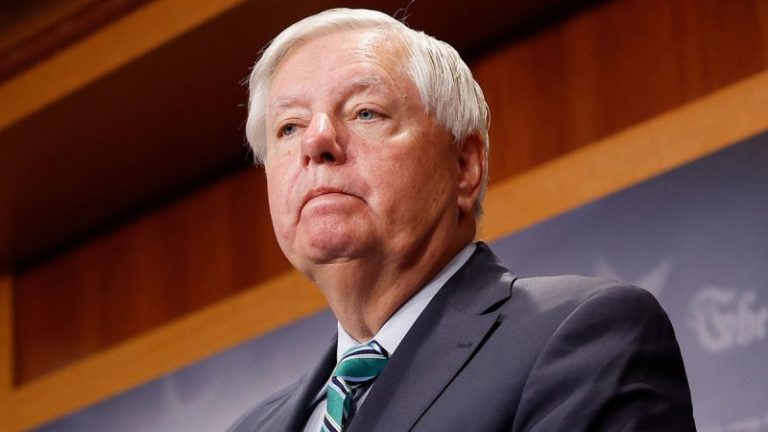
Sen. Lindsey Graham warned that the U.S. mission in Venezuela must end with Nicolás Maduro removed from power, arguing that leaving the embattled leader in place after a major U.S. show of force would be a ‘fatal mistake to our standing in the world.’

‘If after all this, we still leave this guy in power… that’s the worst possible signal you can send to Russia, China, Iran,’ Graham, R-S.C., told reporters after a classified all-senator briefing with War Secretary Pete Hegseth and Secretary of State Marco Rubio.

Trump administration officials did not say whether a series of narco-strikes in the Caribbean could escalate into direct strikes against Venezuelan territory or a broader campaign to oust Maduro. Sen. Richard Blumenthal, D-Conn., told Fox News Digital the briefing was ‘absent of specificity and detail’ and left ‘more questions than answers.’

‘I want to reassert, again, you cannot allow this man to be standing after this display of force, and I did not get a very good answer as to what happens,’ Graham said. ‘What I want is some clarity going forward. Is that in fact the goal?… If it’s not the goal, it is a huge mistake.’

Rep. Don Bacon, R-Neb., said he heard from briefers that there is a ‘very good process of determining if something’s a target or not’ before striking narco-trafficking boats, but the administration did not clarify its broader strategy toward the Maduro regime. 

‘Right now the focus has been on the boats,’ Bacon said. ‘I don’t know what we’re doing yet with Venezuela writ large.’

Rep. Gregory Meeks, D-N.Y., said the classified session also failed to address core questions. 

‘I actually think that was, for me, more of an exercise in futility. I really have no answers. Really didn’t gain anything more than what the public already has gotten,’ he said. He added that there was ‘really no conversation about why… we got 15,000 troops there,’ arguing the deployment ‘doesn’t seem to be just about narcotics trafficking.’ 

Meeks said briefers provided ‘no real rational decision or real answers’ about whether the U.S. is preparing for ‘a war in Venezuela,’ raising what he described as a pressing war powers issue. He said he plans to bring forward legislation this week addressing the recent strikes ‘in the Pacific, in the Caribbean’ as well as any potential move by Trump ‘to go into Venezuela.’

Rubio told reporters the mission is ‘focused on dismantling the infrastructure of these terrorist organizations that are operating in our hemisphere, undermining the security of Americans, killing Americans, poisoning Americans.’

Hegseth told reporters the War Department would not release video footage of the Sept. 2 narco-strikes — in which Adm. Frank Bradley ordered a ‘double tap’ strike to kill survivors — to the public. The video will instead be shown to the House and Senate Armed Services Committees.

Graham dismissed the footage as ‘the least of my concerns’ but said he urged Hegseth to release it so Americans could ‘make your own decisions.’

Hegseth and Rubio’s briefing came as the U.S. undertakes its largest military buildup in the region in decades: 15% of all naval assets are now positioned in the Southern Command theater. Graham cited the deployment as evidence that anything short of Maduro’s removal would undermine U.S. credibility. 

‘It got, yeah, 15% of the Navy pointed to this guy,’ he said.

Graham also pointed to historical precedent, arguing the U.S. has acted similarly when confronting hostile or destabilizing regimes. 

‘We have legal authority, in my view, to do in Venezuela what we did regarding Panama and Haiti,’ he said, recalling that in 1989 the U.S. ‘literally invaded Panama… took the president in power and put him in jail.’

He said he believes Trump intends a comparable outcome. 

‘Every indication by President Trump is that the purpose of this operation is to shut down the (Maduro) regime and replace it with something less threatening to the United States,’ Graham said.

Pressed on whether he meant regime change or lethal force, Graham replied: ‘I don’t care as long as he leaves.’

The public is now waiting to see whether the Trump administration will turn to direct strikes on Venezuelan territory as a means of pressuring Maduro to leave power — a step Graham argued is necessary for the operation to succeed.

This post appeared first on FOX NEWS

President Donald Trump on Tuesday ordered a total blockade of oil tankers entering or leaving Venezuela, declaring the Nicolás Maduro regime a foreign terrorist organization and accusing it of using stolen U.S. assets to finance terrorism, trafficking and other criminal activity.

‘Venezuela is completely surrounded by the largest Armada ever assembled in the History of South America,’ Trump said on Truth Social. ‘It will only get bigger, and the shock to them will be like nothing they have ever seen before – Until such time as they return to the United States of America all of the Oil, Land, and other Assets that they previously stole from us.

‘The illegitimate Maduro Regime is using Oil from these stolen Oil Fields to finance themselves, Drug Terrorism, Human Trafficking, Murder, and Kidnapping,’ he continued. ‘For the theft of our Assets, and many other reasons, including Terrorism, Drug Smuggling, and Human Trafficking, the Venezuelan Regime has been designated a FOREIGN TERRORIST ORGANIZATION.

‘Therefore, today, I am ordering A TOTAL AND COMPLETE BLOCKADE OF ALL SANCTIONED OIL TANKERS going into, and out of, Venezuela,’ Trump added. ‘The Illegal Aliens and Criminals that the Maduro Regime has sent into the United States during the weak and inept Biden Administration, are being returned to Venezuela at a rapid pace. America will not allow Criminals, Terrorists, or other Countries, to rob, threaten, or harm our Nation and, likewise, will not allow a Hostile Regime to take our Oil, Land, or any other Assets, all of which must be returned to the United States, IMMEDIATELY.’

Trump announced Wednesday that the U.S. had seized an oil tanker called the ‘Skipper’ off the coast of Venezuela, sharply escalating U.S. tensions with the nation. The tanker was seized for allegedly being used to transport sanctioned oil from Venezuela and Iran, according to Attorney General Pam Bondi.

The ‘Skipper’ is a vessel that secretly ferries oil in defiance of sanctions, while also being part of an armada of roughly 1,000 tankers that quietly navigate global sea routes to move oil from sanctioned countries like Russia, Iran and Venezuela, according to the administration.

The so-called ‘ghost ships’ sail under foreign flags to obscure their origins, repeatedly change names, shift ownership through shell companies, disable transponders to evade tracking and conduct mid-sea transfers to mask their cargo.

The ‘Skipper’ was loaded with an estimated 1.8 million barrels of oil earlier in December before transferring an estimated 200,000 barrels just before its seizure, Reuters reported.

The oil on the tanker is likely worth $60 million to more than $100 million, based on current average oil prices. Fox News Digital reached out to the White House for any additional comment on the estimated price tag of the oil but did not immediately receive a reply. 

The U.S. military has carried out strikes on suspected drug trafficking boats near Venezuela since September as part of Trump’s mission to end the flow of drugs into the nation.

There have been at least 22 strikes on suspected narcotraffickers near Venezuela, killing 87, since September.

The boat strikes are viewed as part of a U.S. pressure campaign on Venezuela likely aimed to not only curb the flow of drugs, but also to oust Maduro as leader of the oil-rich nation. 

Fox News Digital’s Amanda Macias contributed to this report.

This post appeared first on FOX NEWS

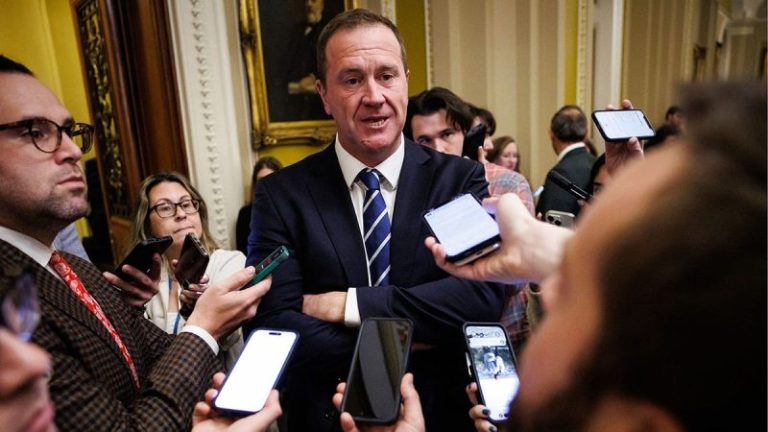
Sen. Eric Schmitt, R-Mo., is being sued by the People’s Republic of China (PRC) for tens of billions of dollars in damages for a lawsuit he filed against the country during his time as Missouri’s attorney general.

Schmitt is being sued by the People’s Government of Wuhan Municipality, the Chinese Academy of Sciences and the Wuhan Institute of Virology of the Chinese Academy of Sciences for roughly $50 billion, several years after the lawmaker sued the country during the COVID-19 pandemic.

The lawsuit, first obtained by Fox News Digital, accused Schmitt, FBI co-deputy director Andrew Bailey, and the state of Missouri of damaging the reputations of China, Wuhan and the associated research facilities through ‘malicious vexatious litigation, fabricating enormous disinformation, and spreading stigmatizing and discriminating slanders.’

Schmitt said in a statement to Fox News Digital that he’d been ‘banned from Communist China, and now I am being sued and targeted by Communist China in a $50 billion lawfare campaign, and I’ll wear it like a badge of honor.’ 

‘China’s sinister malfeasance during the COVID-19 pandemic led to over a million Americans losing their lives, economic turmoil that rocked our country for years, and an enormous amount of human suffering, and as Missouri Attorney General I filed suit to hold them accountable,’ Schmitt said. ‘Instead of trying to defend its indefensible behavior, Communist China responded with frivolous lawfare, attempting to absolve themselves of all wrongdoing in the early days of the pandemic.’ 

‘This novel lawsuit is factually baseless, legally meritless, and any fake judgment a Chinese court issues in this lawsuit we will easily beat back and keep from being enforced against the people of Missouri or me,’ he continued. ‘This is their way of distracting from what the world already knows, China has blood on its hands.’

Schmitt, who served as attorney general for the Show-Me state from 2019 to 2023, sued the PRC, several Chinese government ministries, the Communist Party of China, the Wuhan Institute of Virology and the Chinese Academy of Sciences in early 2020, shortly after the beginning of the COVID-19 pandemic.

At the time, Schmitt accused the Chinese government of withholding information on the COVID-19 virus, failing to contain the outbreak of the virus, and actively hoarding high-quality personal protective equipment (PPE) while producing and selling lower-quality PPE for the rest of the world.

That case resulted in an eventual $24 billion judgment earlier this year.

The lawsuit against Schmitt, Bailey, who resigned as Missouri’s attorney general after he was tapped by President Donald Trump to serve as co-deputy FBI director in September, and Missouri contended that the preceding lawsuit, and statements published across a variety of media outlets, led to severe reputational and economic harm.

They’re demanding that apologies be published in several outlets, including The New York Times, CNN, Wall Street Journal, Washington Post and Chinese media outlets. The apologies come with a price tag, too.

Wuhan and the Chinese government demanded compensation of over 356 billion Chinese Yuan, which converts to just over $50 billion dollars.

This post appeared first on FOX NEWS

A federal judge on Tuesday said he was ‘inclined to deny’ a bid to force the Trump administration to halt construction of the White House ballroom but warned officials not to undertake any irreversible work before a January hearing that could still stop the project.

U.S. District Judge Richard Leon said he will hold another hearing during the second week in January and hinted he may still order a pause.

‘Any below ground construction’ in the coming weeks that dictates above-ground work should be avoided, Leon said, adding, ‘be prepared to take that down.’

Lawyers for the National Trust for Historic Preservation in the U.S. argued the case is not about the need for a ballroom but about the need to follow the law.

They said any construction on federal land requires congressional approval.

Lawyers representing the National Park Service countered that President Trump has authority to direct construction at the White House, saying ‘work must continue for national security issues.’

‘See you in January,’ Leon said as he warned the government not to pursue anything irreversible.

Attorney General Pam Bondi weighed in Tuesday evening.

‘Today @TheJusticeDept attorneys defeated an attempt to stop President Trump’s totally lawful East Wing Modernization and State Ballroom Project,’ she wrote on X. ‘President Trump has faced countless bad-faith left-wing legal attacks – this was no different. We will continue defending the President’s project in court in the coming weeks.’

On Monday, the Trump administration argued in a court filing that pausing construction would undermine national security, citing a Secret Service declaration warning that halting work would leave the site unable to meet ‘safety and security requirements’ necessary to protect President Donald Trump.

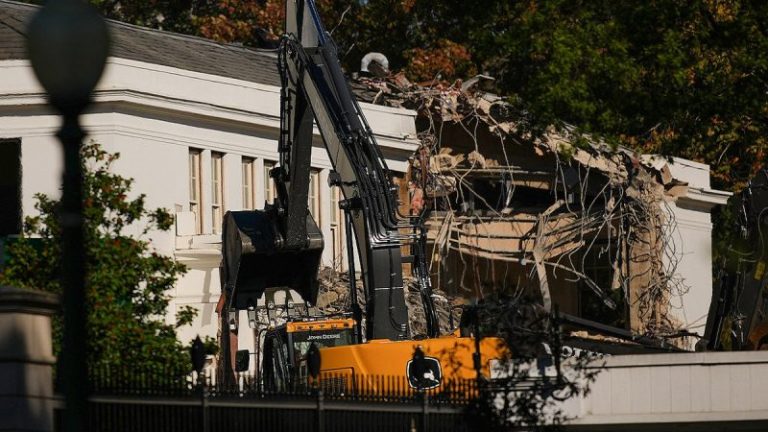
The declaration said the East Wing, demolished in October and now undergoing below-grade work, could not be left unfinished without compromising essential security measures.

The National Trust for Historic Preservation sued last week to stop the project, arguing the government had to follow federal review procedures before any irreversible work began.

The group said the proposed 90,000-square-foot addition, now estimated at more than $300 million, would overwhelm the Executive Residence and permanently alter the White House’s historic design.

The administration countered that the lawsuit was premature, noting regulatory reviews were still coming and above-grade construction was not scheduled to begin until April 2026.

The National Trust said early intervention was necessary, citing warnings from architectural historians who said the ballroom would mark the most significant exterior change to the White House in more than 80 years.

Fox News Digital’s Ashley Carnahan contributed to this report.

This post appeared first on FOX NEWS

There’s a year-end rush in all aspects of life.

Businesses try to run up profits in December. Supervisors want to finish employee reviews. Professors must grade exams.

Congress is no different.

There’s always a race to the finish line in December on Capitol Hill. 

This year’s adventure is health care. But it’s a practical impossibility that Congress can actually make law on health care before the calendar flips. Premium spikes for 24 million Americans loom on January 1st. Congress tried — kinda — to address this problem. But not really.

So, if you’re that professor handing out the grades at the end of the semester, prepare to flunk some pupils, if not the entire Congressional student body.

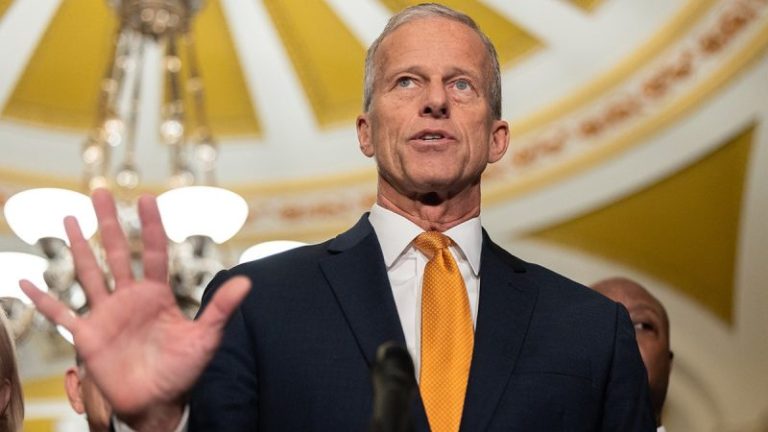
Senate Majority Leader John Thune, R-S.D., hermetically sealed any possibility of addressing health care in 2025 on Tuesday afternoon.

‘We’re not going to pass anything by the end of this week. But I do think there is a potential pathway in January if Democrats are willing to come to the table,’ said Thune.

House Speaker Mike Johnson, R-La., rapidly assembled a bill to allow groups of people – like a bunch of small businesses or a coalition of carpenters – to purchase what they call ‘association’ health plans. In other words, this alliance of people would suddenly have ‘buying power’ if they operate as a team. So if they purchase a set of plans as an ‘association,’ that would defray the cost.

‘This is going to be a great piece of legislation that everybody will unite around,’ said Johnson.

But many Republicans groused privately that it’s one thing to do ‘a health care bill.’ It’s another thing to actually short-circuit the astronomical leap in premiums which hit on January 1.

Rep. Don Bacon, R-Neb., spoke frankly about simply re-upping the existing subsidies.

‘We need to do deeper fixes. This is throwing good money after bad. There is some truth to that. But we have constituents. They’re going to have their premiums go up. That doesn’t help them. That’s why I think we need a temporary extension,’ said Bacon.

Many conservatives adamantly oppose continuing the subsidies. Even if that would help their constituents.

But Bacon addresses the realpolitik of the moment. 

‘It’s not our fault that these things are skyrocketing. But we are in charge. When you’re in charge, you’ve got to deal with it,’ said Bacon. ‘They’re going to have to find some compromise.’

A Christmas Congressional crunch often compels lawmakers to solve big legislative headaches before the holidays.

‘What intensifies the pressure is January 1st is coming,’ said Rep. Adam Smith, D-Wash. ‘It’s having a huge impact on people. I think that is definitely a forcing mechanism.’

The push from Democrats — and some vulnerable Republicans — was to renew the subsidies.

‘I don’t understand why we can’t just do a clean extension of what we just had in place earlier this year,’ said Rep. Alexandria Ocasio-Cortez, D-N.Y. ‘I think that is the easiest and most accessible, no nonsense thing for us to do. Especially as the year is coming to an end.’

But that wouldn’t fly with conservative Republicans.

‘I pity the Republican that has to explain why they would propagate or perpetuate a fraud-ridden subsidy from the COVID-era to prop up a failed health care program,’ said House Budget Committee Chairman Jodey Arrington, R-Texas. 

Rep. Eric Burlison, R-Mo., also opposes extending Obamacare help. But he worries what voters will think of Republicans if the party doesn’t address health care costs. 

‘I think that we fail the American people. We fail our base. We fail the Republican Party. Before I got up here, I was frustrated the Republicans didn’t repeal Obamacare,’ said Burlison. 

‘Repealing Obamacare’ probably won’t happen. That’s because the GOP has tried to unwind the measure since Democrats passed the first versions of it in late 2009. That’s why even through everyone was talking about health care on Capitol Hill, most were skeptical that lawmakers could solve this in a matter of days.

Despite possible Christmas magic.

And even as Thune punted health care into 2026, the House still nibbled around the edges. Critics argued this was only so House Republicans could inoculate themselves from denunciations that they did nothing on health care.

On Tuesday morning, Johnson nixed an idea from GOP moderates for a temporary extension of expiring Obamacare subsidies because it didn’t comply with Congressional budgetary rules.

But by afternoon, Johnson reversed himself to entertain another plan backed by Rep. Nick LaLota, R-N.Y. 

Rather than simply extending federal Obamacare subsidies on an interim basis — which means that insurance companies receive the money — LaLota’s idea provides a two-year tax deduction for those who previously received the Obamacare aid.

President Trump said he would not sign a bill which continued to send money to the insurance companies. So the revamped approach cuts out insurance companies from the equation and policyholders score the tax relief.

‘There’s a real possibility they’ll get a vote on it,’ said Johnson. ‘I’ve tried everything I can to get them that vote on the floor.’

But a roll call vote is a far cry from an actual fix. And it’s uncertain that the House would adopt any amendment and copy it onto the underlying GOP health care bill.

However, a vote on the amendment could give Republicans from swing districts a fig leaf to say they tried to defuse the health care premium crisis. And it’s still unclear if voters might blame Republicans for not addressing health care — now that Democrats copied that issue onto the fall government funding fight.

Health care will be a major issue in the 2026 midterms.

Senate Minority Leader Chuck Schumer, D-N.Y. appeared skeptical that Congress could address the skyrocketing premiums in the near year.

‘You can’t do it after January 1st,’ said Schumer. ‘It’s expired already. It’s not the same as it was before. Once it expires, the toothpaste is out of the tube. 

Schumer also refused to commit to deploying the same maneuver about health care as the next government funding deadline approaches on January 30.

In short, Congress isn’t going to solve health care by Christmas.

But perhaps by Groundhog Day?

If that’s the case, any discussion about health care tied to Groundhog Day, probably resembles, well, Groundhog Day.

This post appeared first on FOX NEWS

Skyharbour Resources Ltd. (TSX-V: SYH ) (OTCQX: SYHBF ) (Frankfurt: SC1P ) (‘Skyharbour’ or the ‘Company’) is pleased to announce that it has completed the acquisition of Rio Tinto Exploration Canada Inc.’s (‘RTEC’) minority interest in the Russell Lake Uranium Project (‘Russell Lake’ or the ‘Project’) pursuant to the previously announced definitive and binding purchase agreement (the ‘Purchase Agreement’). The Project is strategically located in the central core of the Eastern Athabasca Basin of northern Saskatchewan, with access to regional infrastructure, including an all-weather road and powerline.

Russell Lake Project Location Map:
http://www.skyharbourltd.com/_resources/images/2025-11-14%20SKY-RussellLake-Updated.jpg

Transaction Details:

Immediately prior to closing, RTEC’s interest in the Project was approximately 42.3%. Pursuant to the terms of the Purchase Agreement, Skyharbour has acquired 100% of RTEC’s minority interest in the Project in exchange for cash consideration of C$10 million (the ‘Purchase Price’). The Purchase Price consisted of a C$2 million deposit, paid on signing the Purchase Agreement, and a C$8 million cash payment paid at closing.

Skyharbour has granted to RTEC a 0.25% net smelter returns royalty over Russell Lake. The acquisition of RTEC’s interest in Russell Lake has increased Skyharbour’s interest in the Project to 100%, subject to several other net smelter return royalties held by third parties.

Russell Lake Uranium Project Overview:

The Russell Lake Project is a large, advanced-stage uranium exploration property totalling 73,314 hectares strategically located between Cameco’s Key Lake and McArthur River Projects, and adjoining Denison’s Wheeler River Project to the west and Skyharbour’s Moore Uranium Project to the east. The northern extension of Highway 914 between Key Lake and McArthur River runs through the western extent of the property and greatly enhances accessibility, while a high-voltage powerline is situated alongside this road.

Qualified Person:

The technical information in this news release has been prepared in accordance with the Canadian regulatory requirements set out in National Instrument 43-101 and reviewed and approved by Serdar Donmez, P.Geo., VP of Exploration for Skyharbour as well as a Qualified Person.

About Skyharbour Resources Ltd.:

Skyharbour holds an extensive portfolio of uranium exploration projects in Canada’s Athabasca Basin and is well positioned to benefit from improving uranium market fundamentals with interest in thirty-seven projects covering over 616,000 hectares (over 1.5 million acres) of land. Skyharbour has acquired from Denison Mines, a large strategic shareholder of the Company, a 100% interest in the Moore Uranium Project, which is located 15 kilometres east of Denison’s Wheeler River project and 39 kilometres south of Cameco’s McArthur River uranium mine. Moore is an advanced-stage uranium exploration property with high-grade uranium mineralization in several zones at the Maverick Corridor. Adjacent to the Moore Project is the Russell Lake Uranium Project, which hosts widespread uranium mineralization in drill intercepts over a large property area with exploration upside potential. The Company is actively advancing these projects through exploration and drilling programs.

Skyharbour also has joint ventures with industry leaders Denison Mines, Orano Canada Inc., Azincourt Energy, and Thunderbird Resources at the Russell, Preston, East Preston, and Hook Lake Projects, respectively. The Company also has several active earn-in option partners, including CSE-listed Basin Uranium Corp. at the Mann Lake Uranium Project; TSX-V listed North Shore Uranium at the Falcon Project; UraEx Resources at the South Dufferin and Bolt Projects; Hatchet Uranium at the Highway Project; CSE-listed Mustang Energy at the 914W Project; and TSX-V listed Terra Clean Energy at the South Falcon East Project.

In aggregate, Skyharbour has now signed earn-in option agreements with partners that total to potentially over $76 million in partner-funded exploration expenditures and over $42 million in cash and share payments coming into Skyharbour, assuming that these partner companies complete their entire earn-ins at the respective projects.

Skyharbour’s Uranium Project Map in the Athabasca Basin:
https://skyharbourltd.com/_resources/maps/SKY-SaskProject-Locator-2025-12-08.jpg

To find out more about Skyharbour Resources Ltd. (TSX-V: SYH) visit the Company’s website at www.skyharbourltd.com .

Skyharbour Resources Ltd.

‘Jordan Trimble’

Jordan Trimble
President and CEO

For further information contact myself or:
Nicholas Coltura
Corporate Communications Manager
Skyharbour Resources Ltd.
Telephone: 604-558-5847
Toll Free: 800-567-8181
Facsimile: 604-687-3119
Email: info@skyharbourltd.com

NEITHER THE TSX VENTURE EXCHANGE NOR ITS REGULATION SERVICES PROVIDER ACCEPTS RESPONSIBILITY FOR THE ADEQUACY OR ACCURACY OF THE CONTENT OF THIS NEWS RELEASE.

This release includes certain statements that may be deemed to be ‘forward-looking statements’. All statements in this release, other than statements of historical facts, that address events or developments that management of the Company expects, are forward-looking statements. Although management believes the expectations expressed in such forward-looking statements are based on reasonable assumptions, such statements are not guarantees of future performance, and actual results or developments may differ materially from those in the forward-looking statements. The Company undertakes no obligation to update these forward-looking statements if management’s beliefs, estimates or opinions, or other factors, should change. Factors that could cause actual results to differ materially from those in forward-looking statements, exploration and development successes, regulatory approvals including TSXV approval, and general economic, market or business conditions. Please see the public filings of the Company at www.sedarplus.ca for further information.


News Provided by GlobeNewswire via QuoteMedia

This post appeared first on investingnews.com

Gareth Soloway of VerifiedInvesting.com shares his outlook for gold, silver and Bitcoin.

For gold, he outlines two different scenarios — a breakout to US$5,000 per ounce, potentially early in 2026, or a pullback to the US$3,500 to US$3,600 level.

Securities Disclosure: I, Charlotte McLeod, hold no direct investment interest in any company mentioned in this article.

This post appeared first on investingnews.com

TSX-V: WLR 
Frankfurt: 6YL

 CMC Metals Ltd. (TSXV: CMB) (Frankfurt: ZM5P) (‘CMC’ or the ‘Company’) is pleased to announce that it has settled and extinguished $77,600 of outstanding debt (the ‘Debt’) through the issuance of common shares of the Company (the ‘Shares’).

In accordance with the settlement of debt (the ‘Debt Settlement‘), the Company will issue 405,714 common shares to one non-arm’s length creditor of the Company (the ‘Non-Arm’s Length Creditor‘) and 333,333 common shares to one arm’s length creditor (the ‘Arm’s Length Creditor‘) at a deemed price of $0.105 per Share. The Company has entered into administrative and professional services agreements provided between the periods of April to August 2025, inclusive, with the Non-Arm’s Length Creditor for services provided and services agreements for the period April to October 2025, inclusive with the Arm’s Length Creditor.

The Company chose to settle and extinguish the Debt through the issuance of Shares to preserve cash and improve the Company’s balance sheet. The Debt Settlement is subject to approval by the TSX Venture Exchange (the ‘TSXV‘). No new insiders will be created, nor will any change of control occur as a result of the issuance of the Shares.

The shares issued are subject to a four month hold period, which will expire on a date that is four months and one day from the date of issuance.

As certain insiders are party to the Agreement for $35,000 or 333,333 shares, it may be considered a ‘related party transaction’ under Multilateral Instrument 61-101 Protection of Minority Security Holders in Special Transactions (‘MI 61-101’) and the TSXV. The Company is relying on the exemptions from the formal valuation and the minority shareholder approval requirements of MI-61-101 contained in section 5.5 (a) and Section 5.7 (1)(a) as the fair market value of the common shares being issued to insiders in connection with the Service Shares does not exceed 25% of the market capitalization of the Company, as determined in accordance with MI 61-101.

Kevin Brewer, President and CEO of Walker Lane Resources Ltd. noted ‘We have significantly reduced our debt load, and minimized operating costs and expenditures, to deal with the challenges our sector has faced in 2024. The participation of my own company and a primary service company is testimony to the belief of myself and the Board that WLR has significant opportunities to enhance shareholder value in the near future.’

About Walker Lane Resources Ltd.

Walker Lane Resources Ltd. is a growth-stage exploration company focused on the exploration of high-grade gold, silver and polymetallic deposits in the Walker Lane Gold Trend District in Nevada and the Rancheria Silver District in Yukon/B.C. and other property assets in Yukon. The Company intends to initiate an aggressive exploration program to advance the Tule Canyon (Walker Lane, Nevada) and Amy (Rancheria Silver District, B.C.) projects through drilling programs with the aim of achieving resource definition in the near future.

On behalf of the Board:
‘Kevin Brewer’
Kevin Brewer, President, CEO and Director
Walker Lane Resources Ltd.

Cautionary and Forward Looking Statements

This press release and related figures, contain certain forward-looking information and forward-looking statements as defined in applicable securities laws (collectively referred to as forward-looking statements). These statements relate to future events or our future performance. All statements other than statements of historical fact are forward-looking statements. The use of any of the words ‘anticipate’, ‘plans’, ‘continue’, ‘estimate’, ‘expect’, ‘may’, ‘will’, ‘project’, ‘predict’, ‘potential’, ‘should’, ‘believe’ ‘targeted’, ‘can’, ‘anticipates’, ‘intends’, ‘likely’, ‘should’, ‘could’ or grammatical variations thereof and similar expressions is intended to identify forward-looking statements. These statements involve known and unknown risks, uncertainties and other factors that may cause actual results or events to differ materially from those anticipated in such forward-looking statements. These statements speak only as of the date of this presentation. These forward-looking statements include, but are not limited to, statements concerning: our strategy and priorities including certain statements included in this presentation are forward-looking statements within the meaning of Canadian securities laws, including statements regarding the Tule Canyon, Cambridge, Silver Mountain, and Shamrock Properties in Nevada (USA), and its properties including Silverknife and Amy properties in British Columbia, the Silver Hart, Blue Heaven and Logjam properties in Yukon and the Bridal Veil property in Newfoundland and Labrador all of which now comprise the mineral property assets of WLR. WLR has assumed other assets of CMC Metals Ltd. including common share holdings of North Bay Resources Inc. (OTC-US: NBRI) and all conditions and agreements pertaining to the sale of the Bishop mill gold processing facility and remain subject to the condition of the option of the Silverknife property with Coeur Mining Inc. (TSX:CDE). These forward-looking statements reflect the Company’s current beliefs and are based on information currently available to the Company and assumptions the Company believes are reasonable. The Company has made various assumptions, including, among others, that: the historical information related to the Company’s properties is reliable; the Company’s operations are not disrupted or delayed by unusual geological or technical problems; the Company has the ability to explore the Company’s properties; the Company will be able to raise any necessary additional capital on reasonable terms to execute its business plan; the Company’s current corporate activities will proceed as expected; general business and economic conditions will not change in a material adverse manner; and budgeted costs and expenditures are and will continue to be accurate.

Actual results and developments may differ materially from results and developments discussed in the forward-looking statements as they are subject to a number of significant risks and uncertainties, including: public health threats; fluctuations in metals prices, price of consumed commodities and currency markets; future profitability of mining operations; access to personnel; results of exploration and development activities, accuracy of technical information; risks related to ownership of properties; risks related to mining operations; risks related to mineral resource figures being estimates based on interpretations and assumptions which may result in less mineral production under actual conditions than is currently anticipated; the interpretation of drilling results and other geological data; receipt, maintenance and security of permits and mineral property titles; environmental and other regulatory risks; changes in operating expenses; changes in general market and industry conditions; changes in legal or regulatory requirements; other risk factors set out in this presentation; and other risk factors set out in the Company’s public disclosure documents. Although the Company has attempted to identify significant risks and uncertainties that could cause actual results to differ materially, there may be other risks that cause results not to be as anticipated, estimated or intended. Certain of these risks and uncertainties are beyond the Company’s control. Consequently, all of the forward-looking statements are qualified by these cautionary statements, and there can be no assurances that the actual results or developments will be realized or, even if substantially realized, that they will have the expected consequences or benefits to, or effect on, the Company.

The information contained in this presentation is derived from management of the Company and otherwise from publicly available information and does not purport to contain all of the information that an investor may desire to have in evaluating the Company. The information has not been independently verified, may prove to be imprecise, and is subject to material updating, revision and further amendment. While management is not aware of any misstatements regarding any industry data presented herein, no representation or warranty, express or implied, is made or given by or on behalf of the Company as to the accuracy, completeness or fairness of the information or opinions contained in this presentation and no responsibility or liability is accepted by any person for such information or opinions. The forward-looking statements and information in this presentation speak only as of the date of this presentation and the Company assumes no obligation to update or revise such information to reflect new events or circumstances, except as may be required by applicable law. Although the Company believes that the expectations reflected in the forward-looking statements and information are reasonable, there can be no assurance that such expectations will prove to be correct. Because of the risks, uncertainties and assumptions contained herein, prospective investors should not read forward-looking information as guarantees of future performance or results and should not place undue reliance on forward-looking information. Nothing in this presentation is, or should be relied upon as, a promise or representation as to the future. To the extent any forward-looking statement in this presentation constitutes ‘future-oriented financial information’ or ‘financial outlooks’ within the meaning of applicable Canadian securities laws, such information is being provided to demonstrate the anticipated market penetration and the reader is cautioned that this information may not be appropriate for any other purpose and the reader should not place undue reliance on such future-oriented financial information and financial outlooks. Future-oriented financial information and financial outlooks, as with forward-looking statements generally, are, without limitation, based on the assumptions and subject to the risks set out above. The Company’s actual financial position and results of operations may differ materially from management’s current expectations and, as a result, the Company’s revenue and expenses. The Company’s financial projections were not prepared with a view toward compliance with published guidelines of International Financial Reporting Standards and have not been examined, reviewed or compiled by the Company’s accountants or auditors. The Company’s financial projections represent management’s estimates as of the dates indicated thereon.

SOURCE Walker Lane Resources Ltd

View original content to download multimedia: http://www.newswire.ca/en/releases/archive/December2025/17/c7013.html

News Provided by Canada Newswire via QuoteMedia

This post appeared first on investingnews.com