

Author

admin

Browsing

The silver price was on the rise once again this week — it surged past the US$67 per ounce level on Friday (December 19), hitting a new record before pulling back.

As for gold, it spent much of the period around the US$4,330 per ounce level, although it rose as high as US$4,360 on Thursday (December 18), approaching its own all-time high.

Investors were eyeing November US consumer price index (CPI) data, which came out on Thursday. It was up 2.7 percent year-on-year, while core CPI was measured at 2.6 percent.

Those figures were quite a bit lower than analysts’ estimates, and data collection issues caused by the US government shutdown have left market participants questioning the results.

Notably, Bureau of Labor Statistics officials had to make ‘certain methodological assumptions’ because the October CPI report was canceled entirely. The bureau also started November data collection later than usual, driving concerns about a rebound in numbers for December.

US jobs data for both October and November came out this week as well, showing that the unemployment rate for last month rose to 4.6 percent, the highest since 2021.

While 64,000 jobs were added in November, 105,000 were lost in October, and revisions took 33,000 jobs away from the months of August and September.

Outside US economic data, it’s worth noting that for silver there’s still a lot of focus on behind-the-scenes actions that could be impacting the price.

Here’s what Substack newsletter writer John Rubino had to say about that:

‘A lot of the discontinuities that we’re seeing in the silver market right now are due to the fact that the big exchanges like Comex may not have enough silver to satisfy the demands of futures contract holders.

‘In other words, there are a lot more people out there with long futures contracts that could come in and demand silver than there is silver to satisfy that demand. And the number of people who are standing for delivery on futures contracts is rising, and the amount of silver in these exchanges is shrinking.’

Bullet briefing — Platinum beats gold, copper hits new record

Platinum price on the move

I’d be remiss if I didn’t also take a moment to mention platinum.

While gold and silver have been making headlines, platinum’s 2025 rise has been quiet, but significant — it’s up over 100 percent year-to-date and nearly hit US$1,980 per ounce this week.

Platinum is somewhat similar to silver in that they both have precious and industrial sides, and they’ve both seen persistent deficits in recent years.

Platinum’s deficit has definitely helped it rise this year, but looking forward to next year the World Platinum Investment Council is expecting a balanced market. When I saw that, I wondered if that would mean lower prices in 2026. But that may not necessarily be the case.

Edward Sterck said there are a couple of nuances in the council’s outlook — for example, it’s anticipating profit taking from exchange-traded funds, but if that doesn’t happen, then the platinum deficit may persist. He also noted that balance in 2026 wouldn’t erase years of deficits:

‘A balanced market doesn’t solve for the fact we’ve had three years of deficits. It doesn’t in any way, I suppose, rebuild aboveground stocks. And it’s the shortage of aboveground stocks that seems to be one of the major catalysts behind this price action and behind the market tightness.’

Copper price hits new high

It’s not only precious metals that have been hitting new highs this year.

The price of copper has been climbing as well, hitting a new all-time high of close to US$12,000 per metric ton last week on the London Metal Exchange.

It’s pulled back slightly since then, but market watchers agree the copper outlook remains strong as rising demand meets constrained supply. In fact, I’ve been asking experts what they think the top-performing asset of next year will be, and copper has been a popular pick.

Lobo Tiggre of IndependentSpeculator.com chose the base metal as his highest-confidence trade of 2025, and he said he’s sticking with it next year.

Here’s what he had to say about copper:

‘Top pick for 2026 is copper. Similar reasons to 2025 —the copper price has been kicked around, up and down by what I think of as sort of extraneous issues. But the fundamentals mean the demand scenario just looks phenomenal, and the supply has been really constrained.’

Securities Disclosure: I, Charlotte McLeod, hold no direct investment interest in any company mentioned in this article.


This post appeared first on investingnews.com

We also break down next week’s catalysts to watch to help you prepare for the week ahead.

In this article:

    This week’s tech sector performance

    US stocks advanced this week amid key economic data releases, with tech leading gains after Micron Technology’s (NASDAQ:MU) results release and easing artificial intelligence (AI) sector pressures.

    The S&P 500 (INDEXSP:.INX) rose 0.02 percent on the week, closing Friday (December 19) at 6,834.5.

    However, tech stock losses earlier in the week kept gains in check. The Nasdaq Composite (INDEXNASDAQ:.IXIC) lost 0.1 percent for the week to close at 23,307.62 on Friday.

    3 tech stocks moving markets this week

    1. Micron Technology (NASDAQ:MU)

    Micron Technology reported earnings for its first fiscal quarter of 2026 on Thursday (December 18), showing strong results driven by surging high-bandwidth memory sales for AI data centers

    Revenue reached US$13.64 billion, up 93 percent from last year and higher than the company’s September revenue projection of US$12.8 billion. Adjusted earnings per share were US$4.78, beating estimates of US$3.95. The company generated strong free cashflow and declared a US$0.115 per share dividend payable on January 14, 2026.

    Looking ahead, Micron adjusted its profit guidance for the upcoming quarter to US$8.42 per share, higher than Wall Street’s US$4.78 consensus, due to continued AI boom momentum.

    Investors responded to the results by sending Micron shares up 10 percent post-earnings. Momentum carried into Friday’s trading session, spilling over into other tech stocks, which have come under pressure in recent weeks over lofty valuations and funding concerns. The company ended the week 0.58 percent higher.

    2. Trump Media & Technology Group (NASDAQ:DJT)

    Trump Media & Technology Group rose nearly 30 percent before Thursday’s opening bell after the company announced plans to merge with fusion power company TAE Technologies.

    The all-stock deal is reportedly valued at more than US$6 billion. Devin Nunes, chair and chief executive of Trump Media, and Dr. Michl Binderbauer, CEO and director at TAE, are set to serve as co-CEOs.

    TAE is a private company with backing from Alphabet (NASDAQ:GOOGL) and other companies. The merger is slated to create one of the first publicly traded nuclear fusion companies. “We’re taking a big step forward toward a revolutionary technology that will cement America’s global energy dominance for generations,“ Nunes said.

    Shares of Trump Media closed the week with a gain of 39.53 percent.

    3. Oracle (NYSE:ORCL)

    Oracle shares dropped 5.4 percent on Wednesday (December 17) after a Financial Times report claimed data center investor Blue Owl Capital pulled out of a US$10 billion financing round for one of the AI data centers Oracle is constructing for OpenAI in Michigan. Talks reportedly stalled due to concerns over project delays, tougher debt terms, Oracle’s rising debt load and lease arrangements, per sources cited by the news outlet.

    Oracle disputed the report’s implications, stating that Michigan negotiations are “on schedule” without Blue Owl.

    The company said its project development partner, Related Digital, has chosen “the best equity partner from a competitive group of options, which in this instance was not Blue Owl.” Still, the company finished the week with its share price ahead by 2.18 percent as tech stocks staged an end-of-year comeback.

    Oracle, Micron Technology and Trump Media performance, December 15 to 19, 2025.

    Chart via Google Finance.

    Top tech news of the week

                Tech ETF performance

                Tech exchange-traded funds (ETFs) track baskets of major tech stocks, meaning their performance helps investors gauge the overall performance of the niches they cover.

                This week, the iShares Semiconductor ETF (NASDAQ:SOXX) declined by 0.94 percent, while the Invesco PHLX Semiconductor ETF (NASDAQ:SOXQ) saw a loss of 0.66 percent.

                The VanEck Semiconductor ETF (NASDAQ:SMH) also decreased by 0.61 percent.

                Tech news to watch next week

                Markets will be closed mid-week next week, with low trading volumes likely keeping movement calm.

                Watch for year-end selling in tech stocks, a potential rotation into safer sectors and light data like factory orders and home sales reports. Any comments on future interest rates could move markets somehwat, but expect mostly flat trading unless big news like policy changes breaks through.

                Securities Disclosure: I, Meagen Seatter, hold no direct investment interest in any company mentioned in this article.

                This post appeared first on investingnews.com

                Trump Media & Technology will merge with a fusion power company in an all-stock deal that the companies said Thursday is valued at more than $6 billion.

                Devin Nunes, the Republican congressman who resigned in 2021 to become the CEO of Trump Media, will be co-CEO of the new company with TAE Technologies CEO Michl Binderbauer.

                Shares of Trump Media & Technology, the parent company of President Donald Trump’s Truth Social media platform, have tumbled 70% this year but jumped 20% before the opening bell Thursday.

                TAE is a private company and the merger with Trump Media would create one of the first publicly traded nuclear fusion companies.

                “We’re taking a big step forward toward a revolutionary technology that will cement America’s global energy dominance for generations,” Nunes said in a prepared statement.

                TAE focuses on nuclear fusion, a technology that combines two light atomic nuclei to form a single heavier one. It releases enormous amount of energy, a process that occurs on the sun and other stars, according to the United Nation’s International Atomic Energy Agency.

                TAE and Trump Media shareholders will each own approximately 50% of the combined company.

                The companies say the transaction values each TAE common stock at $53.89 per share.

                At closing, Trump Media & Technology Group will be the holding company for Truth Social and TAE, along with its subsidiaries TAE Power Solutions and TAE Life Sciences.

                This post appeared first on NBC NEWS

                On Friday, I debated cannabis legalization at AmericaFest 2025, the annual convention for Turning Point USA, the group led by Charlie Kirk until his assassination in September. Here’s my opening argument:

                My opponent this afternoon is Katherine Mangu-Ward, the editor-in-chief of Reason magazine and a staunch libertarian. Katherine’s pinned post on X calls for the legalization of heroin, so at least she is consistent.

                I too am consistent. I believe the liberal and libertarian effort to destigmatize, normalize, legalize, and even promote the use of ‘drugs of abuse‘ has been a catastrophe for the United States. 

                We are a global outlier on this issue. We have reaped nothing but pain for a generation of ideologically driven decisions to make drugs more accessible to both young people and adults.

                By ‘drugs of abuse,’ I mean drugs that produce a subjective high that makes people want to keep using them and to use more over time. The precise biochemical mechanism and whether the high is stimulating, sedating, or intoxicating matters less than the fact of its temporary pleasure. Of course those drugs include cannabis. Yes, alcohol is a drug of abuse too. So are medically prescribed drugs, from Oxycontin to Adderall to Valium.

                Unfortunately, Thursday’s decision by President Trump to ‘reschedule’ cannabis and make it more accessible will only worsen this self-imposed crisis and lead to more drug-driven misery and death.

                Let’s be clear about cannabis. Cannabis — particularly cannabis today, which is very high in THC, the chemical that intoxicates users — is very much a drug of abuse.

                When they have been tested in rigorously controlled trials — and they have been tested over and over — cannabis and THC have shown almost no medical benefits. But they have many side effects, to both brain and body.

                Normalizing drug use normalizes drug use. Pretending drugs of abuse are medicine normalizes it even faster.

                Cannabis can cause psychotic episodes where users lose touch with reality and become paranoid that friends or family members want to hurt them. It can sometimes cause those users to become violent in response. It can cause episodes of prolonged vomiting that send users to emergency rooms. It is associated with traffic accidents and deaths. It raises the risk of heart attacks in users dramatically. And, yes, it is a gateway drug.

                Overall, cannabis is probably at least as dangerous as alcohol. It is less obviously physically harmful, for despite its cardiovascular risks, it does not cause direct overdose. But it is more psychiatrically harmful.

                Now we come to the simple, facile libertarian argument: but alcohol is legal! Cannabis should be legal too. In fact, all drugs should be legal — and again, I do appreciate the fact Katherine was honest enough to say that out loud.

                My drug, my body, my choice.

                Sounds good. Except that to use drugs is inevitably to risk consequences both to yourself and to other people that cannot be foreseen. Drugs follow their own logic.

                Some drugs — especially opioids — frequently kill their users from overdose. Many drugs cause users to behave in antisocial ways — to become violent, or simply to stop caring about the possible consequences of their actions. And all drugs of abuse have addictive potential.

                The libertarian solution to this problem is to ignore it, to say that users are responsible for their own behavior. If they become addicted, too bad for them.

                This theory sounds nice. But it ignores reality.

                The children and families around users and addicts inevitably bear the brunt of their antisocial behavior, and the rest of us cannot ignore its public harms. Even when it does not lead to full-bore addiction, drug use that is more than casual almost inevitably worsens the problems users have turned to it to solve. It is the most selfish of acts. It divorces users from the lives of people around them — and their own lives.

                A religious person might call that behavior immoral. But one doesn’t have to be religious to recognize it has what economists call externalities. The user feels the subjective pleasure, while everyone else faces the potential consequences.

                As a society, we seem to have become desensitized to the potentially horrific consequences of drug use.

                We should not be. We must not be.

                We — as individuals, and as a nation — must do everything possible to remind people of them. We must discourage it at every turn. That means stigmatizing drugs of abuse, not legitimizing them, not building industries that profit from heavy use and addiction.

                It means driving up the price — in dollars and potential legal consequences — of drug use to discourage people who have not used from doing so, rather than making drugs cheap, openly advertised, and easily accessible.

                It means understanding that every drug is a gateway drug, not just biochemically but societally. Normalizing drug use normalizes drug use. Pretending drugs of abuse are medicine normalizes it even faster.

                Legalization is a red herring. Alcohol is legal, but we arrest people for alcohol consumption all the time — for underage use, for public drinking or intoxication, for drinking and driving. We will continue to arrest people for using cannabis too, even if the drug is fully legalized at the state and federal level.

                But whatever the legal status of cannabis, we are not going to put every — or even many — cannabis users in jail. We don’t now, and we didn’t a generation ago. 

                The question is whether we want encourage use: of cannabis, of Adderall, of alcohol, of OxyCONTIN, of fentanyl, of cocaine, of every legal and illegal drug. Legalizing cannabis is another step on that path to ruination.

                I hope we do not take it.

                Editor’s note: This column first appeared on the author’s Substack, ‘Unreported Truths.’

                This post appeared first on FOX NEWS

                It’s not just Minnesota.

                The past few weeks have made clear that fraudsters stole billions of dollars from states’ welfare programs, much of it from Medicaid. It also appears that Democratic politicians tolerated the heist for their own political benefit. 

                Yet politicians in virtually every state have let waste, fraud and abuse spread like wildfire in Medicaid, putting taxpayers on the hook for an estimated $2 trillion in improper spending over the next decade alone. 

                Thankfully, President Donald Trump and congressional Republicans have given states a reason to clean up this mess and spare taxpayers that pain.

                In a new paper, I show how Democrats have turned Medicaid into one of the most fraud-ridden programs in America — and how Republicans are fixing it. While Medicaid has long been plagued with improper spending, Democrats supercharged this crisis in the Obama years.

                ObamaCare added tens of millions of able-bodied adults to the program, yet that population is much more likely to be ineligible.

                The Obama administration refused to rigorously check eligibility, and the Biden administration adopted the same policy, deliberately hiding an explosion in waste, fraud and abuse. Meanwhile, states refused to police their Medicaid programs, confident that the federal government would look the other way and cover the tab.

                The first Trump administration found that 27.4% of federal Medicaid spending was improper in 2020, or about $120 billion at the time. The administration also found that four out of every five improper payments were the result of eligibility errors. This money flowed to people who shouldn’t have been on Medicaid and therefore diverted money and care away from its intended recipients. Five years later, it’s highly likely that at least one in five Medicaid dollars is still wrongly spent.

                Call this what it is — an assault on taxpayers. It’s also a clear violation of federal law. States are legally required to reimburse the federal government for Washington’s share of Medicaid payments if their improper payment rates are above 3%, a far cry from the 27.4% rate in 2020.

                The Trump administration is once again conducting eligibility checks, but even without that info, it’s all but certain that every state already exceeds the 3% threshold. The only reason they’ve avoided a budget blowout is by receiving so-called ‘good faith waivers’ from Washington. Essentially, states have promised that they’ll tackle fraud and abuse, even when they have no intention of doing so.

                Republicans called time on this rigged game in the law President Trump signed July 4. They effectively eliminated good-faith waivers and told states that, starting in 2030, they will be forced to cover the federal share of any improper payments above 3%. While five years may seem like an eternity, it’s an acknowledgment that states have a mountain to climb to bring their error rates into the low single digits. 

                Consider Ohio. In 2019, it had an improper payment rate of nearly 45%, giving the Buckeye State the worst record in the nation for waste, fraud and abuse. Based on its most recent spending levels, Ohio would be on the hook for $9.7 billion, equal to roughly 15% of its current state budget. Illinois, with a 35.4% rate, would pay $6.4 billion, a tough ask given the state’s famous fiscal woes. Even states with lower improper payment rates, like Pennsylvania, Michigan and Missouri, would still be looking at annual costs of more than $1 or $2 billion.

                Without reform, I estimate that states will pay a combined $100 billion in penalties beginning in 2030. Their only hope to avoid this fiscal pain is to immediately start rooting out waste, fraud and abuse. In the state legislative sessions that start in January, lawmakers should focus on several key reforms.

                First, stop allowing Medicaid recipients to self-attest their income, address and other personal information. Using the honor system invites abuse.

                Second, review recipients’ eligibility at least twice a year for able-bodied adults and once a year for everyone else, thereby removing ineligible individuals early and often.

                Third, cross-check Medicaid data with easily accessible information such as wage, hiring and tax records; returned mail and changes of address; out-of-state food stamp transactions; and prison and death records. These basic good government measures can quickly identify people wrongly receiving taxpayer money.

                Waiting to tackle Medicaid fraud is the most foolish thing states can do. So is hoping that Democrats get their wish and successfully repeal Republicans’ Medicaid reforms. That won’t happen while Trump is president. And if states wait to see the outcome of the 2028 election, they may be disappointed. At that point, they’d face an even steeper hill with barely a year to get their act together.

                There’s no avoiding the reality that Democrats broke Medicaid — in Minnesota and everywhere else — or that Republicans have given states an urgent mandate to finally root out the waste, fraud and abuse.

                 Michael Greibrok is a Senior Research Fellow at the Foundation for Government Accountability.

                This post appeared first on FOX NEWS

                A photo of former President Bill Clinton topless in a dimly lit hot tub with his arms folded behind his head was included in a massive trove of Jeffrey Epstein files released Friday by the Department of Justice (DOJ).

                In another photo, Clinton is seen wading in a pool next to Ghislaine Maxwell and a woman whose face was redacted by authorities.

                Subsequent photos showed Clinton posing with American pop stars Michael Jackson and Diana Ross and seated on a plane next to a female wearing an American flag pin whose face was redacted.

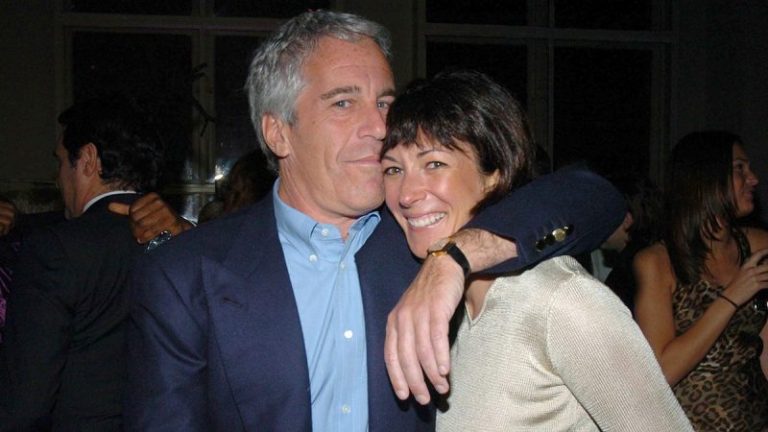
                He was also seen smiling arm-in-arm with the late disgraced financier and convicted sex offender Epstein at what appeared to be a dinner party, wearing a festive shirt.

                The locations where the photos were taken were not included, and no context was provided.

                White House deputy press secretary Abigail Jackson took to social media Friday afternoon to comment on the never-before-seen photos of the former POTUS.

                ‘Here is Bill Clinton in a hot tub next to someone whose identity has been redacted. Per the Epstein Files Transparency Act, DOJ was specifically instructed only to redact the faces of victims and/or minors,’ Jackson wrote. ‘Time for the media to start asking real questions.’

                Clinton’s deputy chief of staff, Angel Ureña, accused the White House of trying to ‘hide [things] forever,’ in a statement on X, implying President Donald Trump continued a relationship with Epstein after his crimes were revealed.

                ‘The White House hasn’t been hiding these files for months only to dump them late on a Friday to protect Bill Clinton. This is about shielding themselves from what comes next, or from what they’ll try and hide forever,’ Ureña wrote in the post. ‘So they can release as many grainy 20-plus-year-old photos as they want, but this isn’t about Bill Clinton. Never has, never will be. Even Susie Wiles said Donald Trump was wrong about Bill Clinton.

                ‘There are two types of people here,’ he continued. ‘The first group knew nothing and cut Epstein off before his crimes came to light. The second group continued relationships with him after. We’re in the first. No amount of stalling by people in the second group will change that. Everyone, especially MAGA, expects answers, not scapegoats.’

                The DOJ dumped thousands of documents and hundreds of photos on its website Friday, all supposedly obtained by authorities during investigations into Epstein and Maxwell’s sex trafficking cases. 

                Other photos showed interior and exterior views of Epstein’s properties, personal photos of Epstein with various people and heavily redacted potential victim exhibits.

                While more than a dozen politically known individuals appeared in the files, Clinton and other notable figures’ inclusion in the files does not necessarily imply wrongdoing.

                The document drop was triggered by the Epstein Files Transparency Act, which required the DOJ to make the files public 30 days from its Nov. 19 signing by President Donald Trump.

                Some files may be withheld by the DOJ if disclosure would jeopardize an ongoing investigation or prosecution, to safeguard victims’ privacy or to avoid publishing sensitive child sexual abuse material.

                Ross’ communications teams did not immediately respond to Fox News Digital’s requests for comment.

                This post appeared first on FOX NEWS

                The Department of Justice began releasing final documents related to convicted sex offender Jeffrey Epstein Friday, with a massive trove of documents that predominantly shows photos and heavily redacted materials categorized into four different sections. 

                The DOJ on Friday afternoon released four different data sets of thousands of photos, New York grand jury material and evidence related to investigations surrounding Epstein. The documents and photos were released on the DOJ’s official website. 

                Epstein was a well-connected financier who rubbed elbows with those at the highest echelons of government and private industry. He was convicted of sex trafficking minors in 2008 and served just more than one year of incarceration, which also included a controversial work-release arrangement under a plea agreement. 

                He was arrested again in 2019 on charges of sex trafficking before he was found dead in his Manhattan jail cell from suicide that same year, officials reported. 

                DATA SET ONE: 

                The first data set shows thousands of photos of the interiors and exteriors of Epstein’s properties, including in New York and on his private island, Little St. James. 

                DATA SET TWO: 

                The second data set released shows Epstein in personal photos with high-profile individuals, including former President Bill Clinton. The photos in the second data set show Epstein shirtless while sitting on a sofa, standing near a helicopter and many photos of him on boats.  

                A photo in the set included Clinton shirtless in a hot tub. 

                When asked about the photo, Clinton spokesperson Angel Urena directed Fox Digital to a statement he posted to X in response to the Epstein drop. 

                ‘The White House hasn’t been hiding these files for months only to dump them late on a Friday to protect Bill Clinton,’ he wrote. ‘This is about shielding themselves from what comes next, or from what they’ll try and hide forever. So they can release as many grainy 20-plus-year-old photos as they want, but this isn’t about Bill Clinton. Never has, never will be. Even Susie Wiles said Donald Trump was wrong about Bill Clinton.’

                Urena said there are ‘two types of people’ involved in the Epstein scandal: those who did not know of Epstein’s crimes and cut him out of their lives upon his conviction and a second group of people who ‘continued relationships with him after’ his crimes came to light.

                ‘We’re in the first. No amount of stalling by people in the second group will change that,’ the Clinton spokesman continued. ‘Everyone, especially MAGA, expects answers, not scapegoats.’ 

                DATA SET THREE:

                The third data set released by the Department of Justice included heavily redacted photos of potential victims, documents from Epstein’s 2019 grand jury records that were also heavily redacted, and potential victim exhibits. 

                DATA SET FOUR: 

                The fourth data set in the document drop mostly showed evidence and exhibits from the investigations into Epstein, including documents dated 2005 and 2006, when the Palm Beach, Florida, Police and FBI began investigating Epstein over tips of potential sex trafficking. 

                President Donald Trump signed a bipartisan law in November that required the Department of Justice to release all ‘unclassified records, documents, communications and investigative materials’ within 30 days of Trump’s signature.  

                Deputy Attorney General Todd Blanche said Friday morning during an appearance on Fox News that the Department was set to ‘release several hundred thousand documents today,’ while adding that the DOJ anticipates releasing ‘more documents over the next couple of weeks.’

                The Epstein Files Transparency Act specifically directs the Justice Department to release all unclassified records and investigative materials related to Epstein and his longtime partner Ghislaine Maxwell, as well as files related to individuals who were referenced in Epstein previous legal cases, details surrounding trafficking allegations, internal DOJ communications as they relate to Epstein and any details surrounding the investigation into his death. 

                This post appeared first on FOX NEWS

                Russian President Vladimir Putin said Friday that Moscow would refrain from launching new attacks on other nations provided his country is treated ‘with respect.’

                The Kremlin made the remarks during his annual televised press conference in Moscow as concerns persist among European nations that Russia poses a security threat, Agence France-Presse (AFP) reported.

                ‘Will there be new special military operations? There will be no operations if you treat us with respect, if you observe our interests, just as we have constantly tried to observe yours,’ Putin said.

                Putin uses the phrase ‘special military operation’ to describe Russia’s offensive in Ukraine, according to AFP.

                He added there would be no further Russian invasions ‘if you don’t cheat us like you cheated us with NATO’s eastward expansion,’ according to the BBC.

                The Russian leader also claimed he was ‘ready and willing’ to end the war in Ukraine ‘peacefully,’ though he offered few details suggesting a willingness to compromise, the BBC reported.

                The yearly news conference, which typically runs at least four hours, features questions from reporters and members of the public across Russia. 

                More than 2.5 million questions were submitted for this year’s event, which focused heavily on the war in Ukraine, Reuters reported.

                Putin also noted during the event that the nation’s ‘troops are advancing’ and expressed confidence that Russia will accomplish its objectives through military means if Ukraine does not assent to Russia’s terms during peace talks, according to The Associated Press.

                ‘Our troops are advancing all across the line of contact, faster in some areas or slower in some others, but the enemy is retreating in all sectors,’ Putin declared.

                As the war drags on, the European Union has just agreed to provide Ukraine with a loan of over $105 billion.

                Fox News Digital’s Alex Nitzberg contributed to this report.

                This post appeared first on FOX NEWS

                The palladium price surged upward in 2025 after three years of trending down and sideways.

                More than 80 percent of palladium demand comes from the auto sector, where it is used in the production of catalytic converters. Platinum and palladium are mostly interchangeable for this end use, and typically swapped for each other as their prices fluctuate.

                Strong growth in demand for electric and hybrid vehicles in recent years has placed downward pressure on palladium prices. On the supply side, Russia is one of the world’s top suppliers of palladium and other platinum-group metals.

                In 2025, palladium prices soared by more than 83 percent as of mid-December on supportive demand signals from slowing electric vehicle (EV) adoption trends and concerns about Russian supply reliability.

                The price of the metal reached a year-to-date high of US$1,675.50 per ounce on December 17.

                What’s the outlook for palladium in 2026? Let’s see what the experts have to say.

                Platinum demand depends on auto sector

                As for China, data from the China Passenger Car Association shows retail auto sales fell by 8.1 percent in November and dropped by 1.1 percent month over month; however, exports rose 52 percent to a record high of 601,000 units.

                “New-energy vehicle sales grew only 4.2 percent year over year, undershooting expectations and reinforcing the theme that the domestic EV momentum is cooling faster than previously assumed,” said Hasan.’The export boom, however, keeps Chinese production elevated and sustains global palladium demand through foreign-market supply chains.”

                The global slowdown in EV sales is also beneficial to palladium’s demand prospects. Reuters reported that global EV sales rose by just 6 percent in November on flat sales out of China and a 42 percent drop in North America after the Trump Administration ended the EV tax credit scheme. That’s the slowest growth rate since February of 2024.

                “Slower electrification limits the speed of substitution away from palladium-heavy combustionengines, extending the life cycle of auto catalyst demand at a time when supply growth remainsan open question,” Hasn stated.

                Looking into 2026, S&P Global sees the outlook for light-vehicle production being dependent on changing US trade policies and emissions standards. Consumer demand could be weighed down by the extra costs brought about by tariffs.

                “The broader pattern suggests flattish global production trends for 2026, a scenario that keeps palladium demand growth steady but not spectacular,” Hasn explained.

                Another factor that may impact palladium demand in the coming year is the premium reversal and the potential for auto makers to swap platinum for palladium in autocatalysts. Historically, for the most part palladium has traded at a premium to platinum; however, this trend reversed in late 2025 as the platinum market is facing a large supply deficit for the year.

                In its September 2025 market update, the World Platinum Investment Council (WPIC) reported at that time that platinum prices over the preceding twelve months were trading at an average premium of US$59 per ounce to palladium prices. The WPIC said it “expects reverse substitution (i.e. palladium for platinum) to reach 250 koz by 2029f. With palladium now benefitting from reverse substitution, palladium will also relatively benefit (versus platinum) from China 7 emission legislation which we have added into our forecasts from 2028f.”

                As of December 17, platinum is trading at a premium of more than US$250 compared to palladium.

                Palladium supply facing challenges

                Palladium’s price peaks in 2025 are not all related to demand. Production and logistics challenges are also driving prices for the metal. The two geographic regions to watch for supply side trends are Russia and South Africa, by far the two biggest palladium producing countries. Together, they account for more than three-quarters of global palladium production. In Russia, palladium is mainly a by-product of nickel and copper mining, whereas in South Africa the metal is mined as a by-product or co-product of platinum.

                In South Africa, platinum and palladium mining operations have been plagued by heavy rain and flooding in 2025. The nation’s mining industry has already been suffering under an energy crisis marked by frequent power outages. To further compound the supply problem, maturing deposits are becoming more expensive to mine and a lack of significant capital investment has led to a dearth of new projects.

                In Russia, palladium output is traditionally dependent upon the economic and operational viability of its nickel mines. Since the country’s invasion of Ukraine, logistical challenges have erupted all along the palladium supply chain from mining to export as sanctions and trade restrictions have tightened. This includes the removal of Russian refiners from the London Platinum and Palladium Market ‘Good Delivery Lists’.

                Another supply side challenge came in mid-2025 when American palladium producer Sibanye-Stillwater (NYSE:SBSW) headed up a petition requesting that the US International Trade Commission (ITC) investigate anti-dumping and countervailing duties on Russian unwrought palladium. Russian palladium represents about 40 percent of US imports of the metal.

                The ITC found that dumped and subsidized Russian palladium imports do pose a threat to the US palladium industry. The Department of Commerce is now conducting a full investigation into the dumping margins and subsidies of Russian unwrought palladium. A determination is expected in January 2026, followed by the final phase of the ITC investigation to be completed in May 2026.

                Sterck said the outcome could have an impact on the substitution of platinum for palladium in catalytic converters. “I think going into next year, we should get greater clarity on these investigations, and it’s certainly something that we’ll be watching in terms of trying to inform our estimates for 2026 as a whole,” he added.

                In its September 20205 market update, the WPIC projected that the palladium market will likely post supply deficits for 2025 and 2026 before moving into a surplus. That’s with palladium mine supply forecast to decline by 1.1 percent CAGR between 2024 and 2029.

                “Notably, the forecast of palladium going into surplus is entirely contingent on recycling supply growth. If this does not materialise then palladium could remain in a deficit for the foreseeable future, which could materially alter palladium value expectations,” stated the report.

                Palladium price forecast for 2026

                The palladium market is notoriously volatile and highly sensitive to economic swings and supply disruptions. All of this makes forecasting palladium prices challenging.

                Precious metals industry service provider Heraeus Precious Metals’ 2026 palladium price forecast is representative of the uncertainty prevalent in this segment of the market. The firm is projecting that prices for the metal will trade in a range of US$950 to US$1,500 next year.

                Palladium may face a widening surplus as battery electric vehicles gain market share,” said Henrik Marx, Head of Trading at Heraeus Precious Metals. This would likely place downward pressure on palladium price. However, the firm’s report points out that the metal’s price may receive a boost from a rally in platinum prices.

                New York-based precious metals dealer Bullion Exchanges has a base case of US$1,300 to US$1,600 per ounce for palladium in 2026. If EV adoption grows faster than expected, its bearish case for the metal comes in at US$1,100 per ounce. If the supply deficit deepens and Russian palladium faces further sanctions, the firm sees a more bullish case for palladium to soar above US$1,800 per ounce.

                Securities Disclosure: I, Melissa Pistilli, hold no direct investment interest in any company mentioned in this article.

                This post appeared first on investingnews.com

                Here’s a quick recap of the crypto landscape for Friday (December 19) as of 9:00 pm UTC.

                Get the latest insights on Bitcoin, Ether and altcoins, along with a round-up of key cryptocurrency market news.

                Bitcoin and Ether price update

                Bitcoin (BTC) was priced at US$88,004.97, up by 3.6 percent over 24 hours.

                Bitcoin price performance, December 19, 2025.

                Chart via TradingView

                Ether (ETH) was priced at US$2,991.30, up by 7.2 percent over the last 24 hours.

                Altcoin price update

                • XRP (XRP) was priced at US$1.91, up by 5.7 percent over 24 hours.
                • Solana (SOL) was trading at US$126.85, up by 7.6 percent over 24 hours.

                Today’s crypto news to know

                MetaPlanet’s US expansion and OTC trading debut

                American Depositary Receipts (ADRs) of BTC treasury company Metaplanet (TSE:3350,OTCQX:MPJPY) began trading today on the US OTC market under the ticker symbol MPJPY, replacing the previously unsponsored MTPLF ticker, according to an announcement from the company.

                This step builds on earlier US expansions. The company, which is based in Tokyo, established a wholly-owned subsidiary called Metaplanet Treasury in Miami, Florida, in May 2025 to handle BTC accumulation and treasury operations with up to US$250 million in capital.

                The launch is intended to enhance US investor participation in MetaPlanet’s BTC strategy.

                Poland’s parliament approves MiCO-aligned crypto bill over veto

                Poland’s lower house of parliament, called the Sejm, approved a crypto-asset market bill today, overriding President Karol Nawrocki’s prior veto. It now heads to the Senate for review, where it potentially faces another veto.

                President Nawrocki vetoed the bill earlier in December, citing threats to civil liberties like easy website blocks. Prime Minister Donald Tusk’s government resubmitted the bill, unchanged. It passed with 241 votes.

                The bill aligns Poland with the EU’s MiCA regulation by designating the Financial Supervision Authority (KNF) to oversee crypto exchanges, impose sanctions, and introduce criminal liability for offenses.

                US Senate confirms Mike Selig as CFTC Chair

                The US Senate has confirmed Mike Selig as the next chair of the Commodity Futures Trading Commission (CFTC), bringing permanent leadership back to an agency that has operated for months in near-limbo.

                Selig’s confirmation passed 53–43 as part of a broader package of federal appointments. The CFTC had been functioning with a single commissioner, Acting Chair Caroline Pham, after multiple resignations hollowed out the five-member panel.

                While Pham kept the agency operational, the lack of a Senate-confirmed chair constrained long-term planning, staffing, and coordination with other regulators.

                That gap was especially acute as lawmakers debated expanding the CFTC’s role in overseeing spot crypto markets.

                CLARITY Act heads for Senate markup in January

                The Digital Asset Market Clarity Act is set to enter Senate markup in January, according to White House crypto and AI adviser David Sacks, putting the bill on a formal path toward passage.

                ‘We had a great call today with Chairmen @SenatorTimScott and @JohnBoozman who confirmed that a markup for Clarity is coming in January. Thanks to their leadership, as well as @RepFrenchHill and @CongressmanGT in the House, we are closer than ever to passing the landmark crypto market structure legislation that President Trump has called for,’ Sacks posted on X. ‘We look forward to finishing the job in January!’

                Senate Banking Chair Tim Scott and Agriculture Chair John Boozman have agreed on the timeline. The bill, which cleared the House earlier this year, aims to settle long-running jurisdiction disputes by spelling out when a token is a security versus a commodity.

                Lawmakers are expected to focus amendments on asset classification tests, investor protection standards, and how quickly platforms must register under the new regime.

                Another key issue will be how the SEC and CFTC coordinate oversight during the transition period.

                If the schedule holds, Congress could finalize a reconciled version later during the year.

                Bybit re-enters UK Market via FCA-approved promotion route

                Crypto exchange Bybit has resumed operations in the UK after a two-year absence triggered by tighter rules on crypto marketing and promotions.

                The platform has restarted spot trading with 100 pairs, using a compliance structure designed to meet the Financial Conduct Authority’s (FCA) financial promotion standards.

                Rather than holding its own UK authorization, Bybit is operating under an arrangement with London-based exchange Archax, which is licensed to approve crypto promotions for unauthorised firms.

                This route has previously been used by other major exchanges seeking access to British users.

                Securities Disclosure: I, Meagen Seatter, hold no direct investment interest in any company mentioned in this article.

                Securities Disclosure: I, Giann Liguid, hold no direct investment interest in any company mentioned in this article.
                This post appeared first on investingnews.com