
Author

admin

Browsing

Analysts say China has developed a chilling strategy for fighting a war with the United States: destroy America’s fighter jets before they ever leave the ground.

In nearly every modern conflict, disabling enemy aircraft on the ground has been the first move. When Israel struck Iranian nuclear sites earlier this year, it began by destroying Iranian runways — grounding Tehran’s air force before it could take off. Russia and Ukraine have done the same throughout their ongoing war, targeting airfields to cripple enemy aircraft. And when India clashed with Pakistan, the opening salvos hit Pakistani air bases.

Beijing has taken that lesson to heart. The People’s Liberation Army (PLA) has spent years building an arsenal of long-range precision missiles — including ‘carrier killers’ like the DF-21D and DF-26 — capable of destroying U.S. aircraft carriers and striking American airfields across the Pacific. The goal: keep U.S. air power out of range before it can even launch.

Now, a U.S. defense technology firm says it has built a way to fight back. Shield AI, based in San Diego, has unveiled a new AI-piloted fighter jet designed to operate without runways, without GPS, and without constant communication links — an aircraft that can think, fly, and fight on its own.

Shield AI says the jet, called X-BAT, can take off vertically, reach 50,000 feet, fly more than 2,000 nautical miles, and execute strike or air defense missions using an onboard autonomy system known as Hivemind. It’s designed to operate from ships, small islands, or improvised sites — places where traditional jets can’t. The aircraft’s dash speed remains classified.

‘China has built this anti-access aerial denial bubble that holds our runways at risk,’ said Armor Harris, Shield AI’s senior vice president of aircraft engineering, in an interview with Fox News. ‘They’ve basically said, ‘We’re not going to compete stealth-on-stealth in the air — we’ll target your aircraft before they even get off the ground.’’

The jet launches vertically, and three X-BATs can fit in the space of one legacy fighter or helicopter.

According to Harris, the U.S. has spent decades perfecting stealth and survivability in the air while leaving its forces vulnerable on the ground. ‘The way to solve that problem is mobility,’ he said. ‘You’re always moving around. This is the only VTOL fighter being built today.’

X-BAT’s Hivemind autonomy allows it to operate in denied or jammed environments, where traditional aircraft would be blind. The system uses onboard sensors to interpret its surroundings, reroute around threats, and identify targets in real time. ‘It’s reading and reacting to the situation around it,’ Harris said. ‘It’s not flying a pre-programmed route. If new threats appear, it can reroute itself or identify targets and then ask a human for permission to engage.’

That human element, he emphasized, remains essential. ‘It’s very important to us that a human is always involved in making the use of lethal force decision,’ Harris said. ‘That doesn’t mean the person has to be in the cockpit — it could be remote or delegated through tasking — but there will always be a human decision-maker.’

Shield AI says X-BAT will be combat-ready by 2029 and is designed to deliver fifth- or sixth-generation performance at a small fraction of the cost of manned fighters. The aircraft’s compact footprint allows up to three X-BATs to fit in the deck space of a single legacy fighter or helicopter, giving commanders more flexibility in launching sorties from limited space.

While Shield AI isn’t disclosing specific numbers, the company says X-BAT is priced in the same range as the Air Force’s Collaborative Combat Aircraft (CCA) program, the next generation of autonomous wingmen meant to fly alongside — and eventually ahead of — manned fighters. Costs vary depending on mission systems and configurations, but the company’s goal is to scale production to keep the jet affordable and sustainable throughout its lifecycle, breaking what it calls the traditional ‘fighter cost curve.’

The company estimates the aircraft will deliver about a tenfold improvement in cost per effect compared to legacy fifth-generation jets, including the F-35, while remaining ‘affordable and attritable’ enough to be risked in high-end combat.

Shield AI is in discussions with both the Air Force and Navy about integrating X-BAT into future combat programs and with several allied militaries exploring joint development opportunities.

Harris said the company views X-BAT as part of a generational shift toward distributed airpower — one that mirrors what SpaceX did in space. ‘Historically, the United States had a small number of extremely capable, extremely expensive satellites,’ he said. ‘Then you had SpaceX come along and put up hundreds of smaller, cheaper ones. The same thing is happening in air power. There’s always going to be a role for manned platforms, but over time, unmanned systems will outnumber them ten-to-one or twenty-to-one.’

For Harris, that shift is about restoring deterrence through flexibility. ‘X-BAT presents an asymmetric dilemma to an adversary like China,’ he said. ‘They don’t know where it’s coming from, and the cost of countering it is high. It’s an important part of a broader joint force that becomes significantly more lethal.


This post appeared first on FOX NEWS

Senate Minority Leader Chuck Schumer, D-N.Y., on Friday accused President Donald Trump of ‘skipping town’ for a trip to Asia during the ongoing government shutdown.

Trump departed for Asia Friday night for a weeklong trip that will include stops in Malaysia, Japan and South Korea. Republicans and Democrats remain divided on negotiations to end the shutdown that began earlier this month, with each side blaming the other as the GOP controls the White House and both chambers of Congress.

‘In the midst of the longest full government shutdown in American history — a crisis of his own making — President Trump’s priorities are severely misplaced,’ Schumer said in a statement.

‘While Americans are struggling to make ends meet, federal workers are going without pay, and millions of families are bracing for soaring health care costs, the President is leaving the country,’ he continued.

Schumer added: ‘America is shut down and the President is skipping town.’

The senator said Democrats have sought to meet with Trump, but that the president is ‘abandoning’ his responsibilities.

‘Democrats have asked, again and again, for President Trump to meet with us to negotiate a bipartisan deal that would address the healthcare crisis, and find a path forward to reopen the government. But instead of doing his job, President Trump is abandoning it,’ Schumer said.

Schumer also called on GOP lawmakers in Congress to work across the aisle to reach a deal to end the shutdown.

‘With the President out of the country, the responsibility falls squarely on Congressional Republicans to act — to come to the table, to do their jobs, and to deliver an agreement that reopens the government and protects Americans from another health care disaster,’ he said.

‘Americans deserve a government that works as hard as they do— not a leader that flies away from responsibility at the time they need one most,’ the top Senate Democrat added.

While in Asia, Trump is expected to meet with regional allies about trade, including the trade war with China, as well as Beijing’s tightening of export controls on rare-earth minerals critical for certain technologies. 

The president is also expected to address security in the region and affirm America’s commitment to supporting its allies.

This post appeared first on FOX NEWS

This week began on a strong note, with emerging signs that US-China tensions could ease and White House Economic Advisor Kevin Hassett’s suggestion that the federal government shutdown could soon end.

US stocks rallied broadly, led by small caps and semiconductors, with the PHLX Semiconductor Sector (INDEXNASDAQ:SOX) hitting an all-time high amid reduced concerns about regional bank credit quality.

On Tuesday (October 21), hotter-than-expected Canadian inflation data weighed on the S&P/TSX Composite Index (INDEXTSI:OSPTX), while the Nasdaq Composite (INDEXNASDAQ:.IXIC) outperformed.

Wednesday (October 22) saw profit taking in high-growth names as Tesla (NASDAQ:TSLA) and IBM (NYSE:IBM) reported after the bell, and as reports of potential new US export curbs on China pressured equities.

IBM beat revenue forecasts with US$9.5 billion in artificial intelligence (AI) revenue, but offered cautious guidance, leading its share price to fall after-hours. Tesla missed revenue estimates, with margins falling to 5.8 percent due to price cuts and reduced regulatory credits, despite record deliveries. CEO Elon Musk reiterated medium-term goals in AI, autonomy and robotics, though the firm didn’t update its financial guidance. Tesla shares also dropped after hours.

Despite the pullback, the tech sector rebounded sharply on Thursday (October 23), driven by optimism about AI and cloud infrastructure. Quantum computing companies such as IonQ (NASDAQ:IONQ), Rigetti Computing (NASDAQ:RGTI) and D-Wave Quantum (NYSE:QBTS) surged on reports of increased US government funding.

North of the border, Canadian Prime Minister Mark Carney and Ontario Premier Doug Ford unveiled a C$3 billion joint investment in small modular reactors at the Darlington site, located east of Toronto in Bowmanville.

Later, Intel (NASDAQ:INTC) surpassed expectations with a 3 percent year-on-year revenue increase, reaching US$13.7 billion, with gross margins doubling to 38 percent. The demand for AI accelerators and x86 processors contributed to these strong results. CEO Lip-Bu Tan expressed confidence in continuing AI-driven compute demand.

Following the announcement, shares rose and opened nearly 5 percent higher the next day.

Intel’s standout earnings boosted sentiment heading into Friday. Markets opened higher after delayed US inflation data came in cooler than expected, showing easing underlying pressures and reinforcing expectations for another Fed rate cut next week. Tech stocks led the advance once again.

3 tech stocks that moved markets this week

1. Micron Technology (NASDAQ:MU)

Micron Technology shares rose 4.46 percent this week, hitting a record high above US$214 on Monday (October 20) after analysts at Barclays (NYSE:BCS) raised their price target from US$195 to US$240, citing robust earnings and margin expansion as signs of operational strength. The company has reported surging demand for its high-bandwidth memory chips, with supply fully sold out through 2026. Other semiconductor stocks, such as ON Semiconductor (NASDAQ:ON) and KLA (NASDAQ:KLAC), also gained, reflecting broad semiconductor strength.

2. Apple (NASDAQ:AAPL)

Apple’s share price is up 2.7 percent for the week, boosted by an overall bullish sentiment for high-value tech stocks, as well as momentum from strong M5 MacBook demand and solid sales of the iPhone 17 in the US and China.

CEO Tim Cook later announced the opening of the company’s Texas manufacturing facility on Thursday, two months ahead of schedule, further boosting sentiment.

3. NVIDIA (NASDAQ:NVDA)

Top AI stock NVIDIA saw gains of 1.67 percent this week following a joint announcement with Taiwan Semiconductor Manufacturing Company (NYSE:TSM). The companies said the first Blackwell wafer has been produced in the US at Taiwan Semiconductor’s semiconductor fab in Phoenix.

It is the first of its kind to be domestically manufactured in recent American history.

NVIDIA remains the bellwether for the AI sector, and its share price performance is widely regarded as a barometer for risk-on sentiment in the AI and tech sectors, with its share price movements often reflecting investor appetite for growth and optimism about the future of AI-driven innovation.

Micron Technology, NVIDIA and Apple performance, October 21 to 24, 2025.

Chart via Google Finance.

Tech ETF performance

This week, the iShares Semiconductor ETF (NASDAQ:SOXX) advanced by 1.83 percent, while the Invesco PHLX Semiconductor ETF (NASDAQ:SOXQ) saw a weekly gain of 1.91 percent.

The VanEck Semiconductor ETF (NASDAQ:SMH) increased by 1.59 percent.

Other tech market news

  • Amazon Web Services experienced a major outage this week, raising concerns about cloud infrastructure resilience and spotlighting the critical dependency on hyperscale providers.

        Tech news to watch next week

        Next week, investors will be eyeing interest rate decisions from the Bank of Canada and the US Federal Reserve. The Bank of Canada is expected to hold rates steady, reflecting ongoing cautiousness amid cooling inflation, while US investors are betting on a rate cut from the the country’s central bank.

        Earnings results from tech giants will also be closely watched, with Alphabet (NASDAQ:GOOGL), Microsoft and Meta reporting on Wednesday (October 29), and Apple and Amazon on Thursday (October 30).

        Strong beats or cautious guidance from these heavyweight companies could either boost confidence in the tech sector’s growth trajectory or temper enthusiasm in the final quarter of 2025.

        Securities Disclosure: I, Meagen Seatter, hold no direct investment interest in any company mentioned in this article.

        This post appeared first on investingnews.com

        Homerun Resources Inc. (TSXV: HMR,OTC:HMRFF) (OTCQB: HMRFF) (‘Homerun’ or the ‘Company’) announces that the Company has submitted its formal application for conditional approval of the previously announced $6-million financing with a single institutional investor. The Company is now awaiting conditional approval from the TSX Venture Exchange.

        The Company also reports, that further to its October 6, 2025, news release, the Company is oversubscribed for its $3-million unit private placement at $1.00. This financing will close after the above financing, as several subscribers have requested that the closing of the $6-million institutional financing be a precedent, and so the Company has requested and received approval from the TSX Venture Exchange to extend the closing of that financing for a standard 30-day period to November 24, 2025.

        Both financings are anticipated to close in the immediate term, subject to TSX-V approval.

        On behalf of the Board of Directors of
        Homerun Resources Inc.

        ‘Brian Leeners’

        Brian Leeners, CEO & Director
        brianleeners@gmail.com / +1 604-862-4184 (WhatsApp)

        Tyler Muir, Investor Relations
        info@homerunresources.com / +1 306-690-8886 (WhatsApp)

        FOR THE ADEQUACY OR ACCURACY OF THIS RELEASE
        The information contained herein contains ‘forward-looking statements’ within the meaning of applicable securities legislation. Forward-looking statements relate to information that is based on assumptions of management, forecasts of future results, and estimates of amounts not yet determinable. Any statements that express predictions, expectations, beliefs, plans, projections, objectives, assumptions or future events or performance are not statements of historical fact and may be ‘forward-looking statements’.

        Neither the TSX Venture Exchange nor its Regulation Services Provider (as that term is defined in policies of the TSX Venture Exchange) accepts responsibility for the adequacy or accuracy of this release.

        To view the source version of this press release, please visit https://www.newsfilecorp.com/release/271921

        News Provided by Newsfile via QuoteMedia

        This post appeared first on investingnews.com

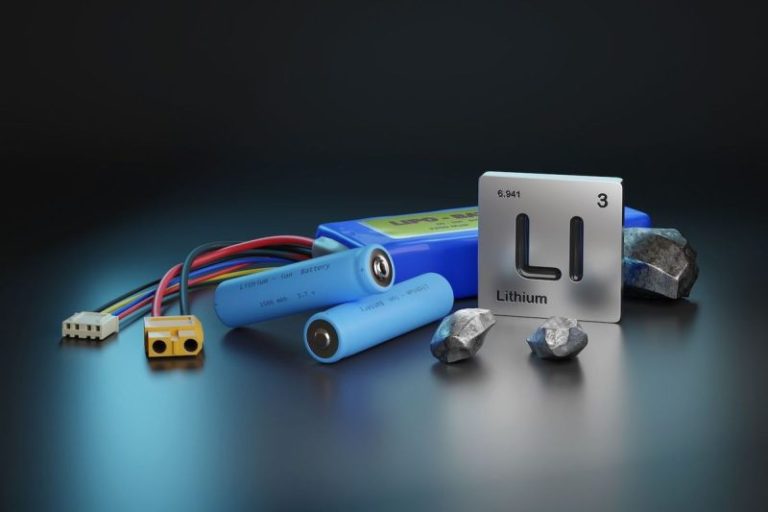
        Canadian company PMET Resources (ASX:PMT, TSX:PMET, OTCQX:PMETF) has completed a lithium-only feasibility study on the CV5 deposit of its Shaakichiuwaanaan lithium project in Northern Quebec.

        The company said that the feasibility study confirms that the project is a large-scale and lifelong operation, with CV5’s maiden reserve updated to 84.3 million tonnes (Mt) at 1.26 percent lithium oxide or about 2.62 Mt lithium carbonate equivalent (LCE) in probable reserves.

        Results also show that there is still potential to upgrade and expand resources at CV5 and its nearby CV13 deposit, which currently hold a total resource of 108.0 million tonnes at 1.40 percent indicated and 33.4 at 1.33 percent inferred.

        “Our large scale and long-life project is ideally suited to support the emerging American, European, and Asian lithium raw materials supply chains,” commented CEO and President Ken Brinsden.

        “There are very few projects of this size & scale, quality, and low production cost that can assist in underwriting the expected capital investment supporting new supply chains and demand growth in western markets.”

        Located in Quebec’s Eeyou Istchee James Bay region, Shaakichiuwaanaan is recognised as the largest lithium pegmatite mineral resource in the Americas.

        It is also among the largest lithium mines in the world, with potential to become the second largest following the Greenbushes lithium operations in Western Australia.

        Greenbushes is owned by Albemarle (NYSE:ALB) and was recorded with an estimated 0.21 metric tonnes per annum lithium production in 2023.

        PMET is targeting a final investment decision for Shaakichiuwaanaan for the second half of 2027, hoping that “the overall market supply-demand balance tightens over the coming years.”

        Researchers found that the project can have an annual production of up to 800,000 tonnes of lithium-rich rock, along with pollucite, tantalite, and cesium.

        Brinsden said that about 20 percent of the jobs created at Shaakichiuwaanaan will be allotted to workers at the Cree territory.

        PMET Resources was formerly Patriot Battery Metals. The company officially changed its name in September.

        Securities Disclosure: I, Gabrielle de la Cruz, hold no direct investment interest in any company mentioned in this article.

        This post appeared first on investingnews.com

        The gold price declined from its recent all-time highs this week, sinking to nearly US$4,000 per ounce and recording its biggest one-day decline in more than 12 years.

        Silver took a similar hit, slipping back below the US$50 per ounce level.

        The drops have been attributed to factors like a stronger US dollar and lower US-China tensions, as well as profit taking, potentially from traders who are new to the market.

        Many experts have been anticipating a correction for the metals — their latest rise has been quick, and no asset can go straight up forever.

        However, there’s also a broad consensus that gold has entered a new phase. For example, Patrick Tuohy of Goldstrom believes gold won’t fall below US$3,000 again.

        Here’s what Tuohy said:

        ‘Is this a short-term phenomenon that’s going to have some some dynamics that are going to turn it on its head and it reverses 50, 60 percent? I don’t believe that is the case. I think within our group … the consensus is that it’s unlikely that we’ll see gold below US$3,000 again in our lifetimes. So let’s say that that’s the floor. That’s a fairly significant move from where we were two years ago. So that’s comfortable.’

        Next week, all eyes will be on the US Federal Reserve, which is set to meet from October 28 to 29. CME Group’s (NASDAQ:CME) FedWatch tool shows strong expectations for another interest rate cut.

        While the release of US government data has been affected by the ongoing shutdown, September consumer price index numbers were released on Friday (October 24).

        The report was the first major piece of federal economic data to come out since the shutdown began, and it has confirmed expectations of another rate reduction.

        Bullet briefing — What’s next for gold and silver?

        Gold and silver prices perked up to end the week, rising to the US$4,100 and US$48.60 levels, respectively. But with the metals still off from their all-time highs, investors are wondering what’s next.

        Opinions vary, but I’ve pulled together a couple of quotes that illustrate what I’m hearing.

        First is Ed Steer of Ed Steer’s Gold and Silver Digest. He’s well known for his commentary on the precious metals space, and he weighed in on what’s next for silver, saying that today really is different compared to the other times silver rose to the US$50 level.

        Here’s how he explained it:

        ‘It’s irrelevant what the price is today. You look at the big picture, and look at the fact that the BRICS+ have become an absolutely awesome juggernaut, and it’s absolutely unstoppable. And as we shift from the west to the east, as this continues economically, financially, it’s impossible to say where this is going to end up.

        ‘But what we’re living right now is we’re living through a major, major shift in financial power, from one area of the world to another, and we’re going to be — they’re going to be writing about this 1,000 years from now. So we’re living through history.’

        Next we have Don Durrett of GoldStockData.com. This interview is from the week before last, so it’s a little older, but definitely still relevant. I’ve kept thinking about a comment Durrett made about one way we can tell the gold cycle is still early. This is what he said:

        The thing that really reveals how early we are is the stock market is only 2 percent from an all-time high. What in the world is the stock market doing at an all-time high and gold at an all-time high? Those are antagonistic. Gold is supposed to be a hedge against uncertainty. The stock market is supposed to show basically confidence.

        And so if you have an all-time high, people should be confident. Everything’s fine. We don’t need this. But people are not confident. People have said this is the most scary bull market ever. Nobody really believes in it, right? … So the question is, who’s telling the truth? Is the stock market telling the truth at an all time high, or is it gold is telling the truth? Well, it’s pretty obvious that gold’s the one telling the truth.

        In It To Win It interview

        Finally, if you’d like to hear more from me, I was recently interviewed by Steve Barton of In It To Win It.

        Securities Disclosure: I, Charlotte McLeod, hold no direct investment interest in any company mentioned in this article.

        This post appeared first on investingnews.com

        Ed Steer of Ed Steer’s Gold and Silver Digest shares his thoughts on silver’s run past US$50 per ounce, saying that in his view the bull market is just getting started.

        ‘One way or another we’re going to run into a supply/demand brick wall, and when that day happens we could see triple-digit silver prices in a very, very short period of time,’ he said.

        Securities Disclosure: I, Charlotte McLeod, hold no direct investment interest in any company mentioned in this article.

        This post appeared first on investingnews.com

        Target said Thursday that it is eliminating about 1,800 corporate positions in an effort to streamline decision-making and accelerate initiatives to rebuild the flagging discount retailer’s customer base.

        About 1,000 employees are expected to receive layoff notices next week, and the company also plans to eliminate about 800 vacant jobs, a company spokesperson said. The cuts represent about 8% of Target’s corporate workforce globally, although the majority of the affected employees work at the company’s Minneapolis headquarters, the spokesperson said.

        Chief Operating Officer Michael Fiddelke, who is set to become Target’s next CEO on Feb. 1, issued a note to personnel on Thursday announcing the downsizing. He said further details would come on Tuesday, and he asked employees at the Minneapolis offices to work from home next week.

        “The truth is, the complexity we’ve created over time has been holding us back,” Fiddelke, a 20-year Target veteran, wrote in his note. “Too many layers and overlapping work have slowed decisions, making it harder to bring ideas to life.”

        Target, which has about 1,980 U.S. stores, lost ground to Walmart and Amazon in recent years as inflation caused shoppers to curtail their discretionary spending. Customers have complained of messy stores with merchandise that did not reflect the expensive-looking but budget-priced niche that long ago earned the retailer the jokingly posh nickname “Tarzhay.”

        Fiddelke said in August when he was announced as Target’s next CEO that he would step into the role with three urgent priorities: reclaiming the company’s position as a leader in selecting and displaying merchandise; improving the customer experience by making sure shelves are consistently stocked and stores are clean; and investing in technology.

        He cited the same goals in his message to employees, calling the layoffs a “necessary step in building the future of Target and enabling the progress and growth we all want to see.”

        “Adjusting our structure is one part of the work ahead of us. It will also require new behaviors and sharper priorities that strengthen our retail leadership in style and design and enable faster execution,” he wrote.

        Target has reported flat or declining comparable sales — those from established physical stores and online channels — in nine out of the past 11 quarters. The company reported in August that comparable sales dipped 1.9% in its second quarter, when its net income also dropped 21%.

        The job cuts will not affect any store employees or workers in Target’s sorting, distribution and other supply chain facilities, the company spokesperson said.

        The corporate workers losing their jobs will receive pay and benefits until Jan. 8 as well as severance packages, the spokesperson said.

        This post appeared first on NBC NEWS

        Card-reading contact lenses, X-ray poker tables, trays of poker chips that read cards, hacked shuffling machines that predict hands. The technology alleged to have been used to execute a multistate, rigged poker operation sounds like it’s straight out of Hollywood.

        And those were only some of the gadgets that authorities say were used to swindle millions of dollars from unsuspecting victims through rigged, high-dollar, underground poker games over more than five years.

        A sprawling indictment unsealed Thursday by the U.S. attorney for the Eastern District of New York charged Chauncey Billups, the head coach of the NBA’s Portland Trail Blazers, and Damon Jones, a former NBA player, along with members of the Mafia and dozens of other defendants, with being part of a conspiracy.

        The victims were “at the mercy of concealed technology, including rigged shuffling machines and specially designed contacts lenses and sunglasses to read the backs of playing cards, which ensured that the victims would lose big,” U.S. Attorney Joseph Nocella of Brooklyn said in a statement.

        Cheating at poker is as old as poker itself. But today, wearable tech and nano-cameras are putting even upstanding poker players on their guard.

        The defendants used “special contact lenses or eyeglasses that could read pre-marked cards,” Nocella said at a news conference announcing the indictments.

        He also showed a photo of an X-ray table that “could read cards face down on the table … because of the X-ray technology.”

        An X-ray poker table in an image from defendant Robert Stroud’s iCloud account.U.S. Justice Department

        “Defendants used other cheating technologies, such as poker chip tray analyzers, which is a poker chip tray that secretly reads cards using a hidden camera,” he said.

        And while marking poker cards so they are visible only with special eyewear is an old trick, new radio-frequency identification and infrared technologies have ramped up the sophistication levels.

        Technically speaking, many of the devices involved in the alleged scam authorities detailed Thursday are relatively cheap to manufacture, said Sal Piacente, a gaming security consultant.

        By the time they reach their customers, however, the cost of industrial shufflers or tables can easily approach $100,000, once distributors and middlemen are factored in.

        “You could make a lucrative career buying this stuff,” Piacente said.

        Casino and gaming security consultants told NBC News that the alleged scheme was possible only because the games were underground. In backrooms, there was none of the surveillance tech that reputable casinos use to catch players cheating.

        “A lot of the features which made this scheme so successful would have been ID’d a lot sooner, or very quickly, in a traditional regulated gaming environment,” said Ian Messenger, a former U.K. law enforcement officer and founder and CEO of the Association of Certified Gaming Compliance Specialists.

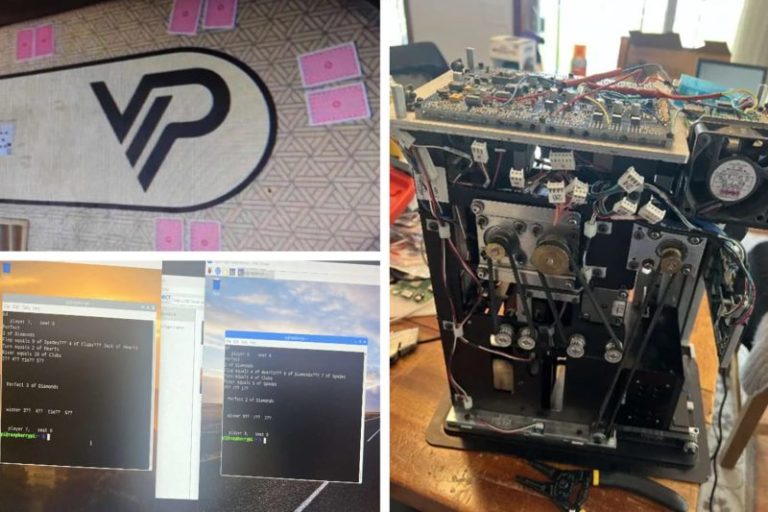
        More than any other tech, it was the reprogramming of the industrial card shufflers — identified in charging documents as Deckmate-brand machines — that authorities said was key to the alleged game rigging.

        A DeckMate 2 shuffler taken apart on a table in an image from defendant Shane Hennen’s iCloud account. U.S. Justice Department

        Deckmates are not sold directly to the public — though many used ones can be found for sale online. The ones at the high-dollar games cited in the indictment could read cards and predict which player had the best hand. Neither Deckmate nor its parent company, Light & Wonder, were implicated in any way in Thursday’s indictments.

        A spokesman for Light & Wonder told NBC News in a statement that the company was aware of reports about the charges against people but said they were not affiliated with the company.

        “We sell and lease our automatic card shufflers and other gaming products and services only to licensed casinos and other licensed gaming establishments,” said Andy Fouché, the company’s vice president of communications. “We will cooperate in any law enforcement investigation related to this indictment.”

        Reprogramming shufflers is not a new trick. In 2023, hackers at the Black Hat security conference in Las Vegas presented research showing how to hack a Deckmate shuffler and use it to cheat.

        The rigged shuffler machines would transmit information about the players’ hands to an off-site “operator,” according to prosecutors.

        The computer program showing information transmitted by the rigged shuffling machine in an image from defendant Shane Hennen’s iCloud account. U.S. Justice Department

        The operator would then communicate the information to someone else at the table, dubbed the “quarterback.” The victim was known as the “fish.”

        Here, the high-tech gadgets met the low-tech of a card game.

        The quarterback might touch the $1,000 poker chip or tap his chin or touch his black chips to indicate who at the table had the best hand.

        Text messages obtained by prosecutors also appear to show defendants concerned that a fish would leave the table if he lost too many hands.

        “Guys please let him win a hand he’s in for 40k in 40 minutes he will leave if he gets no traction,” read one text message released by authorities.

        But according to Messenger, the consultant, it was not the tech that made the alleged scheme so successful for so long. What set it apart was the level of communication.

        For example, he said, the card information had to be seamlessly passed from the dealing machines to an off-site operator and back to a person back at the table, all without alerting the fish.

        “The piece that made this so successful was the coordination, not the technology,” he said.

        This post appeared first on NBC NEWS

        President Donald Trump is ‘not interested’ in making peace with Colombian President Gustavo Petro, the White House said Thursday, as tensions between Washington and Bogotá continue to escalate.

        ‘I don’t think we’re seeing de-escalation from the unhinged leader of Colombia right now,’ press secretary Karoline Leavitt told reporters during a White House briefing when asked what Petro could do to reduce tensions.

        ‘I don’t think the president, frankly, is interested in that at this point,’ Leavitt added.

        Relations between the two countries have sharply deteriorated after Petro accused the U.S. of killing innocent fishermen during strikes targeting narco-traffickers in the Caribbean.

        Following Petro’s accusation, Trump announced plans to cut off all counter-narcotics aid to Colombia and impose new tariffs on the country.

        Trump lashed out at his South American counterpart, calling him a ‘thug’ who is ‘making a lot of drugs.’

        ‘They’re doing very poorly, Colombia. They make cocaine. They have cocaine factories … and he better watch it or we’ll take very serious action against him and his country,’ Trump said. ‘What he has led his country into is a death trap.’

        Petro fired back, threatening to sue Trump in U.S. court.

        ‘From the slanders that have been cast against me in the territory of the United States by high-ranking officials, I will defend myself judicially with American lawyers in the American justice system,’ Petro wrote on X. ‘I will always stand against genocides and murders by those in power in the Caribbean.’

        ‘When our help is required to fight against drug trafficking, American society will have it. We will fight against the drug traffickers with the states that want our help,’ he added.

        Petro has sought closer ties with Venezuelan dictator Nicolás Maduro while distancing Colombia — a major non-NATO ally — from the United States.

        Meanwhile, the U.S. has conducted eight strikes on vessels believed to be transporting narcotics from Latin America. The world is now watching to see whether Trump will follow through on threats to strike Venezuelan soil — or even target Maduro himself, directly or indirectly.

        Trump confirmed that he had authorized the CIA to conduct covert operations inside Venezuela and also warned Colombia could face similar consequences.

        ‘Petro, a low rated and very unpopular leader, with a fresh mouth toward America, better close up these killing fields immediately,’ Trump wrote on Truth Social, ‘or the United States will close them up for him, and it won’t be done nicely.’

        In a statement to Fox News Digital, the Colombian Embassy in Washington sought to ease tensions, saying the U.S. representative in Bogotá recently met with Petro and that ‘both sides agreed to continue dialogue in a spirit of cooperation and mutual respect. The meeting reaffirmed the shared commitment towards efforts against illicit drug trafficking, grounded in accuracy, coordination, and security.’

        This post appeared first on FOX NEWS