
Author

admin

Browsing

Questcorp Mining Inc. (CSE: QQQ,OTC:QQCMF) (OTCQB: QQCMF) (FSE: D910) (the ‘Company’ or ‘Questcorp’) announces that it has closed the first tranche of its non-brokered private placement (the ‘Offering’). In connection with closing, the Company has issued 14,000,334 units (each, a ‘Unit’) at a price of $0.15 per Unit for gross proceeds of $2,100,050. Each Unit consists of one common share of the Company (each, a ‘Share’) and one-half-of-one share purchase warrant (each whole warrant, an ‘Warrant’). Each Warrant entitles the holder to acquire an additional common share of the Company at a price of $0.20 until October 24, 2027, subject to accelerated expiry in the event the closing price of the Shares is $0.50 or higher for ten consecutive trading days.

The Company expects to utilize the proceeds of the Offering for advancement of ongoing exploration and drill work at the La Union Gold and Silver Project, upcoming exploration work at the North Island Copper Property, and for general working capital purposes.

A portion of the Units issued under the first tranche the Offering, representing $2,000,000 will be held pursuant to a sharing agreement entered into with an institutional investor, Sorbie Bornholm LP (‘Sorbie‘) and the Company (the ‘Sharing Agreement‘). The Sharing Agreement provides that the Company’s economic interest will be determined in twenty-four monthly settlement tranches as measured against the Benchmark Price (as defined herein). If, at the time of settlement, the Settlement Price (determined monthly based on a volume-weighted average price for twenty trading days prior to the settlement date) (the ‘Settlement Price‘) exceeds the benchmark price of $0.1949 (the ‘Benchmark Price‘), the Company shall receive more than one-hundred percent of the monthly settlement due, on a pro-rata basis. There is no upper limit placed on the additional proceeds receivable by the Company as part of the monthly settlements. If, at the time of settlement, the Settlement Price is below the Benchmark Price of $0.1949, the Company will receive less than one-hundred percent of the monthly settlement due on a pro-rata basis. In no event will a decline in the Settlement Price of the Units result in an increase in the number of Units being issued to Sorbie.

The Units issued to subscribers in the first tranche of the Offering were issued pursuant to the listed issuer financing exemption (the ‘Listed Issuer Financing Exemption‘) under Part 5A of National Instrument 45-106 – Prospectus Exemptions (‘NI 45-106‘). As a result, they are not subject to statutory hold periods. In connection with the Listed Issuer Financing Exemption, the Company has prepared and filed an offering document related to the Offering that is available under the Company’s profile on SEDAR+ at www.sedarplus.ca and on the Company’s website at: www.questcorpmining.ca. Prospective investors should read this offering document before making an investment decision. No finders’ fees or commissions were paid in connection with completion of the first tranche of the Offering, but Sorbie received a corporate finance fee in the amount $130,000 payable through the issuance of 866,667 Units at price of $0.15 per Unit.

The Company anticipates completing a further tranche of the Offering for up to a further 9,333,000 Units, to bring combined gross proceeds from the Offering to $3,500,000. The Company anticipates that the remaining Units will be offered to subscribers pursuant to the accredited investor exemption (the ‘Accredited Investor Exemption‘) under Section 2.3 of NI 45-106. All securities issued pursuant to the Accredited Investor Exemption will be subject to restrictions on resale for a period of four-months-and-one-day in accordance with applicable securities laws. In connection with completion of the remaining tranche of the Offering, the Company may pay finders’ fees to eligible third-parties who have introduced subscribers to the Offering. Completion of a final tranche of the Offering remains subject to receipt of regulatory approvals.

About Questcorp Mining Inc.

Questcorp Mining Inc. is engaged in the business of the acquisition and exploration of mineral properties in North America, with the objective of locating and developing economic precious and base metals properties of merit. The Company holds an option to acquire an undivided 100% interest in and to mineral claims totaling 1,168.09 hectares comprising the North Island Copper Property, on Vancouver Island, British Columbia, subject to a royalty obligation. The Company also holds an option to acquire an undivided 100% interest in and to mineral claims totaling 2,520.2 hectares comprising the La Union Project located in Sonora, Mexico, subject to a royalty obligation.

Contact Information

Questcorp Mining Corp.
Saf Dhillon, President & CEO
Email: saf@questcorpmining.ca
Telephone: (604) 484-3031

This news release includes certain ‘forward-looking statements’ under applicable Canadian securities legislation. Forward-looking statements include, but are not limited to, statements with respect to the intended use of proceeds from the Offering. Forward-looking statements are necessarily based upon a number of estimates and assumptions that, while considered reasonable, are subject to known and unknown risks, uncertainties, and other factors which may cause the actual results and future events to differ materially from those expressed or implied by such forward-looking statements. Such factors include, but are not limited to: the ability of Riverside to secure geophysical contractors to undertake orientation surveys and follow up detailed survey to confirm and enhance the drill targets as contemplated or at all, general business, economic, competitive, political and social uncertainties, uncertain capital markets; and delay or failure to receive board or regulatory approvals. There can be no assurance that the geophysical surveys will be completed as contemplated or at all and that such statements will prove to be accurate, as actual results and future events could differ materially from those anticipated in such statements. Accordingly, readers should not place undue reliance on forward-looking statements. The Company disclaims any intention or obligation to update or revise any forward-looking statements, whether as a result of new information, future events or otherwise, except as required by law.

To view the source version of this press release, please visit https://www.newsfilecorp.com/release/271978

News Provided by Newsfile via QuoteMedia

This post appeared first on investingnews.com

Tight export controls out of the Democratic Republic of Congo (DRC) added tailwinds to cobalt prices in Q3, prompting market watchers to anticipate a shift from oversupply to balance in the coming months.

After starting the year at lows unseen since 2016 (US$21,502 per metric ton), cobalt began to rebound in Q2.

Prices for the metal then flatlined in the US$33,300 to US$37,000 range from the end of March through September, but a sharp rally in late October sent values to US$47,110, a level last reached in January 2023.

Cobalt price, October 25, 2024, to October 23, 2025.

Chart via Trading Economics.

Much of the cobalt story this year has been dominated by the February export suspension out of the DRC, which supplies roughly three-quarters of the world’s cobalt. The initial curtailment was expected to last four months in an effort to rein in oversupply and stem a price plunge below US$10 per pound, the lowest point in over 20 years.

The supply glut has been attributed to a surge in output driven largely by China’s CMOC Group (OTC Pink:CMCLF, SHA:603993), which has rapidly expanded production at two major DRC mines.

Cobalt supply expected to swing from surplus to balance

Cobalt supply has surged over the past five years, with global mine production more than doubling from 140,000 metric tons in 2020 to 290,000 metric tons in 2024. The bulk of this growth has come out of DRC, with annual output rising from 175,000 metric tons in 2023 to 220,000 metric tons in 2024. This rapid growth has far outpaced demand from the electric vehicle (EV) sector and other end-use industries, resulting in significant market oversupply.

In June, the DRC extended its export halt through September, a move that supported higher price levels.

“Trade statistics for cobalt hydroxide imports into China in June showed the first drop in material following the export ban enforcement in late February,” wrote Fastmarkets’ Rob Searle in a June market update.

“With a typical lead time of around three months, we expected June to be the first month of lower volumes. Cobalt hydroxide imports fell 62 percent in June and are expected to remain at low levels through to the end of December or early 2026. Should the export ban end as planned on September 22, the end of the year is the earliest we can expect to see new feed into the Chinese market from the DRC,’ the battery metals expert continued.

As the deadline for the export halt extension drew near, prices began to climb amid rumors that officials in Kinshashe would implement quotas to continue curbing the market saturation.

After eight months of restricted trade, the Authority for the Regulation and Control of Strategic Mineral Substances’ Markets (ARECOMS), announced it was enacting a quota system aimed at stabilizing global supply and prices.

The output cap will permit the export of 18,125 metric tons of DRC cobalt for the remainder of 2025.

“In 2026, the annual quota is set at 96,600t, of which 87,000t will be distributed to producers on a pro rata basis, with 9,600t retained under ARECOMS’ discretionary control,” a September Benchmark Mineral Intelligence report notes. “The framework will run through 2027, with adjustments possible if officials deem the market ‘imbalanced.”

The restrictions lifted cobalt prices to a 32 month high of US$48,570 on October 23.

Strong cobalt demand projected for next two years

Although the cobalt market remains oversupplied, demand has steadily increased alongside ballooning output, reaching record levels of more than 200,000 metric tons in 2024.

“The primary growth driver of this (growth) is the electric vehicle market, combined with portables, which is the second biggest battery market,” explained Benchmark’s William Talbot during a July Cobalt Institute webinar.

The alloy and military applications segment also experienced growth.

Talbot went on to note that despite reports that EV demand is waning in some regions, broad demand remains robust, and EVs that utilize cobalt battery chemistries “are still growing at pace.”

“If we look at the EV picture year-to-date in 2025, we’ve had more than 30 percent growth compared to the same period last year in unit terms,” he explained.

Cobalt price growth to continue into 2026

The cobalt market is entering a phase of continued volatility and structural change, shaped by shifting supply sources, evolving policy frameworks and growing geopolitical tension, as per Benchmark’s Talbot and the Cobalt Institute.

Looking ahead, Benchmark expects Indonesia to overtake the DRC as the key source of new supply by the late 2020s, as projects such as Kalimantan Ferro Nickel ramp up and few new developments emerge in the DRC.

On the demand side, Talbot said the outlook remains “fairly robust,” with EV growth driving consumption, despite some policy headwinds in the US. He pointed to China’s planned ban on lithium iron phosphate (LFP) battery technology, which he said “is supportive of cobalt-containing chemistries” such as nickel cobalt manganese (NCM).

Rising geopolitical tensions are also reshaping the cobalt supply chain.

“Major players are increasingly cognizant of where their materials come from,” Talbot said, citing new US and European investment in strategic and ESG-compliant cobalt projects.

Talbot added that the cobalt value chain has made “leaps and bounds” in sustainability, with roughly 80 percent of refined cobalt now assessed under the Responsible Minerals Initiative — a key factor for automakers and original equipment manufacturers under tightening compliance requirements.

While Benchmark remains cautious with projections, analysts at Project Blue say cobalt prices could rebound sharply in 2026 and 2027 as the DRC enforces its new export cap of 96,600 metric tons per year.

“Such constraints could lift cobalt prices toward historical real levels of over US$20 per pound,” reads a Project Blue report, noting that the quota “came in lower than many expected,” but aligns with its call for a rebalanced market.

According to Project Blue, at least 100,000 metric tons of exports would be needed next year to maintain equilibrium. Accounting for shipping delays and processing losses, only 85,000 to 90,000 metric tons are expected to reach end users — creating a structural deficit that should continue to support prices. The quota framework could also spur domestic refining as export restrictions make long-term storage of cobalt hydroxide costly.

Industry observers warn that producers — especially copper-cobalt miners such as CMOC — may need to adopt financial hedging and adjust production plans to navigate the added bureaucracy and potential export delays.

Similarly, Fastmarkets expects the DRC’s new rules to support cobalt prices, which have already soared more than 240 percent since February, Alexander Cook wrote in an LME Week recap. Fastmarkets assessed cobalt hydroxide prices at US$19.50 to US$20.20 on October 14, up from just US$5.65 in February.

The restrictions have sharply curtailed available volumes — much of which are already locked into long-term contracts — leaving the spot market increasingly constrained, wrote Cook.

Market participants expect further gains, though analysts caution that such elevated prices could push some battery makers to accelerate the shift toward cobalt-free chemistries such as LFP.

While the quota system has bolstered prices in the short term, the long-term outlook remains uncertain.

Analysts note that cobalt’s fate is increasingly tied to copper market dynamics and the pace of EV demand recovery, with downstream buyers and automakers reassessing cobalt’s role in next-generation batteries.

Securities Disclosure: I, Georgia Williams, hold no direct investment interest in any company mentioned in this article.

This post appeared first on investingnews.com

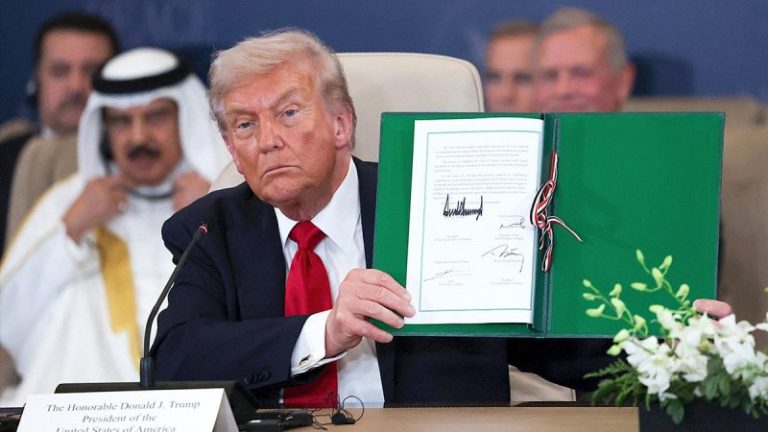
President Donald Trump on Saturday said Hamas needs to start returning the bodies of deceased hostages held captive by the terror group during the war in Gaza ‘quickly, or the other countries involved in this GREAT PEACE will take action.’

While all the living hostages have been returned from Gaza, the remains of 13 deceased hostages have not been handed over by Hamas.

‘Some of the bodies are hard to reach, but others they can return now and, for some reason, they are not,’ Trump wrote in a Truth Social post. ‘Perhaps it has to do with their disarming, but when I said, ‘Both sides would be treated fairly,’ that only applies if they comply with their obligations. Let’s see what they do over the next 48 hours. I am watching this very closely.’

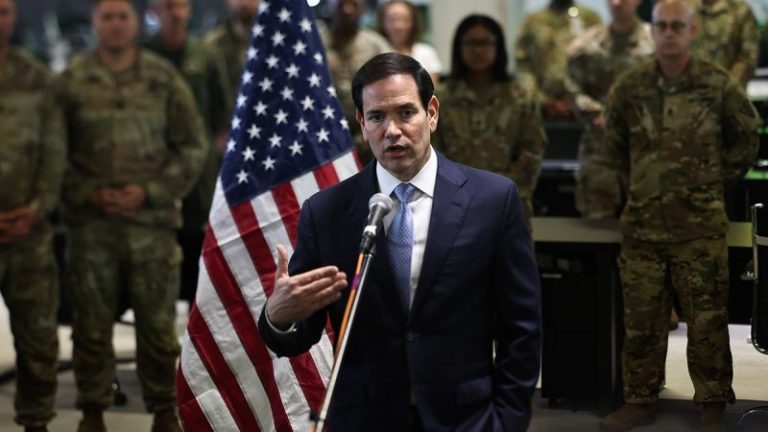
Hours before Trump’s post, Secretary of State Marco Rubio and U.S. Ambassador to Israel Mike Huckabee met with the families of Itay Chen and Omer Neutra, two U.S. citizens who were killed in the Oct. 7, 2023 attacks.

Their bodies are among those still being held by Hamas.

‘We will not forget the lives of the hostages who died in the captivity of Hamas,’ Rubio wrote in an X post. ‘We will not rest until their—and all—remains are returned.’

Authorities believed Chen, a 19-year-old dual U.S.-Israeli citizen, was kidnapped by Hamas on Oct. 7, 2023, but was later declared dead by the Israel Defense Forces (IDF).

Neutra, 21, an American-Israeli from New York, was killed in battle on Oct. 7, 2023.

Huckabee noted Rubio’s visit to Israel was ‘very productive in moving forward’ the U.S.-brokered Gaza peace plan, adding the plan cannot work until all hostages, living and deceased, are released.

While traveling to Asia Saturday, Trump met with Qatari leaders aboard Air Force One while refueling at Al-Udeid Air Base.

Qatar has played a significant role in efforts to negotiate peace and ceasefires in Gaza.

After a meeting with Qatar Emir Tamim bin Hamad Al Thani and Prime Minister Mohammed bin Abdulrahman bin Jassim Al Thani, Trump said ‘The Emir is one of the great rulers of the world … and the Prime Minister has been my friend.’

Referencing the peace deal, the president said, ‘What we’ve done is incredible — peace in the Middle East.’

Fox News Digital’s Rachel Wolf contributed to this report.

This post appeared first on FOX NEWS

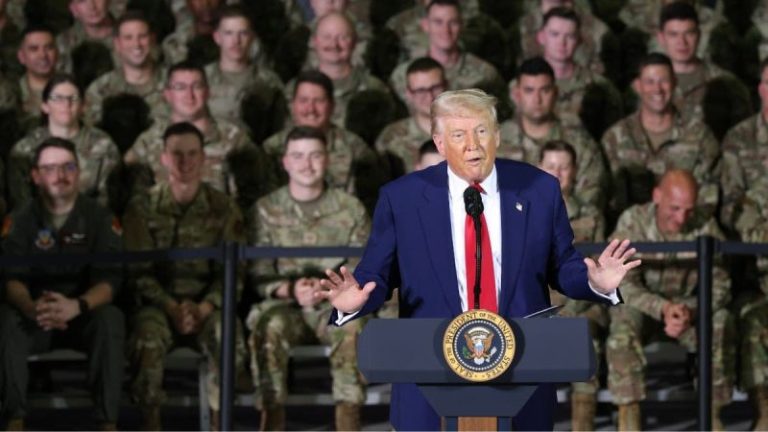
The anonymous donor who gave $130 million to the Pentagon to pay troops during the government shutdown has been identified as Timothy Mellon, a reclusive billionaire and a major financial backer of President Donald Trump, according to a report.

Trump announced the donation on Thursday, but declined to reveal the donor’s identity, only describing him as a ‘patriot’ and a friend. The president again refused to name the person on Friday while talking to reporters aboard Air Force One shortly after departing Washington for Asia, calling the donor ‘a great American citizen’ and a ‘substantial man.’

‘He doesn’t want publicity,’ Trump said on Friday. ‘He prefer that his name not be mentioned, which is pretty unusual in the world I come from, and in the world of politics, you want your name mentioned.’

But the two people familiar with the matter told The New York Times that the man is Mellon, a wealthy banking heir and railroad magnate.

It remains unclear how long the donation will cover the troops’ salaries. The Trump administration’s 2025 budget asked for about $600 billion in total military compensation, according to the Congressional Budget Office.

The $130 million donation would equal about $100 a service member, according to The New York Times.

Mellon, a grandson of former Treasury Secretary Andrew W. Mellon, is a backer of Trump who gave tens of millions of dollars to groups supporting the president’s 2024 campaign. Last year, he gave $50 million to a super PAC supporting Trump, making it one of the largest single contributions ever disclosed, the newspaper noted.

The billionaire was not a prominent Republican donor until Trump was first elected but has given hundreds of millions of dollars in recent years into supporting the president and the GOP.

He is also a significant supporter of Health and Human Services Secretary Robert F. Kennedy Jr., who also ran for president in 2024, first as a Democrat and later as an independent before dropping out to endorse Trump. Mellon donated millions to Kennedy’s presidential campaign and has also given money to the secretary’s anti-vaccine nonprofit, Children’s Health Defense, according to The New York Times.

Despite his political contributions, Mellon has sought to keep a low profile.

In an autobiography published in 2015, Mellon described himself as a former liberal who moved from Connecticut to Wyoming for lower taxes and fewer people.

The Pentagon said it accepted the donation under the ‘general gift acceptance authority.’

‘The donation was made on the condition that it be used to offset the cost of service members’ salaries and benefits,’ Pentagon spokesman Sean Parnell said in a statement to The New York Times.

But the donation may be a potential violation of the Antideficiency Act, which prohibits federal agencies from spending money in excess of congressional appropriations or from accepting voluntary services.

This post appeared first on FOX NEWS

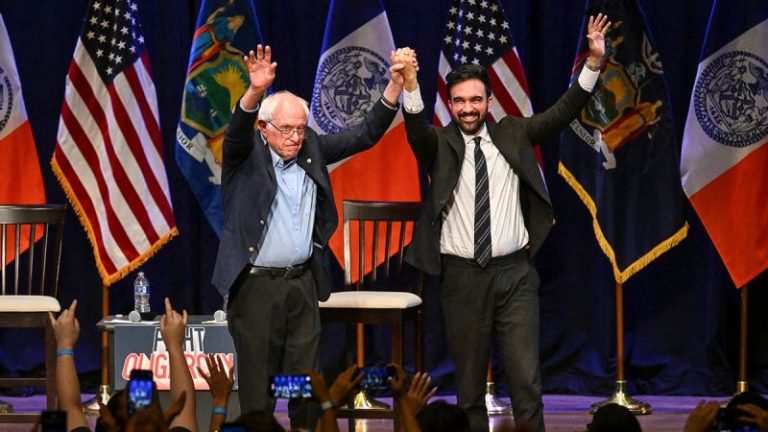
– Progressive stars Rep. Alexandria Ocasio-Cortez, D-N.Y., and Sen. Bernie Sanders, I-Vt., are teaming up with New York City mayoral candidate Zohran Mamdani Sunday night for a ‘New York is not for sale’ rally at Forest Hills Stadium in Queens, New York City.

The high-profile campaign event comes nearly one week before Election Day, as New Yorkers head to the polls for the first weekend of early voting, closing out a contentious mayoral battle where Mamdani’s unanticipated success has landed him on the national stage.

‘Zohran Mamdani is modeling a different kind of politics,’ Sanders, the former Democratic presidential candidate and longtime progressive leader, said in a statement ahead of the rally. 

The trio of self-identified Democratic socialists have invigorated the Democratic Party’s progressive base at a time when Democrats are still grappling with devastating losses in 2024 amid growing discontent with President Donald Trump’s sweeping, second-term agenda.

When Sanders and Ocasio-Cortez teamed up for the ‘Fighting Oligarchy’ tour earlier this year, they sparked sizable buzz, firing up thousands of Democrats at rallies across the United States who had been left without a clear party leader.

‘As mayor, he will not run a top-down, billionaire-funded, consultant-driven administration. Instead, Zohran will be a champion for the working people of New York,’ Sanders said.

Both Sanders and Ocasio-Cortez have campaigned alongside Mamdani in his bid to lead the nation’s most populous city. 

On Friday night, Sanders appeared for a virtual ‘Get Out the Vote’ event with Mamdani. Last month, Sanders and Mamdani teamed up for a ‘Fighting Oligarchy’ town hall in Brooklyn. 

Ahead of the Brooklyn town hall event, the two progressive leaders marched alongside union members in Manhattan’s Labor Day parade. That afternoon, Mamdani posed for a photo with Sanders and Ocasio-Cortez in Astoria, Queens, amassing millions of views.

Sanders, a two-time Democratic presidential nominee runner-up, was an early endorser of Mamdani’s primary campaign, along with Ocasio-Cortez. Their endorsements helped Mamdani consolidate progressive support in the 11-candidate field during the final weeks of the primary race.

Mamdani’s primary upset triggered a political earthquake as the democratic socialist handily defeated former Gov. Andrew Cuomo, who was widely expected to secure the Democratic nomination.

Mamdani’s cross-endorsement with fellow progressive New York City Comptroller Brad Lander cleared the path for Mamdani to consolidate support against Cuomo through ranked-choice voting. 

Cuomo has since launched an independent campaign, teeing up a competitive and contentious general election battle. 

Since Mamdani secured the Democratic nomination, Trump has labeled him a ‘100% Communist Lunatic,’ and ‘my little communist,’ ushering Mamdani onto the national political stage. Mamdani has rejected the moniker, maintaining that he identifies as a democratic socialist, like Sanders and Ocasio-Cortez. 

As Trump began criticizing Mamdani, New York Democrats chose to withhold their endorsements of the socialist candidate, who has made a slew of ambitious campaign promises, like fast and free buses, city-run grocery stores and free childcare, all of which he plans to pay for by raising taxes on corporations and the top 1% of New Yorkers. 

After months of withholding their endorsements, Gov. Kathy Hochul finally endorsed Mamdani last month and House Minority Leader Hakeem Jeffries finally affirmed his support in a statement Friday. Senate Minority Leader Chuck Schumer has still yet to endorse. 

Pressure had been mounting since Mamdani won the Democratic primary in June for Mayor Eric Adams, who was also running as an independent, or Cuomo to drop out of the race to consolidate support against Mamdani. Adams dropped out of the race and endorsed Cuomo on Thursday. 

That pressure reached a boiling point last week as billionaires, including Red Apple Media CEO John Catsimatidis and hedge fund CEO Bill Ackman, called on Republican nominee Curtis Sliwa to drop out of the race in order to clear a pathway to victory for Cuomo.

The latest Fox News survey, conducted Oct. 10-14, ahead of the first general election debate last week, revealed that Mamdani has a substantial lead in the race. According to the poll, Mamdani has a 21-point lead among New York City registered voters with 49% of voters backing Mamdani, while 28% go for Cuomo and 13% favor Sliwa.

Mamdani also rose above the 50% threshold among likely voters, garnering 52% support, while Cuomo picked up 28%, and Sliwa received just 14%.

This post appeared first on FOX NEWS

For decades, the United States has fought the war on drugs as if it were exclusively a law enforcement issue. It never was. It has always had national security implications. 

After years of inaction, drugs now kill more Americans each year than every modern war combined. Fentanyl alone claimed more than 100,000 lives in 2021, a number that continues to rise despite billions spent on interdiction, prevention and policing. That is not a criminal nuisance. That is a sustained mass-casualty event inside the homeland.

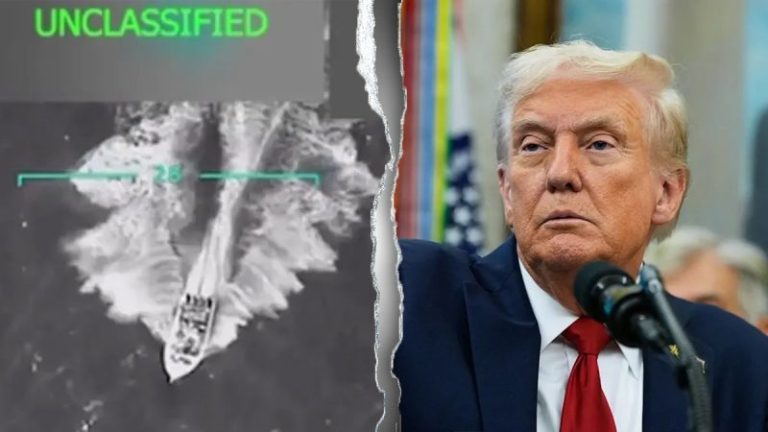
President Donald Trump’s new approach finally treats the crisis for what it is. By designating major drug cartels as foreign terrorist organizations and authorizing the use of military force against them, his administration has drawn a clear line between criminality and warfare. 

The cartels are not ordinary traffickers. They are transnational powers that control territory, wield military-grade arsenals and use terror as a tool of governance. In Trump’s words, they are ‘the ISIS of the Western Hemisphere.’

The numbers already justify the policy. In the first weeks of operations, the new Homeland Security Task Force has arrested more than 3,200 gang and cartel members, seized 91 tons of narcotics and captured over 1,000 illegal weapons. Those seizures represent tens of thousands of American lives saved. Every boat stopped and every shipment intercepted means fewer overdose deaths, fewer funerals, and fewer communities shattered by addiction and violence.

For too long, Washington treated the cartels as criminals who could be prosecuted rather than enemies who had to be defeated. That approach failed. The cartels wage war on America for profit. They assassinate, extort and kidnap while basking in riches captured through intimidation and terror.  They destabilize our neighbors and corrupt governments from Mexico to Venezuela. If America had the right to strike al Qaeda and ISIS abroad for killing Americans, it has an equal right to strike the cartels that kill Americans at home. 

The legal foundation is clear. In February 2025, the State Department designated Tren de Aragua, Sinaloa, Jalisco Nueva Generación, MS-13 and others as Foreign Terrorist Organizations. A presidential determination in September formally declared that the United States is in a non-international armed conflict with these groups. 

No court has challenged the policy because it aligns with both domestic and international law. When foreign networks deliberately kill American citizens, the president has not only the authority but the obligation to act.

The ethical case is equally strong. The Just War tradition requires a just cause, competent authority, proportionality and last resort. Every criterion has been met. The cause could not be more just when drug overdoses in the United States claimed more than 100,000 lives for a third consecutive year by 2023. 

Years of law enforcement, education campaigns and international coordination have not slowed the killing. When nonviolent means have failed, the duty of a government is to protect its citizens by every lawful means available.

Each go-fast boat in the Caribbean and each semi-submersible in the Pacific carries more than cocaine or methamphetamine. It carries a body count of Americans. These are not fishing vessels. They are militarized smuggling platforms crewed by combatants in a foreign network that profits from death. To treat them as anything less is to deny reality. The era of denial is over.

Critics argue that military strikes risk escalation. The cartels crossed this line long ago when they began murdering, intimidating and corrupting their way into power. These transnational criminal enterprises now operate as shadow governments. To continue treating them as mere criminal syndicates would be absurd.  In truth, it would be to accept defeat. 

Trump’s use of force is not about vengeance. It is about national defense. The Department of War, the CIA, the intelligence community, the DEA, FBI and Coast Guard are now unified in a single mission to dismantle the cartels’ capacity to kill Americans. 

Every strike on a drug boat denies the enemy profit and saves lives. As Secretary Pete Hegseth said, each destroyed vessel represents roughly 25,000 Americans who will not die from the poison it carried.

The cartels’ economic reach rivals that of small nations, generating hundreds of billions annually. They corrupt officials, weaponize migration and flood American streets with narcotics. This is not commerce. It is organized war for profit.

A government that fails to confront such an enemy is unworthy of the people it serves. Trump’s use of military force against the cartels is justified both legally and morally. It is long overdue. The United States has every right to defend its borders, its citizens and its sovereignty against a foreign network that profits from American death.

For decades, America fought this war with hesitation and half-measures. Now it is being fought with purpose. This is not a new war. It is the same one that has been killing Americans for generations. The difference is that, at last, America is fighting to win.

This post appeared first on FOX NEWS

U.S. Secretary of State Marco Rubio on Saturday said that the U.S., Israel and other mediators of the Gaza peace deal had shared intelligence to avoid a possible attack last weekend and would do so going forward. 

‘We put out a message through State Department, sent it to our mediators as well, about an impending attack, and it didn’t happen,’ he told reporters while flying from Israel to Qatar. ‘So that’s the goal here, is ultimately to identify a threat before it happens.’

This comes a week after the State Department said it had ‘credible reports’ that Hamas was planning an attack on Palestinian civilians in violation of the agreement.

Rubio said Saturday the U.S. has talked with countries like Qatar, Egypt and Turkey who are interested in contributing to an international stabilization force in the region. He added that Indonesia and Azerbaijan are also interested.

But, he said, ‘Many of the countries who want to be a part of it can’t do it without’ a United Nations resolution supporting the force.

Rubio also met with President Donald Trump in Qatar ahead of the president’s Asian tour.

Vice President JD Vance was also in Israel earlier this week along with special envoy Steve Witkoff and Trump adviser and son-in-law Jared Kushner in an attempt to solidify the ceasefire deal, which took effect earlier this month.

Next week, Rubio said the chairman of the Joint Chiefs of Staff, Gen. Dan Caine, is expected to travel to Israel as well.

Trump thanked Qatar for their part in helping secure the peace deal while meeting with Qatar’s Emir Sheikh Tamim bin Hamad al-Thanimet and Qatar Prime Minister and Foreign Minister Sheikh Mohammed bin Abdulrahman bin Jassim Al Thani.

‘This should be an enduring peace,’ Trump told reporters of the deal.

His visit to Qatar was part of a refueling stop before heading on to Asia.

The Associated Press and Reuters contributed to this report. 

This post appeared first on FOX NEWS

President Donald Trump is heading off to Asia Friday evening, not long after North Korea fired off a ballistic missile for the first time in months and as questions loom regarding trade negotiations with China.

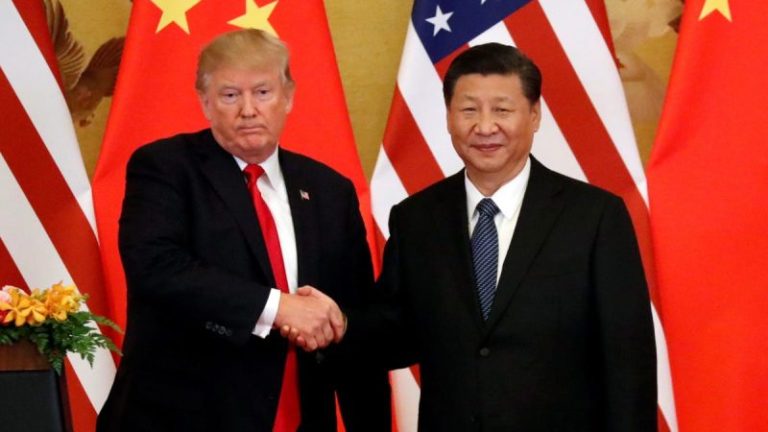
The White House confirmed that Trump will meet with Chinese President Xi Jinping Thursday during the Asia-Pacific Economic Cooperation (APEC) Summit.

The meeting comes amid escalated tensions between the two countries on trade after Beijing announced Oct. 9 it would impose export controls on rare-earth magnets, which are used in a host of products ranging from electric cars to F-35 fighter jets. In response, Trump announced the U.S. would impose a new 100% tariff on all Chinese goods, which is slated to take effect Nov. 1.

Even so, Trump sought to diffuse tensions and has routinely touted his relationship with Xi in recent weeks. Additionally, he has voiced confidence both parties will walk away from the summit pleased and that a deal will be made.

‘I think we are going to come out very well, and everyone’s going to be very happy,’ Trump said Thursday.

The summit between Trump and Xi will mark the first time they’ve met in person since Trump took office in January. The two previously met in person in June 2019 in Japan.

Trump’s meeting with Xi will come on the tail end of a larger trip to the region. Trump is first headed to Malaysia to meet with Malaysian Prime Minister Anwar Ibrahim Sunday afternoon before participating in the Association of Southeast Asian Nations (ASEAN) dinner in the evening.

While in Malaysia, he will also meet with Cambodian Prime Minister Hun Manet and Thai Prime Minister Anutin Charnvirakul.

Trump will then head to Tokyo Monday and is slated to meet on Tuesday with Japanese Prime Minister Sanae Takaichi, who was just elected earlier in October. Takaichi is the first woman to serve as the prime minister of Japan.

Trump will then close out his trip heading to South Korea, where he will meet with the South Korean President Lee Jae Myung and will deliver keynote remarks at the APEC CEO lunch.

Trump is scheduled to return to Washington Thursday.

Meanwhile, North Korea has upped its aggression in recent days, firing off multiple short-range ballistic missiles Wednesday, the first one Pyongyang has launched since May. Meanwhile, North Korean Leader Kim Jong Un showed off a new intercontinental ballistic missile at a military parade in front of Chinese, Russian and other top officials Oct. 10.

‘We are aware of the DPRK’s multiple ballistic missile launches and are consulting closely with the Republic of Korea and Japan, as well as other regional allies and partners,’ U.S. Indo-Pacific Command (INDOPACOM) said in a statement on Wednesday.

‘The United States condemns these actions and calls on the DPRK to refrain from further unlawful and destabilizing acts,’ INDOPACOM said. ‘While we have assessed that this event does not pose an immediate threat to U.S. personnel, or territory or to our allies, we continue to monitor the situation.’

The Associated Press contributed to this report.

This post appeared first on FOX NEWS

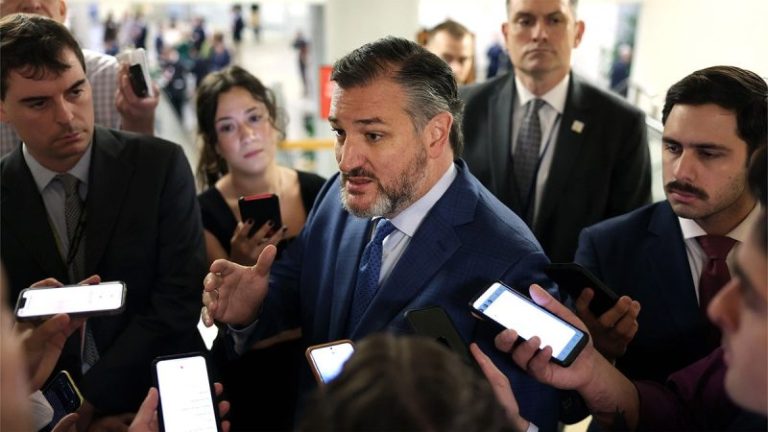
Sen. Ted Cruz, R-Texas, announced after a contentious nomination hearing Thursday that he would not support the Trump administration’s pick for ambassador to Kuwait.

Among other areas of concern, Cruz expressed alarm over Amer Ghalib’s refusal to outright condemn the Muslim Brotherhood, a group Cruz believes works against the geopolitical interests of the United States.

‘The Muslim Brotherhood is a global terrorist organization,’ Cruz said in a post on X. ‘Amer Ghalib refers to them as an inspiration. That is in opposition to President Trump and is disqualifying. I cannot support his confirmation for the Ambassador to Kuwait.’ 

Ghalib, the mayor of Hamtramck, Mich., sparred with Cruz and other members of the Senate earlier that day, clashing with several lawmakers over issues like the United States’ relationship with Israel, comments he had made about the war in Gaza and more.

According to the Department of State, Ghalib was born and raised in Yemen before coming to the United States at age 17. After working full-time in an auto parts factory, he attended the Ross University School of Medicine from 2006-2011 and went on to work as a healthcare professional at the Hamtramck Medical Group until his entry into politics. 

Ghalib made news when he was elected as mayor in 2021, becoming the first Muslim to fill the role. In that capacity, he endorsed Donald Trump for president in 2023.

‘Mr. Ghalib’s journey began as a farmer in Yemen, then as an autoworker in the United States, a healthcare professional, and then as an elected mayor of his city. His multicultural experience, deep regional knowledge and demonstrated success as a politician, leader and community organizer, make him a well-qualified candidate to serve as U.S. Ambassador to the State of Kuwait,’ the State Department wrote in its summary of the administration’s nominee. 

On Thursday, when asked by Cruz if he still considered Saddam Hussein, the former president of Iraq, a martyr, Ghalib initially skirted the question.

‘I was a private citizen in 2020,’ Ghalib answered, referring to the timing of a social media post when he had given that description.

‘I’m just asking your views. I asked you about today. Do you continue to believe that Saddam Hussein is a martyr today?’ Cruz asked again.

‘I don’t think that — there’s no doubt that Saddam was a dictator. I mean, I can say no. It wouldn’t matter. He’s in God’s hands; he’s going to get the treatment he deserves,’ Ghalib said. 

Hussein served as president from 1979 until his government was overthrown in the 2003 U.S. invasion of Iraq. In the aftermath, an Iraqi tribunal found him guilty of willful killing, illegal imprisonment, deportation and torture, among other abuses. He was hanged on Dec. 30, 2006.

Ghalib and the Hamtramck City Council entered the spotlight in 2024 when the city voted unanimously to approve a resolution that, in response to the war in Gaza, required the city to avoid investing in Israeli companies. Citing that resolution, Cruz and other senators expressed reservations that Ghalib would be able to faithfully carry out positions held by the administration. especially if it were to designate the Muslim Brotherhood a terrorist organization or other policy issues that could conflict with Ghalib’s personal views on the Middle East. 

Those hesitations stretched across the aisle.

‘You liked a Facebook comment comparing Jews to monkeys,’ Sen. Jacky Rosen, D-Nev., said. ‘You characterized leaders you don’t like as becoming ‘Jewish.’ As mayor, you failed to comment after one of your political appointees called the Holocaust ‘advance punishment’ for the War in Gaza, and you denied that Hamas used sexual violence as a weapon of war on Oct. 7.’ 

Ghalib did not deny authoring the posts. Instead, he defended himself by arguing that his comments had been taken out of context or that lawmakers had selectively misconstrued his actions. In response to Rosen’s remarks about liking a post comparing Jewish people to monkeys, Ghalib said that he had made it a practice to interact with all social media comments left on his page as a form of acknowledgment. He said those views did not reflect his positions. 

‘I think a lot of my posts were written in Arabic and mistranslated,’ Ghalib said in response to further questioning about some of the posts he had made himself.

The State Department and Ghalib’s office did not immediately respond to requests for comment.

Rosen and other senators did not seem moved by Ghalib’s explanations.

‘That is beyond the pale. I will not be supporting your nomination,’ Rosen said. ‘And if you are confirmed — I want you to remember this, sir: You will be an ambassador for the United States of America. And, thus, as ambassador, we must show respect to everyone. We will be watching to see if that happens.’ 

No date has been set for a final vote on Ghalib’s nomination. 

This post appeared first on FOX NEWS

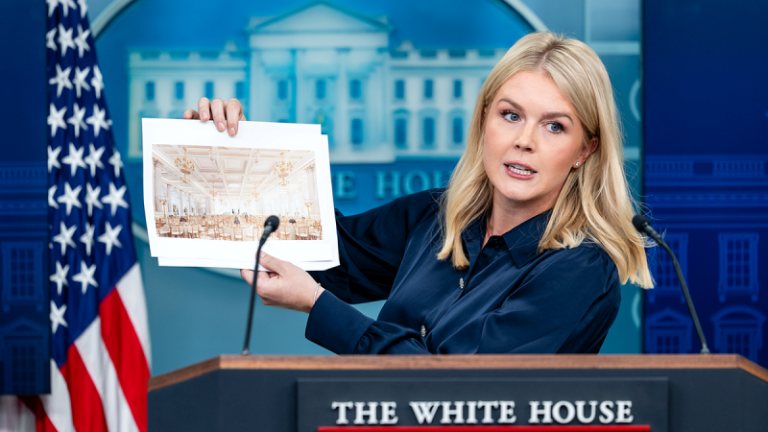
The White House pushed back on reports claiming President Donald Trump will likely name the upcoming White House ballroom after himself, saying any name designation for the event space will come directly from the president. 

‘Any announcement made on the name of the ballroom will come directly from President Trump himself, and not through anonymous and unnamed sources,’ White House spokesman Davis Ingle told Fox News Digital Friday. 

Reports spread like wildfire Friday afternoon that Trump planned to name the ballroom after himself, with ABC News publishing a report that administration officials were reportedly already calling the project ‘The President Donald J. Trump Ballroom.’

‘I won’t get into that now,’ Trump told ABC News Thursday when asked about a potential name, the outlet noted. 

Trump announced Monday that construction had begun on the ballroom, after months of Trump touting the upcoming project to modernize the White House. The project does not cost taxpayers and is privately funded, the administration has repeatedly said. 

‘For more than 150 years, every President has dreamt about having a Ballroom at the White House to accommodate people for grand parties, State Visits, etc. I am honored to be the first President to finally get this much-needed project underway — with zero cost to the American Taxpayer!’ Trump posted to Truth Social on Monday. ‘The White House Ballroom is being privately funded by many generous Patriots, Great American Companies, and, yours truly. This Ballroom will be happily used for Generations to come!’

The ballroom’s official construction set off a firestorm of criticisms among Democrats who have characterized Trump as destroying the iconic American residence. 

‘Oh you’re trying to say the cost of living is skyrocketing? Donald Trump can’t hear you over the sound of bulldozers demolishing a wing of the White House to build a new grand ballroom,’ Democratic Massachusetts Sen. Elizabeth Warren posted to X in response to Trump’s Monday announcement.

‘The White House became my home when I was twelve years old. I always understood that it wasn’t my ‘house’; it was The People’s House,’ former first daughter Chelsea Clinton posted to X. ‘The erasure of the East Wing isn’t just about marble or plaster — it’s about President Trump again taking a wrecking ball to our heritage, while targeting our democracy, and the rule-of-law.’

‘I wanted to share this photo of my family standing by a historic part of the White House that was just torn down today by Trump,’ New Jersey Sen. Andy Kim posted to X Monday. ‘We didn’t need a billionaire-funded ballroom to celebrate America. Disgusting what Trump is doing.’

The Trump administration has repeatedly hit back at the criticisms, including White House press secretary Karoline Leavitt saying on Fox News that presidents historically have wanted a large entertaining space at 1600 Pennsylvania Ave. 

‘Nearly every single president who’s lived in this beautiful White House behind me has made modernizations and renovations of their own,’ Leavitt said on Fox News’ ‘Jesse Watters Primetime’ Tuesday. ‘In fact, presidents for decades — in modern times — have joked about how they wished they had a larger event space here at the White House, something that could hold hundreds more people than the current East Room and State Dining Room.’

‘President Obama even complained that, during his tenure, he had to hold a state dinner on the South Lawn and rent a very expensive tent.’

This post appeared first on FOX NEWS