Author

admin

Browsing

Tensions flared at a House hearing to advance legislation aimed at ending the government shutdown on Tuesday night, with two senior lawmakers on opposite sides of the aisle trading barbs over the fallout.

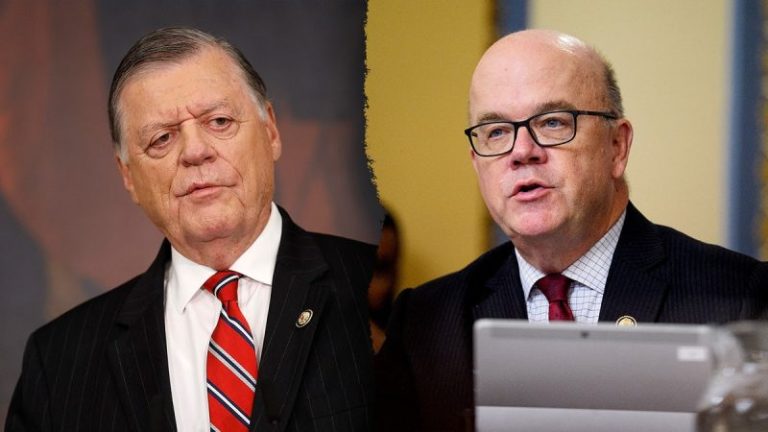
House Appropriations Committee Chairman Tom Cole, R-Okla., clashed with Rep. Jim McGovern, D-Mass., the top Democrat on the House Rules Committee repeatedly at the outset of the hearing. Cole accused Democrats of derailing the federal government, while McGovern railed against the GOP’s refusal to attach provisions extending expiring enhanced Obamacare subsidies to its funding bill.

‘This is the stuff you said you would never do. ‘We would never shut down the government. We would never do this.’ That’s exactly what you’ve done,’ House Appropriations Chairman Tom Cole, R-Okla., said a short while later. ‘You’re putting thousands of people out of work.’

McGovern, who said emphatically that his constituents were ‘getting screwed,’ said, ‘You tried over 50 times to repeal the Affordable Care Act,’ Obamacare’s formal name.

He said he was getting calls from constituents who were ‘out of their minds’ trying to figure out how to pay for healthcare without the subsidies.’

‘Well the most immediate crisis in my district are the thousands of workers that you and your colleagues have put out of work, that aren’t getting a paycheck,’ Cole said.

‘They’re the ones that keep the airplanes flying. They’re the ones that do the national weather center. They’re wondering why they’re not getting paid.’

McGovern shot back, ‘You get no calls about healthcare?’

‘We could have had these debates, we could have had these arguments. Why are they being held hostage?’ Cole continued.

‘The healthcare issue you’re talking about is a subsidy you passed on your own, you said it was COVID-related…The most immediate crisis in my district, you’ve created. My people aren’t getting paid thanks to you and your colleagues.’

McGovern, who tried to interject multiple times, said, ‘So nobody in your district is complaining about healthcare?’

Cole conceded, ‘People complain everywhere about everything, but you asked me what the most important calls I get —’

McGovern cut him off with, ‘—We have a chance to do something about this.’

‘— is, ‘Why am I not getting paid? Why am I being forcibly furloughed?’’ Cole continued.

‘We have a chance to do something to help millions of people afford their health insurance. And what you’re all telling me is you’re not interested,’ McGovern said.

House Rules Committee Chairwoman Virginia Foxx, R-N.C., was ignored as she banged her gavel multiple times in an attempt to call order.

Cole, meanwhile, said the subsidies ‘have nothing to do with the work of my committee.’

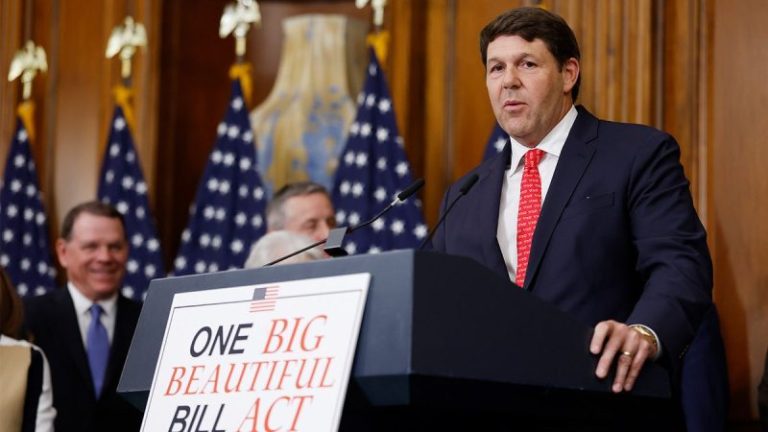
‘But you’re willing to hijack my committee,’ he continued, before McGovern cut him off again, accusing Republicans of voting to ‘cut taxes for millionaires and billionaires’ in the GOP’s ‘big, beautiful bill’ earlier this year.

‘But you could not extend these for people?’ McGovern asked.

The House Rules Committee is the final hurdle for most legislation before it sees House-wide votes. Lawmakers on the key panel vote to advance a bill while setting terms for its consideration, like possible amendment votes and timing for debate.

The funding bill at hand is expected to advance through the committee on party lines. Democrats on the panel are likely to oppose the measure in line with House Democratic leaders, while Republicans have signaled no meaningful opposition.

The vast majority of House Democrats have threatened to oppose the bill over its exclusion of the enhanced Obamacare credits, despite the legislation netting support from eight members of their own party in the Senate.

Republican leaders have signaled a willingness to discuss reforms to the system, which they have criticized as flawed. However, they’ve rejected any notion of pairing a healthcare extension with a federal funding bill that is otherwise largely free of partisan policy riders.

This post appeared first on FOX NEWS

Development-ready gold asset in premier mining jurisdiction with funded advancement plan; preparing to initiate project-development and exploration drill program

Fortune Bay Corp. (TSXV: FOR,OTC:FTBYF) (FWB: 5QN) (OTCQB: FTBYF) (‘Fortune Bay’ or the ‘Company’) is pleased to announce that, following the completion of its $8 million bought-deal financing, the Company has initiated key technical work streams to advance the Goldfields Project (‘Goldfields’ or the ‘Project’) toward a Pre-Feasibility Study (‘PFS’) in 2026. In parallel, permitting activities are progressing through ongoing baseline environmental studies and planned community consultation. Together, these initiatives build on the strong foundation established by the recently released Updated Preliminary Economic Assessment (‘Updated PEA’), which demonstrated exceptional economics, a streamlined permitting pathway, and a de-risked mineral resource with 97% of ounces in the Indicated category.

Updated PEA Economic Highlights:

  • Leverage to Gold Price: At a spot gold price of US$3,650 per ounce (as of September 19, 2025), the after-tax NPV (5%) increases to C$1.25 billion and the IRR to 74%, generating cumulative after-tax free cash flow of C$1.82 billion.

‘Goldfields stands out as a development-ready gold asset in a premier mining jurisdiction,’ stated Dale Verran, CEO of Fortune Bay. ‘With robust Updated PEA economics, a strong project foundation and now a fully funded advancement plan, we are positioned to unlock meaningful value on multiple fronts. As part of this, we are preparing to commence a drilling program in the coming weeks that will include both project-development drilling to support the PFS and exploration drilling to evaluate resource growth potential. We expect to announce the specific exploration drill targets shortly.’

Studies Toward Pre-Feasibility:

  • Project Development-Related Drilling: Planning of a comprehensive drilling program for Box and Athona is underway. This is being optimized to provide the required drill coverage and core samples to support a PFS for Goldfields. The program will integrate geotechnical study, metallurgical sampling, waste rock study and groundwater investigations, aimed to minimize the amount of drilling required to the extent possible. Project development-related drilling is expected to be run in conjunction with an exploration drilling program for efficiency and is expected to begin in the coming weeks.
  • Waste Rock Characterization: The Company has initiated an analytical testing program and a suite of samples, representing the dominant lithological units in the Box and Athona waste rock material, have been collected and are being exported from site for Acid Base Accounting, metal geochemistry and shake flask extraction testing. Results of this work will inform subsequent mineralogical and kinetic waste rock humidity cell testing. All analyses will be carried out by SGS Canada – Lakefield laboratory in Ontario. The results of this study will be used to inform forward planning and sampling during upcoming drilling and will also be used to develop waste rock and water management plans.
  • Metallurgical Testwork: A testwork program is currently underway at the SGS Canada – Lakefield laboratory in Ontario. A representative sample of mineralization from the Box deposit is being tested to supplement work carried out in 2015 and properly constrain what percentage gold can be recovered into a concentrate with the minimum possible mass draw through a combination of gravity and two-pass floatation. Results are expected in early December, and these will inform decision making about project scope and additional metallurgical testing for advancement through PFS.
  • High-Resolution Topographic Survey: A fixed-wing airborne LiDAR (Light Detection and Ranging) survey was carried out at Goldfields in October 2025 to generate high-resolution topographic data to support more detailed engineering studies during PFS. The survey, carried out over the entire project footprint area as proposed in the Updated PEA with additional buffer, was completed by KBM Geomatics of Thunder Bay, Ontario. Deliverables are expected in November 2025.

Permitting Activities, Community Consultation and Regulatory Engagement:

  • Aquatic Surveys: Completed in September 2025 by Ecometrix Inc. of Mississauga, Ontario. Initial reporting on aquatic habitat studies and fishing results is expected in December 2025, with full reporting including laboratory analysis expected in early 2026.
  • Terrestrial Surveys: Initiated in August 2025 by Omnia Ecological Services of Calgary, Alberta. This included ecological land classification studies and deployment of cameras and acoustic survey units. Follow up field work was completed in October 2025, collecting a first round of data from all survey equipment, which remain deployed in the field. Initial reporting on findings is expected in December 2025, with survey work ongoing in 2026.
  • Planned Regulatory Engagement: Results from baseline environmental studies and waste rock characterization work mentioned above will be integrated with feedback from early consultation and will be used as a basis for initiation of regulatory engagement and the submission of a Technical Proposal to the Saskatchewan Ministry of Environment in Q1 of 2026. This work will build upon the Provincially-approved 2008 Environmental Impact Statement for a 5,000 tpd open-pit operation.

Qualified Person & Technical Report

Details for the Updated PEA for Goldfields are provided in the technical report titled ‘Goldfields Project Updated NI 43-101 Technical Report & Preliminary Economic Assessment, Saskatchewan, Canada‘, dated October 20, 2025, prepared by Kevin Murray, P.Eng.; Scott C. Elfen, P.E.; James Millard, P.Geo.; Jonathan Cooper, P.Eng.; Marc Schulte, P.Eng.; Cliff Revering, P.Eng.; and Ron Uken, Pr.Sci.Nat. for Fortune Bay Corp. The technical report is available under the Company’s issuer profile on SEDAR+ (www.sedarplus.ca) and on the Company’s website at www.fortunebaycorp.com.

The technical and scientific information in this news release has been reviewed and approved by Gareth Garlick P.Geo., Vice-President Technical Services of the Company, who is a Qualified Person as defined by NI 43-101. Mr. Garlick is an employee of Fortune Bay and is not independent of the Company under NI 43‑101.

About Goldfields

The 100% owned Goldfields Project (‘Goldfields’ or the ‘Project’) is located approximately 13 kilometres south of Uranium City, Saskatchewan. Goldfields hosts the Box and Athona gold deposits, as well as additional gold showings within the prospective Goldfields Syncline. The Box deposit was historically mined underground between 1939 and 1942, producing 64,000 ounces of gold. The Project is located within a historical mining area and benefits from established infrastructure, including a road and hydro-powerline to the Box deposit. Nearby facilities and services in Uranium City include bulk fuel, civils contractors, and a commercial airport.

About Fortune Bay

Fortune Bay Corp. (TSXV:FOR,OTC:FTBYF; FWB:5QN; OTCQB:FTBYF) is a gold exploration and development company advancing high-potential assets in Canada and Mexico. With a strategy focused on discovery, resource growth and early-stage development, the Company targets value creation at the steepest part of the Value Creation Curve—prior to the capital-intensive build phase. Its portfolio includes the development-ready Goldfields Project in Saskatchewan, the resource-expansion Poma Rosa Project in Mexico, and two optioned Athabasca Basin uranium portfolios providing non-dilutive capital and upside exposure. Backed by a technically proven team and tight capital structure, Fortune Bay is positioned for multiple near-term catalysts. For more information, visit www.fortunebaycorp.com or contact info@fortunebaycorp.com.

On behalf of Fortune Bay Corp.

‘Dale Verran’
Chief Executive Officer
902-334-1919

Cautionary Statement

Information set forth in this news release contains forward-looking statements that are based on assumptions as of the date of this news release. These statements reflect management’s current estimates, beliefs, intentions, and expectations. They are not guarantees of future performance. Words such as ‘expects’, ‘aims’, ‘anticipates’, ‘targets’, ‘goals’, ‘projects’, ‘intends’, ‘plans’, ‘believes’, ‘seeks’, ‘estimates’, ‘continues’, ‘may’, variations of such words, and similar expressions and references to future periods, are intended to identify such forward-looking statements, and include, but are not limited to, statements with respect to: the results of the Updated PEA, including future Project opportunities, future operating and capital costs, closure costs, AISC, the projected NPV, IRR, timelines, permit timelines, and the ability to obtain the requisite permits, economics and associated returns of the Project, the technical viability of the Project, the market and future price of and demand for gold, the environmental impact of the Project, and the ongoing ability to work cooperatively with stakeholders, including Indigenous Nations, local Municipalities and local levels of government. Since forward-looking statements are based on assumptions and address future events and conditions, by their very nature they involve inherent risks and uncertainties. Although these statements are based on information currently available to the Company, the Company provides no assurance that actual results will meet management’s expectations. Risks, uncertainties and other factors involved with forward- looking information could cause actual events, results, performance, prospects and opportunities to differ materially from those expressed or implied by such forward-looking information. Forward looking information in this news release includes, but is not limited to, the Company’s objectives, goals or future plans, statements, exploration results, potential mineralization, the estimation of mineral resources, exploration and mine development plans, timing of the commencement of operations and estimates of market conditions. Factors that could cause actual results to differ materially from such forward-looking information include, but are not limited to failure to identify mineral resources, failure to convert estimated mineral resources to reserves, the inability to complete a feasibility study which recommends a production decision, the preliminary nature of metallurgical test results, delays in obtaining or failures to obtain required governmental, environmental or other project approvals, political risks, inability to fulfill the duty to accommodate Indigenous Nations and local Municipalities, uncertainties relating to the availability and costs of financing needed in the future, changes in equity markets, inflation, changes in exchange rates, fluctuations in commodity prices, delays in the development of projects, capital and operating costs varying significantly from estimates and the other risks involved in the mineral exploration and development industry, and those risks set out in the Company’s public documents filed on SEDAR. Although the Company believes that the assumptions and factors used in preparing the forward-looking information in this news release are reasonable, undue reliance should not be placed on such information, which only applies as of the date of this news release, and no assurance can be given that such events will occur in the disclosed time frames or at all. The Company disclaims any intention or obligation to update or revise any forward-looking information, whether as a result of new information, future events or otherwise, other than as required by law. For more information on Fortune Bay, readers should refer to Fortune Bay’s website at www.fortunebaycorp.com.

Neither TSX Venture Exchange nor its Regulation Services Provider (as that term is defined in policies of TSX Venture Exchange) accepts responsibility for the adequacy or accuracy of this release.

SOURCE Fortune Bay Corp.

View original content to download multimedia: http://www.newswire.ca/en/releases/archive/November2025/12/c0872.html

News Provided by Canada Newswire via QuoteMedia

This post appeared first on investingnews.com

Discovery of uranium mineralization in ideal geological setting, supported by regional radiometric anomaly, confirms large Rossing-style target

ReeXploration Inc. (TSXV: REE) (FSE: K2I0) (‘ReeXploration’ or the ‘Company’) is pleased to announce the identification of a significant new uranium exploration target at its Eureka Project (‘Eureka’ or the ‘Project’), located in the Erongo mining district, central Namibia. This new uranium target supports the Company’s broader focus on advancing critical-mineral opportunities in stable, mining-friendly jurisdictions.

HIGHLIGHTS:

  • New Large-Scale Uranium Target Identified: Immediately southwest of the Eureka Dome, which hosts the Company’s rare earth element (‘REE’) resource and numerous REE targets.
  • Strong Regional Radiometric Anomaly: Airborne data defines a 6.5 x 3.5 km zone characterized by high uranium and low thorium responses.
  • Evidence of Widespread Uranium Mineralization: Uranium reported in shallow overburden samples from historical exploration, verified by recent scintillometer readings up to 1,500 counts per second (‘cps’).
  • Uranium Discovered in Weathered Leucogranites: Field reconnaissance confirmed elevated uranium in occasionally outcropping leucogranites (‘alaskites’), with portable XRF semiquantitative values up to 853 ppm U.
  • Along Trend of Namibia’s ‘Alaskite Alley’: Lies within the same structural corridor that hosts major uranium deposits — Rössing, Husab, Etango, Omaholo, and Norasa — which collectively contain more than 1 billion pounds of U₃O₈.
  • Geological Setting Matches Rössing-Style Models: Key discovery criteria evident, including 1) proximity to the Welwitschia Lineament, 2) position on the flanks of a major basement dome, and 3) leucogranites intruded into reactive calc-silicate host rocks.

‘This uranium target, which is almost entirely covered by thin overburden, represents a promising exploration opportunity within one of the world’s most prolific uranium belts,’ commented Tolene Kruger, Senior Geologist for ReeXploration. ‘The geology, structural setting, and early results are consistent with the deposit models that led to the discovery of the major leucogranite-hosted uranium deposits within Namibia.’

Christopher Drysdale, Interim CEO for ReeXploration, added ‘The identification of this new target highlights the strong technical work completed by our exploration team and the expanded potential of the Eureka Project. As we continue to advance with our REE resource growth plan within the Eureka Dome, this extensive target immediately outside the Dome adds significant exploration upside and optionality for our shareholders, in one of the world’s most established critical minerals mining jurisdictions. We are looking forward to advancing exploration on our numerous REE targets and this newly identified uranium target, consistent with our strategy to discover significant critical mineral resources that contribute to secure, responsible supply chains.’

Expanded Discovery Potential – Large-Scale Rössing-Style Target

The identification of this target underscores the exceptional potential of the Eureka Project, which now includes a growing pipeline of REE targets alongside this newly recognized uranium opportunity. Review and field validation of government airborne radiometric data revealed extensive uranium anomalies situated off the southwestern margin of the Eureka Dome, which is host to the Company’s REE mineral resources and exploration targets. The government airborne radiometric data shows large-scale uranium anomalies 6.5 x 3.5 kilometres in extent with high uranium and low thorium – characteristic signature for Rössing-style targets (Figure 1).

Figure 1: Company license holding showing REE targets within the Eureka Dome, and high uranium anomalies outlined in red on uranium radiometric (government airborne radiometrics) backdrop. Insert: Thorium radiometric backdrop showing low thorium relative to the uranium anomalies.

To view an enhanced version of this graphic, please visit:
https://images.newsfilecorp.com/files/6102/274096_b3f40910c437995f_001full.jpg

Located Along Trend of Namibia’s Renowned Alaskite Alley

The new uranium target at Eureka is situated along trend of Namibia’s ‘Alaskite Alley’, a structural corridor within Namibia’s Central Zone of the Damara Belt that hosts multiple giant uranium deposits hosted within leucogranites, including Rössing, Husab, Etango, Omaholo and Norasa (Figure 2).

Figure 2: Regional satellite view showing the position of the uranium anomalies southwest of the Eureka Dome, and their proximity to the Welwitschia Lineament and other large uranium deposits in Alaskite Alley.

To view an enhanced version of this graphic, please visit:
https://images.newsfilecorp.com/files/6102/274096_b3f40910c437995f_002full.jpg

Key Geological Criteria Consistent with Major Uranium Deposits

The target exhibits all the key geological criteria consistent with the major uranium deposit models, including (Figure 3):

  • Proximity to the Welwitschia Lineament – a major crustal-scale structure, central to ‘Alaskite Alley’, interpreted to have played a key role in localizing uranium-bearing leucogranite intrusions throughout the district.
  • The Welwitschia Lineament is located immediately east of the new uranium target at Eureka.

  • An Older Basement Dome – that provides the structural architecture for the emplacement of uranium-rich leucogranites around dome margins.
  • The Eureka Dome is mapped as the same formation as the Rössing Dome (Etusis Formation).
  • Reactive Contact Rocks – typically calc-silicate lithologies (metasediments) which act as chemical traps promoting uranium precipitation.
  • Calc-silicates are mapped flanking the Eureka Dome (Arandis Formation).
  • The Presence of Leucogranites – late-stage magmatic intrusions which host uranium mineralization in Rössing-style deposits.
  • Significant leucogranites are interpreted to exist below the thin overburden at Eureka as sheeted dykes intercalated between calc-silicates, as evidenced by occasional weathered leucogranite outcrop.

Figure 3: Comparison between the major uranium deposits in Alaskite Alley and the airborne uranium anomalies southwest of the Eureka Dome.

To view an enhanced version of this graphic, please visit:
https://images.newsfilecorp.com/files/6102/274096_b3f40910c437995f_003full.jpg

Initial Field Reconnaissance Supports Potential for Rössing-Style Deposit

Field spectrometer prospecting conducted by the Company has confirmed the regional scale of the airborne radiometric uranium anomalies. The anomalies relate to widespread uranium mineralization occurring within thin overburden, which is best visible where drainages have incised a regionally occurring gypcrete/calcrete horizon with anomalous values ranging from 300 to 1,500 counts per second (‘cps’) (Figure 4).

Figure 4: Photographs taken during reconnaissance field work and ground spectrometer survey within the anomalous areas.

To view an enhanced version of this graphic, please visit:
https://images.newsfilecorp.com/files/6102/274096_b3f40910c437995f_004full.jpg

The uranium mineralization within the overburden is potentially indicative of extensive uranium mineralization within the underlying leucogranites, supported by (Figure 5):

  1. Discovery of secondary uranium mineralization (carnotite) within weathered/leached leucogranites— pXRF semiquantitative values of up to 853 ppm U.

  2. Abundant ‘smokey’ or irradiated quartz within the leucogranites.

  3. Spectrometer evidence of uranium enrichment of weathered leucogranites where in contact with chemically-reactive calc-silicates.

Figure 5: Mineralized leucogranite found during reconnaissance field work and the ground spectrometer survey.

To view an enhanced version of this graphic, please visit:
https://images.newsfilecorp.com/files/6102/274096_b3f40910c437995f_005full.jpg

Historical Work Focused on Shallow Overburden Mineralization

Although the target is on trend with Namibia’s Alaskite Alley, its position farther north, together with the thin overburden and the presence of calc-silicates belonging to the Arandis rather than the Khan Formation, likely contributed to the lack of focused historical exploration. Despite the highly favorable geological setting, the target appears to remain largely untested.

Historical uranium exploration at Eureka—outside of the main Eureka Dome and then held under EPL 3637—was primarily directed toward near-surface secondary uranium (carnotite) mineralization hosted within calcrete and gypcrete horizons. While historical work confirmed the presence of leucogranites intruding calc-silicate rocks, these potential bedrock sources were evidently not systematically drill-tested at any depth.

The work completed in 2009 consisted mainly of shallow pitting and percussion drilling (<5 m depth) designed to evaluate surface uranium enrichment in the search for calcrete-hosted (paleochannel-type) uranium deposits such as Langer Heinrich, leaving the primary leucogranite targets effectively untested. Across the broader Eureka license area, historical work included 100 prospecting pits (to 1.8 m depth, averaging 1.3 m) and 139 rotary air-blast (RAB) drill holes totaling only 803 m (i.e. average depth of only 5.8 m). Visible carnotite mineralization was reported in several pits, with uranium values up to 192 ppm U₃O₈ over 1.18 m, confirming uranium enrichment within the overburden and weathered bedrock. Preliminary, non-NI 43-101-compliant historical estimates indicated approximately 600,000 lbs U₃O₈ at 70 ppm within the overburden gycretes and calcretes (see Technical Disclosure below in reference to this historical resource estimate).

Despite best efforts, the Company has been unable to locate additional drill data or records. The summary descriptions provided in the available report suggest that systematic testing of deeper bedrock targets was never completed. This provides a significant opportunity to evaluate the potential for Rössing-style, leucogranite-hosted uranium mineralization beneath the thin overburden.

Drill Testing Warranted Below the Weathering Profile

Given the apparent shallow nature of the historical drilling, any testing of the underlying leucogranite units would have been very limited or non-existent, with exploration evidently focused on surface and near-surface mineralization within the overburden. The highly weathered nature of the limited leucogranite outcrop indicates that leaching has occurred near-surface, and as a result, leucogranites found at surface would not be expected to be mineralized other than possible secondary mineralization (carnotite) — as discovered from initial field reconnaissance. Drilling below the weathering profile is required to test for primary leucogranite-hosted mineralization (uraninite), typical of Rössing-style deposits.

Technical Disclosure

The historical exploration results and historical resource estimate summarized herein are considered historical in nature and have not been verified by the Company’s Qualified Person as defined under National Instrument 43-101 – Standards of Disclosure for Mineral Projects (‘NI 43-101’). These results, including the historical resource estimate, are sourced from Wartha, R.R. (2009). 2009 Annual Technical Report – EPL 3637 (Ancash Investment (Pty) Ltd.), prepared for Valencia Uranium (Pty) Ltd., December 18, 2009. The approximate historical resource estimate was calculated using an area of 1.5 million m2 and an average mineralized thickness of 1 to 2 metres within the overburden gycretes and calcretes providing approximately 3.9 million tonnes of mineralization at 70 ppm, totaling in 600,000 lbs of U₃O₈. The historical resource categories used in the estimate do not conform to the current CIM Definition Standards and should not be compared directly to current mineral resource categories. The Company is not aware of any more recent mineral resource estimates for the Property. A Qualified Person has not completed sufficient work to verify the historical estimate or to classify it as a current mineral resource, and the Company is not treating the historical estimate as a current mineral resource. To verify and upgrade the historical estimate, additional work will be required, including data verification, review of historical drilling and sampling QA/QC, updated geological modeling, and completion of a new mineral resource estimate in accordance with NI 43-101 and CIM Definition Standards.

Field analysis of rock samples was carried out using a calibrated SciAps X-555 portable X-Ray Fluorescence (pXRF) analyzer. The instrument is capable of detecting uranium providing a rapid, preliminary, and semi-quantitative indication of uranium concentrations which is considered sufficiently reliable for initial reporting of initial field reconnaissance results. Samples are expected to be verified through uranium assay at an accredited laboratory.

Counts per second (‘cps’) results were collected using an RS-125 handheld gamma-ray spectrometer. The RS-125 measures natural radioactivity from potassium (K), uranium (U), and thorium (Th), providing real-time counts-per-second (cps) readings that assist in identifying zones of elevated radioactivity and guiding geological mapping and sampling programs. The cps measurements are qualitative in nature and should not be interpreted as equivalent to uranium concentrations obtained through laboratory analysis.

Qualified Person

Tolene Kruger, BSc. (Hons), M.Sc., is a consulting geologist and has reviewed and approved the scientific and technical information in this news release. Mrs. Kruger is registered as Professional Natural Scientist (Pr.Sci.Nat.) with the South African Council for Natural Science Professions (SACNASP, Reg. No.: 148182), and a Qualified Person for the purposes of National Instrument 43-101 – Standards of Disclosure for Mineral Projects. Ms. Kruger is not independent of the Company under NI 43-101.

About ReeXploration Inc.

ReeXploration (TSXV: REE) (FSE: K2I0) is a Canadian exploration company positioned to help meet surging global demand for secure, responsible supplies of critical minerals essential to the clean energy transition, advanced technologies and national defense. The company’s flagship Eureka Project in central Namibia hosts rare earth element (REE) mineralization in monazite, rich in NdPr magnet metals, with bench-scale testing confirming production of a clean, Western-standard concentrate. Supported by a Namibia-based technical team and guided by global critical minerals experts, ReeXploration is advancing discovery-led growth for rare earth elements (REEs) and other critical minerals, building a credible, ESG-aligned platform positioned to benefit from the global race to diversify and secure responsible supply chains.

Caution Regarding Forward-Looking Information

This press release may contain forward-looking information. This information is based on current expectations and assumptions (including assumptions relating to general economic and market conditions) that are subject to significant risks and uncertainties that are difficult to predict. Actual results may differ materially from results suggested in any forward-looking information. ReeXploration does not assume any obligation to update forward-looking information in this release, or to update the reasons why actual results could differ from those reflected in the forward-looking information unless and until required by securities laws applicable to ReeXploration. Additional information identifying risks and uncertainties is contained in the filings made by ReeXploration with Canadian securities regulators, which filings are available at www.sedarplus.ca.

Neither the TSX Venture Exchange nor its Regulation Services Provider (as that term is defined in policies of the TSX Venture Exchange) accepts responsibility for the adequacy or accuracy of this release.

Further details are available on the Corporation’s website at www.rareearthexploration.com or contact Christopher Drysdale, Interim CEO of ReeXploration Inc., at +1 902-334-1949, contact@rareearthexploration.com.

To view the source version of this press release, please visit https://www.newsfilecorp.com/release/274096

News Provided by Newsfile via QuoteMedia

This post appeared first on investingnews.com

Osisko Metals Incorporated (the ‘ Company or ‘ Osisko Metals ‘) ( TSX: OM,OTC:OMZNF ; OTCQX: OMZNF ; FRANKFURT: 0B51 ) is pleased to announce new drill results from the Gaspé Copper Project, located in the Gaspé Peninsula of Eastern Québec.

New analytical results are presented below (see Table 1), including 35 mineralized intercepts from ten new drill holes. Infill intercepts are located inside the 2024 MRE model ( see November 14, 2024 news release ), and are focused on upgrading inferred mineral resources to measured or indicated categories, as applicable. Expansion intercepts are located outside the 2024 MRE model and may potentially lead to additional resources that will be classified appropriately within the next MRE update. Some of the reported intercepts have contiguous shallower infill as well as deeper expansion (noted on Table 1 below as ‘Both’). Maps showing hole locations are available at www.osiskometals.com .

Highlights:

  • Drill hole 30-1128
    • 330.6 metres averaging 0.46% Cu (0.49% CuEq – expansion)
  • Drill hole 30-1115
    • 33.0 metres averaging 1.28% Cu (1.36% CuEq – expansion)
  • Drill hole 30-1117
    • 779.0 metres averaging 0.26% Cu (0.34% CuEq – infill and expansion)
  • Drill hole 30-1118
    • 555.9 metres averaging 0.20% Cu (0.26% CuEq – infill)
  • Drill hole 30-1123
    • 313.5 metres averaging 0.23% Cu (0.28% CuEq – infill and expansion)
    • 220.5 metres averaging 0.20% Cu (0.30% CuEq – expansion)
  • Drill hole 30-1125
    • 293.0 metres averaging 0.23% Cu (0.30% CuEq – expansion)
  • Drill hole 30-1126
    • 804.0 metres averaging 0.24% Cu (0.31% CuEq – infill and expansion)
  • Drill hole 30-1130
    • 347.7 metres averaging 0.24% Cu (0.29% CuEq – infill)
  • Drill hole 30-1131
    • 714.0 metres averaging 0.21% Cu (0.27% CuEq – both)

Table 1: Infill and Expansion Drilling Results

DDH No. From (m) To (m) Length (m) Cu % Ag g/t Mo % CuEq* Type**
30-1115 499.5 532.5 33.0 1.28 8.89 0.009 1.36 Expansion
And 661.5 717.6 56.1 0.59 3.52 <0.005 0.61 Expansion
30-1117 21.0 45.0 24.0 0.24 1.79 <0.005 0.25 Infill
And 149.0 161.0 12.0 0.17 1.84 0.016 0.24 Infill
And 212.5 991.5 779.0 0.26 1.68 0.019 0.34 Both
(including) 212.5 679.0 466.5 0.22 1.44 0.018 0.29 Infill
(including) 679.0 991.5 312.5 0.32 2.04 0.019 0.41 Expansion
30-1118 17.1 573.0 555.9 0.20 1.00 0.008 0.26 Infill
And 624.0 775.5 151.5 0.11 0.77 0.027 0.21 Expansion
30-1123 23.0 59.0 36.0 0.28 2.19 <0.005 0.30 Infill
And 72.0 107.0 35.0 0.19 1.93 <0.005 0.20 Infill
And 123.0 137.0 14.0 0.13 2.04 <0.005 0.14 Infill
And 213.0 526.5 313.5 0.23 1.84 0.012 0.28 Both
(including) 213.0 443.0 230.0 0.24 1.94 0.011 0.29 Infill
(including) 443.0 526.5 83.5 0.20 1.57 0.017 0.27 Expansion
And 553.5 774.0 220.5 0.20 1.63 0.024 0.30 Expansion
30-1125 15.3 199.5 184.2 0.20 0.97 <0.005 0.21 Infill
And 255.0 288.0 33.0 0.12 1.10 0.008 0.14 Infill
And 304.5 335.0 30.5 0.14 0.65 0.009 0.18 Infill
And 356.6 531.7 175.1 0.15 0.98 0.019 <0.005 Infill
And 643.0 936.0 293.0 0.23 1.26 0.019 0.30 Expansion
30-1126 72.0 204.0 132.0 0.13 1.05 0.005 0.15 Infill
And 229.5 1033.5 804.0 0.24 1.48 0.016 0.31 Both
(including) 229.5 634.1 404.6 0.24 1.81 0.017 0.32 Infill
(including) 634.1 1033.5 399.4 0.24 1.15 0.015 0.30 Expansion
30-1127 5.0 24.0 19.0 0.16 2.31 <0.005 0.18 Infill
And 107.0 124.0 17.0 0.30 3.53 0.005 0.33 Infill
And 255.0 284.2 29.2 0.28 2.66 0.012 0.34 Infill
And 328.5 370.5 42.0 0.21 1.84 0.008 0.25 Infill
And 476.5 493.5 17.0 0.19 1.46 <0.005 0.21 Infill
And 546.0 591.0 45.0 0.56 3.46 0.046 0.75 Infill
And 807.9 833.0 25.1 0.53 2.79 <0.005 0.56 Expansion
And 864.0 891.0 27.0 0.40 2.46 <0.005 0.42 Expansion
30-1128 8.0 32.0 24.0 0.18 2.48 <0.005 0.19 Expansion
And 44.0 58.0 14.0 0.21 2.01 <0.005 0.22 Expansion
And 78.0 193.5 115.5 0.44 3.67 0.008 0.49 Expansion
And 225.0 555.6 330.6 0.46 4.33 <0.005 0.49 Expansion
(including) 392.0 406.5 14.5 2.51 24.9 <0.005 2.66 Expansion
30-1130 5.0 18.0 13.0 0.19 2.09 <0.005 0.21 Infill
And 168.0 515.7 347.7 0.24 2.14 0.010 0.29 Infill
And 610.5 888.0 277.5 0.26 1.51 0.023 0.35 Infill
30-1131 27.0 741.0 714.0 0.21 1.11 0.015 0.27 Both

* See explanatory notes below on copper equivalent values and Quality Assurance/Quality Controls.
** ‘Both’ indicates drill holes that have contiguous shallower infill as well as deeper expansion intercepts.

Discussion

Drill hole 30-1115, located on the eastern margin of the 2024 MRE model, did not intersect significant mineralization to a depth of 499 metres, but cut relatively high grades of 33.0 metres averaging 1.28 % Cu, 8.89 g/t Ag within the C Zone skarn horizon (expansion), as well as 56.1 metres averaging 0.59 % Cu and 3.52 g/t Ag, above the E Zone skarn horizon. The hole ended in an E zone stope where massive sulfides and high-grade skarns were previously mined.

Drill hole 30-1117, located on the western flank of Copper Mountain, cut three mineralized intervals including 779.0 metres averaging 0.26 % Cu, 1.68 g/t Ag and 0.019% Mo (which includes 312.5 metres of depth expansion), extending mineralization in this area to a vertical depth of 991 metres.

Drill hole 30-1118, located near the southern lip of the Copper Mountain open pit, cut two mineralized intervals including 555.9 metres averaging 0.20 % Cu, 1.00 g/t Ag and 0.008% Mo (infill) as well as a deeper intersection of 151.5 metres averaging 0.11 % Cu, 0.77 g/t Ag and 0.027% Mo (expansion), extending mineralization in this area to a vertical depth of 776 metres.

Drill hole 30-1123, located on the southern flank of Copper Mountain, cut three mineralized intersections, 14 to 36 metres thick and distributed in ‘layer cake’ fashion from surface to a vertical depth of 137 metres, followed by 313.5 metres averaging 0.23 % Cu, 1.84 g/t Ag and 0.012% Mo (infill and expansion) and then by 220.5 metres averaging 0.20 % Cu, 1.63 g/t Ag and 0.024% Mo (expansion), extending mineralization in this area to a vertical depth of 774 metres.

Drill hole 30-1125, located approximately 200 metres south of 30-1118, near Copper Brook, cut five mineralized intersections, 30 to 293 metres thick and distributed in ‘layer cake’ fashion from surface to a vertical depth of 936 metres, including 184.2 metres averaging 0.20 % C and 0.97 g/t Ag (infill) as well as 293.0 metres averaging 0.23 % Cu, 1.26 g/t Ag and 0.019% Mo (expansion).

Drill hole 30-1126, located on the western flank of Copper Mountain, cut two mineralized intervals including 804.0 metres averaging 0.24 % Cu, 1.48 g/t Ag and 0.016% Mo (which includes 399.4 metres of depth expansion), extending mineralization in this area to a vertical depth of 1033 metres.

Drill hole 30-1127, located near the eastern margin of the 2024 MRE model, cut eight intersections of mineralization, 17 to 45 metres thick and distributed in ‘layer cake’ fashion from surface to a vertical depth of 891 metres, confirming the near limit of the 2024 MRE model at this location.

Drill hole 30-1128, located 100 metres south of the southern margin of the 2024 MRE model, cut four mineralized intersections, all expansion outside the current resource model, including 115.5 metres averaging 0.44 % Cu and 3.67 g/t Ag within (and above) the B Zone skarn horizon, as well as 330.6 metres averaging 0.46 % Cu and 4.33 g/t Ag from the top of the C Zone skarn to well below (120 metres) the E zone horizon. This latter intersection included a high-grade interval of 14.5 metres averaging 2.51 % Cu and 24.9 g/t Ag, located in a mineralized vein/massive sulfide zone about 20 metres above the E Zone horizon. This is a new mineralized zone not previously identified at Gaspé Copper and its extent is presently unknown.

Drill hole 30-1130, located on top of Copper Mountain near the center of the 2024 MRE model, cut two significant mineralized intervals including 347.7 metres averaging 0.24 % Cu, 2.14 g/t Ag and 0.010% Mo, followed by 277.5 metres averaging 0.26% Cu, 1.51 g/t Ag and 0.023% Mo, extending mineralization in this area to a vertical depth of 874 metres.

Drill hole 30-1131, located near the southern lip of the Copper Mountain open pit adjacent to 30-1118, was drilled at a 78-degree dip towards the north and it intersected 741 metres of continuous mineralization from surface, averaging 0.21 % Cu, 1.11 g/t Ag and 0.015% Mo (infill). This hole confirmed mineralization in this area to a vertical depth of 725 metres, ending in the porphyry intrusion core of the Copper Mountain deposit.

Mineralization at Gaspé Copper is of porphyry copper/skarn type and occurs as disseminations and stockworks of chalcopyrite with pyrite or pyrrhotite and minor bornite and molybdenite. One prograde and at least five retrograde vein/stockwork mineralizing events have been recognized at Copper Mountain, which overprint earlier, bedding replacement skarn and porcellanite-hosted mineralization throughout the Gaspé Copper system. Porcellanite is a historical mining term used to describe bleached, pale green to white potassic-altered hornfels. Subvertical stockwork mineralization dominates at Copper Mountain whereas prograde bedding-parallel mineralization, that is mostly stratigraphically controlled, dominates in the area of lower Copper Mountain, Needle Mountain, Needle East, and Copper Brook. High molybdenum grades (up to 0.5% Mo) were locally obtained in both the C Zone and E Zone skarns away from Copper Mountain.

The 2022 to 2024 Osisko Metals drill programs were focused on defining open-pit resources within the Copper Mountain stockwork mineralization ( see May 6, 2024 MRE press release ). Extending the resource model south of Copper Mountain into the poorly-drilled prograde skarn/porcellanite portion of the system subsequently led to a significantly increased resource, mostly in the Inferred category ( see November 14, 2024 MRE press release ).

The current drill program is designed to convert the November 2024 MRE to Measured and Indicated categories, as well as test the expansion of the system deeper into the stratigraphy and laterally to the south and southwest towards Needle East and Needle Mountain respectively. The November 2024 MRE was limited at depth to the base of the L1 skarn horizon (C Zone), and all mineralized intersections below this horizon represent potential depth extensions to the deposit, to be included in the next scheduled MRE update in Q1 2026.

Most holes are being drilled sub-vertically into the altered calcareous stratigraphy which dips 20 to 25 degrees to the north. The L1 (C Zone) the L2 (E Zone) skarn/marble horizons were intersected in most holes, as well as intervening porcellanites that host the bulk of the disseminated copper mineralization.

Table 2: Drill hole locations

DDH No. Azimuth (°) Dip (°) Length (m) UTM E UTM N Elevation
30-1115 0.0 -90.0 723.6 316600.0 5426109.0 612.4
30-1117 0.0 -90.0 1014.0 315811.0 5426424.0 695.7
30-1118 0.0 -90.0 780.0 315612.0 5426495.0 580.2
30-1123 0.0 -90.0 894.0 316136.0 5425972.8 621.3
30-1125 0.0 -90.0 972.0 315608.0 5426313.0 580.0
30-1126 0.0 -90.0 1080.9 315800.0 5426321.0 651.9
30-1127 0.0 -90.0 1029.0 316500.0 5426171.0 647.8
30-1128 90.0 -88.0 675.0 316277.0 5425557.0 566.5
30-1130 345.0 -80.0 888.0 316194.0 5426387.0 746.0
30-1131 355.0 -78.0 741.0 315612.0 5426495.0 583.0


Explanatory note regarding copper-equivalent grades

Copper Equivalent grades are expressed for purposes of simplicity and are calculated taking into account: 1) metal grades; 2) estimated long-term prices of metals: US$4.25/lb copper, $20.00/lb molybdenum, and US$24/oz silver; 3) estimated recoveries of 92%, 70%, and 70% for Cu, Mo, and Ag respectively; and 4) net smelter return value of metals as percentage of the price, estimated at 86.5%, 90.7%, and 75.0% for Cu, Mo, and Ag respectively.

Qualified Person

The scientific and technical content of this news release has been reviewed and approved by Mr. Bernard-Olivier Martel, P. Geo. (OGQ 492), an independent ‘qualified person’ as defined by National Instrument 43-101 – Standards of Disclosure for Mineral Projects (‘NI 43-101’).

Quality Assurance / Quality Control

Mineralized intervals reported herein are calculated using an average 0.12% CuEq lower cut-off over contiguous 20-metre intersections (shorter intervals as the case may be at the upper and lower limits of reported intervals). Intervals of 10 metres or less are not reported unless indicating significantly higher grades .   True widths are estimated at 90 – 92% of the reported core length intervals.

Osisko Metals adheres to a strict QA/QC program for core handling, sampling, sample transportation and analyses, including insertion of blanks and standards in the sample stream. Drill core is drilled in HQ or NQ diameter and securely transported to its core processing facility on site, where it is logged, cut and sampled. Samples selected for assay are sealed and shipped to ALS Canada Ltd.’s preparation facility in Sudbury. Sample preparation details (code PREP-31DH) are available on the ALS Canada website. Pulps are analyzed at the ALS Canada Ltd. facility in North Vancouver, BC. All samples are analyzed by four acid digestion followed by both ICP-AES and ICP-MS for Cu, Mo and Ag.

About Osisko Metals

Osisko Metals Incorporated is a Canadian exploration and development company creating value in the critical metals sector, with a focus on copper and zinc. The Company acquired a 100% interest in the past-producing Gaspé Copper mine from Glencore Canada Corporation in July 2023. The Gaspé Copper mine is located near Murdochville in Québec s Gaspé Peninsula. The Company is currently focused on resource expansion of the Gaspé Copper system, with current Indicated Mineral Resources of 824 Mt averaging 0.34% CuEq and Inferred Mineral Resources of 670 Mt averaging 0.38% CuEq (in compliance with NI 43-101). For more information, see Osisko Metals’ November 14, 2024 news release entitled ‘Osisko Metals Announces Significant Increase in Mineral Resource at Gaspé Copper’. Gaspé Copper hosts the largest undeveloped copper resource in eastern North America, strategically located near existing infrastructure in the mining-friendly province of Québec.

In addition to the Gaspé Copper project, the Company is working with Appian Capital Advisory LLP through the Pine Point Mining Limited joint venture to advance one of Canada s largest past-producing zinc mining camps, the Pine Point project, located in the Northwest Territories. The current mineral resource estimate for the Pine Point project consists of Indicated Mineral Resources of 49.5 Mt averaging 5.52% ZnEq and Inferred Mineral Resources of 8.3 Mt averaging 5.64% ZnEq (in compliance with NI 43-101). For more information, see Osisko Metals June 25, 2024 news release entitled ‘Osisko Metals releases Pine Point mineral resource estimate: 49.5 million tonnes of indicated resources at 5.52% ZnEq’. The Pine Point project is located on the south shore of Great Slave Lake, NWT, close to infrastructure, with paved road access, an electrical substation and 100 kilometres of viable haul roads.

For further information on this news release, visit www.osiskometals.com or contact:

Don Njegovan, President
Email: info@osiskometals.com
Phone: (416) 500-4129

Cautionary Statement on Forward-Looking Information

This news release contains ‘forward-looking information’ within the meaning of applicable Canadian securities legislation based on expectations, estimates and projections as at the date of this news release. Any statement that involves predictions, expectations, interpretations, beliefs, plans, projections, objectives, assumptions, future events or performance (often, but not always, using phrases such as ‘expects’, or ‘does not expect’, ‘is expected’, ‘interpreted’, ‘management’s view’, ‘anticipates’ or ‘does not anticipate’, ‘plans’, ‘budget’, ‘scheduled’, ‘forecasts’, ‘estimates’, ‘potential’, ‘feasibility’, ‘believes’ or ‘intends’ or variations of such words and phrases or stating that certain actions, events or results ‘may’ or ‘could’, ‘would’, ‘might’ or ‘will’ be taken, occur or be achieved) are not statements of historical fact and may be forward-looking information and are intended to identify forward-looking information. This news release contains forward-looking information pertaining to, among other things: the tax treatment of the FT Units; the timing of incurring the Qualifying Expenditures and the renunciation of the Qualifying Expenditures; the ability to advance Gaspé Copper to a construction decision (if at all); the ability to increase the Company’s trading liquidity and enhance its capital markets presence; the potential re-rating of the Company; the ability for the Company to unlock the full potential of its assets and achieve success; the ability for the Company to create value for its shareholders; the advancement of the Pine Point project; the anticipated resource expansion of the Gaspé Copper system and Gaspé Copper hosting the largest undeveloped copper resource in eastern North America.

Forward-looking information is not a guarantee of future performance and is based upon a number of estimates and assumptions of management, in light of management’s experience and perception of trends, current conditions and expected developments, as well as other factors that management believes to be relevant and reasonable in the circumstances, including, without limitation, assumptions about: the ability of exploration results, including drilling, to accurately predict mineralization; errors in geological modelling; insufficient data; equity and debt capital markets; future spot prices of copper and zinc; the timing and results of exploration and drilling programs; the accuracy of mineral resource estimates; production costs; political and regulatory stability; the receipt of governmental and third party approvals; licenses and permits being received on favourable terms; sustained labour stability; stability in financial and capital markets; availability of mining equipment and positive relations with local communities and groups. Forward-looking information involves risks, uncertainties and other factors that could cause actual events, results, performance, prospects and opportunities to differ materially from those expressed or implied by such forward-looking information. Factors that could cause actual results to differ materially from such forward-looking information are set out in the Company’s public disclosure record on SEDAR+ (www.sedarplus.ca) under Osisko Metals’ issuer profile. Although the Company believes that the assumptions and factors used in preparing the forward-looking information in this news release are reasonable, undue reliance should not be placed on such information, which only applies as of the date of this news release, and no assurance can be given that such events will occur in the disclosed time frames or at all. The Company disclaims any intention or obligation to update or revise any forward- looking information, whether as a result of new information, future events or otherwise, other than as required by law.

Neither the TSX Exchange nor its Regulation Services Provider (as that term is defined in the policies of the TSX Exchange) accept responsibility for the adequacy or accuracy of this news release. No stock exchange, securities commission, or other regulatory authority has approved or disapproved the information contained herein.

Photos accompanying this announcement are available at:
https://www.globenewswire.com/NewsRoom/AttachmentNg/1363bf79-5e03-4101-a728-51e24d82c5b7
https://www.globenewswire.com/NewsRoom/AttachmentNg/3081ce36-9665-4fc1-95ee-eeef072ff25b

News Provided by GlobeNewswire via QuoteMedia

This post appeared first on investingnews.com

Lawyers for roughly two dozen states will head to court Monday to block the Trump administration’s attempt to penalize them for making full payments to Supplemental Nutrition Assistance Program (SNAP) recipients. 

The filing is the latest in a chaotic, fast-moving legal saga centered on the status of the nation’s largest anti-hunger program, which supports 42 million low-income Americans and remains stalled as a result of the ongoing government shutdown.  

Food assistance is not a political issue,’ New York Attorney General Letitia James told reporters Monday. ‘It is a moral imperative, and no one should go hungry because their own government is refusing to feed them.

The request for emergency intervention comes after the Trump administration on Saturday threatened to slap states who paid out the full SNAP benefits with steep economic penalties, despite an order from U.S. District Judge John McConnell, who ordered the administration to make the full SNAP payments fully available compared to just 65%, as had been previously outlined.

Trump officials further urged the Supreme Court in a supplemental brief Monday afternoon to keep in place an emergency stay handed down by Justice Ketanji Brown Jackson last week. 

They cited the progress Congress has made towards resolving the ongoing shutdown, and added that, in their view, ‘the answer to this crisis is not for federal courts to reallocate resources without lawful authority.’ 

‘The only way to end this crisis — which the Executive is adamant to end — is for Congress to reopen the government,’ they added.

States have until tomorrow morning to file their response to the Supreme Court.

The judge had scolded the Trump administration for agreeing to fund just 65% of the SNAP benefits. ‘It’s likely that SNAP recipients are hungry as we sit here,’ McConnell said Thursday shortly before issuing the new order, which gave the USDA less than 24 hours to comply. 

In appealing the case, Trump’s legal team had argued that the judge’s order ‘makes a mockery of the separation of powers,’ and accused McConnell of overstepping his powers as a federal judge.

‘There is no lawful basis for an order that directs USDA to somehow find $4 billion in the metaphorical couch cushions,’ DOJ lawyers argued, describing his order as an ‘unprecedented injunction.’ 

The U.S. Department of Agriculture told states in a directive on Saturday that states that failed to comply with the administration’s plans and pay only the reduced SNAP benefits could see a cancellation of federal cost-sharing benefits for SNAP, and would be otherwise fully financially ‘responsible for the consequences’ of their actions.

California Attorney General Rob Bonta, New York Attorney General Letitia James, and New Jersey Attorney General Matt Platkin spoke out about the actions before heading to court today to seek emergency intervention. 

‘We’re asking the courts to block Saturday night’s guidance and immediately make full SNAP benefits available,’ Bonta said of the lawsuit. 

The group accused the Trump administration of playing politics with SNAP benefits, or the food aid that provides benefits to roughly one in eight Americans.

The New Jersey attorney general, Matt Platkin, described the effort by USDA to halt full SNAP payments and shift the costs to states as the ‘most heinous thing’ he had seen while in office. 

‘There are more children in New Jersey on SNAP than consists of the entire population of our state’s largest city,’ he said, in an effort to contextualize the number of people in the Garden State alone who are served by the food aid program. 

‘The new guidance from USDA ‘claimed that the steps we’ve taken to follow its earlier guidance and a court order were ‘unauthorized,’ and that we must immediately undo the actions, or we would face steep penalties,’ Bonta said. 

Trump officials separately told the Supreme Court on Monday that they will continue to seek their emergency stay of another federal judge’s order requiring them to keep SNAP benefits fully funded during the ongoing government shutdown.

The administration ‘still intends to pursue a stay’ of that order, U.S. Solicitor General D. John Sauer told the Supreme Court in a filing, barring any eleventh-hour action from Congress to reach consensus and reopen the government after the more than 40-day government shutdown. 

This post appeared first on FOX NEWS

Speaker Mike Johnson, R-La., is anticipating the House could vote to end the government shutdown as early as Wednesday, Fox News Digital is told.

The House GOP leader held a lawmaker-only call late on Monday morning where he urged Republicans to return to Washington as soon as possible for what is expected to be just a single day of voting before a full session week begins on Nov. 17.

‘We’re going to plan on voting, on being here, at least by Wednesday,’ Johnson said, Fox News Digital was told. ‘It is possible that things could shift a little bit later in the week, but right now we think we’re on track for a vote on Wednesday. So we need you here.’

He told House GOP lawmakers that the earliest possible vote he could anticipate would be on Wednesday morning, but he later shifted that estimate to the afternoon or evening that day given some Republicans’ schedules this week.

At least several House lawmakers would have to shift district events marking Veterans Day on Tuesday to return by Johnson’s deadline.

One Republican on the call said they would fly to D.C. early on Wednesday morning due to a large-scale event with military veterans the day prior, Fox News Digital was told.

Johnson signaled the House would not move to fast-track the legislation via suspension of the rules, which would bypass procedural hurdles in exchange for raising the passage threshold to two-thirds of the chamber.

Fox News Digital was told the House Rules Committee, the final barrier before a chamber-wide vote, could consider the legislation as early as Tuesday.

It’s not a surprising move, given House Democratic leaders’ opposition to the bill.

Several House Democrats have also declared they will vote against the measure because it does not include any guarantees on extending COVID-19 pandemic-era enhanced Obamacare subsidies that are set to expire at the end of this year.

The House could send President Donald Trump a bill to end the government shutdown as early as Wednesday evening if their current estimates hold.

But their movements will largely depend on what happens in the Senate, where eight Democrats joined Republicans Sunday night to break a filibuster on the shutdown’s 40th day.

But there are several votes left and procedural roadblocks that could be weaponized that could grind the Senate’s march to advance its package to the House to a halt. If all 100 senators agree to fast-track the process, the package could move as quickly as Monday night.

But if not, the bipartisan plan could stagnate in the upper chamber for several days.

Senate Majority Leader John Thune, R-S.D., was optimistic that the Senate could finish its work Monday night but said that would be up to Senate Democrats.

‘Obviously, there are objections from the left, but as long as the votes are there to proceed, we will move forward, and hopefully without a lot of disruption or delay or fanfare right now,’ Thune said. ‘The point is, we are on a path to get the government reopened, and we should try to get it done as soon as possible.’

Schumer didn’t say whether Democrats would block any attempt to move the process along but did blame President Donald Trump and Republicans for the shutdown, which stretched into its 41st day on Monday.

Whether Senate Democrats are in line with a cohesive strategy to block the package remains to be seen. But Sen. Ruben Gallego, D-Ariz., told Fox News Digital that he ‘didn’t hear anything’ about objections or blocks during the Democratic caucus’ closed-door meeting Sunday night.

This post appeared first on FOX NEWS

Critics once called it isolationist. But national security experts now say Donald Trump’s ‘America First’ strategy is proving to be something else entirely — a hard-nosed policy of deterrence built on strong alliances, especially with Israel.

Fred Fleitz, vice chair of the America First Policy Institute’s Center for American Security and former chief of staff at the National Security Council, told Fox News Digital that ‘The America First approach to U.S. national security means a strong national security policy, a decisive president, keeping our nation out of unnecessary wars, having members of alliances carry their own weight, but it also means standing strongly with Israel and fighting antisemitism.’

He said supporting Israel is not about sentiment. ‘Standing with Israel is in our strategic interest,’ he said. ‘Israel is dealing with enemies in the region that the U.S. would have to deal with if it were not there. So it’s in our strategic interest.’

Israel as America’s forward defense

Mike Makovsky, CEO of the Jewish Institute for National Security of America (JINSA), said Israel effectively absorbs threats that would otherwise demand U.S. military action. ‘Historically, there are about three reasons why we have interests in the region,’ he said. ‘One is Israel. Two is oil. And three is Islamic extremism — terrorism, Shia and Sunni.’

Makovsky said it is ironic that the America First debate has resurfaced ‘only a few months after Israel smoked America’s Mideast enemies.’ He pointed to Iran’s nuclear advances and the role of its proxies. ‘They’re building ballistic missiles… They could reach the eastern seaboard of the United States,’ he said. ‘You marry missiles with nukes that could hit the U.S. — you’ve got the North Koreans on the West Coast; do you really want Iran that could hit the East Coast?’

According to Makovsky, Israel’s campaign against those threats shows the alliance’s strategic value. ‘What did the Israelis just do? They took care of it. The United States came in with the B-2 at the very end… but it was Israel that did all that work,’ he said.

He added that Israel ‘pretty much finished off Hamas,’ weakened Hezbollah — ‘which has hundreds of American soldiers’ blood on their hands’ — and continues to confront the Houthis to ‘ensure freedom of navigation.’ That, he argued, is deterrence in action: ‘As long as we support Israel, we give them some help, we give them the weapons they need, they’re really doing our work.’

Countering Iran and its allies

Fleitz called Iran ‘the biggest threat,’ encompassing ‘Iran and Iran’s proxies in the region. This includes Hamas, Hezbollah in Syria, Iran-backed militias in Iraq, and then Iran itself, with its nuclear weapons program and its sponsorship of terror.’

He said Israel’s actions have ‘destroyed Hamas proxies and significantly weakened Iran,’ adding that ‘we joined Israel in June in taking on Iran’s nuclear program, which was a threat to global security.’

Both analysts framed Iran as part of a wider axis of power alongside Russia and China, each exploiting Middle East instability to undermine U.S. influence — by fueling proxy wars, spiking energy prices, and threatening trade routes through the Gulf and the Red Sea. Fleitz said Trump’s willingness to act decisively ‘to attack Iran’s nuclear program’ exemplified using strength to prevent costlier wars later.

Energy and economic security

Both agree that energy policy is where America First becomes measurable. Fleitz said that ‘energy independence is a very important part of President Trump’s America First policy to free Americans from high energy bills.’ At the same time, he noted, energy diplomacy abroad reinforces economic security at home. ‘By pushing the Saudis — and the Saudis, I think, are happy to help us with this — to produce more oil, it may actually help us end the war in Ukraine,’ he said.

Makovsky made a similar case for regional stability: ‘The biggest threat to the Gulf Arab oil exporters … is Iran,’ he said. Without Israel’s containment of Tehran, ‘Iran would have taken over the Middle East, most likely. And if you care about oil prices, that’s not too good.’

Both experts said that when Israel shoulders the burden of defending energy corridors and trade routes, Americans save in both dollars and deployments.

Avoiding unnecessary wars

Fleitz said Trump’s doctrine is about selective force, not retreat. ‘He wants to keep our country out of new and unnecessary wars, but he will use military force prudently to defend our national security,’ he said. ‘He is going to avoid sending American troops into certain situations and using military force. But that doesn’t mean he won’t do these things when it is in U.S. strategic interests.’

He pointed out U.S. personnel who are currently stationed in Israel but ‘they’re not going to Gaza’ and ‘will not be engaging in combat operations against Hamas.’ Their mission, he said, fits the model of minimal footprint, maximum leverage.

Credibility and global deterrence

Makovsky warned that abandoning Israel would erode America’s credibility worldwide. He recalled what a senior Arab leader once told him: ‘If America doesn’t help Israel attack the nuclear facilities of Iran, it will be one of the great catastrophes.’

‘That’s because everybody in the Mideast, everyone in Asia, knows that the U.S.–Israel relationship is one of the closest in the world,’ Makovsky said. ‘If we don’t help Israel, it undercuts our credibility. The Chinese and the Russians and the North Koreans know that if we’re not going to support Israel, we’re not going to help other allies … and it would make us more vulnerable to the Chinese without a doubt.’

Peace through strength

Fleitz said Trump’s ’20-point peace plan’ for Gaza exemplifies the America First balance between toughness and diplomacy. ‘It achieved its two primary objectives, getting all the living hostages out of Israel and enacting a ceasefire,’ he said, acknowledging that ‘the ceasefire is fairly shaky.’ The next step, he added, is ‘an international stabilization force’ — a complex process still under negotiation.

For both experts, the takeaway is the same: America First doesn’t mean isolation. It means strategic partnerships that keep U.S. troops out of long wars while preserving American dominance.

This post appeared first on FOX NEWS

House Budget Committee Chairman Jodey Arrington, R-Texas, will not seek re-election in 2026.

The senior Republican lawmaker will have finished serving a decade in Congress when he leaves at the end of next year.

‘I have a firm conviction, much like our founders did, that public service is a lifetime commitment, but public office is and should be a temporary stint in stewardship, not a career,’ Arrington said.

And the conservative Texan told Fox News Digital he felt he was leaving on a high note, having played a key role in crafting President Donald Trump’s big, beautiful bill.

‘It was a very unique, generational impact opportunity, to be almost ten years into this and to have the budget chairmanship, and to lead the charge to successfully pass that and to help this president fulfill his mandate from the people,’ Arrington said. ‘It just seems like a good and right place to leave it.’

He cited multiple legislative items across his tenure as Budget Committee chair when asked what he took pride in, but added, ‘It’s more of changing the narrative and the culture in Congress and in my party that I’m most proud of.’

‘I’m from a rural district and I can tell you, raising the profile among urban and suburban members as to the unique challenges of rural America and the unique contributions of rural America — like food security and energy independence and how much the nation depends on these plow boys and cowboys in rural areas — that’s another thing I’m proud of,’ he said.

Arrington said he had faith Republicans in Washington would pick up his mantle of fiscal hawkishness, or as he’s often called it, ‘reversing the curse’ of public debt.

‘The president’s committed to it, he talks about it all the time. He’s actually doing something about it with very difficult decisions, not politically popular decisions. This is all about political will,’ Arrington said. ‘Trump’s doing it. Mike Johnson is committed to it… And we have a growing number of fiscal hawks who are absolutely dogged on this issue.’

But he said he would continue to push for further fiscal reforms for his remaining year on Capitol Hill, including another budget reconciliation bill to follow up on the big, beautiful bill.

‘I don’t know where the Senate Republicans are. I don’t know where the president is and can’t speak for the White House. But the House is at the ready,’ Arrington said. ‘It’s been our most consequential tool to support the president and the strength of the country, and I don’t see any reason we wouldn’t utilize it to its fullest extent.’

The West Texas Republican said he had not given much thought to what he would do next but said he wanted to ‘remain in the fight,’ adding he would seek a ‘new leadership challenge’ that ‘allows me to make the biggest difference on as many people as I can.’

‘And then I would say…I am looking forward to quality time with my wife and kids and focusing on my leadership and service, not in the people’s house, but in my own house,’ Arrington said.

He said he hoped to ‘make a difference’ in the lives of his two young sons and daughter.

Arrington’s Lubbock-anchored district leans heavily Republican, meaning it’s unlikely to flip to blue in the 2026 midterms.

And come the end of his time next year, the conservative lawmaker said he would leave with no regrets.

‘I’m thankful that God called me and gave me the grace to succeed and to achieve the things that we’ve achieved,’ Arrington said.

‘His grace looks like the members of Congress that I’ve been doing battle with, my budget hawks who I’ve been in the trenches with, my constituents who I run into in the grocery store, who want to pray with me right there in the aisle while I’m checking out. The grace of God looks like my wife being both mom and dad about two-thirds of the time, because I’m in Washington doing battle for the country.’

He finished, ‘Did I make my share of mistakes? You bet. Did I learn along the way? You bet I did. But we left [the country] better than we found it, and it gives me great satisfaction.’

This post appeared first on FOX NEWS

The shutdown stalemate that has dragged on in the Senate officially ended late Monday night, and it places Congress on a path to reopen the government later this week.

Senators advanced a bipartisan funding package to end the government shutdown after a group of Senate Democrats broke from their colleagues and joined Republicans in their bid to reopen the government.

Those same eight Senate Democratic caucus members stuck with Republicans and provided the crucial votes needed to send the package to the House.

The votes went deep into Monday night on the shutdown’s 41st day and resulted in an updated continuing resolution (CR) being combined with a trio of spending bills in a minibus package that is now headed to the House.

Whether the Senate would get to this point was in the air for much of last week and even earlier in the day. On Monday, lawmakers were riding high after smashing through the package’s first procedural test, but concerns of objections and other procedural maneuvers threatened to derail the process.

‘I think everybody’s pretty united [behind] this bill,’ Sen. Bernie Moreno, R-Ohio, said. ‘We want to reopen the government.’

Senate Minority Leader Chuck Schumer, D-N.Y., and his caucus demanded throughout the entirety of the shutdown that they would only vote to reopen the government if they received an ironclad deal on expiring Obamacare subsidies.

But that deal, or at least the one that Democrats wanted, never materialized. Instead, eight Senate Democrats took the offer that Senate Majority Leader John Thune, R-S.D., has made since the beginning: A guarantee to vote on legislation that would deal with the subsidies.

Thune reiterated his promise and noted that a vote would come, ‘No later than the second week of December.’ The subsidies are set to expire by the end of the year.

‘We have senators, both Democrat and Republican, who are eager to get to work to address that crisis in a bipartisan way,’ he said. ‘These senators are not interested in political games, they’re interested in finding real ways to address healthcare costs for American families. We also have a president who is willing to sit down and get to work on this issue.’

Senate Democrats did not leave completely empty-handed, however.

Included in the revamped CR, which would reopen the government until Jan. 30, was a reversal of the Trump administration’s firing of furloughed federal workers, a deal to ensure that furloughed workers would get back pay and future protections for federal workers during shutdowns.

‘This was the only deal on the table,’ Sen. Jeanne Shaheen, D-N.H., one of the eight that crossed the aisle to support the package, said. ‘It was our best chance to reopen the government and immediately begin negotiations to extend the [Obamacare] tax credits that tens of millions of Americans rely on to keep costs down.’

Sen. Tim Kaine, D-Va., another of the eight Senate Democrats to break with Schumer, said that it was clear that Republicans weren’t going to budge on their position that healthcare would be dealt with after the government reopened. 

But it wasn’t the guarantee of a vote on the expiring subsidies that got him to splinter, it was promises that there would be protections for federal employees. 

‘If you wait another week, they’re going to get hurt more, another month or even more,’ Kaine said. ‘So what got me over the line was the pledge that they were able to give the federal employees.’ 

On the House side, it appears GOP leaders are eager to move quickly on ending the prolonged shutdown.

Speaker Mike Johnson, R-La., earlier Monday told Fox News Digital that he would bring the House back into session ‘immediately’ upon Senate passage of the legislation.

He later told House Republicans on a lawmaker-only call that he anticipated a vote in their chamber midweek at the earliest, Fox News Digital was told.

‘We’re going to plan on voting, on being here, at least by Wednesday,’ Johnson said. ‘It is possible that things could shift a little bit later in the week, but right now we think we’re on track for a vote on Wednesday. So we need you here.’

Johnson signaled the House would not move to fast-track the legislation via suspension of the rules however, which would bypass procedural hurdles in exchange for raising the passage threshold to two-thirds of the chamber.

It’s not a surprising move given House Democratic leaders’ opposition to the bill.

He said, however, that the House Rules Committee should be ready to move by Tuesday at the earliest.

This post appeared first on FOX NEWS

Mark Skousen of Forecasts & Strategies shares his outlook for gold, silver and the US economy.

‘We’ve entered an era of what I call permanent inflation,’ he explained.

‘After World War II, inflation became permanent — higher and higher prices every year. The inflation rate may ebb and accelerate, but it’s always positive year after year.’

Securities Disclosure: I, Charlotte McLeod, hold no direct investment interest in any company mentioned in this article.

This post appeared first on investingnews.com