Author

admin

Browsing

Vice President JD Vance praised President Donald Trump’s ‘bulldozer’ approach to public health, calling it a necessary force that ‘just had to happen,’ during remarks at Wednesday’s Make America Healthy Again (MAHA) summit.

The summit, held at the Waldorf Astoria in Washington, D.C., was centered on Health and Human Services (HHS) Secretary Robert F. Kennedy Jr.’s MAHA movement — aimed at improving nutrition, eliminating toxins, preserving natural habitats and fighting the chronic disease epidemic in the U.S.

‘That is a good summary of Donald J. Trump is that he takes a bulldozer to Overton windows every single day,’ Vance told the HHS secretary during the event. ‘It just had to happen… One of the criticisms that Bobby will always get, and I always think it’s such b——-, excuse my language… [is that] sometimes there’s this attack where people say that conclusion is not supported by the science, or this or that conclusion is a conspiracy theory.’

‘Science, as practiced in its best form, is that if you disagree with it, then you ought to criticize it, and you ought to argue against it. You can’t shut down the debate,’ Vance continued. ‘If you look at all the big public health debates that we’ve had in this country over the last 20 or 30 years… they tried to silence the people who were saying things that were outside the Overton window. As we found out the hard way over the last few years, it was very often that people who were outside the Overton window were actually right, and all the experts were wrong.’

Vance went on to say the country could not advance unless Americans become comfortable with people who are ‘willing to challenge orthodoxy.’

He also vowed to keep Appalachia in the forefront of the conversation, noting residents have higher premature mortality rates due to a long history of being failed by the public health system.

‘You know what really p—– people off — when they realize that their loved ones are dying much sooner than everybody else,’ said Vance, whose autobiography, ‘Hillbilly Elegy,’ details his own upbringing in Appalachia. ‘That is a big part of the story of what’s going on in Appalachia, and why I think so many people in Appalachia feel left behind.’

He described himself as ‘the golden boy’ of Appalachia, admitting he feels guilt about the many people who grew up in families like his and have not had an easy life or the same amount of economic opportunity.

‘That gives me a sense of purpose because I want those people to have the same opportunities that I’ve had,’ Vance said. ‘But it also gives me a great sense of anger, because we never should have gotten to the point that we are today. The reason that we have, is because of failed leadership over generations.’

When discussing the people of Appalachia, he said they are people who, ‘though they don’t have much, would take the shirt off their back and give it to a complete stranger, because that’s what you do.’

‘If you go back to America’s biggest wars — World War I, World War II, Vietnam — which were the counties that filled their draft quotas with volunteers instead of with draftees?’ Vance posed. ‘It’s very often the parts in deep Appalachia where you’ve got grinding poverty, but you’ve also got this incredible love of country.’

‘So if any place in this country deserves not to be left behind, it’s Appalachia… These are people who deserve to live better, healthier lives, but they really have been left behind by this country’s leadership,’ Vance added.

This post appeared first on FOX NEWS

Regardless of how the gold price is doing, the top gold-mining companies are always making moves.

Right now, gold is in the limelight — stimulated by increasing global inflation, geopolitical turmoil and economic uncertainty, the gold price is repeatedly setting new highs in 2025, and broke through the US$4,400 per ounce mark in October.

Rising safe-haven demand for gold alongside concerns over gold mine supply have pushed the metal to record highs in recent years. and market watchers are eyeing world’s top gold-mining companies to see how they respond to market dynamics.

While the future of the economy remains uncertain, the rising gold price has been a boon to gold-mining companies as it improves their margins after several years of high inflation increasing the costs associated with mining operations.

According to US Geological Survey data, gold production came in at 3,300 metric tons in 2024. China, Australia and Russia were the top three gold-producing countries last year.

But what were the top gold-mining companies by production in 2024?

Read on to find out which companies produced the most gold this past year.

1. Newmont (TSX:NGT,NYSE:NEM)

Production: 213.03 metric tons

Newmont is the world’s top gold-mining company. In 2024, the company reported production of 192.96 metric tons of gold.

Newmont has a diverse portfolio of assets, with significant operations in North and South America, Australia and Africa.

Its portfolio includes a 38.5 percent interest in Nevada Gold Mines in Nevada, US, through a joint venture with majority owner Barrick Mining (TSX:ABX,NYSE:B).

In 2024, the Nevada Gold Mines complex produced 2.68 million ounces (83.48 metric tons) of gold. Newmont’s attributable share is 1.03 million ounces, or 32.14 metric tons.

The company’s next largest operation is its wholly owned Ahafo South Complex in Ghana. It consists of three mines, the Subika and Awonsu open pits, and the Subika underground mine. Last year, the asset produced 798,000 ounces (24.28 metric tons) of gold for Newmont. The company’s Ahafo North open pit mine achieved commercial production in late 2025 and is expected to average 275,000 and 325,000 ounces of gold per year.

In January 2025, Newmont sold its Porcupine Complex in Ontario, Canada, to Discovery Silver for total consideration of US$425 million. In 2024, the mine produced 270,000 ounces (8 metric tons) of gold. The sale is part of Newmont’s larger divestiture of US$4.3 billion in non-core assets.

2. Barrick Mining (TSX:ABX,NYSE:B)

Production: 121.65 metric tons

Barrick Mining produced 121.65 metric tons of attributable gold in 2024, landing it as the second highest gold producer in the world. Like Newmont, Barrick is a global producer and owns assets on nearly every continent.

Barrick’s largest operation is its 61.5 percent stake in Nevada Gold Mines alongside Newmont. The gold complex accounted for 1.65 million ounces, or 51.34 metric tons, of Barrick’s gold production in 2024.

The company’s second-largest producing asset is its 80 percent owned Loulo-Gounkoto gold complex in Mali, which produced 578,400 ounces of gold in 2024 for Barrick.

While much of Barrick’s production has remained steady over the past several years, disagreements with the Malian government, run by a military junta since a 2021 coup, has brought uncertainty to its operations there.

In 2024, the government accused Barrick of failing to pay its taxes amid changes to royalty rights and mining licenses. It arrested four workers there and issued an arrest warrant for then-CEO Mark Bristow.

In June 2025, the Mali government placed the mine under provisional administration, as a resolution of the dispute failed to materialize.

3. Agnico Eagle Mines (TSX:AEM,NYSE:AEM)

Production: 108.41 metric tons

In 2024, Agnico Eagle produced 108.41 metric tons of gold, taking third place among the world’s biggest gold producers. It wholly owns its portfolio of 11 mines, with seven in Canada, two in Mexico and one in each of Australia and Finland.

The company’s Detour Lake and Canadian Malartic mines in Canada are some of the world’s biggest gold mines.

In 2024, its Detour Lake operation, in Ontario near the Québec border, produced 671,950 ounces (20.9 metric tons) of gold. Just behind was the Canadian Malartic Complex in Québec, which produced 655,654 ounces (20.4 metric tons) in 2024.

Gold production at Canadian Malartic peaked at 715,000 ounces (22 metric tons) in 2021 The mine is a combination of open pit and underground mines; however, the main open pit was depleted in 2023, and the mine is expected to transition to fully underground operations by 2029.

4. Navoi Mining and Metallurgy Company

Production: 96.42 metric tons

In 2024, Navoi Mining and Metallurgy Company produced 96.42 metric tons of gold. NMMC is the largest mining company operating in Uzbekistan, with 12 mines. The company has been in operation since the 1960s, when the country was still part of the Soviet Union.

NMMC’s primary asset is the Muruntau mine, which produced an estimated 2.68 million ounces of gold in 2024. Muruntau is the world’s largest open pit mine and the second highest gold producing mine in the world. It has been in production since 1969.

The company is working on modernizing its operations and considering a potential public listing.

5. Polyus (LSE:PLZL,MCX:PLZL)

Production: 93.36 metric tons

Polyus produced 93.37 metric tons of gold in 2024. The gold company is the largest gold producer in Russia from five wholly owned operations in the country.

Polyus holds significant proven and probable gold reserves of 101 million ounces, or 3,141 metric tons.

Its largest asset is the Olimpiada mine in Eastern Siberia. In 2024, the mine produced 1.48 million ounces (46.93 metric tons) of gold, putting it among the top gold operations in the world. Its second biggest mine is Blagodatnoye, also in Siberia, which produced 500,300 ounces (15.56 metric tons) of gold in 2024.

6. AngloGold Ashanti (NYSE:AU,ASX:AGG)

Production: 82.35 metric tons

AngloGold Ashanti produced 82.74 metric tons of attributable gold in 2024, putting it among the top Africa-based gold mining companies.

The company has a portfolio of nine mining assets spread across seven countries in Africa, South America and Australia, as well as numerous exploration projects around the world.

AngloGold’s largest wholly owned operation is the Geita mine in Northwest Tanzania. The property consists of multiple open-pit and underground operations, which produced 483,000 ounces (15 metric tons) of gold in 2024.

The company also owns a 45 percent interest in the Kibali mine located in the Democratic Republic of Congo. The mine is the largest gold operation in Africa, producing 686,000 ounces (21.34 metric tons) in 2024, with 308,700 ounces (9.6 metric tons) attributable to AngloGold. The remaining ownership in the mine is held by Barrick Mining at 45 percent and the DRC government at 10 percent.

7. Kinross Gold (TSX:K,NYSE:KGC)

Production: 66.19 metric tons

Kinross Gold ranked seventh on our list of top gold producers with 66.17 metric tons of attributable gold equivalent production in 2024. Kinross maintains considerable and steady output from a portfolio of six assets across Canada, the US, Brazil, Chile and Mauritania.

Kinross has full ownership over all its operating assets, with the exception of its 70 percent owned Manh Choh mine in Alaska, US. The company began processing ore from Manh Choh at its Fort Knox operations through the Peak Gold joint venture in 2024.

The biggest contributor to Kinross’s output is its Tasiast mine in Western Mauritania, which produced 622,394 ounces (19.36 metric tons) of gold in 2024. Tasiast is currently an open-pit operation, and the company has been working to explore the underground potential of the mine at several key targets.

Among Kinross’ other assets, Paracatu stands out with its 528,574 ounces (16.44 metric tons) of gold production in 2024, making it the third largest gold mine in Brazil.

8. Gold Fields (NYSE:GFI)

Production: 64.21 metric tons

Gold Fields was the eighth biggest gold company in 2024, producing 61.75 metric tons of the yellow metal. The company is a globally diversified gold producer with nine mining operations across Australia, Chile, Peru, Ghana and South Africa. The company also owns the Windfall gold project in Canada.

Gold Fields’ most significant gold operation is the Tarkwa mine in Southern Ghana, one of the largest gold mines in West Africa. Gold Fields holds a 90 percent interest in the mine, with the remaining 10 percent owned by the Government of Ghana.

The mine consists of four open pits. In 2024, the operation produced 537,000 ounces (16.7 metric tons) for Gold Fields.

Its next largest asset is its wholly owned St Ives complex in the Eastern Goldfields region of Western Australia. The operation, which commenced production in the 1980s, currently consists of two open pits and two underground mines. It delivered 331,000 ounces (10.3 metric tons) of gold in 2024.

9. Zijin Mining Group (OTC Pink:ZIJMF)

Production: 62.21 metric tons

In 2024, Zijin Mining Group produced 62.21 metric tons of attributable gold from its mines across Asia, Africa, Australia and South America. Although the company is not exclusively a gold producer, its substantial portfolio of assets has helped it become China’s leading gold company.

Its most significant contributor to gold production came from its Norton complex near Kalgoorlie, Western Australia. The asset is a conglomeration of several different mines and delivered 263,000 ounces (8.18 metric tons) of gold in 2024.

Zijin’s next largest gold operation is Buriticá, an underground gold mine located near Medellín, Colombia, of which it holds 69.28 percent ownership. In 2022, the mine underwent an expansion that included upgrades to its mining equipment, improving the overall processing capacity. In 2024, the mine produced 322,000 ounces (10.02 metric tons) of gold, with 223,000 ounces (6.94 metric tons) attributable to Zijin.

10. Harmony Gold Mining Company (NYSE:HMY,JSE:HAR)

Production: 47.51 metric tons

In 2024, Harmony Gold Mining Company produced 47.51 metric tons of gold, making it the world’s 10th largest gold mining company.

The majority of the company’s large portfolio of wholly owned operations are located in South Africa, and it also operates the Hidden Valley mine in Papua New Guinea.

Harmony Gold’s top operation is the Mponeng mine in Northern South Africa. The underground mine is among the deepest in the world, where gold is retrieved from depths of approximately 4 kilometers. In the calendar year 2024, Mponeng produced 320,993 ounces (9.98 metric tons) of gold.

Harmony also owns the Moab Khotsong mine in Northern South Africa, an underground mine consisting of three vertical shaft systems. It started production in 2003, making it one of South Africa’s younger deep-level underground mines. In 2024, the mine contributed 202,742 ounces (6.31 metric tons) to Harmony’s total output.

Securities Disclosure: I, Dean Belder, hold no direct investment interest in any company mentioned in this article.

This post appeared first on investingnews.com
(TheNewswire)

NOT FOR DISTRIBUTION TO UNITED STATES NEWS WIRE SERVICES
OR FOR DISSEMINATION IN THE UNITED STATES

Vancouver, British Columbia TheNewswire – November 13th, 2025 Prismo Metals Inc. (‘ Prismo ‘ or the ‘ Company ‘) (CSE: PRIZ,OTC:PMOMF) (OTCQB: PMOMF) is pleased to announce that further to its news release dated October 20, 2025 (the ‘ Initial News Release ‘), the Company has upsized and closed its previously announced non-brokered private placement of units of the Company (‘ Units ‘) at an issue price of $0.10 per Unit (the ‘Private Placement’ ). Due to strong investor demand, the Private Placement was increased from 12,500,000 Units to the issuance of 17,450,000 Units for gross proceeds of $1,745,000.

The Company also announced it has amended the terms of the warrants forming part of the Units (the ‘ Amendmen t’). As announced in the Initial News Release, each Unit was to consist of one common share of the Company (a ‘ Share ‘) and one-half of one common share purchase warrant of the Company (each whole warrant, a ‘ Warrant ‘). Each Warrant was to entitle the holder to purchase one Share for a period of thirty-six (36) months from the date of issuance at an exercise price of $0.175, subject to an acceleration expiry clause (the ‘ Acceleration Clause ‘), whereby if the Shares closed at or above $0.25 for ten (10) consecutive trading days on the Canadian Securities Exchange, the Company would have the right to accelerate the expiry date of the Warrants by issuing a news release announcing the accelerated Warrant term, pursuant to which the Warrants would expire on the 30 th calendar day after the date of such news release. As a result of the Amendment, each issued Unit now consists of one Share and one full Warrant, with each Warrant entitling the holder to purchase one Share for a period of thirty-six (36) months from the date of issuance at an exercise price of $0.175, without the Acceleration Clause.

The Company intends to use the net proceeds from the Private Placement primarily for drilling at its Silver King project and for general corporate purposes. There may be circumstances, however, where, for sound business reasons, a reallocation of funds may be necessary. The Company expects to accept additional subscriptions of Units in the coming days for an approximate amount of $125,000.

In connection with the closing of the Private Placement, the Company issued an aggregate of 919,960 finder’s warrants (the ‘Finder’s Warrants’ ) and paid finder’s commissions of $ 92,398 to certain qualified finders. Each Finder’s Warrant is exercisable for a period of twenty-four (24) months from the date of issuance to purchase one Share at a price of $0.10. In addition, the Company paid a cash fee of $15,000 to a financial advisor.

All securities issued or issuable in connection with the Private Placement are subject to a four-month hold period from the closing date under applicable Canadian securities laws, in addition to such other restrictions as may apply under applicable securities laws of jurisdictions outside Canada.

Multilateral Instrument 61-101

The Company has issued an aggregate of 303,275 Units pursuant to the Private Placement to certain ‘related parties’ of the Company (the ‘ Interested Parties ‘), in each case constituting, to that extent, a ‘related party transaction’ as defined under Multilateral Instrument 61-101 – Protection of Minority Securityholders in Special Transactions (‘ MI 61-101 ‘). The Company is exempt from the requirements to obtain a formal valuation and minority shareholder approval in connection with the participation of the Interested Parties in the Private Placement in reliance on sections 5.5(a) and 5.7(1)(a) of MI 61-101, as neither the fair market value of the Private Placement nor the securities issued in connection therewith, in so far as the Private Placement involves the Interested Parties, exceeds 25% of the Company’s market capitalization. The Company did not file a material change report more than 21 days before the expected closing of the Private Placement as the details of the Private Placement and the participation therein by the Interested Parties therein were not settled until recently and the Company wishes to close on an expedited basis for sound business reasons.

About Prismo Metals Inc.

Prismo (CSE: PRIZ,OTC:PMOMF) is mining exploration company focused on three silver projects (Palos Verdes, Silver King and Ripsey) and a copper project in Arizona (Hot Breccia).

Please follow @PrismoMetals on , , , Instagram , and

Prismo Metals Inc.

1100 – 1111 Melville St., Vancouver, British Columbia V6E 3V6

Contact:

Alain Lambert, Chief Executive Officer alain.lambert@prismometals.com

Gordon Aldcorn, President gordon.aldcorn@prismometals.com

Neither the Canadian Securities Exchange nor its Market Regulator (as that term is defined in the policies of the Canadian Securities Exchange) accepts responsibility for the adequacy or accuracy of this release.

Cautionary Note Regarding Forward-Looking Information

This release includes certain statements and information that may constitute forward-looking information within the meaning of applicable Canadian securities laws. Forward-looking statements relate to future events or future performance and reflect the expectations or beliefs of management of the Company regarding future events. Generally, forward-looking statements and information can be identified by the use of forward-looking terminology such as ‘intends’ or ‘anticipates’, or variations of such words and phrases or statements that certain actions, events or results ‘may’, ‘could’, ‘should’, ‘would’ or ‘occur’. This information and these statements, referred to herein as ‘forward‐looking statements’, are not historical facts, are made as of the date of this news release and include without limitation, statements regarding discussions of future plans, estimates and forecasts and statements as to management’s expectations and intentions with respect to, among other things, the intended use of any proceeds raised under the Private Placement.

These forward‐looking statements involve numerous risks and uncertainties and actual results might differ materially from results suggested in any forward-looking statements. These risks and uncertainties include, among other things, the potential inability of the Company to utilize the anticipated proceeds of the Private Placement as anticipated; and those risks set out in the Company’s public disclosure record on SEDAR+ ( www.sedarplus.com ) under the Company’s issuer profile .

Although management of the Company has attem pted to identify important factors that could cause actual results to differ materially from those contained in forward-looking statements or forward-looking information, there may be other factors that cause results not to be as anticipated, estimated or intended. There can be no assurance that such statements will prove to be accurate, as actual results and future events could differ materially from those anticipated in such statements. Accordingly, readers should not place undue reliance on forward-looking statements and forward-looking information. Readers are cautioned that reliance on such information may not be appropriate for other purposes. The Company does not undertake to update any forward-looking statement, forward-looking information or financial out-look that are incorporated by reference herein, except in accordance with applicable securities laws. We seek safe harbor.

Copyright (c) 2025 TheNewswire – All rights reserved.

News Provided by TheNewsWire via QuoteMedia

This post appeared first on investingnews.com

Investor Insight

With strategic, US-based assets, Trigg Minerals is well-positioned to become a cornerstone supplier of antimony and tungsten into the United States and allied markets. With a sharpened focus on critical minerals in Tier-1 jurisdictions, Trigg is executing a strategy that aligns with urgent national security and energy transition needs.

Overview

Trigg Minerals (ASX:TMG,OTCQB:TMGLF) is an emerging leader in the global critical minerals space, focused exclusively on the development of antimony and tungsten assets in the US – both metals designated as critical minerals by the United States, Canada, Australia and the European Union for its role in national defense, energy transition technologies, and advanced industrial applications.

Global supply of both antimony and tungsten is highly concentrated, with more than 80 percent controlled by China and Russia. Export restrictions, sanctions and the depletion of strategic stockpiles have created acute shortages, driving demand for alternative, conflict-free sources. This geopolitical backdrop creates a once-in-a-generation opportunity for new suppliers to anchor Western supply chains.

Trigg’s strategy is firmly focused on developing critical minerals projects in Tier-1 US jurisdictions, where stable regulatory frameworks, established infrastructure and strong government support provide a competitive advantage.

The company’s flagship Antimony Canyon project in Utah is one of the largest undeveloped antimony systems in the country, now secured through patented mining claims that streamline the pathway to production. Complementing this is the Tennessee Mountain tungsten project in Nevada, a historic tungsten district with confirmed high-grade mineralisation, and the newly acquired Central Idaho antimony project, which offers district-scale potential in a historically productive region.

By advancing this portfolio, Trigg aims to establish itself as a vertically integrated supplier, from mine development through to downstream smelting and refined metal production. With strong shareholder support, active engagement with US government and defence stakeholders, and membership in international industry associations, Trigg Minerals is positioned to play a leading role in rebuilding secure Western supply of antimony and tungsten.

Company Highlights

  • ASX-listed explorer advancing critical mineral projects in the United States, with a focus on antimony and tungsten.
  • Antimony Canyon Project (Utah) – flagship project with patented claims, high grades and a streamlined pathway to development.
  • Tennessee Mountain Project (Nevada) – historic tungsten district with confirmed high-grade mineralisation.
  • Central Idaho Antimony Project – district-scale landholding with grades up to 17.6 percent antimony.
  • Optionality in Australia, including Wild Cattle Creek, one of the world’s highest-grade undeveloped antimony resources.
  • Strong financial position and strategic investment support, including backing from Tribeca Investment Partners.
  • Proposal to rebrand as American Antimony and Tungsten at the November 2025 AGM to reflect US focus.

Key Project

Antimony Canyon Project

Antimony Canyon, located in Utah, is Trigg’s flagship project and one of the largest undeveloped antimony systems in the United States. Historically mined during the 20th century but never subject to modern exploration, the district hosts multiple high-grade stibnite deposits. In 2025, Trigg consolidated control through the acquisition of 20 patented claims, giving the company full ownership of both surface and mineral rights. This control materially de-risks permitting by allowing the project to proceed under Utah’s streamlined Mined Land Reclamation Act, avoiding lengthy federal processes.

An exploration target of 6.1 to 6.9 million tonnes (Mt) at 1.4 to 2.3 per cent antimony, containing between 86,000 and 158,000 tonnes of antimony metal, has been established on these claims. Sampling programs have confirmed exceptional grades, including channel results up to 33.2 percent antimony. With no active US antimony production, Antimony Canyon offers a unique opportunity to establish domestic supply, with Trigg advancing studies for a pilot-scale mining operation and downstream smelting in partnership with Metso, leveraging Ausmelt technology for the production of refined antimony metal.

Tennessee Mountain Tungsten Project

In August 2025, Trigg expanded into tungsten through the acquisition of the Tennessee Mountain project in Nevada, another Tier-1 US jurisdiction. This historic mining district hosts the Garnet Mine and widespread skarn-hosted tungsten mineralisation. Historical trenching and drilling reported thick intersections of mineralised zones, including 24.9 metres at 0.65 percent tungsten trioxide and 10.67 metres at 0.98 percent tungsten trioxide. A non-JORC historical estimate of 0.71 Mt, grading 0.3 to 0.5 percent tungsten trioxide, underscores the scale and potential of the system. With tungsten also recognised as a critical mineral for defence and clean energy technologies, Tennessee Mountain provides diversification and growth within Trigg’s US portfolio.

Central Idaho Antimony Project

In September 2025, Trigg acquired the Central Idaho antimony project, located within the historically productive Swanholm Mining District. Early fieldwork has already confirmed very high-grade mineralisation, including assays up to 17.6 percent antimony from surface samples, with associated gold values. The project covers a district-scale landholding in an area geologically analogous to Perpetua Resources’ Stibnite gold project, which has received substantial US federal support. With minimal historic disturbance and no legacy tailings, the project offers a clean environmental baseline and a potentially straightforward permitting pathway.

Australian Projects

While Trigg’s near-term focus is firmly in the US, the company maintains optionality through its Australian portfolio. The Wild Cattle Creek deposit in New South Wales contains a JORC 2012 resource of 1.52 Mt at 1.97 percent antimony, representing ~30,000 tonnes of contained metal and ranking as one of the world’s highest-grade undeveloped antimony deposits. Additional Australian projects, including Taylors Arm, Spartan and Nundle, as well as the Drummond gold project in Queensland, provide longer-term exploration upside.

Management Team

Timothy Morrison – Executive Chairman

Tim Morrison is a highly experienced executive in the Australian resource and capital markets sector. With a background in law and investment banking, Morrison has held senior roles in both private and public resource companies, including those focused on critical minerals, base metals, and energy. His leadership at Trigg is defined by a clear strategic focus: unlock value from the Wild Cattle Creek deposit and position the company as a cornerstone in the global antimony supply chain. Morrison brings extensive experience in stakeholder engagement, project financing, and government relations, having previously led funding rounds, IPOs, and major project negotiations across multiple jurisdictions. His vision for Trigg is underpinned by a disciplined growth strategy and sovereign supply positioning.

Jonathan King – Chief Geologist

Jonathan King is a seasoned geologist with over 20 years of experience in mineral exploration and resource development. He has worked across a broad range of commodities including antimony, gold, copper, and rare earths, and has been instrumental in leading exploration teams across Australia, Southeast Asia and Africa. At Trigg, King is responsible for designing and executing the company’s exploration programs, including the upcoming high-impact drill campaign at Wild Cattle Creek. His technical leadership ensures that resource expansion is driven by rigorous geoscientific methodology, with a focus on unlocking district-scale potential across the broader Achilles project area.

Andre Booyzen – Non-executive Director

Andre Booyzen is an experienced mine operator and leader and has 25+ years of experience in operational, senior and executive roles, and is a specialist in antimony mining. He brings extensive experience in mine development, operational strategy, and off-take agreements. Booyzen previously served vice-president of Mandalay Resources (TSX:MND,OTCQB:MNDJF), where he had full strategic and operational control including product sales, off takes and funding negotiations at the Costerfield gold-antimony mine in Victoria, currently Australia’s only producer of antimony concentrate. Booyzen also served on the board of the Minerals Council of Australia (Victoria) for more than five years and was chairman for three of those.

Chris Gregory – Non-executive Director

Chris Gregory is a highly accomplished global mining executive and geologist with over 30 years of experience. He has an extensive leadership track record in discovery, development, mine operation and strategic growth across a wide range of commodities and jurisdictions. Gregory’s career included 22 years with Rio Tinto, where he led the discovery and evaluation of Sepon gold/copper deposit in Laos. He was vice-president, exploration and geology at Mandalay Resources, where he was instrumental in the success of the Costerfield Antimony/Gold mine in Victoria for more than 10 years up to 2022.

Nicholas Katris – Non-executive Director and Company Secretary

Nicholas Katris has over 15 years of experience in corporate advisory and public company management, having begun his career as a chartered accountant. He has been actively involved in the financial management of public companies within the mineral and resources sector, holding roles on both the board and executive management teams. His expertise spans the advancement and development of mineral resource assets, as well as business development. Throughout his career, Katris has worked across Australia, Africa, Brazil and Canada, gaining extensive experience in financial reporting, capital raising, and treasury management for resource companies. He currently serves as company secretary for Leeuwin Metals (ASX:LM1) and Perpetual Resources (ASX:PEC).

James Graf – Non-executive Director

James Graf has over 35 years of international capital markets, M&A and corporate management experience, including roles as CEO, CFO and/or board director of eight US-listed special purpose acquisition companies, and as a managing director at Deutsche Bank in Hong Kong and Merrill Lynch in Singapore. Graf currently serves as CEO and board director of Graf Global (NYSE:GRAF) and as interim CFO of NKGen Biotech (OTC:NKGN). He was previously a board director of Velodyne Lidar (Nasdaq:VLDR) and also founded an enterprise software company with operations in the US, Malaysia and Ukraine.

This post appeared first on investingnews.com

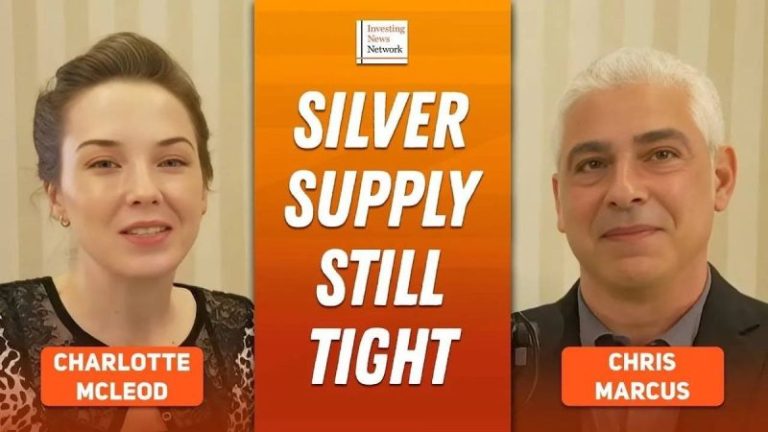
Chris Marcus, founder of Arcadia Economics, shares his thoughts on silver and gold.

While it’s impossible to know exactly how precious metals prices will move in the short term, he’s confident they will maintain an upward trajectory in the long term.

Securities Disclosure: I, Charlotte McLeod, hold no direct investment interest in any company mentioned in this article.

This post appeared first on investingnews.com

Senators believe that after reaching a deal to end the longest shutdown on record, they won’t be in the same position early next year.

The bipartisan package that advanced from the Senate late Monday night would, if passed by the House this week, reopen the government until Jan. 30. Lawmakers believe that extension would give them enough time to fund the government the old-fashioned way, making another shutdown a moot point.

But that all depends on whether they can complete work on spending bills, find agreement with the House, and get them on President Donald Trump’s desk before the new deadline.

There’s also the possibility that if the guarantee for a vote on expiring Obamacare subsidies does not go how Senate Democrats want, that could significantly hamper Congress’ ability to avert yet another shutdown.

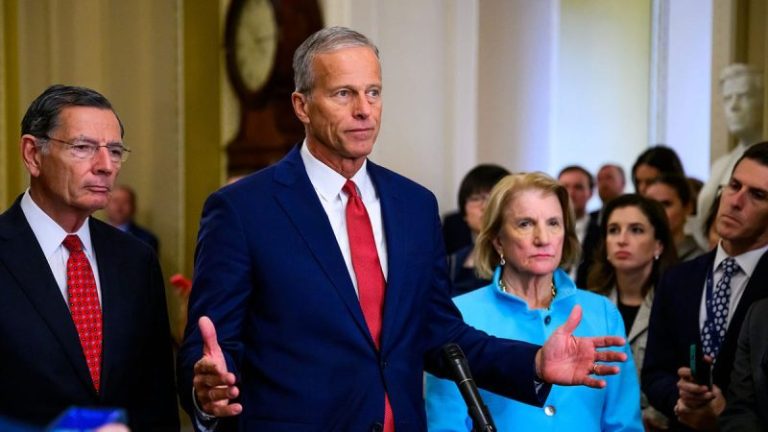
‘We’ll take them one day at a time,’ Senate Majority Leader John Thune, R-S.D., said. ‘Obviously, it’s another deadline we have to deal with. But the immediate objective is to get the government open and enable those conversations to commence.’

‘There are Democrats and Republicans who are both interested in trying to do something in the healthcare space,’ he continued. ‘And clearly, there is a need. I mean, there is an affordability issue on healthcare that has to be addressed, and the current trajectory we’re on isn’t a sustainable path.’

Sen. Richard Blumenthal, D-Conn., told Fox News Digital that Democrats needed to be united in their demand that ‘Republicans be held to their promise of having a vote on the healthcare subsidies in December.’

Thune reiterated his guarantee on Sunday and teed up the second week of December as the deadline for getting a Democratic proposal to the floor.

‘The future is unpredictable, but we need to continue our fight unequivocally, unyieldingly, for affordable healthcare insurance through extending the subsidies and other measures under the [Affordable Care Act],’ Blumenthal said. ‘Republicans have a reflexive obsession with repealing or destroying the ACA.’

The hope is that funding the government with appropriations bills will be the key to preventing another shutdown.

Senate Appropriations Chair Susan Collins, R-Maine, said that she anticipated Thune to tee up a new package of spending bills, this one combining the defense, labor, transportation and housing bills into one chunk.

‘The more appropriations bills that we’re able to pass, the better off we’re going to be, the better off the American people will be served,’ she said.

Sen. Mike Rounds, R-S.D., a member of the Senate Appropriations Committee, was unsure if lawmakers would be in the same spot again come January.

But he believed that the desire to move forward with spending bills, spurred largely by the bipartisan deal struck to reopen the government, was a good start.

‘It makes it a whole lot easier not to have a shutdown again,’ he said.

Despite the rancor and frustration from the Democratic side of the aisle over the collapse of their healthcare demand, they also want to pass bipartisan funding bills, largely in a bid to push back against cuts made by the Trump administration.

However, Sen. Chris Murphy, D-Conn., predicted that it would be quite difficult to pass a long-term bipartisan budget.

‘We cannot sign on to a long-term budget that does nothing on healthcare and has nothing to stop the destruction of our democracy,’ he said. ‘You know, there are no real protections in the short-term spending bill against Trump’s illegality.’

For now, some see the January deadline as ‘light years away,’ like Sen. John Kennedy, R-La., while others aren’t ready to make a prediction about what comes next.

‘Just one step at a time,’ Sen. Chris Van Hollen, D-Md., told Fox News Digital.

This post appeared first on FOX NEWS

Frustration is boiling over among Democratic ranks against Senate Minority Leader Chuck Schumer, D-N.Y., after walking away from the longest government shutdown on record largely empty-handed.

Some argue that Schumer squandered key leverage and failed to steer his caucus through the chaos to victory. 

‘I think that people did what they could to get us out of the shutdown, but what has worked in the past isn’t working now,’ Sen. Elissa Slotkin, D-Mich., said. ‘And so, we need to meet the moment, and we’re not doing that.’

Slotkin, like others in the Senate Democratic caucus, ‘wanted something deliverable on the price of healthcare.’ The core of their shutdown strategy was to force Republicans and President Donald Trump to make a deal on expiring Obamacare subsidies, but that didn’t happen. 

Sen. Bernie Sanders, I-Vt., argued that getting rid of Schumer would be difficult. 

‘Chuck Schumer is part of the establishment,’ Sanders told MSNBC. ‘You can argue, and I can make the case, that Chuck Schumer has done a lot of bad things, but getting rid of him — who’s going to replace him?’

Other Democrats weren’t so resigned.

Graham Platner, a Democratic Senate candidate running to replace Sen. Susan Collins, R-Maine, placed the collapse of Senate Democrats’ unified front squarely on leadership. 

‘The Democratic Party at the leadership level has become entirely feckless,’ Platner said in a video posted by Our Revolution, a political action organization started as an offshoot of Sanders’ presidential campaign. 

‘What happened last night is a failure of leadership in the most clear terms,’ he said after the Senate passed the bipartisan deal Monday, sending it to the House. ‘Sen. Schumer is the minority leader. It is his job to make sure his caucus is voting along the lines of what’s going to be good for the people of the United States. He could not maintain that.’ 

Schumer and congressional Democrats walked away from the shutdown stalemate in the Senate largely empty-handed, save for some victories on ensuring furloughed federal workers would receive back pay, the reversals of firings made by the Trump administration during the shutdown and future protections for workers.  

Still, they fell far short of their goal to extend the expiring subsidies, which are set to sunset at the end of this year. 

Those subsidies, initially passed as an emergency response to COVID-19 in 2021, were always supposed to be temporary. But Democrats fear that their sudden expiration could leave millions of policyholders with substantially higher premiums overnight if allowed to expire.

But as mounting pressure grew — and no sign of Republicans wavering on the subsidies — eight Democrats voted to put the government on the path to reopening. 

To some onlookers, Schumer had held the party line for as long as possible.

Sen. Catherine Cortez Masto, D-Nev., one of the eight Democrats who voted with Republicans to reopen the government, said she respected Schumer’s leadership.

‘He’s done a good job,’ Masto said. ‘He kept us in the loop and was open to our conversations.’

Sen. Chris Murphy, D-Conn., argued that the problem wasn’t Schumer, it was his colleagues. 

‘Sen. Schumer didn’t want this to be the outcome, and I pressed hard for it not to end like this,’ Murphy said. ‘He didn’t succeed, let’s not sugarcoat that. But the problem is, the problem exists, inside the caucus. The caucus has to solve it.’

Republicans, however, spent much of the shutdown arguing that Schumer had waged the shutdown to appease his base — a base that had wanted to see some sort of resistance to Trump.

‘This is how it always would end,’ Sen. Ted Cruz, R-Texas, said on Monday evening. ‘Chuck Schumer has a political problem. He’s afraid of being primaried from the left. And so, the Democrats inflicted this shutdown on the American people in order to prove to their radical left-wing base that they hate Donald Trump.’

‘I think a lot of Americans have suffered as a result of this political stunt,’ Cruz added.

On the other hand, many Democrats made it clear they believed Schumer had failed to effectively mount resistance to Trump’s agenda on healthcare.

CNN data analyst Harry Enten compiled polls dating back to 1985 comparing the popularity of Democratic leaders among Democratic voters. Schumer, he found, was the least popular of them all. 

‘Chuck Schumer — his days are over. If he cannot keep his caucus together, he needs to go,’ Sunny Hostin, a co-host of ‘The View,’ told audiences on Monday.

‘Chuck Schumer has not met this moment, and Senate Democrats would be wise to move on from his leadership,’ Rep. Mike Levin, D-Calif., said.

California Gov. Gavin Newsom summed up his thoughts in a one-word post to X. 

‘Pathetic,’ Newsom said.

This post appeared first on FOX NEWS

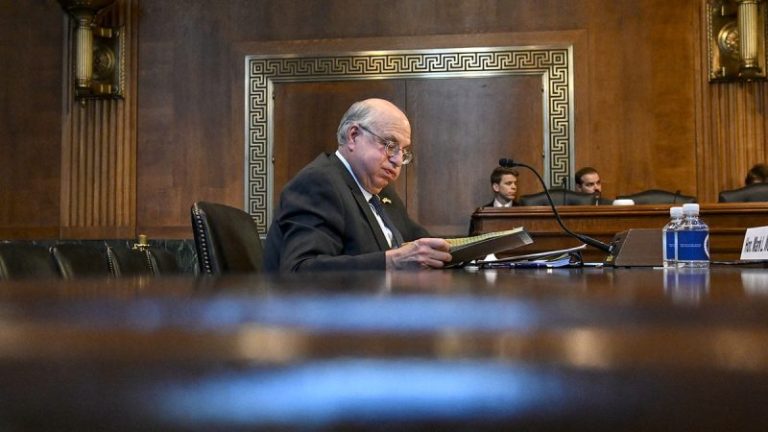
A senior federal judge in Massachusetts who was appointed by former President Reagan announced he has resigned in protest against President Donald Trump, who he says has been ‘using the law for partisan purposes.’

U.S. District Judge Mark L. Wolf, 78, resigned on Friday and explained that the Trump administration’s actions that he described as threatening the rule of law compelled him to speak out.

In a piece for The Atlantic, Wolf wrote that he had looked forward to serving for the rest of his life when Reagan appointed him in 1985 but decided to step down last week because of Trump’s ‘assault on the rule of law’ that he finds ‘so deeply disturbing.’

‘I no longer can bear to be restrained by what judges can say publicly or do outside the courtroom,’ the former judge wrote. ‘President Donald Trump is using the law for partisan purposes, targeting his adversaries while sparing his friends and donors from investigation, prosecution, and possible punishment. This is contrary to everything that I have stood for in my more than 50 years in the Department of Justice and on the bench. The White House’s assault on the rule of law is so deeply disturbing to me that I feel compelled to speak out. Silence, for me, is now intolerable.’

‘When I accepted the nomination to serve on the U.S. District Court in Massachusetts, I took pride in becoming part of a federal judiciary that works to make our country’s ideal of equal justice under law a reality,’ he continued. ‘A judiciary that helps protect our democracy. That has the authority and responsibility to hold elected officials to the limits of the power delegated to them by the people. That strives to ensure that the rights of minority groups, no matter how they are viewed by others, are not violated. That can serve as a check on corruption to prevent public officials from unlawfully enriching themselves. Becoming a federal judge was an ideal opportunity to extend a noble tradition that I had been educated by experience to treasure.’

Wolf added that he now wants to do ‘everything in my power to combat today’s existential threat to democracy and the rule of law.’

The former judge noted that Trump cannot replace him with a nominee of his own, as former President Obama named Judge Indira Talwani as his successor in 2013.

Wolf criticized the Department of Justice’s prosecutions of former FBI Director James Comey and Democrat New York Attorney General Letitia James. The former judge also took issue with Trump’s social media post in which he asked Attorney General Pam Bondi to prosecute Comey, James and Sen. Adam Schiff, D-Calif.

He also said that even if a prosecution ends in an acquittal, it ‘can have devastating consequences for the defendant.’

Wolf also wrote that the DOJ must ensure prosecutors do not seek an indictment unless they have ‘sufficient admissible evidence to prove guilt beyond a reasonable doubt.’

‘Trump has utterly ignored this principle,’ Wolf wrote.

Wolf blasted Trump’s ‘unconstitutional or otherwise illegal’ executive orders, criticized the president’s calls for judges to be impeached for ruling against him, said there was ‘corruption by [Trump] and those in his orbit’ and emphasized that attacks on the courts have led to actual threats against judges.

‘I resigned in order to speak out, support litigation, and work with other individuals and organizations dedicated to protecting the rule of law and American democracy,’ Wolf wrote. ‘I also intend to advocate for the judges who cannot speak publicly for themselves.’

‘I cannot be confident that I will make a difference,’ he added. ‘I am reminded, however, of what Senator Robert F. Kennedy said in 1966 about ending apartheid in South Africa: ‘Each time a man stands up for an ideal, or acts to improve the lot of others, or strikes out against injustice, he sends forth a tiny ripple of hope.’ Enough of these ripples can become a tidal wave.’

The U.S. District Court for the District of Massachusetts said Wolf’s ‘steadfast commitment to the rule of law, determination in wrestling with novel issues of fact and law, and dedication to making fair, equitable and legally sound decisions without fear or favor are the hallmarks of his time on the bench.’

‘His many opinions on complex issues of law in notable cases have had a great impact on jurisprudence,’ Chief Judge Denise J. Casper said in the statement. ‘In addition, his tenure as Chief Judge led to the increased engagement with the bar and community, including the initiation of the Court’s bench/bar conference and his continued support of the Court’s Fellowship Programs. I, along with my colleagues and this Court community, applaud his years of dedicated service.’

This post appeared first on FOX NEWS

The House will vote on reopening the federal government Wednesday after lawmakers’ funding bill survived a key hurdle earlier in the morning.

The bipartisan deal to end the 42-day government shutdown advanced through the House Rules Committee overnight Wednesday, with all Republicans supporting the measure and all Democrats against.

It now moves to the full House for consideration, where multiple people familiar with GOP leaders’ conversations told Fox News Digital they believe it will pass with nearly all Republicans on board.

Passage through the House Rules Committee is a meaningful step toward ending the shutdown, now the longest in U.S. history by roughly a week.

The panel’s hearing to advance the bill lasted more than six hours, kicking off Wednesday evening and ending shortly after 1 a.m. on Thursday.

Democrats attempted to force votes on amendments dealing with COVID-19-era enhanced Obamacare subsidies that are set to expire at the end of this year and other issues opposed by the GOP, though all failed.

House Minority Leader Hakeem Jeffries, D-N.Y., made a notable surprise appearance at one point, testifying in favor of his own amendment to extend those subsidies for another three years.

The lengthy hearing saw members on opposite sides of the aisle clash several times as well, with Democrats repeatedly accusing Republicans of robbing Americans of their healthcare and taking a ‘vacation’ for several weeks while remaining in their districts during the shutdown.

‘I am sick and tired of hearing you all say we had an eight-week vacation,’ House Rules Committee Chairwoman Virginia Foxx, R-N.C., said at one point. ‘I worked every day. I don’t know about you. I don’t want to hear another soul say that.’

Democrats and some Republicans also piled on a provision in the funding bill that would allow GOP senators to sue the federal government for $500,000 for secretly obtaining their phone records during ex-Special Counsel Jack Smith’s investigation.

‘I think there’s gonna be a lot of people, if they look and understand this, they’re going to see it as self-serving, self-dealing kind of stuff. And I don’t think that’s right,’ Rep. Chip Roy, R-Texas, said.

‘I’m trying to figure out what we can do to force the Senate’s hand to say, ‘You’re going to repeal this provision and fix it,’ without amending it here.’

The bill will now get a House-wide ‘rule vote,’ a procedural test that, if it passes, allows lawmakers to debate the legislation itself.

Lawmakers are expected to then hold a final vote sometime on Wednesday evening on sending the bill to President Donald Trump’s desk for his signature.

Trump signaled he was supportive of the legislation in comments to reporters on Monday.

‘We’ll be opening up our country very quickly,’ Trump said when asked if he backed the deal.

The Senate broke through weeks of gridlock on Monday night to pass the legislation in a 60-40 vote, with eight Democrats joining the GOP to reopen the government.

Meanwhile, travel disruptions have been causing chaos at U.S. airports, with air traffic controllers and Transportation Security Administration (TSA) officers being forced to work without pay since last month. Many of those employees had been forced to take on second jobs to make ends meet, fueling staffing shortages and flight delays that threatened to overshadow the Thanksgiving holiday.

Millions of Americans who rely on federal food benefits were also left in limbo amid a partisan fight over whether and how to fund those programs during the shutdown.

The bill would extend fiscal year (FY) 2025 federal funding levels through Jan. 30 to give negotiators more time to strike a longer-term deal for FY 2026.

It would also give lawmakers some headway with that mission, advancing legislation to fund the Department of Agriculture and the Food and Drug Administration; the Department of Veterans Affairs and military construction; and the legislative branch.

They are three of 12 individual bills that are meant to make up Congress’ annual appropriations, paired into a vehicle called a ‘minibus.’

In a victory for Democrats, the deal would also reverse federal layoffs conducted by the Trump administration in October, with those workers getting paid for the time they were off.

A side-deal struck in the Senate also guaranteed Senate Democrats a vote on legislation extending Obamacare subsidies that were enhanced during the COVID-19 pandemic, which are set to expire at the end of this year.

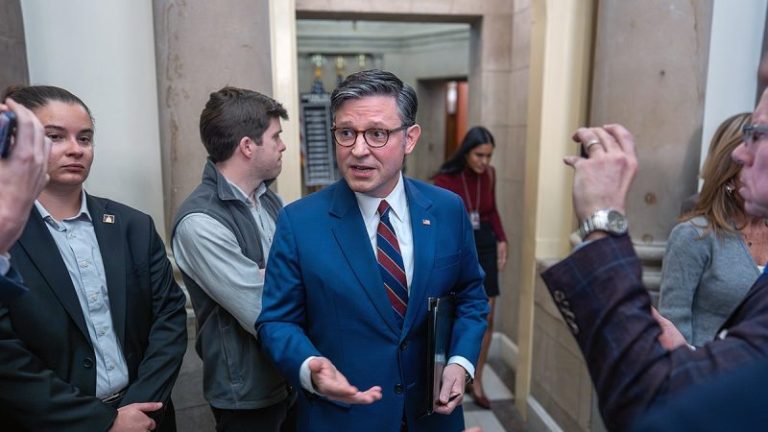
Speaker Mike Johnson, R-La., however, has made no such promise in the House.

This post appeared first on FOX NEWS