Author

admin

Browsing

Outages on Shopify’s e-commerce platform have been resolved, the company said late Monday, bringing to an end a daylong glitch on the annual ‘Cyber Monday’ shopping day.

Some merchants that use Shopify’s service to sell goods online said they experienced issues with checkouts through the company’s point-of-sale system.

Businesses that run on Shopify also had trouble logging into their administrative portals.

In a statement, Shopify said: ‘We had a system degradation that has now been mitigated.’

Throughout the day, business owners posted angry messages directed at the company on X, where Shopify President Harvey Finkelstein had posted ‘HAPPY CYBER MONDAY! Let’s finish strong!’ earlier in the day, with an emoji of a flexed arm.

One business, Costack Spices, based in London, replied: ‘How??? [We] cannot fulfill orders or log on,’ with three red-faced emojis. In a follow-up, the company posted, ‘This is unbelievable.’

Another user wrote, ‘@ShopifySupport I haven’t been able to access it for the last couple hours.’

Shopify replied to most users on X with the same message: ‘We are aware of an issue with Admins impacting selected stores, and are working to resolve it.’

In 2024, merchants using Shopify services recorded $11.5 billion in sales from Black Friday through Cyber Monday, the company said, with more than 76 million customers buying from businesses powered by the platform.

Shopify provides website design tools, online checkout services and digital advertising products to businesses of all sizes. The company says that millions of merchants use its services.

While Shopify’s share of Cyber Monday sales may be limited, smaller businesses that rely on the company to process their transactions may have missed out on crucial sales at the start of the all-important holiday season.

Total Cyber Monday sales are expected to be more than $53 billion, according to Salesforce.

Shopify stock ended the trading day down 5.9%.

This post appeared first on NBC NEWS

MILAN — The Prada Group announced Tuesday that it has officially purchased Milan fashion rival Versace in a 1.25 billion euro (nearly $1.4 billion) deal that puts the fashion house known for its sexy silhouettes under the same roof as Prada’s “ugly chic” aesthetic and Miu Miu’s youth-driven appeal.

The highly anticipated deal is expected to relaunch Versace’s fortunes, after middling post-pandemic performance as part of the U.S. luxury group Capri Holdings.

Prada said in a one-line statement that the acquisition had been completed after receiving all regulatory clearances.

Prada heir Lorenzo Bertelli will steer Versace’s next phase as executive chairman, in addition to his roles as group marketing director and sustainability chief.

The son of co-creative director Miuccia Prada and longtime Prada Group chairman Patrizio Bertelli has said he doesn’t expect to make any swift executive changes at Versace. But Bertelli has said that the company, which places among the top 10 most recognized brands in the world, has long been underperforming in the market.

Prada has underlined that the 47-year-old Versace brand offered “significant untapped growth potential.’’

Versace has been in the midst of a creative relaunch under a new designer, Dario Vitale, who previewed his first collection during Milan Fashion Week in September. He had previously been head of design at Miu Miu, but his move to Versace was unrelated to the Prada deal, executives have said.

Capri Holdings, which owns Michael Kors and Jimmy Choo, paid $2 billion for Versace in 2018, but had been struggling to position Versace’s bold profile in the recent era of “quiet luxury.″

Versace represented 20% of Capri Holdings 2024 revenue of 5.2 billion euros. An analyst presentation for the Prada deal said that Versace would represent 13% of the Prada Group’s pro-forma revenues, with Miu Miu coming in at 22% and Prada at 64%. The Prada Group, which also includes Church’s footwear, reported a 17% boost in revenues to 5.4 billion euros last year.

The Prada Group has already begun preparations to incorporate crosstown rival Versace into its Italian manufacturing system, a point of pride for the group.

“Making a bag for one brand or another, the know-how is the same,″ Bertelli told reporters last week at the group’s Scandicci leather goods factory, which already makes bags for the Prada and Miu Miu brands and will soon add Versace.

The Prada Group’s has invested 60 million euros in its supply chain this year, including a new leather goods factory near Siena, a new knitwear factory near Perugia as well as increasing production at its factory Church’s footwear factory in Britain and expanding another Tuscan factory. That’s on top of 200 million euros in investments from 2019-24.

Prada’s efforts include an academy that has trained some 570 new artisans over the last 25 years in an in-house training academy operating in the Tuscany, Marche, Veneto and Umbria regions.

Last year, Prada hired 70% of the 120 artisans who trained in the academy. The number of trainees rose by 28% to 152 this year.

This post appeared first on NBC NEWS

Tech billionaires Michael and Susan Dell announced Tuesday that they are pledging $6.25 billion to create some 25 million additional ‘Trump Accounts’ for children across the country.

These accounts will be seeded with $250 each, and available for children who missed the eligibility cutoff for the $1,000 federally funded ‘Trump Accounts’ for babies born after Jan. 1, 2025.

Children living in ZIP codes with median incomes below $150,000 will be the first to receive the funds, the White House said.

‘The greatest investment that we could possibly make is in children,’ Susan Dell said alongside President Donald Trump at the White House.

‘It’s really an amazing moment that two people would do that kind of a contribution,’ Trump said.

The president said he was also talking to other wealthy donors and friends to potentially make similar contributions.

Michael Dell; President Donald Trump.Errich Petersen; Chip Somodevilla / Getty Images

Asked how this donation came to be, Michael Dell said: ‘We started talking about Texas only at the beginning. And then we thought about it some more, and we went back and forth, as we do on these things, and this is where we ended up.’

The Dells said they considered making the pledge for a long time. But they said they didn’t want the pledge to be the end of their involvement.

Michael Dell encouraged states to ‘really grow financial literacy’ to help educate families about how the accounts and markets work.

‘These deposits will reach the accounts of most children age 10 and under who were born prior to the qualifying date for the federal newborn contribution,’ the Dells said in a statement issued by their foundation.

‘Children older than 10 may benefit, too, if funds remain available after initial sign-ups,’ the Dell family said. ‘It is an incredibly practical and direct step to help families begin saving today.’

The Dells say they ‘believe this effort will expand opportunity, strengthen communities, and help more children take ownership of their future.’

The Dell family gift “is expected to reach nearly 80% of children age 10 and under across 75% of U.S. zip codes,” according to the nonprofit Invest America.

Children born after Jan. 1 and until Dec. 31, 2028, will receive an account infused with a $1,000 investment from the U.S. Treasury, as part of the recently passed One Big Beautiful Bill.

The accounts will open and begin accepting contributions starting on July 4, 2026. The accounts will initially be held by a financial firm designated by the Treasury Department, but later will be able to be transferred to any brokerage firm.

Those accounts will also be eligible for additional contributions of up to $5,000 per year until the beneficiary child reaches age 18. Withdrawals from the accounts are not permitted until the children reach that age.

Trump accounts can be invested only in low-cost index funds or ETFs that either mirror the S&P 500 or ‘another American stock index,’ according to the White House Council of Economic Advisers.

‘These investment accounts are simple, secure, and structured to grow in value through market returns over time,’ the Dell family said.

‘Trump Accounts represent a potentially valuable tool for building up savings and tapping the power of compound growth for the young,’ Charles Schwab tax planning director Hayden Adams recently wrote.

If a family could contribute and invest the maximum $5,000 per year in the accounts, and with a reasonable growth rate of about 6%, ‘by age 18, the child’s account would hold around $191,000 in assets.’

Once a child turns 18, the accounts are eligible to be converted to a traditional individual retirement account, ‘meaning it could continue to accumulate potential gains on a tax-free basis’ for many years.

The Dells are one of the wealthiest families in America, with a fortune of nearly $150 billion, according to Bloomberg Billionaires. The family’s primary source of wealth is Dell Technologies, the company founded by Michael Dell in 1984.

In recent years, the value of Dell shares have been fueled by the booming AI revolution, for which Dell is a supplier of servers and other technology.

This post appeared first on NBC NEWS

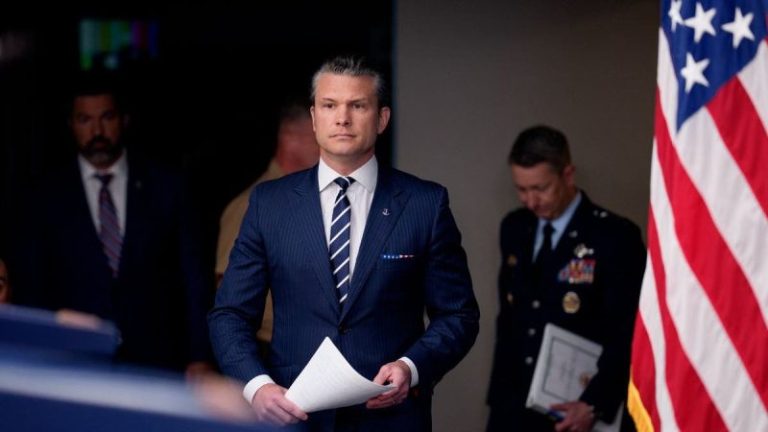
Secretary of War Pete Hegseth chastised the press following media reports that he signed off on a second strike against an alleged drug boat after the first one left survivors. 

The Trump administration has come under renewed scrutiny for its strikes in the Caribbean targeting alleged drug smugglers, after the Washington Post reported on Friday that Hegseth verbally ordered everyone onboard the alleged drug boat to be killed in a Sept. 2 operation. The Post reported that a second strike was conducted to take out the remaining survivors on the boat. 

On Monday, the White House confirmed that a second strike had occurred, but disputed that Hegseth ever gave an initial order to ensure that everyone on board was killed, when asked specifically about Hegseth’s instructions.

Hegseth said that he watched the first strike live, but did not see any survivors at that time amid the fire and the smoke — and blasted the press for their reporting.

‘This is called the fog of war. This is what you in the press don’t understand,’ Hegseth told reporters at a Cabinet meeting on Tuesday. ‘You sit in your air-conditioned offices or up on Capitol Hill and you nit pick, and you plant fake stories in the Washington Post about ‘kill everybody’ phrases on anonymous sources not based in anything, not based in any truth at all. And then you want to throw out really irresponsible terms about American heroes, about the judgment that they made.’ 

Hegseth said that after watching the first strike, he left for a meeting and later learned of the second strike. The White House said Monday that Hegseth had authorized Adm. Frank ‘Mitch’ Bradley to conduct the strikes, and that Bradley was the one who ordered and directed the second one. 

At the time of the Sept. 2 strike, Bradley was serving as the commander of Joint Special Operations Command, which falls under U.S. Special Operations Command. He is now the head of U.S. Special Operations Command.

According to Hegseth, carrying out a subsequent strike on the alleged drug boat was the right call. 

‘Admiral Bradley made the correct decision to ultimately sink the boat and eliminate the threat,’ Hegseth said Tuesday. 

Meanwhile, reports of the second strike have attracted even more scrutiny from lawmakers on both sides of the aisle on Capitol Hill and calls for greater oversight, amid questions about the strikes’ legality. 

‘This committee is committed to providing rigorous oversight of the Department of Defense’s military operations in the Caribbean,’ Reps. Mike Rogers, R-Ala., and Adam Smith, D-Wash., who lead the House Armed Services Committee, said in a statement on Saturday. ‘We take seriously the reports of follow-on strikes on boats alleged to be ferrying narcotics in the SOUTHCOM region and are taking bipartisan action to gather a full accounting of the operation in question.’

Hegseth said Tuesday that although there has been a pause in strikes in the Caribbean because alleged drug boats are becoming harder to find, the Trump administration’s campaign against the influx of drugs will continue. 

‘We’ve only just begun striking narco-boats and putting narco-terrorists at the bottom of the ocean because they’ve been poisoning the American people,’ Hegseth said. 

The Trump administration has carried out more than 20 strikes against alleged drug boats in Latin American waters, and has bolstered its military presence in the Caribbean to align with Trump’s goal to crack down on the influx of drugs into the U.S.

This post appeared first on FOX NEWS

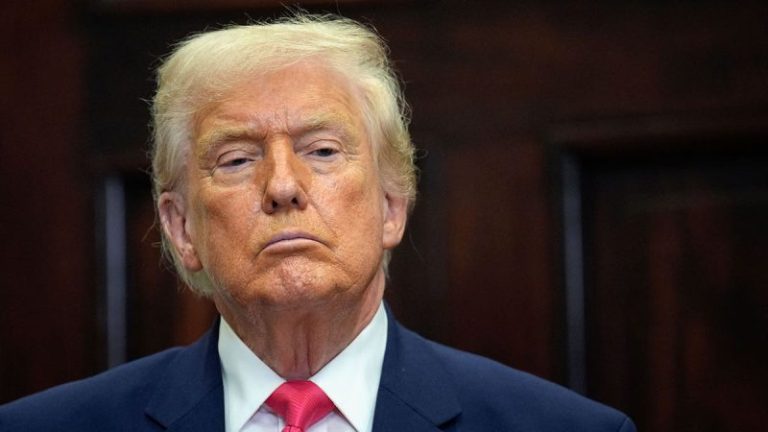
President Donald Trump announced in a Truth Social post on Tuesday that he would ‘fully and completely’ terminate any documents signed by former President Joe Biden’s autopen, including pardons and commutations.

‘Any and all Documents, Proclamations, Executive Orders, Memorandums, or Contracts, signed by Order of the now infamous and unauthorized ‘AUTOPEN,’ within the Administration of Joseph R. Biden Jr., are hereby null, void, and of no further force or effect,’ Trump wrote.

‘Anyone receiving ‘Pardons,’ ‘Commutations,’ or any other Legal Document so signed, please be advised that said Document has been fully and completely terminated, and is of no Legal effect. Thank you for your attention to this matter!’

This post appeared first on FOX NEWS

In March, President Donald Trump announced the Air Force’s new F-47 stealth fighter, built by Boeing.  So where is the Navy’s secret new carrier plane?

Fifteen years ago, the U.S. Navy read the signals from China and secretly started development of a long-range, stealthy plane to launch from aircraft carriers.  The Navy’s newest bird is more like a fighter-bomber, with the AI smarts to lead drones into combat and enough range to scare China.

Today that plane – known only as F/A-XX or fighter attack, experimental – is ready to go. Both Boeing and Northrop Grumman have flown test planes. Their prototypes are waiting in the wings; or rather, in discreet guarded hangars, most likely in Missouri and Florida. 

Yet, for some reason, the Pentagon isn’t in the mood to make the ‘downselect’ purchase decision. The delay is shocking and dangerous.

Congress wants the Navy plane so much they added nearly $1 billion to the budget to accelerate F/A-XX. ‘The U.S. Navy needs sixth-generation fighters. I’m concerned that any hesitancy on our part to proceed with the planned procurement of the sixth-gen fighters for the Navy will leave us dangerously outmatched in a China fight,’ Rep. Ken Calvert, R-Calif., the head of the House Appropriations Subcommittee on Defense, said on May 14. 

Of course, U.S. Navy F/A-18EFs have pounded Middle East targets during various air campaigns for almost three decades.  Just look at the damage they did to Houthi missile sites and weapons caches in Yemen during Operation Rough Rider this past spring.  But for the fierce fighting scenarios of the Pacific, the Navy pilots that fly from aircraft carriers need a new plane. 

All that President Trump has to do now is take this opportunity to pick the best plane for the Navy.

Here are six things to know about the Navy’s secretive project.

The Navy has not let us see photographs of the F/A-XX, obviously. Tantalizing concept art released over the summer reveals a smooth stealth shape, with a cockpit canopy similar to the F-35.  The diamond or delta-wing shape provides lift and range, especially at higher cruise altitudes. 

  In April, the Navy announced F/A-XX would have at least 25% more range than current fighters.  The range could be up to 1,000 miles, according to a top analyst’s estimate. Add in air refueling, longer-range missiles, and you have the ability to take the fight all across the Pacific.  I can tell you this: the Navy has been short of a true long-range fighter since the retirements of the A-6 Intruder and the F-14 Tomcat of TOPGUN fame, so range is a priority.

  While the F-35C excels with just one engine, the Navy preference has always been for two engines, due to all that flying over water. You won’t see the engines because they are tucked inside the plane to diminish heat signature. U.S. engine technology is far ahead of China’s, in areas like thermal management and overall thrust. 

Early stealth aircraft like the SR-71, F-117 and the B-2 sported flat black coatings to help absorb radar waves.  The current trend in stealth materials is an avian grey, like the B-21 Raider bomber now in production.  Fortunately, the U.S. is the world leader in aerospace-grade carbon fiber composites.

  Expect an impressive bomb bay for internal carriage of long-range missiles.  Current fighters like the Superhornet hang missiles from hard points under the wings.  To achieve stealth, the FA-XX will follow the path of the F-35C, and tuck missiles inside.  Sawtooth bomb bay doors help maintain the aircraft’s stealth profile.

Part of the Navy’s plan is to stock carriers with drone refuelers like the new MQ-25 Stingray to accompany the F/A-XX on its stealthy missions.  Since you ask, no, drones cannot do it all.  Naval strike demands payload to carry heavy bombs and missiles.  Plus, it turns out a pilot is pretty useful. The FA-XX can also control wingmen drones in the battlespace. With FA/XX, the Navy can target enemy ships, land bases, and radar sites.

Trump certainly understands the value of stealth after the B-2 bomber’s obliteration of Iran’s nuclear sites.  It’s unclear whether anyone has laid out for the president just how a massive risk the Pentagon is taking with naval aviation by slowing down F/A-XX.

Please note that China flew a stealthy demonstrator designed for carrier landings over a year ago.  On Nov. 7, China commissioned its third carrier, the Fujian, and is laying modules for a fourth carrier — designed to be bigger than the USS Gerald R. Ford and to run on nuclear power for the first time. In a few years, China may have six of its own carriers. That’s a serious threat.

Put simply, the Navy must have this long-range, stealthy fighter. The idea is to pair the FA/XX with long-range missiles so the carrier airwing regains the long-range punch they will need to maneuver and strike against China in the Pacific.

No one wants to say this, but without FA-XX, the carrier mission may diminish in the future.    

It’s past time for President Trump to make a decision. 

This post appeared first on FOX NEWS

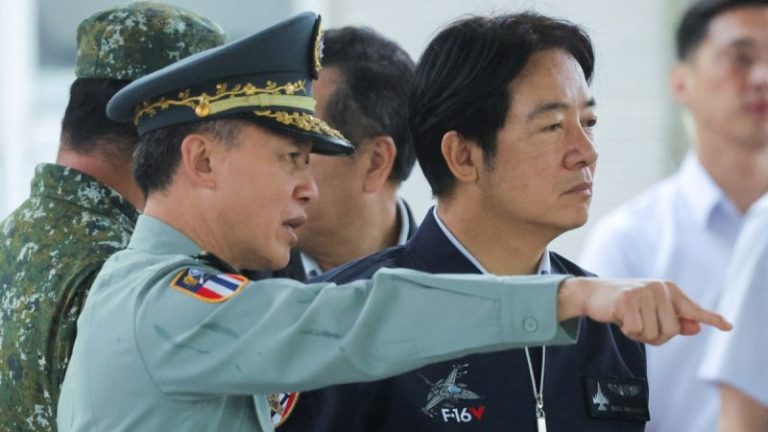
: Last week, Taiwan President William Lai unveiled a massive $40 billion supplemental defense procurement proposal, casting it as proof that the independently ruled, democratic island is serious about countering escalating military pressure from the People’s Republic of China (PRC). The PRC has not governed Taiwan for even a single day but claims it as its territory.

A State Department spokesperson told Fox News Digital that, ‘We welcome Taiwan’s announcement of a new $40 billion special defense procurement budget. Consistent with the Taiwan Relations Act and more than 45 years of commitment across multiple U.S. Administrations, the United States supports Taiwan’s acquisition of critical defense capabilities, commensurate with the threat it faces.’ 

The spokesperson also commended Taipei, ‘We also welcome the Lai administration’s recent commitments to increase defense spending to at least 3% of GDP by 2026 and 5% of GDP by 2030, which demonstrates resolve to strengthen Taiwan’s self-defense capabilities.’

The American Institute in Taiwan (AIT) – the de facto American embassy – responded very positively almost immediately after Lai’s proposal was announced. Courtney Donovan Smith, a political columnist for the Taipei Times, told Fox News Digital that the strong support from AIT, ‘Amounts to a public American stamp of approval.’

A day after Lai’s announcement, Taiwan’s Defense Minister, Wellington Koo, told the media that preliminary talks have already been held with the United States about the kinds of weapons it wants to buy as part of this budget that would run from 2026 to 2033. But Koo said he could not make any details of discussions public until Congress receives a formal notification.

Yet some in Taiwan expressed concern that the language from the administration was somewhat understated, and didn’t come from senior-enough officials. 

Those worried about what they perceive as a muted tone from the Trump administration wondered if the timing could be sensitive, coming shortly after President Trump and Chinese leader Xi Jinping agreed to a trade deal, and just days after Xi phoned Trump to reiterate Beijing’s claims over Taiwan, claims the U.S. ‘acknowledges’ but does not accept.

Even so, Taipei-based political risk analyst and Tamkang University assistant professor Ross Feingold told Fox News Digital that U.S. support fundamentally has not shifted and that when it comes to U.S. weapons sales to Taiwan, ‘If Taiwan is a willing buyer, the Trump administration is likely to be a willing seller.’

Also causing distress to the fragile egos of China’s communist leaders is Japan’s new Prime Minister Sanae Takaichi, a conservative who became Japan’s first female prime minister in October. She appeared to break long-standing Japanese strategic ambiguity over Taiwan when, asked on Nov. 7 in parliament whether a Chinese attack on Taiwan would qualify as ‘a situation threatening Japan’s survival.’

Takaichi didn’t deflect with a ‘I don’t comment on hypotheticals.’ Instead, she said, ‘If there are battleships and the use of force, no matter how you think about it, it could constitute a survival-threatening situation.’

Under Japan’s 2015 security law, that designation could allow Japanese military action in defense of an ally.

China predictably lashed out, immediately calling her remarks ‘egregious.’ A Chinese diplomat in Osaka escalated further, reposting coverage on X with a threat-like warning: ‘The dirty head that sticks itself in must be cut off.’

Kerry K. Gershaneck, a visiting scholar at National Chengchi University and a former U.S. Marine counterintelligence officer, told Fox News Digital that the U.S. needed to clearly denounce China for threats against Japan and the Japanese prime minister. Gershaneck warned that Asian allies remember past U.S. abandonment’ under what he called the ‘do not provoke China!’ policy of the Obama administration. ‘Unless high-level Washington officials signal stronger support, he said, ‘the Trump 47 administration risks going down in history as Barack Hussein Obama’s third term.’

Feingold noted that while Takaichi’s stance was enthusiastically received in Taiwan, the excitement ‘was unsustainable and not based on a formal policy decision by Japan to defend Taiwan.’

Following reports that President Trump phoned the Japanese prime minister and requested that she dial down talk about Taiwan, Japan’s Chief Cabinet Secretary Kihara Minoru issued a strong denial, saying Trump did not advise Takaichi to ‘temper the tone of her comments about Taiwan.’

While the geopolitical shifts grabbed headlines, Lai’s real challenge is domestic. Taiwan has a single-chamber legislature, and Lai’s Democratic Progressive Party does not have a majority.

Cheng Li-wun, the new chair of the main opposition Kuomintang (KMT), campaigned against boosting defense spending to 5% of GDP and has repeatedly argued Taiwan is ‘not an ATM’ for ‘unreasonable’ military budgets. The KMT supports renewed engagement with Beijing and acceptance of the ‘1992 Consensus,’ a proposed framework that allows both sides to claim there is ‘one China’ while interpreting the meaning differently. Lai rejects that position entirely, calling it a path toward subordination to China.

Bryce Barros, associate fellow at GLOBSEC and a former U.S. Senate national security advisor, told Fox News Digital that there are serious hurdles. ‘Opposition leaders have cited cuts to other essential services like healthcare, lack of details on how the budget will be paid for and concerns over more hostilities with China,’ he said. But Barros said the head of the de facto American embassy has called for bipartisan support for the bill, and he noted Lai needs only six opposition defections for the vote to pass.

Analysts also stress the proposal is not solely for U.S. weapons. Lai wants major investment in domestic defense manufacturing, including a ‘dome’ anti-missile system, which could help blunt accusations of excessive spending to curry favor with Washington. But the plan still faces a volatile parliament and certain retaliation from China.

This post appeared first on FOX NEWS

The Department of Justice (DOJ) on Friday charged five men from across the U.S. with running an online ‘child exploitation enterprise’ called ‘Greggy’s Cult,’ that allegedly used Discord servers to terrorize, blackmail and coerce minors into ‘horrific acts of self-harm.’

The indictment unsealed by federal prosecutors charges five individuals with ‘conspiracy to produce child pornography, conspiracy to receive and distribute child pornography, and conspiracy to communicate interstate threats.’

Hector Bermudez, 29, of Queens, New York; Zachary Dosch, 26, of Albuquerque, New Mexico; Rumaldo Valdez, 22, of Honolulu, Hawaii; David Brilhante, 28, of San Diego, California; and Camden Rodriguez, 22, of Longmont, Colorado, were arrested Tuesday will be arraigned in the Eastern District of New York at a later date, according to the DOJ.

Prosecutors described a ‘nightmarish platform on the internet,’ alleging that ‘Greggy’s Cult’ carried out ‘depraved conduct’ that included ‘repeatedly encouraging victims to kill themselves or encouraging them to insert household objects into their genitals or anus.’

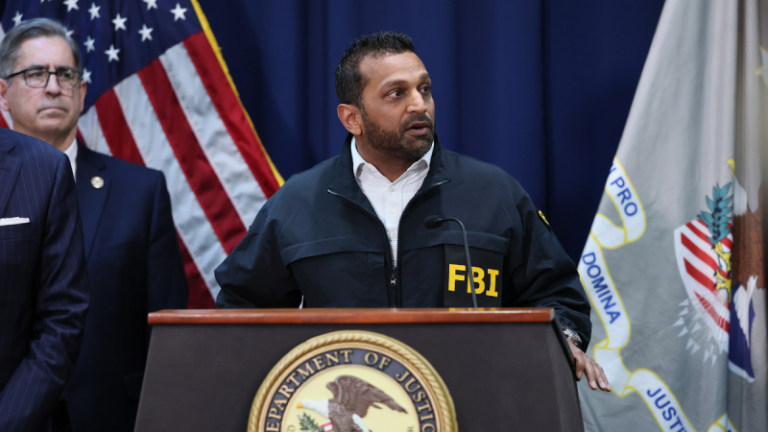
‘These five defendants allegedly targeted vulnerable children and others via online platforms – they exploited, threatened, and harassed them, and encouraged horrific acts of self-harm,’ FBI director Kash Patel said in a statement. ‘The FBI is sending a message to those individuals involved in criminal activity through violent online networks: you can’t hide in the shadows hovering over a keyboard – we will find and hold accountable those who participate in these illegal and heinous acts.’

The indictment stated that the defendants allegedly engaged in the ‘production and distribution of child sex abuse material’ between January 2020 and January 2021, and also participated in other forms of ‘exploitation and harassment’ of both minors and adults.

According to prosecutors, the defendants and other members of ‘Greggy’s Cult’ met on Discord servers and ‘directed minor victims, who had joined a video call on either Discord or another video conferencing platform, to engage in sexually explicit or other degrading conduct.’

The group is also accused of finding victims on gaming platforms such as Roblox and Counter-Strike: Global Offensive.

The cult members allegedly captured screenshots and screen recordings of the ‘sexually explicit conduct’ before sharing it to other Discord servers and with each other, according to the DOJ.

Attorney General Pam Bondi reacted to the indictment, stating that ‘no child should ever be terrorized or exploited online, and no online platform should give refuge to predators.’

‘The Department of Justice will continue to protect children, support survivors, and hold accountable anyone who preys on the vulnerable – online or offline – with every tool we have,’ Bondi added.

Prosecutors also accused the defendants of extorting their targets, alleging that they tried to frame the adult victims as pedophiles or send malware to minor victims, which was then used as ‘leverage to get the victims to engage in degrading acts on camera.’

The defendants were allegedly able to convince victims to commit acts of ‘degradation,’ including having them be ‘owned’ by a member of the cult to demonstrate loyalty, or writing the names of cult members on their bodies, which prosecutors referred to as ‘fansigning.’

Acting Assistant Attorney General Matthew Galeotti of the DOJ’s Criminal Division said in a statement that the defendants were charged with an ‘unspeakable act of coercing and blackmailing children and adults to engage in self-harm and other degrading acts.’

U.S. Attorney Joseph Nocella Jr. for the Eastern District of New York called the alleged conduct ‘monstrous,’ adding that children were ‘at times driven to the brink of suicide.’

The DOJ stated that ‘Greggy’s Cult’ formed before the emergence of the ‘764’ network, another online child-exploitation group that the FBI has launched an intensified effort to take down.

Members of ‘764’ allegedly use popular online platforms such as Discord, Telegram and Roblox to recruit and manipulate minors.

This post appeared first on FOX NEWS

Investor Insight

Goldgroup offers investors a rare opportunity to participate in the rapid buildout of a multi-asset gold producer in Mexico, with near-term production growth at the operating Cerro Prieto mine and the addition of two fully owned, high-impact assets – Pinos and San Francisco – positioning the company for substantial scale, re-rating potential and strong leverage to gold.

Overview

Goldgroup Mining (TSXV:GGA,OTC:GGAZF) is a Canadian gold company building a portfolio of high-quality producing and development assets across Mexico, one of the world’s premier mining jurisdictions. With two 100 percent owned gold projects – Cerro Prieto and Pinos – and the acquisition of 100 percent of the San Francisco mine, Goldgroup is positioned for rapid, disciplined production growth.

The company’s strategy is straightforward: optimize and expand production at its flagship Cerro Prieto mine, advance Pinos toward a production decision, and bring the large-scale San Francisco mine back online. Combined, these projects outline a defined path to more than 100,000 ounces of annual production, with further upside from exploration, resource expansion and future acquisitions.

Goldgroup is guided by an experienced leadership team with deep expertise in building and optimizing mines in Mexico. The company benefits from strong financial support from the Calu Group and founders of Luca Mining, with proven track records of value creation through mine development, operational turnarounds and strategic M&A.

Company Highlights

  • Two operating or near-term production gold assets in Mexico, 100-percent-owned and fully permitted.
  • Cerro Prieto expansion completed, increasing from ~12,500 oz/year to 30,000+ oz/year during 2026 and beyond, including tailings re-processing.
  • Its second asset, Pinos, is a fully permitted high-grade underground development project with historical resources and +90 percent metallurgical recoveries.
  • San Francisco acquisition in progress, a past producer capable of ~40,000 oz/year with significant exploration upside.
  • Aggressive M&A strategy aimed at fast-tracking Goldgroup into the mid-tier producer category with advanced due diligence nearing completion. .
  • Backed by the Calu Group and the founders of Luca Mining, bringing extensive operational and financing expertise in Mexico.

Key Projects

Cerro Prieto Open Pit Gold Mine

Cerro Prieto is Goldgroup’s established producing operation in the Cucurpe mining district of Sonora, Mexico. It’s been in production since 2013 and is augmented by a newly expanded processing capacity that has more than doubled throughput. The mine is the cornerstone of Goldgroup’s near-term growth strategy, with ongoing optimization, a planned tailings re-processing and re-leaching initiative, and multiple drill-ready targets across the property. An updated NI 43-101 resource estimate for the Esperanzas deposit further reinforces the reliability of the mineralized system while underscoring the potential for continued resource growth.

Project Highlights

  • Producing open-pit gold mine in Sonora with 120,000+ ounces produced since 2013
  • Throughput recently doubled to 4,200+ tons per day (tpd) with installation of a second crushing circuit
  • Tailings re-leaching strategy expected to add up to 9,000 oz/year over ~5 years
  • Expansion plan targeting 30,000+ ounces of annual production
  • Updated NI 43-101 outlines 37,209 oz measured and indicated, and 1,504 oz inferred gold resources
  • Multiple exploration targets across the property, including Esperanza, Nueva Esperanza and additional zones all under definition drilling.

Pinos Gold Development Project

Pinos is a fully permitted, advanced-stage underground gold project positioned within the prolific Zacatecas mining belt. The district hosts 29 concessions over 3,816 hectares, with 52 shafts and more than 40 km of underground workings. Goldgroup’s internal roadmap outlines 12,700 oz/year of potential annual production from Pinos in a development scenario.

Project Highlights:

  • Multiple high-grade veins historically mined at 30 to 50 g/t gold
  • Historical measured and indicated estimate: 86,000 oz gold and 1.3 Moz silver (Candelaria Mining, 2018). Note: Historical resource only; not treated as current NI 43-101
  • Metallurgical recovery of +90 percent gold via cyanide leaching and Merrill-Crowe
  • Fully permitted for mine construction

Goldgroup plans to launch targeted exploration and resource-definition drilling at Pinos, followed by an updated economic study (PEA or PFS) that will guide a production decision for this fully permitted high-grade project.

San Francisco Open Pit Gold Mine

The San Francisco mine is a past-producing, large-scale open-pit gold operation in Sonora with extensive existing infrastructure and significant resource and exploration upside. Goldgroup has acquired the majority of creditor debt connected to the mine, enabling it to control the restructuring process and advance toward full ownership pending final court approval. With historical production of approximately 1.3 million ounces and strong metallurgical recoveries, San Francisco presents a near-term opportunity for Goldgroup to restore a proven gold mine to production and add meaningful scale to its growth profile.

Project Highlights:

  • Large-scale past producer with ~1.3 million ounces of gold produced from 2010 to 2019
  • Strong existing infrastructure: grid power, wells, ADR plants, assay lab, haul roads
  • High processing capacity of 16,875 tpd via two parallel crushing circuits
  • Good metallurgical recoveries ranging from 77 percent to 90 percent
  • Multiple new high-grade zones identified behind and below pit walls
  • Restart plan underway, including drilling to upgrade resources and update the mine plan

Management Team

Ralph Shearing – Chief Executive Officer

A professional geologist with nearly four decades of experience in mining and exploration, Ralph Shearing founded and led Luca Mining Corp, where he oversaw major development milestones such as the exploration, initial development construction and pre-production of the Tahuehueto gold mine, the acquisition and successful restart of production of the Campo Morado zinc poly-metalic mine in Mexico.

Anthony Balic – Chief Financial Officer & Director

Previously the director of finance for Goldgroup, Anthony Balic has extensive experience in mining finance, including senior roles at Deloitte LLP specializing in assurance and advisory for mining companies. He oversees corporate finance, accounting and capital strategy for Goldgroup.

Corry Silbernagel – Director

Corry Silbernagel is a veteran financial and technical specialist with experience across mining and energy. He is the former CFO of Cabo Drilling and project manager for large-scale initiatives at Suncor and TransAlta. Silbernagel brings expertise in strategic finance, project development and operational oversight.

Blair Jordan – Director

Blair Jordan is managing partner at Restructure Advisors, with deep experience in corporate restructuring, turnaround strategies and investment banking. He held CFO and interim CEO roles in multiple public companies, and is the former managing director at Echelon Wealth Partners.

Roberto Guzman – Director

Roberto Guzman is a finance leader with more than 25 years of experience in Mexico’s financial sector. Jordan holds an advanced degree in finance from Universidad Tecnologica de Mexico and has served as finance manager for numerous public and private Mexican companies.

This post appeared first on investingnews.com

Here’s a quick recap of the crypto landscape for Monday (December 1) as of 9:00 p.m. UTC.

Get the latest insights on Bitcoin, Ether and altcoins, along with a round-up of key cryptocurrency market news.

Bitcoin and Ether price update

Bitcoin (BTC) was priced at US$85,482.46, down by 6.4 percent over 24 hours.

Bitcoin price performance, December 1, 2025.

Chart via TradingView.

Bitcoin marked its largest single-day decline in a month, continuing a sell-off that started in November.

This sharp downturn was influenced largely by rising expectations of a Bank of Japan rate hike at its December meeting, which triggered a surge in Japanese bond yields, strengthening the yen and prompting global investors to pull capital from risk assets like Bitcoin. This caused liquidations of speculative long positions and created downward price pressure.

However, significant technical support levels lie around US$86,000 to US$79,600, with further downside possible to US$67,700 and major support between US$45,000 and US$70,000 if bearish momentum persists. Holding above roughly US$85,200 is critical to avoid deeper bearish territory.

Farzam Ehsani, CEO of cryptocurrency exchange VALR, added that concerns about MSCI potentially excluding major crypto-holding companies such as Strategy from global indices are adding pressure through expected forced sell-offs, further weakening market structure and liquidity.

“The recovery of the cryptocurrency market, and Bitcoin in particular, after the decline of the last month and a half, will take some time. The main questions at the moment are how the market will close out this year and whether Bitcoin will recover above $100,000 in December.”

Ether (ETH) also experienced a steep decline, priced at US$2,757.79, down by 8.9 percent over 24 hours.

Derivatives data

Derivatives data showed US$10.93 million liquidated in BTC shorts positions over the final four hours of trading, indicating short sellers getting squeezed out as price stabilized rather than accelerating lower.

Open interest edged up 0.50 percent to US$57.63 billion, showing fresh positions entering despite the dip, which often signals sustained trader interest and potential stabilization or rebound setup.

A funding rate of -0.001 percent reflects mild bearish sentiment, common in corrections but not extreme enough to indicate panic selling. BTC’s RSI at 32.58 marks deeply oversold territory, suggesting selling may be nearing a climax and creating conditions for a short-term bounce if support holds.

Altcoin price update

  • XRP (XRP) was priced at US$2.02, down by eight percent over 24 hours.
  • Solana (SOL) was trading at US$124.54, down by 9.3 percent over 24 hours.

Today’s crypto news to know

Bitcoin’s weekend slide wipes out US$637 million in leveraged positions

Bitcoin’s latest downturn over the weekend triggered a wave of liquidations that erased roughly US$637 million across futures markets.

The selloff pushed Bitcoin to an intraday low near US$85,700, extending its monthly decline past 21 percent and dragging Ethereum, XRP, and other majors sharply lower. The slump began as momentum-driven selling forced heavily leveraged longs to unwind, turning a routine correction into a fast, disorderly slide.

Comments from Strategy CEO Phong Le about potentially selling part of the company’s sizable Bitcoin holdings added to jitters, even though prediction markets continue to see a low probability of actual disposals this year.

“We can sell Bitcoin, and we would sell Bitcoin if needed to fund our dividend payments below 1x mNAV,” Le said in a podcast.

The company currently controls 649,870 BTC, which valued at about US$56.26 billion at current prices.

Further, China’s central bank reiterating its hard line against crypto activity further weighed on sentiment heading into the final month of the year.

Goldman Sachs boosts ETF offerings with Innovator Capital acquisition

Goldman Sachs (NYSE:GS) has agreed to buy Innovator Capital Management, a company specializing in defined outcome ETFs, in a deal worth about US$2 billion in cash and stock, according to a Monday announcement.

Defined outcome ETFs are special funds that limit losses or cap gains for investors using options contracts.

Innovator’s US$28 billion in assets and 159 ETFs will significantly enhance Goldman Sachs Asset Management’s ETF portfolio, increasing that bank’s total ETF lineup from US$51 billion to US$79 billion.

The acquisition payment partly depends on Innovator meeting certain performance targets after the deal closes, which were not publicly disclosed. The deal is expected to close in Q2 2026, subject to regulatory approval and other usual conditions.

Goldman Sachs will fully own the Innovator business, integrating its 60-plus employees into Goldman’s teams. However, Innovator’s investment managers and services will remain unchanged.

Tether blasts S&P after fresh downgrade

Tether pushed back forcefully this week after S&P Global cut its assessment of USDT’s peg stability, assigning the stablecoin the lowest score on the agency’s scale.

S&P pointed to weaker reserve quality, shrinking cash-equivalent holdings, and rising exposure to secured loans and Bitcoin as reasons for the downgrade.

The report noted that Tether’s Bitcoin holdings now exceed the cushion meant to absorb volatility, increasing the risk that a sharp price drop could leave the token undercollateralized.

Tether’s leadership dismissed the rating as biased and politically motivated.

‘Some influencers are either bad at math or have the incentive to push our competitors,’ Tether CEO Paolo Ardoino said in a recent post on X.

After the downgrade last week, Ardoino also maintained that ‘the traditional finance propaganda machine is growing worried when any company tries to defy the force of gravity of the broken financial system.’

The downgrade also comes as Tether’s mining affiliate winds down operations in Uruguay after months of unpaid power bills and stalled expansion plans.

Japan prepares 20 percent flat tax on crypto gains

Japan is moving toward a flat 20 percent tax on cryptocurrency gains, a change that would replace the current progressive regime that can push rates above 50 percent for active traders.

Nikkei Asia reported that under the proposal, crypto income would be placed into a separate category similar to equities, with the goal of reducing distortions that discourage trading or push users offshore.

Lawmakers backing the plan say aligning digital assets with other investment products could draw liquidity back to domestic exchanges and boost overall tax receipts.

The reform is expected to be finalized as part of the country’s 2026 tax framework, with revenue split between the national and local governments.

Securities Disclosure: I, Giann Liguid, hold no direct investment interest in any company mentioned in this article.

Securities Disclosure: I, Meagen Seatter, hold no direct investment interest in any company mentioned in this article.

This post appeared first on investingnews.com