
Author

admin

Browsing

Bitcoin, the most well-known cryptocurrency, paved the way for the cryptocurrency asset class.

Now the cryptocurrency of choice, its meteoric rise has been unlike any other commodity, resource or asset. Bitcoin’s price rose more than 1,200 percent from March 2020 to reach US$69,044 on November 10, 2021.

The coin showcased its famous volatility in the following year, falling as low as US$15,787 by November 2022 amid economic uncertainty and a wave of negative media coverage.

Bitcoin started 2024 just below US$45,000 and made substantial gains in remainder of the year. Following Donald Trump’s victory over Vice President Kamala Harris in the US presidential election, Bitcoin soared to US$103,697 on December 4, 2024.

The first quarter of 2025 saw the price of Bitcoin decline by more than 25 percent to a low for the year of US$75,004 in early April. Since then, rising institutional demand and an emerging industry-friendly US regulatory environment have poured rocket fuel into the digital assets value.

Bitcoin reached its new all-time high price of US$126,198.07 on October 6, 2025, before closing at US$124,752.53.

However, the digital currency faced a larger than a 30 percent drop in value in November, dropping as low as US$80,659.81 per Bitcoin on November 21 as part of a larger risk-off sentiment pervading the markets.

For frequent updates on the biggest news of the crypto sector, check out our Crypto Market Recap, with updates multiple times per week.

Where did Bitcoin start, and what has spurred its price movements since its launch? Read on to find out.

In this article

    What is Bitcoin and who invented it?

    Created as a response to the 2008 financial crisis, the concept of Bitcoin was first introduced in a nine-page white paper titled “Bitcoin: A Peer-to-Peer Electronic Cash System” on October 31, 2008, on a platform called Metzdowd.

    The manifesto was penned by a notoriously elusive person (or persons) who used the pseudonym Satoshi Nakamoto. The author(s) laid out a compelling argument and groundwork for a new type of cyber-currency that would revolutionize the monetary system.

    Cryptographically secured, Bitcoin was designed to be transparent and resistant to censorship, using the power of blockchain technology to create an immutable ledger preventing double-spending. The true allure for Bitcoin’s early adopters was in its potential to wrestle power away from banks and financial institutes and give it to the masses.

    This was especially enticing as the fallout from the 2008 financial collapse ricocheted internationally. Described as the worst financial crisis since the Great Depression, US$7.4 billion in value was erased from the US stock market in 11 months, while the global economy shrank by an estimated US$2 trillion.

    On January 3, 2009, the Genesis Block was established, marking the beginning of Bitcoin’s blockchain, onto which all additional blocks have been added. The Genesis Block contained the first 50 Bitcoins ever created and a simple message: “The Times 03/Jan/2009 Chancellor on the brink of second bailout for banks.”

    Many believe the message hints at Bitcoin’s mission, as it references an article in The London Times that criticized the British government’s inadequate response to the financial crisis of 2007 to 2008, particularly the government’s inability to provide effective relief and support to the struggling economy.

    What was Bitcoin’s starting price?

    When Bitcoin started trading in 2009, its starting price was a minuscule US$0.0009.

    On January 12, 2009, Nakamoto made the first Bitcoin transaction when they sent 10 Bitcoins to Hal Finney, a computer scientist and early Bitcoin enthusiast, marking a crucial milestone in the cryptocurrency’s development and adoption.

    News of the cryptocurrency continued to spread around the Internet, but its value did not rise above US$0 until October 12, 2009, when a Finnish software developer sent 5,050 Bitcoins to New Liberty Standard for US$5.02 via PayPal Holdings (NASDAQ:PYPL), thereby establishing both the value of Bitcoin and New Liberty Standard as a Bitcoin exchange.

    The first time Bitcoin was used to make a purchase was on May 22, 2010, when a programmer in Florida named Laszlo Hanyecz offered anyone who would bring him a pizza 10,000 Bitcoin in exchange. Someone accepted the offer and ordered Hanyecz two Papa John’s pizzas for US$25. The 10,000 Bitcoin pizza order essentially set Bitcoin’s price in 2010 at around US$0.0025.

    Bitcoin’s price finally broke through the US$1 mark in 2011, and moved as high as US$29.60 that year. However, in 2012 Bitcoin pulled back and remained relatively muted.

    Bitcoin’s price saw its first significant growth in earnest in 2013, the year it broke through both US$100 and US$1,000. It climbed all the way to US$1,242 in December 2013.

    From that peak, Bitcoin’s price began to fall, and it spent most of 2015 in the US$200 range, but it turned around in December 2015 and began to climb again, ending the year at around US$430.

    Bitcoin price chart from August 2011 to December 31, 2015.

    Chart via TradingEconomics.com.

    When did the Bitcoin price start to grow?

    January 1, 2016, marked the beginning of Bitcoin’s sustained price rise. It started the year at US$433 and ended it at US$989 — a 128 percent value increase in 12 months.

    That year, several contributing factors led to Bitcoin’s rise in mainstream popularity. The stock market experienced one of its worst first weeks ever in 2016, and investors began turning to Bitcoin as a “safe-haven” stock amidst economic and geopolitical uncertainty.

    2016 also saw the Brexit referendum in the UK in June and the election of Donald Trump to the White House in November, both events that coincided with a bump in Bitcoin’s price.

    Bitcoin continued its ascent, while various industries continued to take an interest in blockchain technology, particularly technology and finance. In February, a group of investors that included IBM (NYSE:IBM) and Goldman Sachs (NYSE:GS) invested US$60 million in a New York firm developing blockchain technology for financial services, Dig Asset Holdings. Bitcoin was trading at US$368.12 on February 2, down a bit from January, but two months later it was US$418.

    In May the price of Bitcoin experienced a significant price increase, rising by 21 percent to US$539 at the end of the month. Its price went higher into June, peaking at US$764 on June 18. After that, it fell sharply and spent the summer in the high US$600 range. It dropped to US$517 on August 1 and started its climb all over again.

    Microsoft (NASDAQ:MSFT) and Bank of America Merrill Lynch partnered for a finance transacting endeavor in September. Not much price movement was observed, but Bitcoin remained on a steady upward trajectory after that. In October, Ripple partnered with 12 banks in a trial that used its native digital currency token XRP to facilitate cross-border payments. Institutional investment bolstered investor confidence, and Bitcoin went from US$629 to US$736 between October 20 and November 20.

    Bitcoin’s popularity continued into 2017, and it rose from US$1,035.24 in January to US$18,940.57 in December. Futures contracts began trading on the Chicago Mercantile Exchange in December 2017, and Bitcoin began to be more widely perceived as a legitimate investment rather than a passing fad. FOMO flooded the market. What ensued was a frenzy of media coverage featuring celebrity endorsements and initial coin offerings (ICOs) that spilled into 2018.

    Regulators began to take notice and issued warnings and guidelines meant to protect investors and mitigate risks associated with digital assets, which only seemed to make people want them more.

    Through it all, Bitcoin remained the “gold standard” of cryptocurrencies, yet its price was subject to extreme volatility. At the beginning of 2019, it was around US$3,800, it reached nearly US$13,000 in June, but by December 2019 Bitcoin was trading at around US$7,2000.

    Bitcoin price chart from January 1, 2016, to December 31, 2019.

    Chart via TradingEconomics.com.

    What factors led to Bitcoin’s rise in the early 2020s?

    2020 proved a testing ground for the digital coin’s ability to weather financial upheaval. Starting the year at US$6,950.56, a widespread selloff in March triggered by the pandemic brought its value to US$4,841.67 — a 30 percent decline.

    The low created a buying opportunity that helped Bitcoin regain its losses by May. The rally continued throughout 2020, and the digital asset ended the year at US$29,402.64, a 323 percent year-over-year increase and a 507 percent rise from its March drop.

    By comparison, gold, one of the best-performing commodities of 2020, added 38 percent to its value from the low in March through December, setting what was then an all-time high of US$2,060 per ounce in August.

    Bitcoin’s ascent continued in 2021, rallying to an all-time high of US$68,649.05 in November, a 98.82 percent increase from January. Much of the growth in 2021 was attributed to risk-on investor appetite.

    Increased money printing in response to the pandemic also benefited Bitcoin, as investors with more capital looked to diversify their portfolios. The success of the world’s first cryptocurrency amid the market ups and downs of 2020 and 2021 led to more interest and investment in other coins and digital assets as well. For example, 2021 saw the rise of non-fungible tokens (NFTs), unique crypto assets that are stored, sold and traded digitally using blockchain technology.

    Almost immediately following its record close above US$69,000 in November 2021, Bitcoin’s value began to fall once again. Market uncertainty weighed especially heavily on Bitcoin in 2022. During the second quarter of that year, values dived below US$20,000 for the first time since December 2020.

    On May 7, 2022, Curve Whale Watching posted the first sign that confidence in Terra Luna, a cryptocurrency pegged to the US dollar, was waning after 85 million of its stablecoin UST exchanged for less than the 1:1 ratio it was supposed to maintain. This triggered a massive sell-off that brought Luna’s value down 99.7 percent and eventually resulted in the Terra tokens ceasing to be traded on major crypto exchanges.

    Terra’s collapse had a domino effect on the industry as investors’ faith in crypto crumbled. In July, the Celsius network, a platform where users could deposit crypto into digital wallets to accrue interest, halted all transfers due to “extreme market conditions”, driving down the price of Bitcoin even further to US$19,047, a 60 percent decline from January 2022. In July, Celsius filed for Chapter 11 bankruptcy.

    However, the biggest shake-up to the industry came in November when CoinDesk published findings that cryptocurrency trading firm Alameda Research led by Sam Bankman-Fried had borrowed billions of dollars of customer funds from crypto exchange and sister company FTX. Over a third of Alameda’s assets were tied up in FTT, the native cryptocurrency of FTX.

    Once this news broke, investors withdrew their funds en masse, causing a liquidity crunch that collapsed FTX. Bankman-Fried was later arrested and sentenced to 25 years in federal prison on counts of money laundering, wire fraud and securities fraud.

    Although Bitcoin was never implicated, the fallout of the FTX scandal led to a crisis of confidence across the sector and increased scrutiny from regulators and law enforcement. By the end of 2022, prices for Bitcoin had moved even lower to settle below US$17,000.

    Bitcoin price chart from January 1, 2020, to December 31, 2022.

    Chart via TradingEconomics.com.

    Bitcoin’s powerful performance cannot be understated as evidenced by its price performance in the later half of 2023 and so far in 2024.

    Concerns with the banking system led the price of Bitcoin to rally in March 2023 to US$28,211 by March 21 after the failure of multiple US banks alarmed investors.

    In Q2 2023, Bitcoin continued its ascent, stabilizing above US$25,000 even as the US Securities Exchange Commission (SEC) filed lawsuits against Coinbase Global (NASDAQ:COIN), along with Binance and its founder Changpeng Zhao.

    Although it looked like bad news for the sector, Bitcoin stayed steady, holding above US$25,000. This was supported by BlackRock (NYSE:BLK), the world’s largest asset manager, filing for a Bitcoin exchange-traded fund with the SEC on June 15.

    Bitcoin’s price jumped above US$30,000 on June 21, 2023, and on July 3, 2023, the crypto hit its highest price since May 2022 at US$31,500. It held above US$30,000 for nearly a month before dropping just below on July 16, 2023. By September 11, 2023, prices had slid further to US$25,150.

    Heading into the final months of the year, the Bitcoin price benefited from increased institutional investment on the prospect of the SEC approving a bevy of spot Bitcoin exchange-traded funds by early 2024. In mid-November the price for the popular cryptocurrency was trading up at US$37,885, and by the end of the year that figure had risen further to US$42,228 per BTC.

    2024 Bitcoin price performance

    Bitcoin price chart from January 1, 2024, to November 6, 2024.

    Chart via TradingEconomics.com.

    Once the SEC’s approval of 11 spot Bitcoin ETFs hit the wires, the price per coin jumped again to US$46,620 on January 10, 2024. These investment vehicles were a major driving force behind the more than 42 percent rise in value for Bitcoin in February; it reached US$61,113 on the last day of the month.

    On March 4, Bitcoin surged almost 8 percent in 24 hours to trade at US$67,758, less than 2 percent away from its previous record, and on March 11 it hit a new milestone, surpassing the US$72,000 mark. Three days later, on March 14, Bitcoin reached its highest-ever recorded price of US$73,737.94, surpassing the market cap of silver.

    Bitcoin often surges leading up to the halving events, which is when Bitcoin rewards are halved for miners. The most recent came in April when the reward for completing a block was cut from 6.25 to 3.125 Bitcoin.

    Several sources cited the 2024 halving as one of the forces that drove the price of Bitcoin to its newest high.

    The halving occurred at around 8:10 p.m. EDT on a Friday, and Bitcoin’s price remained stable within the US$63,000 to US$65,000 range over the ensuing weekend. On April 22, the Monday following the halving, it was slightly above US$66,000.

    While Bitcoin’s price stayed relatively stable, the cryptocurrency’s trading volume experienced significant fluctuations through that weekend, with a 45 percent increase from April 19 to April 20 followed by a 68 percent decline on April 21. Between April 30 and May 3, it fell as low as US$56,903 following the Federal Reserve’s April policy meeting, which did not produce a rate cut.

    Reports that the SEC was moving to approve spot Ether ETFs in May sent the price of Bitcoin climbing again alongside that of Ether, the native token of the Ethereum blockchain, which serves as the foundation for these ETFs. Bitcoin passed US$71,000 for the second time ever at 8:00 p.m. EDT on May 20, days before the SEC approved spot Ether ETFs on May 23.

    Bitcoin hovered between US$67,000 and US$69,000 for the remainder of the month and into the middle of June. It fell back below US$67,000 on June 13 and moved lower the next day when the Federal Reserve opted to delay lowering interest rates once again.

    Losses picked up speed through late June and continued in July, with analysts pointing to uncertainty over post-election regulations, Germany’s sell-off of seized Bitcoin assets and concerns about the impact of the defunct trading platform Mt. Gox on the token market. Bitcoin dropped to a two-month low of US$55,880 on July 8, but quickly recovered most of its losses after Federal Reserve Chairman Jerome Powell’s congressional testimony on July 9 that signaled rate cuts may not be far off.

    As crypto gains wider acceptance and accessibility, with more traditional financial institutions and products incorporating digital assets, the type of risk that Bitcoin represents has evolved. Bitcoin was primarily seen as a highly speculative alternative investment. Now, with expanding institutional interest, it is increasingly seen as a ”risk-on” asset – meaning its price movements are influenced by market sentiment, investor confidence and broader economic conditions.

    A rise in Bitcoin’s price ensued after the July 13 assassination attempt of US presidential candidate Donald Trump, who has been actively endorsing the crypto industry for support. Bitcoin rose from US$57,899 to US$66,690 in the week following the incident as the odds of a Trump victory were seen to improve, highlighting the impact of regulatory uncertainty on the market. However, Bitcoin’s price didn’t experience any significant pullbacks in the week after current US President Joe Biden dropped out of the race on July 21 and current Vice President Kamala Harris took over as the new nominee.

    Other significant developments affecting Bitcoin during the summer included the underwhelming performance of spot Ether ETFs, fears of a US government Bitcoin sell-off, Trump’s proposed national Bitcoin stockpile and Trump’s declining chances of winning the election as support for Harris snowballs.

    Bitcoin experienced a tumultuous August, with its price plummeting alongside other digital assets and the stock market on August 5th. Several factors triggered this sell-off, including weaker-than-expected economic data on August 2 and an unexpected interest rate hike in Japan. These events sparked panic in Asian markets, leading investors to liquidate high-risk assets like Bitcoin.

    Despite a brief recovery, Bitcoin continued to fluctuate throughout August, dropping to US$58,430 on the weekend of August 10 and 11, and experiencing further price swings between US$60,700 and US$56,700. While positive inflation data boosted the stock market, Bitcoin struggled to break past a US$60,000 ceiling.

    A brief rally on August 23rd, prompted by the Federal Reserve’s signal to begin lowering interest rates, was quickly followed by another price drop. This pattern of rallies and subsequent declines persisted for the remainder of August and most of September. Bitcoin ended the month at just above US$64,540.

    During the lead up to the 2024 US presidential election had a notable affect on Bitcoin’s price movements, with the Republican party generally seen as more ‘crypto-friendly’ than the Democrats. On October 28, PolyMarket, bettors favored Trump with a 66.1 percent probability of winning compared to Harris’ 33.8 percent. This translated into a 7 percent gain in a little over 24 hours on October 29 to flirt with the previous all-time high, coming in at US$73,295.

    A few days later on November 3, Trump’s lead would seemingly narrow with the gap closing to 55 percent for Trump and 44.3 percent for Harris. The Bitcoin price responded by dropping to US$67,874 on November 4.

    Bitcoin set a then high price on November 6, 2024, when it reached US$76,243 per BTC at 4:00 p.m. EST. This price came after the 45th US President Donald Trump made a stunning political comeback to become the 47th US President. His retaking of the presidency was heralded as hugely positive for the cryptocurrency market.

    “We have a #Bitcoin President,” Michael Saylor, founder of Bitcoin development company Strategy (NASDAQ:MSTR), posted on X.

    Bitcoin crossed the US$100,000 threshold for the first time on December 4, 2024, rising as high as US$103,697.

    What was the highest price for Bitcoin?

    Bitcoin set a new all-time high price on October 6, 2025, when it reached US$126,198.07 per BTC.

    Investor’s Business Daily reported that the spike came as the US government shutdown in a gridlock on the budget. Analysts also noted that October is typically a stellar month for double digit gains in the cryptocurrency.

    You can learn more about the biggest news driving Bitcoin in the October 6 Crypto Market Update.

    What is the Bitcoin price today?

    As of December 1, 2025, Bitcoin is trading around the US$87,000 level after spending much of November on a steady decline.

    Earlier in 2025, Bitcoin demonstrated its volatile nature when the price of the cryptocurrency fell to as low as US$75,000 per coin by April 7. This represented a key buying opportunity as crypto buffs were anticipating further strength in the market under Trump.

    Soon after, the price of Bitcoin was once again on a steady upward path and breached the US$100,000 level on May 8, and reached its new high above US$126,000 in October.

    FAQs for investing in Bitcoin

    What is a blockchain?

    A blockchain is a digitized and decentralized public ledger of all cryptocurrency transactions.

    Blockchains are constantly growing as completed blocks are recorded and added in chronological order. The mechanism by which digital currencies are mined, blockchain has become a popular investment space as the technology is increasingly being implemented in business processes across a variety of industries. These include banking, cybersecurity, networking, supply chain management, the Internet of Things, online music, healthcare and insurance.

    Is Peter Todd Satoshi Nakamoto?

    Canadian software developer Peter Todd has denied he is Satoshi Nakamoto, a claim made by the documentary ‘Money Electric: The Bitcoin Mystery,’ which aired on October 8, based on circumstantial evidence such as posts on an early Bitcoin forum and correspondence between Todd and Hal Finney, who received the first Bitcoin from Satoshi.

    Aired on HBO, the film by Cullen Hoback features interviews with people involved in Bitcoin’s creation and suggests that Todd could be the elusive Satoshi Nakamoto who wrote the 2008 white paper that led to Bitcoin’s launch. Reddit posts dating back to 2015 have also suggested that Todd could be Satoshi.

    Todd has continuously denied the claim, most recently to multiple media outlets, including CoinDesk and Bloomberg.

    How to buy Bitcoin?

    Bitcoin can be purchased through a variety of crypto exchange platforms and peer-to-peer crypto trading apps, and then held in a digital wallet. These include Coinbase Global, CoinSmart Financial (OTC Pink:CONMF,NEO:SMRT), BlockFi, Binance and Gemini.

    What is the Bitcoin halving?

    Unlike traditional currencies that can increase circulation through printing, the number of Bitcoins is finite. This limit is a core function of Bitcoin’s algorithm and was designed to offset inflation by maintaining scarcity. There are 21 million in existence, of which 19,952,398 are in circulation as of November 24. This means there are 1,047,602 still unmined.

    A new Bitcoin is created when a Bitcoin miner uses highly specialized software to complete a block of transaction verifications on the Bitcoin blockchain. Roughly 900 Bitcoins are currently mined per day; however, after 210,000 blocks are completed, a Bitcoin protocol called a halving automatically reduces the number of new coins issued by half. Halving not only counteracts inflation but also supports the cryptocurrency’s value by ensuring that its price will increase if demand remains the same.

    Halvings have occurred every four years since 2012, with the most recent happening on April 19, 2024. The next halving is expected to occur in 2028.

    Bitcoin’s halving has significant implications for the cryptocurrency’s mining activity and supply because of how Bitcoin mining works. Currently, miners are paid 3.125 Bitcoin for every block they complete. After the next halving, the pay rate will lower to 1.5625 Bitcoin for every completed block for the next four years.

    What is Coinbase?

    Coinbase Global is a secure online cryptocurrency exchange that makes it easy for investors to buy, sell, transfer and store cryptocurrencies such as Bitcoin.

    How does crypto affect the banking industry?

    Cryptocurrencies are an alternative to traditional banking, and tend to attract people interested in assets that are outside mainstream systems. According to data from Statista, 53 percent of crypto owners are between the ages of 18 and 34, showing that the industry is drawing younger generations who may be interested in decentralized digital options.

    Privacy is a key draw for cryptocurrency owners, as is the fact that they are separated from third parties such as central banks. Additionally, crypto transactions, including purchases, sales and transfers, are often quick and have fewer associated fees than transactions going through the banking system in the typical manner.

    That said, banks are starting to notice how popular cryptocurrencies are. As Bitcoin and its compatriots become increasingly mainstream, many banks have begun to invest in cryptocurrencies and blockchain companies themselves.

    Is Bitcoin a good investment anymore?

    While Bitcoin has reached new heights in 2025, one of its well-known features is its volatility. Investors who are more accepting of risk could look to the cryptocurrency space as there historically has been money to be made, and Bitcoin is regaining value after plummeting in 2022. However, there is also historically money to be lost, and investors who prefer to take smaller risks should look towards other avenues.

    For more information on investing in Bitcoin right now, check out our article Is Now a Good Time to Buy Bitcoin?

    Who has the most invested in Bitcoin?

    Satoshi Nakomoto, the mysterious founder of Bitcoin, is believed to also be the biggest holder of the coin. Analysis into early Bitcoin wallets has revealed that Nakamoto likely owns over 1 million of the nearly 19.5 million Bitcoins in existence.

    Does Elon Musk own Bitcoin?

    Tesla and Twitter CEO Elon Musk’s association with both Bitcoin and the meme coin Dogecoin is well known, and both his tweets and Tesla’s actions have influenced the cryptocurrencies’ trajectories over the years.

    While it is unknown just how much he owns, Musk has disclosed that he personally has holdings of Bitcoin and Dogecoin, as well as Ether. It was revealed in September 2023 that Musk may be funding Dogecoin on the quiet, according to Forbes.

    As for Tesla, the company purchased US$1.5 billion of Bitcoin in 2021, but sold 75 percent of that the next year. As of November 2025, the EV maker’s Bitcoin holdings were estimated at 11,509 Bitcoin, the twelfth-largest bitcoin holdings for a publicly traded company. In a January 2024 post on his social media platform X, Musk said “I still own a bunch of Dogecoin, and SpaceX owns a bunch of Bitcoin.’

    Securities Disclosure: I, Meagen Seatter, hold no direct investment interest in any company mentioned in this article.


    Ads by Money. We may be compensated if you click this ad.Ad
    This post appeared first on investingnews.com

    As scrutiny continues to intensify across the battery metals supply chain, the conversation around sustainability has moved far beyond carbon footprints.

    At this year’s Benchmark Week, Stefan Debruyne, director of external affairs at Sociedad Quimica y Minera de Chile (SQM) (NYSE:SQM), made that point unmistakably clear: sustainability in lithium is as much about people, process and transparency as it is about emissions — and it must be learned, not imposed.

    SQM, one of the world’s largest lithium producers, has long been at the center of debates about extraction in Chile’s Salar de Atacama. But for Debruyne, the company’s vision of leadership goes beyond scale.

    “We approach leadership in a holistic way,” he said. “It’s not only about having trust to produce and being able to deliver the quality the market needs, but also doing it in a responsible way — dialogue, working closely with stakeholders and civil society. We work very hard on all components.”

    Building social license

    Much of Debruyne’s role over the past five years has centered on improving engagement with Indigenous communities, many of which have deep historical grievances tied to land, water and the impact of large-scale resource extraction.

    “It’s really about being the best neighbor possible,” he said.

    But getting there has required fundamental shifts in mindset and method. One of the clearest examples is what Debruyne called the principle of horizontality — a change born from early missteps.

    A decade ago, when communities questioned the mine’s hydrological impacts, SQM responded the way many industrial operators would: it sent engineers to explain the technical data.

    “You would think that’s a great thing to do,” Debruyne said. “But we learned that’s not the right way, because community members aren’t hydrologists. There’s a vertical difference.”

    Instead, SQM now helps communities secure independent experts of their choosing, ensuring conversations happen “on a horizontal level.” This shift has been crucial to rebuilding trust.

    Just as important, Debruyne said, is abandoning the western notion of time.

    “Communities have a different concept of time. It’s about giving them the time they need — taking information back, returning, iterating. You may think you’re doing things the right way, but there’s always room for improvement.”

    Why social investment reduces risk

    For Oxfam policy advisor Andrew Bogrand, these types of changes are not just ethical — they’re also practical.

    The expert, who also spoke on the panel, noted that since 2010, more than 800 protests or violent incidents have occurred around mine sites globally, including 300 since 2021 alone.

    Each one carries real costs: slowdowns, legal expenses, rising insurance premiums — and, as Bogrand pointed out, the hidden cost of executive time diverted to crisis management.

    “There is a win-win solution,” he told the Benchmark Week audience. “It’s engaging communities, making sure everyone’s on the same page. Sometimes the solutions are very simple.”

    As an example, he pointed to mining projects where warning messages were sent in English to communities that do not speak the language, or where key safety information was delivered over SMS when what residents needed was a physical noticeboard in their own dialect.

    Bogrand described companies that “step over a dollar to pick up a penny” — refusing modest community requests, only to face shutdowns costing tens of millions of dollars.

    Transparency: A tool, not a threat

    Debruyne described transparency as one of SQM’s most effective tools, even if it initially felt counterintuitive.

    A few years ago, the company made all hydrological data from its government reporting publicly accessible online.

    “I was bracing myself,” he said, expecting to receive dozens of questions about brine levels. But counter to his fears, transparency defused tension rather than fueling it. “I received complete silence,’ Debruyne noted.

    It also created a foundation for future collaboration, including joint environmental monitoring programs with communities that had refused to speak with SQM for years.

    Moving slow to move fast

    The tension between rapid industry growth and slow, iterative sustainability processes often surfaces in investor discussions. For Bogrand, the answer is simple: “You have to move slow to move fast.”

    Rushing early stage engagement almost always backfires, he argued, while early investment in community relationships pays dividends across the life of a mine.

    Debruyne echoed this idea, noting that patience, consistency and presence — not promises — win trust. In one case, SQM organized a visit for Atacama Indigenous women leaders to electric vehicle and battery plants in Germany and Poland, allowing them to see firsthand where lithium fits in a finished product.

    One participant, surprised that the metal formed only a thin coating on a cathode, admitted she had imagined an “Avatar-like” scenario where mines destroyed massive volumes of land for each battery.

    “Because they don’t have visibility on the value chain, they make interpretations, which is human,” Debruyne told listeners. “Dialogue is so important.”

    Both Debruyne and Bogrand agree that the lithium supply chain cannot scale without social acceptance, credible transparency and deep engagement with affected communities.

    As Debruyne noted, “Ultimately, it’s about people.”

    Securities Disclosure: I, Georgia Williams, hold no direct investment interest in any company mentioned in this article.
    This post appeared first on investingnews.com

    PARIS — Airbus fleets were returning toward normal operations on Monday after the European plane maker pushed through abrupt software changes faster than expected, as it wrestled with safety headlines long focused on rival Boeing.

    Dozens of airlines from Asia to the United States said they had carried out a snap software retrofit ordered by Airbus, and mandated by global regulators, after a vulnerability to solar flares emerged in a recent mid-air incident on a JetBlue A320.

    Airbus said on Monday that the vast majority of around 6,000 of its A320-family fleet affected by the safety alert had been modified, with fewer than 100 jets still requiring work.

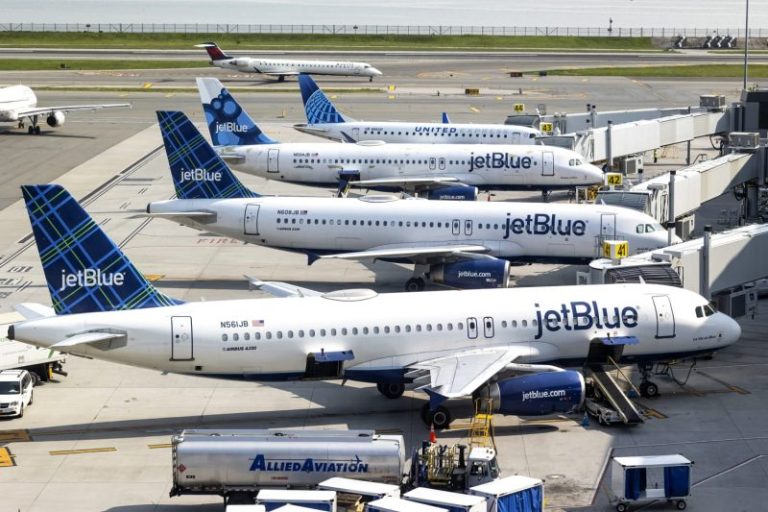
    JetBlue Airbus A320 planes at LaGuardia Airport in New York City.Nicolas Economou / NurPhoto via Getty Images file

    But some require a longer process and Colombia’s Avianca continued to halt bookings for dates until December 8.

    Sources familiar with the matter said the unprecedented decision to recall about half the A320-family fleet was taken shortly after the possible but unproven link to a drop in altitude on the JetBlue jet emerged late last week.

    Shares in Airbus were down 2.1% in early trading in Paris.

    Following talks with regulators, Airbus issued its 8-page alert to hundreds of operators on Friday, effectively ordering a temporary grounding by ordering the repair before next flight.

    “The thing hit us about 9 p.m. [Jeddah time] and I was back in here about 9:30. I was actually quite surprised how quickly we got through it: there are always complexities,” said Steven Greenway, CEO of Saudi budget carrier Flyadeal.

    The instruction was seen as the broadest emergency recall in the company’s history and raised immediate concerns of travel disruption particularly during the busy U.S. Thanksgiving weekend.

    The sweeping warning exposed the fact that Airbus does not have full real-time awareness of which software version is used given reporting lags, industry sources said.

    At first airlines struggled to gauge the impact since the blanket alert lacked affected jets’ serial numbers. A Finnair passenger said a flight was delayed on the tarmac for checks.

    Over 24 hours, engineers zeroed in on individual jets.

    Several airlines revised down estimates of the number of jets impacted and time needed for the work, which Airbus initially pegged at three hours per plane.

    “It has come down a lot,” an industry source said on Sunday, referring to the overall number of aircraft affected.

    The fix involved reverting to an earlier version of software that handles the nose angle. It involves uploading the previous version via a cable from a device called a data loader, which is carried into the cockpit to prevent cyberattacks.

    At least one major airline faced delays because it lacked enough data loaders to handle dozens of jets in such a short time, according to an executive speaking privately.

    UK’s easyJet and Wizz Air said on Monday they had completed the updates over the weekend without cancelling any flights.

    JetBlue said late Sunday it expected to have completed work to return to service 137 of 150 impacted aircraft by Monday and plans to cancel approximately 20 flights for Monday due to the issue.

    Questions remain over a subset of generally older A320-family jets that will need a new computer rather than a mere software reset. The number of those involved has been reduced below initial estimates of 1,000, industry sources said.

    Industry executives said the weekend furor highlighted changes in the industry’s playbook since the Boeing 737 MAX crisis, in which the U.S. plane maker was heavily criticized over its handling of fatal crashes blamed on a software design error.

    It is the first time Airbus has had to deal with global safety attention on such a scale since that crisis. CEO Guillaume Faury publicly apologized in a deliberate shift of tone for an industry beset by lawsuits and conservative public relations. Boeing has also declared itself more open.

    “Is Airbus acting with the Boeing MAX crisis in mind? Absolutely — every company in the aviation sector is,” said Ronn Torossian, chairman of New York-based 5W Public Relations.

    “Boeing paid the reputational price for hesitation and opacity. Airbus clearly wants to show … a willingness to say, ‘We could have done better.’ That resonates with regulators, customers, and the flying public.”

    This post appeared first on NBC NEWS

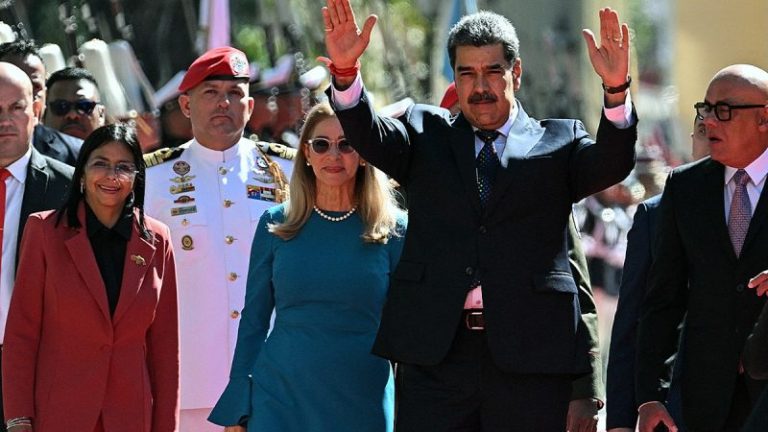
    President Donald Trump delivered a stern ultimatum to Nicolás Maduro to leave Venezuela immediately before announcing the country’s airspace should be closed, according to a report.

    Per the Miami Herald, Washington’s warning was delivered in a phone call with Caracas and offered guaranteed evacuation for Maduro, his wife Cilia Flores, and their son, but only if the dictator agreed to resign on the spot. 

    The conversation stalled, U.S. officials said, and within hours Washington escalated dramatically. 

    The ensuing impasse, a source told the outlet, was over Maduro asking for ‘global amnesty for any crimes he and his group had committed, and that was rejected.’ 

    ‘Second, they asked to retain control of the armed forces — similar to what happened in Nicaragua in ’91 with Violeta Chamorro. In return, they would allow free elections.’ 

    The final issue was timing, according to the outlet, as Washington demanded that Maduro resign immediately – but Caracas refused.

    Trump went on to announce Saturday that Venezuelan airspace would be considered ‘closed in its entirety.’ 

    The Herald also reported that the Maduro government tried to schedule another call to Washington but received no response.

    According to a defense expert familiar with the country’s military and state-linked cartel ties, Maduro and key players in his regime could now face their most serious threat yet.

    ‘I think the operations will start imminently,’ former Venezuelan diplomat Vanessa Neumann told Fox News Digital.

    ‘The clearing of the airspace is an indication and a very clear public warning that missiles might be coming to take out command and control infrastructure or retaliatory infrastructure,’ Neumann said. ‘This will not be like breaking a jar into a thousand pieces, this is where you can lift the concentration of power, and it’s easier to manage.’

    ‘The targets have been identified through covert operations over the last several years by people on the ground,’ she continued. ‘So they’re well-mapped. This is a capture-or-kill scenario, but there’s a limit to how many people you can remove quickly.’

    On Sunday, Trump told reporters aboard Air Force One not to ‘read anything into’ his declaring Venezuela’s airspace closed when asked if a strike was imminent. 

    ‘Maduro also doesn’t have that many options, and his military is very weak,’ she warned. ‘You can’t go after 30 people simultaneously, who are spread all around, but certainly high on the list would be Maduro himself.’

    Venezuela’s armed forces, once among Latin America’s strongest, have been weakened by years of corruption, sanctions, defections, and lack of maintenance. Much of its equipment, Neuman says, has never even been serviced.

    ‘Their material is extremely old, decayed, and has not been serviced,’ Neuman explained. 

    ‘They’ve got junk from the Russians. The stuff they originally had from the Americans is decades old and has not been serviced.

    ‘So, they have neither the personnel, foreign support, nor the material,’ she said.

    Ahead of shuttering the airspace, the U.S. also officially designated the cartel allegedly linked with Venezuela’s government, the Cartel de los Soles, as a foreign terrorist organization.

    ‘This cartel turned Venezuela’s main oil company into a narcotics trafficking money laundering operation, using the company’s access to international finance, until it was sanctioned,’ Neuman, who has worked with governments on countering transnational organized crime linked to the group, explained.

    ‘They were using Venezuelan military jets to bring in cocaine from Colombia, process it in Venezuela, and then move it into Central America and then into Europe.

    ‘Jet pilots were making a lot of money off that, and they’ve tortured people. They target people, anybody who tell on them, they’re disappeared,’ Neuman said. ‘They’re now one of the prime drug trafficking networks into the United States and Europe, and use their military positions, including their military-to-military relations, to grow and accelerate those movements.’

    In fact, in September, the European Parliament also voted in favor of the EU designating Cartel de los Soles as a terrorist organization.

    ‘The Cartel de Los Soles is also a key collaborator and financier of Hezbollah and some of the drug money has been used to fund terrorist attacks that have killed American citizens, even in the Middle East,’ added Neuman, CEO of Asymmetrica Group, which specializes in defense cooperation.

    The U.S. has also ramped up a military and intelligence campaign targeting drug-trafficking networks linked to Venezuela, including strikes on suspected narcotics boats.

    ‘The decision is President Trump’s because when he says, ‘Go’, we go. And nobody knows when he’ll say that,’ Neuman said. ‘He has mobilized so many assets down there now. But what President Trump is doing now is long overdue.’

    ‘The timing is right now,’ she added. ‘Because even Maduro’s biggest backers, Russia and Iran, are both on the back foot, and China will not go that far in backing Maduro as it has bigger and broader interests throughout the region.’

    She also noted that ‘Maduro is also weakened because his partners are weakened and have their own issues to deal with,’ and that ‘we also now have a concentration of power and deep repression within the country that’s quite unified, which means it’s easy to flip.’

    Neuman identified others in the regime who may be targeted, including Vice President Delcy Rodríguez, Diosdado Cabello, Minister of Interior, Justice and Peace and Alexander Granko Arteaga, head of Venezuela’s counter-intelligence agency, the DGCIM.

    ‘One of the reasons Granko is an important figure is that he’s one of the reasons why they haven’t capitulated and why there has not been a military uprising,’ Neuman explained.

    ‘It’s because of the brutality of the counter-intelligence that they do to their own military, and hundreds of soldiers are tortured. That said, the Venezuelan people have made it clear that they wanted Maduro out and fought democratically but lost,’ she added.

    ‘They voted in elections, protested peacefully, lobbied for sanctions, and lobbied for international support,’ Neuman said.

    This post appeared first on FOX NEWS

    Official peace talks between the U.S. and Ukraine on ending the Ukraine war moved to a productive phase Sunday – but only after President Zelenskyy sent a new-look team to Florida, according to a former Ukrainian government official.

    With Rustem Umerov now leading Zelenskyy’s team and longtime adviser and chief of staff Andriy Yermak out, the source claimed the move signaled Kyiv was reassessing its ‘uncompromising’ stance.

    The official, who spoke to Fox News Digital on condition of anonymity, said the personnel choice represented a move away from the approach that has shaped Ukraine’s diplomatic strategy for years.

    ‘Yermak had been teaching Zelenskyy to be a ‘Father of the Nation’ and until now, the Ukrainian side has been pushing for an unachievable and uncompromising position,’ the former official said.

    ‘Umerov is not a very impressively strong individual in politics, but he wants to achieve results and is known to be aligned with compromise.’

    Ukraine’s new delegation also included Andrii Hnatov, head of the armed forces; Andrii Sybiha, the foreign minister; and Umerov, who is head of the country’s security council.

    After the meeting, Umerov offered a brief assessment to reporters, saying: ‘We are grateful to American people, American leadership and a great team with, state secretary, Steve, with both Jared Kushner for their tremendous work with us,’ he said.

    ‘Our objective is a prosperous, strong Ukraine. We will [be] discussing [sic] the future of Ukraine. We discussed all the important matters that are important for Ukraine, for Ukrainian people. And the U.S was super supportive.’

    We already had a successful meeting in Geneva, and today we can continue this success. So at the moment, this meeting was productive and successful in the later stages.’

    The new team traveled to Florida for discussions aimed at refining President Trump’s proposed framework and his push to end Russia’s war against Ukraine.

    Sunday’s negotiations also took place after a leak published by Bloomberg News, revealed a transcript of an Oct. 14 call where special envoy Steve Witkoff allegedly offered advice to Russian officials on how to sell a peace plan to Trump.

    ‘The Ukrainian side had in some way undermined peace negotiations and Donald Trump’s efforts, not mentioning that it prolongs the war,’ the former official said.

    The same former official said the shift in Kyiv’s delegation followed the dramatic resignation of Yermak, after anti-corruption investigators raided his home on Friday.

    ‘Yermak was deeply distrusted by many actors, including Western actors including the U.S. administration and including Biden’s administration,’ the source added.

    Despite his exit, the official warned that Yermak’s influence may still be shaping the Ukrainian team.

    ‘Mr. Yermak is still there and, in fact, all the delegation that came to Florida includes Mr. Yermak’s people, his loyal people, very close personally to him –  people who [have] been serving him faithfully for years.’

    ‘Yermak has not disappeared and might be on the telephone or online and ruling the agenda behind the scenes,’ they added.

    They said Yermak’s long-standing governing style still influences Kyiv’s political posture:

    ‘In Ukraine, as in many post-Soviet countries, there is still the so-called ‘telephone rule’, when a powerful person can influence the outcome of any formal decision-making despite lacking formal powers and in contradiction with the law.’

    ‘Yermak has been doing this for the last six and a half years,’ the source added.

    Secretary of State Marco Rubio, Witkoff, and senior advisor Jared Kushner led the American side in Sunday’s session.

    Rubio told reporters after the meeting: ‘We had another very productive session. Building off Geneva, building off the events of this week,’ he said.

    ‘As I told you earlier this morning, our goal here is to end the war,’ he continued. ‘But it’s more than just to end the war. We don’t just want to end the war. We also want to help Ukraine be safe forever. So never again will they face another invasion. And equally importantly, we want them to enter an age of true prosperity.’

    Trump told reporters aboard Air Force One on Sunday that he had spoken to Rubio and Witkoff and that they were ‘doing well.’

    ‘Ukraine’s got some difficult little problems,’ Trump said. ‘They have some difficult problems. But I think Russia would like to see it end and I think Ukraine… I know Ukraine would like to see it end.’

    He also said he thinks there is ‘a good chance we can make a deal.’

    In a post shared on X, Zelenskyy highlighted Umerov’s work in Florida as the head of the Ukrainian delegation.

    ‘Today, following the work of the teams in the United States, head of the Ukrainian delegation Rustem Umerov reported on the main parameters of the dialogue, its emphases, and some preliminary results,’ he said.

    ‘It is important that the talks have a constructive dynamic and that all issues were discussed openly and with a clear focus on ensuring Ukraine’s sovereignty and national interests. I am grateful to the United States, to President Trump’s team, and to the President personally for the time that is being invested so intensively in defining the steps to end the war. We will continue working. I look forward to receiving a full report from our team during a personal meeting.’

    Sunday’s talks came just hours after another deadly Russian strike on Kyiv killed at least one person and wounded 19, including four children, Euronews reported.

    Since Russia’s full-scale invasion in 2022, the war has left huge areas of Ukraine devastated and roughly 20% of its territory under occupation.

    This post appeared first on FOX NEWS

    President Donald Trump on Sunday defended Secretary of War Pete Hegseth over allegations he ordered a second strike on a Venezuelan drug boat, saying he believes Hegseth’s denial and would not have supported a follow-up attack if it happened.

    The exchange came during a gaggle aboard Air Force One as reporters pressed Trump on claims that Hegseth authorized a second strike that allegedly killed two wounded men after an earlier attack on a suspected drug-smuggling vessel.

    Trump repeatedly said Hegseth denied giving such an order. He added that he was aware of the allegation but stressed that Hegseth told him the claim was untrue and that he accepted that explanation without hesitation.

    ‘He said he did not say that, and I believe him 100%,’ Trump said.

    Reporters asked Trump whether he would have approved a second strike if Hegseth had ordered one, prompting him to again distance himself from the allegation while stressing that he trusted his secretary of war.

    Trump said he planned to seek additional information about the reported incident but reiterated that Hegseth assured him nothing improper happened.

    ‘No, I wouldn’t have wanted that. Not a second strike,’ Trump said.

    Still, he praised the wider campaign targeting drug-smuggling boats, saying the strikes had sharply reduced the flow of narcotics into the U.S. by sea in recent months.

    Trump argued the vessels posed a deadly threat and framed the operations as necessary to protect Americans, calling the missions lethal but justified.

    ‘You can see the boats,’ he said. ‘You can see the drugs in the boats and each boat is responsible for killing 25,000 Americans.’

    Trump went to Hegseth’s defense after reports from outlets such as The Washington Post and CNN claimed the U.S. military ordered a second strike on a suspected drug vessel in the Caribbean on Sept. 2 after the earlier attack left two survivors.

    According to The Washington Post, the commander overseeing that operation told colleagues on a secure conference call that the survivors were legitimate targets because they could still contact other traffickers for help and ordered the second strike to comply with what he said was a directive from Hegseth that everyone must be killed.

    ‘As usual, the fake news is delivering more fabricated, inflammatory and derogatory reporting to discredit our incredible warriors fighting to protect the homeland,’ Hegseth wrote on X on Friday.

    ‘As we’ve said from the beginning and in every statement, these highly effective strikes are specifically intended to be ‘lethal, kinetic strikes,’’ Hegseth continued. ‘The declared intent is to stop lethal drugs, destroy narco-boats and kill the narco-terrorists who are poisoning the American people. Every trafficker we kill is affiliated with a Designated Terrorist Organization.’

    Fox News Digital’s Greg Norman and Alexandra Koch contributed to this report.

    This post appeared first on FOX NEWS

    Steve Witkoff, the U.S. special envoy to the Middle East, will travel to Moscow on Monday, a U.S. official tells Fox News.

    The trip comes as peace talks between Ukraine and Russia show signs of progress, with the White House pushing a peace plan to end the nearly four-year-long war.

    On Sunday, Witkoff — a central figure in negotiating the ceasefire between Israel and Hamas — joined Secretary of State Marco Rubio and senior advisor Jared Kushner in Florida to meet with Ukrainian negotiators. 

    Rubio described the meeting as ‘very productive.’ In a statement, Rubio said that the end goal is ‘not just the end of the war.’

    ‘Obviously, that’s essential and fundamental. We want to see the end of the killing and the death and the suffering, and I’m sure the Ukrainian side, I know they do as well,’ Rubio said. 

    ‘They want peace. But it’s also about securing an end to the war that leaves Ukraine sovereign and independent and with an opportunity at real prosperity.’

    Last week, Russia’s Foreign Minister Sergey Lavrov said Moscow could reject the White House’s peace deal framework if it does not uphold the ‘spirit and letter’ of what President Donald Trump and Russian President Vladimir Putin agreed to at the Alaska summit in August.

    He warned that if the terms of the ‘key understandings’ are ‘extinguished’ then the situation would become ‘fundamentally different.’

    Despite Lavrov’s comments, Putin showed interest in Trump’s plans to end the war on Thursday, calling the drafted plans a starting point.

    ‘We need to sit down and discuss this seriously,’ Putin told reporters, according to The Associated Press.

    Trump’s plan as ‘a set of issues put forward for discussion’ rather than a draft agreement.

    ‘Every word matters,’ Putin added.

    Fox News Digital’s Sarah Tobianski, Kyle Schmidbauer and Ashley Carnahan contributed to this report.

    This post appeared first on FOX NEWS

    President Donald Trump defended calling Venezuela’s airspace closed, saying the country is sending criminals into the U.S., but told reporters not to ‘read anything into it’ when asked whether the warning suggested an imminent strike.

    While speaking to reporters aboard Air Force One on Sunday, Trump said Venezuela is ‘not a very friendly country’ and claimed it has sent criminals, gang members and drug traffickers into the U.S.

    On Saturday, Trump told airlines, pilots, drug dealers and human traffickers to ‘consider THE AIRSPACE ABOVE AND SURROUNDING VENEZUELA TO BE CLOSED IN ITS ENTIRETY.’

    When asked Sunday if the warning meant an airstrike is imminent, Trump said: ‘Don’t read anything into it.’

    Trump also confirmed a report from the New York Times that he spoke on the phone with President Nicolás Maduro, though he offered no details about the conversation.

    ‘I wouldn’t say it went well or badly,’ he said. ‘It was a phone call.’

    The president’s comments come amid rising tensions between the U.S. and Venezuela over Venezuela’s failure to stop drug traffickers from sending narcotics into the U.S.

    Since September, the Trump administration has conducted over 20 strikes against alleged drug boats in Latin American waters and beefed up its military presence in the Caribbean as part of Trump’s effort to crack down on the flow of drugs into the U.S.

    The strikes have brought the total number of suspected narco-terrorists eliminated to over 82, with three survivors.

    But as the U.S. continues to bolster forces in the waters off Venezuela, Maduro has called for peace but also remained defiant against what he called ‘imperialist aggression.’

    Maduro delivered an address in Caracas last week while brandishing a sword and warning supporters to prepare for confrontation, saying the U.S. will ‘very soon’ begin stopping suspected Venezuelan drug traffickers on land.

    He appeared at a mass rally in the capital holding the sword of Simón Bolívar, the 19th-century independence leader regarded as the liberator of much of South America. Maduro told supporters the country was facing a decisive moment.

    The Associated Press reported that he said, ‘For anyone, whether civilian, politician, military, or police –  Let no one make excuses. Failure is not an option. The homeland demands it! Our greatest effort and sacrifice. And with (Simón) Bolívar, I come to say that if the homeland demands it, the homeland will have our lives, if necessary,’ he declared while raising Bolívar’s sword.

    Maduro framed the situation as a struggle against what he described as external threats, urging Venezuelans to mobilize against any foreign aggression.

    Fox News Digital’s Diana Stancy and Efrat Lachter contributed to this report.

    This post appeared first on FOX NEWS

    Perth, Australia (ABN Newswire) – Locksley Resources Ltd (ASX:LKY,OTC:LKYRF) (FRA:X5L) (OTCMKTS:LKYRF) announced that it has been progressing a sponsored Level 1 American Depositary Receipt (‘ADR’) program with The Bank of New York Mellon (‘BNY’), the global leader in depositary receipt services. The Company has been advised that the ADR program will be available on or after 3rd of December 2025 onwards. Each ADR will represent 20 ordinary shares.

    Why ADRs benefit Locksley and the Market

    The establishment of an ADR program represents a significant step forward in Locksley’s global capital markets positioning, moving beyond the perception of an ASX microcap and into a structure trusted by major global institutions.

    An ADR is a U.S dollar-denominated trading instrument that allows U.S. investors to gain exposure to non-US companies without the need for cross-border or cross-currency complexities. Importantly, the establishment of the ADR program is not a new offer of securities, therefore no additional shares will be issued or any capital raised.

    Key benefits include:

    – Institutional Accessibility: Many U.S. funds are restricted from investing directly in ASXlisted small caps. A U.S.-traded ADR opens access to tier-one U.S. institutions, wealth managers, and ETFs that otherwise cannot participate.

    – Credibility and Perception Uplift: Partnering with BNY Mellon is widely regarded as a strong indicator of governance quality and market standing

    – Liquidity & Marketability: ADRs trade in U.S. dollars during U.S. market hours, improving visibility, liquidity and ease of settlement for U.S investors

    – Peer Alignment: ADRs are already used by leading Australian and global resources companies, placing Locksley alongside a well-recognised peer group

    – Future Capital Pathway: The ADR framework establishes early infrastructure for potential future U.S exchange listings and builds a trading history with U.S Investors

    Background on BNY Mellon

    – BNY is the world’s largest provider of depositary receipt services, with a 41% global market share and a 68% share in Australia. The firm acts as depositary for 12 of the 14 Australian companies currently listed on Nasdaq and provides depositary services to over 90% of Fortune 100 companies worldwide

    – BNY’s dedicated Depositary Receipts platform provides issuers with a full suite of services, including investor relations advisory, U.S. capital markets connectivity, dividend and proxy management, and access to the largest team of DR specialists in the market

    Precedent Companies

    Many Australian and global companies utilise ADR programs as part of their U.S. investor engagement strategies, including BHP, Rio Tinto, Fortescue Metals, QBE, Telstra, and CSL. Locksley’s ADR program will provide U.S. investors with streamlined access to the Company’s Mojave Critical Minerals Project in California, a project strongly aligned with U.S. government and defence supply chain priorities. The program will enhance Locksley’s visibility among U.S. institutions, funds and retail investors seeking exposure to critical minerals.

    Kerrie Matthews, Locksley CEO commented:

    ‘Progressing with The Bank of New York Mellon to establish an ADR program represents another important step in Locksley’s U.S. capital markets strategy. Since commencing as CEO, I have focused on positioning Locksley not just as another Australian junior, but as a company of global strategic importance.’ ‘The ADR program enables U.S. institutions and investors to participate in our vision to deliver a 100% U.S. Mine to Market antimony solution. This uplifts our profile, expands our investor reach and sets the stage for long term capital pathways as we fast-track Mojave’s development.’

    About Locksley Resources Limited:

    Locksley Resources Limited (ASX:LKY,OTC:LKYRF) (FRA:X5L) (OTCMKTS:LKYRF) is an ASX listed explorer focused on critical minerals in the United States of America. The Company is actively advancing exploration across two key assets: the Mojave Project in California, targeting rare earth elements (REEs) and antimony. Locksley Resources aims to generate shareholder value through strategic exploration, discovery and development in this highly prospective mineral region.

    Mojave Project

    Located in the Mojave Desert, California, the Mojave Project comprises over 250 claims across two contiguous prospect areas, namely, the North Block/Northeast Block and the El Campo Prospect. The North Block directly abuts claims held by MP Materials, while El Campo lies along strike of the Mountain Pass Mine and is enveloped by MP Materials’ claims, highlighting the strong geological continuity and exploration potential of the project area.

    In addition to rare earths, the Mojave Project hosts the historic ‘Desert Antimony Mine’, which last operated in 1937. Despite the United States currently having no domestic antimony production, demand for the metal remains high due to its essential role in defense systems, semiconductors, and metal alloys. With significant surface sample results, the Desert Mine prospect represents one of the highest-grade known antimony occurrences in the U.S.

    Locksley’s North American position is further strengthened by rising geopolitical urgency to diversify supply chains away from China, the global leader in both REE & antimony production. With its maiden drilling program planned, the Mojave Project is uniquely positioned to align with U.S. strategic objectives around critical mineral independence and economic security.

    Tottenham Project

    Locksley’s Australian portfolio comprises the advanced Tottenham Copper-Gold Project in New South Wales, focused on VMS-style mineralisation

    Source:
    Locksley Resources Limited

    Contact:
    Kerrie Matthews
    Chief Executive Officer
    Locksley Resources Limited
    T: +61 8 9481 0389
    Kerrie@locksleyresources.com.au

    News Provided by ABN Newswire via QuoteMedia

    This post appeared first on investingnews.com