Author

admin

Browsing

House Oversight Committee Chairman James Comer, R-Ky., is accusing Democrats on his panel of selectively releasing information related to Jeffrey Epstein.

It came hours after committee Democrats released photos and videos capturing what they called ‘never-before-seen’ views of Epstein’s private compound in the U.S. Virgin Islands.

But Comer told Fox News Digital that many of those images published by Democrats were already released by Project Veritas founder James O’Keefe, now the head of O’Keefe Media Group.

‘Ranking Member Robert Garcia and Democrats on the Oversight Committee continue to embarrass themselves,’ Comer said on Wednesday.

‘Throughout the course of our investigation, Democrats have cherry-picked documents and doctored some of them, and now they are chasing headlines by slapping ‘never-before-seen’ on images and video that were reported by O’Keefe Media Group months ago. The only thing ‘never-before-seen’ is such a reckless Ranking Member.’

It came after Oversight Democrats publicized images from Epstein’s island, Little Saint James, including images that appear to show a room with a dentist’s chair and a chalkboard that has words like ‘power,’ ‘deception,’ and ‘appear’ written on it.

O’Keefe himself accused committee Democrats on X of publishing the images with redactions while claiming he himself posted similar photos without information blotted out.

Ranking Member Rep. Robert Garcia, D-Calif., said in a press release when that first crop came out, ‘These new images are a disturbing look into the world of Jeffrey Epstein and his island. We are releasing these photos and videos to ensure public transparency in our investigation and to help piece together the full picture of Epstein’s horrific crimes…It’s time for President Trump to release all the files, now.’

Roughly 18 minutes after Fox News Digital reached out for a response to Comer’s statement, House Oversight Committee Democrats posted on X that they were releasing ‘an additional 150+ photos and videos sent to our committee from Epstein Island.’

The tranche includes images of a framed photo of Epstein and Ghislaine Maxwell meeting the pope. 

Another image of a framed photo appears to show two different people’s hands latched together, while others show works of art — including a lamp whose base resembles a naked woman’s torso.

One photo shows a Samsung computer that appears to reflect several different security camera angles, only three of which look functional and which show the outdoors.

Another image appears to show a nightstand that holds a sleeping mask and a box of tissues, among others.

A spokesperson for the House Oversight Committee majority pledged the panel will release more files soon while criticizing Democrats for what they called a selective release.

‘The House Oversight Committee has received approximately 5,000 documents in response to Chairman Comer’s subpoenas to J.P. Morgan and Deutsche Bank, as well as his request to the U.S. Virgin Islands. The Majority is reviewing these materials and will make them public soon, just as the Committee has already done with the more than 65,000 pages produced during this investigation,’ the spokesperson said.

‘It is odd that Democrats are once again releasing selective information, as they have done before. The last time Democrats cherry-picked and doctored documents, their attempt to construct yet another hoax against President Trump completely collapsed.’

Comer has already released thousands of pages’ worth of documents related to his committee’s Epstein investigation.

Democrats have accused him of running cover for President Donald Trump, who was previously friends with Epstein but has denied and never been implicated in any wrongdoing related to the late pedophile.

Republicans in turn have accused Democrats of sabotaging a bipartisan probe in order to create a false narrative about Trump.

This post appeared first on FOX NEWS

Absent direct military action, President Donald Trump is running low on options amid his standoff with Venezuelan President Nicolás Maduro, according to experts.

Strikes near Venezuelan waters aimed at drug traffickers, sanctions and a $50 million bounty have so far been unsuccessful in forcing Maduro, whom the U.S. has designated as a leader of the Tren de Aragua drug cartel, to step down from power.

After repeated threats, adversaries may now view a lack of direct military action as a sign of weakness from the U.S. But Maduro is in an equally difficult position — his own military capabilities are dwarfed in comparison to Trump’s, and experts say China and Russia lack the will to directly challenge the U.S. in its own hemisphere.

Meanwhile, the clock is ticking: Trump’s unprecedented military buildup in the Caribbean — including sending the world’s largest aircraft carrier to the region — is taking away resources from other theaters.

Katherine Thompson, a senior fellow in defense and foreign policy studies at the libertarian think tank the Cato Institute, said that there are very few tools left at Trump’s disposal to oust Maduro, aside from a targeted strike against the Venezuelan leader or a land invasion. 

While the White House has not directly said that it is seeking regime change, recent media reports indicate that Trump and Maduro have spoken about the Venezuelan leader departing his post.

Thompson noted that previous efforts to squeeze out Maduro, including imposing sanctions on Venezuela and backing opposition leader Juan Guaidó during Trump’s first term, have proven unsuccessful. 

‘It does not seem like there is — outside of the military option — anything new on the table that hasn’t really been tried,’ Thompson said.

Even so, Thompson cast doubt on whether military action would prove successful. 

‘If the offer on the table from the Trump administration is we’re going to potentially execute an invasion unless you talk to us, perhaps that’s a strong enough diplomatic, strategic move that gets Maduro to capitulate,’ Thompson said. ‘But it just doesn’t seem like we’re picking up that many signals from the Maduro regime that that is going to be palatable.’ 

Meanwhile, Thompson said that adversaries like Russia and China are probably confused about why the Trump administration has fixated on the Maduro regime, which doesn’t jeopardize U.S. interests as much as other actors, when the Trump administration has adopted an ‘American First’ mantra. 

‘I imagine for them, it’s probably a bit puzzling, if they’re looking at it through a real, brass tacks, realist lens, why this administration would be prioritizing ousting the Maduro regime, as opposed to conflicts in other theaters,’ Thompson said.

As a result, the Trump administration’s actions focusing on Venezuela likely leave a bit of ‘befuddlement’ on the part of Russia and China about how serious the U.S. is about putting American interests first, Thompson said.

She added that China may be wondering if the U.S. diverting resources, such as directing the aircraft carrier USS Gerald R. Ford to the Caribbean, could provide an opportunity for it to invade Taiwan if the U.S. is tied up with operations in Venezuela. Multiple U.S. officials have said they believe China will be capable of invading Taiwan by 2027. 

Will Russia and China back Venezuela? 

While there may be greater interest from China to take action within its own theater, experts agreed it was unlikely that Russia or China would actually get involved and back Venezuela should military operations between the U.S. and Caracas escalate — even though Moscow and Beijing are strategic allies with Venezuela. 

Some analysts said Maduro would find himself largely isolated if Trump launched military strikes against Venezuela. Russia, still consumed by its war in Ukraine, is unlikely to offer anything beyond denunciations of U.S. action, and China, despite years of deep economic engagement with Caracas, is also expected to stop well short of military involvement, they said. 

From Moscow’s perspective, there is both ideological and strategic discomfort with an American intervention — but little appetite or capability to counter it.

‘Moscow opposes unilateral U.S. military intervention, especially when aimed at toppling a friendly authoritarian regime. That said, Russia lacks the will and ability to stop U.S. intervention in this part of the world should Trump decide to go that route,’ said John Hardie, a Russian military analyst at the Foundation for Defense of Democracies (FDD).

Hardie said Russia is watching Washington’s internal debate carefully. 

‘Analysts in Moscow interpret the internal debate in Washington over Venezuela as evidence that although Republican views on foreign policy are shifting, the more traditional, hawkish camp still retains influence,’ Hardie said. ‘This whole episode probably also reinforces Russian views of Trump as unpredictable and impulsive, though I suspect Moscow is glad to see Trump prioritizing the Western Hemisphere over other regions more central to Russian interests.’

China’s likely response would mirror its recent behavior in other conflicts. Beijing has major financial stakes in Venezuela but has shown little willingness to risk confrontation with the United States, especially in the Western Hemisphere.

Jack Burnham, a China analyst at FDD, said Maduro should take note of how China behaved during the 12-Day War, when Iran came under intense U.S.- and Israeli-led strikes.

‘If Maduro is expecting support from China, he should have had his expectations corrected by Tehran’s recent experience under fire,’ Burnham said. ‘Despite China providing key war-related materials to Iran prior to the 12 Day War, once the conflict escalated, Beijing stood down, content to stand on the sidelines and offer statements.’

Burnham said that same pattern would likely apply now: ‘If American military action accelerates, look for Beijing to engage in a war of words rather than send badly needed supplies to Caracas.’

Trump’s crusade against drugs

The Trump administration has beefed up its military presence off the coast of Venezuela and has adopted a hard-line approach to address the flow of drugs into the U.S. For example, it designated drug cartel groups like Tren de Aragua, Sinaloa and others as foreign terrorist organizations in February.

The Trump administration has repeatedly said it does not recognize Maduro as a legitimate head of state, but instead, a leader of a drug cartel. In August, the Trump administration upped the reward for information leading to Maduro’s arrest to $50 million, labeling him ‘one of the largest narco-traffickers in the world.’

On Sunday, Trump confirmed that he spoke to Maduro over the phone last week, after the New York Times reported that the two had talked, but declined to provide specifics on what they discussed. However, The Miami Herald reported on Sunday that Trump gave Maduro an ultimatum, guaranteeing the Venezuelan leader and his family safety — if he resigned immediately. 

The White House did not provide comment when asked if the Trump administration is pushing a regime change, and whether Maduro had been offered any incentives to step down. However, the officials said all options are on the table to mitigate the influx of drugs into the U.S. 

‘President Trump has been clear in his message to Maduro: stop sending drugs and criminals to our country,’ White House spokesperson Anna Kelly said in a statement to Fox News Digital on Tuesday. ‘The President is prepared to use every element of American power to stop drugs from flooding in to our country.’

The White House did not respond to a request for comment from Fox News Digital on The Miami Herald’s report. 

Additionally, the New York Post reported on Tuesday that U.S. officials are discussing potentially sending Maduro to Qatar, although officials familiar with Qatar’s role in the negotiations said Maduro will not head there. It’s unclear where Maduro would flee to, and no countries have confirmed they will accept him. 

Trump’s reported negotiation with Maduro comes as the strikes in the Caribbean are facing heightened scrutiny from the legal community and lawmakers.

While lawmakers have questioned the legality of the strikes since the beginning, the attacks have come under renewed scrutiny after the Washington Post reported on Friday that Secretary of War Pete Hegseth verbally ordered everyone onboard the alleged drug boat to be killed in a Sept. 2 operation. The Post reported that a second strike was conducted to take out the remaining survivors on the boat. 

On Monday, the White House confirmed that a second strike had occurred, but disputed that Hegseth ever gave an initial order to ensure that everyone on board was killed when asked specifically about Hegseth’s instructions.

The White House also said Monday that Hegseth had authorized Adm. Frank ‘Mitch’ Bradley to conduct the strikes, and that Bradley was the one who ordered and directed the second one. 

At the time of the Sept. 2 strike, Bradley was serving as the commander of Joint Special Operations Command, which falls under U.S. Special Operations Command. He is now the head of U.S. Special Operations Command. 

According to Hegseth, carrying out a subsequent strike on the alleged drug boat was the right call. 

‘Admiral Bradley made the correct decision to ultimately sink the boat and eliminate the threat,’ Hegseth said Tuesday. 

Altogether, the Trump administration has conducted more than 20 strikes against alleged drug boats in Latin American waters, and has enhanced its military presence in the Caribbean to align with Trump’s goal to crack down on drugs entering the U.S.

The last confirmed strike occurred on Nov. 15. Hegseth said Tuesday that although there has been a pause in strikes in the Caribbean because alleged drug boats are becoming harder to find, the Trump administration’s crusade against drugs will continue. 

‘We’ve only just begun striking narco-boats and putting narco-terrorists at the bottom of the ocean because they’ve been poisoning the American people,’ Hegseth said Tuesday. 

This post appeared first on FOX NEWS

The U.S. Institute of Peace has been formally rebranded as the Donald J. Trump Institute of Peace, marking the latest step in the president’s months-long effort to dismantle the congressionally created agency.

The name change comes after a turbulent year for the organization, which the Trump administration has sought to shut down while shifting its authority to the Department of Government Efficiency (DOGE).

The institute has been fighting the move in federal court, but layoffs proceeded after an appeals court stayed a lower-court ruling that temporarily blocked the administration’s plan.

The agency’s website briefly went offline Wednesday morning before returning with promotion for Trump’s upcoming peace-agreement ceremony between the Democratic Republic of Congo and Rwanda.

White House spokesperson Anna Kelly defended the renaming, telling Fox News Digital the former institute had been ‘a bloated, useless entity that blew $50 million per year while delivering no peace.’

‘Now, the Donald J. Trump Institute of Peace, which is both beautifully and aptly named after a President who ended eight wars in less than a year, will stand as a powerful reminder of what strong leadership can accomplish for global stability,’ Kelly said. 

She added Trump ‘ended eight wars in less than a year,’ framing the institute’s new name as recognition of his ‘peace through strength’ approach.

‘Congratulations, world!’ Kelly said.

Secretary Marco Rubio echoed that sentiment in a post responding to the announcement.

‘President Trump will be remembered by history as the President of Peace,’ Rubio wrote. ‘It’s time our State Department display that.’

The U.S. Institute of Peace was created by Congress in 1984 as a nonpartisan organization supporting conflict-prevention and peace-building efforts abroad. The dismantling and rebranding into a Trump-named entity represents one of the most sweeping agency overhauls of Trump’s second term.

Earlier this year, U.S. District Judge Beryl Howell ruled that the administration’s shutdown effort was unlawful. But the ruling was stayed on appeal, clearing the way for terminations to move forward in July as the administration restructured the agency and continued transferring functions elsewhere.

The institute did not immediately respond to Axios’ request for comment on the rebranding or the status of its ongoing legal challenge.

The State Department did not immediately respond to Fox News Digital’s request for comment.

This post appeared first on FOX NEWS

Gold has reached once-unthinkable prices in 2025, gaining over 60 percent by early December.

Looking ahead to 2026, experts believe the major themes that carried the gold price to new heights this year will continue to underwrite its trajectory in the months ahead, boosting the metal even further.

What are the top trends shaping the gold market, and what should investors expect in the new year?

Trade tensions to stoke ETF and central bank gold demand

US President Donald Trump’s aggressive trade policies have injected a high level of volatility into a world economy that was already reeling from ongoing regional conflicts.

This type of uncertainty reliably encourages investors to seek safe havens, and that theme dominated much of the gold story for 2025. Heading into the new year, analysts see no end to this trend.

Strong gold exchange-traded fund (ETF) inflows and central bank purchases are projected to continue into next year as investors, particularly in the west, increasingly recognize the hedge value of gold.

Global financial services firm Morgan Stanley (NYSE:MS) sees demand for gold from ETFs and central banks pushing the gold price back up above US$4,500 per ounce by mid-2026.

The World Gold Council (WGC) also expects the themes of risk and uncertainty to continue driving gold.

“My sense is that we’re going to continue to see these challenges in 2026.”

Cavatoni expects this will translate into continued strong ETF flows and central bank demand for the monetary metal for 2026, although central bank buying may come at a slower pace than the past few years.

Gold as a hedge against potential AI stock bubble

Another potential 2026 tailwind for gold is a correction in artificial intelligence (AI) stocks.

Analysts are increasingly warning that this could happen, and it’s possible that AI bubble meltdown concerns may push more investors away from equities and into gold in the coming year.

Michael Hartnett, chief investment strategist at Bank of America Global Research, told his clients in late October that gold may be one of the strongest hedges if the AI bubble bursts.

Similarly, Macquarie analysts are warning that if AI tech firms and their clients can’t demonstrate a return on their huge investments in the emerging technology, gold may be the best bet for protection against the resulting market fallout: “Optimists buy tech, pessimists buy gold, hedgers buy both.’

Weak US dollar, low interest rates price positive for gold

The gold price has an inverse relationship with the US dollar and real interest rates. Indeed, Morgan Stanley’s US$4,500 gold forecast for mid-2026 is predicated on a weaker dollar and lower rates.

Lower rates typically weaken the dollar, and Trump has been pressuring the US Federal Reserve to drop rates since taking office. With Fed Chair Jerome Powell’s term due to end next year, market watchers are anticipating that a more dovish Fed head will take the helm. This means that more rate cuts are likely on the table for 2026.

A softer dollar and a low rate environment would provide foundational support for further gold price gains. The resulting inflation is expected to push the Fed toward quantitative easing (QE), or the purchasing of government bonds to increase money supply and lower long-term rates, which would further bolster the yellow metal’s appeal.

At its October policy meeting, the Fed stated that its quantitative tightening activities (allowing bonds to mature without reinvesting the proceeds) would end on December 1.

“Frankly … interest expense for the federal government is running at US$1.2 trillion a year (and) the budget deficit is US$1.8 trillion a year, so the interest is really contributing to the deficit,” he said. “The US federal government really needs lower rates, or else interest is going to continue to consume a big piece of their revenues.”

Lepard believes investors are keenly aware that lower rates are coming, which naturally means more inflation. This realization is enhancing gold’s investment appeal.

Gold price forecasts for 2026

Heading into 2026, Fed monetary policy changes are likely to give gold another boost to the upside.

“As we move through the year, as the Federal Reserve transitions to QE and maybe yield curve control and money printing, the (precious) metals themselves will catch another leg up,” said Lepard.

“Gold will go through US$4,500 toward US$5,000, silver will go to US$60 or US$70 and (gold and silver) stocks will all go up another 30 percent pretty easily, and then maybe more over the next 12 months,’ he added.

Global financial services provider B2PRIME Group also sees gold’s average price in 2026 at around US$4,500 as US debt challenges and possible Fed rate cuts continue to bolster the value of the precious metal.

Overall, most analysts’ gold price predictions for the upcoming year are in the US$4,500 to US$5,000 range.

Metals Focus is forecasting an annual average high of US$4,560 in 2026, with gold potentially reaching a record US$4,850 in the fourth quarter. The firm sees these gains materializing despite a projected gold surplus of 41.9 million ounces in 2026, up 28 percent year-on-year; that would take mine production to another record high in 2026.

Goldman Sachs (NYSE:GS) is predicting that gold could reach as high as US$4,900 next year on increased central bank buying and anticipated inflation-causing interest rate cuts by the Fed.

For its part, Bank of America (NYSE:BAC) sees the yellow metal breaching US$5,000 in 2026 on growing deficit spending in the US and Trump’s ‘unorthodox macro policies.’

Investor takeaway

Ongoing uncertainty from trade tensions, a potential market correction in the AI sector, US debt challenges and anticipated shifts in Fed policy have fueled strong investment demand for gold as a safe-haven asset.

Those demand drivers are not going away in 2026; in fact, they are likely to provide further foundational support that could propel the gold price to new record highs.

Securities Disclosure: I, Melissa Pistilli, hold no direct investment interest in any company mentioned in this article.

This post appeared first on investingnews.com

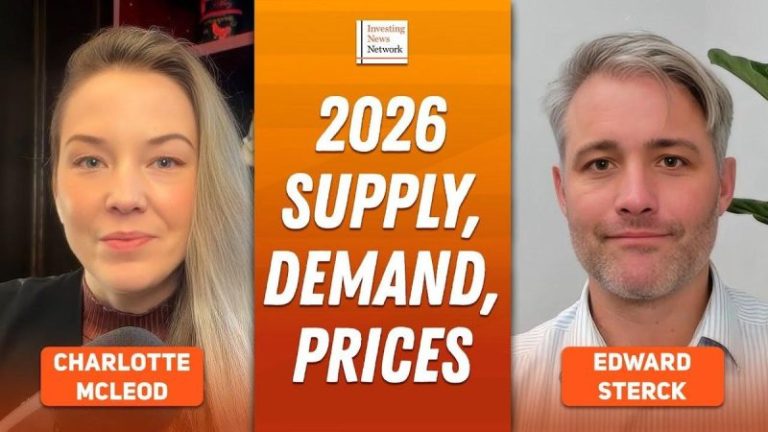
Edward Sterck, director of research at the World Platinum Investment Council (WPIC), shares the organization’s platinum outlook heading into 2026.

After a third consecutive deficit in 2025, the WPIC anticipates balance next year, but Sterck explained that there are factors that could change that outlook.

Securities Disclosure: I, Charlotte McLeod, hold no direct investment interest in any company mentioned in this article.

This post appeared first on investingnews.com

Copper prices were volatile in 2025, with high levels of uncertainty influencing the market.

Changing US trade policy, as well as traditional supply and demand fundamentals, worked together to move the metal.

Increasing demand and a lack of new supply have long been key drivers for copper, and this year new forces played a role in the form of tariff threats caused by significant policy shifts from the Trump administration.

Copper price in Q4

Experts have widely predicted a copper supply deficit over the last few years.

On the demand side, industrial usage tied to the energy transition is rising, and that’s on top of high copper consumption due to increasing rates of urbanization in the Global South.

Further consternating the market is a concerning supply situation. First Quantum Minerals’ (TSX:FM,OTC Pink:FQVLF) Cobre Panama mine, which previously contributed approximately 1 percent of global copper supply, has been on care and maintenance since the Panamanian government ordered its closure at the end of 2023.

More recently, in September, Freeport-McMoRan (NYSE:FCX) announced the temporary closure of its Grasberg mine in Indonesia due to an ingress of 800,000 metric tons of wet material into the main Grasberg block cave (GBC), killing seven workers. The company has launched an investigation and adjusted its annual guidance.

Even though both operations are expected to return to full production, the process will take time.

In September, Panama said it would initiate an environmental and social audit of Cobre Panama by the end of 2025, with the mine to begin production in early 2026. Tied to the restart will be a significant change to the contract under which First Quantum had previously been operating, ensuring state ownership of the land and its resources.

Meanwhile, Freeport said that operations will resume at the unaffected Big Gossan and Deep Mill Level Zone mines before the end of 2025, but extraction at the GBC won’t restart until the second quarter of 2026. Freeport also noted that it isn’t expecting the GBC to return to full production until 2027.

Once restarted, the mines will be a welcome relief to an overburdened copper market, but in their closed state, their lack of contribution is significantly shifting the supply situation.

In an October report, the International Copper Study Group predicted a 178,000 metric ton global refined copper surplus for 2025, saying it would shift to a 150,000 metric ton deficit in 2026.

However, by the end of November, the situation had evolved, with the group noting a smaller refined copper surplus of about 94,000 metric tons through the first nine months of 2025.

With just one month left in the year, the market looks to be approaching a deficit sooner than expected.

The November release outlines growing use of refined copper, which rose 5.5 percent during the first nine months of 2025; refined copper output rose just 4.3 percent, while mining production increased 2.2 percent.

One moderating factor for supply/demand could be a soft macroeconomic environment, particularly in the US.

“US demand from construction and manufacturing is expected to remain steady but not robust, as policy headwinds for renewables and EVs, elevated input costs, and project delays persist,’ she said.

‘Most market watchers anticipated continued arbitrage opportunities between US and global benchmarks with periodic local price spikes as trade policies evolve.’

How did copper perform for the rest of the year?

Copper price, January 1 to December 3, 2025.

Copper price in Q1

The copper price rose sharply in the first quarter amid strong supply and demand fundamentals.

These included supply chain disruptions following a major power outage in Chile at the end of February, which caused a temporary shutdown at BHP’s (ASX:BHP,NYSE:BHP,LSE:BHP) Escondida, the world’s largest copper mine.

Prices also saw major momentum amid tariff threats, as US President Donald Trump made several significant trade policy announcements at the start of his second term in office.

Among them was the signing of an executive order at the end of February that invoked Section 232 of the Trade Expansion Act and initiated a national security investigation into the impacts of copper imports into the US.

Although tariffs wouldn’t be applied to copper until Q3, the move still prompted traders to stockpile refined copper at Chicago Mercantile Exchange warehouses to get ahead of any potential tariffs.

Copper price in Q2

Volatility was the story in Q2, as markets were affected by a widening supply deficit and the threat of US tariffs.

The start of the quarter saw markets plummet following Trump’s ‘Liberation Day’ tariff announcement, which applied a baseline 10 percent tariff to all imports into the US, with additional retaliatory tariffs following shortly after.

Additionally, the US and China butted heads and initiated a tariff war that saw Chinese goods entering the US hit with 145 percent tariffs; US goods entering China were levied with 125 percent tariffs.

The tariffs caused a great deal of uncertainty to creep into the US bond market, pushing yields on 10 year treasuries up sharply as investors began dumping these assets. The move sparked fears of an imminent recession, prompting broad selloffs across commodities and equity markets.

Copper price in Q3

The third quarter was also defined by high volatility, with copper prices in the US surging as traders sought to import large volumes of the metal before the implementation of Section 232 tariffs.

The imports caused a significant disparity between the US and international markets, with premiums on the Comex rising to 30 percent above those at the London Metal Exchange. Putting that disconnect into context, Jacob White, exchange-traded fund product manager at Sprott Asset Management, explained that a copper short squeeze on the Comex in 2024 pushed premiums to a high of 8 percent. The London Metal Exchange and Comex are typically much closer to par, with an average differential of 0.5 percent over the past five years.

Ultimately, refined copper was exempted for the time being, with tariffs set to be phased in at 15 percent in 2027 and 30 percent in 2028. The move pulled the rug out from under traders, causing the US prices to collapse.

Securities Disclosure: I, Dean Belder, hold no direct investment interest in any company mentioned in this article.

This post appeared first on investingnews.com

Here’s a quick recap of the crypto landscape for Wednesday (December 3) as of 9:00 a.m. UTC.

Get the latest insights on Bitcoin, Ether and altcoins, along with a round-up of key cryptocurrency market news.

Bitcoin and Ether price update

Bitcoin (BTC) was priced at US$92,758.95, up by 4.1 percent over 24 hours.

Bitcoin price performance, December 3, 2025.

Chart via TradingView.

After Bitcoin stared the week with its largest single-day decline in a month, it rallied about 6.6 percent in 24 hours to reclaim US$93,000. This now marks Bitcoin’s highest intraday level in more than two weeks.

Despite the cryptocurrency’s rebound, analysts are still urging caution and advising investors to await clearer macro signals before fully re-entering higher-risk assets.

Ether (ETH) also regained ground and is currently priced at US$3,051.34, up 7.1 percent over 24 hours.

Altcoin price update

  • XRP (XRP) was priced at US$2.19, an increase of 4.6 percent over 24 hours.
  • Solana (SOL) was trading at US$142.17, up by 6.6 percent over 24 hours.

Today’s crypto news to know

Strategy faces possible removal from MSCI indexes

Michael Saylor’s Strategy (NASDAQ:MSTR) is in discussions with index provider MSCI as the company thinks about removing Strategy from major stock indexes, according to Reuters.

MSCI is considering cutting companies whose business model is to buy crypto. Strategy currently holds about 650,000 BTC and has relied on new debt and equity issuance to add to its holdings.

JPMorgan Chase (NYSE:JPM) estimates a removal could trigger up to US$8.8 billion in outflows if other index providers follow suit. Saylor said the company is participating in MSCI’s review process, but questioned the scale of possible selling projected by JPMorgan. A verdict is expected by January 15 of next year.

Sony partner launches stablecoin for Soneium

Startale Group has launched USDSC, a stablecoin pegged to the US dollar that is designed to serve as the default settlement currency on Sony Group’s (NYSE:SONY,TSE:6758) Soneium blockchain.

According to a Decrypt report, the launch includes a new rewards program called STAR Points that is geared at encouraging user activity across payments, liquidity supply and app interaction. Soneium went live earlier this year following a test phase that drew 14 million users and processed 50 million transactions.

Startale CEO Sota Watanabe said USDSC aims to support payments and yield generation across the network’s creator-focused ecosystem. Stablecoin infrastructure firm M0 is providing backend support for issuance and liquidity.

A waitlist for the Startale app is open to users seeking early access to USDSC features and rewards.

SEC blocks rollout of high-leverage ETFs

The US Securities and Exchange Commission (SEC) has halted the approval process for multiple ultra-leveraged exchange-traded funds (ETFs), citing concerns about investor risk.

Warning letters were sent to nine issuers, including Direxion, ProShares and Tidal, affecting products designed to offer more than 2x exposure to equities, commodities and cryptocurrencies.

The SEC said the proposals exceed regulatory limits on allowable leverage and rely on benchmark definitions that may fail to reflect true market volatility. Some of the planned funds target exposure to highly volatile assets. No 3x or 5x single-stock ETFs currently exist in the US due to existing restrictions.

Leveraged ETF trading has surged since 2020, with total assets rising to around US$162 billion.

Securities Disclosure: I, Giann Liguid, hold no direct investment interest in any company mentioned in this article.

This post appeared first on investingnews.com

Sankamap Metals Inc. (CSE: SCU) (‘Sankamap’ or the ‘Company’) further to the Company’s news releases dated October 21, 2025, November 4, 2025, and November 18, 2025, the Company continues to work towards the filing of its annual audited financial statements and management’s discussion and analysis for the fiscal year ended June 30, 2025 (the ‘Required Filings’). The Company has obtained approval from the Alberta Securities Commission to extend the Management Cease Trade Order (‘MCTO’) under National Policy 12-203 Management Cease Trade Orders (‘NP 12-203’) until December 28, 2025.

While the audit of Sankamap’s private subsidiary has now been completed, timing adjustments in the subsidiary’s audit resulted in a brief postponement of fieldwork and the review of Sankamap’s audit file. The upcoming holiday period is also expected to affect scheduling. To support timely completion of the audit, the Company intends to appoint the subsidiary’s auditor as its auditor, as their familiarity with the Company’s mineral property and the Solomon Islands jurisdiction is expected to facilitate an expedited process. A change of auditor is underway, and the Company expects to file the required change of auditor documentation shortly.

The Required Filings were due to be filed by October 28, 2025. In connection with the anticipated delays in making the Required Filings, the Company made an application for a Management Cease Trade Order (‘MCTO‘) under National Policy 12-203 Management Cease Trade Orders (‘NP 12-203‘) to the Alberta Securities Commission, as principal regulator for the Company, and the MCTO was issued on October 29, 2025. The MCTO restricts all trading by the Company’s CEO and CFO in securities of the Company, whether direct or indirect. The issuance of the MCTO will not affect the ability of persons who are not directors, officers or insiders of the Company to trade their securities. The MCTO will remain in effect until the Required Filings are filed or until it is revoked or varied.

The Company expects to proceed with the filing of its interim first-quarter financial statements shortly after the Required Filings have been completed and submitted.

The Company confirms that it intends to satisfy the provisions of the alternative information guidelines described in NP 12-203 by issuing bi-weekly default status reports in the form of a news release until it meets the Required Filings requirement. The Company has not taken any steps towards any insolvency proceeding and the Company has no material information relating to its affairs that has not been generally disclosed.

About Sankamap Metals Inc.

Sankamap Metals Inc. (CSE: SCU) is a Canadian mineral exploration company dedicated to the discovery and development of high-grade copper and gold deposits through its flagship Oceania Project, located in the South Pacific. The Company’s fully permitted assets are strategically positioned in the Solomon Islands, along a prolific geological trend that hosts major copper-gold deposits; including Newcrest’s Lihir Mine, with a resource of 71.9 million ounces of gold¹ (310 Mt containing 23 Moz Au at 2.3 g/t P+P, 520 Mt containing 39 Moz Au at 2.3 g/t indicated, 81 Mt containing 5 Moz Au at 1.9 g/t measured, 61 Mt containing 4.9 Moz Au at 2.3 g/t Inferred).

Exploration is actively advancing at both the Kuma and Fauro properties, part of Sankamap’s Oceania Project in the Solomon Islands. Historical work has already highlighted the mineral potential of both sites, which lie along a highly prospective copper and gold-bearing trend, suggesting the possibility of further, yet-to-be-discovered deposits.

At Kuma, the property is believed to host an underexplored and largely untested porphyry copper-gold (Cu-Au) system. Historical rock chip sampling has returned consistently elevated gold values above 0.5 g/t Au, including a standout sample assaying 11.7% Cu and 13.5 g/t Au2; underscoring the area’s significant potential.

At Fauro, particularly at the Meriguna Target, historical trenching has returned highly encouraging results, including 8.0 meters at 27.95 g/t Au and 14.0 meters at 8.94 g/t Au3. Complementing these results are exceptional grab sample assays, including historical values of up to 173 g/t Au3, along with recent sampling by Sankamap at the Kiovakase Target, which returned numerous high-grade copper values, reaching up to 4.09% Cu. In addition, limited historical shallow drilling intersected 35.0 meters at 2.08 g/t Au3, further underscoring the property’s strong mineral potential and the merit for continued exploration. With a commitment to systematic exploration and a team of experienced professionals, Sankamap aims to unlock the untapped potential of underexplored regions and create substantial value for its shareholders. For more information, please refer to SEDAR+ (www.sedarplus.ca), under Sankamap’s profile.

1.Newcrest Technical Report, 2020 (Lihir: 310 Mt containing 23 Moz Au at 2.3 g/t P+P, 520 Mt containing 39 Moz Au at 2.3 g/t indicated, 81 Mt containing 5 Moz Au at 1.9 g/t measured, 61 Mt containing 4.9 Moz Au at 2.3 g/t Inferred)

2. Historical grab, soil and BLEG samples from SolGold Kuma Review June 2015, and SolGold plc Annual Report 2013/2012

3. September 2010-June 2012 press releases from Solomon Gold Ltd. and SolGold Fauro Island Summary Technical Info 2012

QP Disclosure

The technical content for the Oceania Project in this news release has been reviewed and approved by John Florek, M.Sc., P.Geol., a Qualified Person in accordance with CIM guidelines. Mr. John Florek is in good standing with the Professional Geoscientists of Ontario (Member ID:1228) and a director and officer of the Company.

ON BEHALF OF THE BOARD OF DIRECTORS

s/ ‘John Florek’
John Florek, M.Sc., P.Geol
Chief Executive Officer
Sankamap Metals Inc.

Contact:
John Florek, CEO
T: (807) 228-3531
E: johnf@sankamap.com

The Canadian Securities Exchange has not approved nor disapproved this press release.

Forward-Looking Statements

Certain statements made and information contained herein may constitute ‘forward-looking information’ and ‘forward-looking statements’ within the meaning of applicable Canadian and United States securities legislation. These statements and information are based on facts currently available to Sankamap and there is no assurance that the actual results will meet management’s expectations. Forward-looking statements and information may be identified by such terms as ‘anticipates,’ ‘believes,’ ‘targets,’ ‘estimates,’ ‘plans,’ ‘expects,’ ‘may,’ ‘will,’ ‘could’ or ‘would.’

This press release contains forward-looking statements, including, but not limited to, statements regarding management’s expectations about obtaining the MCTO and completing the Required Filings within the anticipated timeline. Forward-looking statements are subject to various risks, uncertainties, and other factors that could cause actual results or events to differ materially from those expressed or implied by such statements. Sankamap does not undertake any obligation to update forward-looking statements or information, except as required by applicable securities laws. For more information on the Company, investors should review the Company’s continuous disclosure filings that are available at www.sedarplus.ca.

To view the source version of this press release, please visit https://www.newsfilecorp.com/release/276869

News Provided by Newsfile via QuoteMedia

This post appeared first on investingnews.com

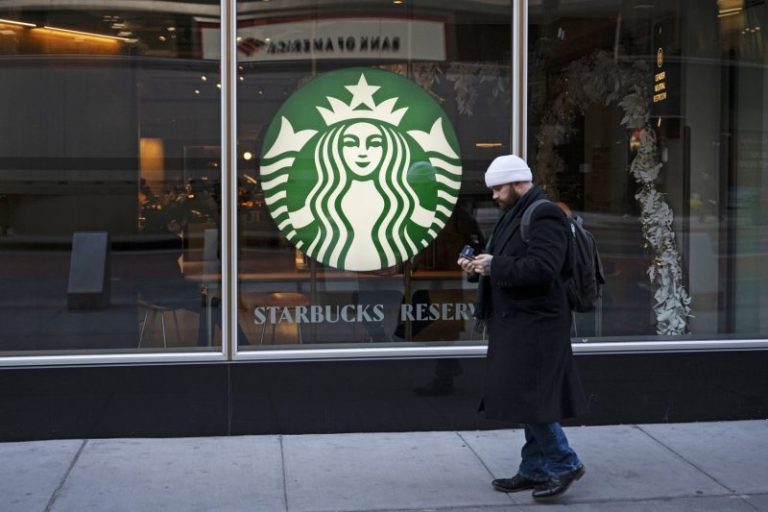
Starbucks will pay about $35 million to more than 15,000 New York City workers to settle claims it denied them stable schedules and arbitrarily cut their hours, city officials announced Monday.

The company will also pay $3.4 million in civil penalties under the agreement with the city’s Department of Consumer and Worker Protection. It also agrees to comply with the city’s Fair Workweek law going forward.

A company spokeswoman said Starbucks is committed to operating responsibly and in compliance with all applicable local laws and regulations in every market where it does business, but also noted the complexities of the city’s law.

“This (law) is notoriously challenging to manage and this isn’t just a Starbucks issue, nearly every retailer in the city faces these roadblocks,” spokeswoman Jaci Anderson said.

Most of the affected employees who held hourly positions will receive $50 for each week worked from July 2021 through July 2024, the department said. Workers who experienced a violation after that may be eligible for compensation by filing a complaint with the department.

The $38.9 million settlement also guarantees employees laid off during recent store closings in the city will get the chance for reinstatement at other company locations.

The city began investigating in 2022 after receiving dozens of worker complaints against several Starbucks locations, and eventually expanded its investigation to the hundreds of stores in the city. The probe found most Starbucks employees never got regular schedules and the company routinely reduced employees’ hours by more than 15%, making it difficult for staffers to know their regular weekly earnings and plan other commitments, such as child care, education or other jobs.

The company also routinely denied workers the chance to pick up extra shifts, leaving them involuntarily in part-time status, according to the city.

Starbucks Workers United members and supporters picket outside a Starbucks in New York on Nov. 21.Michael Nagle / Bloomberg via Getty Images

The agreement with New York comes as Starbucks’ union continues a nationwide strike at dozens of locations that began last month. The number of affected stores and the strike’s impact remain in dispute by the two sides.

This post appeared first on NBC NEWS

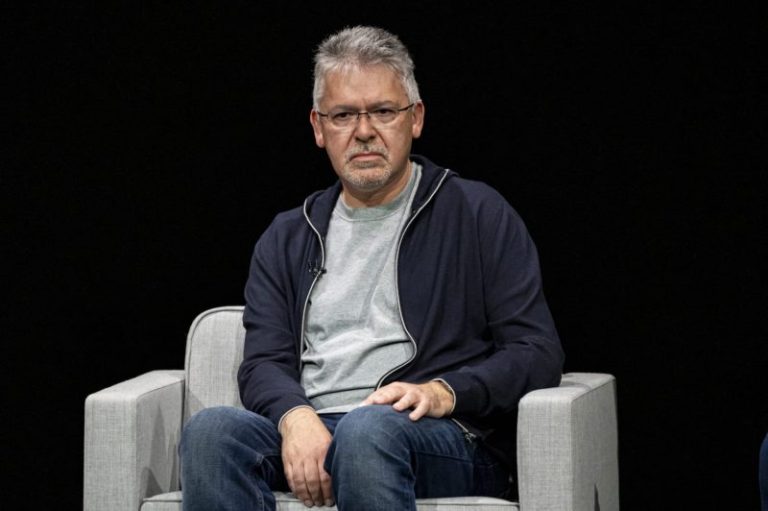
Apple’s top artificial intelligence executive is stepping down and will retire in 2026, the company announced Monday.

John Giannandrea had been at Apple since 2018, where his official title was senior vice president for machine learning and AI strategy.

He will be replaced by Amar Subramanya, who comes to Apple after a brief stint as corporate vice president of AI at Microsoft and more than a decade at Google.

Subramanya will report to one of CEO Tim Cook’s deputies, Craig Federighi, rather than to Cook directly, as Giannandrea had.

‘AI has long been central to Apple’s strategy, and we are pleased to welcome Amar to Craig’s leadership team and to bring his extraordinary AI expertise to Apple,’ Cook said Monday.

The abrupt change at a company known for its careful succession planning highlights Apple’s challenge as it tries to compete with top AI developers such as Google, ChatGPT owner OpenAI, Meta and Microsoft.

Earlier this year, Apple delayed the release of an upgraded version of Siri with AI powered features. At the time, it said it was going to ‘take us longer than we thought’ to develop the new version.

The company said it anticipated rolling out new features ‘in the coming year,’ but it has not offered any more specifics.

‘We’re making good progress on it, and, as we’ve shared, we expect to release it next year,’ Cook said on the company’s quarterly earnings call in late October.

“With Apple Intelligence, we’ve introduced dozens of new features that are powerful, intuitive, private and deeply integrated into the things people do every day,” Cook said on the Oct. 30 call

The company is targeting the spring to release the upgraded Siri, Bloomberg News recently reported.

When a user grants permission, Siri can tap into ChatGPT’s broad world knowledge and present an answer directly.Apple

While Apple’s iOS and macOS are integrated with ChatGPT, those features are somewhat limited.

In recent weeks, Apple has reportedly neared deals to integrate with Google’s Gemini, as well as AI models from Perplexity and Anthropic.

Apple introduced Apple Intelligence on June 10, 2024.Apple

Apple’s stock has also felt the effect of what some perceive to be its lagging AI services.

This year, Apple shares have returned 13%, which tops both Amazon and Microsoft. But shares of Oracle have popped 20%, Nvidia has surged 34%, and Google parent company Alphabet has soared 65%.

Still, Apple remains the world’s second-largest publicly traded company, with a market value of $4.2 trillion, behind only Nvidia.

Overall, the S&P 500 has risen almost 16% this year.

This post appeared first on NBC NEWS