Author

admin

Browsing

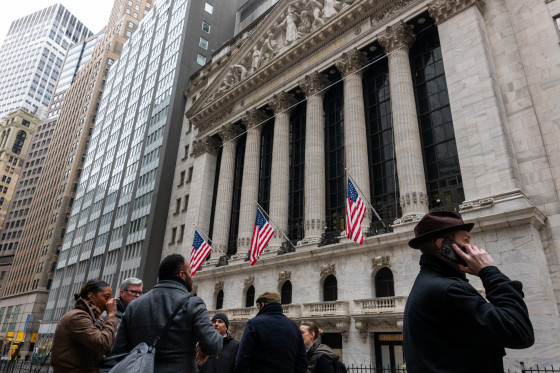
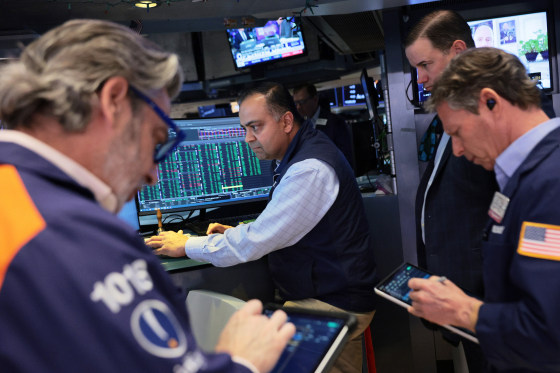
U.S. stocks and bonds sold off Thursday and oil continued its weekslong upward trajectory, as optimism faded about possible peace talks or a U.S.-Iran ceasefire.

The price of U.S. crude oil rose near $95 per barrel, up more than 4%. International Brent crude rose 5%, to more than $109 per barrel. Since the war started, the cost of U.S. crude oil is up more than 40%. Since the start of the year, it has risen more than 60%.

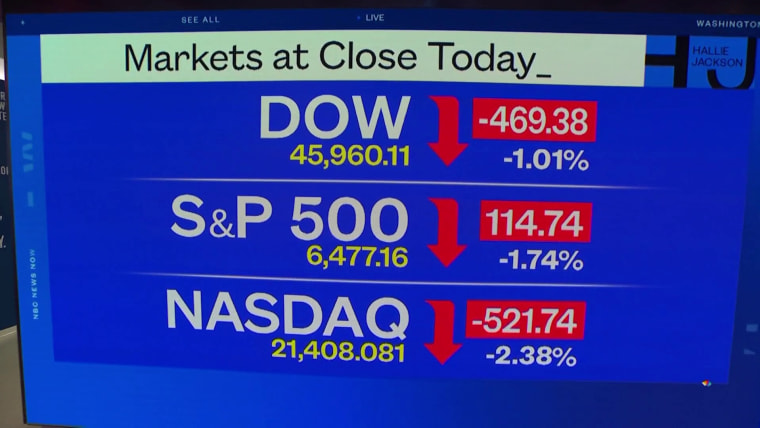
The S&P 500 closed down by 1.7%, the Dow tumbled 470 points and the Russell 2000 ended the day down 1.7%. For the S&P 500, Thursday was its worst single day since the war began.

The Nasdaq Composite fared the worst though, and dropped nearly 2.4%, pushing the index into correction territory. A correction is when an index falls 10% or more from its most recent all-time high. As of Thursday’s close, the index is now down 10.9% from its October high.

Heating oil, a proxy for jet fuel prices, also spiked 8% on Thursday afternoon. The nationwide average price of unleaded gas was $3.98 a gallon.

Nonetheless, Trump downplayed the severity of the oil and gas price spikes.

Energy prices “have not gone up as much as I thought,” Trump said at a Cabinet meeting in Washington.

The military campaign is “not over, so maybe it’ll go up a little bit more,” Trump said. “It’s all going to come back down to where it was and probably lower.”

Trump also cast doubt on a deal with Iran. “They are begging to work out a deal,” he said. “I don’t know if we’ll be able to do that. I don’t know if we’re willing to do that.”

But analysts widely believe that oil prices will continue to remain elevated over the long run, factoring in the risk that shippers will now have to assume for oil tankers that transit through the Strait of Hormuz.

Also impacting market sentiment was a report from the Organisation for Economic Co-operation and Development, which predicted that as a result of the war with Iran, the average inflation rate for G20 countries this year would rise to 4%, up from its December prediction of 2.8%. The United States is a member of the OECD.

Bonds also sold off, driving yields higher. The 10-year U.S. Treasury bond yield rose to 4.42%. The yield on 20-year bond hit 4.97% and the 30-year yield hit 4.93%.

Treasury yields, especially for the 10-year bond, heavily influence consumer lending rates. As a result, mortgage rates have risen from around 6% at the start of the war on Feb. 28 to more than 6.5% as of Thursday afternoon.

Stock indexes in Asia had already begun to sell off overnight. China’s Shanghai index and Hong Kong’s Hang Seng index both fell 1%, while Korea’s Kospi slid 3.2%.

These indexes were also weighed down by big drops in shares of tech companies, including Samsung, after Google revealed a new, more efficient use of storage and memory systems for artificial intelligence.

The Stoxx 600 in Europe followed, closing down more than 1%. Flagship stock indexes in Germany, France and the U.K. also ended the trading session down by around 1%.
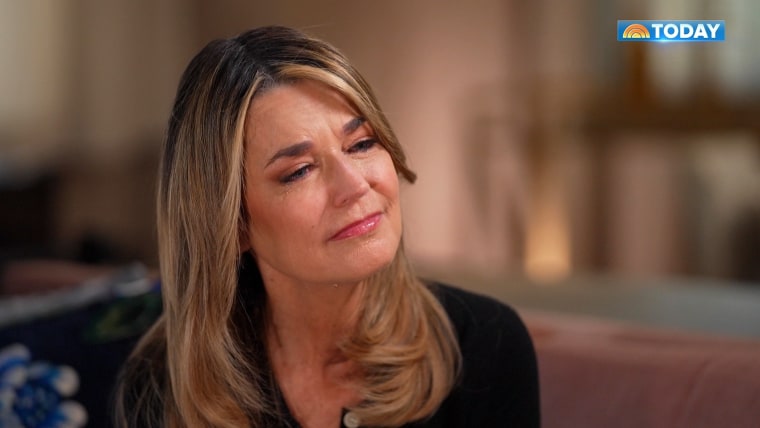
“TODAY” co-anchor Savannah Guthrie will return to the NBC morning show on April 6, as investigators continue to search for her 84-year-old mother in Arizona.

In her first interview since Nancy Guthrie went missing in February, Savannah Guthrie told Hoda Kotb she believes returning to “TODAY” is “part of my purpose right now” — even if it’s hard to imagine coming back to a workplace “of joy and lightness.”

“I can’t come back and try to be something that I’m not. But I can’t not come back because it’s my family,” Guthrie said in the interview about returning to work. “I don’t know if I can do it. I don’t know if I’ll belong anymore, but I would like to try. I would like to try.”

“I’m not gonna be the same. But maybe it’s like that old poem, ‘More beautiful in the broken places,’” she added.

Tune into “Savannah Speaks: A Dateline Special” at 9 p.m. EST on NBC.

Kotb revealed Guthrie’s return Friday on “TODAY.” Her co-host, Craig Melvin, added that the team “can’t wait to welcome her back with open arms.”

“It’s where she belongs. It’s where we all want her to be,” Melvin said.

A spokesperson for “TODAY” did not have additional comment.

Nancy Guthrie was reported missing Feb. 1 after she did not show up at a friend’s house for virtual church services, authorities said. She was last seen the previous night around 9:45 p.m. after having dinner at her daughter Annie Guthrie’s home.

Authorities have described the case as a possible kidnapping or abduction, but clues have been scarce. The Pima County Sheriff’s Office has not publicly specified a motive.

Guthrie told Kotb that her religious faith is “how I will stay connected to my mom.” She alluded to her mother’s experience with loss after her husband, Charles Guthrie, died at the age of 49 in 1988.

“I saw her belief. I saw her faith. She taught me, she taught all of us,” said Guthrie, who was 16 at the time of her father’s death. “I may not do it as well as her, but I will do it. I will do it for my kids. I will. I will not fall apart. I will not let whoever did this take my children’s mother from them.”

Guthrie repeated her pleas for information about her mother’s possible abduction, saying in part: “We need someone to tell the truth. I have no anger in my heart. I have hope in my heart. I have love. But this family needs peace.”

“We need an answer, and someone has it in their power to help,” she added.

Guthrie also opened up about her visit earlier this month to the New York City set of the “TODAY” show, describing her NBC colleagues as her “greater family.”

“I really wanted to come and see everybody. I just love this beautiful place that we call home, where we get to come and be every day,” she said, adding, “When times are hard, you want to be with your family.”

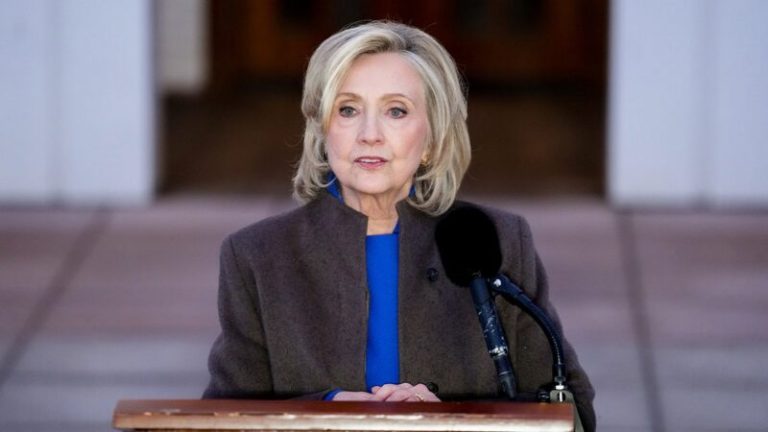
Former Secretary of State Hillary Clinton is returning next month to New Hampshire, the state that for a century has held the first primary in the race for the White House.

But that doesn’t mean the Democratic Party’s 2016 presidential nominee is looking to make a comeback in 2028.

While a growing number of potential contenders for the next Democratic presidential nomination have made stops in New Hampshire, as well as in South Carolina and Nevada, two other key early primary states, Clinton said in an interview last month she would not run for president again and that the party had a “good bench.”

Instead, Clinton will headline the New Hampshire Democratic Party’s (NHDP) annual spring fundraising dinner. The state party announced the news Thursday and said the gala, the McIntyre-Shaheen 100 Club Dinner, would be held April 25 in Nashua, New Hampshire.

HEAD HERE FOR THE LATEST FOX NEWS REPORTING, ANALYSIS, AND OPINION ON HILLARY CLINTON

“Through decades of public service — as first lady, a U.S. senator, and secretary of state — Secretary Clinton has fought tirelessly for women’s rights and been a champion for economic security around the world,” longtime NHDP chair Ray Buckley said. “Her work to expand voting rights, strengthen child and family leave policies and combat global health crises has made a lasting impact both here and abroad.”

Buckley told Fox News Digital Clinton will salute retiring Democratic Sen. Jeanne Shaheen for her 40 years of public service. Shaheen was the first woman in the nation’s history elected both governor and senator.

A spokesperson for Clinton told Fox News Digital the former secretary is excited about returning to New Hampshire.

But not everyone’s happy with Clinton’s return to the key New England swing state.

HILLARY CLINTON COMES OUT SWINGING FOLLOWING EPSTEIN DEPOSITION

Responding to the news, a longtime progressive leader in New Hampshire, who asked to remain anonymous to speak more freely, told Fox News Digital, “Although this may be a good invite to raise money for the party, it is another example of how completely tone-deaf the party is to the need for real change.

“As exemplary as Hillary Clinton’s conduct was with respect to the Epstein congressional subpoena, she’s yesterday’s news, hasn’t offered a new idea in decades and doesn’t serve the needs of building a new Democratic majority in New Hampshire.”

Clinton won the 2008 New Hampshire Democratic presidential primary in her marathon battle against former President Barack Obama for the party’s nomination.

Eight years later, in her second White House bid, she lost the New Hampshire primary in a landslide to progressive champion Bernie Sanders, the senator from neighboring Vermont.

Since her loss to President Donald Trump in the 2016 general election, Clinton has returned twice to New Hampshire. She made a stop in Concord in December 2017 as part of her book tour. And she spoke at Dartmouth College in 2019.

While some on the left take issue with the optics of Clinton’s return to New Hampshire, both the former secretary of state and her husband, former President Bill Clinton, have long been supporters of New Hampshire’s cherished position at the top of the primary calendar.

Lucas Meyer, a New Hampshire-based non-profit leader and former longtime president of the New Hampshire Young Democrats, noted that “a lot of New Hampshire Democrats have a lot of affection and love for Secretary Clinton and for her service to our country.”

And Meyer, a former campaign strategist, emphasized the state party’s fundraising dinner that Clinton is headlining “is about funding the apparatus to run campaigns over the next year. Secretary Clinton has a pretty broad appeal, and since she’s not running, there’s a little more flexibility for her to raise money for the party and to attract donors to cut checks for the state.”

A conservative watchdog group is adding fodder to the debate over whether the American Bar Association has become a politicized institution favoring the left.

A new report released by Trump-aligned lawfare group America First Legal, co-founded by one of the president’s top advisors, Stephen Miller, claims the ABA’s Standing Committee on Amicus Curiae Briefs over the last decade has produced 80% of left-leaning liberal arguments, 20% neutral and zero that are conservatively-aligned. 

Meanwhile, in all six cases the ABA has filed amicus briefs involving Trump, the ABA went against the president or his allies.

President Donald Trump’s second term has included attacks against the ABA, arguing it has politicized its accrediting power and has favored Democratic Party-backed candidates when vetting judicial nominees. The ABA’s size and legacy make it the premier trade association for the legal sector, but some conservatives fear the group’s power is becoming a “monopoly.”

REPUBLICANS CALL FOR TRUMP TO CUT OFF AMERICAN BAR ASSOCIATION

“The ABA requires that amicus briefs be authorized by its board of governors and must be consistent with existing ABA policy or involve matters of ‘special significance to lawyers or the legal profession,’” a press release from AFL argued. “Briefs on birthright citizenship, transgender healthcare for minors and the Texas heartbeat law fall well outside that mandate.”

According to AFL’s audit, which scanned briefs filed between April 2016 and February 2026, there were a total of 87 filed. Seventy of them “favored a liberal or progressive outcome,” AFL argues, while none it came across were “conservative-aligned,” the group added. The remaining covered what AFL described as neutral issues, such as a patent law case.

“The ABA does not categorize its amicus briefs as conservative or liberal but base them on the law. The ABA files amicus briefs that take positions that reflect official ABA policy that has been debated and adopted by the House of Delegates,” the ABA told Fox News Digital.

“The House is the ABA’s policy-making body comprising hundreds of delegates from state bars across the country and a wide range of ABA subject-matter entities and adopts policy only after engaging in a deliberative and representative process. Throughout it all, defending the rule of law is our North Star. “

TRUMP LAWYER IN JACK SMITH CASE DRAWS CONSERVATIVE BACKING AFTER DOJ PRAISE RATTLES ‘ELITE’ LEGAL CONFERENCE

The audit also found in cases where Trump, or a Trump official, was named, and the ABA filed an amicus brief, they argued every time in the direction contrary to the Trump official or Trump himself.

“The ABA presents its amicus program as advancing the interests of the legal profession and the rule of law,” said Gene Hamilton, president of America First Legal.

“The data tells a different story,” Hamilton continued. “More than four in five briefs push a progressive agenda, immigration advocacy has become the program’s dominant focus and the organization has not once — in ten years and across two Trump administrations — filed a brief that could be characterized as supportive of a conservative legal position. The ABA is not a neutral arbiter and should be treated no differently than any other liberal advocacy group.”

In President Trump’s second term, the Trump administration has taken several steps to push back against what it says is bias at the ABA. In February 2025, Federal Trade Commission Chairman Andrew Ferguson announced a new policy prohibiting FTC political appointees from holding leadership roles in the American Bar Association (ABA), participating in ABA events or renewing their ABA memberships. 

That early action was also followed by several others, such as a May letter to the ABA’s president from Attorney General Pam Bondi indicating the Department of Justice would no longer be engaging in its traditional partnership related to vetting judicial nominees, citing “refusal to fix the bias in its ratings process, despite criticism.”

In April, Trump signed an executive order that singled out the ABA and other powerful accrediting groups, warning that anyone engaging in unlawful discrimination would be refused federal recognition.

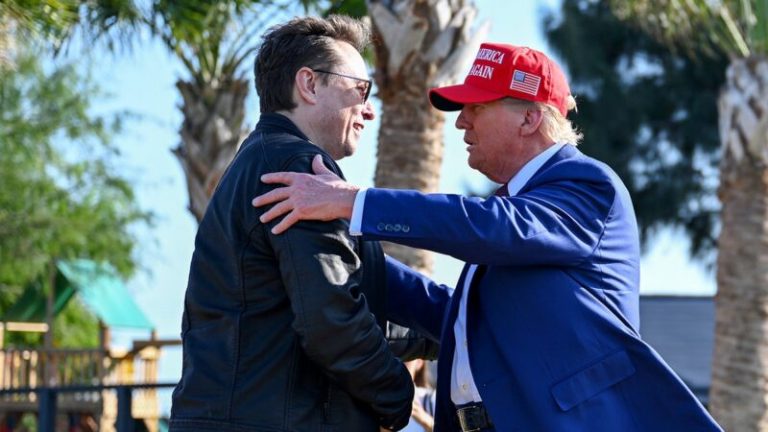
Elon Musk’s attorney is urging a federal judge to scrutinize a recent jury verdict that found Musk liable for misleading investors, arguing that the panel’s decision was compromised by bias and even “mocked” the judicial process. 

“Mr. Musk came into this trial concerned that he could not have a fair trial decided by an impartial jury, that he would be deprived of the counsel of his choice, and that he could not present the full testimony of one of the key witnesses to his defense,” Musk’s lawyer, Alex Spiro, wrote in a letter sent to U.S. District Judge Charles R. Breyer, the judge presiding over the case. “Unfortunately, and as evidenced by the record and expressed on the jury’s verdict form, each of those fears were realized.”

A jury this month found Musk had misled investors in his 2022 effort to purchase Twitter — now known as ‘X’ — in a lawsuit that focused on allegations that he had misrepresented impacted stock prices. 

Spiro argued that the jury’s conduct raises “a serious issue” about whether Musk received a fair trial — citing what he described as a deliberate and symbolic use of the number 420 — one that he argued has been long associated with Musk — in the verdict form.

META, GOOGLE FACE MASSIVE LIABILITY AS ‘ADDICTED KIDS’ TRIAL CONTINUES IN LA

Musk has repeatedly leaned into internet jokes and references to the “420” number, long associated with marijuana culture. The SEC in 2018 accused Musk of choosing a $420 price point for Tesla shares because it was a reference to pot, which Musk described as “unjustified.”

Spiro noted in the letter that the jury had “emphasized” the $4.20 figure in blue ink and larger font, and described it as a “numerical joke” meant to “send a message” to Musk, in his view, rather than reflect a neutral application of the law. 

He also argued that presentation of the damages number, which stood out from other figures on the form, further underscored his concerns that the verdict was influenced by “bias,” rather than by evidence.

The filing from Spiro comes amid a broader push from Musk’s legal team to make the case that their client was denied a fair trial. He also cited alleged widespread juror hostility and what he described as misconduct by opposing counsel, as well as procedural decisions that limited Musk’s ability to present key testimony.

DOGE’S MEDICAID DATA DUMP AIMS TO EXPOSE FRAUD — BUT PRIVACY AND LEGAL HURDLES LOOM

According to Spiro, juror questionnaires revealed “deep” negative views of Musk, and the court was unable to fully screen out biased jurors due to the prevalence of those opinions. He also claimed opposing counsel engaged in “gamesmanship” that sidelined him from a central trial role and introduced prejudicial arguments unrelated to the core claims.

EX-FBI AGENTS INVOLVED IN ARCTIC FROST PROBE SUE FOR WRONGFUL TERMINATION

Despite those concerns, jurors in the case rejected the plaintiffs’ primary allegation — that Musk had orchestrated a deliberate scheme to manipulate Twitter’s stock price during his acquisition effort in 2022. Jurors did, however, still find Musk liable on a narrower issue, stemming from statements he made about the status of the deal.

Spiro, for his part, argued the mixed outcome further underscores the problem — suggesting the liability finding was driven less by the evidence and more by a desire to penalize Musk personally.

“The inescapable conclusion,” he wrote, is that the jury used its verdict to express views about Musk rather than to apply the law impartially.

The court has not yet ruled on the claims, though the filing in question could set up further legal challenges to the verdict, including potential efforts to overturn or revisit the outcome.

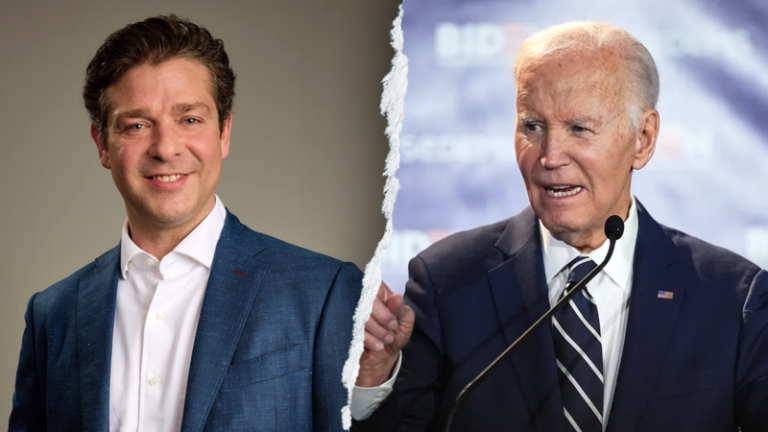
EXCLUSIVE: Michael Carbonara, a Republican running in the Sunshine State as a political disruptor to unseat longtime Democratic incumbent Rep. Debbie Wasserman Schultz, is pitching an idea to reduce the crippling student loan debt crisis facing the country without shifting the burden to taxpayers.

In an interview with Fox News Digital, Carbonara lamented that as America marks its 250th anniversary, “the idea of the American dream has been slipping away” for many young Americans.

He criticized Democrats for promoting affordability while proposing solutions that amount to increased taxes.

“This is the first time where the next generation actually has less opportunity and less freedom than their parents in America’s 250-year history,” he said. “Rather than just tax and tax and tax, which people are tired of, I want to put more money back into the pocket of every American, so life is affordable.”

FOREIGNERS ARE SNAPPING UP US HOMES AND STEALING THE AMERICAN DREAM OUT FROM UNDER FAMILIES

Instead of shifting responsibility to taxpayers, Carbonara blames government subsidies as the “root cause” of rising college costs. A fintech mogul and business leader who also hosts a podcast, he said government subsidies allowed schools to raise prices, making college unaffordable.

“There’s no reason that students need to pay $50,000 a year for an education and wind up with a lifetime of debt that they have to chase every year to pay off,” he said, noting, “That’s not what we want. We want people to be able to go to school, get married, have a good-paying job so they can afford to have a family.”

Carbonara said this is one of the top issues voters voice to him on the campaign trail.

“I don’t just hear from young Americans, I hear from everyone,” he explained.

“The average age of first-time home ownership is now over 40 years old, when 20, 30 years ago, it was below 30 years old,” he went on. “Let’s face it, nobody wants to get married to have kids when you live in a 700-square-foot condo in South Florida.”

VANCE TOUTS TRUMP ECONOMY GAINS DURING NORTH CAROLINA TOUR, CITES RISING HOME PURCHASES

However, unlike former President Joe Biden’s student loan forgiveness plan, which would have put taxpayers on the hook, Carbonara said addressing government subsidies would place the responsibility on universities.

“The idea of forgiveness, we have to throw that idea out, there’s no forgiveness here,” he said. 

“It’s the university’s responsibility to step up to fix the dilemma. And we need to put together these programs for the universities to be able to fix it because again, they were the ones that received all the funding, all the tuition payments that were guaranteed by the government. So, since they benefited, it’s their responsibility to fix the issues.”

If elected, Carbonara believes he could work on both sides of the aisle to bring a bipartisan solution to the student loan crisis.

“People recognize this is a real crisis,” he said, adding, “This is going to take hard work, and it’s going to require responsibility from both students and, obviously, members of Congress.”

BIPARTISAN HOUSING PUSH ADVANCES, BUT TRUMP-BACKED INVESTOR BAN FACES RESISTANCE

Ultimately, Carbonara said that with the American dream spiraling out of reach for many, “we’ve come to a crossroads.”

“Do we go to the socialism route… or do we go the route of freedom where we can create opportunity and give people the tools to be self-determined and be able to be prosperous and make their own decisions in life?” he asked.

“That’s the path we need to go to. We need to return to our core values of America that made our country great and give the American freedom and the American dream opportunity back to everyone.”

U.S. stocks surged Monday, after President Donald Trump announced that he was postponing all military strikes on Iranian power plants for a five-day period.

Trump said the U.S. and Iran had engaged in what he called “very good and productive conversations regarding a complete and total resolution of our hostilities in the Middle East.”

Reporting about the nature and timing of these “conversations” evolved over the course of the day, and included conflicting accounts from various stakeholders.

But for markets, the talks offered a glimmer of hope that a path toward the de-escalation of the conflict — and the oil crisis it created — were within reach.

Iranian state media responded to Trump’s post by saying the U.S. president has “backed down” after Iran’s firm response.

Trump, however, said that Iran had “called” to discuss trying to resolve the war diplomatically.

“They want to make a deal, and we are very willing to make it,” Trump told reporters before boarding Air Force One in Florida.

The Strait of Hormuz, a crucial transit point for global oil supplies, could be “open very soon,” Trump added, but he provided few details.

Experts and analysts quickly pointed out that even if the fighting were to end this week, it would still take months for the strait to reopen.

The S&P 500 and Nasdaq 100 futures initially soared about 3% on Trump’s post shortly after 7 a.m. ET. By the time the closing bell rang, both indexes still recorded significant gains, but less than futures had indicated early in the morning. The S&P 500 closed up 1.1% and the Nasdaq Composite ended the day higher by 1.4%.

The gains were also broad based, with every S&P sector ending the day higher.

The Dow Jones Industrial Average also shot higher immediately after Trump’s statement. By the end of the trading session, the Dow was higher by 631 points, and the Russell 2000 index closed up 2.7%.

It was the best day for the S&P, Nasdaq and Dow since Feb. 6.

Oil prices plunged around 11% and U.S. crude oil settled for the day at $88.13 per barrel. International Brent crude oil fell to $99.94 per barrel, settling under $100 per barrel for the first time since March 11.

Still, crude oil prices have risen more than 30% since the war began on Feb. 28, and more than 50% since the start of the year.

Trump’s Monday announcement on social media came after the president on Saturday said that he had given the Iranian regime 48 hours to “fully open, without threat, the Strait of Hormuz.” That ultimatum was set to expire Monday night.

U.S. natural gas prices dropped 6% Monday, European natural gas futures slid 9% and heating oil prices dropped 12%. Heating oil futures can also be a proxy for the price of jet fuel.

U.S. Treasury bonds also rose in the minutes after Trump’s comments, and the yields which guide borrowing rates for consumers dropped after posting big moves higher on Thursday and Friday on rising inflation fears stemming from soaring energy prices. Yields were down only slightly in mid-morning trading after the statements from Iranian media and Trump.

Investors were already grappling with how to trade headlines about the war before Monday’s volatility.

“Investors have two related problems in pricing risks around the Gulf war,” UBS economist Paul Donovan said in a note on Monday before Trump’s post. “Statements from top U.S. administration officials give different and at times contradictory assessments of the war; in the absence of measurable objectives, this is all markets have to respond to. The result is volatility.”

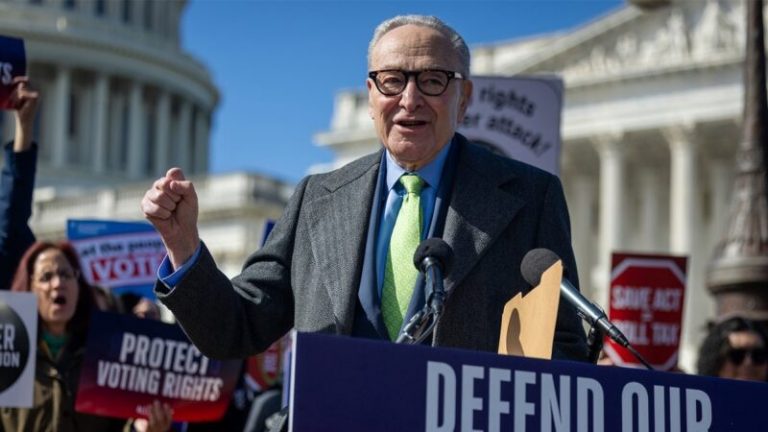
Senate Democrats blocked an amendment to Trump-backed voter ID legislation that would have done something they publicly support and require photo identification to vote in federal elections.

Democrats, including Senate Minority Leader Chuck Schumer, D-N.Y., have shown interest in photo voter ID, which has grown in popularity among voters across the country.

“Democrats support voter ID,” Schumer said on a press call earlier this month. “In fact, we included it, and it is included, in our Freedom to Vote legislation several years ago.”

HOUSE CONSERVATIVES ERUPT OVER SENATE GOP, WHITE HOUSE DEAL AMID SAVE ACT FIGHT

Several others have also come out in support of a voter ID bill in recent weeks.

When asked by CNN’s Kaitlan Collins whether he would support a clean voter ID bill, Sen. Cory Booker, D-N.J., said, “Yes.”

“And New Jersey has voter ID laws,” Booker said. “I’ve got to show my driver’s license.”

Still, Democrats blocked an amendment to the Safeguarding American Voter Eligibility (SAVE) America Act from Sen. Jon Husted, R-Ohio, meant to put them on record for that position.

DEMS BLOCK GOP AMENDMENT TYING VOTER ID BILL TO TRANSGENDER SPORTS BAN

Schumer said ahead of the vote that “Republicans are once again wasting time on voter suppression.” 

“Let’s let’s be very clear what this amendment is,” Schumer said. “It’s a wolf in sheep’s clothing, and it’s a giant cover-up to what their bill really does, which is dramatic voter suppression, kicking 20 million or more people off the rolls without their knowledge or consent.”

Senate Republicans argued that if Democrats truly support voter ID, they should back the amendment.

“That is one on which the Democrats have said — Sen. Schumer himself — that ‘we are not opposed to photo ID,’” Senate Majority Leader John Thune, R-S.D., said. “Well, let’s test that proposition. Let’s actually have a vote on it and see where the Democrats are.”

Republicans have been engaged in a floor push on the SAVE America Act for the past 10 days, debating the legislation in a bid to shift the narrative from the GOP being unable to advance the bill out of the Senate to Democrats being the ones blocking it.

Senate Democrats have argued that while they support identification to vote, the SAVE America Act goes far beyond that requirement. Schumer and others have likened the broader bill to Jim Crow-era segregationist laws in the Deep South, saying it would disenfranchise voters, particularly minority communities and low-income Americans.

GOP TRIGGERS MARATHON SENATE FIGHT TO EXPOSE DEMS’ OPPOSITION TO TRUMP-BACKED VOTER ID BILL

However, requiring identification is already the practice in 36 states. Of those, 23 require photo ID, while 13 accept another form of identification, such as a bank statement. Nine of those states have Democratic senators.

According to a widely cited Pew Research poll from last year, 71% of Democratic voters support showing government-issued photo ID to vote.

“I know there are a lot of issues in the SAVE America Act, but this particular one focused on photo ID as something that can be easily implemented, which is already being implemented around the country,” Husted said of his amendment.

Senate Democrats blocked the measure once before, when Husted tried to force a vote on a standalone photo voter ID bill last week. His amendment listed several acceptable forms of identification, including an unexpired driver’s license with a photo, an unexpired state-issued ID card with a photo, a valid passport, a valid military or veteran ID with a photo or an unexpired tribal ID with a photo.

Sen. John Fetterman, D-Pa., who typically breaks with his party, stood alongside Schumer and his colleagues on Thursday. Like other Democrats, he has opposed the SAVE America Act because of its additional provisions, such as giving the Department of Homeland Security access to states’ voter rolls.

But he recently said, “If the GOP wants real reform over a show vote, put out a clean, standalone bill, and I’m AYE.”

U.S. stocks rose Wednesday and global oil prices fell in yet another volatile trading session as traders and investors were buffeted by constant headlines about the war in Iran.

News of a 15-point U.S. peace plan proposal sparked hopes early in the day that the Trump administration was moving to end its monthlong war against Iran. Initially, the S&P 500 and the Nasdaq 100 futures rose more than 1%.

But reports that Iran had responded negatively to the proposal briefly knocked index futures off their pre-market highs and lifted oil prices off their morning lows.

Despite the early setback, stocks closed the trading day higher. At 4 p.m. ET, the S&P 500 index was up about 0.4%, the Nasdaq Composite closed 0.7% higher, and the Dow jumped 305 points. The Russell 2000 index of smaller companies rose 1.1%.

The price of U.S. crude oil also traded off its lowest levels of the day and was down only 1.4% to about $90 per barrel by late afternoon. West Texas Intermediate crude oil has soared more than 30% since the start of the war on Feb. 28. The cost per barrel is up 50% since the beginning of the year.

International Brent crude prices traded near breakeven, at around $102 per barrel. The price of heating oil, a proxy for jet fuel, dropped 6%.

The global price of oil directly affects what Americans pay at the gas pump and what it costs them to heat and cool their homes. The average nationwide price of unleaded gas Wednesday was $3.98 per gallon, according to AAA data.

“Markets desperately want to believe in the positive,” UBS Global Wealth Management chief economist Paul Donovan wrote. “Focus on the apparent 15-point US plan to end the war has received more attention than Iranian dismissals of this, or the fact that passage through the Strait of Hormuz is minimal.”

Iran’s response to the U.S. proposal included a list of five conditions for ending the war, according to Iranian state TV, which cited a senior political-security official with knowledge of the details of the proposal.

Pakistan has also offered to mediate talks to end the hostilities, four sources told NBC News. A Persian Gulf official said Pakistan had been passing messages between the two countries for the past two days.

An in-person meeting between the U.S. and Iran could be held in the coming days, two sources added.

But President Donald Trump has continued to give conflicting signals.

On March 16, Trump said he was delaying his scheduled visit to China “by a month or so” to monitor the war. On Monday, he said the Strait of Hormuz would be “open very soon.”

And on Tuesday, Trump told reporters in the Oval Office, “This war has been won.” At the same time, the U.S. is sending more than 1,000 additional troops to the Middle East, sources said.

A motorist drives past a sign displaying prices at a gas station in Oakland, Calif., on Tuesday.Godofredo A. Vásquez / AP

Since the war started, the market has experienced several days like this, when markets are whipsawed by constant back-and-forth comments.

“There’s really no way to know at this point what the facts are regarding the state of negotiations, as neither side has any real incentive to conduct talks via the press, so expect more whipsaw action as things continue to progress,” analysts at Bespoke Investment Group wrote in a client note.

They added that the “ongoing tensions continue to support higher prices [and] stoke inflation concerns” and are likely to cause central banks to remain on hold, rather than cut rates.

On the contrary, traders believe the European Central Bank and the Bank of England will both raise interest rates.

“Uncertainty remains high,” analysts at ING wrote in a note Wednesday morning. “Overall, volatility remains elevated and a geopolitical risk premium persists.”

In the 18 trading sessions since the war began, U.S. oil prices have closed down only five times. Likewise, over the same period, the S&P 500 has closed higher only seven times. Three of those higher closes were only fractional.

After Wednesday’s close, the Nasdaq was down nearly 6% for the year, while the S&P 500 was on track for a 3.5% loss so far. The majority of those losses were concentrated in the weeks since the war began.

Meanwhile, the Strait of Hormuz, through which 20% of the world’s oil supply typically passes, has remained at a near standstill since the war began.

On Monday, just five ships passed through the strait, according to data compiled by S&P Global Market Intelligence. On Tuesday, the total was six. On many days since the war started, not a single ship has passed through.

However, some of the ships passing through the strait have taken an unusual course that put them close to the Iranian coastline, potentially signaling that Tehran was keeping a tight grip on traffic flows. Two Indian ships were granted passage Tuesday after a deal with Iran, Bloomberg News reported. The Iranian navy also guided the ships.

Otherwise, hundreds of other ships loaded up with cargo, oil and liquefied natural gas remain stuck.

The two pilots killed in the collision between a passenger jet and a Port Authority fire truck at New York’s LaGuardia Airport late Sunday have been identified as Antoine Forest and Mackenzie Gunther.

The pair have yet to be officially named by authorities, who have said only that both pilots of the Canada Air Express plane died and that they were based in Canada. Their identities were confirmed by Canadian news reports and by a college that one pilot attended.

Antoine Forest, one of the pilots who reportedly died in the LaGuardia plane collision.via Facebook

The Federal Aviation Administration, the National Transportation Safety Board and other agencies are investigating the crash. They will seek to determine how the truck was able to cut across the jet’s path moments after it touched down on the runway.

Here’s what we know about the fatal crash.

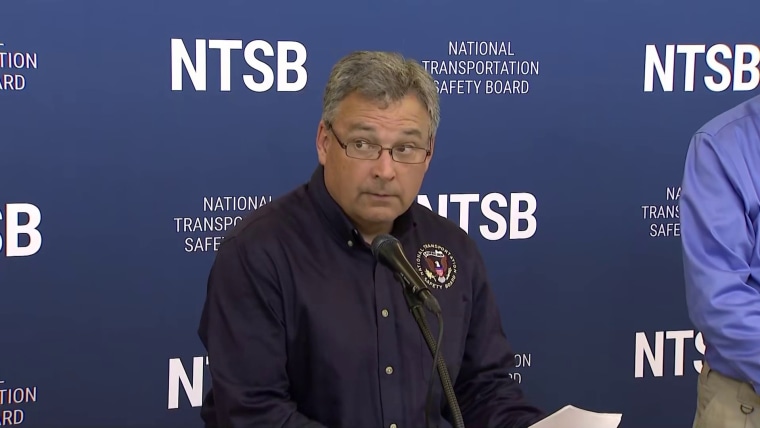
At a news conference Tuesday afternoon, NTSB officials released preliminary information gleaned from the final three minutes of the plane’s cockpit voice recorder that showed that the fire truck was cleared to cross the runway 20 seconds before the crash.

At 2 minutes and 22 seconds, the flight crew checked in with the tower at LaGuardia, said Doug Brazy, NTSB’s senior aviation investigator.

At 2 minutes and 17 seconds, the tower cleared the airplane to land on Runway 4.

Brazy said that at 1 minute and 3 seconds, an airport vehicle made a radio transmission to the tower but that the transmission was “stepped on” by another radio transmission. NTSB Chairwoman Jennifer Homendy said that means there was some sort of interference with the transmission.

At 54 seconds, the tower advised the flight crew that the plane was at a stable approach, Brazy said.

At 40 seconds, the LaGuardia tower asked which vehicle needed to cross a runway. Brazy said the fire truck made a transmission to the tower, which the tower acknowledged. At 25 seconds, the truck requested permission to cross Runway 4. Brazy said that at 20 seconds, the tower cleared the truck to cross.

At 17 seconds, the fire truck read back the runway crossing clearance, he said. According to Brazy, the tower instructed a Frontier Airlines flight to hold position, and at 9 seconds, the tower told the fire truck to stop.

At 8 seconds, there was a sound consistent with the airplane’s landing gear touching down on the runway, he said. At 6 seconds, there was a pilot transfer of controls. Homendy told reporters that the first officer was flying the plane and transferred control to the captain.

At 4 seconds, the tower again instructed the fire truck to stop, Brazy said.