
Author

admin

Browsing

The global lithium market enters 2026 after a punishing 2025 marked by oversupply, weaker-than-expected EV demand and sustained price pressure, although things began turning around for lithium stocks in Q4.

Lithium carbonate prices in North Asia fell to four-year lows early in the year, triggering production cuts and project delays, before rebounding sharply in the second half. By late December, prices had jumped 56 percent from their January levels, signaling the start of a potential market rebalancing.

Analysts point to tightening inventories and high-cost supply under strain as early signs of a recovery, while long-term demand from electrification, energy storage and the energy transition remains intact.

Battery energy storage systems are emerging as a major growth driver, expected to account for roughly a quarter of global battery demand in 2025. In the US, storage could make up 35 to 40 percent of battery demand in the coming years, according to Benchmark Mineral Intelligence’s Iola Hughes.

“LFP is the story right now,” Hughes said, highlighting falling costs and technological innovation as key enablers for large-scale deployment. Global storage remains concentrated in China and the US, but new markets like Saudi Arabia are scaling rapidly.

As storage expands in scale, geography and strategic importance, it is set to become a central pillar of lithium demand heading into 2026.

1. Lithium Argentina (NYSE:LAR)

Year-to-date gain: 106.39 percent
Market cap: US$891.03 million
Share price: US$5.49

Lithium Argentina produces lithium carbonate from its Caucharí-Olaroz brine project in Argentina, developed with Ganfeng Lithium (OTC Pink:GNENF,HKEX:1772). The company was spun out from Lithium Americas in October 2023 and changed its name from Lithium Americas (Argentina) in January 2025.

In mid-April, Lithium Argentina executed a letter of intent with Ganfeng Lithium to jointly advance development across the Pozuelos-Pastos Grandes basins.

In August, Lithium Argentina agreed to form a new joint venture with Ganfeng Lithium that will combine the companies’ projects in the Pozuelos and Pastos Grandes basins of Salta, Argentina.

The joint venture will bring together Ganfeng’s wholly owned Pozuelos-Pastos Grandes (PPG) project and Lithium America’s Pastos Grandes and Sal de la Puna projects, in which Ganfeng currently holds a 15 percent and 35 percent stake respectively.

Once completed, Ganfeng will hold a 67 percent stake in the consolidated PPG project, and Lithium Argentina will hold a 33 percent interest.

In Q4, Lithium Argentina released a positive scoping study for the PPG project, confirming its scale and strong economics. The consolidated project hosts a measured and indicated resource of 15.1 million metric tons of lithium carbonate equivalent (LCE) and is designed for staged production of up to 150,000 metric tons per year over a 30 year mine life.

In the same announcement, the company confirmed receipt of an environmental approval for Stage 1 from the Secretariat of Mining and Energy of the Province of Salta.

Lithium Argentina released its Q3 results in November, noting approximately 8,300 metric tons of lithium carbonate production at its Caucharí-Olaroz operation during the quarter, with 24,000 metric tons produced between January and September.

Company shares rose to a year-to-date high of US$5.58 on December 31, in line with rising lithium carbonate prices.

2. Sociedad Química y Minera (NYSE:SQM)

Year-to-date gain: 87.39 percent
Market cap: US$19.66 billion
Share price: US$68.98

SQM is a major global lithium producer, with operations centered in Chile’s Salar de Atacama. The company extracts lithium from brine and produces lithium carbonate and hydroxide for use in batteries.

SQM is expanding production and holds interests in projects in Australia and China, including a 50/50 joint venture for the Mt Holland lithium operation in Western Australia. In July, the company produced its first battery-grade lithium hydroxide production at its Kwinana refinery in the state.

In late April, Chile’s competition watchdog approved the partnership agreement between SQM and state-owned copper giant Codelco aimed at boosting output at the Atacama salt flat. The deal, first announced in 2024, reached another milestone when it secured approval for an additional lithium quota from Chile’s nuclear energy regulator CChEN.

SQM ended the year finalizing the agreement. The partnership was formalized through SQM’s subsidiary SQM Salar absorbing Codelco’s Minera Tarar and being renamed Nova Andino Litio.

SQM reported a net income of US$404.4 million for the first nine months of 2025, rebounding from a US$524.5 million loss in the same period of 2024. Revenue totaled US$3.25 billion, down 5.9 percent year-over-year, while gross profit reached US$904.1 million.

The company’s third-quarter performance highlighted the turnaround, as SQM achieved record lithium sales volumes. It reported net income of US$178.4 million, up 36 percent from Q3 2024, and revenue of US$1.17 billion, up 8.9 percent. Gross profit for the quarter climbed 23 percent to US$345.8 million.

SQM attributed the rebound to higher realized lithium prices and improved operational efficiency, signaling a strong recovery trajectory for the remainder of 2025.

Shares of SQM reached a year-to-date high of US$71.63 on December 26.

3. Albemarle (NYSE:ALB)

Year-to-date gain: 64.29 percent
Market cap: US$16.71 billion
Share price: US$142.01

North Carolina-based Albemarle is dividing into two primary business units, one of which — the Albemarle Energy Storage unit — is focused wholly on the lithium-ion battery and energy transition markets. It includes the firm’s lithium carbonate, hydroxide and metal production.

Albemarle has a broad portfolio of lithium mines and facilities, with extraction in Chile, Australia and the US. Looking first at Chile, Albemarle produces lithium carbonate at its La Negra lithium conversion plants, which process brine from the Salar de Atacama, the country’s largest salt flat. Albemarle is aiming to implement direct lithium extraction technology at the salt flat to reduce water usage.

Albemarle’s Australian assets Wodgina hard-rock lithium mine in Western Australia, which is owned and operated by the 50/50 MARBL joint venture with Mineral Resources (ASX:MIN,OTC Pink:MALRF). Albemarle wholly owns the on-site Kemerton lithium hydroxide facility. The company’s other Australian joint venture is the Greenbushes hard-rock mine, in which it holds a 49 percent interest.

In late October, Albemarle signed an agreement to sell its 51 percent stake in its refining catalyst business, Ketjen, leaving it with 49 percent ownership, part of a broader portfolio reshaping that also includes the sale of Ketjen’s 50 percent stake in the Eurecat joint venture to partner Axens.

The combined deals are expected to generate approximately US$660 million in pre-tax cash proceeds and strengthen Albemarle’s financial flexibility. Both transactions are anticipated to close in the first half of 2026, subject to regulatory approvals.

In November, Albemarle reported third‑quarter results that reflected improved operations amid continued lithium market headwinds. The company logged net sales of roughly US$1.31 billion, a slight year‑over‑year decline driven by lower energy storage pricing.

Albemarle generated US$356 million in quarterly cash from operations, noting the company remained on track to reduce full‑year capital expenditures to around US$600 million while targeting positive free cash flow of US$300 million to US$400 million in 2025.

Shares of Albemarle marked a year-to-date high of US$150.01 on December 26, amid strengthening lithium prices.

4. Lithium Americas (NYSE:LAC)

Year-to-date gain: 47 percent
Market cap: US$1.24 billion
Share price: US$4.41

US-focused Lithium Americas is developing its flagship Thacker lithium Pass project located in Humboldt County in northern Nevada. The project is a joint venture between Lithium Americas at 62 percent and General Motors (NYSE:GM) at 38 percent.

According to the company, Thacker Pass holds the “largest measured lithium reserve and resource in the world.”

In March, Lithium Americas secured a US$250 million investment from Orion Resource Partners to advance Phase 1 construction of the project, which is expected to fully cover development costs through the construction phase. On April 1, the joint venture partners made a final investment decision for the project, with completion targeted for late 2027.

Shares of Lithium Americas surged in late September, rising from US$3.07 to US$7.37 in three days. Its share price reached a 2025 high of US$10.05 on October 13.

Lithium Americas’ share price rose on news of renegotiation talks over its US$2.26 billion Department of Energy loan tied to the Thacker Pass project. According to media reports, the Trump administration was seeking up to a 10 percent equity stake as part of amendments to the loan’s repayment structure.

In response, Lithium Americas offered no-cost warrants for 5 to 10 percent of its shares and agreed to cover related administrative costs, while requesting changes to the amortization schedule without altering the loan’s term or interest.

An agreement was reached on October 1 and Lithium Americas received the first US$435 million installment of the loan on October 20.

The company ended the year by announcing it was being added to the S&P/TSX Composite Index (INDEXTSI:OSPTX).

5. Sigma Lithium (NASDAQ:SGML)

Year-to-date gain: 20.23 percent
Market cap: US$1.5 billion
Share price: US$13.49

Sigma Lithium is a Brazil-focused lithium producer supplying chemical-grade lithium concentrate to the global battery market. The company operates the Grota do Cirilo project in Minas Gerais, one of the world’s largest hard-rock lithium operations.

Sigma’s Greentech industrial lithium plant currently produces about 270,000 metric tons per year of lithium concentrate, equivalent to roughly 38,000 to 40,000 metric tons of LCE. The company is building a second processing plant that is expected to lift total capacity to approximately 520,000 metric tons of concentrate annually.

In September, Sigma Lithium’s flagship Grota do Cirilo operation in Brazil faced both regulatory scrutiny and operational disruption.

That month, Brazilian prosecutors requested a pause in operations after a technical review flagged shortcomings in the project’s Environmental Impact Assessment, citing potential water-management risks to the Piauí stream from planned open pits, a key water source for nearby communities, particularly during droughts.

While it denied issues with its EIA, Sigma paused mining to upgrade equipment and improve efficiency. The company phased down operations in September and shut the mine throughout October, leading to a sharp drop in output.

In mid-November, Sigma reported a strong Q3 2025, with net revenue rising 69 percent quarter-over-quarter and 36 percent year-over-year. The company generated US$24 million from final price settlements on sales completed by the end of Q3, with a further US$4 million in cash expected from additional settlements.

Sigma also expects to receive approximately US$33 million from the sale of 950,000 metric tons of lithium-bearing material that can be reprocessed by its customers, providing an additional near-term cash inflow.

Operationally, it said mining activities would restart by the end of November, with full ramp-up targeted for the first quarter of 2026. Because the company took over mining operations from its equipment contractor earlier in 2025, the restart is supported by upgraded equipment leased directly from manufacturers and operated in-house.

Sigma Lithium shares rose to a year-to-date high of US$14.50 on December 26.

Securities Disclosure: I, Georgia Williams, currently hold no direct investment interest in any company mentioned in this article.

This post appeared first on investingnews.com

The seizure of a Russian-linked oil tanker in the North Atlantic has highlighted ‘worry’ among NATO and Nordic-Baltic governments over dark fleet vessels and the type of crews onboard, according to a maritime intelligence analyst.

U.S. military and Coast Guard personnel boarded the Marinera between Iceland and the U.K. Wednesday as it operated under deceptive shipping practices, including flying a false flag and violating sanctions.

According to Reuters, Russian authorities demanded the humane treatment and repatriation of the crew members.

Windward maritime intelligence analyst Michelle Wiese Bockmann claimed the Marinera’s ownership had just been transferred to Burevestmarin LLC, a Russian company.

‘We do not know the status of these sailors and seafarers, who are Russian nationals,’ Wiese Bockmann told Fox News Digital. ‘That lack of clarity is common with dark fleet tankers.

‘The Marinera did have its ownership transferred to a newly formed Russian company, with the registered owner, ship manager and commercial manager being Burevestmarin LLC.’

She also suggested NATO and the Nordic-Baltic 8+ group of governments have been ‘worried’ about sanctioned oil tankers with unauthorized personnel onboard, including ‘armed guards.’

‘Increasingly, and I know the Nordic Baltic 8+ governments are worried about the fact that you are having unauthorized people also on board, also known as armed guards,’ Wiese Bockmann said. ‘But it is highly irregular.

‘Armed guards are rarely seen and typically used on ships that are transiting the Gulf of Aden or the Red Sea and are therefore assessed as at risk from attack by Houthis or pirates,’ she added.

After the seizure, White House press secretary Karoline Leavitt rejected Russian demands for special treatment of the Marinera’s crew during her regular briefing Wednesday.

‘This was a Venezuelan shadow fleet vessel that had transported sanctioned oil,’ Leavitt said.

‘The vessel was deemed stateless after flying a false flag, and it had a judicial seizure order. And that’s why the crew will be subject to prosecution.’

Russia’s Foreign Ministry said it was ‘closely following’ the situation, according to the state-run TASS news agency.

Wiese Bockmann noted that dark fleet crews are often multinational, typically involving a Russian master with Chinese, Indian or Filipino crew members.

‘There is a blurring of commercial and military shipping around the dark fleet,’ she said. ‘What we’re seeing now is something that has really only emerged in the last six or seven months.’

European authorities have also begun holding crews accountable, particularly when captains are ‘facilitating dangerous deceptive shipping practices, such as spoofing and going dark,’ she explained.

‘The EU recently sanctioned the captain of a tanker who refused orders from the Estonian navy (Jaguar) to be stopped for inspection last May. And the French charged a captain over his refusal to comply with orders and failure to justify a flag’s nationality after authorities intercepted a dark fleet tanker in the Atlantic last October,’ Wiese Bockmann added.

As previously reported by Fox News Digital, a second vessel, the M. Sophia, was also boarded in international waters near the Caribbean while en route to Venezuela.

Fox News Digital has reached out to the White House for comment.

This post appeared first on FOX NEWS

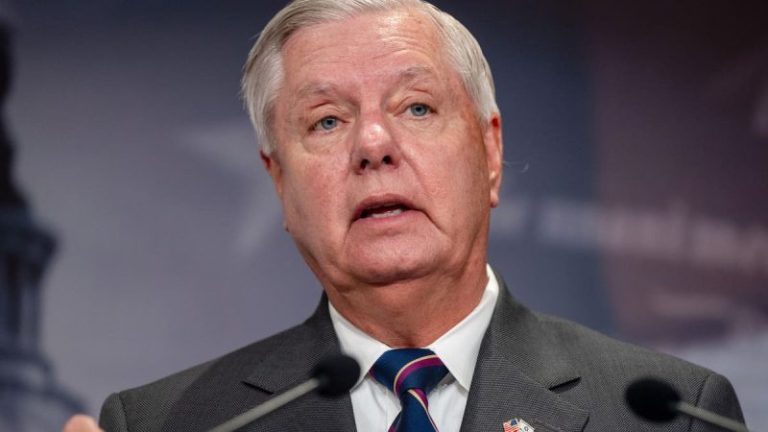
Sen. Lindsey Graham announced Wednesday that President Donald Trump has approved a Russian sanctions bill designed to pressure Moscow to end its war with Ukraine.

Graham revealed the development in a post on X, describing it as a pivotal shift in the U.S. approach to the Russia-Ukraine conflict. 

‘After a very productive meeting today with President Trump on a variety of issues, he greenlit the bipartisan Russia sanctions bill that I have been working on for months with Senator Blumenthal and many others,’ Graham said. 

‘This will be well-timed, as Ukraine is making concessions for peace and Putin is all talk, continuing to kill the innocent.’

According to the Sanctioning Russia Act of 2025, the bipartisan legislation is designed to grant Trump sweeping, almost unprecedented, authority to economically isolate Russia and penalize major global economies that continue to trade with Moscow and finance its war against Ukraine.

Most notably, the bill would require the United States to impose a 500% tariff on all goods imported from any country that continues to purchase Russian oil, petroleum products or uranium. The measure would effectively squeeze Russia financially while deterring foreign governments from undermining U.S. sanctions.

‘This bill will allow President Trump to punish those countries who buy cheap Russian oil fueling Putin’s war machine,’ Graham said.

‘This bill would give President Trump tremendous leverage against countries like China, India and Brazil to incentivize them to stop buying the cheap Russian oil that provides the financing for Putin’s bloodbath against Ukraine.’

Graham said voting could take place as early as next week and that he is looking forward to a strong bipartisan vote.

The move on the Russian sanctions bill follows another sharp escalation in America’s clampdown on Moscow. Earlier Wednesday, U.S. forces reportedly seized an oil tanker attempting to transport sanctioned Venezuelan oil to Russia.

Graham publicly celebrated the seizure in another post on X, describing it as part of a broader winning streak of U.S. intervention aimed at Venezuela and Cuba. 

In the post, he also took aim at critics such as Sen. Rand Paul, who has opposed the bill, arguing that it would damage America’s trade relations with much of the world.

Fox News Digital reached out to the White House for comment.

This post appeared first on FOX NEWS

Sen. Ted Cruz, R-Texas, on Wednesday called on Congress during a Senate hearing to impeach two federal judges, making his most elaborate case yet for imposing the extraordinary sanction on a pair of closely scrutinized jurists.

Cruz acknowledged that impeaching federal judges is exceedingly rare — 15 have been impeached in history, typically for straightforward crimes like bribery — but the Texas Republican argued it was warranted for judges James Boasberg and Deborah Boardman.

‘Rarer still, until now, were the deeper offenses the framers feared most — judges who, without necessarily breaking a criminal statute, violate the public trust, subvert the constitutional order or wield their office in ways that injure society itself,’ Cruz said. ‘That is why, throughout history, Congress recognized that impeachable misconduct need not be criminal.’

Cruz, a Senate Judiciary Committee member with an extensive legal background, said the House needed to initiate impeachment proceedings over controversial gag orders Boasberg signed in 2023 and a sentence Boardman handed down last year in the case of Justice Brett Kavanaugh’s attempted assassin.

Impeachment proceedings must be initiated in the House and typically run through the House Judiciary Committee.

Russell Dye, a spokesman for the GOP-led committee, said ‘everything is on the table’ when asked if Chairman Jim Jordan, R-Ohio, was open to the idea. If the House were to vote in favor of impeachment, it would then advance to the Senate. Two-thirds of senators would need to vote to convict the judges and remove them, a highly improbable scenario because the vote would require some support from Democrats.

Cruz’s counterpart at the hearing, Sen. Sheldon Whitehouse, D-R.I., defended the judges and accused Republicans of threatening impeachment as an effort to intimidate the judiciary because it routinely issues adverse rulings against the Trump administration.

‘There was a time when I’d have hoped a Senate Judiciary subcommittee would not be roped into a scheme to amplify pressure and threats against a sitting federal judge,’ Whitehouse said. ‘But here we are.’

In the case of Boardman, a Biden appointee, the judge sentenced Sophie Roske, who previously went by Nicholas Roske, to eight years in prison after the Department of Justice sought a 30-year sentence. Roske pleaded guilty to attempting to murder Kavanaugh. Boardman said she factored into her sentence that Roske identified as transgender and therefore faced unique adversity.

Cruz argued Democrats’ concerns about threats that judges have faced for ruling against President Donald Trump fell on deaf ears, in his view, because they did not speak out about Boardman’s leniency toward Roske.

‘My Democrat colleagues on this committee do not get to give great speeches about how opposed they are to violence against the judiciary, and, at the same time, cheer on a judge saying, ‘Well, if you attempt to murder a Supreme Court justice, and you happen to be transgender, not a problem. We’re going to deviate downward by more than two decades,” Cruz said.

In the case of Boasberg, former special counsel Jack Smith subpoenaed several Republican Congress members’ phone records while conducting an investigation into the 2020 election and Trump’s role in the Jan. 6 Capitol riot. Smith sought gag orders so that the senators would not immediately be notified about the subpoenas, and Boasberg authorized those orders.

Prosecutors seeking gag orders is not unusual, but senators have layers of protection from prosecution under the Constitution. The targeted Republicans have decried the subpoenas, saying their rights were violated.

Smith and an official representing the federal courts have both said that Boasberg was not notified that the subpoenas and gag orders were related to members of Congress.

Rob Luther, a law professor at George Mason University, was a witness for Republicans at the hearing and said Boasberg still should not have signed the gag orders without knowing who they applied to. Luther cited stipulations included in the orders.

‘One must ask on what basis Judge Boasberg found that the disclosure of subpoenas would result in destruction of or tampering with evidence, intimidation of potential witnesses, and cause serious jeopardy to the investigation, end quote,’ Luther said. ‘Did Judge Boasberg merely rubber stamp the requested gag order, or was he willfully blind?’

Smith’s actions also aligned with a DOJ policy at the time that did not require the special counsel to alert the court that the subpoenas targeted senators, a point raised by Sen. John Kennedy, R-La., during the hearing. Luther said the policy did not matter.

‘DOJ policy does not supplant federal law,’ he said.

This post appeared first on FOX NEWS

President Donald Trump on Wednesday signed a presidential memorandum directing the U.S. to withdraw from 66 international organizations, ordering executive departments and agencies to cease participation in and funding of entities the administration says no longer serve U.S. interests.

The memorandum follows a State Department review ordered earlier this year under Executive Order 14199 and applies to 35 non-United Nations organizations and 31 United Nations entities, according to the White House.

In the memorandum, Trump said he reviewed Secretary Rubio’s findings and determined it is ‘contrary to the interests of the U.S. to remain a member of, participate in, or otherwise provide support’ to the listed organizations.

The order directs all executive departments and agencies to take immediate steps to effectuate the withdrawals as soon as possible. For United Nations entities, withdrawal means ceasing participation in or funding to the extent permitted by law.

The administration framed the move as part of Trump’s broader ‘America First’ agenda aimed at restoring American sovereignty and ending taxpayer support for organizations it views as wasteful, ineffective or contrary to U.S. interests. 

Review of additional international organizations remains ongoing, according to the White House.

Secretary of State Marco Rubio said the withdrawals fulfill a key commitment of Trump’s presidency.

‘Today, President Trump announced the U.S. is leaving 66 anti-American, useless, or wasteful international organizations,’ Rubio said in a post on X. ‘Review of additional international organizations remains ongoing.’

Rubio said the administration concluded the institutions were ‘redundant in their scope, mismanaged, unnecessary, wasteful, poorly run, captured by the interests of actors advancing their own agendas contrary to our own, or a threat to our nation’s sovereignty, freedoms, and general prosperity.’

‘It is no longer acceptable to be sending these institutions the blood, sweat, and treasure of the American people, with little to nothing to show for it,’ Rubio said. ‘The days of billions of dollars in taxpayer money flowing to foreign interests at the expense of our people are over.’

The list includes organizations involved in areas such as climate, energy, development, governance, migration and gender policy, according to the White House. The White House published the full list alongside the order.

Rubio said the withdrawals reflect a shift in how the administration views international engagement.

‘We will not continue expending resources, diplomatic capital, and the legitimizing weight of our participation in institutions that are irrelevant to or in conflict with our interests,’ Rubio said. ‘We seek cooperation where it serves our people and will stand firm where it does not.’

The White House and the State Department did not immediately respond to Fox News Digital’s request for comment.

This post appeared first on FOX NEWS

Former Vice President Al Gore on Wednesday condemned President Donald Trump’s move to withdraw the U.S. from United Nations-linked climate initiatives.

Gore claimed in a post on X that ‘the most significant challenge of our lifetimes’ is ‘the climate crisis.’ 

‘The ongoing work of the IPCC, UNFCCC, and other global institutions remains essential to safeguarding humanity’s future,’ he asserted, referring to the Intergovernmental Panel on Climate Change (IPCC), the United Nations Framework Convention on Climate Change (UNFCC).

‘By withdrawing from the IPCC, UNFCCC, and the other vital international partnerships, the Trump Administration is undoing decades of hard-won diplomacy, attempting to undermine climate science, and sowing distrust around the world,’ he wrote.

Trump issued a memorandum ordering U.S. withdrawal from the two initiatives that Gore mentioned as well as scads of other entities.

The president’s memorandum lists the Intergovernmental Panel on Climate Change under a grouping of ‘Non-United Nations Organizations.’ But the website ipcc.ch states, ‘The Intergovernmental Panel on Climate Change (IPCC) is the United Nations body for assessing the science related to climate change.’

In the memorandum, the president declared that he has ‘determined that it is contrary to the interests of the United States to remain a member of, participate in, or otherwise provide support to the organizations listed in section 2 of this memorandum.’

Secretary of State Marco Rubio said in a statement, ‘As this list begins to demonstrate, what started as a pragmatic framework of international organizations for peace and cooperation has morphed into a sprawling architecture of global governance, often dominated by progressive ideology and detached from national interests.’

Gore, who served as vice president alongside Democratic President Bill Clinton, lost the 2000 presidential contest to Republican George W. Bush.

This post appeared first on FOX NEWS

Investor Insight

E-Power Resources offers investors high-grade exposure to the rapidly expanding flake graphite sector through one of Québec’s most promising districts. With a strategic land position, near-surface discoveries, and a leadership team experienced in exploration and capital markets, E-Power is positioned to help supply North America’s critical battery materials chain.

Overview

E-Power Resources (CSE:EPR) is a Montréal-based company focused on advancing its flagship Tetepisca graphite property in Québec’s North Shore region. The company’s mission is to delineate and develop a high-grade, near-surface flake-graphite resource capable of supplying future North American battery-anode demand.

Since entering the Tetepisca district in 2019, E-Power has systematically advanced its project from regional geophysics to mapping, sampling, drilling and metallurgical testing. This disciplined exploration pipeline has confirmed the presence of district-scale, high-purity graphite mineralization within the same geological sequence that hosts neighboring deposits such as Focus Graphite’s Lac Tetepisca and Nouveau Monde Graphite’s Uatnan, which together hold more than 120 million tons (Mt) measured + indicated at approximately 14 percent Cg.

Graphite demand is accelerating globally as electric-vehicle production and energy-storage capacity expand. Québec’s hydroelectric grid, pro-mining policy environment, and rapidly developing anode-manufacturing infrastructure make it a world-class jurisdiction for low-carbon graphite development. Within this setting, E-Power’s land position, grade profile and technical results uniquely position the company to become a core participant in Canada’s graphite-to-battery supply chain.

Company Highlights

  • Flagship project in Québec’s premier graphite district: 100-percent-owned Tetepisca Property, 234 contiguous claims covering ≈ 12,840 ha, the largest land position in the district
  • Exceptional grades: 2025 surface sampling returned up to 68.7 percent Cg (carbon in graphite form) at the Graphi-Centre target, among the highest reported globally
  • High-purity metallurgy: 2024 bulk sampling produced concentrates grading up to 96.4 percent Cg, validating commercial potential.
  • Strategic infrastructure advantage: ~220 km from Baie-Comeau and within trucking distance of a planned 200,000 tons per year (tpy) graphite-anode facility, anchoring Québec’s battery-materials hub.
  • Surging Market Demand: With global battery production accelerating, the graphite market is forecast to soar, positioning E-Power to benefit from one of the most dynamic growth trends in the energy materials sector.
  • Led by Experience: Backed by a strong, technically skilled management team, E-Power is strategically positioned to advance North American graphite independence and capture growing demand in the energy transition economy.

Key Project

Tetepisca Graphite Project

The Tetepisca graphite property is approximately 220 km north of Baie-Comeau, covering 234 contiguous claims (~12,840 ha) in the heart of the Tetepisca Graphite District (TGD). The property is 100-percent-owned by E-Power and hosts the same graphitic metasedimentary units that define the district’s producing and feasibility-stage assets.

District-Scale Opportunity

The TGD is an emerging flake-graphite camp that now hosts more than 120 Mt of measured and indicated resources averaging ~14 percent Cg across nearby projects such as Nouveau Monde Graphite’s Uatnan and Focus Graphite’s Lac Tetepisca deposits.

E-Power controls the largest contiguous land position in the district, strategically covering the same graphitic metasedimentary horizons that host these deposits. The district’s proximity to the planned 200,000 tpy graphite-anode facility in Baie-Comeau creates a unique alignment of resource, infrastructure and processing capability, positioning E-Power as a potential key upstream feed source for Québec’s integrated graphite-to-anode supply chain.

2024–2025 Exploration Results

E-Power’s work since 2021 has validated the property’s high-grade, near-surface potential.

  • The 2025 Phase 1 program returned grab samples up to 68.7 percent Cg at the Graphi-Centre target, one of the highest surface graphite grades reported globally.
  • New discoveries on the northern claim block (N3 and N4 targets) yielded multiple samples exceeding 20 percent Cg, extending graphite mineralization across more than 330 meters of strike within continuous conductive trends.
  • The Syndicate Trend, a 12 km linear conductor in the southwest, produced a new showing with grades of 54.7 percent Cg within a broader corridor that includes a historical drill intercept of 12.74 percent Cg over 9.55 meters.
  • Metallurgical test work from 2024 bulk sampling confirmed high-purity concentrates of up to 96.4 percent Cg, with additional mineralogy and flake-size distribution studies underway to define commercial product potential.

E-Power’s 2025–2026 work program will focus on advancing the Tetepisca property toward an initial resource estimate. Key activities include expanded fieldwork and metallurgical testing at the Graphi-Centre, Captain Cosmos and Syndicate showings; follow-up ground and drone-borne geophysical surveys to refine drill targets; and a focused drilling campaign designed to define near-surface, high-grade graphite zones. In parallel, the company is initiating early environmental baseline and access studies to support future development and potential partnerships within Québec’s growing graphite-to-anode supply chain.

Management Team

Jean-Michel Gauthier – Chief Executive Officer

Jean-Michel Gauthier contributes significant expertise in capital markets, corporate development and strategic positioning within the resource sector. His focus will be on ensuring the optimal deployment of capital and maximizing the inherent value of the Tetepisca Project as it advances through key de-risking stages.

Mark Billings – Chairman of the Board

Mark Billings is a highly respected finance professional in the Canadian resource sector, bringing extensive investment banking and corporate finance experience. His prior roles, including VP corporate finance at Desjardins Securities, provide a crucial foundation for guiding E-Power’s capital formation and strategic financing plans necessary for the Tetepisca Project’s development phases.

Jamie Lavigne – Chief Operating Officer

Jamie Lavigne is a professional economic geologist with over 30 years of experience in exploration and mine development. He has worked with major Canadian and Australian mining companies and several junior explorers and operates his own consulting firm. Lavigne holds a B.Sc. from Memorial University and an MSc. from the University of Ottawa. He is a member of L’Ordre des Géologues du Québec and the Northwest Territories and Nunavut Association of Professional Engineers and Geoscientists.

Paul Haber – Chief Financial Officer and Corporate Secretary

Paul Haber brings over 20 years of experience in corporate finance and capital markets. He has served as CFO, board member, and audit chair for numerous public and private companies, including XTM (CSE:PAID), South American Silver (TSX:SAC), and Migao Corporation (TSX:MGO). A CPA and CA, Haber began his career at Coopers & Lybrand and holds an Honours B.A. in Management from the University of Toronto. He also holds a Chartered Director designation from the DeGroote School of Business and the Conference Board of Canada.

Christian Falk – Advisory Board Member

Christian Falk is co-founder of Camet AG, Zug Switzerland and Vega Metals Trading in Montreal, Canada. He offers more than 16 years of global mining and metals trading experience, including significant tenure with Glencore International AG. His expertise in global graphite and critical metals markets will be critical in formulating E-Power’s downstream commercial strategy and understanding customer specifications.
This post appeared first on investingnews.com

Discoveries made by companies in the genetics sector help support every other life science industry in a variety of ways.

One of the genetic sector’s major contributions is the discovery of new genetic drivers of diseases. Genetic testing has grown substantially over the last few years, thanks to advances in technology; growth has also been spurred by an increase in chronic diseases and the continuing development of test kits for therapeutic areas with unmet medical needs.

Gene therapy is also a huge driver of growth in the overarching genetics market. This important segment of the life science market is focused on how genes can help treat or prevent serious conditions in patients. This includes the potential for healthcare professionals to implement gene therapy at the cellular level instead of using medication or surgery, replacing ‘faulty’ genes with new ones to potentially cure diseases.

Pharma and biotech companies often dabble in genetics along with their core disciplines, meaning that some firms may also have operations in other areas.

The top NASDAQ genetics stocks listed below have products related to gene therapy, genetic testing, genetically defined cancers and rare genetic diseases.

Data for this list of genetics stocks on the NASDAQ was collected on December 31, 2025, using TradingView’s stock screener, and stocks with market caps above US$50 million were considered.

1. Avidity Biosciences (NASDAQ:RNA)

Year-over-year gain: 143.8 percent
Market cap: US$10.87 billion
Share price: US$72.14

Avidity Bioscience is a biopharma firm developing a new form of RNA therapy called antibody oligonucleotide conjugates (AOC) that target the genes causing rare muscle diseases.

Through its proprietary AOC platform, Avidity developed programs for three rare muscle diseases: AOC 1001 for myotonic dystrophy type 1, AOC 1044 for Duchenne muscular dystrophy and AOC 1020 for facioscapulohumeral muscular dystrophy. The company is also working to expand its pipeline into cardiology and immunology.

In October 2025, Avidity entered into a definitive agreement to be acquired by Novartis (NYSE:NVS), which will include the company’s late-stage neuromuscular programs (AOC 1001, 1020, 1044) and the AOC platform, for US$12 billion.

Avidity’s early-stage precision cardiology programs will spin off into a new public company prior to closing in H1 2026. The spin-off will also have rights to use and develop the AOC platform for cardiology applications.

2. Wave Life Sciences (NASDAQ:WVE)

Year-over-year gain: 36.52 percent
Market cap: US$3.13 billion
Share price: US$17.12

Wave Life Sciences is another clinical-stage firm focused on unlocking insights from human genetics to deliver RNA-based medicines. The company’s PRISM platform is targeting both rare and prevalent disorders. Its pipeline includes clinical programs for Duchenne muscular dystrophy, alpha-1 antitrypsin deficiency and Huntington’s disease, as well as a preclinical program for WVE-007 in obesity.

Wave Life Sciences advanced its PRISM RNA platform across multiple programs in 2025. It is also performing a Phase 1 trial testing its WVE-007 obesity candidate, which is an investigational INHBE GalNAc-siRNA using Wave’s proprietary SpiNA design.

In December, the company reported positive interim data from the WVE-007 trial, which showed that a single dose resulted in sustained Activin E reduction, supporting infrequent dosing. Target engagement updates and body composition readouts are planned for Q1 2026.

3. UniQure (NASDAQ:QURE)

Year-over-year gain: 33.15 percent
Market cap: US$1.47 billion
Share price: US$23.86

UniQure is a gene therapy company focused on patients with severe medical needs. In November 2022, the US Food and Drug Administration (FDA) approved the company’s gene therapy Hemgenix (etranacogene dezaparvovec), which is the world’s first gene therapy for hemophilia B.

Today, uniQure’s proprietary gene therapy pipeline includes treatments for patients with Huntington’s disease, refractory temporal lobe epilepsy, ALS and Fabry disease.

Its gene therapy pipeline advanced in 2025, with positive Phase I/II topline data for Huntington’s disease candidate AMT-130 showing 75 percent slowing of disease progression at three years via cUHDRS, alongside 60 percent functional capacity preservation.

While data from the Phase I/II study led the FDA to grant AMT-130 breakthrough therapy designation in April, in December the agency told UniQure it believes the data may not be adequate to support a pre-biologics license application under the accelerated approval pathway. The company is pursuing a follow-up meeting.

4. Stoke Therapeutics (NASDAQ:STOK)

Year-over-year gain: 186.96 percent
Market cap: US$1.81 billion
Share price: US$31.74

Stoke Therapeutics is another biotech company with a focus on developing RNA medicine. With its proprietary research platform TANGO, which stands for targeted augmentation of nuclear gene output, the company is developing antisense oligonucleotides to selectively restore protein levels.

Stoke’s first product candidate, zorevunersen (STK-001), is in clinical testing for the treatment of Dravet syndrome, a severe form of genetic epilepsy. The company is also developing STK-002 for the treatment of autosomal dominant optic atrophy, an inherited optic nerve disorder.

Both candidates advanced in 2025, with STK-001 enrolling patients in Phase 3 after positive long-term data showed seizure reductions and cognitive gains. Likewise, STK-002’s clinical development program is being informed by results, presented in October, of a Phase 1 two year natural history study on the disease progression of autosomal dominant optic atrophy.

Securities Disclosure: I, Meagen Seatter, hold no direct investment interest in any company mentioned in this article.

This post appeared first on investingnews.com

Alain Corbani, head of mining at Montbleu Finance and manager of the Global Gold and Precious Fund, sees the gold price reaching US$5,000 per ounce in the near term.

He sees real interest rates and the US dollar as the key factors to watch, but noted that other elements are also adding tailwinds.

Securities Disclosure: I, Charlotte McLeod, hold no direct investment interest in any company mentioned in this article.

This post appeared first on investingnews.com

The copper price climbed to a fresh record on Tuesday (January 6), with persistent supply disruptions and trade uncertainty pushing the metal to a nearly 30 percent rally since October.

Benchmark three month copper on the London Metal Exchange (LME) rose as much as 3.1 percent in early trading to an all‑time high of US$13,387.50 per metric ton before settling slightly lower, but still above US$13,200.

The jump marks another milestone in a rally that first saw copper breach US$12,000 late in December last year.

Copper is widely used across the industrial economy, from construction and power infrastructure to electric vehicles and data centers that support artificial intelligence growth. Analysts attribute the gains to a combination of production setbacks at major mines and heightened concerns that prospective US trade tariffs could further disrupt flows.

Large copper-mining operations such as Freeport-McMoRan’s (NYSE:FCX) Grasberg complex in Indonesia have faced challenges since last year, while a strike at Capstone Copper’s (TSX:CS,ASX:CSC,OTC Pink:CSCCF) Mantoverde mine in Chile has reduced output prospects in one of the world’s top copper‑producing nations.

The threat of new tariffs under the Trump administration has also shaped expectations. Traders have moved to ship refined copper into the US ahead of any potential levies, tightening supply elsewhere. Furthermore, data show copper stocks in Comex warehouses have jumped to more than 450,000 metric tons, well above last year’s levels.

Copper outlook for 2026

Market watchers expect many of the forces that drove copper through 2025 to persist.

Supply constraints are expected to remain acute this year as aging mines and capacity shortfalls weigh on availability. New projects such as Arizona Sonoran Copper Company’s (TSX:ASCU,OTCQX:ASCUF) Cactus project and the long‑anticipated Resolution mine in the US are still years from significant output.

Copper demand is projected to grow as the global energy transition accelerates.

“A huge amount of this tightness has to do with US tariff concerns,” she said.

China, the world’s largest copper consumer, is also shaping the outlook. Despite weakness in its property sector, the country posted economic growth and is expected to prioritize copper‑intensive sectors under its new five year plan.

Longer‑term projections from industry groups suggest structural demand growth will outpace supply additions.

A UN report estimates that copper demand could rise 40 percent by 2040, requiring substantial investment and new mines just to keep pace. Likewise, Wood Mackenzie forecasts that copper demand will increase 24 percent by 2035, while the International Copper Study Group predicts a refined copper deficit of 150,000 metric tons in 2026 alone.

Securities Disclosure: I, Giann Liguid, hold no direct investment interest in any company mentioned in this article.

This post appeared first on investingnews.com