
Author

admin

Browsing

Among the files made public by the House Oversight Committee is a document that stands out for its tone: a glossy 238-page scrapbook that offers a rare and unusually intimate glimpse of Jeffrey Epstein’s self-curated network. 

The infamous ‘birthday book,’ compiled by Ghislaine Maxwell in 2003, for Epstein’s 50th includes what appears to be notes from former President Bill Clinton, Alan Dershowitz, as well as photographs that juxtapose girlfriends, animals, children’s drawings with financiers and politicians — a tableau that feels all the more unsettling today.

Maxwell wrote to Epstein at the beginning of the book that she wanted to ‘gather stories and old photographs to jog your memory about places, people and different events.’ She hoped he would ‘derive as much pleasure from looking through it’ as she did assembling it for him.

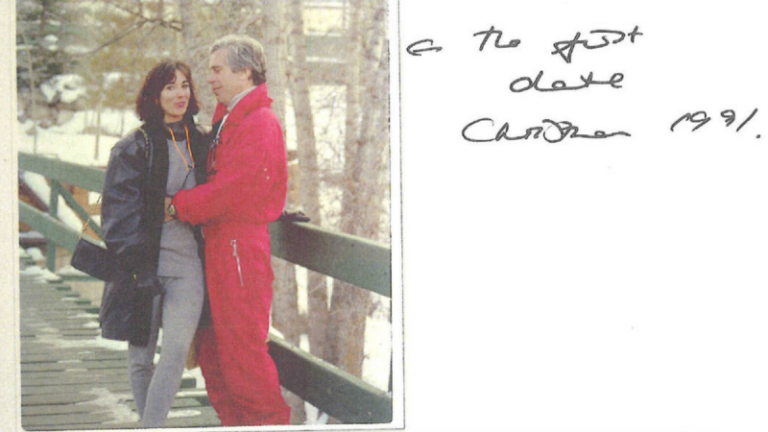
Later in the book, a photo of the two canoodling appears with a caption that reads ‘the first date,’ marked with the year 1991.

Maxwell was found guilty in 2021 of sex trafficking and other offenses, and is serving a 20-year prison term. Prosecutors said she played a central role in Epstein’s scheme, luring underage girls into what began as massages and escalated into sexual abuse.

Now 63 and incarcerated since her 2020 arrest, Maxwell told Deputy Attorney General Todd Blanche in late August that she had no role in the sexual exploitation of minors. When asked about the ‘birthday book,’ she told Blanche that she could only remember some parts of it, adding that it had been years since she compiled it. 

Among the book’s entries is an apparent note from Bill Clinton, where the former Democratic president praises Epstein’s ‘childlike curiosity’ and his ‘drive to make a difference’ as well as the ‘[illegible] of friends.’

Dershowitz, a former Harvard University law professor who once represented Epstein during criminal investigations, used his birthday note to make a joke about influencing media coverage.

‘Dear Jeffrey, as a birthday gift to you, I managed to obtain an early version of the Vanity Unfair article. I talked them into changing the focus from you to Bill Clinton, as you will see from the enclosed excerpt. Happy birthday and best regards,’ the entry said.

Dershowitz has repeatedly denied wrongdoing as it relates to Epstein.

The birthday book also contained sentimental messages from family and friends. In one note, Epstein’s mother, Pauline Stolofsky Epstein, wrote that she’s been ‘very busy reminiscing since Ghislaine asked me to write about you.’ 

‘Jeff[,] you have been a good son since day one and we have been proud of you ever since,’ Epstein’s mother said.

‘I recall you refused to sleep [as a child] unless I read a story from Grandma’s Golden Book that she bought for 25c,’ she added. ‘At PTA meetings I begged your teachers to improve your handwriting.’

She also referenced Epstein’s life as a bachelor, as well as his prominent media shout-outs.

‘At age 27 Cosmopolitan magazine featured you as ‘Bachelor of the Month,” Pauline Epstein wrote. ‘Today you still hold that title.’

‘Jeff, I’m so sorry that Dad can’t share the nachus [pride] we have regarding your achievements,’ she added. ‘He would have been overjoyed reading the article about you in New York Magazine.’ 

The book features hundreds of photos from throughout Epstein’s life until age 50, including pictures of him as a child and a teenager.

Some of the earlier images included family pictures, formal school photos and pictures of him hanging out with friends as a teenager.

The book also had revealing images of Epstein shirtless, Epstein embracing women and what appears to be a censored photo of him and Maxwell laughing and embracing in a pool. Pictures of mating lions and zebras were also included in the book.

A picture of a woman in a bikini was also included with the caption, ‘Visiting you down in Palm Beach. Can’t get a second of privacy with you and a camera around ha ha!’

Upon the files’ release, Rep. James Comer, R-Ky., chair of the House Oversight Committee, accused Democrats of previously ‘cherry-picking’ the documents.

‘Oversight Committee Republicans are focused on running a thorough investigation to bring transparency and accountability for survivors of Epstein’s heinous crimes and the American people,’ Comer said.

This post appeared first on FOX NEWS

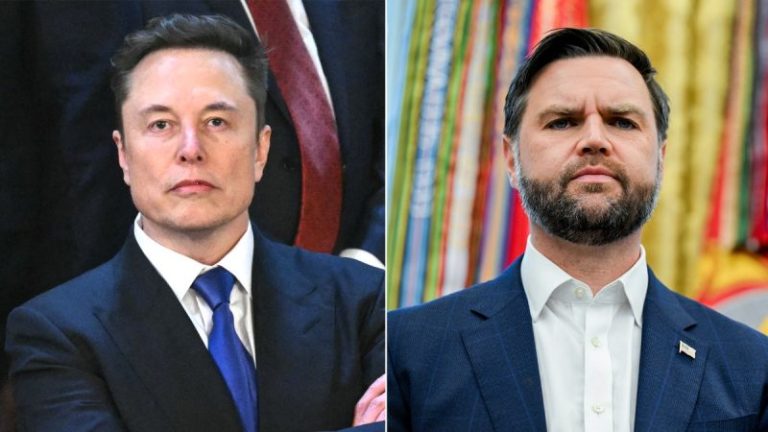
Business tycoon Elon Musk agreed with Vice President JD Vance’s assertion that the bulk of violent crime is perpetrated by a small pool of people who should be locked up.

‘The big lie the Democrats told about violent crime is that it’s ‘systemic’ and therefore no one’s really responsible. If the ‘system’ is to blame then you fund a bunch of nonprofits that don’t do anything besides give jobs to underqualified radicals,’ Vance noted in a post on X. ‘The reality is that the gross majority of violent crime is committed by a very small group of people and we should be throwing them in prison.’

Musk agreed, saying that people who have greater sympathy for those likely to perpetrate murder than for those at risk of becoming murder victims are ‘disgusting.’

‘Yes,’ he commented when sharing Vance’s post. ‘What it comes down to is this: Do you have more sympathy for those highly likely to commit murder or more for those at risk of being murdered? If the former, you are a disgusting human being and yet so many on the radical left choose this!’

Republican Rep. Beth Van Duyne of Texas also shared Vance’s post.

‘The crime and homeless industrial complexes Democrats have set up with NGOs and nonprofits’ aren’t designed to solve problems,’ the congresswoman asserted. ‘Rather, they are fraudulent entities which exist to launder taxpayer dollars to enrich themselves, their friends, and further radical, pro-criminal policies that only endanger hard working Americans.’

Musk has also advocated for locking up repeat violent criminals for life.

‘A second conviction for aggravated violent crime should get life imprisonment,’ he wrote on X.

This post appeared first on FOX NEWS

It really shouldn’t be that big a deal.

Donald Trump was one of many friends solicited to send messages to Jeffrey Epstein for his 50th birthday. There’s a far more cautious one from Bill Clinton, too.

If the president had merely said ‘yeah, I sent it, we were joking back and forth, nothing to see here’ – this was in 2003, before the child predator was charged with sexual abuse – nobody would have blinked. The birthday book was assembled by his then-girlfriend Ghislaine Maxwell.

Instead, he filed a $10 billion lawsuit against the Wall Street Journal for supposedly publishing inaccuracies in its report on the Trump birthday message.

The Journal has now been vindicated.

Trump flatly denied having sent a birthday message at all. He can’t draw, he would never do such a thing, it was inconceivable.

Now it looks a lot more conceivable.

As the Journal was the first to report, there is a friendly back-and-forth against the backdrop of a sketch of a naked woman’s silhouette. Trump’s signature is in the pubic area, and the paper says it matches other acknowledged ‘Donald’ signatures – along with his use of such phrases as ‘a wonderful thing.’

There is this exchange:

Donald: We have certain things in common, Jeffrey.

Jeffrey: Yes we do, come to think of it.

Donald: Enigmas never age, have you noticed that?

Jeffrey: As a matter of fact, it was clear to me the last time I saw you.

Donald: A pal is a wonderful thing. Happy Birthday – and may every day be another wonderful secret.

That’s it, given more punch by Trump’s denial that he never sent such a thing.

In fact, after the publication of the texts and the naked silhouette – which I’m sure you’ve seen as it’s been all over television – Trump continues to deny that the letter and sketch are his. 

They’re sure doing a good job of moving on from the Epstein mess, huh?

Reached on his cell yesterday by NBC reporter Garrett Haake, Trump said: ‘I don’t comment on something that’s a dead issue. I gave all comments to the staff. It’s a dead issue.’

That sounds like wishful thinking. The only ‘dead’ part is Jeffrey Epstein.

Press Secretary Karoline Leavitt backed up the boss in a posting:

‘The latest piece published by the Wall Street Journal PROVES this entire ‘Birthday Card’ story is false. As I have said all along, it’s very clear President Trump did not draw this picture, and he did not sign it. President Trump’s legal team will continue to aggressively pursue litigation.

‘Furthermore, the ‘reporter’ @joe_palazzolo who wrote this hatchet job reached out for comment at the EXACT same minute he published his story giving us no time to respond. This is FAKE NEWS to perpetuate the Democrat Epstein Hoax!’ But it’s hardly a hoax to Epstein’s victims, who spoke out the other day – one voted for Trump – about how being lured into having sex while young as 14 ruined their lives.

The New York Times has a sobering report on other birthday messages to Epstein.

Venture capitalist William Elkus recalled Epstein conjuring a beautiful woman out of thin air during a visit to a farm town in Iowa, where it was hard to ‘tell the difference between the girls and the hogs.’ Elkus marveled at Epstein’s being able to find a ‘spectacular tall blonde’ whom he later invited back with him to New York, concluding he had relied on ‘some long distance escort service.’

Elkus told the Times that it was a joke and that he was referring to Epstein’s ‘charisma, which was palpable.’

A person named Leslie wrote, ‘I wanted to get you what you want,’ so ‘here it is’ – a drawing of breasts. Another writer sent photos of zebras, and lions, getting it on.

A person named Nick described a night in London that left Epstein ‘howling with laughter.’ Nick said an ‘old man smiling sweetly’ pulled down a woman’s panties and put his hand on her privates, only to find another man’s hand already there. 

Some women, including assistants and girlfriends – the names are redacted – may have been Epstein’s victims. 

One woman wrote: ‘With you, dear Jeffrey, I laugh like a little girl and feel like a woman.’ There’s a hand-drawn heart, a brief message and a photo of a woman’s butt in a thong bikini.

There’s a cartoon of Epstein in a beach chair getting ‘what appears to be a nude massage from four topless women.’ Appears? That’s exactly what it is.

There were messages from Nathan Myhrvold, former chief technology officer for Microsoft; retail billionaire Leslie Wexner; billionaire investor Leon Black; Epstein’s onetime attorney Alan Dershowitz; and Jean-Luc Brunel, a French modeling scout who died in 2022 by suicide in a French jail cell after being charged with raping teenage girls.

The Washington Post has more, saying ‘attention to Trump’s relationship with Epstein is not going away anytime soon, and the political headaches for the president are likely to linger.’

In a partially redacted photo, Epstein is holding an oversized check made out to him for $22,500 with DJTRUMP on the signature line. The handwritten caption: ‘Sells ‘fully depreciated’ [redacted] to Donald Trump for $22,500.’ 

Trump allies have decided to make their stand on the signature question, adding to the murkiness.

‘Is this really the best they could do?’ wrote MAGA influencer Benny Johnson. ‘Trump has the most famous signature in the world. Time to sue them into the oblivion.’

In a drawing, labeled ‘1983,’ a male figure is pictured handing balloons to young girls in pigtails. That was next to ‘2003,’ where he’s drawn getting massages from topless blonde women with the caption ‘what a great country!’

Look, there’s no other way to say it: This has the whiff of a cover-up.

I mean, are people buying the president’s insistence that he never sent the birthday message that they’ve seen with their own eyes?

Trump boxed himself by insisting, even now, that he’d never sent such a message. That’s the heart of the political problem.

The president may pronounce the story dead, but for the rest of the world – including MAGA supporters who have been obsessed with this case – it’s very much alive.

This post appeared first on FOX NEWS

Sen. Josh Hawley, R-Mo., called to ‘open the courtroom doors’ so parents can sue Meta, accusing founder and CEO Mark Zuckerberg of misleading Congress after whistleblowers detailed child safety failures on the company’s virtual reality (VR) platforms.

Two former Meta researchers told a Senate panel Tuesday that the company buried child harm evidence in VR, killed age-verification studies and let AI chatbots flirt with kids, prompting a bipartisan push to pass measures protecting minors online.

‘The claims at the heart of this hearing are nonsense; they’re based on selectively leaked internal documents that were picked specifically to craft a false narrative,’ a Meta spokesperson said. 

‘The truth is there was never any blanket prohibition on conducting research with young people and, since the start of 2022, Meta approved nearly 180 Reality Labs-related studies on issues including youth safety and well-being.’

Testifying before the Senate were Cayce Savage and Jason Sattizahn, both former Meta researchers.

Sattizahn alleged Meta routinely prioritized engagement and profit over safety — especially for kids — and manipulated or erased research showing harm.

He said despite attempts to curb data collection, the studies researchers could run still showed the company’s products endangered users.

Germany once banned Meta’s VR sales over data treatment concerns; after sales resumed in 2022, Sattizahn was sent to conduct research there.

He said he understood Meta was trying to show its VR headsets were safe for Germans.

But when research uncovered that underage children using Meta VR in Germany were subjected to demands for sex acts, nude photos and other acts children should never be exposed to, Sattizahn alleged Meta demanded all evidence be erased.

‘My research still revealed emotional and psychological damage, particularly to women who were sexually solicited, molested or worse,’ he testified. ‘In response, Meta demanded I change my research in the future to not gather this data on emotional and psychological harm.’

Savage testified she led youth safety research in VR and likewise said Meta prioritized engagement over child safety.

She said the company employed suppression tactics, including editing reports, demanding deletions and threatening jobs.

Hawley asked Savage why it was important for Meta to have children under 13 using VR. She told him kids drive household adoption of gaming devices, which means more money for Meta.

‘So, this is about profits at the end of the day,’ Hawley told Savage while seeking clarification on whether Meta will do anything for a profit, including exposing children to vile sexual abuse.

‘When I was doing research to identify the harms that children were facing in VR, which I had to be sneaky about because legal wouldn’t actually let me do it, I identified that Roblox, the app on in VR, was being used by coordinated pedophile rings,’ Savage said. ‘They set up strip clubs, and they paid children to strip.’

She added that Robux could be converted into real money.

Savage said she flagged the issue to Meta, saying under no circumstances should Meta host the Roblox app on the headset.

‘You can now download it in their app store,’ she said.

Later, under questioning, Savage told the panel she estimates any child in a social VR space will come in contact with, or be directly exposed to, something inappropriate.

‘She said every single child who goes into the platform will 100% be exposed to child sex abuse material. Every single one,’ Hawley told Fox News Digital Tuesday evening. ‘I just come back to the fact that we have got to protect our children. 

‘It can’t be that if you go online as a kid, you are 100% likely to be sexually abused, and that’s what the witnesses said today. If you are online, if you’re on their virtual reality program platform rather, you are going to get sexually abused. That was their testimony.’

Hawley called out Zuckerberg for testifying on Jan. 31, 2024, that Meta does not allow people under the age of 13 on the service.

During his testimony last year, the CEO said anyone under the age of 13 will be removed from the service, and, in response to another question, Zuckerberg said Meta does not want users under the age of 13.

Hawley said Zuckerberg misled Americans with that testimony, pointing to whistleblowers who said under-13 users are rampant on the platform.

‘I don’t see how you can square what he told us under oath last year with what these whistleblowers said today,’ Hawley told Fox News Digital. ‘But that’s true of a lot of his statements. I mean, he said over and over, whether it’s the safety protocols Facebook has put into place, that’s not true. 

‘Whether it’s regarding their work in China, he said, ‘Oh, we don’t do work in China.’ That is not true. He said, ‘We don’t have any contacts with the Chinese government.’ That’s not true. So, I mean, we’re really piling up a long list here.’

Hawley said he has called for Zuckerberg to testify again under oath, though he’s heard Meta isn’t interested.

Ultimately, Hawley said, it was time to ‘open the courtroom doors’ so victims and families can sue Meta for failing to protect children.

‘It is abundantly clear to me that it is time to allow parents and victims to sue this company,’ he said. ‘They have got to be able to get into court and to get in front of a jury and hold this company accountable, and that begins with Mark Zuckerberg. There has to be accountability. We have to open the courtroom doors and allow victims to have their day in court.’

Earlier this year, Hawley said he advanced legislation through the Judiciary Committee that would allow victims of child sex abuse online to sue Facebook or any Big Tech company where harm happens.

‘I don’t think we’re going to see real change at these companies until this becomes law and parents and victims can get into court and hold these people accountable,’ he said. ‘The bottom line is we’ve got to protect our kids. I mean, they’re making money by stealing the innocence of our children.’

Meta told Fox News Digital the company is training its artificial intelligence bots to not respond to teenagers on self-harm, suicide, disorder eating and potentially inappropriate romantic conversations, regardless of content. The company is also working to limit teen access to a select group of AI characters, ‘for now.’

Sen. Marsha Blackburn, R-Tenn., closed the meeting by inviting anyone from Meta to testify or challenge what was said.

‘I think that they see there is truly bipartisan anger, not only with Meta, but with these other social media platforms and virtual reality platforms and chatbots that are intentionally, knowingly harming our children,’ she said. ‘This has got to stop. Enough is enough.’

This post appeared first on FOX NEWS

The Trump administration’s Make America Healthy Again (MAHA) Commission indicated that, after more than a decade of restrictions on whole milk in schools, the federal government is planning to drop them. 

The decision to drop the restrictions on whole milk sales in schools was announced as part of the MAHA commission’s Make Our Children Healthy Again Strategy, a sweeping plan with over 120 initiatives released Tuesday. The initiatives cover a wide range of topics, from toxic food dyes, to nutrient requirements, to misleading health advertisements. Updated recommendations regarding fluoride and PFAS chemicals in water and a new definition for ‘ultra-processed food’ were among the planned initiatives as well.

‘The Trump administration is mobilizing every part of government to confront the childhood chronic disease epidemic,’ Health Secretary Robert F. Kennedy Jr. said Tuesday. ‘This strategy represents the most sweeping reform agenda in modern history — realigning our food and health systems, driving education, and unleashing science to protect America’s children and families. We are ending the corporate capture of public health, restoring transparency, and putting gold-standard science — not special interests — at the center of every decision.’

The move to bring back whole milk to schools is something Kennedy has been considering since day one, according to Nina Teicholz, a nutrition expert who was privy to discussions among Kennedy’s staff before he was confirmed by the Senate to lead the nation’s public health response. While removing the restrictions is a significant move, there are still additional steps that will need to be taken before whole milk becomes widely accepted again, according to the Congressional Research Service (CRS).

One of those additional steps is rewriting the national dietary guidelines, which directly influence school meal nutrition standards. The new MAHA children’s health strategy indicates that the Trump administration will update the 2025–2030 guidelines, while also reforming the manner in which future dietary guidelines can be updated. Additionally, the U.S. Department of Agriculture (USDA) would also initiate changes to school nutrition standards through its rulemaking process to permit whole milk in schools. 

Meanwhile, legislation is another avenue that could be used to streamline the process for bringing back whole milk in schools, the CRS notes, which would then compel the USDA to revise its regulations governing the National School Lunch Program. In the current Congress, a bill to bring back both whole milk and 2% milk has been approved in the House and is awaiting full approval in the Senate before it can be sent to the president’s desk.

Another notable part of the new MAHA children’s health strategy entails an initiative to ramp up enforcement of prescription drug advertising laws. The strategy said this includes the dissemination of ‘risk information and quality of life through misleading and deceptive advertising on social media and digital platforms.’ The report notes that the new enforcement will target direct-to-consumer telehealth companies and social media influencers, among others.

In April, the Department of Health and Human Services (HHS) and the Food and Drug Administration (FDA) announced plans to phase out all petroleum-based synthetic dyes from the nation’s food supply. The MAHA strategy indicated this effort will remain ongoing as the FDA continues to pass policies that will either limit, or altogether prohibit, the use of petroleum-based food dyes in all food products approved in the United States.

Other initiatives include providing a government-wide definition for ‘ultra-processed foods’ to support future policy activity, efforts to require better transparency in food labeling, new recommendations regarding fluoride and PFAS chemicals in water, updates to the Generally Recognized As Safe (GRAS) standards, changes to nutrition requirements for infant formula, and efforts to increase breastfeeding rates to ensure a safe supply of donor milk.

‘For too long, health care has used a reactive approach to chronic diseases,’FDA Commissioner Dr. Marty Makary said. ‘I am pleased to support the findings of the MAHA commission and to promote a more proactive approach, tackling root causes undermining the health and happiness of American children.’

Tuesday’s children’s health strategy from the MAHA Commission follows an earlier assessment on children’s health released in May. After that report was released, farmers expressed concern over what the reforms could mean for their livelihoods. However, following Tuesday’s latest strategy report, at least one of those groups is applauding the Trump administration for taking steps to protect farmers. 

‘It’s clear that farmers’ voices were finally heard, but our work to defend their access to safe and proven crop protection tools is far from over,’ said Elizabeth Burns-Thompson, Executive Director of the Modern Ag Alliance. ‘The Commission avoided some of the most damaging potential outcomes for American agriculture, but it still advanced some misconceptions about these essential farming inputs and the gold-standard science and regulatory processes that stand behind them.’

This post appeared first on FOX NEWS

Questcorp Mining Inc. (CSE: QQQ,OTC:QQCMF) (OTCQB: QQCMF) (FSE: D910) (the ‘Company’ or ‘Questcorp’) is pleased to provide an update on the Phase I drilling program at its La Union Gold and Silver project in northwest Sonora, Mexico. Drill holes have now been completed at two of the 4 target areas:

  • The initial hole was completed beneath the historic Union Mine itself, intersecting the favourable carbonaceous Clemente and Caborca formations, including the microconglomeratic carbonate unit which hosted mineralization at the bottom of the past producing Union Mine.
  • Drilling then shifted focus to the El Cobre Mine area and the Union Norte Mine area, testing vertical feeder zones above the Clemente formation dolomites and carbonaceous sandstones. Hole two intersected more quartzites than interpreted from the geophysics, with the quartzites carrying more extensive hematitic oxides, possibly indicative of oxide gold mineralization potentially related to sulfides which have been oxidized through supergene weathering.

Saf Dhillon, President and Chief Executive Officer, states: ‘The drilling is indicating oxidation is consistent with past mining and targets are coming along with a positive exploration drilling so far. The drilling is intersecting more quartzite than expected which is favorable for fracture-controlled mineralization. The Riverside operations team is progressing the current exploration program working with the surface rancher and the drilling company to efficiently progress a high-quality exploration program.’

Drilling has now moved to the Famosa Target to progress exploration program. The Mexico Mining Ministry has approved many permits and are actively supporting the environmentally, socially conscious mineral exploration practices as a key aspect for the new Mexican government initiatives.

The technical content of this news release has been reviewed and approved by R. Tim Henneberry’, P.Geo (BC) a Director of the Company and a Qualified Person under National Instrument 43-101.

About Questcorp Mining Inc.

Questcorp Mining is engaged in the business of the acquisition and exploration of mineral properties in North America, with the objective of locating and developing economic precious and base metals properties of merit. The company holds an option to acquire an undivided 100-per-cent interest in and to mineral claims totalling 1,168.09 hectares comprising the North Island copper property, on Vancouver Island, B.C., subject to a royalty obligation. The company also holds an option to acquire an undivided 100-per-cent interest in and to mineral claims totalling 2,520.2 hectares comprising the La Union project located in Sonora, Mexico, subject to a royalty obligation.

ON BEHALF OF THE BOARD OF DIRECTORS,

Saf Dhillon
President & CEO

Questcorp Mining Inc.
saf@questcorpmining.ca
Tel. (604-484-3031)

Suite 550, 800 West Pender Street
Vancouver, British Columbia
V6C 2V6.

Certain statements in this news release are forward-looking statements, which reflect the expectations of management regarding completion of survey work at the North Island Copper project. Forward-looking statements consist of statements that are not purely historical, including any statements regarding beliefs, plans, expectations or intentions regarding the future. Such statements are subject to risks and uncertainties that may cause actual results, performance or developments to differ materially from those contained in the statements. No assurance can be given that any of the events anticipated by the forward-looking statements will occur or, if they do occur, what benefits the Company will obtain from them. Except as required by the securities disclosure laws and regulations applicable to the Company, the Company undertakes no obligation to update these forward-looking statements if management’s beliefs, estimates or opinions, or other factors, should change.

To view the source version of this press release, please visit https://www.newsfilecorp.com/release/265741

News Provided by Newsfile via QuoteMedia

This post appeared first on investingnews.com

In the high-stakes world of resource extraction, a nation’s mineral wealth is a powerful magnet for investment, fueling economic growth and national prosperity. But not all countries are created equal.

For investors in the mining sector it’s key to understand that jurisdictional risk can be profoundly impacted by political changes, as new administrations can swiftly alter the regulatory landscape. These policy shifts can present both opportunities and setbacks, introducing a complex layer of uncertainty to even the most promising ventures.

At the same time, regions traditionally seen as stable and secure for resource development can face their own challenges, including rigorous permitting regimes that can slow mine development activity.

Read on for three case studies on jurisdictional risk and how to navigate this type of complexity.

Case study: First Quantum’s Cobre Panama mine

Perhaps the most notable example in recent years of how politics can affect operations is the closure of First Quantum Minerals’ (TSX:FM,OTC Pink:FQVLF) Cobre Panama mine in Panama.

As with many mining operations, Cobre Panama took decades to bring into production. First Quantum received approval to begin work at the site in February 1997; however, it would take 22 years and US$10 billion to build the mine and the required infrastructure before production commenced in September 2019.

When it was placed on care and maintenance in November 2023, the mine was one of the largest in the world, accounting for approximately 1 percent of total copper supply.

The closure came after Panama’s government faced intense public backlash for granting First Quantum a 20 year mining contract; it was quickly declared unconstitutional by the Supreme Court.

The Panamanian government also introduced an indefinite moratorium on all mining concessions. The move put the country’s mining sector in a state of limbo and led other companies to cease activities in Panama. For example, Orla Mining (TSX:OLA,NYSEAMERICAN:ORLA) decided to halt funding of its Cerro Quema project until it had “greater certainty with respect to the mining concessions, as well as fiscal and legal stability in Panama.”

Cobre Panama’s closure and the subsequent moratorium led Fitch to downgrade its investment outlook for Panama in March 2024, from BBB- to BB+. The credit agency cited fiscal governance challenges that arose following the mine’s closure, noting that Cobre Panama accounted for 5 percent of the nation’s GDP.

Although the International Monetary Fund expects Panama’s GDP to rebound to 4.5 percent in 2025 as non-mining sectors of the nation’s economy grow, the changes have already had a significant impact on the national economy, with GDP growth slowing to 2.9 percent in 2024, from 7.4 percent in 2023.

Case study: Barrick Mining’s Loulo-Gounkoto complex

Another recent example is the impact of unrest on Barrick Mining’s (TSX:ABX,NYSE:B) operations in Mali.

The African nation has experienced a prolonged period of instability, with the government being overthrown in three coup d’états within a 10 year span, in 2012, 2020 and 2021.

The most recent two came following months of turmoil after election irregularities and accusations of corruption in 2020, then calls for a more legitimate government to be installed in 2021.

Ultimately, the government was replaced by a military junta, and in 2022, it was announced that elections would be held in 2024. However, these were delayed until early 2025, at which time they were again postponed.

This past July, Malian military authorities granted current leadership a five year mandate, renewable as many times as necessary without requiring an election, which guarantees control of the government until 2030.

The impact on the mining sector has been notable. In 2022, the new government ordered an audit of the mining sector, which led to Mali adopting a new mining code in 2023 after limited industry consultation.

The code aims to generate more revenue for the government from mining operations by increasing government ownership to 35 percent from 20 percent and removing tax-exempt status for some operations.

Existing mining contracts were also reviewed, which limited the ability to renegotiate, leading to a protracted negotiation process between the Malian government and Barrick over its Loulo-Gounkoto complex.

While Barrick has said its commitment to Mali remains firm, going so far as to make a good-faith payment of US$83 million, the two parties were unable to reach an agreement. The stalled negotiations led the government to arrest or issue arrest warrants for key personnel over unpaid taxes and contract disputes, including Barrick CEO Mark Bristow.

With no resolution, Barrick was ultimately forced to shut down the mine in January of this year. Although arbitration proceedings continue, the operation was placed under provisional administration on June 16, and government helicopters were seen onsite removing more than 1 metric ton of gold on July 10.

According to the Extractive Industry Transparency Initiative, the mining sector makes a significant contribution to the nation’s economy, representing 79 percent of exports and 9.2 percent of GDP. Although other companies haven’t ceased operations in the country, the government’s action has created tensions for investors, with CEOs suggesting that the new rules make it economically unfeasible for new mines or takeovers in the country.

The Fraser Institute gave Mali a policy perception score of 14.94 in its 2024 Annual Survey of Mining Companies, a significant decrease from 2023, when it achieved 33.34, and a precipitous decline from 2020’s score of 78.18. In the overall ranking, Mali fell to 74 out of 82 countries included in the survey, down from 37 out of 77 in 2020.

The institute notes that companies say policy accounts for about 40 percent of their decision when choosing where to establish operations. The other 60 percent is based on the mineral potential. In this regard, Mali improved to 55.26 from 41.18 in 2023; however, it remains in the bottom half of all jurisdictions, ranking 40 out of 58.

The institute uses these scores to determine the overall investment attractiveness of jurisdictions. In 2024, Mali scored 39.13 and ranked 72 out of 82. Respondents to the survey suggested that the rejection of gold mining permits and the lack of transparency created uncertainty and deterred investment.

Even when investment is in the national interest, underlying issues can be hard to overcome.

Case study: The DRC

The Democratic Republic of the Congo (DRC) is endowed with a vast wealth of minerals, ranging from copper to cobalt and diamonds, but a lack of infrastructure and geopolitical instability have hindered investment.

However, the mining sector has seen steady growth in recent years as the government looks to attract investment. One project is the construction of the Lobito Corridor, Africa’s first open-access transcontinental rail link. It connects Zambia and the DRC with the port of Lobito in Angola, providing improved shipping opportunities for producers.

Among the operations that have signed on to use the rail link is Ivanhoe Mines’ (TSX:IVN,OTCQX:IVPAF) Kamoa-Kakula mine. The asset is one of the world’s largest copper mines, producing 964 million pounds in 2024.

In February 2024, the company signed a term sheet to access the corridor, allowing it to transport between 120,000 and 240,000 metric tons of copper concentrates per year for a five year term, commencing in 2025.

In a press release, Robert Friedland, Ivanhoe’s founder and executive co-chair, said the corridor is “fast becoming one of the most important trade routes for vital copper metal in the world.”

He added that the rail link will unlock projects due to the lower logistical costs.

While development in the DRC is moving in the right direction, it’s not without its problems. Tensions remain with neighboring Rwanda, as Rwanda has backed anti-government M23 rebels. The groups have been warring since 2022, with much of the violence occurring in the Eastern DRC, a mineral-rich area of the country.

In April 2024, M23 seized the town of Rubaya, the center of coltan production in the DRC; coltan is a critical mineral for the tech sector. While Ivanhoe’s mine has avoided the violent uprisings elsewhere in the country, it still highlights key security challenges for operations in the country and underscores the fragility of stability.

Like Mali, the DRC declined in the Fraser Institute’s survey last year.

It dropped to 12.97 on policy, down from 24.93 in 2023, ranking 77 out of 82. However, its mineral potential ranked much higher, scoring 73.53 — that’s up from 55 in 2023 and a rank of 14 out of 58.

On overall investment attractiveness, the DRC was middling, scoring 49.31 and ranking 58 out of 82. The report points to issues such as disputes over land tenure ownership, which have led to uncertainty and deterred investment.

Is there any truly safe mining jurisdiction?

The mining community has looked mainly to North America, Europe and Australia to minimize jurisdictional risk.

Canada, the US and Australia are widely considered safe places to invest in due to the stability of their governments and the absence of cross-border conflicts. Despite changes in government, political parties in these nations tend to support extractive industries through tax credits and investment programs.

As a whole, challenges in these jurisdictions tend to be more regulatory than geopolitical in nature, with strict environmental and social regulations adding years to development timelines.

Recently, however, there have been some moves to break down these barries.

The US and Canada have both made promises to streamline the permitting process to decrease timelines for critical minerals. Additionally, under the Biden administration, the US Department of Defense, increased funding for projects deemed critical to national interests, including those involving Canadian companies Fortune Minerals (TSX:FT,OTCQB:FTMDF) and Lomiko Metals (TSXV:LMR,OTC Pink:LMRMF).

The program has continued under US President Donald Trump, with the most recent award being announced on July 22, for US$6.2 million in funding for Guardian Metal Resources (LSE:GMET,OTCQX:GMTLF).

Although challenges in these regions still exist, in general they remain stable. For investors, it can help to de-risk portfolios and avoid the geopolitical tensions and uncertainty that arise elsewhere.

Securities Disclosure: I, Dean Belder, hold no direct investment interest in any company mentioned in this article.

This post appeared first on investingnews.com