Author

admin

Browsing

A judicial consensus is forming against climate lawfare, but the U.S. Supreme Court must still end environmental extortion of American energy. In two landmark cases, the court will soon have the opportunity to reassert the federal government’s authority over questions of national energy and environmental policy. 

Environmental groups believe that energy use increases global temperatures, causes sea levels to rise and creates more destructive weather. Their campaign to curtail energy has taken many forms — including asking the Environmental Protection Agency (EPA) to block pipelines and the Interior Department to deny oil and gas leases — but it met a roadblock with the 2024 election and the Trump administration’s subsequent blizzard of executive orders lifting overregulation.  

Rather than pursue their interests in Congress or before the electorate, environmental extremists have now allied with bankrupt cities and trial lawyers to use the courts to shake down the energy industry. Blue cities and states have filed tort suits in state courts to extract money for allegedly causing weather-related costs in their jurisdictions. 

The Supreme Court will soon decide whether to take up one of those cases, Boulder County v. Suncor Energy, following a ruling this year from the Colorado Supreme Court that allowed the county’s case to move forward in state court. Borrowing theories of liability from tobacco and opioid litigation, Boulder alleges that energy companies sold their products without disclosing climate risks. Such claims plainly intrude on federal authority over interstate pollution. 

Other climate cases are still progressing in lower state courts. In Hawaii, summary judgment motions are pending in a case seeking damages for rising sea levels. Hawaii’s highest court allowed this litigation to move forward in 2023 with Justice Todd Eddins issuing a remarkable concurrence, declaring that litigation would proceed under the ‘Aloha Spirit,’ regardless of federal precedent.  

In Rhode Island, the state judge presiding over a similar lawsuit against the energy industry compared it to developing nations devastated by natural disasters, citing Kenya, Tanzania and the Seychelles. The suggestion that Rhode Island has suffered comparable ‘severe destruction’ is telling: judges are inflating rhetoric to justify climate claims, not grounding them in law.  

Meanwhile, other states are effectively trying to replace federal authority over environmental policy. In Louisiana, plaintiffs obtained a $750 million judgment (potentially over $1 billion with interest) against Chevron for coastal erosion that they claimed was caused by oil extraction during World War II. Those companies had been under federal contracts to supply aviation fuel for the war effort. Yet eight decades later, Louisiana claims it can punish those practices retroactively. 

The energy firms sought to move the case to federal court because of its genesis in work for the federal government. But a divided 5th U.S. Circuit Court of Appeals panel refused to allow it. As Judge Andrew Oldham rightly noted in dissent, crude oil extraction plainly ‘relates to’ war production. If states can sue private businesses for their wartime work generations later, future cooperation with the federal government will be chilled, raising the costs of national defense. This coming term, the Supreme Court will review the Fifth Circuit’s decision. 

Despite some disappointing rulings from activist judges, a growing number of state courts are beginning to resist such frivolous claims. A Maryland judge rejected Baltimore’s lawsuit that alleged fossil fuels caused sea rises that have harmed the city; the Maryland Supreme Court will hear the appeal later in October. A South Carolina court dismissed Charleston’s similar claims, which blue city officials will almost certainly appeal as well. Likewise, nearly identical state and municipal lawsuits have been similarly dismissed in Pennsylvania, New York, Delaware and New Jersey. 

Notwithstanding some recent wins, climate lawfare is like Hydra — new cases are constantly being brought. Even if higher courts ultimately overturn them, simply forcing the industry to defend against these suits imposes enormous litigation costs. That alone is a victory for environmental radicals. At this stage, the Supreme Court must act to reaffirm federal authority over national energy and environmental policy.  

If climate change is producing harmful effects nationwide, then the nation should decide how to address it. As the U.S. Court of Appeals ruled in a 2021 case rejecting New York City’s lawsuit against Chevron, ‘the question before us is whether a nuisance suit seeking to recover damages for the harms caused by global greenhouse gas emissions may proceed under New York law. Our answer is simple: no.’ However, they frame their aims, blue cities and states are trying to set nationwide climate policy through litigation — violating federal law and tort principles. 

As the country decides how to respond to climate change, those choices — including the possibility of not acting — must have nationwide legitimacy. Courts cannot allow a handful of blue jurisdictions, aided by trial lawyers and environmental activists, to dictate those decisions for the rest of America. 

This post appeared first on FOX NEWS

House Republicans’ campaign arm is going after Democrats hours after the federal government entered a shutdown at midnight on Wednesday.

A new National Republican Congressional Committee (NRCC) ad being rolled out in 42 battleground districts is aimed at putting pressure on Democratic lawmakers to accept the GOP’s plan and end the shutdown.

‘Democrats refused to fund the government. So now military troops, police and Border Patrol lose their paychecks. Because of Democrats, veterans, farmers, small businesses lose critical funding. Disaster relief — cut off,’ a voiceover states.

‘Democrats are grinding America to a halt in order to give illegal immigrants free healthcare. Tell Democrats: Stop the shutdown.’

The ad buy came at a four-figure price tag, according to an NRCC spokesperson.

It’s being rolled out in 25 districts represented by Democrats and 17 held by Republicans.

The federal government shut down overnight after Democrats and Republicans in the Senate failed to reach a spending agreement in time for the end of fiscal year (FY) 2025 on Sept. 30.

A short-term extension of FY 2025 funding, aimed at giving Congress more time to reach a longer-term deal, failed to advance in the Senate on Tuesday evening.

The measure, aimed at keeping the government open through Nov. 21, passed the House mainly along party lines earlier this month.

Democrats were angered at being sidelined in the spending negotiations, and by the GOP bill’s exclusion of enhanced COVID-19-era Obamacare subsidies. Those subsidies, passed in 2021 under President Joe Biden, are set to expire by the end of 2025 without congressional action.

Republicans have signaled that they will not budge from their measure, citing Democrats’ past support for similar bills aimed at averting shutdowns.

‘Out of touch Democrats shut down the government to bankroll handouts for illegal immigrants and appease their radical base. Voters won’t forget who betrayed them, and the NRCC will make sure Democrats pay the price,’ NRCC spokesman Mike Marinella told Fox News Digital.

President Donald Trump and his administration have wide discretion over what changes occur during a shutdown.

However, it’s likely that thousands of government employees get furloughed, while others are made to work without paychecks until funding is reinstituted. A host of federal agencies and services could also be shuttered.

Some federal workers could lose their jobs permanently as well, with Office of Management and Budget Director Russ Vought issuing guidance earlier this month warning offices to consider plans for mass layoffs in the event of a shutdown.

This post appeared first on FOX NEWS

African Discovery Group (OTC:AFDG) (“AFDG” or the “Company”) has entered into a term sheet to acquire the Butembo Copper exploration license in the Democratic Republic of Congo (DRC) by acquiring 100% of the shares of SOCIETE GRABIN MINING SAS (the “Transaction”). The Butembo Copper project is a greenfield exploration project located in the North Kivu province of the Democratic Republic of Congo. 40km south of the provincial capital of Beni. The project is located 33km west of the Ugandan border with verified road and rail access to the port of Mombasa.

The area is generally underexplored relative to the well-known copper belts of the Katanga copper belt to the south – however the Mesoproterozoic Kibalian greenstone belt is known for its tungsten-tin-gold occurrences, and it hosts the well-known Kilembe Mine nearby which has produced substantial quantities of both copper and cobalt

According to Rio Tinto, African deposits make up eight out of the 10 highest grade deposits discovered since 1990. The recent discovery of the Butembo copper deposit has underscored the need for further exploration work in areas peripheral to the Katanga Copper Belt.It is important to note that the artisanal pits initially targeted and extracted alluvial gold in the surficial gravels that overly the schists hosting the copper mineralization.The implication is that Butembo is prospective for both gold and copper.

The Butembo discovery is a near surface high-grade copper oxidized ore with measured grades of up to 18% with depth and lateral extension potential of over 5km along strike. The project is located at the base of the Ruwenzori mountains and borders Virunga National Park. There is extensive artisanal activity for both copper and gold and by extension a thriving small scale minerals industry exists in Butembo going back years. Regolith clay samples to the north have tested positively for copper – this is interpreted as a positive indicator of a northern extension to Butembo.

The artisanal and first phase exploration pits around the flood plain of the Talehya River, which runs through the concession, have been tested over an initial 500m of strike length – and the results have been positive with one of these analyses reporting the 18% Cu mentioned above as well as 16.3% in another exploration pit.

The deposit is in the vicinity of the historic Kilembe copper mine (4 million tons) across the border in Uganda whose sulphide mineralization occurs within biotite schists thought to have formed by hydrothermal fluids during early tectonic cycles that were trapped in structurally favorable impermeable locations. This offers a unique insight into the potential geological controls of the Butembo deposit. Mineralization is structurally controlled, occurring along northeast-trending shear zones and folds that facilitated hydrothermal fluid flow. The primary ore minerals include chalcopyrite, pyrite, and linnaeite, forming massive sulfide lenses and disseminated zones.

The Butembo deposit holds a strategically advantageous location, benefiting from proximity to regional infrastructure, which includes electrical power being available within reach of the project boundary. The site is located close to the Ugandan border, offering access to the East African transport corridor. This includes road and rail connections through Uganda to the port of Mombasa, Kenya—providing a viable export route for future development.

The combination of surface high-grade mineralization, artisanal activity, infrastructure access, and strategic location positions the Butembo Copper Project as a high-potential target for early-stage exploration and resource delineation.

Source

This post appeared first on investingnews.com

Perth, Australia (ABN Newswire) – Locksley Resources Ltd (ASX:LKY,OTC:LKYRF) (FRA:X5L) (OTCMKTS:LKYRF) is pleased to advise that a senior Locksley team has completed a visit to Rice University in Houston, Texas, to formally evaluate the Company’s research collaboration with Rice.

Highlights

– Given increased industry interest in DeepSolv(TM), the Company has requested the expansion & acceleration of the Rice technology program

– The expansion would include the following components:

o Testing of multiple antimony feedstocks at different processing stages, direct ore, post DMS and high-grade concentrates

o Testing of antimony feedstock from multiple sources including the Mojave Project, EV Resources and additional other 3rd party samples

– Meetings held with Professor Pulickel Ajayan, Rice Executive Vice President for Research, and Technology Transfer Office

– Dedicated project workshop with the Ajayan research team to discuss technical programs

– Locksley in discussions with an additional mining group regarding the opportunity of evaluation the DeepSolv(TM) technology

– Locksley is focused upon providing Antimony processing independence to the USA and the opportunity presented by the $1.5bn+ domestic market

During the visit, the Locksley team met with Professor Pulickel Ajayan and members of his laboratory, senior Rice administrators including the Executive Vice President for Research and the Office of Technology Transfer and representatives from Rice Public Affairs. These discussions were followed by a dedicated project workshop with the Ajayan group, providing the foundation for the joint technical program under the collaboration.

The work program, formally launched through this visit, will focus on two parallel thrusts:

1. The development of DeepSolv(TM) product, for the extraction and refining of antimony feedstocks

2. The evaluation of antimony-based materials for advanced energy storage applications

As previously announced, Locksley has secured an agreement with EV Resources for the supply of external antimony ore, which will be incorporated alongside feedstock from the Mojave Project to support the development of DeepSolv(TM). In addition, DeepSolv(TM) continues to gain industry momentum, with discussions now underway with an additional potential user for the treatment of antimony ore. Given the growing industry interest in DeepSolv(TM) the Company is actively evaluating options to expand and accelerate the Rice technology program.

Locksley views the Rice partnership as a cornerstone of its U.S. strategy, providing access to world class expertise and positioning the Company to advance both upstream and downstream opportunities in antimony and rare earths.

Locksley’s Chairman Patrick Burke, commented:

‘This visit marks an important milestone in Locksley’s mine-to-market strategy to onshore the supply of antimony and rare earths into the United States. By formally commencing our collaboration with Rice University and incorporating additional ore supply secured through our agreement with EV Resources, we have laid the foundation for a practical and accelerated testwork program. These initiatives position Locksley at the centre of developing a secure domestic supply chain, aligned with U.S. government priorities. We look forward to working closely with Professor Ajayan and his team as we move rapidly toward delivering tangible results.’

*To view images and figures, please visit:
https://abnnewswire.net/lnk/U3C84R75

About Locksley Resources Limited:

Locksley Resources Limited (ASX:LKY,OTC:LKYRF) (FRA:X5L) (OTCMKTS:LKYRF) is an ASX listed explorer focused on critical minerals in the United States of America. The Company is actively advancing exploration across two key assets: the Mojave Project in California, targeting rare earth elements (REEs) and antimony. Locksley Resources aims to generate shareholder value through strategic exploration, discovery and development in this highly prospective mineral region.

Mojave Project

Located in the Mojave Desert, California, the Mojave Project comprises over 250 claims across two contiguous prospect areas, namely, the North Block/Northeast Block and the El Campo Prospect. The North Block directly abuts claims held by MP Materials, while El Campo lies along strike of the Mountain Pass Mine and is enveloped by MP Materials’ claims, highlighting the strong geological continuity and exploration potential of the project area.

In addition to rare earths, the Mojave Project hosts the historic ‘Desert Antimony Mine’, which last operated in 1937. Despite the United States currently having no domestic antimony production, demand for the metal remains high due to its essential role in defense systems, semiconductors, and metal alloys. With significant surface sample results, the Desert Mine prospect represents one of the highest-grade known antimony occurrences in the U.S.

Locksley’s North American position is further strengthened by rising geopolitical urgency to diversify supply chains away from China, the global leader in both REE & antimony production. With its maiden drilling program planned, the Mojave Project is uniquely positioned to align with U.S. strategic objectives around critical mineral independence and economic security.

Tottenham Project

Locksley’s Australian portfolio comprises the advanced Tottenham Copper-Gold Project in New South Wales, focused on VMS-style mineralisation

Source:
Locksley Resources Limited

Contact:
Locksley Resources Limited
T: +61 8 9481 0389
E: info@locksleyresources.com.au

News Provided by ABN Newswire via QuoteMedia

This post appeared first on investingnews.com

Investor Insight

Rua Gold offers a compelling investment opportunity driven by its highly promising gold assets in New Zealand’s historic gold-producing regions, and supported by the government’s renewed focus on fast tracking economic growth.

Overview

Rua Gold (TSXV:RUA,OTC:NZAUF,WKN:A4010V,OTCQB:NZAUF) is a gold exploration company focused on two prolific, historic gold-producing regions in New Zealand: Hauraki Goldfield and Reefton Goldfield. Both these regions boast of previous high-grade gold production, with more than 15 million ounces (Moz) produced in the Hauraki district and over 2 Moz in the Reefton Goldfield. New Zealand is a tier 1 mining jurisdiction with highly prospective geology, and a skilled workforce. The new government of New Zealand has committed to promoting economic growth through mining- and business-friendly policies, such as the Fast Track Approval Bill, which proposes quicker approval timelines for a range of projects, including mining.

Rua Gold solidified its position as the dominant Reefton Goldfield explorer with the acquisition of Reefton Resources, a 100 percent owned subsidiary of Siren Gold (ASX:SNG). The completion of the transaction expands Rua Gold’s tenement package to cover over 95 percent of the Reefton Goldfield.

New Zealand’s critical minerals list includes both gold and antimony, enhancing the significance of Rua Gold’s ongoing exploration campaign which revealed promising antimony potential. Rua Gold sits on the majority of New Zealand’s known antimony inventory, a strategic advantage that positions the Reefton Project to contribute substantial economic value while strengthening New Zealand’s critical mineral supply.

Rua Gold benefits from a team of professionals boasting extensive expertise in geology and mining. The company’s board of directors is led by Oliver Lennox-King (Fronteer, Roxgold), who has a successful track record developing projects and companies.

Company Highlights

  • Rua Gold is a gold exploration company advancing two highly prospective land packages in New Zealand’s historic gold districts – the Hauraki Goldfield and the Reefton Goldfield.
  • Premiere Mining Jurisdiction: New Zealand is recognized as a tier 1 mining jurisdiction, underpinned by proven high grade geology and a long history of gold production. The country hosts orogenic deposits (+9 Moz), epithermal sources (+15 Moz), and alluvial deposits (+22 Moz).
  • Key Assets: The company’s portfolio includes the Reefton Goldfield on New Zealand’s South Island and the Glamorgan property on the North Island.
  • Supportive Government Policy: The new government has prioritized economic growth, highlighted by the Fast Track Approval Bill, which enables mining permits to be granted in less than 6 months, the fastest permitting timeline in the world.
  • High-Quality Prospects: Rua Gold’s projects feature both orogenic and epithermal gold systems with historical production grades ranging from 16 to 50 g/t gold.
  • Exploration Programs: The company is fully permitted and financed, with multiple near-term catalysts. Active exploration is underway, including drilling programs at the Reefton district properties.
  • Leadership Team: Rua Gold is led by a seasoned board and management team with deep regional knowledge and a strong track record of discovery success. With financing and permits secured, the company is well-positioned to unlock value and drive growth.

Key Projects

Reefton Goldfield

Rua Gold holds six project areas at the Reefton Goldfield: Northern, Capleston, Murray Creek, Ajax, Crushington, and Southern. The Reefton district has a rich history of gold production with over 2 Moz of gold recovered at 24.5 g/t. Among the noteworthy findings from recent years of exploration is the greenfield discovery of the Pactolus quartz vein. Assays have unveiled significant high-grade gold concentrations in this vein.

Rua Gold’s systematic exploration has highlighted the potential for the rejuvenation of this district in renewed opportunities around the historic high-grade gold deposits. Rua Gold completed an extensive assessment of the historical mines situated within the company’s tenements in the Reefton Goldfield, yielding five targets in the Murray Creek area.

Rua Gold has expanded its Reefton exploration program with a third drill rig and a planned 4,000 m of diamond drilling at Auld Creek in the coming months. The company is targeting a resource of >300,000 oz AuEq by the end of 2025 and positioning to enter New Zealand’s proposed fast-track permitting process. At Glamorgan, access agreements are underway, with surface work scheduled for Q3 2025 and drilling expected to begin in Q4 2025. Rua Gold is fully funded to execute this growth strategy, with a cash balance of US$14 million as of June 30, 2025.

Drilling at Auld Creek has returned high-grade intercepts, including 17 m @ 9.8 g/t AuEq (with 10 m @ 15.3 g/t AuEq) and 8 m @ 8.9 g/t AuEq (with 5 m @ 11.1 g/t AuEq). These results extend the vertical extent of the Fraternal shoot from 160 m to 300 m and strike length from 350 m to 620 m, with mineralization remaining open in all directions. Surface geochemistry suggests the system may continue for more than 2.5 km, underscoring significant potential for resource growth.

Glamorgan Project

The Glamorgan project comprises over 4,600 hectares in the Hauraki district on New Zealand’s North Island. Hauraki boasts of a substantial presence of high-grade gold and silver mining, with approximately 50 epithermal deposits mined since the 1860s. These deposits have yielded over 15 Moz of gold and 60 Moz of silver. Glamorgan has a 3.8 km zone displaying indications of gold mineralization, backed by soil and rock samples, suggesting the presence of an epithermal gold mineralized system at the property.

Glamorgan is located 2.8 kms north of Oceana Gold’s recent significant discovery at Wharekirauponga. The company has applied for a minimum impact access agreement with the New Zealand Department of Conservation. Once granted, the company will commence an exploration program that includes soil sampling, magnetic and resistivity geophysical surveys, and geological mapping.

Rua Gold completed the first phase of surface exploration on its Glamorgan epithermal gold prospect which identified two significant soil anomalies over 4 kms in length. Rua Gold also completed the second phase of surface exploration at its Glamorgan Project, an epithermal gold system located in the Hauraki Goldfield on New Zealand’s North Island.

The Hauraki Goldfield is a prolific epithermal gold province that has produced more than 15 million ounces of gold from over 50 historic mines. The Glamorgan Project sits adjacent to OceanaGold’s Wharekirauponga deposit, which hosts Indicated Mineral Resources of 1.4 Moz at 17.9 g/t Au and is expected to commence construction in the second half of 2025.

Management Team

Oliver Lennox-King – Non-executive Chairman

Oliver Lennox-King boasts a distinguished and extensive career within the mineral resource sector, encompassing a broad experience in financing, research, and marketing. Since 1992, he has occupied senior executive and board roles in various junior exploration and mining enterprises. Most recently, Lennox-King was the chairman of Roxgold from 2012 until July 2021, when it was sold for $1.2 billion to Fortuna. In addition to Roxgold, he also served as chairman of other notable firms, including Pangea Goldfields, Aurora Uranium, and Fronteer Gold.

Robert Eckford – CEO and Director

Robert Eckford is a certified professional accountant with significant expertise in mergers and acquisitions, accounting, finance, and commercial management within the mining sector. Most recently, he was co-founder and head of finance for Aris Mining, and prior to that, he had worked with international mining companies, including Barrick Gold, Yamana Gold, and Leagold Mining.

Simon Henderson – COO and Director

Simon Henderson is an exploration specialist and has over 40 years of experience, most of which is in New Zealand. He was part of the discovery team for several significant gold finds in New Zealand, such as Wharekirauponga. He maintains robust connections with key local stakeholders and the country’s permitting authorities.

Zeenat Lokhandwala – CFO and Corporate Secretary

Zeenat Lokhandwala brings over a decade of expertise in mergers and acquisitions, finance, accounting and taxation. She is the former CFO of Great Bear Royalties and director of finance at Great Bear Resources.

Brian Rodan – Director

Brian Rodan has more than 43 years of experience who is currently serving as Fellow of the Australian Institute of Mining and Metallurgy. Rodan is the founding director of Dacian Gold (ASX:DCN)

Mario Vetro – Director

Mario Vetro has extensive experience structuring and providing guidance to resource companies. He is the co-founder of K92 Mining and the proprietor of Commodity Partners.

Paul Criddle – Director

Paul Criddle has extensive experience constructing and overseeing gold mines in Australia and West Africa. He was formerly a chief operating officer for West Africa at Fortuna and also served as the COO for Azimuth and Perseus. He was previously the managing director at Matador Mining.

Tyron Breytenbach – Director

Tyron Breytenbach is a geologist with operational and capital markets experience. He is currently the CEO of Lithium Africa Resources. Previously, he was senior vice-president of Capital Markets at Aris Mining and served as managing director at Cormark Securities. Before transitioning to capital markets, Breytenbach spent a decade in the mining sector as a geologist, focusing on orogenic and epithermal gold deposits and specializing in resource estimation. He earned his BSc (Honours) degree from Rand Afrikaans University in South Africa and is a designated professional geologist in Ontario.

This post appeared first on investingnews.com

Here’s a quick recap of the crypto landscape for Monday (September 29) as of 9:00 p.m. UTC.

Get the latest insights on Bitcoin, Ether and altcoins, along with a round-up of key cryptocurrency market news.

Bitcoin and Ether price update

After opening on Monday at its lowest valuation of the day, US$112,168, Bitcoin (BTC) reached a high of US$114,336, a 3.6 percent increase in 24 hours. The cryptocurrency dipped below US$110,000 last week, but its Sunday (September 28) night rebound liquidated roughly US$250 million in short positions.

Bitcoin price performance, September 29, 2025.

Chart via TradingView.

Despite the rally, some market participants aren’t convinced the bull market is back in full force. Crypto investor and entrepreneur Ted Pillows noted that Bitcoin’s pump is “mostly due to short positions getting closed.”

Meanwhile, bulls argue that Bitcoin usually follows gold’s price moves with a three to four month delay, suggesting a strong rally could come in October or November.

Targets mentioned range from US$150,000 to as high as US$300,000 over the next few months.

Ether (ETH) is also performing well, up 3.8 percent over 24 hours to US$4,190.47. Like Bitcoin, Ether opened at its lowest daily valuation, US$4,112.40, before peaking at US$4,202.65.

Supply reduction, increased DEX activity and seasonal bullish trends could set the stage for an Ether price pump in October, with predictions pointing toward US$4,300 or higher.

A looming US government shutdown could increase short-term volatility in the cryptocurrency market this week due to delayed economic data and regulatory uncertainties.

Decisions on 16 crypto exchange-traded funds (ETFs) — including those tied to Solana, XRP, Litecoin and Dogecoin — are expected from the US Securities and Exchange Commission throughout October.

Altcoin price update

  • Solana (SOL) was priced at US$212.91, an increase of 3.3 percent over the last 24 hours and its highest valuation of the day. SOL opened at US$206.31, its lowest valuation of the day, and trended upward.
  • XRP was trading for US$2.90, up by 2.5 percent over the last 24 hours. Its lowest valuation of the day was US$2.85, while its highest was US$2.91.

ETF data and derivatives trends

The Fear & Greed Index currently reads 39, indicating fear amongst market participants.

Bitcoin dominance in the crypto market is at 56.66 percent, showing a slight fall week-over-week.

Last week, the cumulative net flow for spot Bitcoin ETFs was predominantly negative, with several days of outflows. According to data from the week of September 22 to September 26, spot Bitcoin ETFs had outflows on four days, with September 24 being the only day of inflows at US$241 million. The inflows were led by BlackRock’s iShares Bitcoin Trust (NASDAQ:IBIT) and the ARK 21Shares Bitcoin ETF (BATS:ARKB).

Overall, the weekly trend showed significant withdrawal pressures despite the one day inflow exception. Cumulative total inflows for spot Bitcoin ETFs stood at US$56.78 billion as of September 26.

On the derivatives side, CoinGlass data shows Bitcoin futures open interest at US$82.89 billion, an increase of 6.73 percent over 24 hours and a rise of 0.32 percent over four hours. Open interest for Ether futures is at US$56.04 billion, up 2.71 percent over 24 hours and a 0.06 percent boost over four hours.

Bitcoin leveraged positions have resulted in liquidations totaling US$5.61 million in four hours. Ether saw significantly greater liquidations, amounting to US$9.53 million. Bitcoin’s max pain price is US$114,000.

The Ether funding rate is positive, signaling bullish sentiment and more demand for long positions, while the Bitcoin funding rate is in the red, signaling bearish sentiment.

Today’s crypto news to know

SWIFT to debut blockchain to facilitate cross-border payments

According to a Monday announcement, the Society for Worldwide Interbank Financial Telecommunication (SWIFT) is developing a blockchain in collaboration with over 30 financial institutions and Consensys.

The initial focus is on developing infrastructure for “real-time 24/7 cross-border payments.” SWIFT CEO Javier Pérez-Tass made the announcement at SWIFT’s annual Sibos conference, held in Frankfurt, Germany, on Monday:

“We provide powerful and effective rails today and are moving at a rapid pace with our community to create the infrastructure stack of the future. Through this initial ledger concept we are paving the way for financial institutions to take the payments experience to the next level with Swift’s proven and trusted platform at the centre of the industry’s digital transformation.’

SWIFT will consider feedback on its design from financial institutions from 16 countries.

Polkadot users show support for potential stablecoin

Bryan Chen, co-founder of Polkadot and chief technology officer of its Acala blockchain, introduced a proposal on Sunday to develop a native stablecoin for the Polkadot network.

The stablecoin (pUSD) would be algorithmic and backed by Polkadot tokens, and would use the pUSD ticker. It would also include an optional savings module, allowing holders to lock their stablecoins and earn interest from stability fees. It will utilize the Honzon protocol on the Acala network. The aim is to reduce reliance on USDt and USDC.

The proposal is gathering support among users. The ballot will close in 24 days.

Qatar financial group adopts Kinexys

One of the largest financial institutions in the Middle East, Qatar’s QNB Group, has switched to JPMorgan Chase’s (NYSE:JPM) blockchain platform for US dollar corporate payments processing.

By adopting JPMorgan’s Kinexys Digital Payments system, QNB can now process US dollar-based payments for its business clients in Qatar in minutes and 24/7, the companies said in a statement.

Kazakhstan debuts crypto fund

Kazakhstan, in partnership with Binance, has launched a state-backed crypto reserve called the Alem Crypto Fund, according to an announcement on the country’s government website.

The fund, established by the Ministry of Artificial Intelligence and Digital Development and managed by Qazaqstan Venture Group, aims for long-term digital asset investments and strategic reserves. Its initial asset is BNB, Binance’s utility token. The announcement does not specify the amount of BNB purchased or future investments.

Securities Disclosure: I, Meagen Seatter, hold no direct investment interest in any company mentioned in this article.

This post appeared first on investingnews.com

Electronic Arts, maker of video games like “Madden NFL,” “Battlefield,” and “The Sims,” is being acquired for $52.5 billion in what could become the largest-ever buyout funded by private-equity firms.

The private equity firm Silver Lake Partners, Saudi Arabia’s sovereign wealth fund PIF, and Affinity Partners will pay EA’s stockholders $210 per share. Affinity Partners is run by President Donald Trump’s son-in-law, Jared Kushner.

PIF, which was already the largest insider stakeholder in Electronic Arts, will be rolling over its existing 9.9% stake in the company.

The commitment to the massive deal is inline with recent activity by Saudi Arabia’s sovereign wealth fund, wrote Andrew Marok of Raymond James.

“The Saudi PIF has been a very active player in the video gaming market since 2022, taking minority stakes in most scaled public video gaming publishers, and also outright purchases of companies like ESL, FACEIT, and Scopely,” he wrote. “The PIF has made its intentions to scale its gaming arm, Savvy Gaming Group, clear, and the EA deal would represent the biggest such move to date by some distance.”

Electronic Arts would be taken private and its headquarters will remain in Redwood City, California.

The total value of the deal eclipses the $32 billion price paid to take Texas utility TXU private in 2007.

If the transaction closes as anticipated, it will end EA’s 36-year history as a publicly traded company that began with its shares ending its first day of trading at a split-adjusted 52 cents.

The IPO came seven years after EA was founded by former Apple employee William “Trip” Hawkins, who began playing analog versions of baseball and football made by “Strat-O-Matic” as a teenager during the 1960s.

CEO Andrew Wilson has led the company since 2013 and he will remain in that role, the firms said Monday.

“Electronic Arts is an extraordinary company with a world-class management team and a bold vision for the future,” said Kushner, who serves as CEO of Affinity Partners. “I’ve admired their ability to create iconic, lasting experiences, and as someone who grew up playing their games — and now enjoys them with his kids — I couldn’t be more excited about what’s ahead.”

This marks the second high-profile deal involving Silver Lake and a technology company with a legion of loyal fans in recent weeks. Silver Lake is also part of a newly formed joint venture spearheaded by Oracle involved in a deal to take over the U.S. oversight of TikTok’s social video platform, although all the details of that complex transaction haven’t been divulged yet.

Silver Lake has also previously bought out two other well-known technology companies, the now-defunct video calling service Skype in a $1.9 billion deal completed in 2009, and a $24.9 billion buyout of personal computer maker Dell in 2013. After Dell restructured its operations as a private company, it returned to the stock market with publicly traded shares in 2018.

By going private, EA will be able to reprogram its operations without being subjected to the investment pressures and scrutiny that sometimes compel publicly held companies to make short-sighted decisions aimed at meeting quarterly financial targets. Although its video games still have a fervent following, EA’s annual revenues have been stagnant during the past three fiscal years, hovering from $7.4 billion to $7.6 billion.

Meanwhile, one of its biggest rivals Activision Blizzard was snapped up by technology powerhouse Microsoft for nearly $69 billion in 2023, while the competition from mobile video game makers such as Epic Games has intensified.

After being taken private, formerly public companies often undergo extensive cost-cutting that includes layoffs, although there has been no indication that will be the case with EA. After jettisoning about 5% of its workforce in 2024, EA ended March with 14,500 employees and then laid off several hundred people in May.

The deal is expected to close in the first quarter of 2027. It still needs approval from EA shareholders.

EA’s stock rose more than 5% before the opening bell.

This post appeared first on NBC NEWS

The owners of nearly 200,000 BMWs should park their vehicles outside because they risk catching fire while parked or being driven, the National Highway Traffic Safety Administration announced Friday.

The vehicle models affected include 2019-22 Z4; 2019-21 330I; 2020-22 X3; 2020-22 X4; 2020-22 530I; 2021-22 430I standard and convertible; 2022 230I; and roughly 1,500 20-2022 Toyota Supra vehicles manufactured by BMW, NHTSA said in a news release.

The federal agency said the vehicles’ engine starter relay may corrode, “causing the relay to overheat and short circuit, which may cause a fire.”

“Owners should park outside and away from buildings and other vehicles until they either confirm their vehicle is not subject to the recall or have their vehicle remedied,” NHTSA said.

BMW did not immediately return a request for comment.

NHTSA said the German automaker will be conducting a phased recall due to parts availability. Interim notification letters to owners are scheduled to be mailed on Nov. 14, with a second notice to be sent as remedy parts are available, the agency added.

Vehicle identification numbers for affected vehicles will be searchable on NHTSA.gov starting Nov. 14, the agency said.

Beginning on that date, car owners can visit NHTSA.gov/recalls and enter their license plate number or 17-digit VIN to see if their vehicle is under recall. They can also call NHTSA’s Vehicle Safety Hotline at 888-327-4236.

NHTSA also advised owners of the BMWs to call the company with any questions.

The German automaker recalled more than 1 million cars and SUVs in 2017 over similar issues. The recall was expanded to another 185,000 vehicles in 2019.

This post appeared first on NBC NEWS

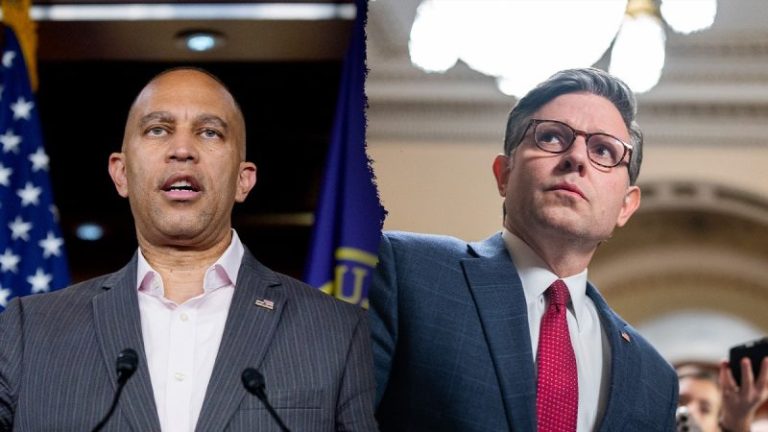
The partisan messaging war over a looming government shutdown is heating up with a new memo sent to House Republicans by Speaker Mike Johnson, R-La.

In a memo titled, ‘Debunking the Democrats’ Shutdown Delusion,’ sent to House GOP offices on Monday, obtained by Fox News Digital, Johnson is urging fellow House Republicans to keep the heat on Democrats in the government funding fight by arguing against their most often-used points in the ongoing battle.

‘Republicans have acted responsibly by advancing a clean, nonpartisan 24-page continuing resolution that keeps funding at current levels through November 21 with no partisan policy riders. It averts a government shutdown and ensures essential services and benefits continue uninterrupted for the American people,’ the memo said.

‘Meanwhile, Democrats are doubling down on false narratives as the threat of a Democrat-led government shutdown looms. Democrats — who once claimed that shutdowns would be ‘dangerous,’ ‘disastrous,’ and ‘self-inflicted harm’ to seniors, veterans, servicemembers, families, and the economy — are now actively trying to force one over policies completely unrelated to government funding.’

The memo first quoted Democrats’ attack that Republicans are working to end healthcare for millions of Americans, urging GOP lawmakers to fight back with ‘the current funding bill is a simple short-term funding extension with no policy changes and healthcare programs are fully funded at the current levels.’

‘Democrats want to hold September government funding hostage over an unrelated December policy fight of their own making. Policy debates can happen separately, and Democrats don’t need to shut down the government to do it,’ the memo said.

House Minority Leader Hakeem Jeffries, D-N.Y., and other Democrats are pushing for any government funding bill to include an extension of COVID-19 pandemic-era Obamacare subsidies that are set to expire at the end of 2025.

Democrats also released their own alternative funding bill that would have repealed Medicaid reforms in President Donald Trump’s big, beautiful bill – all points which Republicans have panned as nonstarters.

Republican leaders have signaled openness to discussing Obamacare extensions but have argued against including them in a seven-week short-term funding bill.

The memo also urges GOP lawmakers to criticize Democrats’ proposal, saying it gives ‘free healthcare for illegal aliens,’ ‘$500 million in taxpayer funding to prop up liberal news outlets,’ ‘a $50 billion cut in investments for improving rural health care,’ and ‘billions in funding for DEI and climate projects in foreign countries.’

On Democratic accusations that Republicans are using federal workers as ‘pawns’ in a government shutdown battle, the memo said, ‘If Democrats choose to force a shutdown, the Trump administration must be ready to responsibly manage the situation, including making tough personnel decisions to prioritize operations.’

‘But this disruption is entirely avoidable should Democrats support the responsible solution is on the table. If Democrats reject it, they alone will bear the blame for using federal workers as pawns in their political games,’ it said.

The memo also encouraged Republicans to point out that their short-term funding bill passed the House earlier this month with nearly entirely GOP votes, and that Democrats in the Senate were responsible for scuttling it earlier this month.

It comes after Johnson urged House Republicans on a conference call earlier to stay united on federal funding, arguing Democrats had ‘no credible argument’ in the fight.

Senate Republicans are expected to put the bill on the floor again sometime this week. If it fails to pass by midnight on Oct. 1, however, a partial government shutdown is all but certain.

This post appeared first on FOX NEWS