Author

admin

Browsing

Recent Russian incursions into NATO airspace have sharpened divisions inside the alliance over how to respond, exposing both the strength and the limits of collective defense.

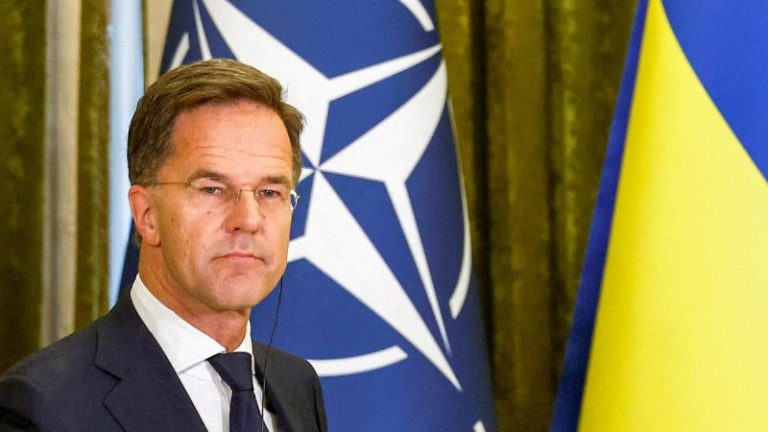
Secretary General Mark Rutte clashed with Estonian Prime Minister Kristen Michal last week after Estonia invoked NATO’s Article 4 clause, which triggers consultations when a member feels its security is threatened.

According to three European officials granted anonymity to speak freely, Rutte argued that repeated invocations risked diluting the treaty’s force. One source said he even raised his voice at Michal, warning that NATO must be cautious about how often it signals alarm.

Rutte argued that if Article 4 were invoked every time Russia violated sovereignty — through drone incursions, fighter jets, cyberattacks and more — it would quickly lose impact, according to the officials.  

A NATO spokesperson confirmed Rutte and Michal spoke Friday and said the secretary general ‘has supported Estonia throughout the process.’

Rasmus Ruuda, director of the Government Communication Office of Estonia, told Fox News Digital Rutte ‘expressed support for Estonia and the Prime Minister thanked NATO for its actions.’

‘Article 4 is just a signal that we’re taking note of what happened,’  said Giedrimas Jeglinskas, a Lithuanian member of parliament and former NATO assistant secretary general. ‘We can be invoking Article 4 every week, and I think that only weakens us, because we’re unable to truly respond to that aggression that Russia is sort of throwing at us.’

The tension comes after a series of provocative moves by Moscow. Last month, missile-carrying Russian MiG-29s flew into Estonian territory, following an earlier breach of Polish airspace by 19 drones and repeated incursions over Romania. In Poland, jets scrambled to intercept the drones, shooting some of them down. It marked the first time since World War II that Polish armed forces mobilized to engage an airborne threat over their homeland.

The Russian jets in Estonia were eventually escorted out of its territory by Italian F-35s. Estonia’s Article 4 request followed Poland’s own invocation days earlier, prompting another round of consultations in Brussels.

Since its creation in 1949, Article 4 has been triggered only nine times. NATO’s warning to Russia after the Estonian request was blunt: any further breaches would be met with ‘all means’ of defense. Estonia’s defense minister said his nation was prepared to shoot down Russian planes violating airspace ‘if there is a need.’ 

But Jeglinskas said signaling without consequence risks leaving the alliance trapped.

‘We’re happy to do Article 4 every other day, but so what? What’s next?’ he said. ‘The real question is what happens when the jets actually enter our airspace.’

The debate cuts to a deeper question: what constitutes a ‘need’ to shoot down Russian jets? How can Russia be deterred without stumbling into direct war?

‘The last thing we want is to have NATO get drawn into a war with Russia,’ a senior State Department official told Fox News Digital. ‘God knows how that ends.’

‘Almost all wars … they don’t necessarily start with a big bang,’ the official went on. ‘They start with an escalation, and then somebody feels they need to respond to this, and then you just get in a toxic spiral.’

The United States has promised to defend ‘every inch’ of NATO while pressing Europe to bear more of its own defense burden. Washington’s mixed signals have only complicated matters.

Trump administration officials long favored reducing the U.S. troop presence in Europe. But President Donald Trump recently delivered one of the starkest warnings to Moscow, declaring that NATO states should shoot Russian aircraft down if they incur on their territory.

Jeglinskas said the statement resonated across the Baltic States. ‘What was really helpful was that President Trump was very clear,’ he said. ‘That gives us confidence we’re on the right track, and we really appreciate the support.’

Still, allies remain divided on whether to escalate. Some warn that Eastern Europe cannot credibly threaten retaliation without an American security guarantee. Others argue that deterrence depends on showing Russia its incursions carry a cost.

‘If we really want to send a proper message of deterrence to Russia, we need to be prepared to use kinetic force,’ Jeglinskas said. ‘That means neutralizing those jets — shooting them down or finding other ways to impose consequences — so Russia actually feels the cost of its incursions. That hasn’t happened yet, and it leaves us vulnerable.’

The airspace disputes now extend beyond fighter jets. European Union members are meeting in Copenhagen this week to discuss shoring up air defenses after a wave of drone sightings. Denmark briefly shut down its airspace following mysterious drone activity, while Lithuania’s Vilnius airport and Norway’s Oslo airport also reported disruptions. Drones have even been spotted over Germany’s northern state of Schleswig-Holstein.

‘We are not at war, but we are no longer at peace either. We must do much more for our own security,’ German Chancellor Friedrich Merz said in Düsseldorf.

NATO jets scrambled to intercept drones over Poland, but the response underscored a growing mismatch: deploying multi-million dollar fighters to counter small, unmanned aircraft is neither efficient nor sustainable.

‘NATO remains the most crucial element of our security equation,’ Jeglinskas said. ‘It’s the backbone through which our security is viewed. There’s really no doubt about NATO’s political will and its capability to defend its territory, but warfare is changing — and the question now is, has NATO adapted to the new way of war that is seeping through the borders of Ukraine?’

Jeglinskas warned that neither NATO nor the Baltic States have done enough. ‘The Polish incursion signified that NATO is not fully ready to counter these threats,’ he said. ‘Scrambling jets is a tremendous economic mismatch. If these kinds of attacks become swarms, it’s not sustainable.’

To address mounting threats, NATO last month launched Operation Eastern Sentry, reinforcing its presence on Europe’s eastern flank. Jeglinskas welcomed the move but said gaps remain.

‘Jets are very important, but more jets don’t mean we’re more secure from low-altitude drones,’ he said. ‘The question is: do we have sensors that can detect what’s happening from the ground up to a kilometer into our airspace? We don’t see that. It’s like a dead space.’

Jeglinskas called for stronger short- and medium-range radar, as well as layered defenses akin to Israel’s Iron Dome, capable of intercepting drones with both kinetic and electronic means.

‘NATO’s response is commendable,’ he said, ‘but it’s not enough. You need technical know-how, the right capabilities, and systems that are truly integrated if you want to make this work.’

For now, NATO remains caught between signaling resolve and acting on it. As Russia continues to test the alliance’s borders, Jeglinskas and other Eastern European officials warn that credibility is at stake. The next incursion, they argue, may demand more than words.


This post appeared first on FOX NEWS

Gold’s momentum has price predictions heading upwards of US$4,000 per ounce by the year’s end.

Rising by more than 44 percent since the start of the year, in 2025 the price of gold has hit highs once unthinkable. Aggressive central bank buying, US Federal Reserve rate decisions, ongoing geopolitical conflicts and US trade policy uncertainty have weakened the US dollar and escalated federal debt concerns. The resulting increase in demand for safe-haven assets is pushing investors toward gold, from physical bars to gold exchange-traded funds.

This week, the US government shutdown drove the price of gold even higher, approaching the US$3,900 level as it reached US$3,896.30 early in the morning of Wednesday (October 1) before pulling back.

Let’s take a look at what’s driving the gold price in the final stretch of 2025.

US monetary policy and dollar weakness

Gold traditionally has had an inverse relationship to the dollar, and has benefited greatly this year as the dollar has weakened. Many agree that this trend is set to continue feeding the gold price in the months ahead.

While China has been the focal point of gold buying this year, the World Gold Council’s Joe Cavatoni said western investors looking for risk diversification are helping to drive the latest surge in the gold price.

In his view, the Fed has how begun signaling to investors that economic deterioration — and a possible move into a stagflationary environment — is imminent.

Global conflict stoking central bank buying

Strong central bank buying is another key catalyst for gold’s record price streak.

Although the rate at which the world’s central banks are scooping up the precious metal has slowed somewhat in 2025 compared to the last few years, governments are still set to be net buyers this year.

For a fourth year in a row, Cavatoni sees central banks continuing to buy gold despite higher prices, although he noted that they may make price-sensitive adjustments to buy more strategically. According to the World Gold Council’s latest annual central bank survey, conducted in June, 95 percent of the 73 respondents expect to increase their gold holdings over the next 12 months. At the same time, 73 percent expect to lighten their US dollar reserves.

Countries are building up their strategic reserves of gold as security. Just look at the top two buyers of gold recently: China and Poland. Both are at the center of rapidly escalating geopolitical conflicts.

China has responded to escalating US trade tensions by taking a defensive stance economically, and that has included significantly boosting its gold reserves by 36 metric tons over nine months as of this past July.

Poland is the largest net purchaser of gold this year at 67 metric tons. No doubt, the European nation views the metal as a critical safeguard against escalating hostilities with neighboring Russia.

“Everybody has to build up their gold reserves, because the road that all these countries are on is the road of increasing global stress,” explained Chambers, adding that global leaders understand that “paper is no good when you’re fighting a war.’ This is driving the gold price higher as demand comes up against supply.

“There’s only 3,200 tonnes of it mined every year,” he said, “and the price is only going to go one way.”

Is gold heading to US$4,000 in 2025?

However, both Gareth Soloway of VerifiedInvesting.com, and Steve Barton of In It To Win It said gold is likely to trade sideways and even pull back to as low as US$3,500 before making another go at the US$4,000 target.

So will it get there this year?

Nothing is for certain, but there are a few signals gold investors should watch. The World Gold Council’s Cavatoni said he’s keeping a close eye on what the money markets are doing as interest rates start to move, as well as investor sentiment in western markets, the US in particular.

“Pay attention to how people are responding to that risk and uncertainty that we talked to, and economic conditions that are getting clearer, and I think you’ll find that this case for gold is well supporting the price predictions you’re hearing from analysts in the markets,’ he suggested.

Securities Disclosure: I, Melissa Pistilli, hold no direct investment interest in any company mentioned in this article.

This post appeared first on investingnews.com

Charlie Javice, the founder of a startup company that sought to dramatically improve how students apply for financial aid, was sentenced Monday to more than seven years in prison for cheating JPMorgan Chase out of $175 million by greatly exaggerating how many students it served.

Javice, 33, was sentenced in Manhattan federal court for her March conviction by Judge Alvin K. Hellerstein, who said she committed “a large fraud” by duping the bank giant in the summer of 2021. She made false records that made it seem the company, called Frank, had over 4 million customers when it had fewer than 300,000, Hellerstein found.

The judge said Javice had assembled a “very powerful list” of her charitable acts, which included organizing soup kitchens for the homeless when she was 7 years old and designing career programs for formerly incarcerated women.

In court papers, defense lawyers noted that Javice has faced extraordinary public scrutiny, reputational destruction and professional exile, “making her a household name” in the same way Elizabeth Holmes became synonymous with her blood-testing company, Theranos.

Defense attorney Ronald Sullivan told Hellerstein that his client was very different from Holmes because what she created actually worked, unlike Holmes, “who did not have a real company” and whose product “in fact endangered patients.”

In seeking a 12-year prison sentence for Javice, prosecutors cited a 2022 text Javice sent to a colleague in which she called it “ridiculous” that Holmes got over 11 years in prison.

Hellerstein largely dismissed arguments that he should be lenient because the acquisition pitted “a 28-year-old versus 300 investment bankers from the largest bank in the world,” as Sullivan put it.

Still, the judge criticized the bank, saying “they have a lot to blame themselves” after failing to do adequate due diligence. He quickly added, though, that he was “punishing her conduct and not JPMorgan’s stupidity.”

Sullivan said the bank rushed its negotiations because it feared another bank would acquire Frank first.

A prosecutor, Micah Fergenson, though, said JPMorgan “didn’t get a functioning business” in exchange for its investment. “They acquired a crime scene.”

Fergenson said Javice was driven by greed when she saw that she could pocket $29 million from the sale of her company.

“Ms. Javice had it dangling in front of her and she lied to get it,” he said.

Given a chance to speak, Javice said she was “haunted that my failure has transformed something meaningful into something infamous.” She said she “made a choice that I will spend my entire life regretting.”

Javice, sometimes speaking through tears, apologized and sought forgiveness from “all the people touched or tarnished by my actions,” including JPMorgan shareholders, Frank employees and investors, along with her family.

Javice, who lives in Florida, has been free on $2 million bail since her 2023 arrest.

At trial, Javice, a graduate of the University of Pennsylvania’s Wharton School of Business, was convicted of conspiracy, bank fraud and wire fraud charges. Her lawyers had argued that JPMorgan went after Javice because it had buyer’s remorse.

In her mid-20s, Javice founded Frank, a company with software that promised to simplify the arduous process of filling out the Free Application for Federal Student Aid, a complex government form used by students to apply for aid for college or graduate school.

Frank’s backers included venture capitalist Michael Eisenberg. The company said its offering, akin to online tax preparation software, could help students maximize financial aid while making the application process less painful.

The company promoted itself as a way for financially needy students to obtain more aid faster, in return for a few hundred dollars in fees. Javice appeared regularly on cable news programs to boost Frank’s profile, once appearing on Forbes’ “30 Under 30” list before JPMorgan bought the startup in 2021.

Javice was among a number of young tech executives who vaulted to fame with supposedly disruptive or transformative companies, only to see them collapse amid questions about whether they had engaged in puffery and fraud while dealing with investors.

In their pre-sentence submission, prosecutors wrote that they were requesting a lengthy prison sentence to send a message that fraud in the sale of startup companies is “no less blameworthy than other types of fraud and will be punished accordingly.”

Prosecutors added that the message was “desperately needed” because of “an alarming trend of founders and executives of small startup companies engaging in fraud, including making misrepresentations about their companies’ core products or services, in order to make their companies attractive targets for investors and/or buyers.”

This post appeared first on NBC NEWS

YouTube said Monday it would settle a lawsuit brought by President Donald Trump for more than $24 million, adding to a growing list of settlements with tech and media companies that have amassed millions of dollars for Trump’s projects.

Trump sued after his YouTube account was banned in 2021. After the Jan. 6 riot, YouTube said content posted to Trump’s channel raised “concerns about the ongoing potential for violence.” His account was reinstated in 2023.

Monday’s settlement makes YouTube the last major tech platform to settle a lawsuit with Trump, who similarly sued Meta and Twitter for banning his accounts in the aftermath of Jan. 6. Meta, the owner of Facebook and Instagram, settled for $25 million, while Twitter, since renamed X, settled for about $10 million.

A notice of settlement for Trump’s lawsuit against YouTube details that $22 million of it will go toward building a new White House ballroom. Trump has touted that the addition will have room for 900 people, and the White House has said it could cost $200 million to build.

Other plaintiffs that joined Trump’s suit, such as the American Conservative Union and a number of other people, will get $2.5 million of the settlement.

In addition to tech companies, many major media outlets have settled lawsuits with Trump over the past year.

In July, Paramount Global settled with him for $16 million after he took issue with a “60 Minutes” interview with Kamala Harris that aired on CBS.

In December, Disney settled with Trump over a lawsuit in which he accused ABC and anchor George Stephanopoulos of defamation in an interview with Rep. Nancy Mace, R-S.C. Disney paid Trump’s future presidential library $15 million as part of the settlement.

Disney came under pressure from the administration again when it recently suspended “Jimmy Kimmel Live!” for nearly a week after two major station owners threatened to stop airing the show. One of the station owners, Nexstar, is seeking clearance from Trump’s Federal Communications Commission chairman for a $6.2 billion merger.

The other station owner, Sinclair, is reportedly considering a merger, which the FCC would also need to approve.

Trump is also suing The Wall Street Journal over its reporting about his friendship with Jeffrey Epstein, and he recently sued The New York Times for $15 billion. A judge struck down that lawsuit, though Trump could refile it.

This post appeared first on NBC NEWS

President Donald Trump shared photos on Truth Social on Tuesday showing red ‘Trump 2028’ hats strategically displayed on the Resolute Desk during an Oval Office meeting with Democrat leaders Monday in hopes of fending off a government shutdown.

Trump’s post came late Tuesday, hours before Washington grappled with its first shutdown since 2018-19. 

‘The Trump administration wants a straightforward and clean CR [continuing resolution] to continue funding the government – the exact same proposal that Democrats supported just 6 months ago, 13 times under the Biden Administration,’ White House spokeswoman Abigail Jackson told Fox News Digital. 

‘But radical Democrats are shutting the government down because they want a nearly $1.5 trillion wish list of demands, including free health care for illegal aliens. The Democrat’s radical agenda was rejected by the American people less than a year ago at the ballot box, now they’re shutting down the government and hold the American people hostage over it.’

Vice President JD Vance warned, ‘I think we’re headed to a shutdown’ after Monday’s meeting. 

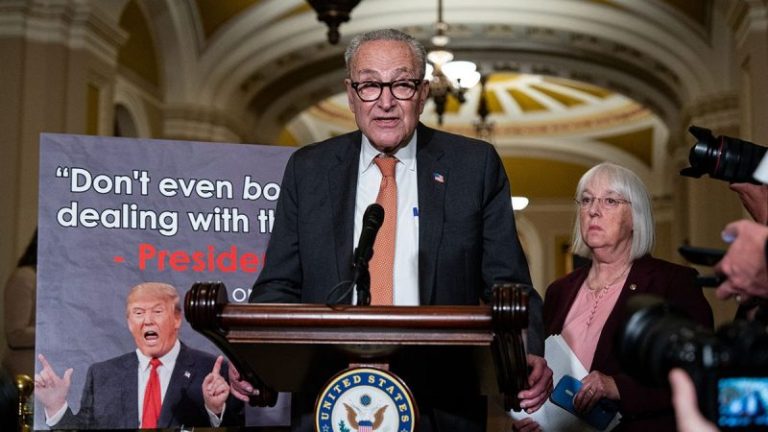
Senate Minority Leader Chuck Schumer, D-N.Y., said at the time the sides ‘have very large differences.’ 

Late Tuesday, the Senate failed a last-ditch vote on extending funding and barreled toward a shutdown as the clock struck midnight on Oct. 1.

Trump posted the photos late Tuesday, a few hours before the shutdown was slated to begin. 

His campaign has sold ‘Trump 2028’ hats since earlier this year.

Democrat leaders downplayed the stunt. 

Schumer said Trump ‘can avoid a shutdown if he chooses to,’ while House Minority Leader Hakeem Jeffries, D-N.Y., added, ‘we will not back down’ in defending healthcare and spending priorities.’

Trump presided over a 35-day government shutdown in 2018–19, the longest in American history, during his first term in office.

This post appeared first on FOX NEWS

Senate Democrats again blocked Republicans’ short-term funding extension Tuesday afternoon, further increasing the odds of a partial government shutdown and thousands of federal workers going without paychecks.

Democratic lawmakers in the upper chamber, led by Senate Minority Leader Chuck Schumer, D-N.Y., banded together to vote against the GOP’s continuing resolution (CR), a move that marked the second time Democrats impeded the legislation’s progress this month.

Congress has until midnight Wednesday to pass a CR or else the government will shut down. However, the possibility of that happening became increasingly unlikely throughout the day as Republicans and Democrats huddled behind closed doors in separate meetings hours before the vote. 

The bill, which was passed by the House GOP earlier this month, failed on a largely party-line vote, 55-45. Sen. Rand Paul, R-Ky., was the lone Republican to vote against the bill, while Sens. John Fetterman, D-Pa., Catherine Cortez Masto, D-Nev., and Angus King, I-Maine, crossed the aisle to vote for the funding extension.

Democrats also tried to advance their own counter-proposal, but that bill was similarly blocked by Senate Republicans.

There is still time to avert a partial shutdown, but the window is closing fast. If Schumer and Thune are unable to find a path forward, it would mark the third shutdown under President Donald Trump.

When asked if he believed a shutdown was inevitable, Trump said, ‘Nothing is inevitable.’ 

‘But I would say it’s probably likely, because they want to give healthcare to illegal immigrants, which will destroy healthcare for everybody else in our country,’ he told reporters in the Oval Office. ‘And I didn’t see them bend even a little bit when I said we can’t do that.’ 

Shortly after the vote, however, the Office of Management and Budget released a memo that the appropriations for Fiscal Year 2025 would run out at 11:59 p.m. on Tuesday, making a shutdown official. 

‘It is unclear how long Democrats will maintain their untenable posture, making the duration of the shutdown difficult to predict,’ the memo read. 

Republicans want to pass a ‘clean’ short-term extension until Nov. 21 that would give appropriators time to finish spending bills, while Democrats want to extend expiring Obamacare premium subsidies, among multiple other demands.

But the chances of a deal materializing, particularly one that meets Democrats’ demands, are slim. Both Senate leaders traded barbs throughout the day, first on the Senate floor and then in back-to-back press conferences. 

Thune panned Democrats’ push for an extension to the expiring tax credits, which aren’t set to sunset until the end of this year, as well as their other demands to repeal the healthcare portion of Trump’s ‘big, beautiful bill’ and clawback canceled funding for NPR and PBS. 

Republicans argue that reversing the cuts from Trump’s megabill and undoing the public broadcasting rescission would amount to $1.5 trillion in spending tacked onto their short-term funding extension. 

‘These are things that they’re demanding as part of their so-called negotiation,’ Thune said. ‘Ladies and gentlemen, there isn’t anything here to negotiate.’

Schumer, however, countered that the decision to shut the government down was ‘in their court’ and charged that Democrats were working to solve the GOP’s ‘healthcare crisis.’

Still, despite scoring a meeting in the Oval Office with Trump and congressional Republican leaders, in addition to public guarantees from Thune and Republicans that Obamacare tax credits could be discussed after a shutdown was averted, Schumer demanded that Democrats be cut in on negotiations to craft a bipartisan bill. 

Earlier in the day, the top Senate Democrat commandeered a floor chart from Thune that showed how many times Democrats supported CRs under former President Joe Biden. He said that each time, Republicans were involved in the process. 

‘As leader, I sat down with the Republicans every one of those years and created a bipartisan bill. Their bill is partisan. They call it clean. We call it partisan. It has no Democratic input,’ Schumer said. ‘Thune never talked to me.’ 

This post appeared first on FOX NEWS

The Interior Department announced Tuesday it is testing autonomous lawnmowers on the National Mall in Washington, D.C., in an effort by the Trump administration to use artificial intelligence to ‘boost operational efficiency.’

In an order obtained by Fox News Digital, Interior Secretary Doug Burgum said AI will ‘drive smarter decision-making, boost operational efficiency, and better deliver on our core mission of advancing American energy dominance, protecting our natural resources, partnering with Tribal Nations, and enhancing internal services.’ 

The Interior Department is working with a private company, the name of which was not shared, to develop its AI technologies for use by the agency. 

Video shared with Fox News Digital shows a demonstration of the AI-controlled lawnmowers on the National Mall, each carrying an American flag. Visitors scanned a QR code on the technology to view a map tracking their progress.

In the video, Jeff Gowen, division manager of the National Park Service’s Technical Services Division, said the new machines will ‘allow us to get more work done with the same amount of people.’

Gowen added that six AI-controlled lawnmowers are being tested at six national parks with a grant provided by the National Park Foundation. 

‘Wild time to be alive,’ he said.

In his order, Burgum said AI will strengthen relationships with state and tribal lands while pushing federal agencies to adopt AI faster and more responsibly.

‘To fully unlock the potential of AI, we must scale intelligently, govern responsibly, and enable our workforce to lead with confidence and clarity,’ he said. ‘As AI becomes more accessible to the DOI workforce, it offers real opportunities to modernize how we serve, strengthening coordination with stakeholders, including State and Tribal partners, across the Nation’s lands.’

In addition to the lawnmowers, Burgum said the Interior Department is already using AI for wildfire response and environmental reviews.

‘AI is reshaping how industries operate and government must not be left behind, and must adapt to private sector standards,’ he said in the order.

‘AI offers a strategic advantage across all facets of the Department’s mission, enabling an advanced workforce with well-trained employees to strengthen domestic resource development and operational efficiency, allowing for the best management of public lands,’ he added. ‘AI adoption shall be pursued in ways that strengthen Interior’s ability to serve the American people through safe, responsible, and outcome-oriented innovation.’

The lawnmowers come after the Trump administration released its ‘America’s AI Action Plan’ in July, a plan aimed at securing U.S. dominance in AI. The plan highlights AI’s role in economic competitiveness and national security.

‘Winning the AI race will usher in a new golden age of human flourishing, economic competitiveness, and national security for the American people,’ the White House said.

This post appeared first on FOX NEWS