Author

admin

Browsing

Experienced Thermal Integration Specialist Team Adds Depth to Syntholene’s Construction and Operational Roster

Syntholene Energy CORP (TSXV: ESAF,OTC:SYNTF) (FSE: 3DD0) (OTCQB: SYNTF) (‘Syntholene’ or the ‘Company’) announces that it has selected Papadakis Engineering (‘Papadakis’), the advanced fabrication and systems division of Papadakis Racing, as its development and integration partner for the geothermal heat exchanger system supporting Syntholene’s planned thermal-hybrid synthetic fuel Demonstration Facility.

Papadakis Engineering is a U.S.-based engineering and fabrication firm with deep expertise in high-performance thermal systems, precision manufacturing, and complex system integration.

The Papadakis organization is internationally recognized for its championship-winning motorsports engineering program, having designed and built record-setting powertrains and vehicle systems for top-tier professional racing series, including multiple Formula Drift titles.

The firm is known for translating extreme performance requirements into reliable, precision-engineered systems operating under continuous thermal and mechanical stress, a pedigree that directly informs its approach to advanced industrial thermal and integration challenges.

‘Thermal integration is one of the most important levers for Syntholene’s vision of lowering the cost of electrolytic hydrogen and, by extension, synthetic fuels,’ said Dan Sutton, Chief Executive Officer of Syntholene Energy Corp. ‘Papadakis brings an uncommon combination of thermal engineering, fabrication discipline, and execution speed. Their experience delivering tightly integrated, high-performance systems makes them an ideal partner as Syntholene moves from design into physical system validation.

The Company’s engagement of Papadakis is pursuant to a written project proposal dated January 28, 2026. The project scope covers detailed engineering, fabrication, containerized integration, and electrical scope associated with a geothermal heat exchanger skid designed to provide low-grade process heat to Syntholene’s Solid Oxide Electrolyzer Cell (SOEC)-based hydrogen production system. Under the proposal, Papadakis has agreed to provide electrical and heat exchanger integration services for a total contract value of US$289,026 payable in tranches during the term, with delivery of services expected to be complete by June 1, 2026. The work is intended to support factory acceptance testing and delivery of a fully integrated demonstration-scale system. This proposal was entered into by the Company in the ordinary course of its business in furtherance of the previously announced proposed Demonstration Facility. Papadakis and the Company are arm’s length parties.

Syntholene’s proposed Demonstration Facility represents the kind of engineering challenge we’re built for: integrating complex subsystems into a cohesive, performance-driven platform,‘ said Stephan Papadakis, Founder of Papadakis Engineering. ‘My team is excited to apply our high-performance engineering discipline to a program aimed at improving the efficiency and economics of synthetic fuel production.’

The selection of Papadakis represents a key milestone in the execution of Syntholene’s thermal-hybrid production architecture, which aims to integrate electricity with process heat to reduce net electrical demand and improve overall SOEC system efficiency. The proposed Demonstration Facility is designed to validate this approach and to generate operating data required to inform future commercial deployment plans.

The proposed Demonstration Facility is intended to serve as a validation platform for Syntholene’s thermal-hybrid production system, enabling the Company to de-risk system integration, operating performance, and unit economics ahead of targeted future commercial scale-up. Data to be generated from the facility is expected to inform subsequent project development, engagement with strategic partners, and discussions with policymakers and capital providers.

About Papadakis Engineering

Papadakis Engineering is an agile engineering, procurement, and construction firm specializing in advanced design, prototyping, precision fabrication, and integrated system development. The company bridges the gap between engineering and execution, enabling clients to move efficiently from concept through validated hardware.

Papadakis Engineering has deep experience solving complex mechanical, thermal, and electrical integration challenges under compressed timelines and high-performance requirements. Originally founded by champion Stephan Papadakis in the high-performance environment of professional motorsport, the firm applies that same discipline to industrial, energy, and advanced technology programs requiring precision, reliability, and secure operations.

About Syntholene Energy Corp

Syntholene is actively commercializing its novel Hybrid Thermal Production System for low-cost clean fuel synthesis. The target output is ultrapure synthetic jet fuel, which the Company seeks to manufacture at 70% lower cost than the nearest competing technology today. The Company’s mission is to deliver the world’s first truly high-performance, low-cost, and carbon-neutral synthetic fuel at an industrial scale, unlocking the potential to produce clean synthetic fuel at lower cost than fossil fuels, for the first time.

Founded by experienced operators across advanced energy infrastructure, nuclear technology, low-emissions steel refining, process engineering, and capital markets, Syntholene aims to be the first team to deliver a scalable modular production platform for cost-competitive synthetic fuel, thus accelerating the commercialization of carbon-neutral eFuels across global markets.

For further information, please contact:
Dan Sutton, CEO
comms@syntholene.com
www.syntholene.com
+1 608-305-4835

X: @Syntholene
Linkedin: Syntholene Energy
Youtube: Syntholene Energy

Investor Relations
KIN Communications Inc.
604-684-6730
ESAF@kincommunications.com

Neither TSX Venture Exchange nor its Regulation Services Provider (as that term is defined in policies of the TSX Venture Exchange) accepts responsibility for the adequacy or accuracy of this release.

Forward-Looking Statements

This press release contains forward-looking statements within the meaning of applicable securities laws. The use of any of the words ‘expect’, ‘anticipate’, ‘aims’, ‘continue’, ‘estimate’, ‘objective’, ‘may’, ‘will’, ‘project’, ‘should’, ‘believe’, ‘plans’, ‘intends’, ‘targets’ and similar expressions are intended to identify forward-looking information or statements. All statements, other than statements of historical fact, including but not limited to statements regarding the proposal with Papadakis and proposed services, the timeline and cost for service delivery pursuant to the Papadakis proposal, proposed Demonstration Facility, testing planned at the proposed Demonstration Facility and the proposed use of data from such testing, commercial scalability,proposed benefits to the project from the skills of the engaged service providers, economic benefits of the Company’s products relative to competitive products; protection of the Company’s intellectual property through provisional patents and patents; the Company’s ability to execute on its plans for advancement and commercialization of its technology; technical and economic viability, anticipated geothermal power availability, anticipated benefit of eFuel, and future commercial opportunities, are forward-looking statements.

The forward-looking statements and information are based on certain key expectations and assumptions made by the Company, including without limitation the assumption that the Company will be able to execute its business plan in the manner and timeline set forth in its public disclosure or at all, that the engaged service providers have the skills to advance the Company’s business plans, that Papadakis will be able to complete the propsal on time and budget, that the eFuel will have its expected benefits, that there will be market adoption, that the Company’s review of the competitive landscape and that its understanding of being the world’s first Company to have geothermal-SOEC integration remain accurate, that any potential competitors to the Company would not be able to develop or execute geothermal-SOEC integration as quickly or as well as the Company, that the Company will be able to produce the eFuel at competitive pricing in the range anticipated in this news release or at all, that the proposed validation testing will be able to be completed, and that the results from such tests will validate the Company’s technology and support further commercialization, that geothermal heat will be available to the Company at the necessary levels, that the proposed Demonstration Facility will be completed on time and on budget, that the Company will continue to have access to skilled personnel with relevant experience, that regulatory requirements remain favourable for the Company, and that the Company will be able to access financing as needed to fund its business plan. Although the Company believes that the expectations and assumptions on which such forward-looking statements and information are based are reasonable, undue reliance should not be placed on the forward-looking statements and information because the Company can give no assurance that they will prove to be correct. Since forward-looking statements and information address future events and conditions, by their very nature, they involve inherent risks and uncertainties.

Actual results could differ materially from those currently anticipated due to a number of factors and risks, including, without limitation, Syntholene’s ability to complete the testing, that the results of the testing will support continued commercialization and the Company’s technology, that the engaged service providers do not have the necessary skills to and do not advance the Company’s business plan, that Papadakis is not able to complete the scope of services on time and on budget or at all, that there are competitors in geothermal-SOEC integration that are unknown to the Company, that the Company may not be able to produce eFuel at the targeted prices or at a price that is lower than potential competitors, that definitive commercial purchase orders for Syntholene’s eFuel may not materialize, Syntholene’s ability to meet production targets, realize projected economic benefits, overcome technical challenges, secure financing, maintain regulatory compliance, manage geopolitical risks, and successfully negotiate definitive terms. Syntholene does not undertake any obligation to update or revise these forward-looking statements, except as required by applicable securities laws.

This news release contains future-oriented financial information and financial outlook information (collectively, ‘FOFI’) about the cost and pricing of the eFuel product that Syntholene is seeking to commercialize, which is subject to the same assumptions, risk factors, limitations, and qualifications as set forth in the above paragraphs. FOFI contained in this news release was made as of the date hereof and was provided for the purpose of describing the anticipated effects of advancement of Syntholene’s business operations. Syntholene’s actual results, performance or achievement could differ materially from those expressed in, or implied by, such FOFI. Syntholene disclaims any intention or obligation to update or revise any FOFI contained in this news release, whether as a result of new information, future events or otherwise, unless required pursuant to applicable law. Readers are cautioned that the FOFI contained herein should not be used for purposes other than for which it is disclosed herein.

Readers are advised to exercise caution and not to place undue reliance on the forward-looking statements and FOFI in this news release.

To view the source version of this press release, please visit https://www.newsfilecorp.com/release/288190

News Provided by TMX Newsfile via QuoteMedia

This post appeared first on investingnews.com

(TheNewswire)


Vancouver, British Columbia / March 12, 2026 ‑ TheNewswire – Harvest Gold Corporation (TSXV: HVG,OTC:HVGDF) (‘Harvest Gold‘ or the ‘Company‘) is pleased to announce that it has entered into definitive agreements (the ‘Agreements‘) to acquire 24 additional mineral claims covering 1,356 hectares (the ‘Claims‘) from two separate arm’s length prospector groups in the Urban Barry Greenstone Belt of Quebec.

The block of six (6) claims and four (4) claims to the south are underlain by the Kiask River Deformation Zone and, when combined with Harvest Gold’s LaBelle property, provide continuous coverage over approximately 33 kilometres of strike length of favourable geology south of the Wilson intrusion (see Figure 1).


Click Image To View Full Size

Figure 1: Newly Acquired Mineral Claims

With this acquisition, Harvest Gold’s land position in the highly prospective Urban Barry Greenstone Belt now totals 401 mineral claims covering 21,372.81 hectares and over 50 kilometres of strike length of favorable and potentially mineralized structures, strategically located within the Urban Barry Greenstone Belt (See Figure 2).


Rick Mark, President and CEO of Harvest Gold, states: ‘This expansion enhances our strategic footprint in the Urban Barry Greenstone Belt. Importantly, it connects Mosseau and LaBelle and now covers the entirety of the Kiask River Deformation Zone. Historical results and surface showings from only a small portion of the now expanded Mosseau property underscore the strong exploration potential across the largely underexplored, 100% owned land package.


Strategic Expansion of the Mosseau Project

The Claims acquired by Harvest Gold cover 1,356 hectares in the Urban Barry Greenstone Belt of Quebec. The Claims expand the Company’s Mosseau Project along strike, both to the north and south, incorporating areas of favourable geology with documented historical gold and base metal showings. Historical work documented in the government’s database (SIGEOM) has outlined five (5) additional mineral showings in the north part of the Mosseau property, extending into the Toussaint Deformation Zone and three (3) mineral showings to the south, adjoining the Mosseau and LaBelle properties (Figure 1).

Northern Showings within the Toussaint Deformation Zone include:

  • Domtar 116 (Blueberry): 4.4% Cu, 46.0 g/t Ag, 1.38 g/t Au over 0.18 m (DDH) 

  • Domtar 111 (Beehler Vein): 0.69 g/t Au, 3.09 g/t Ag, 0.22% Cu, 0.23% MoS₂ over 0.61 m (channel sample) and 1.4 g/t Au, 0.86% Cu (grab sample) 

  • Rivière Wilson: 1.0 g/t Au (grab sample) 

  • Verneuil-BV-92-01: 1.23 g/t Au over 0.27 m (DDH) 

  • Verneuil-Serem Est: 1.41 g/t Au over 1.5 m (DDH) 

Southern Showings – Kiask River Deformation Zone

  • Lac Labrie: 47.32 g/t Au over 0.3 m (DDH), 22.3 g/t Au over 0.9 m (DDH), 119.67 g/t Au (float sample) 

  • Labrie 2: 1.65% Zn, 1.11% Pb (grab samples) 

  • Lac Labrie SE: 2.06 g/t Au, 4.46 g/t Ag over 0.61m (DDH) 

The block of six (6) claims and Four (4) claims to the south are underlain by the Kiask River Deformation Zone and, when combined with Harvest Gold’s LaBelle property, provide continuous coverage over approximately 33 kilometres of strike length of favourable geology south of the Wilson intrusion The Audet-Robert claim blocks were purchased from Jean Robert, Les Explorations Carat, 9495-6976 Québec Inc. (the ‘Audet-Robert Vendors‘) and the Gaudreault claim block was purchased from Daniel Gaudreault (the ‘Gaudreault Vendor‘).

Transaction Terms – Audet-Robert Claim Blocks

As consideration for a 100% interest in the Audet-Robert claim blocks, Harvest Gold has agreed to provide the Audet-Robert Vendors with:

  • $60,000 in cash, with $30,000 payable upon receiving TSX Venture Exchange (the Exchange‘) approval to the transaction and $30,000 payable by June 30th, 2026; 

  • 750,000 common shares of the Company (the Shares‘), with one-half (1/2) of the Shares to be issued upon receiving Exchange approval to the transaction and one-half (1/2) of the Shares to be delivered by June 30th, 2026.  The Shares will be subject to a statutory resale restriction period of four months from the date of issuance of the Shares in accordance with Canadian securities laws. 

Transaction Terms – Gaudreault Claim Block

As consideration for a 100% interest in the Gaudreault claim block, Harvest Gold will provide the Gaudreault Vendor with $5,000 in cash.

No finder’s fees are payable in connection with the transactions.

The Agreements remain subject to regulatory approval by the Exchange.

NI 43-101 Disclosure – Historical Data

The historical exploration results referenced in this news release were completed by previous operators and have not been independently verified by Harvest Gold. Although the Company considers the historical work to be relevant and reliable, it has not completed sufficient work to verify these historical results and does not rely on them for the purposes of this disclosure. The historical information is presented solely to provide context for current exploration results and ongoing exploration planning.

The true widths of the reported historical drill and channel sampling intervals have not been determined. Grab samples are selective by nature and may not be representative of the overall mineralization on the Mosseau Project.


Qualified Person Statement

All scientific and technical information in this news release has been prepared and approved by Louis Martin, P.Geo., Technical Advisor to the Company and considered a Qualified Person for the purposes of NI 43-101.

Mr. Martin has reviewed and verified the historical assay results reported in SIGEOM and has not identified any errors or omissions during the data verification process. The Company and Mr. Martin are not aware of any factors related to sampling or recovery that could materially affect the accuracy or reliability of the historical data disclosed herein.

About Harvest Gold Corporation

Harvest Gold is focused on exploring for near-surface gold deposits and copper-gold porphyry deposits in politically stable mining jurisdictions. Harvest Gold’s board of directors, management team and technical advisors have collective geological and financing experience exceeding 400 years.

Harvest Gold has three active gold projects focused in the Urban Barry area, totalling 401 claims covering 21,372.81 ha, located approximately 45-70 km west of Gold Fields Limited’s – Windfall Deposit (Figure 2).

Harvest Gold acknowledges that the Mosseau Gold Project straddles the Eeyou Istchee-James Bay and Abitibi territories.  Harvest Gold is committed to developing positive and mutually beneficial relationships based on respect and transparency with local Indigenous communities.

Harvest Gold’s three properties, Mosseau, Urban-Barry and LaBelle, together cover over 50 km of favourable strike along mineralized shear zones.


Click Image To View Full Size

Figure 2: Project Location: Urban-Barry Greenstone Belt


ON BEHALF OF THE BOARD OF DIRECTORS

Rick Mark
President and CEO
Harvest Gold Corporation

For more information please contact:

Rick Mark or Jan Urata
@ 604.737.2303 or
info@harvestgoldcorp.com

Neither TSX Venture Exchange nor its Regulation Services Provider (as that term is defined in the policies of the TSX Venture Exchange) accepts responsibility for the adequacy or accuracy of this release.

Forward Looking Information

This news release includes certain statements that may be deemed ‘forward looking statements’. All statements in this news release, other than statements of historical facts, that address events or developments that Harvest Gold expects to occur, are forward looking statements. Forward looking statements are statements that are not historical facts and are generally, but not always, identified by the words ‘expects’, ‘plans’, ‘anticipates’, ‘believes’, ‘intends’, ‘estimates’, ‘projects’, ‘potential’ and similar expressions, or that events or conditions ‘will’, ‘would’, ‘may’, ‘could’ or ‘should’ occur.

Although the Company believes the expectations expressed in such forward-looking statements are based on reasonable assumptions, such statements are not guarantees of future performance and actual results may differ materially from those in the forward-looking statements. Factors that could cause the actual results to differ materially from those in forward looking statements include market prices, exploitation and exploration successes, and continued availability of capital and financing, and general economic, market or business conditions. Investors are cautioned that any such statements are not guarantees of future performance and actual results or developments may differ materially from those projected in the forward-looking statements. Forward looking statements are based on the beliefs, estimates and opinions of the Company’s management on the date the statements are made. Except as required by securities laws, the Company undertakes no obligation to update these forward-looking statements in the event that management’s beliefs, estimates or opinions, or other factors, should change.

Copyright (c) 2026 TheNewswire – All rights reserved.

News Provided by TheNewsWire via QuoteMedia

This post appeared first on investingnews.com

Jeremy Carl, President Donald Trump’s nominee for assistant secretary of state for international organization affairs, withdrew his nomination Tuesday after facing bipartisan criticism over past comments about race, religion and Israel.

Carl, a conservative commentator and senior fellow at the Claremont Institute, wrote on X that he lacked the unanimous Republican support needed to advance his nomination out of the Senate Foreign Relations Committee. He was nominated to the State Department role by President Donald Trump and Secretary of State Marco Rubio.

‘I am withdrawing my nomination for consideration as Assistant Secretary of State for International Organization Affairs,’ he wrote Tuesday afternoon. ‘I am tremendously grateful to President Trump for nominating me and then (upon expiration of my original nomination) renominating me for this role, and I am also grateful to Secretary Rubio and his team for their continued support throughout this long and time-consuming process.’

Republicans hold a 12-10 majority on the panel, meaning a single GOP defection would result in a tie vote and block the nomination from moving to the full Senate.

‘Unfortunately, at this time this unanimous support was not forthcoming,’ Carl wrote, adding that he did not want the administration to ‘waste valuable time and energy’ attempting to change the outcome.

During his confirmation hearing last month, senators pressed Carl on previous remarks concerning ‘white identity,’ immigration and Israel. Sen. John Curtis, R-Utah, specifically pressed him on an October 2024 podcast, in which Carl said, ‘the United States spends too much time and energy on Israel, often to the detriment of our own national interests.’ Curtis challenged Carl on what American interests were harmed, and asked if he recognized the benefits that the U.S. gains from the relationship with Israel. Carl dodged the questions, but did say that he wishes that ‘the UN would stop being antisemitic all the time.’

Curtis also cited the same podcast, in which the host accused Jews of claiming a ‘special victim status’ over the Holocaust, and said, ‘Israel is not a victim, but instead a perpetrator,’ to which Carl responded, ‘Right, right. Yeah, no, I mean, I think that’s true.’ Carl at first said that he would have to review the question, but when Curtis noted that he gave Carl’s exact words, Carl admitted, ‘I’m sure that they’re accurate.’

Curtis said afterward that Carl was not the ‘right person to represent our nation’s best interests in international forums.’

Sen. Chris Murphy, D-Conn., questioned Carl about his references to ‘white identity’ and what he believed was being ‘erased.’ Carl responded that he was concerned about the erosion of what he described as a majority American culture due to mass immigration, saying he stood by those comments. Murphy later called him a ‘legit white nationalist’ on social media.

Carl rejected that characterization, saying he is ‘not a White nationalist’ and that his remarks referred to a broadly shared American culture that people of all backgrounds could embrace.

‘Unfortunately, for senior positions such as this one, the support of the President and Secretary of State is very important but not sufficient,’ Carl added on X. ‘We also needed the unanimous support of every GOP Senator on the Committee on Foreign Relations, given the unanimous opposition of Senate Democrats to my candidacy, and unfortunately, at this time this unanimous support was not forthcoming.’

The position Carl was nominated to oversees U.S. engagement at the United Nations and other multilateral organizations. He previously served as a deputy assistant interior secretary during Trump’s first term.

‘I remain extremely confident in President Trump, Secretary Rubio, and the rest of the outstanding team at State (a group of leaders that includes many close friends),’ Carl concluded on X. ‘I know they will continue to pursue a foreign policy that puts America first, and that they will work to ensure America is able to exercise its power and influence in the world like never before.’

Fox News Digital reached out to the White House and the State Department for comment and has not heard back.

Reuters contributed to this report.

This post appeared first on FOX NEWS

As a physician and a mother, I have seen firsthand how Washington’s decisions ripple into the exam room and around the kitchen table. At a time when healthcare debates often divide, it is worth recognizing leaders who safeguard freedom while tackling real health needs. The Trump administration is doing exactly that: protecting access, preserving choice and confronting public-health challenges while trusting families and their physicians to decide what is best.

President Donald Trump is proving that when Washington listens to everyday Americans and acts with urgency, real change is possible. For too long, the crushing cost of prescription drugs has forced families to make an impossible choice between filling a prescription and paying their bills.

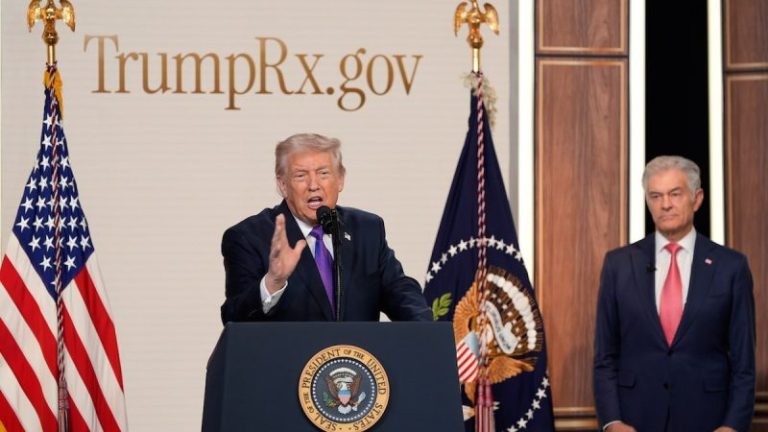
Lowering drug prices has been a cornerstone of his presidency, and he has taken meaningful steps to deliver by expanding generics and biosimilars, implementing historic price transparency rules, capping insulin costs for seniors, advancing TrumpRX to increase competition to increase competition and direct access, and pursuing a ‘Most Favored Nation’ policy, so Americans are no longer paying more for medications than patients in other developed countries.

These policies represent an important shift toward putting patients, not middlemen, first. It’s a strong and necessary start, but sustaining this momentum by increasing competition and expanding access will be critical to finally bringing lasting relief to Americans.

This is not the first time Trump has revolutionized healthcare access. He set the tone during his first term with Operation Warp Speed, a milestone in American biomedical history, after COVID-19 paralyzed the world six years ago this month. By pairing private‑sector innovation with decisive federal coordination, it accelerated effective vaccine development and distribution; proving speed and rigor can coexist when government clears paths instead of creating bottlenecks. Just as important, it expanded options for patients and families, reinforcing a simple principle: access first, always.

What followed, however, is where public trust began to erode. Not because of Operation Warp Speed, but because its success was taken over by bureaucratic overreach. I watched in real time as public trust in health institutions collapsed, common sense was dismissed, legitimate debate was shut down and universal COVID vaccine mandates were imposed. Patients did not turn away from the vaccine recommendations because of the science; they turned away because of coercion despite evolving science and varying risk levels.

When personal autonomy gave way to mandates, they undermined confidence in both institutions and vaccines themselves. The result wasn’t the product of Trump’s leadership and scientific progress; it was the consequence of power being prioritized over personal choice.

Today, this administration is again pursuing strong public‑health outcomes without treating Americans as bystanders. Trust should be built where it matters most: in the home and in the doctor’s office. Parents want choice. Doctors want access. Parents overwhelmingly trust their own physicians. Doctors who know a child’s history and needs should remain the most trusted voices and, increasingly, America’s health agencies are speaking that same language.

The recent shift in tone from top health leaders is significant and worth recognizing. Acting Centers for Disease Control and Prevention Director Jay Bhattacharya is urging Americans to get the measles vaccine as cases rise and the U.S. risks losing its hard-won elimination status. He called the decision ‘deeply personal’ while making clear that ‘measles is preventable and vaccination remains the most effective way to protect yourself and those around you.’

Centers for Medicare & Medicaid Services Administrator Mehmet Oz echoed that in February: ‘There will never be a barrier to Americans getting access to the measles vaccine. It is part of the core schedule.’ This is what responsible public health communication looks like: honest, direct, and rooted in science, without coercion.

President Donald Trump is proving that when Washington listens to everyday Americans and acts with urgency, real change is possible.

The challenge now is sustaining this posture. Keeping vaccines available, affordable and accessible is not a concession to one side of the political debate, it’s broadly popular across the spectrum and conservatives are no exception. Skepticism of mandates and top-down health edicts does not translate into a desire to see vaccines become harder to get or more expensive to access. Americans want the freedom to make their own choices alongside their doctors and that freedom is only meaningful when access is guaranteed.

At the same time, the message must be clear: removing mandates does not mean vaccines are no longer recommended, or they have somehow been deemed unsafe. Vaccines remain one of the most effective tools in modern medicine. When vaccination rates fall, history and modern-day show that preventable disease and mortality rise.

Trump understands this, and his agencies need to hold the line: speak honestly about what the science says, respect personal decision-making and ensure that no American faces a barrier to a vaccine they want. That’s a winning posture politically — and more importantly, it’s the right thing to do.

This post appeared first on FOX NEWS

Republicans sharply criticized former President Joe Biden over rising prices at the gas pump, but a spike in energy prices amid the U.S.-Israeli conflict in Iran threatens to scramble the party’s affordability messaging.

The Iran conflict has led to a surge in gas prices for Americans, leading to an average 50 cents a gallon increase since Operation Epic Fury began on Feb. 28.

The average price of gas reached $3.54 per gallon on Tuesday, according to AAA. Diesel prices have also risen to $4.72 per gallon. The increases have been mostly fueled by volatility in oil prices, which rose above $100 per barrel on Monday as the Strait of Hormuz remained effectively shuttered.

The president characterized the gas price hike amid the Iran conflict as ‘a very small price to pay’ in a Truth Social post Sunday.

That statement represented a sharp break with Trump’s typical messaging touting low gas prices prior to Operation Epic Fury.

‘Gasoline, which reached a peak of over $6 a gallon in some states under my predecessor — it was quite honestly a disaster — is now below $2.30 a gallon in most states. And in some places, $1.99 a gallon,’ President Donald Trump said during his Feb. 27 State of the Union address. ‘And when I visited the great state of Iowa just a few weeks ago, I even saw $1.85 a gallon for gasoline.’

The surge in gas and diesel prices threatens to undermine the economic message of President Trump and congressional Republicans, who have touted low gas prices as a major win in the lead-up to November’s midterm elections. Cost of living issues are expected to be a key concern among voters as both parties claim to be laser-focused on making everyday life more affordable.

During the 2024 presidential contest, Trump frequently campaigned on ending Biden’s ‘war on American energy’ and pledged to reverse a surge in gas prices that occurred under his predecessor’s tenure.

Gas prices averaged $3.45 per gallon across all fuel grades during Biden’s four-year term, surging to a record high of more than $5 per gallon in June 2022 after the outbreak of the Russia-Ukraine war, according to the U.S. Energy Information Administration.

‘Starting on Day 1, we will drive down prices and make America affordable again,’ Trump said during a speech at the Republican National Committee convention in July 2024. ‘People can’t live like this.’

Democrats have seized on rising prices at the pump amid the conflict in Iran.

‘I wish the administration thought about this before they started this unnecessary war,’ Sen. Angus King, I-Maine, who caucuses with Democrats, said Monday when asked about the gas price hike.

‘Donald Trump’s war has sent gas prices skyrocketing through the roof,’ Senate Minority Leader Chuck Schumer, D-N.Y., wrote on social media Monday. ‘What contempt. What cluelessness.’

Schumer has called on the president to release oil from America’s Strategic Petroleum Reserve to combat supply bottlenecks in the Middle East. The top Democrat notably opposed a Trump-led effort to replenish the stockpile in his first term when oil prices were much lower.

Republicans have voiced confidence that the rise in gas prices would be temporary. GOP lawmakers have frequently cited their efforts to roll back Biden-era energy regulations and boost domestic production as evidence that their policies are working to lower energy prices.

‘It’s going to be probably volatile for a period of time. I think what’s going to be key is ensuring we can get safe access to the Strait of Hormuz,’ Sen. Steve Daines, R-Mont., said Monday, adding that he was confident the disruption would be short-lived.

Daines, who abruptly suspended his re-election campaign last week, highlighted that average gas prices were under $3 per gallon prior to Trump’s State of the Union speech. 

‘That’s an important win for the American people,’ the retiring Montana lawmaker said. ‘Something you’re reminded of usually weekly when you’re gassing up your vehicle.’

Some Republicans and Trump administration officials are also arguing that a defeated Iran will ultimately spur lower gas prices, even if there is pain in the short run.

White House press secretary Karoline Leavitt characterized the recent increase in oil and gas prices as ‘temporary’ during a briefing Tuesday.

‘Once the national security objectives of Operation Epic Fury are fully achieved, Americans will see oil and gas prices drop rapidly, potentially even lower than they were prior to the start of the operation,’ Leavitt said.

‘At the end of the day, we’re going to destroy this regime, and their ability to disrupt oil is going to be less, and we’re going to have more production, not less,’ Sen. Lindsey Graham, R-S.C., told reporters Monday. ‘Once you take the largest state sponsor of terrorism off the planet, who depends on oil for their revenue, that’s a more stable world.’

Nearly seven in 10 Americans — including 44% of Republicans — expect gas prices to keep increasing in the coming months, according to a Reuters-Ipsos poll released Monday.

Trump has threatened Iran with unprecedented force if the flow of oil through the Strait of Hormuz is further restricted.

‘Death, Fire, and Fury will reign upon them — But I hope, and pray, that it does not happen!’ Trump wrote Monday on Truth Social.

This post appeared first on FOX NEWS

Three years ago, I came to the United States as a graduate student with the intention of studying public and international affairs at Columbia University, with a focus on public service. Like many who come here from across the world, I had a vision of the United States as the land of the free, a place where freedom of speech was cherished and where I could study freely. I thought it was a place where I could stand up for what I believed in without fear of retaliation from the government.

On March 8, 2025, that vision shattered. Multiple plainclothes ICE agents in unmarked cars grabbed me, without a warrant, from the lobby of my apartment building in New York and threw me on a plane to a federal detention center in Louisiana. As a green card holder with a U.S. citizen wife — who was 8 months pregnant at the time — I couldn’t believe what was happening. I had been targeted by the government because of my lawful speech in support of Palestinian rights, for protesting the use of my tax dollars and tuition fees to support the Israeli occupation.

Throughout my 104 days in federal detention, during which I missed the birth of my first child, I considered myself a political prisoner. The government had deprived me of my liberty, not because I had broken any laws, but because it didn’t like what I had to say.

Once I challenged my detention and Secretary Rubio’s determination that my political views posed a foreign policy threat, the government scrambled to add new accusations. They alleged, baselessly, that I had committed fraud on my green card application. Claims invented not out of evidence, but out of retaliation. Recent evidence in federal court revealed that DHS itself acknowledged, a day before my arrest, that there were no issues with the information I provided on my green card application because everything was complete, true, and correct. Yet I was arrested anyway.

I was not alone. Other students and scholars with valid immigration status were similarly targeted for detention and deportation despite having committed no crime. They were pulled off streets by masked agents, targeted outside of their homes, and tricked into arrests during citizenship appointments. What happened to us is exactly what the First Amendment is designed to prevent: the government deciding which speech is acceptable and which is not. Once that protection is weakened, everyone is at risk.

The Supreme Court recognized eighty years ago that the First Amendment protects all of us in the United States — citizens and noncitizens alike — from government persecution for our beliefs. If we allow that boundary to be violated for noncitizens, or when the government claims a foreign policy concern, a precedent is created that can be used against all of us. Even citizens. Even people who disagree with me vehemently about Palestine.

The government has argued that federal courts must let people sit in immigration detention for months or years before reviewing allegations of constitutional violations. They have argued that Pro-Palestine speech constitutes a foreign policy threat. They have argued that I deserve to be deported because they dislike my ideas. If they can do this to a lawful permanent resident with a U.S. citizen wife and newborn U.S. citizen child, there’s no telling who else they will come for.

The government isn’t allowed to control how we can speak and think. Attorneys representing me in my case, and others like me in similar cases, argued this point in court and secured our release from detention. But my case is still ongoing, and the executive branch’s immigration agency may soon order my deportation. So, I ask Americans directly: do you want to live in a country where you can be snatched off the street by plainclothes agents for your thoughts?

In Assad’s Syria, where I grew up in a Palestinian refugee camp, that was routine. Since the beginning of 2025, the United States, a country whose Constitution protects freedom of speech, has seen an increase in these actions that I once associated with Assad: abductions by plainclothes officers without warrants, forced detention of people who express views the government doesn’t like, and the targeted silencing of dissent.

I will continue to use my platform to advocate for human rights in Palestine. But I ask each and every person reading this to use their voice to defend our First Amendment rights. The right to speak our minds, no matter who holds power, is the foundation of our democracy, and it is in peril. Whatever you may think of me or my views, that foundation belongs to all of us.

This post appeared first on FOX NEWS

A top Senate Republican wants answers on why the Biden administration drained the nation’s oil stockpile but did little to replenish it.

Sen. Tom Cotton, R-Ark., charged that decisions under President Joe Biden to tap the Strategic Petroleum Reserve (SPR) could have a ripple effect as the U.S. continues its war with Iran and as the Iranian government continues its chokehold on the Strait of Hormuz.

Cotton, in a letter first obtained by Fox News Digital to Department of Energy Secretary Chris Wright, charged that the Biden administration released 180 million barrels from the nation’s reserves in 2022 ‘to suppress gas prices ahead of the midterm elections.’

‘That decision drained the reserve to a 40-year low,’ Cotton wrote. ‘The decision to drain the SPR was not a response to a supply emergency; it was a deliberate political act designed to protect Democrats from the consequences of their own failed energy policies.’

Biden tapped the reserve twice — once in 2021 to relieve soaring fuel prices as the nation still grappled with the economic fallout from the COVID-19 pandemic and again the following year to combat increased energy costs at the onset of the war between Russia and Ukraine.

The SPR has capacity for over 700 million barrels of crude oil, but currently, the reserve has far less following the drawdown under the previous administration.

At the end of Biden’s term, the reserve had about 415 million barrels of crude on hand, according to data from the Department of Energy.

Cotton said that it wasn’t ‘the first time Democrats undermined the reserve’ and noted that Senate Minority Leader Chuck Schumer, D-N.Y., and congressional Democrats blocked President Donald Trump’s bid to refill the SPR in 2020, when barrels were cheap, with $3 billion from a colossal COVID-19 stimulus package moving through Congress.

He also said that in 2021, Biden signed an executive order that halted new oil and gas leases on federal lands and offshore, which Cotton charged ‘constrained domestic production while the administration was draining the reserve.’

Cotton demanded that Wright answer how blocking the $3 billion oil purchase and halting oil and gas leases impacted the nation’s overall domestic supplies that could have been used to replenish the SPR.

Meanwhile, congressional Democrats are demanding that Trump tap into the SPR after oil prices spiked to four-year highs over the weekend as the war in Iran intensifies.

Schumer said that the reserve ‘exists for moments exactly like this.’

‘The Strait of Hormuz is the world’s most important oil transit choke point, with roughly 20% of global petroleum liquids consumption moving through it in recent years,’ Cotton said. ‘That is precisely why the SPR must be treated as a strategic national security asset, not a political tool.’

This post appeared first on FOX NEWS

Copper prices surged through 2025 and into 2026, placing the red metal firmly back into the spotlight as concerns about a looming global supply shortfall mount among market watchers.

Analysts say the tightening outlook reflects a powerful mix of rising demand — driven by urbanization, the energy transition and the rapid expansion of artificial intelligence infrastructure — against a backdrop of stagnant mine supply.

Speaking at the Benchmark Summit, held in Toronto on March 2, Carlos Piñeiro Cruz, principal copper analyst at Benchmark Mineral Intelligence, outlined the key forces shaping the copper market in the near term, while warning that structural supply challenges could intensify over the coming decade.

Copper supply side increasingly tight

It would be a lie to suggest that the copper supply and demand situation is tenable.

In 2025, mining disruptions led to significant declines in output. Cruz noted that production in Q4 2024 exceeded that of any quarter in 2025; in fact, the sector lost around 1 million metric tons (MT) of output in total.

Much of the reduction was due to unforeseen situations, such as the mudslide at Freeport-McMoRan’s (NYSE:FCX) Grasberg in Indonesia, seismic events at Ivanhoe Mines’ (TSX:IVN,OTCQX:IVPAF) Kamoa-Kakula in the Democratic Republic of the Congo and worker strikes at BHP’s (ASX:BHP,NYSE:BHP,LSE:BHP) Escondida in Chile.

While the operations will eventually recover, the incidents come at a time when the copper market is increasingly tight and is expected to enter into a supply deficit in the coming years.

Cruz is predicting copper production growth of 1.5 percent in 2025, suggesting that the growth rate is behind what is expected from refined copper demand. The majority of the increase will come from mines returning to normal operations, with additional amounts from projects or expansions that began ramping up in 2025.

Cruz stated that pre-disruption growth was originally forecast at around 2 million MT in 2026, but has since been downgraded by around 700,000 MT, with the majority of the reduction coming from Escondida.

“We see that supply coming in this year will be highly skewed towards H2 as mines recover, with a 9 percent increase between Q1 and Q4, with most of this growth coming from South America, Africa and Asia, ex-China,” Cruz said.

From there, he expects growth to stabilize in 2027 at a much higher rate than this year, with Africa to experience a faster growth rate than the overall market. In the long run, Cruz predicts a compound annual growth rate of 0.9 percent between 2025 and 2035, with copper output peaking in 2033 at 27 million MT.

Copper demand drivers to watch

One of the main areas Cruz focused on was the acceleration of demand driven by the energy transition, artificial intelligence and technology. A lot of the new demand is coming from electric vehicles (EVs) — while the amount of copper in each EV is seen declining, demand growth will remain strong as sales increase.

“We do think that copper density on EVs is going to go down substantially. From 2010 to 2035, it’s going to go from 85 kilograms per unit to 64 kilograms per unit. In spite of this, we still think that copper demand from battery EVs and hybrid vehicles will grow substantially from around 2.3 million MT in 2025 to 6 million MT in 2035,” Cruz said.

It’s not just EVs, other technologies like artificial intelligence, data centers and communications are placing additional strains on the electrical infrastructure. Increasing demand for new power lines, electrical generators and energy storage is further bolstering downstream demand for copper.

“We anticipate demand from these particular sectors will grow from around 10 million MT in 2025 to 14 million MT in 2035. With most of the demand coming from energy transmission and generation,” Cruz said.

He went on to explain that transmission and generation account for 77 percent of the anticipated growth.

Cruz thinks energy demand has been overshadowed by the growth in data centers, where he suggested that copper demand will increase by only about 400,000 MT between 2025 and 2035.

“Of the growth I told you about from EVs with almost 4 million MT, or the demand from energy infrastructure with a little less than 3 million MT, it’s not that impressive. Although it still adds up to a substantial growth,” he said.

100 new copper mines by 2035?

The key takeaway from Cruz’s presentation was that a copper supply gap is developing. While he pointed out that the annual supply growth rate will come in at around 1 percent, demand is nearly double at 1.9 percent.

“This basically means that with the mines that currently exist, plus the projects that are under construction, we expect to see a difference in what needs to be mined and what will be mined in 2035 of around 7.4 million MT,” he said.

When probable projects are factored in, the supply gap narrows, but a 2.2 million MT shortfall still exists. However, these additional projects are not guaranteed. Cruz suggested that to avoid shortfalls, 100 new mines with output in the 75,000 MT range need to be built by 2035 — but this won’t be an easy task. Of the 10 largest mines in the world, only two were built after 2010; meanwhile, many of the others are decades or over 100 years old.

One reason new mines are scarce is long permitting processes, but Cruz also acknowledged that newly found large-scale deposits are at greater depths and lower grades. This has led to a scarcity of greenfield projects, with most growth coming from expansions at existing mines, a trend Cruz expects to continue over the coming years.

“Looking ahead, we expect this trend to continue to the point that we anticipate that by 2031, new production from greenfield projects will be half of what it was in 2011,” he said.

Additionally, Cruz said the copper market is becoming increasingly bifurcated, with China set to be a dominant force in both production and refinement of the red metal moving forward.

“The supply gap, or the future copper shortage, is something that the industry has been warning about for years now. The truth is, it seems not a lot of people are paying attention to it, but China has,” he said.

Cruz explained that China’s involvement in the Democratic Republic of Congo was the result of extensive planning and considerable investment. In fact, Chinese companies have collectively surpassed western producers and are securing their own supply chain.

Investor takeaway

Overall, Cruz believes the copper sector is well positioned for investment.

While he has some concern that smelting capacity is nearing saturation, he expects the situation to return to balance by 2031 and thinks that competition for concentrate will keep producer costs lower until then.

The combination of low treatment charges, high copper prices and even higher by-product gold, silver and molybdenum prices has helped increase margins and profitability for operators.

“We think that the market is in a very good position right now for miners at least. You could argue that for smelters it’s good as well despite the treatment and refinement charges, and we think that if these factors last a little bit longer, we expect some of these projects to bring the copper that humanity needs,” Cruz said.

Securities Disclosure: I, Dean Belder, hold no direct investment interest in any company mentioned in this article.

This post appeared first on investingnews.com

Canada is a premier destination for mineral exploration and mining, but the nation’s exploration-stage companies are still struggling to attract investment dollars.

The country’s appeal is showcased in the Fraser Institute’s most recent Annual Survey of Mining Companies, which tracks the investment attractiveness of global mining jurisdictions. It places the Canadian provinces of Ontario and Saskatchewan among the world’s top mining jurisdictions, behind only Nevada.

The Canadian mining industry “serves as a proxy for the global (mining) industry” as it is home to “the largest concentration of public mineral companies in the world,” with Toronto at “the center of the mining finance universe,” said Douglas Silver, partner and senior advisor at Benwerrin Investment Partners, during his presentation at this year’s Prospectors & Developers Association of Canada (PDAC) convention, held last week.

Jeff Killeen, director of policy and programs for PDAC, shared similar sentiments in his own presentation, telling conference attendees, “Almost 30 percent of every dollar raised somewhere in the world for the (mining) sector comes through the Canadian marketplace: the TSX, the Venture and the CSE.”

Canada’s unique tax incentives crucial for mining investment

Canada owes its leading position in the global mining industry to its large landmass and abundance of natural resources. However, both Silver and Killeen pointed out that the nation’s flow-through share tax incentive — unique to Canada — is also “incredibly critical” to the success of the natioin’s mining sector.

Flow-through shares are a highly specialized financing tool that allow resource companies to transfer eligible exploration and development expenses to investors, who then deduct them from their own taxable income.

Under the Mineral Exploration Tax Credit (METC), funds generated from this type of capital raise must be put into a project within 18 months. There’s also the Critical Mineral Exploration Tax Credit (CMETC), which applies to critical minerals used for batteries and magnets, including rare earths, nickel, uranium, lithium and graphite, among others.

Generational shift shrinking pool of mining investors

Although Canada dominates the global mining finance sector and is teeming with multiple types of mineral deposits, it’s becoming increasingly difficult for the nation’s exploration-stage companies to attract investment dollars.

The tight financial landscape for today’s explorers stems in part from both a complex regulatory system that limits the areas open to mining activity, and a lack of proper infrastructure in the more remote regions of the country. Both of these shortcomings strike at the heart of perceived jurisdictional risk for both retail and institutional investors.

During his presentation, Killeen highlighted a few of the key financing trends affecting access to capital in the mineral industry, noting that last year saw a dramatic uptick in investment in the mining sector.

Where is capital originating from? Most of it was equity raised through private placements, which poses a problem as it represents a very narrow investor base that consists of friends and family of the management team and strategic investors that probably already own shares in the company.

“That just tells us that we’re not broadening the investor base. We’re not pulling in more investors. There’s no more new retail folks coming in investing in shares in Canada. This tells us that we’re in a very risky balance in terms of who actually can fund the sector through the next generation,” he warned the PDAC audience.

“There is a lesser population of retail investors as time goes on. You know that the Boomer generation is going away in terms of an investment pool, and the next generation isn’t necessarily replicating that.”

Silver also views the generational shift in the investment landscape as a problem for raising money in the mining industry. “There’s no question from what I’ve read and heard that the younger generations don’t pick individual stocks. They tend to lean towards ETFs or crypto or other stuff,” he said. “Crypto is definitely competing with mining.”

Gold grabbing all the dollars

Canada’s minerals industry did experience a strong rebound in terms of equity investment in 2025, but it was heavily targeted at producers and developers with large-scale, near-production projects. Gold dominated, but investment also increased in projects associated with critical minerals like lithium, nickel, copper and graphite.

“How much is going to the bottom end, to those sub-$100 million market cap companies, the lion’s share of the junior explorers that are out there? Well, in the Canadian marketplace, only about 10 percent of every dollar raised is getting down to those size of companies,” explained Killeen, highlighting the discrepancy.

In his view, the lack of investment over the past decade is bringing about a decline in grassroots exploration.

Gold is grabbing many mineral investment dollars, not only because its price is surging to unprecedented highs, but also because there’s a faster return on investment compared to other metals. Killeen said that’s due to the fact that gold mining doesn’t require large amounts of infrastructure such as railways and ports.

“In some cases, you don’t need roads. The capital to develop a gold mine might be one-sixth of, one-10th of or one-20th of a copper mine or a zinc mine,” he commented. “So the rate of return for the average investor who’s looking at an exploration stock saying, ‘Could I get money back into this? Could I get value back into this?’ Today that timeframe is much shorter, and the capital to bring it to market is much lower.”

Looking at copper, which is much more capital intensive, Killeen said production is down nearly 30 percent from seven or eight years ago. Reserves are also down, even though rising copper prices have resulted in more resources being upgraded to reserves. Silver agreed with that take — his research shows that the Canadian mining industry is overflowing with gold companies. Of the 1,555 mining companies in Canada in 2024, 42 percent of them were gold-focused firms compared to only 17 percent for copper, the second highest amount.

“So why do we have so many gold companies? I think the answer is pretty obvious to me, which is if you want to build a porphyry copper mine, you’ve got to go raise $5 (billion) or $10 billion,” said Silver. “That’s very difficult in the mining industry, because we just don’t have that much gross capital available to us relative to what some of the other industries have … but you can build a gold mine for a couple hundred million (dollars).’

Despite the massive focus on gold, Killeen and Silver both noted that Canada is actually seeing increasing exploration activity for rare earths, lithium, cobalt, graphite and uranium.

Improving the investment case for Canada’s juniors

Killeen said PDAC and its members are pushing for the Canadian government to make the METC and CMETC permanent to bring more investment into mineral exploration in greenfield regions and making new discoveries.

Last year, flow-through shares generated C$1.6 billion in investment into the sector, according to Silver’s research, or about 76 percent of funding received by mineral exploration companies in Canada.

“When you look at the role of Canadian flow through, it’s so incredibly critical to Canadian mining,” he said. Silver too is advocating for the mining industry and investors to “fight for flow through way more than you do.’

To address infrastructure challenges for bringing critical metals projects into production sooner for a quicker return on investment, Killeen suggested more pension funds investing in Canada and easing government regulations.

“We need them cooperating together with the federal government to develop major infrastructure that doesn’t exist beyond 100 kilometers from the border,” he said.

Killeen noted that “the world is changing” and governments, including Canada’s, are becoming more focused on securing domestic sources of critical minerals. For example, at PDAC, Tim Hodgson, Canada’s minister of energy and natural resources, announced a C$3.6 billion suite of investments targeting the critical minerals sector.

Securities Disclosure: I, Melissa Pistilli, hold no direct investment interest in any company mentioned in this article.

This post appeared first on investingnews.com

Silver mining companies are being supported by a silver price bull run in 2026.

After climbing through 2025, silver broke its all-time high set in 1980 in October before reaching a new high of US$121.62 per ounce on January 29.

The factors driving the metal’s rise remain, most notably tightening supply and demand fundamentals driven by higher demand from industrial sectors and its use in photovoltaics.

Additionally, prices have found tailwinds from safe-haven investors who find silver’s lower entry price compared to gold appealing. They have moved toward silver on the back of uncertainty in global financial markets as the US implements tariff policies, as well as escalating tensions in the Middle East and the unresolved conflict between Russia and Ukraine.

Below is an overview of the five largest silver-mining stocks by market cap as of February 26, 2026, as per TradingView’s stock screener. Read on to learn more about the activities and operations of these large-cap silver stocks.

1. Pan American Silver (TSX:PAAS,NYSE:PAAS)

Market cap: C$37.1 billion
Share price: C$92.37

Pan American Silver is among the world’s largest primary silver producers, with silver assets located throughout the Americas and operations in Peru, Mexico, Bolivia, Argentina and Chile. Its largest wholly owned silver-producing asset is its La Colorada mine in Mexico.

Pan American also has a 44 percent stake in the Juanicipio mine in Central Mexico following its US$2.1 billion acquisition of MAG Silver that closed in September 2025. The mine is operated by Fresnillo (LSE:FRES), which holds the remaining 56 percent.

According to Pan American’s Q4 and full year 2025 report, its operations produced a record 7.28 million ounces of attributable silver in Q4 boosted by the addition of the Juanicipio mine. Juancipio is now the company’s biggest silver producer, producing 1.91 million ounces of attributable silver in Q4.

The La Colorada mine was the second highest contributor at 1.61 million ounces of silver. Other significant contributions came from the El Peñon gold-silver mine in Chile at 1.06 million ounces of silver, Cerro Moro in Argentina at 920,000 ounces, Huaron in Peru at 780,000 ounces and San Vicente in Bolivia at 760,000 ounces.

For the full year, Pan American produced 22.8 million ounces of attributable silver, coming in above its annual guidance. The company also provided guidance for 2026, estimating production of 25 million to 27 million ounces of attributable silver and all-in sustaining costs for its silver segment of US$15.75 to US$18.25 per ounce.

2. First Majestic Silver (TSX:AG,NYSE:AG)

Market cap: C$19.75 billion
Share price: C$42.59

First Majestic Silver has three wholly owned silver-producing mines in Mexico: San Dimas in Durango, Santa Elena in Sonora and La Encantada in Coahuila. The first two produce gold as well.

Additionally, the company holds a 70 percent stake in the Los Gatos silver mine in Chihuahua, which also produces zinc, lead and gold as byproducts. First Majestic acquired the property in January 2025 through a merger with Gatos Silver; Japan’s Dowa Holdings (TSE:5714) owns the remaining 30 percent.

On top of its mining operations, First Majestic mints and sells silver bullion from its First Mint facility in Nevada, US. The company commenced sales in March 2024.

According to its full year 2025 production report, First Majestic achieved record Q4 silver production of 4.17 million ounces of silver, a 77 percent year-over-year increase from 2.35 million ounces.

First Majestic’s Los Gatos mine was its largest producer, delivering 1.49 million attributable ounces of silver during the quarter. San Dimas took second place at 1.32 million ounces, while La Encantada and Santa Elena produced 1 million ounces and 358,185 ounces, respectively.

On a yearly basis, First Majestic produced 15.44 million ounces of silver, near the upper end of its guidance. The company set guidance for 2026 at 13 million to 14.4 million ounces of silver, with silver equivalent all-in sustaining costs at US$26.15 to US$27.91 per ounce.

3. Endeavour Silver (TSX:EDR,NYSE:EXK)

Market cap: C$5.33 billion
Share price: C$19.17

Endeavour Silver is a mining company with operations in Mexico and Peru.

In Mexico, Endeavour has two operating silver-gold mines — Guanaceví mine and Terronera — as well as a portfolio of exploration projects that includes the advanced Pitarilla silver project. The company achieved commercial production at Terronera in October 2025.

In Peru, the company owns the Kolpa silver mine, which also produces zinc, lead and copper. It acquired the Peruvian mine’s owner Compañia Minera Kolpa in May 2025 for total consideration of US$145 million in a combination of cash and shares. Endeavour also agreed to pay up to US$10 million in cash in contingent payments if certain events are met.

In its Q4 and full year 2025 results, Endeavour reported Q4 silver production of 2.03 million ounces, up 146 percent year over year. For the full year, Endeavour produced 6.49 million ounces of silver, a 45 percent increase over its production of 4.47 million in 2024.

Much of these gains were driven by new production from Kolpa and Terronera, which contributed 631,867 and 352,002 ounces of silver respectively in Q4. Kolpa delivered 1.61 million ounces during its eight months of ownership in 2025.

A large portion of the increase was due to the acquisition of Kolpa, which

The company also noted that it achieved commercial production at Terronera in October 2025, delivering 352,002 ounces of silver in the final quarter of the year. Another 608,388 ounces of silver were produced at its Bolanitos mine in Mexico in 2025.

On January 15, Endeavour announced it had completed the sale of the mine to Guanajuato Silver for upfront consideration of US$40 million, with additional payments to be made upon meeting production milestones at the mine.

4. Silvercorp Metals (TSX:SVM,NYSEAMERICAN:SVM)

Market cap: C$3.96 billion
Share price: C$18.84

Silvercorp Metals is a production and development company operating two silver mines in China: the Ying Mining District in Henan and the GC mine in Guangdong. It is also working to develop the copper primary El Domo project in Central Ecuador.

In the company’s operations report for its fiscal Q3 2026 ended December 31, Silvercorp reported total silver production for the quarter of 1.9 million ounces, a 4 percent decrease from the same period last year. The majority of its output came from the Ying Mining District, which delivered approximately 1.7 million ounces of silver, with about 100,000 ounces coming from the GC mine, according to the release.

It is constructing the Kuanping project as a satellite deposit for Ying, at which it expects to see minor development ore production beginning in June. In addition to mining activities, the company reported 76,607 meters of exploration drilling and 19,917 meters of tunnelling across Ying and GC.

On February 4, Silvercorp announced that the construction budget for its El Domo project had been increased by US$44 million to US$284 million. The largest component of the rise at US$16 million was an increase in the VAT rate from 10 percent to 15 percent; the company expects to recover the funds through tax credits in the first year of operation.

Silvercorp detailed its 2025 progress at El Domo in the release, which included moving over 2.6 million cubic meters of material for site preparation.

5. Americas Gold and Silver (TSX:USA,NYSEAMERICAN:USAS)

Market cap: C$3.34 billion
Share price: C$12.90

Americas Gold and Silver is a US and Mexico-focused silver producer. Its primary operations consist of the Galena Complex in Idaho, US, and the Cosala operations in Sinaloa, Mexico.

Americas is one of the largest primary silver miners in the US due to its Galena Complex in Nevada’s Silver Valley, a historic mining district that is home to the Bunker Hill, Sunshine and Lucky Friday mines. In addition to silver, Galena produces antimony and copper byproducts. In February, the company announced plans to build an antimony processing facility at the complex through a 51 percent owned joint venture.

In late 2025, Americas Gold and Silver completed a two phase plan to increase efficiency at the mine’s No. 3 shaft. The first phase upgraded the hoisting capacity from 40 to 80 metric tons per hour of material movement, while phase two included upgrades to the hoist pads, the installation of a hoist control console and the deployment of an antenna system in the shaft to support upgrades to automation.

The Cosala operations in Sinaloa comprise 67 mining concessions spanning 19,385 hectares and include the Los Braceros processing facility, the San Rafael mine and the EC120 mine. While San Rafael contains higher levels of zinc and lead, EC120 hosts higher grades of silver and copper. EC120 entered commercial production on January 1, 2026, as the company transitions its operations away from San Rafael.

In December, Americas Gold and Silver completed its acquisition of the past-producing Crescent silver mine, located 9 miles from the Galena Complex in Idaho. The company plans to restart production at the fully permitted mine, which produced more than 25 million ounces of silver between 1917 and 1981. Feedstock from the mine will be delivered to the milling site at the Galena Complex.

The company said it is fully funded and will rapidly advance Crescent to production, while also carrying out aggressive exploration programs at both sites.

On January 21, Americas announced it achieved record production from its Cosala operations, coming in at 1.19 million ounces of silver in 2025 and 463,000 ounces in Q4 alone.

Its combined full year silver production of 2.65 million ounces was up 52 percent over the 1.17 million attributable ounces it delivered in 2024, in part due to the company increasing its stake in Galena from 60 to 100 percent to end 2024.

FAQs for silver investing

Is silver a good investment?

Silver comes with many of the same advantages as its sister metal gold. Both are considered safe-haven assets, as they can offer a hedge against market downturns, a weakening US dollar and inflation.

Additionally, many investors like being able to physically own an asset, and with its lower price point, buying silver coins and bars is an accessible option for building a precious metals portfolio. Of course, physical silver isn’t the only way to invest in the metal — there are also silver stocks and various silver exchange-traded funds.

It’s up to investors to do their due diligence and decide whether silver is the right match for their portfolio.

Does silver go up when the stock market goes down?

Historically, silver has shown some correlation with stock market moves, although it’s not consistent. When the stock market has seen its worst crashes, silver has moved down, but by a less significant amount than the stock market has, showing that it can act as a safety net to lessen losses in tough circumstances.

However, silver is also known for its volatility. What’s more, because it has industrial applications as well as a currency side, silver is less tied to the stock market than gold is.

Securities Disclosure: I, Dean Belder, own shares of Vizsla Silver.

This post appeared first on investingnews.com