Aurum Resources (AUE:AU) has announced Boundiali Gold Project produces more good drilling results
Download the PDF here.
This post appeared first on investingnews.com


Aurum Resources (AUE:AU) has announced Boundiali Gold Project produces more good drilling results
Download the PDF here.

Lead prices were volatile in 2025 amid investor uncertainty and factors like tariff threats.
The base metal is primarily consumed by lead-acid batteries, but is also used to produce radiation shielding, weights and, in the defense sector, ammunition. More recently it’s seen increased demand from the electric vehicle (EV) sector as a low-voltage auxiliary power source for lighting, windows and other essential systems.
Because lead isn’t usually mined as a primary metal, its supply is tied to other metals like zinc, silver and copper, making the lead price highly dependent on demand for these other metals — and by extension, fairly volatile.
Continuous contracts for lead on the London Metal Exchange (LME) started 2025 at US$1,921.44 per metric ton (MT) and saw steady upward momentum in Q1, rising as high as US$2,090.48 on March 18.
According to Shanghai Metals Market, lead’s early 2025 rise was supported by the end of the Chinese New Year holiday, as well as increased activity in the supply chain, which led to a limited increase in demand for lead ingot purchases. This activity coincided with destocking of lead inventories in western markets, which further fueled the price.
Lead continued to trade above US$2,000 for the remainder of March, but the start of April saw its price floor fall out — the metal hit its 2025 low of US$1,829.75 on April 9 amid a broader rout in commodities markets. This came after US President Donald Trump’s “Liberation Day” tariff announcement on April 2.
LME lead price, 2025.
Chart via the LME.
Shanghai Metals Market notes that the tariff announcement came during the traditional off season for lead, with battery producers reducing production and weakening overall demand for the metal.
However, the lead price had rebounded as of the end of April, with rising demand driving down inventories in downstream industries. By the end of Q2, lead was once again trading above US$1,900.
Trade concerns remained present, and although lead ultimately wasn’t included in reciprocal tariffs, considerable uncertainty dampened sentiment during the metal’s normally peak August-to-September period.
During the year’s third quarter, a significant 45,150 MT delivery to LME warehouses in November pushed total volume to 266,125 MT, leading to a collapse in the lead price amid oversupply concerns.
Lead stabilized in the US$1,930 to US$2,050 range as the year drew to a close, spiking to US$2,078.84 on November 12 and to US$1,910.48 on December 12.
According to the International Lead and Zinc Study Group (ILZSG), global demand for refined lead is expected to increase by 0.9 percent to 13.37 million MT in 2026 after rising 1.8 percent in 2025.
In an October report, the organization projects a 6.6 percent rise in US lead demand for 2025, driven by higher domestic battery production. The ILZSG is also expecting greater 2025 lead usage in the Czech Republic, Germany, Poland and the UK, with a 1.8 percent gain in demand across the European Union.
However, a rise in Chinese demand in the first half of 2025, supported by a government trade-in policy for cars and e-bikes, was offset by lower exports of lead-acid batteries, which fueled demand growth of just 0.9 percent.
Many of these same factors are expected to carry over into 2026, with gains in Europe, Vietnam and the US expected to be offset by a forecast 1.7 percent decrease in Chinese demand.
On the supply side, mining output is expected to increase 2.2 percent to 4.67 million MT in 2026, with a 2.5 percent rise from Chinese operations, along with further gains from Europe and output recoveries in Australia and the US.
Refined supply is forecast to increase by 1 percent to 13.47 million MT over the next year, with gains from smelters in Brazil, India and Kazakhstan partially offset by lower production in China and the UK.
Overall, the ILZSG is expecting the lead surplus to grow to 102,000 MT in 2026.
According to a report from market intelligence firm Mordor Intelligence, lead-acid batteries are set to see increasing demand from data centers and 5G applications, where they are used as back-up power systems. The firm is calling for a 0.4 percent compound annual growth rate (CAGR) over the next two to four years.
In terms of EV sector demand, Mordor sees a 0.3 percent CAGR over the next two years as low-speed EVs like rickshaws and golf carts gain greater uptake in emerging markets in Southeast Asia.
Lead’s supply side could be affected by changing dynamics in the silver market.
In a December 12 article, Fastmarkets notes that a high silver price is prompting producers to accelerate project development timelines, pointing to Silver Mountain Resources’ (TSXV:AGMR,OTCQB:AGMRF) Reliquias project, which is expected to enter commercial production in Q3 2026.
As far as 2026 goes, Fastmarkets is expecting balance in the refined lead metal market, with little supply growth and the price rangebound at around the US$2,000 mark.
Securities Disclosure: I, Dean Belder, hold no direct investment interest in any company mentioned in this article.

Mario Innecco, who runs the maneco64 YouTube channel, shares his thoughts on the record runs in gold and silver, outlining what these high prices say about the world.
‘This is I think the end of this fiat currency regime,’ he said.
Securities Disclosure: I, Charlotte McLeod, hold no direct investment interest in any company mentioned in this article.

Here’s a quick recap of the crypto landscape for Wednesday (January 14) as of 9:00 p.m. UTC.
Get the latest insights on Bitcoin, Ether and altcoins, along with a round-up of key cryptocurrency market news.
Bitcoin (BTC) was priced at US$97,611.39, up by 3.3 percent over 24 hours.
Bitcoin price performance, January 14, 2025.
Chart via TradingView.
Ether (ETH) was priced at US$3,380.29, up by 5.5 percent over the last 24 hours.
The US Senate Committee on Agriculture has scheduled January 27 for its markup of a sweeping crypto market structure bill aimed at clarifying regulatory oversight of digital assets.
The bill text is due to be released on January 21, giving lawmakers less than a week to review and propose amendments before the committee vote. Committee Chair John Boozman said the compressed schedule is designed to balance transparency with momentum as Congress looks to reduce regulatory uncertainty.
The agriculture committee plays a central role because it oversees the Commodity Futures Trading Commission, which would gain expanded authority under the proposal.
If approved, the bill would still need to clear the Senate Banking Committee, pass the full Senate and House and ultimately be signed into law. While momentum has improved compared to last year, unresolved disputes remain around stablecoin yield and decentralized finance provisions.
Polygon Labs has entered into definitive agreements to acquire Coinme and Sequence, bringing together licensed fiat on- and off-ramps, enterprise wallets and onchain orchestration in one integrated solution.
Coinme provides licensed cash-to-digital at retail locations, while Sequence has the simplified ‘smart wallet’ technology needed to move that money easily. By acquiring these two companies, Polygon believes it is building a “one-stop shop” for moving money, allowing users to turn physical cash into digital money, and vice versa, at over 50,000 retail locations in the US; they can also create a digital wallet using an email or social media account.
In addition to that, Polygon said the acquisition will allow crypto users to send money across the world in seconds, without the need for complicated background steps.
Figure Technology Solutions (NASDAQ:FIGR) has launched a new system called the On-Chain Public Equity Network (OPEN), providing a new way for companies to list and trade shares using blockchain technology.
According to the announcement, OPEN is a new system where official stock ownership is recorded directly on a public blockchain, meaning the blockchain record is the stock, unlike a digital copy. It allows continuous, peer-to-peer trading via a limit order book, eliminating reliance on traditional banks and clearinghouses that close.
Investors can self-custody their stocks in a digital wallet, which aims to reduce fees and costs.
The network also allows shareholders to use their stocks as collateral for borrowing or lending, a role typically held by prime brokers. Figure said it is planning for these blockchain stocks to be ‘exchangeable’ with Nasdaq-traded stocks, ensuring price parity and liquidity across both markets.
Figure is the first company to use OPEN, and is offering some of its own shares to demonstrate the technology’s viability for large-scale public investing.
CleanSpark (NASDAQ:CLSK), a company primarily known for Bitcoin mining, announced an expansion to build data centers for artificial intelligence (AI) with the purchase of 447 acres of land in Brazoria County, Texas.
This is its second major land purchase in the area following a similar deal nearby in Austin County.
The company has secured a long-term deal to get up to 600 megawatts of electricity for this new site, enough power to run hundreds of thousands of homes.
While the company is known for mining Bitcoin, it is now using its expertise in building large “computer warehouses” to support the AI boom. These new sites are being designed as AI factories, places filled with powerful computers that process the complex data needed for things like ChatGPT and other advanced tech.
The deal is expected to close in early 2026. Once finished, CleanSpark will have nearly 1 gigawatt of potential capacity in the Houston area, making it a major player in the infrastructure that runs the modern internet.
Bitcoin climbed back above US$95,000 after Michael Saylor’s Strategy (NASDAQ:MSTR) disclosed a US$1.3 billion Bitcoin purchase, its largest single acquisition since July.
The purchase pushed Strategy’s shares up about 7 percent, reinforcing its reputation as a high-beta proxy for Bitcoin. The company now holds roughly US$66 billion worth of Bitcoin at an average purchase price near US$75,000.
Strategy funded the purchase by issuing more than US$1 billion in new shares rather than tapping existing cash.
The rally was reinforced by a surge in institutional demand, with US-listed spot Bitcoin exchange-traded funds recording their strongest single-day inflows since October.
European crypto exchange Bitpanda is reportedly preparing for an initial public offering (IPO) in the first half of 2026, with a potential valuation of up to 5 billion euros.
Bloomberg reported that the Vienna-based firm is said to be eyeing a Frankfurt listing, positioning itself in one of Europe’s deepest capital markets. Founded in 2014, Bitpanda has grown into a major retail platform with more than 7 million users and a dominant share of Austria’s domestic crypto trading activity.
The company has reportedly engaged major investment banks to advise on the deal, though it has yet to formally confirm its IPO plans. A Frankfurt listing would align Bitpanda with a broader trend of European firms prioritizing liquidity and investor depth over traditional UK venues
Securities Disclosure: I, Meagen Seatter, hold no direct investment interest in any company mentioned in this article.
Securities Disclosure: I, Giann Liguid, hold no direct investment interest in any company mentioned in this article.
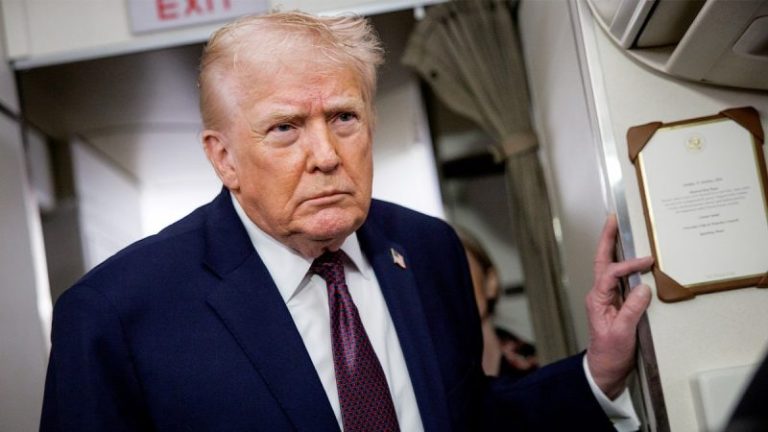
President Donald Trump is setting the stage for the U.S. to be involved in overseeing Venezuela for a significant period of time, after conducting strikes and capturing dictator Nicolás Maduro and labeling himself ‘acting’ president of Venezuela.
The move marks his boldest interventionist move yet — a foreign policy approach by which one country intervenes in another state’s affairs — and follows other major military operations from the Trump administration, including strikes in Syria in December 2025 against Islamic State operatives after an ambush against U.S. troops there, and strikes in June 2025 against the Iranian nuclear sites of Fordow, Natanz and Isfahan.
Trump told The New York Times in an interview that was published Wednesday that ‘only time will tell’ how long the U.S. will be running Venezuela, but said it would be ‘much longer’ than a year.
Additionally, Trump announced recently that Venezuela’s interim government would hand over up to 50 million barrels of oil to the U.S. and that the oil would be sold ‘immediately.’
‘We will rebuild it in a very profitable way,’ Trump told the Times. ‘We’re going to be using oil, and we’re going to be taking oil. We’re getting oil prices down, and we’re going to be giving money to Venezuela, which they desperately need.’
Likewise, Trump shared a doctored image that looked like a Wikipedia page that identified him as ‘Acting President of Venezuela’ since January 2026.
Previous interventionist actions the U.S. has taken include launching an invasion of Afghanistan in response to the 9/11 attacks Afghanistan-based al-Qaeda conducted against the U.S., and an invasion of Iraq in 2003 that led to the toppling of Iraqi dictator Saddam Hussein’s regime. In both cases, the U.S. remained in prolonged occupations there.
The language the Trump administration is using now focusing on illegal migration is different than what was used during the Afghanistan and Iraq conflicts, which focused on democracy-building and promoting freedom, Katherine Thompson, a senior fellow in defense and foreign policy studies at the libertarian think tank the Cato Institute, told Fox News Digital.
‘But the pathway to achieve those things, I don’t see, like, a broad differentiation from the things that we did before,’ Thompson told Fox News Digital.
Thompson said that she doesn’t see how the Trump administration’s goals could be completed without small rotational deployments from U.S. forces to provide security, particularly in the event that the U.S. reopens its Embassy in Caracas, Venezuela.
‘I don’t see how we’re going to have a team there without at least some small deployment of rotational forces to achieve security of our own personnel,’ Thompson said.
So far, no U.S. troops are on the ground in Venezuela, and the Senate advanced a War Powers resolution Thursday that, if passed, would bar using U.S. forces within or against Venezuela without Congress’ approval.
When asked by Fox News Digital about whether Trump’s ‘Acting President of Venezuela’ post was shared jokingly and what it indicates about how long the U.S. will be involved in running Venezuela, White House spokeswoman Anna Kelly told Fox News Digital: ‘President Trump will be the greatest President for the American and Venezuelan people in history. Congratulations, world!’
Although Trump has blasted previous administrations for actions in the Middle East and vowed he would bring an end to ‘endless wars’ while ushering in an ‘America First’ agenda prioritizing U.S. interests, Democrats warned that the U.S. may be involving itself in another complicated conflict.
Senate Minority Leader Chuck Schumer, D-N.Y., claimed that the U.S. is on the path to another ‘endless war.’
‘The very thing that Donald Trump campaigned against over and over and over again was no more endless wars,’ Schumer said in an interview with ABC News Jan. 4. ‘And, right now, we’re headed right into one with no barriers, with no discussion.’
Trump announced on Jan. 3 that U.S. special forces conducted a ‘large-scale strike’ against Caracas, and seized Maduro and his wife, Cilia Flores. Both were taken to New York and appeared in a Manhattan federal court Jan. 5 on drug charges, where they each pleaded not guilty.
The raid came after months of pressure on Venezuela and more than two dozen strikes in Latin American waters against alleged drug traffickers as part of Trump’s effort to crack down on the influx of drugs into the U.S.
The Trump administration routinely stated that it did not recognize Maduro as a legitimate head of state and said he was the leader of a drug cartel. Likewise, Trump said in December 2025 he believed it would be ‘smart’ for Maduro to step down.
The Trump administration has justified seizing Maduro as a ‘law enforcement’ operation, and Secretary of State Marco Rubio said congressional approval wasn’t necessary since the operation didn’t amount to an ‘invasion.’
However, lawmakers primarily on the left have questioned the legality of the operation in Venezuela, which was conducted without Congress’ approval.
‘This has been a profound constitutional failure,’ the top Democrat on the Senate Armed Services Committee, Sen. Jack Reed, D-R.I., said in a statement Jan. 3. ‘Congress — not the President — has the sole power to authorize war. Pursuing regime change without the consent of the American people is a reckless overreach and an abuse of power.’

A South Korean court heard arguments Tuesday seeking the death penalty for former President Yoon Suk Yeol, as prosecutors accused the ousted leader of orchestrating a rebellion through his controversial martial law declaration in December 2024.
Independent counsel Cho Eun-suk asked the Seoul Central District Court to impose the sentence, arguing that Yoon’s actions amounted to ‘anti-state activities’ and describing the decree as a ‘self-coup.’
Yoon, a conservative who was removed from office last spring, remains in custody while facing multiple criminal proceedings tied to the martial law episode and other controversies from his presidency. Prosecutors say the rebellion charge carries the most severe potential punishment.
Cho’s team argued in court that Yoon sought to prolong his hold on power by undermining South Korea’s constitutional system of governance.
Yoon has rejected the accusations, telling the court that the investigations into his conduct have been ‘frenzied’ and marked by ‘manipulation’ and ‘distortion.’
He has maintained that the declaration of martial law was intended to alert the public to what he viewed as the growing threat posed by the opposition Democratic Party, which used its legislative majority to block his political agenda.
Yoon argued that the exercise of presidential emergency powers cannot be treated as rebellion under the law.
The court is expected to deliver a verdict next month. Legal experts have said a life sentence is more likely than execution, noting that South Korea has not carried out a death penalty since 1997.
Yoon is the first South Korean president who has faced a potential death penalty after leaving office since Chun Doo-hwan was sentenced to death in 1996 for various crimes. Chun’s death sentence was later commuted to life in prison, and he was subsequently pardoned and freed.
The Associated Press contributed to this report.

The interim government in Venezuela has released at least four U.S. citizens who were imprisoned under President Nicolás Maduro’s regime, Fox News confirmed.
The release marks the first known release of Americans in the South American country since the U.S. military completed an operation to capture authoritarian Venezuelan President Nicolás Maduro, who is now facing federal drug trafficking charges in New York.
‘We welcome the release of detained Americans in Venezuela,’ a State Department official said Tuesday. ‘This is an important step in the right direction by the interim authorities.’
The release of American citizens was first reported by Bloomberg.
President Donald Trump said Saturday that Venezuela had begun releasing political prisoners.
‘Venezuela has started the process, in a BIG WAY, of releasing their political prisoners,’ Trump wrote on Truth Social. ‘Thank you! I hope those prisoners will remember how lucky they got that the USA came along and did what had to be done.’
Venezuela’s interim government has reported that 116 prisoners have been released, although only about 70 have been verified by the non-governmental organization Justicia, Encuentro y Perdón, according to Bloomberg.
National Assembly President Jorge Rodríguez said prisoner releases would continue, according to the outlet.
The U.S. government issued a new security alert Saturday urging Americans in Venezuela to leave the country immediately, citing security concerns and limited ability to provide emergency assistance, the U.S. Embassy in Caracas said.
‘U.S. citizens in Venezuela should leave the country immediately,’ the embassy said in the alert.
The warning pointed to reports of armed groups operating on Venezuelan roads.
Following the military operation, Trump suggested that the U.S. would ‘run’ Venezuela for an extended period.
‘We’re going to run the country until such time as we can do a safe, proper and judicious transition,’ he said.

Former Secretary of State Hillary Clinton was subpoenaed to appear before the House Oversight Committee on Wednesday, but she’s expected to ignore the order, potentially risking criminal charges.
Hillary Clinton is scheduled to be deposed behind closed doors at 10 a.m. on Wednesday, and it appears the GOP-led committee will move forward with holding the interview in some form regardless of whether she attends.
Hillary and Bill Clinton’s lawyers sent a letter to House Oversight Committee Chairman James Comer, R-Ky., earlier this week, calling their subpoenas ‘invalid and legally unenforceable.’
But Comer previously threatened to initiate contempt of Congress proceedings against both Clintons if they skipped their January deposition dates, which were rescheduled twice prior, amid conversations with their attorneys.
Bill Clinton defied his own subpoena on Tuesday, failing to appear for a 10 a.m. closed-door deposition.
Comer told reporters afterward that the House Oversight Committee would meet next week to advance a contempt resolution against the former president in response.
When Fox News Digital asked if the same would happen to Hillary Clinton if she failed to appear the next day, Comer said, ‘We’ll see. We’ll talk about it.’
The former first couple were two of 10 people subpoenaed by Comer as part of the panel’s investigation into Jeffrey Epstein. The subpoenas were issued following a bipartisan vote by an Oversight subcommittee panel during an unrelated hearing on illegal immigration.
Despite that, however, no Democrats appeared for Bill Clinton’s expected grilling.
‘Not a single Democrat showed up today, not a single Democrat,’ Comer told reporters. ‘It just seems like they only care about pushing Republicans. And we’ve had a former Trump Cabinet secretary, Alex Acosta, in for a grilling. We had Bill Barr, former attorney general, in for a grilling. But for whatever reason, President Clinton didn’t show up. And the Democrats on the committee don’t seem to have a problem.’
The Clintons’ attorneys criticized Comer’s leadership of the investigation in their letter, discounting the subpoenas.
‘President and Secretary Clinton have already provided the limited information they possess about Jeffrey Epstein and Ghislaine Maxwell to the Committee,’ the lawyers said.
‘Your continued insistence that the former President and Secretary of State can be compelled to appear before the Committee under these circumstances, however, brings us toward a protracted and unnecessary legal confrontation that distracts from the principal work of the Congress with respect to this matter, which, if conducted sincerely, could help ensure the victims of Mr. Epstein and Ms. Maxwell are afforded some measure of justice for the crimes perpetrated against them, however late. But perhaps distraction is the point.’
Comer said after Bill Clinton skipped his deposition, ‘No one’s accusing Bill Clinton of any wrongdoing. We just have questions. And that’s why the Democrats voted, along with Republicans, to subpoena Bill Clinton.’
The House Oversight Committee would need to advance a contempt resolution before it’s considered by the entire chamber. If a simple majority votes to hold someone in contempt of Congress, a criminal referral is then traditionally made to the Department of Justice.
A criminal contempt of Congress charge is a misdemeanor that carries a punishment of up to one year in jail and a maximum $100,000 fine, if convicted.
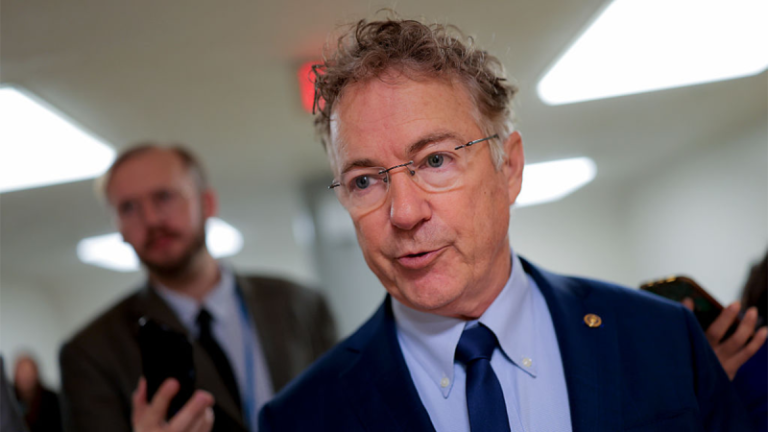
Sen. Rand Paul, R-Ky., accused his ‘pro-life’ Republican colleagues of not caring about the people killed in boat strikes near Venezuela who the Trump administration, without providing evidence, claims were trafficking fentanyl.
During an appearance on ‘The Joe Rogan Experience’ released on Tuesday, Paul said GOP lawmakers ‘don’t give a s‑‑-‘ about the people who died on the vessels, blasting his colleagues for not granting the presumption of innocence.
‘I look at my colleagues who say they’re pro-life, and they value God’s inspiration in life, but they don’t give a s‑‑- about these people in the boats,’ Paul said. ‘Are they terrible people in the boats? I don’t know. They’re probably poor people in Venezuela and Colombia.’
‘I guess what I don’t feel connected to my Republican colleagues is that those lives don’t matter at all, and we just blow them up. And against all justice, and against all laws of war, all laws of just war, we have never blown up people who were shipwrecked,’ he added, referring to the administration’s reported targeting and killing of survivors of initial strikes who were clinging to wreckage.
The liberty-minded Republican said it is ‘against the military code of justice to do that.’
‘We’re doing it and everybody just says, ‘Oh, well, they’re drug dealers,” he said.
Paul criticized his fellow GOP lawmakers who have repeated the administration’s claims about the boats carrying fentanyl. He also took issue with colleagues who hold the position of, ‘Well, we’re at war with them. They’re committing war by bringing drugs into America.’
‘They’re not even coming here,’ Paul explained. ‘They’re going to these islands in the south part of the Caribbean. The cocaine — and it’s not fentanyl at all — the cocaine’s going to Europe.’
He emphasized that ‘those little boats can’t get here.’
‘No one’s even asked this common question: Those boats have these four engines on them. They’re outboard boats. You can probably go about 100 miles before you have to refuel. Two thousand miles from us, they’d have to refuel 20 times to get here,’ Paul said.
The senator accused the administration of conducting the boat strikes to create ‘a pretense and a false argument’ ahead of the operation to attack Venezuela and arrest its president, Nicolás Maduro.
‘It’s all been a pretense for arresting Maduro,’ he said. ‘So, we have to set up the predicate. We got to show you we care about drugs.’
Paul helped the Senate advance a resolution last week that would limit Trump’s ability to conduct further attacks against Venezuela after the U.S. military’s recent move to strike the country and capture Maduro, which the Kentucky Republican said amounts to war. The Upper Chamber could pass the measure later this week, although it faces an uphill battle in the House despite some support from Republicans.
‘I think bombing a capital and removing the head of state is, by all definitions, war,’ Paul told reporters before the procedural vote last week. ‘Does this mean we have carte blanche that the president can make the decision any time, anywhere, to invade a foreign country and remove people that we’ve accused of a crime?’
The lawmaker has repeatedly criticized the administration’s boat strikes on alleged narco-terrorists in recent months, often raising concerns about killing people without due process and the possibility of killing innocent people. The senator previously cited Coast Guard statistics that show a significant percentage of boats boarded on suspicion of drug trafficking are innocent.
Paul said on ‘The Joe Rogan Experience’ that he believes the administration might attack Mexico next, which Trump has signaled could be a future target.
‘They want to do that next. They want to bomb Mexico,’ Paul said.
Trump has said cartels are ‘running Mexico’ and that ‘something’s going to have to be done’ because Mexican President Claudia Sheinbaum is ‘very frightened’ of the cartels.

The cobalt market entered 2025 under pressure from a prolonged supply glut, but the balance shifted sharply as the year unfolded, due almost entirely to intervention from the Democratic Republic of Congo (DRC).
After starting the year near nine year lows of US$24,343.40 per metric ton, cobalt metal prices had risen to US$53,005 by the end of December, pushed upward by supply concerns stemming from export limits in the DRC.
“The cobalt market in 2025 was characterised by a significant price recovery following the DRC banning the export of all cobalt from its borders in February,” said Aubry. “By the end of 2025, sulphate prices increased 266 percent, hydroxide increased by 328 percent and metal prices by 130 percent year-to-date.”
As mentioned, cobalt metal prices hit their weakest level since 2016 in January. Global mine output had more than doubled over five years, far outpacing demand growth from electric vehicles and other end uses.
That dynamic changed abruptly in late February, when the DRC — which supplies roughly three-quarters of the world’s cobalt — imposed a four month suspension on cobalt hydroxide exports.
The news lifted cobalt from US$24,495 at the start of the year to above US$34,000 by the end of March, with intra-month highs nearing US$36,300. The move marked the sector’s first meaningful rebound in nearly two years.
As the DRC exhibited control over cobalt supply, the market began to look to the world’s second largest cobalt-producing nation: Indonesia. Indonesia’s cobalt output is largely a by-product of its laterite nickel industry, produced through high-pressure acid leaching (HPAL) plants that process nickel-rich ores.
These facilities generate mixed hydroxide precipitate (MHP), an intermediate containing both nickel and cobalt that can be further refined into battery-grade materials. The model has enabled Indonesia to rapidly scale its cobalt supply, leveraging its dominant nickel position and integrated processing infrastructure.
Indonesia produced about 31,000 metric tons of cobalt in 2024 — roughly 10 percent of global supply — cementing its position as the world’s second largest producer behind the DRC.
Output growth is being driven by HPAL projects targeting up to 500,000 tons per annum (tpa) of mixed hydroxide precipitate, potentially yielding 50,000 tpa of cobalt, though scaling up may prove challenging.
Indonesian MHP, a lower-cost intermediate that is rich in nickel and cobalt, is increasingly viewed by Chinese refiners as a substitute for DRC-sourced cobalt hydroxide.
The DRC’s export ban continued to underpin prices through the second quarter.
Standard-grade cobalt metal was trading near US$15 to US$16 per pound at the time, while cobalt sulfate posted even sharper gains. Despite the rally, sentiment remained cautious. Chinese refiners drew on existing inventories, and trade data showed cobalt units still flowing into China, particularly from Indonesia.
By June, prices had begun to ease as uncertainty mounted over how long the DRC would maintain controls.
Although China imported significant volumes earlier in the year, analysts warned Indonesian supply would be insufficient to fully offset reduced DRC cobalt shipments. Later that month, the DRC extended its export restrictions through September, reinforcing expectations that the market would move toward balance.
By mid-year, Chinese import data confirmed the impact — cobalt hydroxide inflows had fallen sharply, with analysts projecting constrained refinery feed into late 2025 or early 2026.
Prices stabilized in a broad US$33,000 to US$37,000 range through Q3, supported by tightening supply and diminishing inventories. Market participants increasingly viewed the DRC’s actions as a structural shift rather than a temporary correction, signaling the end of the cobalt surplus that had defined the previous two years.
By late 2025, the cobalt market had transformed from one of chronic oversupply to one approaching equilibrium — a reset driven not by demand growth, but by decisive supply-side intervention.
After months of supply disruption, the DRC lifted its full cobalt export ban in mid-October, replacing it with a rigid quota system that will shape the market through 2026.
Under the new framework, annual DRC exports are capped at about 96,600 metric tons, roughly half of 2024 levels, with just 18,125 metric tons scheduled for shipment in Q4 2025.
This structural tightening helped sustain elevated prices that surged above US$47,000 by late October, levels not seen since early 2023, amid persistent feedstock shortages and constrained exports.
DRC quotas have provided a degree of market clarity, with major producers like CMOC Group (OTCPL:CMCLF) receiving significant allocations that underpin production plans. Despite robust output guidance, inventories outside the DRC remain tight, and market participants see continued upward price pressure as the quota system curtails supply.
“The DRC’s quota system is set to squeeze supply in the next two years — unless the country revises quotas higher,” wrote Fastmarkets’ Oliver Masson in a December market update.
“Prices are already considerably higher than they were at the beginning of the year, and they are likely to remain elevated for as long as current quota levels remain in force,’ he said. ‘Cobalt is mostly used in batteries, and the longer prices remain elevated, the more likely it is that EV manufacturers will seek to move to low-cobalt or cobalt-free chemistries where feasible. This could slow demand in the medium term.”
Looking ahead to 2026, analysts see the cobalt market shifting into a deficit as export caps bite and global feedstock availability shrinks. Fastmarkets projects a structural shortfall of about 10,700 metric tons against demand near 292,300 metric tons, driven by DRC quota limits and ongoing drawdowns of stocks.
Industry forecasters also anticipate that reduced shipments, combined with a stubbornly tight pipeline, will support stronger average prices next year. Some forecasts suggest cobalt could average near US$55,000 in 2026 as export quotas supplant the 2025 ban. Indonesian supply is emerging as a secondary source, with production climbing, but most analysts agree it will be insufficient to offset DRC constraints in the near term.
After a year of dramatic swings driven by supply policy in the DRC, 2026 is shaping up as the first sustained deficit environment in the cobalt market, with prices expected to remain elevated amid structural tightening.
“Prices have substantially recovered over 2025 and are expected to remain elevated in 2026 as the DRC limits exports,” said Aubry. “There is a significant potential upside risk as dwindling ex-DRC stocks present the risk of demand destruction towards the end of the year.”
Securities Disclosure: I, Georgia Williams, hold no direct investment interest in any company mentioned in this article.