Author

admin

Browsing

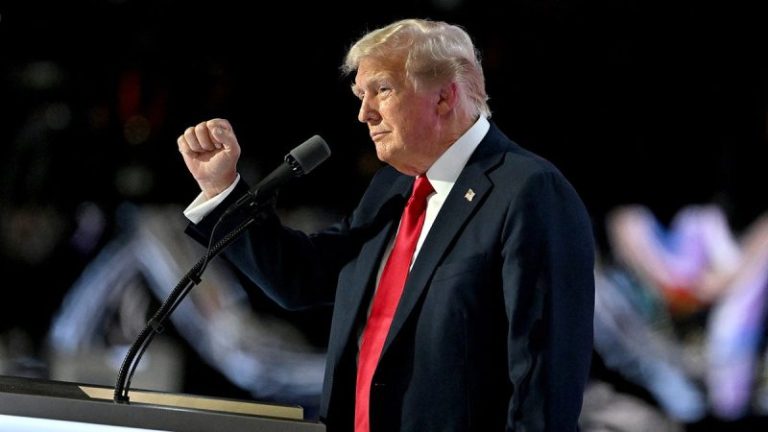
— The Republican National Committee (RNC) is taking a big step toward holding its first-ever midterm convention.

The RNC on Thursday advanced a change to the party’s rules that would allow Chairman Joe Gruters ‘to convene a special ceremonial convention outside a presidential election cycle,’ according to a memo shared first with Fox News Digital.

National political conventions, where party delegates from around the country formally nominate their party’s presidential candidates, normally take place during presidential election years.

But with Republicans aiming to protect their narrow control of the Senate and their razor-thin House majority in this year’s elections, President Donald Trump announced in September that the GOP would hold a convention ahead of the midterms ‘in order to show the great things we have done’ since recapturing the White House.

The new memo highlights ‘the possibility of an America First midterm convention-style gathering aligned with President Trump’s vision for energizing the party this fall.’

The party in power, in this case the Republicans, normally faces stiff political headwinds in the midterms. And the hope among Trump and top Republicans is that a midterm convention would give the GOP a high-profile platform to showcase the president’s record and their congressional candidates running in the midterms.

The RNC’s rules are based on holding a convention every four years. The proposed rule change will allow the RNC to hold a midterm convention. If adopted, the rule states that the convention must be called at least 60 days in advance, and no business would be conducted during the gathering.

The proposed change was adopted Thursday evening by the RNC’s Rules Committee during the party’s winter meeting in Santa Barbara, California.

It’s unclear if the full RNC membership will vote on the rule change when it gathers Friday at the confab’s general session. If the rule isn’t adopted by the full RNC, it’s expected to be approved at the party’s spring meeting.

Gruters, in a statement to Fox News Digital, highlighted that the RNC’s winter meeting ‘shows how completely united Republicans are behind President Trump and our efforts to win the midterms. The RNC has been aggressively focused on expanding our war chest, turning out voters and protecting the ballot in this fall’s elections. We’re building the operation needed to protect our majorities and give President Trump a full four-year term with a Republican Congress.’

Details on the date and location of the midterm convention will come at a later date and will likely be announced by the president.

But a Republican source told Fox News Digital it’s probable the convention would be held at the same time as the RNC’s summer meeting, which typically occurs in August.

The rival Democratic National Committee (DNC) may also hold a midterm convention. Sources confirmed to Fox News Digital last summer that DNC chair Ken Martin and other party leaders were quietly pushing the idea of a convention ahead of the midterms.

Democrats held a handful of midterm conventions in the 1970s and 1980s.

This post appeared first on FOX NEWS

President Donald Trump on Thursday said the United States should have considered testing NATO by forcing member countries to respond to America’s southern border crisis.

Trump speculated in a post on Truth Social that the U.S. could have invoked Article 5 — the alliance’s collective defense clause that deems an attack on one member as an attack on all — thereby putting NATO ‘to the test.’

‘Maybe we should have put NATO to the test: Invoked Article 5, and forced NATO to come here and protect our Southern Border from further Invasions of Illegal Immigrants, thus freeing up large numbers of Border Patrol Agents for other tasks,’ he wrote.

The president’s comments came after he has recently questioned NATO’s commitment to aiding the U.S.

‘We will always be there for NATO, even if they won’t be there for us,’ the president wrote on social media earlier this month.

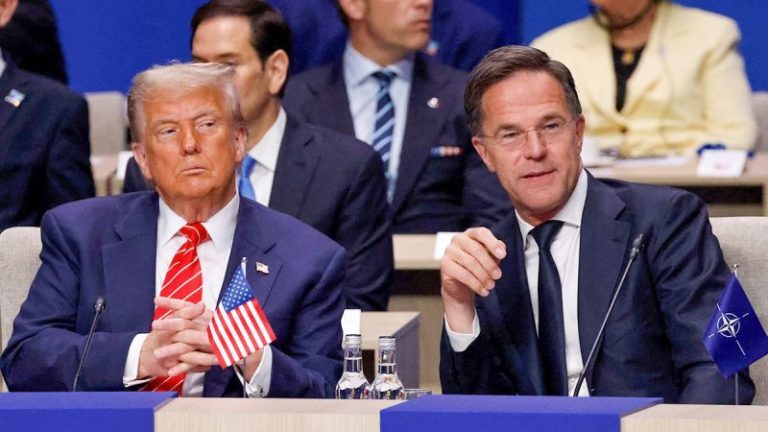
After meeting with NATO Secretary General Mark Rutte on Wednesday at the World Economic Forum in Switzerland, Trump announced that he had the ‘framework of a future deal regarding Greenland.’

Trump wrote on Truth Social that if finalized, the deal ‘will be a great one for the United States of America, and all NATO Nations.’

Following the meeting, Trump said he would scrap a plan to impose tariffs on a group of NATO members who sent troops to Greenland amid the president’s efforts to acquire the island. Trump had asserted that those countries would be subjected to a 10% tariff on all goods beginning Feb. 1.

In an exclusive interview with Fox News this week, Rutte said Trump was ‘totally right’ about needing to shore up security in the Arctic region, noting that the chance of Russia or China becoming a threat in that region was increasing.

Rutte applauded Trump’s leadership in getting NATO countries to pay more money for the alliance’s defenses.

‘I would argue tonight with you on this program he was the one who brought a whole of Europe and Canada up to this famous 5%,’ Rutte said, ‘which is crucial for us to equalize our spending, but also protect ourselves. And this is the framework which you see in his post that we will work on.’

NATO members were previously spending 2% of GDP on defense, but have now agreed to spend 5% of GDP on defense and national security infrastructure.

Fox News Digital reached out to the White House for comment.

Fox News Digital’s Alec Schemmel contributed to this report.

This post appeared first on FOX NEWS

Louisiana state Rep. Julie Emerson announced on Thursday that she was nixing her U.S. Senate bid in light of President Donald Trump-backed U.S. Rep. Julia Letlow entering the GOP primary.

‘With Congresswoman Letlow’s entrance into the race, the path to victory that was visible a couple of months ago has diminished. I support President Trump and respect his decision to endorse Julia Letlow to defeat Bill Cassidy. Because of this, I’m choosing to end my campaign now,’ Emerson said in a statement.

Incumbent Republican Sen. Bill Cassidy of Louisiana, who has served in the U.S. Senate since 2015, is running for re-election.

After the House impeached Trump in 2021, Cassidy was one of the Senate Republicans who voted to convict during a vote that occurred after Trump had already departed from office — the Senate vote ultimately fell short of the threshold required to convict Trump.

The president pledged his endorsement to Letlow in a Truth Social post on Saturday.

‘Should she decide to enter this Race, Julia Letlow has my Complete and Total Endorsement. RUN, JULIA, RUN!!!’ the president exclaimed in the post.

Letlow launched a Senate bid days later.

‘Today, I am announcing my candidacy for the United States Senate to ensure the nation we leave our children is safer and stronger. Louisiana deserves a conservative Senator who will not waver. I am honored to have President Trump’s endorsement and trust. Let’s Geaux!’ she declared in a Tuesday post on X.

Louisiana State Treasurer John Fleming and state Sen. Blake Miguez are also running in the Republican U.S. Senate primary in the state.

This post appeared first on FOX NEWS

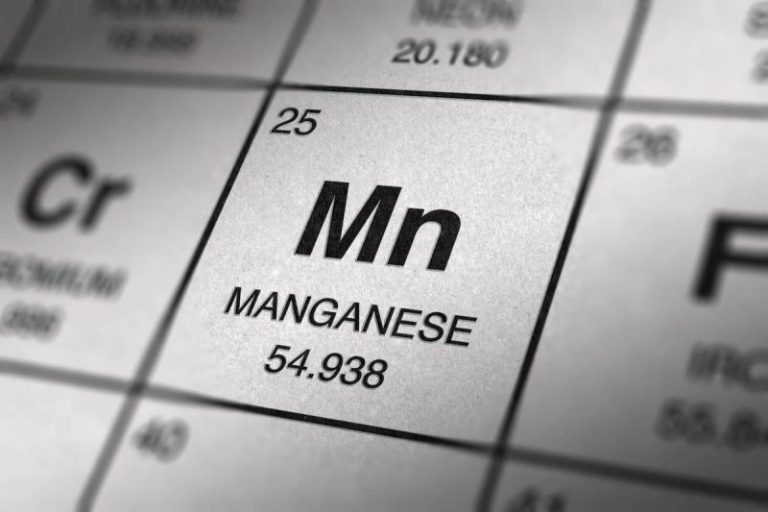
After taking a bearish turn in late 2024, manganese prices started 2025 on a flat note despite a robust demand outlook supported by growth in the electric vehicle (EV) battery segment.

In the first half of 2025, the manganese market experienced mixed signals as supply dynamics shifted and demand from the steelmaking sector remained uneven. Early in the year, logistical disruptions and tight inventories in China briefly supported manganese ore prices — China’s port stocks fell to multi-year lows in March, drawing down to roughly 3.7 million metric tons due to by logistical bottlenecks and steady consumption by alloy makers and steel producers.

A rebound in sales in early spring pushed ore prices to a 2025 high of US$4.48 per metric ton.

However, by mid-year, the broader picture was one of ample supply and downward price pressure.

Manganese ore production climbed to around 10.1 million metric tons in H1, buoyed by strong export volumes from South Africa and Gabon and the resumption of Australian shipments that had been disrupted in 2024.

At the same time, global steel output weakened, particularly in China, where production declined about 3 percent year-on-year amid slowing domestic demand, while India and North America posted modest gains.

Demand for manganese alloys also softened, with sales volumes down modestly and margins compressed by rising feedstock costs, especially for alloy producers facing less favorable mixes.

Manganese prices struggle as structural demand builds

By June 20, 2025, manganese’s H1 gains had eroded and ore prices fell to US$4.21.

Eramet (EPA:ERA,OTCPL:ERMAF), a major producer, said it expected supply of manganese ore to increase in the second half of 2025, partly as key producers such as Australia returned volumes to market after earlier disruptions.

‘Ore supply should increase in H2, driven by the full return to the market of the leading Australian producer, partly offset by a potential downward revision of South African exports,’ the company notes. Demand for manganese alloys was expected to weaken in line with seasonality and softer global steel production.

Analysts cautioned that production expansions from major manganese producers could exacerbate oversupply. “Production increases … can only lead to oversupply, leading to a reduction in price,” one industry executive said.

Protectionist measures in key markets, including new EU quotas on ferroalloys, added uncertainty by potentially disrupting traditional trade flows and affecting alloy pricing dynamics.

Beyond the steel sector, structural shifts in consumption patterns emerged.

Although steelmaking still accounts for the lion’s share of manganese demand, interest in battery-related uses, particularly high-purity manganese for lithium-ion and next-generation EV chemistries, continued to gain attention.

“Our expectations of ongoing strengthening battery-grade demand and production in China in Q4 have been tempered somewhat by ongoing challenges within the nickel cobalt manganese (NCM) market,” Rob Searle, battery raw materials analyst at Fastmarkets, wrote in a November battery metals market update.

“While we expect a level of demand ramp-up in Q4, in the wider context of geopolitical challenges and a challenging Chinese market, the manganese demand uptick in the short term could be somewhat tempered,’ he added.

Changing battery chemistries

During a June Supply Chain (SC) Insights webinar, experts noted that manganese-rich cathode chemistries are increasingly drawing attention as automakers seek to cut costs and reduce exposure to cobalt and nickel.

Andy Leyland, founder of SC Insights, pointed out “manganese-rich chemistry is really offering a good solution … in terms of costs,” highlighting the commodity’s role in emerging battery designs.

While high-nickel NCM batteries remain dominant, industry players are exploring manganese as a lower-cost, high-performance alternative in Europe and North America, where supply chains remain heavily reliant on imports, particularly from China. OEMs are under pressure to secure raw materials directly, with vertical integration and direct sourcing emerging as key strategies to manage price volatility and supply security.

John Mulcahy, supply chain specialist at SC Insights, emphasized that sourcing upstream allows companies to negotiate better terms and reduce exposure to market fluctuations, even amid low pricing environments.

Manganese-rich chemistries are expected to expand steadily, complementing existing NCM and lithium iron phosphate (LFP) batteries, rather than replacing them entirely.

As Leyland noted, these materials are “definitely very high up on the focus from the demand side,” signaling growing adoption in the global push for cost-effective, low-cobalt battery solutions.

In March, Firebird Metals (ASX:FRB,OTCPL:FRBMF) produced its first lithium manganese iron phosphate (LMFP) EV batteries, becoming the first Australian company to achieve the feat. The move could position Firebird as a low-cost manganese cathode player, and highlights growth in the LMFP battery production segment.

Rising nationalism presents trade challenges

With the demand picture for manganese showing promise, analysts warn that export restrictions in Gabon could lead to a supply crunch before the decade is over. According to the US Geological Survey, 63 percent of US manganese imports come from Gabon. In June, the African nation announced plans to implement an export ban in January 2029.

Gabon’s renewed push to ban manganese ore exports from 2029 underscores Africa’s broader shift toward value addition, but it also risks tightening an already fragile global supply picture, a Project Blue market note reads.

As the world’s second largest exporter, Gabon shipped more than 7 million metric tons of high-grade ore in 2024, material that is critical to both ferroalloy production and emerging battery supply chains.

An export ban would hit Chinese buyers and European processors reliant on Gabonese feedstock, while adding pressure to the high-grade market at a time when Australia’s GEMCO mine is expected to wind down later this decade.

Although in-country processing — through ferroalloys or batteries — offers a path to capture more value locally, it would require significant investment and could shift, rather than eliminate, environmental and logistical costs.

For global markets, Gabon’s move signals rising resource nationalism in Africa and a potential structural squeeze on manganese supply heading into the next decade.

“However, without large-scale investments from China, a key battery producer, such ambitious plans of African governments risk remaining unrealised,” the Project Blue overview states.

“China has invested in Africa’s mineral industry (e.g. Ghana), securing access to the continent’s high-quality raw materials, while keeping production of high value-added products directly in China.”

In early 2025, Euro Manganese (TSXV:EMN,OTCPL:EUMNF) scored a major boost when its Chvaletice manganese project was designated a “strategic project” under the EU’s Critical Raw Materials Act.

The move underscores the EU’s push to secure local supply of critical battery materials and could tighten the manganese market by prioritizing European production in the continent’s energy transition.

Oversupply vs. new manganese demand drivers

For 2026, analysts expect the manganese market to remain broadly balanced, but with pressures and opportunities on both the supply and demand fronts. However, longer-term fundamentals point to steady growth.

Global market forecasts indicate the manganese industry could expand modestly in value and volume by 2035, driven by ongoing demand from steel and increasing uptake in battery and clean-energy applications.

Some reports project market size rising through the decades, with Asia-Pacific demand remaining dominant and new opportunities emerging in the electrification and high-purity material segments.

Steel demand will continue to be the principal driver in 2026, with India’s expanding production offering a potential buffer against slower growth in China and Europe. Battery applications may not yet move the pricing needle dramatically, but their structural importance is increasing as automakers and cathode developers look to diversify away from nickel and cobalt reliance, a trend that could support manganese demand in the medium term.

“Looking ahead to the coming weeks and months, it is likely we won’t see too much further upward pressure on prices. Asian markets are heading towards the seasonal lull in demand and manufacturing activity in February as the Lunar New Year holidays begin,” Searle said in a January Fastmarkets report.

“At the same time, there are concerns around what China’s EV demand outlook looks like in Q1 2026, with changes to subsidy schemes potentially leading to softening consumption of battery-grade manganese.”

Securities Disclosure: I, Georgia Williams, hold no direct investment interest in any company mentioned in this article.

This post appeared first on investingnews.com

Steve Barton, host of In It To Win It, shares price targets for silver and discusses when silver stocks may start to outperform the metal.

‘I fully expect a catch-up trade like this — I think that it’s coming, and I think it’s going to come this year and probably this first quarter,’ he said.

Securities Disclosure: I, Charlotte McLeod, hold no direct investment interest in any company mentioned in this article.

This post appeared first on investingnews.com
Aura Energy Limited (ASX: AEE, AIM: AURA) (“Aura” or “the Company”) is pleased to announce that MMCAP International Inc. SPC (‘MMCAP’) and certain other strategic investors (together the ‘Strategic Investors’) will provide funding of C$10 million for a 19.7% interest in the Company’s polymetallic Häggån project (‘the Häggån Project’) located in Sweden, establishing its value at C$50 million.

Aura has entered into a binding agreement to transfer 100% of the Häggån Project to SIU Metals Corp. (‘SIU Metals‘), an unlisted Canadian public company, in consideration for acquiring shares in SIU Metals. The agreement will result in SIU Metals being the 100% owner of the Häggån Project.

Aura will retain 78.7% ownership of SIU Metals and the Strategic Investors will own 19.7% after contributing C$10 million via a private placement. SIU Metals intends to seek a stock market listing on the TSX Venture Exchange (‘TSXV’) in connection with the transaction.

HIGHLIGHTS

  • Valuation for Häggån project established at C$50 million (A$55 million)
  • Agreement with MMCAP and certain other strategic investors to provide aggregate gross proceeds of C$10 million to SIU Metals, which will be renamed following the transaction
  • Proceeds to be used for the advancement of the Häggån project, including permitting and resource expansion through continued exploration including on surrounding tenements
  • Aura will retain ownership of 78.7% of SIU Metals and consequently will retain indirect exposure to the Häggån project post-transaction
  • Aura to appoint new officers and directors to SIU Metals on closing of transaction
  • Financing is expected to complete in February 2026, with the transaction expected to complete in June 2026
  • New Canadian listed company to benefit from increased visibility and direct comparison with valuation of other public companies with similar deposits
  • On 1 January 2026, the Minerals Act in Sweden was amended to allow exploration for and extraction of uranium
Phil Mitchell, Executive Chairman Aura Energy, said:

“We are delighted to welcome investors of the calibre of MMCAP, Aura’s largest shareholder, and other high-quality investors into this new vehicle for Aura’s Häggån project, and the future support they can bring. We believe their investment is a demonstration of the quality and potential of the project, and its exciting future as, following legislation changes brought into effect on 1 January 2026, mining of uranium is now allowed again in Sweden. This transaction shines a spotlight on the under-recognized value of Häggån within Aura Energy, and creates an independent and dedicated pathway for funding, growth and management of the project.

Upon successful completion of the transaction, Aura’s existing shareholders will continue to benefit from Häggån’s upside potential, and by way of a direct comparison with the valuation of other companies with similar deposits in the region.”

Click here for the full ASX Release

This post appeared first on investingnews.com
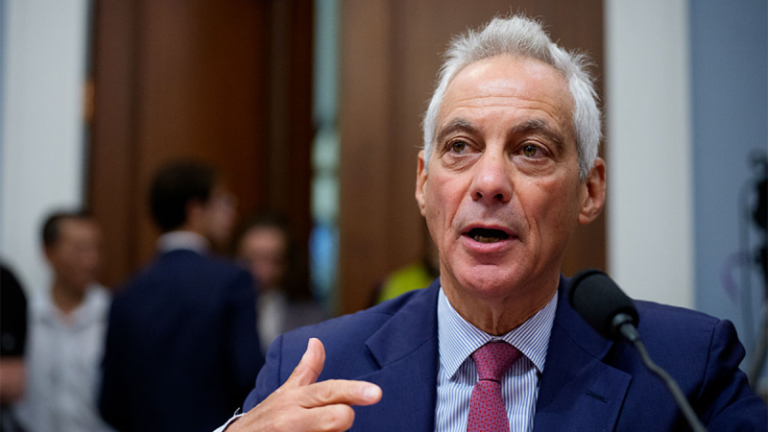
Former Chicago Mayor Rahm Emanuel, a potential White House hopeful for 2028, said on Wednesday that he wants a mandatory retirement age of 75 for the president and people holding office in other branches of government.

‘You’re 75 years old: done,’ Emanuel, a Democrat, said at a Center for American Progress event. ‘And that would be in the legislative branch, it’d be in the executive branch — including the Cabinet — and it’d also be in the Supreme Court, and all the federal courts.’

Emanuel, 66, acknowledged that he would be affected by this proposal if he happens to be elected president in 2028 and seeks re-election, as he would be 73 at the start of a potential second term.

‘I know where I am in my age. Of course it would apply to me,’ Emanuel told Politico. ‘You can’t say ‘here’s what I want to do to change Washington, one of the things I want to do’ — but I get an exemption because I bought it beforehand.’

The proposal would make President Donald Trump, 79, ineligible to continue serving and would have prevented former President Joe Biden, now 83, from serving his term in the White House.

In Congress, 17 senators and 45 House members are currently 75 or older and would be impacted by the standard.

Supreme Court Justices Clarence Thomas, 77, and Samuel Alito, 75, would also be barred from continuing to serve on the bench, while Justices Sonia Sotomayor, 71, and John Roberts, 70, are nearing Emanuel’s mandatory retirement age.

‘You can’t serve in the armed forces, you can’t serve in private sector jobs,’ Emanuel told reporters on Wednesday. ‘Go work on your golf swing, it’s not that good to begin with.’

Emanuel, who served as ambassador to Japan under Biden and chief of staff under former President Barack Obama, is reigniting a topic that was hot during the last presidential election.

Biden, then 81, and Trump, then 78, were both campaigning for a second term ahead of the 2024 election while facing questions surrounding repeated gaffes. Biden ultimately dropped out of the race amid pressure to end his campaign over his mental and physical fitness.

Former U.S. Ambassador to the U.N. Nikki Haley, who ran in the GOP primary in the last presidential election, proposed mandatory mental competency tests for politicians over the age of 75 during her campaign.

Emanuel, also a former House member, said he would push for legislation to set the limit instead of attempting a constitutional amendment. It is unclear whether that proposed legislation would be constitutional, and could be difficult to receive support in a Congress where the median age for senators is 64.

He said the age limit would be part of a broader demand for ‘comprehensive ethics, lobbying [and] anti-corruption reform’ across the federal government that he said would include a crackdown on lawmakers and judges accepting and stock trading. He wants the Democratic Party to push that proposal as part of a midterms message that also includes raising the minimum wage.

‘You have a president of the United States, in my view, that has expanded, deepened the swamp. Our job is to drain the swamp as Democrats,’ Emanuel said. ‘There’s not a day that goes by that you don’t read a story about either his family, [Commerce Secretary Howard] Lutnick’s family or [Special Envoy Steve] Witkoff’s family making money.’

This post appeared first on FOX NEWS

President Donald Trump dramatically reversed course Tuesday on a U.K. plan to transfer sovereignty of the Chagos Islands to Mauritius while warning it could jeopardize U.S. access to the Diego Garcia military base.

Trump’s reversal highlights what a defense expert called a ‘new Trump Doctrine’ before linking the president’s opposition to the Chagos deal with his Greenland push and citing fears Mauritius could later back out.

Writing on his Truth Social platform Tuesday, Trump called the U.K.’s Chagos decision ‘an act of great stupidity.’

‘Shockingly, our ‘brilliant’ NATO Ally, the United Kingdom, is currently planning to give away the Island of Diego Garcia, the site of a vital U.S. Military Base, to Mauritius, and to do so FOR NO REASON WHATSOEVER,’ Trump wrote. ‘There is no doubt that China and Russia have noticed this act of total weakness.’

‘Trump has done a 180, partly because of the U.K.’s support for Denmark’s sovereign claims over Greenland and partly because of a new strategy outlined by the White House,’ John Hemmings, director of the National Security Center at the Henry Jackson Society, told Fox News Digital.

‘These moves are linked and part of a ‘new Trump Doctrine’’ outlined in November’s National Security Strategy,’ he explained.

‘Diego Garcia is a potential threat to Beijing’s strategy to control vital shipping lanes between the oil-rich Middle East and China’s industrial heartland,’ he added, describing how ‘nearly 23.7 million barrels of oil transit the Indian Ocean every day, with the base being vital in any U.S.-China conflict over Taiwan.’

In a separate post, Trump explicitly linked the Chagos dispute to his Greenland push.

‘The U.K. giving away extremely important land is an act of GREAT STUPIDITY, and is another in a very long line of national security reasons why Greenland has to be acquired,’ Trump wrote.

The Chagos Islands were separated from Mauritius during Britain’s decolonization process, a move the International Court of Justice ruled unlawful in 2019. 

The U.K. later agreed to transfer sovereignty while leasing Diego Garcia back for at least 99 years at a cost of at least $160 million annually.

Diego Garcia is a hub for long-range bombers, logistics and power projection across the Middle East, the Indo-Pacific and Africa. Around 2,500 personnel, mostly American, are stationed there.

‘If Mauritius were to offer the islands to China after taking de jure control, it would put immense pressure on the U.S. in the eyes of international public opinion,’ Hemmings explained.

‘After all, once Mauritius has de jure sovereignty, it can renegotiate the lease terms or even renege on the treaty at any time it wants.

‘It might also provide access to the exclusive economic zone, with all of its rich fishing grounds, to Chinese fishing fleets, adding another layer of risk to U.S. Air Force operations around the island,’ Hemmings said.

‘At this moment, the U.S. base at Diego Garcia is thought to be secure, with Mauritius promising the U.K. (and by proxy, the U.S.) a 99-year lease, which will not, it is supposed, interfere with the operations of the air base at all. But the devil is in the details.’

Fox News Digital has reached out to the White House for comment.

This post appeared first on FOX NEWS