Author

admin

Browsing

Did gold and silver just experience a blow-off top, or do they have more room to run?

Lobo Tiggre, CEO of IndependentSpeculator.com, shares his thoughts on what’s going on with the precious metals, and how investors may want to position.

Securities Disclosure: I, Charlotte McLeod, hold no direct investment interest in any company mentioned in this article.

This post appeared first on investingnews.com

Ross Beaty of Equinox Gold (TSX:EQX,NYSEAMERICAN:EQX) and Pan American Silver (TSX:PAAS,NASDAQ:PAAS) shares his thoughts on gold and silver’s record-setting runs.

While high prices are exciting, he noted that even US$50 per ounce silver is good for miners.

‘At the end of the day, there’s still great value in the silver equities,’ Beaty said.

Securities Disclosure: I, Charlotte McLeod, hold no direct investment interest in any company mentioned in this article.

This post appeared first on investingnews.com

Statistics Canada released November’s gross domestic product (GDP) data on Friday (January 30). The numbers show that the economy remained flat overall with the prior month, following a 0.3 percent decline in October.

The goods-producing industries fell by 0.3 percent in November, weighed down by a 1.3 percent contraction in manufacturing and a 2.1 percent decline in wholesale trade amid ongoing trade tensions between Canada and the United States.

Declines were offset by increases to the retail trade sector, which grew 1.3 percent alongside a 0.9 percent increase to the transportation and warehousing sector.

The release also included advanced data for December that shows real GDP increased by 0.1 percent. Although the data for the month are preliminary, they point to a 0.1 percent contraction in the fourth quarter and a 1.3 percent annual gain in 2025.

This week also marked the first rate-setting meetings of 2026 by the Bank of Canada and the US Federal Reserve.

Both central banks decided to keep their rates unchanged. On Wednesday (January 28), the BoC reported it would maintain its benchmark rate at 2.25 percent. In its announcement, the bank said the outlook remains little changed from its October projection but noted it is vulnerable to evolving US trade policy and geopolitical risks.

South of the border, the Fed held its Federal Fund Rate at 3.25 percent to 3.75 percent. In its announcement, the Fed shared similar sentiments, suggesting that uncertainty remained elevated.

Against that backdrop, gold and silver experienced significant volatility this week, with prices for both metals dropping on Thursday (January 29). Gold fell from above US$5,500 toward the US$5,100 mark during the first hour of trading on US markets, while silver fell from the US$120 mark to around US$108.

Both metals rebounded on the day, posting slight losses from their opening levels, but on Friday prices collapsed further, with gold trading below US$4,800 and silver approaching US$80 in morning trading.

For more on what’s moving markets this week, check out our top market news round-up.

Markets and commodities react

Canadian equity markets were in retreat to end the week.

The S&P/TSX Composite Index (INDEXTSI:OSPTX) lost 3.4 percent over the week to close Friday at 31,923.52, while the S&P/TSX Venture Composite Index (INDEXTSI:JX) fared worse, shedding 8.15 percent to 1,051.08. The CSE Composite Index (CSE:CSECOMP) dropped 9.54 percent to 169.92.

The gold price saw significant declines from mid-week highs, losing 9.76 percent during Friday’s trading day. However, it fell just 1.76 percent from the week’s start to close at US$4,840.76 per ounce on Friday at 4:00 p.m. EST.

The silver price fared even worse, plummeting 28.17 percent on Friday, and closing the week 13.62 percent lower overall at US$83.43 on Friday.

In base metals, the Comex copper price recorded a 1.32 percent drop this week to US$5.98.

On the other hand, the S&P Goldman Sachs Commodities Index (INDEXSP:SPGSCI) was up 4.24 percent to end Friday at 598.20.

Top Canadian mining stocks this week

How did mining stocks perform against this backdrop?

Take a look at this week’s five best-performing Canadian mining stocks below.

Stocks data for this article was retrieved at 2:00 p.m. EST on Friday using TradingView’s stock screener. Only companies trading on the TSX, TSXV and CSE with market caps greater than C$10 million are included. Mineral companies within the non-energy minerals, energy minerals, process industry and producer manufacturing sectors were considered.

1. Vanguard Mining (CSE:UUU)

Weekly gain: 141.18 percent
Market cap: C$29.82 million
Share price: C$0.41

Vanguard Mining is an exploration company working to advance a portfolio of uranium, copper and nickel assets in Canada and Paraguay. Its flagship project is the Yuty Prometeo uranium project in Paraguay.

Among its properties is the Redonda copper and molybdenum project near Campbell River, British Columbia. The site consists of nine mineral claims covering 2,746 hectares and hosts porphyry-style mineralization.

On Tuesday (January 27), Vanguard announced plans for its phase 2 drill program at Redonda, comprising up to 7 holes totaling 2,800 meters, targeting areas in the southeast portion of the property between historic drill holes.

The company also said it would conduct detailed mapping and prospecting in the northern and western portions of Redonda to identify additional priority drill targets and would use phase 1 results to refine targeting.

The program is being advanced quickly to build on drilling results that “confirmed a significantly expanded copper-molybdenum mineralized system at Redonda,” the company said.

2. San Lorenzo Gold (TSXV:SLG)

Weekly gain: 85.6 percent
Market cap: C$185.63 million
Share price: C$2.32

San Lorenzo Gold is an exploration company working to advance its Salvadora project in the Chañaral province of Chile.

The property consists of 25 exploration and nine exploitation concessions covering an area of 8,796 hectares. It hosts a large copper and gold porphyry system with several significant targets. According to the project page, the site geology resembles that of the nearby Codelco-owned Salvador copper mine, which has operated since the early 1950s and is expected to continue until the mid-2060s following an expansion.

On January 26, San Lorenzo provided assay results from the first hole of a drilling program at the Cerro Blanco target at Salvadora. The hole was drilled to a depth of 472 meters, of which it encountered 222.4 meters of mineralization across five sections. The widest interval graded 1.09 grams per metric ton (g/t) gold over 132.2 meters from a depth of 201.5 meters.

The company said it believes the mineralization represents the upper level of a porphyry system and that it suggests a continuation of the system encountered during drilling at the site in 2025.

3. Ameriwest Critical Metals (CSE:AWCM)

Weekly gain: 75.76 percent
Market cap: C$14.69 million
Share price: C$0.58

Ameriwest Critical Minerals is an exploration company with a portfolio of assets in British Columbia, Canada, as well as the US states of Nevada, Oregon and Arizona.

The company announced in August that it was changing its name from Ameriwest Lithium to better reflect a portfolio diversifying into copper and rare earth minerals.

In October 2025, Ameriwest entered into a definitive agreement for the option and potential purchase of the Xeno RAR rare earth mineral claims in British Columbia. Under the terms of the deal, Ameriwest will pay C$55,000 in cash considerations, C$125,000 in exploration expenses over 18 months, a 2 percent net smelter return royalty and 2 million shares.

Then, in November, the company completed the acquisition of 34 unpatented mineral claims in Oregon that form the Bornite copper project in exchange for US$100,000 and a 2 percent net smelter return royalty.

Previous exploration of the Bornite property by Plexus in the 1990s identified a historic resource of 138.5 million pounds of copper, 54,000 ounces of gold and 1.7 million ounces of silver from 3.2 million metric tons of ore. Ameriwest’s current CEO was part of the Plexus team who explored Bornite.

In addition to its recently acquired properties, Ameriwest also owns the Thompson Valley lithium project in Arizona and the Railroad Valley lithium project in Nevada.

The most recent news from the company came on January 20, when it upsized a non-brokered private placement from C$2 million to C$3 million. The company said proceeds would be used to accelerate exploration efforts at its Bornite project.

In the release, Ameriwest says its long-term goal at the project, if results, financing and permitting are successful, is “evaluating the development of an approximately 1,000-tonne-per-day underground copper mining operation.”

4. Tectonic Metals (TSXV:TECT)

Weekly gain: 61.78 percent
Market cap: C$217.87 million
Share price: C$2.54

Tectonic Metals is a gold exploration company working to advance the Flat project in Alaska, US.

The project covers 98,840 acres in Western Alaska and hosts a reduced intrusion-related gold system and six district-scale targets. According to Tectonic, the mineralization is analogous to Kinross Gold’s (TSX:K,NYSE:KGC) Fort Knox mine in Eastern Alaska.

Among the targets is the Chicken Mountain intrusion, where exploration has identified 3 kilometers of mineral strike that remains open in all directions. Each of the 87 holes drilled at Chicken Mountain have intercepted gold.

The most recent update from the Flat project came on Thursday, when Tectonic announced results from 20 drill holes across four target areas.

Most significantly, its first drilling at the Black Creek intrusion, located 6 kilometers north of Chicken Mountain, discovered a new gold zone. The discovery hole, which started from surface, returned grades of 4.5 g/t gold over 48.77 meters. This included a core interval of 7.79 g/t over 24.38 meters, inside of which was a 6.1 meter interval grading 15.19 g/t.

The company said drilling has now confirmed gold mineralization across five intrusion targets: Chicken Mountain, Alpha Bowl, Golden Apex, Black Creek and Jam. It also said that results from 14 other holes are still pending.

5. Golden Lake Exploration (CSE:GLM)

Weekly gain: 60 percent
Market cap: C$12.48 million
Share price: C$0.12

Golden Lake Exploration is a gold exploration company that owns the Jewel Ridge gold project in Nevada, United States.

The project sits along the prolific Battle Mountain–Eureka Gold trend, which has produced more than 40 million ounces to date and hosts operations from McEwen Mining (TSX:MUX,NYSE:MUX) and North Peak Resources.

More than 700 meters of strike have been identified on the property across three primary targets: Eureka Tunnel, Jewel Ridge and Hamburg.

On Wednesday, Golden Lake announced that it had entered into a definitive agreement to be wholly acquired by McEwen Mining and become its subsidiary. Among the highlights of the deal is the ability for Jewel Ridge to be integrated into McEwen’s neighboring Gold Bar mine complex, providing access to infrastructure and funding.

FAQs for Canadian mining stocks

What is the difference between the TSX and TSXV?

The TSX, or Toronto Stock Exchange, is used by senior companies with larger market caps, and the TSXV, or TSX Venture Exchange, is used by smaller-cap companies. Companies listed on the TSXV can graduate to the senior exchange.

How many mining companies are listed on the TSX and TSXV?

As of December 2025, 898 mining companies and 71 oil and gas companies are listed on the TSXV, combining for more than 60 percent of the 1,531 total companies listed on the exchange.

As for the TSX, it is home to 175 mining companies and 51 oil and gas companies. The exchange has 2,089 companies listed on it in total.

Together, the TSX and TSXV host around 40 percent of the world’s public mining companies.

How much does it cost to list on the TSXV?

There are a variety of different fees that companies must pay to list on the TSXV, and according to the exchange, they can vary based on the transaction’s nature and complexity. The listing fee alone will most likely cost between C$10,000 to C$70,000. Accounting and auditing fees could rack up between C$25,000 and C$100,000, while legal fees are expected to be over C$75,000 and an underwriters’ commission may hit up to 12 percent.

The exchange lists a handful of other fees and expenses companies can expect, including but not limited to security commission and transfer agency fees, investor relations costs and director and officer liability insurance.

These are all just for the initial listing, of course. There are ongoing expenses once companies are trading, such as sustaining fees and additional listing fees, plus the costs associated with filing regular reports.

How do you trade on the TSXV?

Investors can trade on the TSXV the way they would trade stocks on any exchange. This means they can use a stock broker or an individual investment account to buy and sell shares of TSXV-listed companies during the exchange’s trading hours.

Article by Dean Belder; FAQs by Lauren Kelly.

Securities Disclosure: I, Dean Belder, hold no direct investment interest in any company mentioned in this article.

Securities Disclosure: I, Lauren Kelly, hold no direct investment interest in any company mentioned in this article.

This post appeared first on investingnews.com

Gold and silver are wrapping up a record-setting week once again.

Starting with gold, the yellow metal left market participants hanging last week after finishing just shy of US$5,000 per ounce. However, it made up for it in spades this week, breaking through that level and continuing on up to smash through US$5,500.

Silver was no slouch either. After hitting triple digits at the end of last week it moved even higher this week, spending time above US$121 per ounce.

Unfortunately, it didn’t take long for those questions to be answered.

Gold and silver prices dropped precipitously as the week drew to a close, with the yellow metal finishing Friday (January 30) just below US$4,900 and silver sitting at about the US$85 level.

What’s going on, and more importantly, what should investors do?

Let’s tackle what’s going on first. The broad consensus from the experts I spoke to at VRIC was that gold and silver prices continue to be driven by elements that have been in play for years, such as strong central bank gold buying and silver’s persistent deficit. But both metals have new factors contributing to their gains.

Adrian Day of Adrian Day Asset Management highlighted two points that have changed for gold, with the first being increasing global chaos. Here’s how he explained it:

Day also mentioned gold purchases from stablecoin issuer Tether as a new factor for gold:

On the silver side, the dynamics are undeniably complex, but Willem Middelkoop of the Commodity Discovery Fund summed it up like this:

So how should investors approach this environment? Personalization was a major theme among the people I spoke to at VRIC, with many emphasizing the importance of understanding why you own the assets in your portfolio and what circumstances would lead you to sell.

Here’s Lobo Tiggre of IndependentSpeculator.com on how that could look right now:

With that said, two key themes emerged when it comes to what experts are doing now.

The first is silver stocks. Multiple market watchers, including Rick Rule of Rule Investment Media, believe silver stocks are set to move higher now that the metal itself has broken out.

Rule said he sold 80 percent of his physical silver and used around half of the money to buy silver companies. This is why he did it:

The second place people are rotating to is oil and gas stocks. You may remember that I touched on this in last week’s video, and the theme strengthened at VRIC — Rick himself took 25 percent of the money he made selling physical silver and put it in oil and gas stocks.

While opinions differ on whether now is the exact right time to buy, I heard multiple times that senior dividend-paying oil and gas companies are a play to consider for those who have taken profits in the gold and silver sector and are looking for the next ‘buy low’ opportunity.

Securities Disclosure: I, Charlotte McLeod, hold no direct investment interest in any company mentioned in this article.

This post appeared first on investingnews.com
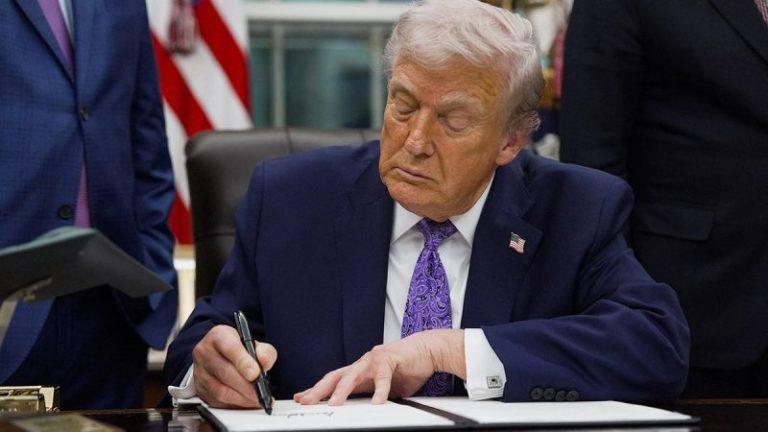
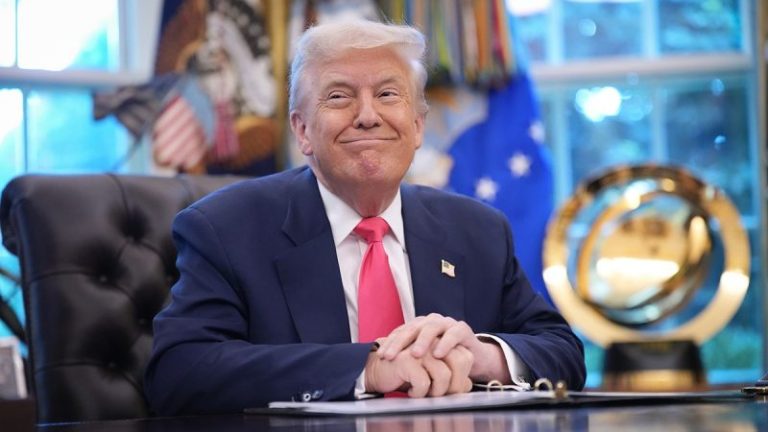
President Donald Trump on Thursday declared a national emergency via an executive order over Cuba, accusing the communist regime of aligning with hostile foreign powers and terrorist groups while moving to punish countries that supply the island nation with oil.

Thursday’s executive order states that the policies and actions of the Cuban government constitute ‘an unusual and extraordinary threat, which has its source in whole or substantial part outside the United States, to the national security and foreign policy of the United States.’

To address that threat, Trump ordered the creation of a tariff mechanism that allows the U.S. to impose additional duties on imports from foreign countries that ‘directly or indirectly sell or otherwise provide any oil to Cuba,’ according to the order.

The White House said the move marks a significant escalation in U.S. pressure on the Cuban government, aimed at protecting American national security and foreign policy interests.

In the order, Trump said Cuba aligns itself with and provides support for ‘numerous hostile countries, transnational terrorist groups, and malign actors adverse to the United States,’ naming Russia, China, Iran, Hamas and Hezbollah.

The administration said Cuba hosts Russia’s largest overseas signals intelligence facility, which the order states attempts to steal sensitive U.S. national security information. The order also says Cuba continues to deepen intelligence and defense cooperation with China.

According to the order, Cuba ‘welcomes transnational terrorist groups, such as Hezbollah and Hamas.’

Trump also cited the Cuban government’s human rights record, accusing the regime of persecuting and torturing political opponents, denying free speech and press freedoms, and retaliating against families of political prisoners who protest peacefully.

‘The United States has zero tolerance for the depredations of the communist Cuban regime,’ Trump said in the order, adding that the administration will act to hold the regime accountable while supporting the Cuban people’s aspirations for a free and democratic society.

Under the order, the Commerce Department will determine whether a foreign country is supplying oil to Cuba, either directly or through intermediaries. The State Department, working with Treasury, Homeland Security, Commerce and the U.S. Trade Representative, will decide whether and how steep the new tariffs should be if so.

Secretary of State Marco Rubio is tasked with monitoring the national emergency and reporting to Congress, while the Commerce Department will continue tracking which countries are supplying oil to Cuba.

In a fact sheet, the White House said the order is designed to protect U.S. national security and foreign policy from the Cuban regime’s ‘malign actions and policies,’ and described the move as part of Trump’s broader effort to confront regimes that threaten American interests.

The administration said the action builds on Trump’s first-term Cuba policy, which reversed Obama-era engagement and reinstated tougher measures against the communist government.

The executive order is set to take effect Friday.

The White House did not immediately respond to Fox News Digital’s request for additional comment.

This post appeared first on FOX NEWS

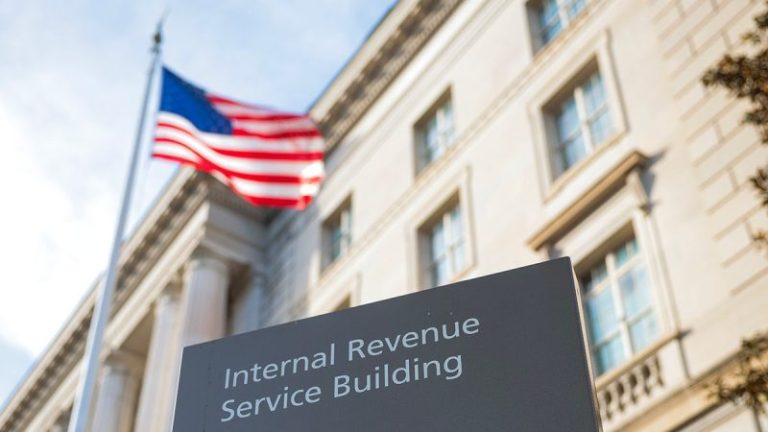
President Donald Trump has filed a $10 billion lawsuit against the IRS, accusing the agency of unlawfully leaking his confidential tax returns in a politically motivated violation of federal privacy laws.

A spokesman for Trump’s legal team told Fox News ‘a rogue, politically motivated’ IRS employee disclosed private and confidential tax information involving Trump, his family and the Trump Organization to outlets, including The New York Times and ProPublica.

The suit claims the disclosures were illegal and harmed millions by violating federal privacy laws.

That contractor at the heart of the leak, Charles Littlejohn, pleaded guilty in October 2023 to a single felony count of unauthorized disclosure of tax return information and is serving a five-year prison sentence.

Littlejohn admitted to stealing and leaking Trump’s tax records to The New York Times and to disclosing confidential tax data involving wealthy individuals to ProPublica.

According to the lawsuit, Littlejohn testified in a 2024 deposition that the Trump materials he leaked included information on all of Trump’s business holdings.

As previously reported by Fox News Digital, Littlejohn refused to testify before Congress, invoking his Fifth Amendment rights while appealing his sentence.

According to a June 2025 Judiciary Committee press release, DOJ prosecutors said Littlejohn’s disclosures were ‘unprecedented in its scope and scale.’ 

This is a developing story. Check back for updates.

This post appeared first on FOX NEWS

President Donald Trump warned the U.K. Thursday against strengthening ties with China, hours after Prime Minister Keir Starmer met President Xi Jinping in Beijing to reset relations after a long period of strain.

Trump’s remarks came as Starmer and Xi had called for a renewed ‘strategic partnership,’ highlighting the pressures facing them amid global instability.

Speaking to Fox News while traveling to Florida for the premiere of first lady Melania Trump’s documentary, Trump was asked about the U.K. ‘getting into business with China.’

‘Well, it’s very dangerous for them to do that,’ Trump said. ‘And it’s even more dangerous, I think, for Canada to get into business with China.’

Trump added that China was not the solution for Western economies despite his personal relationship with Xi. ‘I know China very well. I know President Xi is a friend of mine, and I know him very well, but that’s a big hurdle to get over,’ he said, before joking that Beijing might ban Canada from playing ice hockey. 

‘That’s not good. Canada’s not going to like that,’ he added. 

Trump had previously criticized Canadian Prime Minister Mark Carney after Carney’s visit to China and warned then that ‘China will eat Canada alive.’

Trump’s latest comments followed an 80-minute meeting in Beijing between Starmer and Xi in which the leaders sought to thaw relations after several years of diplomatic chill.

The Associated Press reported that neither leader mentioned Trump directly in their discussions Thursday.

‘In the current turbulent and ever-changing international situation, China and the United Kingdom need to strengthen dialogue and cooperation to maintain world peace and stability,’ Xi told Starmer, according to Chinese state broadcaster CCTV.

Xi also warned that if major powers failed to uphold international law, the world risked sliding into a ‘jungle.’

Starmer said cooperation on climate change and global stability was ‘precisely what we should be doing,’ The Associated Press also reported.

The outlet also reported that Starmer described the meeting as ‘very productive,’ and mentioned progress on whisky tariffs, visa-free travel to China for British citizens and cooperation on migration.

As previously reported by Fox News Digital, Starmer sought Xi’s help to disrupt the supply of China-made small boat engines that the U.K. leader’s office says are used to smuggle people across the English Channel.

He also raised human rights concerns and the Iran nuclear program.

Starmer is the first British prime minister to visit China in eight years and the fourth U.S.-allied leader to do so this month, signaling a push by Beijing to re-engage Western partners.

The visit also came as the U.K. navigates trade alignment with the U.S., defense cooperation in Arctic regions and negotiations over the sovereignty of the Chagos Islands.

In November, the U.S. and China reached a deal easing some tariffs and export controls, boosting U.S. agricultural exports, curbing fentanyl precursor flows and relieving pressure on American semiconductor and shipping companies.

Fox News Digital has reached out to the White House for comment.

This post appeared first on FOX NEWS

The Trump administration announced Thursday it was easing sanctions on the Venezuelan oil industry, as the U.S. aims to ramp up production in the South American country following the capture of dictator Nicolás Maduro earlier this month.

The U.S. Treasury said it is authorizing transactions involving the government of Venezuela and state-owned oil company PdVSA that are ‘ordinarily incident and necessary to the lifting, exportation, reexportation, sale, resale, supply, storage, marketing, purchase, delivery, or transportation of Venezuelan-origin oil, including the refining of such oil, by an established U.S. entity.’

The new license includes significant carve-outs, with sanctions remaining fully intact for persons or entities in Russia, Iran, North Korea or Cuba.

It also excludes transactions with blocked vessels, Chinese-owned or controlled entities operating in Venezuela or the U.S., and debt swaps, gold payments, or cryptocurrency payments, including Venezuela’s petro.

The announcement came as President Donald Trump pushes for the expansion of oil production in Venezuela.

‘We have the major oil companies going to Venezuela now, scouting it out and picking their locations, and they’ll be bringing back tremendous wealth for Venezuela and for the United States and the oil companies will do fine too.’ Trump said during a cabinet meeting Thursday.

Trump also announced during the meeting that commercial airspace over Venezuela would reopen, after the Federal Aviation Administration (FAA) released an emergency notice earlier this month blocking civil flight operations by U.S. aircraft over the South American country.

‘I just spoke to the president of Venezuela and informed her that we’re going to be opening up all commercial airspace over Venezuela,’ Trump said. ‘American citizens will be very shortly able to go to Venezuela, and they’ll be safe there and be safe. It’s under very strong control.’

 Earlier Thursday, Venezuela’s government approved opening the nation’s oil sector to privatization, with Acting President Delcy Rodríguez signing the reform into law — a move that reverses a core principle of the socialist movement that has ruled the country for more than two decades.

Fox News Digital’s Diana Stancy and The Associated Press contributed to this report.

This post appeared first on FOX NEWS

Last week, Secretary of War Pete Hegseth released the 2026 National Defense Strategy (NDS), a Pentagon blueprint that elevates Israel as a ‘model ally’ and translates President Trump’s national security doctrine into concrete military policy.

‘Israel has long demonstrated that it is both willing and able to defend itself with critical but limited support from the United States. Israel is a model ally, and we have an opportunity now to further empower it to defend itself and promote our shared interests, building on President Trump’s historic efforts to secure peace in the Middle East,’ the NDS states.

The document is now influencing parallel debates over the future of U.S. security assistance to Israel and whether the next Memorandum of Understanding, or MOU, should continue delivering traditional U.S. military aid to Israel, amid dissenting voices that portray the alliance as a burden rather than a strategic asset.

According to the strategy, Israel proved its ability and willingness to defend itself following the Oct. 7 attacks, demonstrating that it is not a passive partner but an operational force that supports U.S. interests in the region. The strategy emphasizes empowering capable allies rather than constraining them, building on President Trump’s earlier push for regional integration through the Abraham Accords.

Jonathan Ruhe, director of foreign policy at the Jewish Institute for National Security of America, said the strategy reflects a broader American shift toward partnerships that strengthen both U.S. security and domestic industry.

‘U.S. defense assistance to Israel in the MOU is spent in dollars here in America to support our industry,’ Ruhe told Fox News Digital. ‘And like in the national security strategy, it then enables Israel to go and do more to protect U.S. interests.’

He said a future agreement would likely extend beyond funding alone. ‘A new MOU would also likely be broader and include things that are more 50-50 partnership, like joint research and development, co-production, intelligence sharing and things like that to reflect the changing partnership going forward,’ Ruhe said.

The strategy also highlights the importance of revitalizing the American defense industrial base, noting that allies purchasing U.S. systems help strengthen domestic production while enabling partners to shoulder greater responsibility for regional security.

Avner Golov, vice president of the Israeli think tank Mind Israel, said the document makes clear that Israel is viewed not merely as a recipient of aid, ‘Israel is in the fight. We are protecting ourselves by ourselves. We just need the tools to do that. And by doing so, we enhance not only America’s standing in the Middle East, but also worldwide and contribute to the American economy.’

That framing comes as Israel and the United States prepare for negotiations over the next 10-year MOU, which governs U.S. military assistance to Israel. The current agreement, signed in 2016, provides $3.3 billion annually in foreign military financing, along with $500 million a year for missile defense cooperation.

The debate follows tensions during the Biden administration, when the White House paused the delivery of certain U.S. weapons to Israel in May 2024, including a shipment of 2,000-pound bombs. At the time, Netanyahu warned that Israel ‘will stand alone’ if Washington halted weapons deliveries, reflecting concern that limits or delays in U.S. military support could undermine Israel’s readiness and deterrence. 

Experts have noted that U.S. leaders have not always approved every Israeli weapons request and that roughly 70% of Israel’s military imports come from the United States, underscoring the strategic calculus behind Prime Minister Netanyahu’s recent push for greater independent production.

Golov criticized that approach, arguing it risks prioritizing optics over readiness. ‘I believe that is a short-term vision,’ Golov said. ‘In the long term, Israel must first be prepared for the next round of escalation. If we are not ready, we will face another war. If we are prepared, perhaps we can deter it.’

‘Israel must remain the strongest army in the region, and that is also a fundamental American interest,’ Golov said.

Ruhe said the debate reflects lessons learned from nearly two years of war. ‘You’ve got this sort of topsy-turvy world now where the Israelis are saying we don’t want to take any more U.S. money, and the Americans are saying, no, you’re going to take our money,’ he said.

According to Ruhe, the conflict exposed vulnerabilities created by heavy dependence on U.S. supply chains and political delays.

‘The war of the last two years showed that Israel can’t afford to be as dependent on the U.S. or continue to maintain the same defense partnership that it has because that creates a dependence,’ he said. ‘Israel becomes vulnerable to U.S. shortages in weapons output or politically motivated embargoes and holdups that can impact Israel’s readiness.’

At the same time, Ruhe noted that Israel remains reliant on the United States for major platforms.

‘Even Israel will say we’re utterly dependent on the U.S. for those big-ticket platforms,’ he said, pointing to aircraft such as the F-15 and F-35 that Israel has already committed to purchasing.

For that reason, Ruhe argued that maintaining stable funding under the next MOU may be the most practical path forward.

‘It’s actually much easier for Congress just to go ahead and approve that money,’ he said, explaining that predictable funding reduces annual political battles on Capitol Hill.

Golov said Israel’s long-term objective should not be reducing ties with Washington, but deepening them. ‘I don’t want to reduce dependency,’ he said. ‘I want to increase contribution to America.’

He described the emerging vision as a fundamental shift in how the alliance is structured. ‘We are moving from a 20th-century aid model to a 21st-century strategic merger,’ Golov said. ‘Israel is the only partner that delivers a 400% return on investment without asking for a single American soldier.’

Golov said the proposed framework is built around three pillars: an industrial defense ecosystem, a joint technology ecosystem and a regional ecosystem connecting Israeli innovation, Gulf infrastructure and American power.

He emphasized that maintaining U.S. security assistance during the transition period is critical.

‘We need a final ten-year ‘bridge’ with the current security aid MOU,’ Golov said. ‘A sudden cut would be a dangerous signal of American retreat to our enemies and may hinder IDF preparedness.’

‘I don’t know who the next president of the United States will be,’ he added. ‘This is where our enemies can read it in a very dangerous way.’

This post appeared first on FOX NEWS

Crypto wallets are rapidly evolving from simple asset storage tools into sophisticated financial operating systems, increasingly serving as the primary interface for everyday financial activity on-chain.

That’s the central thesis of a new research report from Bitget Wallet. In it, the firm argues that as blockchain adoption matures, user behavior is shifting away from episodic, market-driven trading toward repeatable financial activities such as payments, savings and asset management, positioning the wallet at the center of a new financial era in 2026.

This structural shift sees wallets consolidating functions once spread across traditional exchanges, banks and standalone decentralized applications. Payments, trading, yield and privacy are now handled through a single, user-owned interface as cryptocurrencies begin to function more like everyday money.

This maturation is quantifiable: stablecoin on-chain transaction volume reached about US$33 trillion in 2025, with global stablecoin supply growing more than 50 percent to over US$300 billion. Furthermore, spending across major crypto card programs rose 525 percent year-on-year, underscoring a clear transition toward real-world financial use.

The BitGet Wallet report details eight structural trends defining this new phase of on-chain finance.

1. Payments expansion and invisible settlement

Stablecoins are evolving from a gray-zone asset into an invisible, programmable global settlement infrastructure, integrated into cross-border and local instant payment systems and card networks. Wallets function as multi-currency routing hubs, handling conversions and optimizing paths, increasingly using ‘PayFi’ models where held capital automatically earns on-chain yield during payment cycles.

2. The rise of agentic commerce

The artificial intelligence (AI) economy is moving toward machines as autonomous economic actors. Protocols like x402 enable AI agents to transact automatically for data and services by embedding stablecoin payments in HTTP requests.

As this shifts the security focus from know your customer to know your agent (KYA), wallets are becoming unified funding, risk control and KYA enforcement hubs for both people and their authorized agents.

3. Privacy as core infrastructure

Privacy is now essential for scalable on-chain finance. With the Ethereum Foundation prioritizing it, privacy must be built into the infrastructure. Wallets are emerging as the main privacy boundary, managing transactions and on-chain data access to balance trust, usability and compliance without revealing full balances or behaviors.

4. On-chain credit evolves from collateral to reputation

DeFi is shifting from overcollateralized lending to models based on behavioral trust. Continuous on-chain activity, including recurring payments and cash management, generates behavioral signals for dynamic risk assessment. Wallets can aggregate these cross-chain, time-based behaviors to create a behavioral credit layer, translating consistent activity into better permissions and reduced friction, thus building durable financial relationships.

5. Market rebalancing and RWA derivatives

Real-world assets (RWAs) are evolving past simple tokenization toward perpetual and synthetic exposure.

With regulatory clarity and a sizeable increase in tokenized RWA value, reaching US$37.7 billion in 2025, attention is shifting to trading. Synthetic RWA derivatives and perpetual decentralized exchanges (Perp DEXs) are emerging, facilitating price exposure to nearly any asset with a reliable feed, and turning wallets into cross-market portfolio allocation gateways.

6. Perp DEXs and wallet-native trading

Decentralized perpetual markets grew significantly in 2025, with monthly turnover surpassing US$1 trillion at times. This brought on-chain perpetuals close to 20 percent of centralized derivatives volume.

Wallets are increasingly becoming the main trading platform, integrating execution, context and portfolio management, replacing standalone trading venues.

7. Prediction markets as tradable information

Prediction markets have become key financial infrastructure, with annual volumes over US$40 billion.

They now convert real-world events, like sports or elections, into tradable probability signals containing asymmetric information. Wallets are transforming into event-driven financial interfaces, making it easier for users to express views and manage risk based on these outcomes.

8. Memecoins as an onboarding vector

Memecoins, despite driving new wallet downloads and trading, offer inconsistent liquidity.

As the market matures, wallets are adding advanced tools like address clustering and relationship analysis to help users better understand the emotion, momentum and capital flows of meme trading, aiming to convert speculative activity into sustainable financial behavior.

Investor takeaway

“Crypto is increasingly being used for everyday financial activity,” said Bitget Wallet CMO Jamie Elkaleh.

Elkaleh also noted that Bitget Wallet has embraced this shift, strategically aligning its product architecture around payments and cash management with its unified Pay hub that combines crypto cards, QR payments and bank transfers alongside yield and trading features.

Securities Disclosure: I, Meagen Seatter, hold no direct investment interest in any company mentioned in this article.

This post appeared first on investingnews.com