Author

admin

Browsing

We also break down next week’s catalysts to watch to help you prepare for the week ahead.

In this article:

    This week’s tech sector performance

    The US market kicked off the holiday‑shortened week with many tech stocks opening lower after Alibaba (NYSE:BABA) unveiled its new AI model, Qwen 3.5, on Monday (February 16), amplifying concerns about risks from the Chinese market. Major indices closed little changed after a day of subdued trading.

    This caution, she added, is compounded by uncertainty in the broader macro backdrop, driving down stocks in AI‑exposed sectors. She concluded that this process reflects a maturing market, predicting that in 2026, capital will concentrate around firms with clear, monetizable AI strategies.

    Futures gained ground on Wednesday morning (February 17) ahead of the release of the FOMC minutes from its latest meeting, which highlighted a divide: some participants favored another rate hike if inflation remains above target, directly contradicting market expectations of additional cuts amid forecasts of economic weakness.

    Also on Wednesday, Federal Reserve Governor Michael Barr outlined three potential scenarios for how AI could impact the labor market during a speech at the New York Association for Business Economics.

    The first, and currently favored, scenario is gradual adoption, where slow AI integration minimizes job loss and any brief skill mismatch is addressed through training. The second scenario is rapid advancement, where AI outpaces the labor market, potentially rendering many people “unemployable.” In this case, fast‑moving AI startups could displace older firms, triggering mass unemployment and requiring a complete overhaul of the social safety net to share productivity gains.

    The third possibility suggests that electricity or capital shortages will limit AI’s full potential, making it an indispensable tool but not a truly revolutionary force. Barr concluded that the degree of disruption will ultimately depend on societal investment in creating new jobs, training workers, and implementing mitigation strategies.

    Stocks rallied midday but pulled back in a late‑session softening tied in part to the release of the FOMC minutes. A volatile session in tech saw the Nasdaq Composite (INDEXNASDAQ:.IXIC) pare earlier strength, finishing up 0.8 percent.

    On Thursday (February 19), the market retraced the mid‑week bounce, with the Nasdaq closing down 0.3 percent.

    Friday’s PCE report suggested inflation could be reigniting, keeping rate‑sensitive equities range‑bound in early trading, but the Supreme Court’s decision to strike down US President Trump’s global tariffs caused a rally in Wall Street’s heavyweights in the afternoon.

    3 tech stocks moving markets this week

    1. Shopify (NYSE:SHOP)

    Shopify led NDXT gainers, advancing 14.73 percent. Phillip Securities upgraded the stock to “Strong‑Buy”.

    2. AppLovin (NASDAQ:APP)

    AppLovin saw a 14.68 percent gain, extending its post‑earnings rally.

    2. DoorDash (NASDAQ:DASH)

    DoorDash advanced by 9.36 percent after Bank of America (NYSE:BAC) raised its price target to U$272, citing AI and chatbot efficiencies as well as grocery expansion, while Citizens analyst Andrew Boone reiterated “market outperform” on strong order growth and unchanged 2026 EBITDA outlook.

    Shopify, DoorDash and AppLovin performance, February 16 to 20, 2026.

    Chart via Google Finance.

    Top tech news of the week

                                  Tech ETF performance

                                  Tech exchange-traded funds (ETFs) track baskets of major tech stocks, meaning their performance helps investors gauge the overall performance of the niches they cover.

                                  This week, the iShares Semiconductor ETF (NASDAQ:SOXX) advanced by 1.83 percent, while the Invesco PHLX Semiconductor ETF (NASDAQ:SOXQ) advanced by 1.77 percent.

                                  The VanEck Semiconductor ETF (NASDAQ:SMH) also increased by 1.76 percent.

                                  Tech news to watch next week

                                  Next week, tech‑focused investors will be watching NVIDIA’s Q4 print on February 25 as the key driver of sentiment across semiconductor and other AI‑related names.

                                  Securities Disclosure: I, Meagen Seatter, hold no direct investment interest in any company mentioned in this article.

                                  This post appeared first on investingnews.com

                                  On Tuesday (February 17) Canadian Prime Minister Mark Carney announced the creation of Canada’s first Defense Industrial Strategy, aimed at supporting the nation’s defense sector and overall sovereignty.

                                  The strategy will shift procurement’s focus to prioritize Canadian manufacturers, aiming to create 125,000 new jobs throughout the supply chain, and will include accelerating critical mineral projects.

                                  Not included in the prime minister’s official announcement, the strategy will also create a critical minerals stockpile to support the independence of domestic supply chains. The news follows a February 7 announcement out of the US, which said it will create its own critical minerals stockpile through Project Vault, a multibillion-dollar plan aimed at reducing dependence on the foreign supply chain and providing access to minerals needed for advanced manufacturing.

                                  Statistics Canada released its December monthly mineral production survey on Friday (February 20).

                                  The data shows an increase in the production and shipment of gold and copper over November’s figures.

                                  Copper output increased to 43.65 million kilograms, from 39.7 million the previous month; meanwhile, gold production rose to 18,210 kilograms from 18,086 kilograms in November. For shipments, copper jumped to 57.86 million kilograms from 45.87 million kilograms, while gold shipments increased to 19,233 kilograms from 17,625 kilograms.

                                  As for silver, production saw a slight fall to 22,747 kilograms from 23,198 kilograms in November, meanwhile shipments increased to 26,888 kilograms versus 26,207 kilograms.

                                  For more on what’s moving markets this week, check out our top market news round-up.

                                  Markets and commodities react

                                  Canadian equity markets were mixed this week.

                                  The S&P/TSX Composite Index (INDEXTSI:OSPTX) gained 3.96 percent over the week to close Friday (February 13) at 33,817.51, while the S&P/TSX Venture Composite Index (INDEXTSI:JX) rose 4.99 percent to 1,042.56.

                                  The CSE Composite Index (CSE:CSECOMP) gained 2.6 percent to 165.86.

                                  The gold price gained 3.5 percent to close at US$5,094.04 per ounce on Friday at 4:00 p.m. EST. The silver price fared better, closing the week up 11.89 percent at US$84.16 on Friday.

                                  In base metals, the Comex copper price recorded a 1.71 percent increase this week to US$5.93.

                                  The S&P Goldman Sachs Commodities Index (INDEXSP:SPGSCI) was up 3.3 percent to end Friday at 602.33.

                                  Top Canadian mining stocks this week

                                  How did mining stocks perform against this backdrop?

                                  Take a look at this week’s five best-performing Canadian mining stocks below.

                                  Stocks data for this article was retrieved at 4:00 p.m. EST on Friday using TradingView’s stock screener. Only companies trading on the TSX, TSXV and CSE with market caps greater than C$10 million are included. Mineral companies within the non-energy minerals, energy minerals, process industry and producer manufacturing sectors were considered.

                                  1. Belo Sun Mining (TSX:BSX)

                                  Weekly gain: 108.93 percent
                                  Market cap: C$508.45 million
                                  Share price: C$1.17

                                  Belo Sun Mining is an explorer and developer focused on advancing its Volta Grande gold project in Brazil.

                                  The property covers approximately 2,400 hectares within the Tres Palmeiras greenstone belt in Pará, Brazil. The company has been working on the project since 2003, and acquired the necessary development permits in 2014 and 2017.

                                  A 2015 mineral reserve estimate demonstrated a proven and probable reserve of 3.79 million ounces of gold from 116 million metric tons of ore with an average gold grade of 1.02 per metric ton (g/t).

                                  Development at the site stalled in April 2017 after a suspension order was issued by the Brazilian Federal Regional court until an indigenous study was completed. The decision was later upheld by courts in December of that year.

                                  Then, early in 2018, a federal judge ruled that the Federal Brazilian Institute of the Environment (IBAMA) would be the competent authority for issuing environmental permits. The decision was overturned in 2019, with the Secretariat of Environment and Sustainability of the State of Pará (SEMAS) reassuming its permitting authority. The decision was once again reversed in September 2023, returning authority to IBAMA.

                                  In January 2025, Belo Sun announced that the Federal Court of Appeals had reassigned SEMAS as the permitting authority for the Volta Grande project. The company said it was pleased with the decision, as the agency is familiar with the project and enjoys a constructive and transparent relationship with it.

                                  The most recent news on the case came on February 14, when the company announced that the project’s installation license had been reinstated. The court found Belo Sun had complied with the conditions imposed to complete the Indigenous Component Study and that consultation had been conducted in good faith and accordance with protocol.

                                  The company noted that respondents to the appeal will be given the opportunity to file their response with the court and said they would provide further updates as appropriate.

                                  2. Walker River Resources (TSXV:WRR)

                                  Weekly gain: 48.05 percent
                                  Market cap: C$32.66 million
                                  Share price: C$0.57

                                  Walker River is an exploration company focused on advancing its Lapon Gold project in Nevada, US.

                                  The project, located southeast of Reno, consists of 149 claims covering 3,101 acres and hosts three key target areas: Pikes Peak, Lapon Canyon/Rose, and Range Front Rattlesnake.

                                  According to the project page, small-scale underground historic mining at the site dates back to 1914, with more modern exploration occurring in the 1990s after it was acquired by Teck Resources (TSX:TECK.A,TECK.B,NYSE:TECK). During its exploration, low-grade surface-mineralization was discovered over a strike length of 450 meters.

                                  In December 2025, Walker River announced the most recent assays from the site, which returned grades of 3.05 grams per metric ton (g/t) over 117.4 meters, which included an intersection of 6.67 g/t over 18.3 meters.

                                  The company has not released news in the past week.

                                  3. Chesapeake Gold (TSXV:CKG)

                                  Weekly gain: 37.43 percent
                                  Market cap: C$228.17 million
                                  Share price: C$4.92

                                  Chesapeake Gold is a precious metals explorer and developer advancing the Metates and Lucy projects in Mexico. Metates is the more advanced of the two projects and is located northeast of Mazatlan. A July 2021 preliminary economic assessment (PEA) for the project indicated a post tax net present value of US$930 million, with an internal rate of return of 55.9 percent and a payback period of 1.6 years based on a gold spot price of US$1,786 per ounce.

                                  The PEA also reports a measured and indicated resource of 19.8 million ounces of gold and 542 million ounces of silver with average grades of 0.47 g/t gold and 12.9 g/t silver from 1.3 billion metric tons of ore.

                                  The company also owns the less-advanced Lucy project in Sinaloa, Mexico. The property covers 483 hectares and hosts zinc- and gold-bearing skarn systems. A 10 hole, 900 meter exploration program in 2024 produced one highlighted sample grading 6.11 g/t gold over 24 meters from surface.

                                  The most recent news from the company came on Tuesday, when it announced it was named to this year’s TSX Venture 50 list. It delivered annual share price growth of 388 percent and a 415 percent increase to its market cap.

                                  4. New Zealand Energy (TSX:NZ)

                                  Weekly gain: 33.33 percent
                                  Market cap: C$12.85 million
                                  Share price: C$0.38

                                  New Zealand Energy is an oil and gas producer focusing on projects in New Zealand’s Taranaki basin.

                                  According to the company’s December 2024 oil and gas reserves summary, it holds proven and probable quantities of 1.15 million barrels of oil equivalent across a range of producing, non-producing, and undeveloped projects. The main producing projects are the Tariki 5 and Tariki 5A wells, which are 50 percent joint ventures with L&M Energy.

                                  The most recent news from New Zealand came on February 9, when it announced that it had closed a non-brokered private placement for 17.5 million common shares for gross proceeds of C$3.5 million.

                                  The company said that the funds raised will be directed to advancing its gas storage project and general working capital.

                                  5. Unigold (TSXV:UGD)

                                  Weekly gain: 32.43 percent
                                  Market cap: C$64.66 million
                                  Share price: C$0.245

                                  Unigold is an exploration company advancing its Nieta Concession in the Dominican Republic.

                                  The property consists of two primary areas, Nieta Sur and Nieta Norte, totaling approximately 21,000 hectares in the Northwest Dominican Republic, near the border with Haiti.

                                  The Candelones project, Unigold’s main focus, is hosted at Nieta. A December 2022 feasibility study for the project indicated a post-tax net present value of US$30.64 million with an internal rate of return of 43.6 percent.

                                  The study also included a mineral resource estimate with measured and indicated open-pit quantities of 974,000 ounces of gold, 59.24 million pounds of copper, and 2.43 million ounces of silver with average grades of 1.56 g/t gold, 0.14 percent copper, and 3.89 g/t silver from 19.37 million metric tons of ore.

                                  The most recent news from Unigold came on Tuesday, when it announced the appointments of Juana Barcelo and Andrés Marranzini to its board of directors. Barcelo has more than 15 years of business and legal experience in the Latin American and Caribbean mining sector, and was most recently the president/country manager for the Barrick Mining (TSX:ABX,NYSE:B) and Newmont (NYSE:NEM,ASX:NEM) joint venture, Barrick Pueblo Viejo.

                                  Meanwhile, Marranzini is a lawyer and the current CEO of Punta Bergantín Development, and has previously held positions within the Dominican government.

                                  FAQs for Canadian mining stocks

                                  What is the difference between the TSX and TSXV?

                                  The TSX, or Toronto Stock Exchange, is used by senior companies with larger market caps, and the TSXV, or TSX Venture Exchange, is used by smaller-cap companies. Companies listed on the TSXV can graduate to the senior exchange.

                                  How many mining companies are listed on the TSX and TSXV?

                                  As of December 2025, 898 mining companies and 71 oil and gas companies are listed on the TSXV, combining for more than 60 percent of the 1,531 total companies listed on the exchange.

                                  As for the TSX, it is home to 175 mining companies and 51 oil and gas companies. The exchange has 2,089 companies listed on it in total.

                                  Together, the TSX and TSXV host around 40 percent of the world’s public mining companies.

                                  How much does it cost to list on the TSXV?

                                  There are a variety of different fees that companies must pay to list on the TSXV, and according to the exchange, they can vary based on the transaction’s nature and complexity. The listing fee alone will most likely cost between C$10,000 to C$70,000. Accounting and auditing fees could rack up between C$25,000 and C$100,000, while legal fees are expected to be over C$75,000 and an underwriters’ commission may hit up to 12 percent.

                                  The exchange lists a handful of other fees and expenses companies can expect, including but not limited to security commission and transfer agency fees, investor relations costs and director and officer liability insurance.

                                  These are all just for the initial listing, of course. There are ongoing expenses once companies are trading, such as sustaining fees and additional listing fees, plus the costs associated with filing regular reports.

                                  How do you trade on the TSXV?

                                  Investors can trade on the TSXV the way they would trade stocks on any exchange. This means they can use a stock broker or an individual investment account to buy and sell shares of TSXV-listed companies during the exchange’s trading hours.

                                  Article by Dean Belder; FAQs by Lauren Kelly.

                                  Securities Disclosure: I, Dean Belder, hold no direct investment interest in any company mentioned in this article.

                                  Securities Disclosure: I, Lauren Kelly, hold no direct investment interest in any company mentioned in this article.

                                  This post appeared first on investingnews.com
                                  Nuvau Minerals Inc. (TSXV: NMC,OTC:NMCPF) (the ‘Company’ or ‘Nuvau’) announces that, further to its news release dated January 30, 2026, it has amended the terms of its previously announced ‘best efforts’ brokered private placement offering, co-led by Clarus Securities Inc. and Integrity Capital Group Inc. (together, the ‘Agents’), comprised of (i) the offering of up to 18,750,000 units of the Company (the ‘Units’) at a price of $0.80 per Unit for gross proceeds of up to $15,000,000 (the ‘Unit Offering’) and the offering of up to 5,555,555 FT Shares (as defined herein) at a price of $0.90 per FT Share for gross proceeds of up to $5,000,000 (the ‘FT Offering’ and together with the Unit Offering, the ‘Offering’).

                                  As amended, the Company proposes to issue up to 5,555,555 flow-through common shares of the Company (the ‘FT Shares‘) at an offering price of $0.90 per FT Share (the ‘FT Share Price‘). All FT Shares will be common shares of the Company that qualify as ‘flow-through shares’ within the meaning of subsection 66(15) of the Income Tax Act (Canada) and section 359.1 of the Taxation Act (Québec). The gross proceeds from the offering of FT Shares will be used by the Company to incur eligible ‘Canadian exploration expenses’ (as defined in the ITA), a portion of which may qualify as ‘flow-through mining expenditures’ and at least 30% of which will qualify as ‘flow-through critical mineral mining expenditures’ (‘FTCMME‘) (each as defined in the ITA) (the ‘Qualifying Expenditures‘). At the sole discretion of the Company certain subscribers of FT Shares may be allocated a higher percentage of Qualifying Expenditures that qualify as FTCMME. All Qualifying Expenditures will be incurred by the Company on or before December 31, 2027, and will be renounced in favour of the subscribers of the FT Shares with an effective date on or before December 31, 2026.

                                  All other terms of the Offering remain unchanged. Please refer to the Company’s news release dated January 30, 2026, for additional information.

                                  In connection with the Offering, a director of the Company, plans to sell up to 400,000 common shares of the Company (‘Common Shares‘) held, directly or indirectly, through the facilities of the TSX Venture Exchange (the ‘Exchange‘) and intends to use the proceeds from such sales to subscribe for 400,000 FT Shares under the FT Offering. The sale of such Common Shares is expected to be effected pursuant to pre-arranged trades made through the facilities of the Exchange.

                                  Participation in the Offering by a director of the Company constitutes a ‘related party transaction’ within the meaning of Multilateral Instrument 61-101 – Protection of Minority Security Holders in Special Transactions (‘MI 61-101‘). The Company intends to rely on the exemptions from the formal valuation and minority shareholder approval requirements provided under sections 5.5(a) and 5.7(1)(a) of MI 61-101 on the basis that the fair market value of the transaction, insofar as it involves interested parties, will not exceed 25% of the Company’s market capitalization.

                                  Closing of the Unit Offering is expected to occur on or about February 24, 2026, with the closing of the FT Offering expected to occur on or about March 6, 2026. Completion of the Offering remains subject to certain conditions, including, but not limited to, the conditional approval of Exchange. All securities issued under the Offering will be subject to a hold period expiring four months and one day from the date of issuance thereof.

                                  The Agents will have an option (the ‘Agent’s Option‘), exercisable in whole or in part up to 48 hours prior to the closing of the Unit Offering, to offer for sale up to any combination of additional Units (or any combination of their underlying components) and/or additional FT Shares, at their respective offering prices, to raise up to an additional $5,000,000 in gross proceeds.

                                  The securities offered have not been registered under the U.S. Securities Act, and may not be offered or sold in the United States absent registration or an applicable exemption from the registration requirements. This news release shall not constitute an offer to sell or the solicitation of an offer to buy nor shall there be any sale of the securities in any State in which such offer, solicitation or sale would be unlawful.

                                  About Nuvau
                                  Nuvau is a Canadian mining company, incorporated under the OBCA, currently in the exploration and development phase. Nuvau’s principal asset is its right to earn-in a 100% undivided interest from Glencore in the Matagami property located in Abitibi region of central Québec, Canada pursuant to an amended and restated earn-in agreement dated January 28, 2026, among Nuvau, Nuvau Minerals Corp., and Glencore.

                                  Further Information
                                  All information contained in this news release with respect to the Company was supplied by the respective party for inclusion herein, and each party and its directors and officers have relied on the other party for any information concerning the other party.

                                  For further information please contact:
                                  Nuvau Minerals Inc.
                                  Peter van Alphen 
                                  President and CEO
                                  Telephone: 416-525-6063
                                  Email: pvanalphen@nuvauminerals.com

                                  Cautionary Statements
                                  This news release contains forward-looking statements and forward-looking information (collectively, ‘forward-looking statements‘) within the meaning of applicable securities laws. Any statements that are contained in this news release that are not statements of historical fact may be deemed to be forward- looking statements. Forward-looking statements are often identified by terms such as ‘may’, ‘should’, ‘anticipate’, ‘will’, ‘estimates’, ‘believes’, ‘intends’ ‘expects’ and similar expressions which are intended to identify forward-looking statements. More particularly and without limitation, this news release contains forward-looking statements concerning the timing and ability of the Company to close the Offering on the terms announced, the proposed use of proceeds of the Offering, the Company’s ability to incur Qualifying Expenditures and renounce the Qualifying Expenditures to subscribers, and the Company’s ability to obtain exchange approval for the Offering. Forward-looking statements are inherently uncertain, and the actual performance may be affected by a number of material factors, assumptions and expectations, many of which are beyond the control of the Company, including expectations and assumptions concerning the Company and the Matagami Property. Readers are cautioned that assumptions used in the preparation of any forward-looking statements may prove to be incorrect. Events or circumstances may cause actual results to differ materially from those predicted as a result of numerous known and unknown risks, uncertainties and other factors, many of which are beyond the control of the Company. Readers are further cautioned not to place undue reliance on any forward-looking statements, as such information, although considered reasonable by the management of the Company at the time of preparation, may prove to be incorrect and actual results may differ materially from those anticipated.

                                  The forward-looking statements contained in this news release are made as of the date of this news release, and are expressly qualified by the foregoing cautionary statement. Except as expressly required by securities law, the Company does not undertake any obligation to update publicly or to revise any of the included forward-looking statements, whether as a result of new information, future events or otherwise.

                                  Neither the TSX Venture Exchange nor its Regulation Services Provider (as that term is defined in the policies of the TSX Venture Exchange) accepts responsibility for the adequacy or accuracy of this news release. No stock exchange, securities commission or other regulatory authority has approved or disapproved the information contained herein.

                                  NOT FOR DISTRIBUTION TO U.S. NEWSWIRE SERVICES OR FOR DISSEMINATION IN THE UNITED STATES

                                  To view the source version of this press release, please visit https://www.newsfilecorp.com/release/284780

                                  News Provided by TMX Newsfile via QuoteMedia

                                  This post appeared first on investingnews.com

                                  This year’s TSX Venture 50 list represents a major shift in investor sentiment, particularly to gold and silver.

                                  The TSX Venture 50 ranks the top 50 companies on the TSX Venture Exchange based on annual performance using three criteria: one year share price appreciation, market cap growth and Canadian consolidated trading value.

                                  This year’s list includes 51 companies due to a tie based on the ranking system.

                                  Together, the 51 companies have an average share price appreciation of 431 percent — that’s compared to just 207 percent achieved by last year’s group. These companies successfully raised C$1.5 billion in new capital.

                                  Market value growth was an impressive 775 percent for C$17.9 billion in market cap creation.

                                  That market value growth is not only more than double the 333 percent averaged in 2025, but also represents the largest annual gain since the TSX Venture 50 list began in 2006.

                                  The unprecedented performance of the TSX Venture 50 companies, even in the face of mounting global economic uncertainty, is a clear indication that investor confidence in Canadian capital markets remains solid.

                                  “The Venture 50 list this year really does reflect the global interest in mining and this entrance into a commodity super cycle,’ said Robert Peterman, chief commercial officer at TSX & Global Capital Formation.

                                  Overall the list’s composition highlights how historic 2025 was for junior miners. Compared to last year’s list, which included only 10 mining companies, this year’s list is made up of 48 mining companies, the vast majority of which are gold and silver juniors. With an average share price increase of 443 percent in 2025, they have a total market cap value of C$19.9 billion.

                                  1. Prospector Metals (TSXV:PPP)

                                  Share price appreciation: 1,130 percent
                                  Market cap growth: 3,122 percent

                                  Prospector Metals’ flagship property is the 10,869-hectare ML gold project near Dawson City and 25 kilometers northeast of the former Brewery Creek God Mine in Yukon, Canada. It’s located within the Tintina Gold Belt which hosts significant historic mining operations and current exploration and development projects. B2Gold (TSX:BTO,NYSEAMERICAN:BTG) is a strategic partner in the project and holds a 19.9 percent equity stake in Prospector Metals.

                                  Prospector’s exploration work at ML in 2025 led to the discovery of the new TESS gold-copper zone in October. High-grade and near surface intercepts included 288 g/t over 1 meter within 21.93 g/t over 24.65 meters.

                                  Keep an eye out for more drill results coming from Prospector as the company has more than C$40 million in working capital and plans to kick off a 25,000 meters program in 2026.

                                  2. Santacruz Silver (TSXV:SCZ)

                                  Share price appreciation: 1,100 percent

                                  Market cap growth: 1,137 percent

                                  Santacruz Silver has producing operations in Bolivia and Mexico which include a 45 percent stake in the Bolivar and Porco mines and a 100 percent ownership of the Caballo Blanco Group mines in Bolivia and its wholly-owned Zimapan mine in Mexico.

                                  For 2025, Santacruz Silver’s production came in at 5,598,680 ounces of silver, down 17 percent from the year prior. The company attributed the decline to a major flooding event at Bolivar in May which led to a temporary shutdown of mining activities in certain areas. However, its silver production has consistently improved in the last two quarters of the year.

                                  For 2026, Santacruz is working toward improving operational efficiencies and recovery rates at its operations in order to increase production.

                                  3. Goldgroup Mining (TSXV:GGA)

                                  Share price appreciation: 875 percent
                                  Market cap growth: 2,711 percent

                                  Goldgroup Mining is building a portfolio of high-quality gold assets in Mexico, its cornerstone property is the producing Cerro Prieto heap-leach gold mine in Sonora. In the same state, the company recently acquired the formerly producing San Francisco gold mine and is evaluating the potential to restart production.

                                  Cerro Prieto has been in continuous production since 2013 and currently produces about 11,500 ounces of gold annually. For 2026, Goldgroup is undertaking an optimization and exploration program to more than double the mine’s output to more than 30,000 ounces.

                                  Through a definitive merger agreement with Gold Resource (NYSE:GORO), Goldgroup will soon add the producing Don David gold mine in Oaxaca to its portfolio. The deal is expected to close in Q2 2026.

                                  4. Golconda Gold (TSXV:GG)

                                  Share price appreciation: 700 percent
                                  Market cap growth: 695 percent

                                  Golconda is a precious metals producer and explorer with mining operations and exploration projects in South Africa and New Mexico. This includes the producing Galaxy Gold mine in South Africa’s prolific gold district, the Barberton Greenstone Belt. In New Mexico, the company is working to restart the Summit high-grade silver-gold mine.

                                  In 2025, Golconda’s Galaxy mine produced 13,020 ounces of gold, up 69 percent compared to the previous year. Golconda’s goal is to triple production over the next three years.

                                  At Summit, the company is working to bring the mine back into production in Q2 2026 and then spin it out as a standalone US-focused gold-silver producer by the end of the year.

                                  5. Fuerte Metals (TSXV:FMT)

                                  Share price appreciation: 646 percent
                                  Market cap growth: 1,481 percent

                                  Fuerte Metals is exploring and developing advanced base and precious metals projects across Canada, Mexico and Chile. Its flagship project is the wholly-owned Coffee gold project in the Yukon, Canada. A measured and indicated resource estimate of 3.0 million ounces of gold makes it one of the top 10 largest heap-leach development projects in the world.

                                  Fuerte’s asset portfolio also includes the Placeton-Caballo Muerto copper-gold project in Chile and the Christina gold-silver-zinc project and Yecora copper-silver-molybdenum project in Mexico. Fuerte’s shareholder base includes Newmont (NYSE:NEM,ASX:NEM) and Agnico Eagle Mines (TSX:AEM,NYSE:AEM).

                                  The Coffee project is in the final stages of permitting, engineering, and resource expansion drilling as Fuerte prepares for a construction decision.The company expects to complete a Preliminary Economic Assessment for the first half of 2026, and a feasibility study in the second half of the year.

                                  Securities Disclosure: I, Melissa Pistilli, hold no direct investment interest in any company mentioned in this article.

                                  This post appeared first on investingnews.com

                                  Investor Insight

                                  Tartisan Nickel offers investors exposure to a high-grade, advanced-stage nickel sulfide and Copper project in Northwestern, Ontario with existing infrastructure and clear near-term catalysts, alongside a past-producing silver project in Sault Ste. Marie, Ontario providing significant upside and growth potential.

                                  Overview

                                  Tartisan Nickel (CSE:TN, OTCQX:TTSRF, FSE:8TA) is a Canadian exploration and critical mineral development company focused on advancing high-quality critical mineral assets in Ontario. The company’s primary asset, the Kenbridge Nickel-Copper Project in Northwestern Ontario, is an advanced-stage nickel sulfide copper deposit hosting nickel, copper and cobalt. Management’s strategy for Kenbridge is straight forward and execution-focused: increase the size and confidence of the Kenbridge resource through drilling, extend mine life, advance to pre-feasibility which will continue de-risk the project.

                                  The Kenbridge project has undergone extensive historical work, including 120,000 meters of drilling.

                                  At the same time, Tartisan controls the Sill Lake Silver Project, a past-producing silver-lead property near Sault Ste. Marie, Ontario. With strong commodity fundamentals across nickel, copper and silver, management views Tartisan as a company with “more than one leg under the table,” offering investors exposure to multiple value drivers within a single platform.

                                  Company Highlights

                                  • Clear focus on drilling-driven value creation, with active programs designed to upgrade inferred resources, expand the deposit at depth, and extend the mine life into the mid-teens
                                  • Low-capex development profile relative to many peer Nickel-Copper projects, supported by a 622m shaft, all-season road access, and established infrastructure
                                  • Sill Lake Silver Project provides additional, underappreciated value, offering exposure to silver through a brownfield, past-producing asset with a defined historic resource
                                  • Experienced leadership team with deep capital markets and mine development experience, focused on disciplined capital allocation and unlocking value from opportunity-acquired assets

                                  Key Projects

                                  Kenbridge Nickel-Copper-Cobalt Project

                                  The Kenbridge Project is Tartisan’s flagship asset and the company’s primary focus. It is a high-grade, Class 1 nickel sulfide Copper deposit located in a mining-friendly jurisdiction with established infrastructure and access. Kenbridge benefits from extensive historical work, including 120,000 metres of drilling and a three-compartment shaft extending to a depth of 622 metres, placing the project closer to a brownfield’s asset – and ultimately full feasibility than many earlier-stage peers.

                                  A preliminary economic assessment (PEA) completed in 2022 outlined a potentially economic underground mining operation, supported by relatively modest initial capital requirements compared to large, low-grade nickel projects.

                                  Current drilling is aimed at upgrading inferred resources to measured and indicated categories and expanding the deposit both along strike and at depth, where historical data indicate improving grades.

                                  The company’s near-term objective is to meaningfully extend the mine life beyond the nine years outlined in the PEA, with the longer-term goal of positioning Kenbridge as a strategic asset in a tightening nickel market. With all-season road access, proximity to power, and ongoing engagement with Treaty #3 First Nations ,the Kenbridge Nickel-Copper Deposit is viewed as an advanced stage project with clear pathways to further value creation.

                                  Tartisan Nickel Corp. has been engaging with Treaty # 3 First Nations since May 2007.

                                  Sill Lake Silver-Lead Project

                                  The Sill Lake Project is a 100-percent-owned, past-producing silver-lead asset located approximately 30 kilometres north of Sault Ste. Marie, Ontario. The property hosts an NI 43-101-compliant historic mineral resource and benefits from existing underground development, including ramp access and historic workings.

                                  Tartisan considers Sill Lake a brownfields opportunity with relatively low capital intensity, particularly in the context of stronger silver prices. Planned work includes validation of historic data, evaluation of multiple mineralized trends, and the potential for future drilling and bulk sampling. Importantly, management believes Sill Lake’s value is largely unrecognized by the market, providing investors with additional upside that is not currently built into Tartisan’s valuation.

                                  Management Team

                                  Mark Appleby – President, CEO and Director

                                  Mark Appleby has 40 years of experience in investment banking, corporate finance and capital markets. He has helped lead numerous public resource companies through exploration, development and financing cycles, and brings a strong focus on disciplined capital allocation and asset-driven value creation.

                                  Yves Clément – Director

                                  Yves Clément is a professional geologist with more than 36 years of experience in mineral exploration and development across Canada, South America and West Africa, contributing deep technical oversight at the board level.

                                  Carl J. McGill – Director

                                  Carl McGill has over 32 years of experience in capital markets and financial management, with a background spanning banking, corporate finance and public company leadership.

                                  Dean MacEachern – P. Geo., Independent Geological Advisor

                                  Dean MacEachern has more than 36 years of global exploration experience and has worked on the Kenbridge project under previous ownership, providing valuable continuity and geological insight as a Qualified Person under NI 43-101.

                                  Greg Edwards – Kenbridge Project Manager

                                  Greg Edwards brings over 26 years of Canadian exploration and project development experience and plays a key role in advancing Kenbridge while supporting community and First Nations engagement.

                                  This post appeared first on investingnews.com
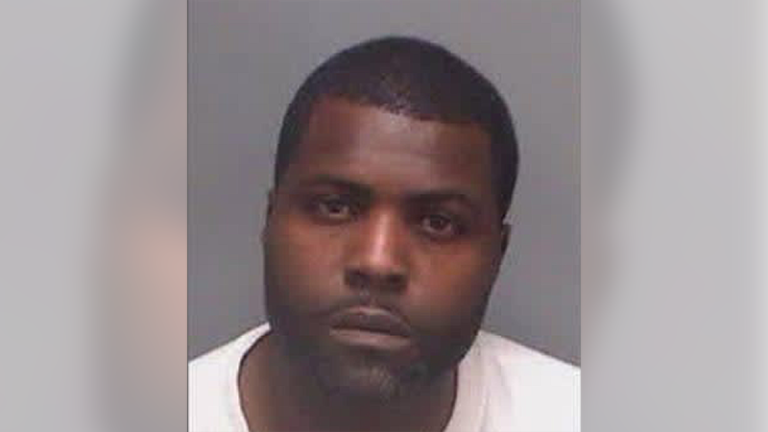
                                  A repeat offender once described by federal prosecutors as a ‘danger to the community’ was set to be released Thursday after receiving a sentence commutation signed with an autopen in the final days of former President Joe Biden’s administration.

                                  Oscar Freemond Fowler III had been serving a 12-year, six-month federal sentence after pleading guilty in 2024 to being a felon in possession of a gun and possession with intent to distribute cocaine. Federal prosecutors urged the court to impose at least 150 months in prison, citing his lengthy criminal history and arguing he posed an ongoing threat to the public.

                                  Fowler was included in a Jan. 17, 2025, executive grant of clemency commuting the sentences of more than 2,500 inmates under the Biden administration. The warrant, issued in Washington and bearing Biden’s signature, was one of three clemency documents critics say were executed using an autopen.

                                  While the Biden administration said the commutations were relief for non-violent drug offenders, the Oversight Project, a conservative investigative group for the Heritage Foundation, argues that Fowler’s history of violence makes him a clear danger to the public.

                                  The Oversight Project issued a warning to Florida officials this week about Fowler’s release.

                                  ‘He is a dangerous criminal who’s supposed to be in jail for a very long time,’ Oversight Project President Mike Howell told Fox News Digital. ‘This is the exact person that should be in federal custody.’

                                  The most serious allegations in Fowler’s past involve the death of Naykee Bostic in St. Petersburg. Bostic was found with 25 gunshot wounds shortly after Fowler had been released from a previous federal stint in 2013. While Fowler was acquitted of the murder in 2017 after two prior mistrials, the Oversight Project points to a 2024 sentencing memorandum stating that Fowler made a video-recorded admission to the killing and expressed a willingness to use violence again.

                                  Howell said the case contradicts prior characterizations of the clemency actions as focusing on nonviolent offenders.

                                  ‘We agree with the Biden administration’s own Justice Department officials who flagged that these people were violent,’ Howell said. ‘Stop saying they’re nonviolent. The documents speak for themselves.’

                                  Howell also questioned the legality of the autopen process.

                                  ‘The president has said these autopen commutations are null and void,’ Howell said. ‘DOJ had a choice to make — keep him in custody or release him — and they chose not to follow that direction.’

                                  The Florida attorney general’s office did not immediately respond to Fox News Digital’s request for comment.

                                  The release of Fowler comes after the House Oversight Committee’s GOP majority released a 100-page report in October 2025 detailing findings from its monthslong probe into Biden’s White House, specifically whether his inner circle covered up signs of mental decline and if that alleged cover-up extended to executive actions signed via autopen without Biden’s full awareness.

                                  ‘The Department of Justice should immediately conduct a review of all executive actions taken by President Biden between January 20, 2021, and January 19, 2025. Given the patterns and findings detailed herein, this review should focus particularly on all acts of clemency. However, it should also include all other types of executive actions.’

                                  In an interview with The New York Times in July, Biden affirmed he ‘made every decision’ on his own.

                                  This post appeared first on FOX NEWS

                                  Iran is rebuilding nuclear sites damaged in previous U.S. strikes and ‘preparing for war,’ despite engaging in talks with the Trump administration, according to a prominent Iranian opposition figure.

                                  Alireza Jafarzadeh, deputy director of the Washington office of the National Council of Resistance of Iran (NCRI), said newly released satellite images also prove the regime has accelerated its efforts to restore its ‘$2 trillion’ uranium enrichment capabilities.

                                  ‘The regime has clearly stepped up efforts to rebuild its uranium enrichment capabilities,’ Jafarzadeh told Fox News Digital. ‘It is preparing itself for a possible war by trying to preserve its nuclear weapons program and ensure its protection.’

                                  ‘That said, the ongoing rebuilding of Iran’s uranium enrichment capabilities is particularly alarming as the regime is now engaged in nuclear talks with the United States,’ he added.

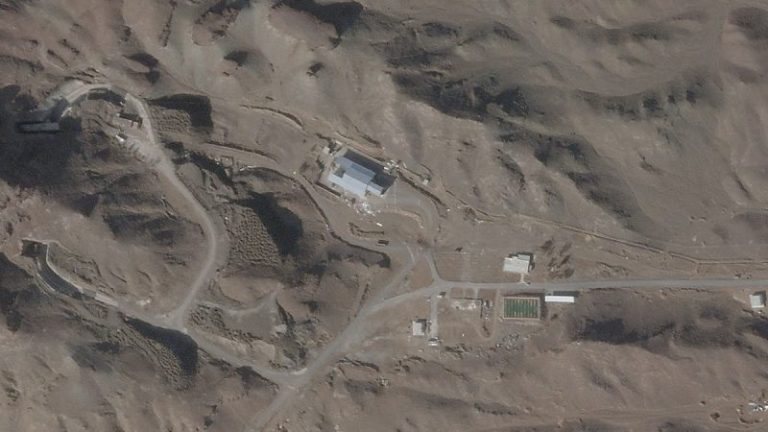
                                  New satellite images released by Earth intelligence monitor, Planet Labs, show reconstruction activity appears to be underway at the Isfahan complex.

                                  Isfahan is one of three Iranian uranium enrichment plants targeted in the U.S. military operation known as ‘Midnight Hammer.’

                                  The June 22 operation involved coordinated Air Force and Navy strikes on the Fordow, Natanz and Isfahan facilities.

                                  Despite the damage, the satellite images show Iran has buried entrances to a tunnel complex at the site, according to Reuters.

                                  Similar steps were reportedly taken at the Natanz facility, which houses two additional enrichment plants.

                                  ‘These efforts in Isfahan involve rebuilding its centrifuge program and other activities related to uranium enrichment,’ Jafarzadeh said.

                                  The renewed movements come as Iran participated in talks with the U.S. in Geneva.

                                  On Thursday, President Donald Trump warned that ‘bad things’ would happen if Iran did not make a deal.

                                  While the talks were aimed at curbing Iran’s nuclear program in exchange for sanctions relief, Jafarzadeh argues that for the regime, talks would be nothing more than a tactical delay.

                                  ‘Supreme Leader Ali Khamenei agreed to the nuclear talks as it would give the regime crucial time to avoid or limit the consequences of confrontation with the West,’ he said.

                                  Jafarzadeh also described the regime spending at least ‘$2 trillion’ on nuclear capabilities, which he said ‘is higher than the entire oil revenue generated since the regime came to power in Iran in 1979.’ 

                                  ‘Tehran is trying to salvage whatever has remained of its nuclear weapons program and quickly rebuild it,’ he said. ‘It has heavily invested in the nuclear weapons program as a key tool for the survival of the regime.’

                                  Jafarzadeh is best known for publicly revealing the existence of Iran’s Natanz nuclear site in 2002, which led to inspections by the International Atomic Energy Agency and intensified global scrutiny of Tehran’s nuclear ambitions.

                                  ‘The insistence of the Iranian regime during the nuclear talks on maintaining its uranium enrichment capabilities, while rebuilding its damaged sites, is a clear indication that Supreme Leader Ali Khamenei has no plans to abandon its nuclear weapons program,’ he said.

                                  The National Council of Resistance of Iran, led by Maryam Rajavi, exposed for the first time the nuclear sites in Natanz, Arak, Fordow and more than 100 other sites and projects, Jafarzadeh said, ‘despite a massive crackdown by the regime on this movement.’

                                  This post appeared first on FOX NEWS

                                  The Pentagon is deploying the USS Gerald R. Ford to the Middle East, creating a rare two-carrier presence in the region as tensions with Iran rise and questions swirl about possible U.S. military action.

                                  The Ford will reinforce the USS Abraham Lincoln already operating in theater, significantly expanding American airpower at a moment of heightened regional uncertainty.

                                  While officials have not announced imminent action, the dual-carrier presence increases the Pentagon’s flexibility — from deterrence patrols to sustained strike operations — should diplomacy falter.

                                  The largest aircraft carrier in the world

                                  The Gerald R. Ford is the largest and most advanced aircraft carrier ever built.

                                  Commissioned in 2017, the nuclear-powered warship stretches more than 1,100 feet and displaces more than 100,000 tons of water. It serves as a floating air base that can operate in international waters without relying on host-nation approval — a key advantage in politically sensitive theaters.

                                  Powered by two nuclear reactors, the ship has virtually unlimited range and endurance and is designed to serve for decades as the backbone of U.S. naval power projection.

                                  How much airpower does it carry?

                                  A typical air wing aboard the Ford includes roughly 75 aircraft, though the exact mix depends on mission requirements.

                                  Those aircraft can include F/A-18 Super Hornets, stealth F-35C Joint Strike Fighters, EA-18G Growler electronic warfare jets, E-2D Hawkeye early warning aircraft and MH-60 helicopters.

                                  In a potential conflict with Iran, several of those platforms would be central. 

                                  The F-35C is designed to penetrate contested airspace and carry out precision strikes against heavily defended targets. The Growler specializes in jamming enemy radar and communications — a critical capability against Iran’s layered air defense systems. 

                                  The E-2D extends surveillance hundreds of miles, helping coordinate air and missile defense.

                                  Together, they give commanders options ranging from deterrence patrols to sustained strike operations.

                                  Built for higher combat tempo

                                  What separates the Ford from earlier carriers is its ability to generate more sorties over time.

                                  Instead of traditional steam catapults, it uses an electromagnetic aircraft launch system, or EMALS, allowing aircraft to launch more smoothly and at a faster pace. The system is designed to reduce stress on jets and increase operational tempo.

                                  The ship also features advanced arresting gear and a redesigned flight deck that allows more aircraft to be staged and cycled efficiently.

                                  In a high-intensity scenario — particularly one involving missile launches or rapid escalation — the ability to launch and recover aircraft quickly can be decisive.

                                  How it compares to the Lincoln

                                  While both the Ford and the Abraham Lincoln are 100,000-ton, nuclear-powered supercarriers capable of carrying roughly 60 aircraft to 75 aircraft, they represent different generations of naval design.

                                  The Lincoln is a Nimitz-class carrier commissioned in 1989 and part of a fleet that has supported decades of operations in the Middle East. The Ford is the Navy’s next-generation carrier and the lead ship of its class.

                                  The key difference is efficiency and output. 

                                  The Ford was built to generate a higher sustained sortie rate using its electromagnetic launch system, along with a redesigned flight deck and upgraded power systems. In practical terms, both ships bring substantial strike capability — but the Ford is designed to launch and recover aircraft faster over extended operations, giving commanders greater flexibility if tensions escalate.

                                  How it defends itself

                                  The Ford does not sail alone. It operates as the centerpiece of a carrier strike group that typically includes guided-missile destroyers, cruisers and attack submarines.

                                  Those escort ships provide layered air and missile defense, anti-submarine protection and additional strike capability.

                                  The carrier itself carries defensive systems including Evolved Sea Sparrow Missiles, Rolling Airframe Missiles and the Phalanx Close-In Weapon System — designed to intercept incoming threats at close range.

                                  That defensive posture is especially relevant in the Middle East.

                                  Iran has invested heavily in anti-ship ballistic missiles, cruise missiles, armed drones, naval mines and fast-attack craft operated by the Islamic Revolutionary Guard Corps. The Gulf region presents a dense and complex threat environment, even for advanced U.S. warships.

                                  Why two carriers matter

                                  With both the Ford and the Lincoln in theater, commanders gain more than just added firepower. Two carriers allow the U.S. to sustain a higher tempo of operations, distribute aircraft across multiple areas, or maintain continuous presence if one ship needs to reposition or resupply.

                                  Dual-carrier deployments are relatively uncommon and typically coincide with periods of heightened regional tension.

                                  The timing — as negotiations with Tehran continue — underscores the strategic message. Carriers are often deployed not only to fight wars, but to prevent them.

                                  By positioning both ships in the region, Washington is signaling that if diplomacy falters, military options will already be in place.

                                  This post appeared first on FOX NEWS

                                  Ex-Victoria’s Secret mogul Les Wexner’s lawyer was caught on a hot mic jokingly threatening to ‘kill’ him if he continued giving long answers to questions during his deposition on Jeffrey Epstein by the House Oversight Committee.

                                  The moment was caught after the committee released its full, nearly five-hour deposition of 88-year-old Wexner as part of its ongoing probe into Jeffrey Epstein’s network.

                                  Several hours into the deposition, while Wexner was giving a particularly long-winded answer, Wexner’s attorney leaned over to him and whispered in his ear, ‘I’m going to f—ing kill you if you answer another question with more than five words, okay?’

                                  Both Wexner and his attorney laughed after this statement, indicating Wexner understood it as a joke. The lawyer proceeded to instruct Wexner to ‘answer the question,’ laughing more.

                                  Shortly before this exchange, the attorney had urged Wexner to ‘answer the question,’ saying, ‘I’m sure we all appreciate the stories, we’re just trying to answer questions that they actually want answered,’ referring to the House committee.

                                  The Oversight Committee heard from Wexner, a billionaire fashion mogul best known for his work in revolutionizing the Victoria’s Secret store chain, about his involvement with Epstein, whom Wexner characterized as strictly a business associate rather than a close friend.

                                  Despite being named a co-conspirator in a recently uncovered FBI document from 2019, Wexner said that he has never been directly contacted by either the FBI or the Department of Justice. He maintained his total innocence during the deposition, saying, ‘I was naïve, foolish, and gullible to put any trust in Jeffrey Epstein. He was a con man. And while I was conned, I have done nothing wrong and have nothing to hide. I completely and irrevocably cut ties with Epstein nearly twenty years ago when I learned that he was an abuser, a crook, and a liar.’

                                  The committee stated it was releasing the full deposition with ‘no spin,’ saying, ‘The American people deserve to see the testimony for themselves—transparency matters.’

                                  Wexner is the founder of L Brands, formerly called The Limited, through which he acquired well-known companies Victoria’s Secret, Bath & Body Works, Express, and Abercrombie & Fitch, among others. He is no longer associated with Victoria’s Secret. He was one of Epstein’s first major clients as a financial advisor, with Epstein being granted power of attorney over Wexner’s vast wealth. Wexner also sold his Manhattan townhouse to Epstein, which was later discovered to be one of the locations where federal authorities accused Epstein of abusing young women and girls under 18.

                                  Despite this, Wexner stated that he always kept his relationship with Epstein as strictly professional, saying, ‘I don’t think I ever went to lunch, or dinner, a movie or had a cup of coffee with Jeffrey,’ adding, ‘My focus was on my business and on community.’

                                  Wexner said he severed ties with Epstein in 2007 after learning of an investigation and discovering that Epstein had misappropriated funds from him and his family. He said a substantial amount of the money was returned. 

                                  Wexner also testified that he was not aware of Epstein ever staying at a guesthouse on his New Albany, Ohio, estate, where Maria Farmer is said to have been abused by Epstein and associate Ghislaine Maxwell. He maintained that he only had knowledge of Epstein staying at a nearby neighbor’s residence. Pressed on whether he denies Farmer’s testimony that she was abused on his property, he stated, ‘I never met her, didn’t know she was here, didn’t know she was abused.’

                                  He categorically denied any knowledge of either Epstein or Maxwell arranging women for prominent individuals. He also categorically denied ever having a sexual encounter with anyone introduced by Maxwell and Epstein or having any sexual relationship with Epstein himself.

                                  He further denied any sexual contact or knowledge of another prominent Epstein victim, Virginia Giuffre.

                                  Wexner was also asked about his knowledge of Epstein and President Donald Trump’s relationship. He said that he does not think they were friends, but said Epstein ‘held him out as a friend.’

                                  Committee members also questioned Wexner on a note he wrote in a birthday book to Epstein in which he drew breasts with the caption, ‘Dear Jeffrey, I wanted to get you what you want, so here it is … Your friend, Leslie.’

                                  Wexner confirmed that he wrote the note but dismissed it, saying, ‘He was a bachelor, so I drew a pair of boobs as kind of a joke, offhandedly, I would say.’

                                  Wexner is the fourth person appearing before the House Oversight Committee in its Epstein probe.

                                  Fox News Digital’s Liz Elkind contributed to this report.

                                  This post appeared first on FOX NEWS

                                  When President Donald Trump announced ‘TrumpRx’ in early February, a weight I’ve carried my entire adult life suddenly lifted from my shoulders. The website offers life-saving medications at much lower prices than normal, based on the president’s promise to give Americans the same prescription drug costs as patients in other developed countries. I can personally attest that such equal treatment — a policy known as ‘most favored nation’ pricing — is urgently needed for people who struggle with chronic disease.

                                  I’ve had debilitating asthma since I was a child. I’ve been able to manage it thanks to a prescription drug which blocks lung inflammation and keeps my airways open. The few times I’ve gone off the medication, I’ve ended up in the emergency room, unable to breathe. That nearly happened four years ago in what I thought was the worst possible place — on the other side of the world, unable to contact my doctors or go to my pharmacy.

                                  My family and I were in Italy, on a trip to honor my mother. She had recently been diagnosed with cancer and my brother and I scheduled the trip in between her chemo treatments, when she would be well enough to travel. She had always wanted to go there with us. But in our rush to get two families and three little kids packed, I accidentally grabbed a nearly empty inhaler.

                                  I realized my mistake a few days into the trip, when I looked at the inhaler and saw that I only had two doses left. I wasn’t just worried about my health, though, of course, that was paramount. I worried how I’d afford the drug if I even found it in Italy.

                                  I’ve organized my professional life around access to insurance that covers my medication, given its longstanding retail price $600 for a month’s supply. For 25 years, I’ve grappled with denied coverage letters, premium tier prescription charts and the constant worry that we would have to cut back on necessities to get my medication. At the time, in Italy, I was already paying a few hundred dollars a month for the drug — a lot, but a bargain compared to its normal price.

                                  But I had no choice. I had to get my medication. After a few minutes of searching, I found an Italian pharmacy across town. I walked there immediately, trying to control my racing thoughts of what might happen. I knew that if I couldn’t get the drug, I couldn’t get safely back to the U.S.

                                  Fifteen minutes later, in tears I walked out, drug in hand. It cost me only 30 euros or about $35.

                                  At first, I was both relieved and grateful. But by the end of the day, I was scratching my head. Why was it $600 in the U.S. while Italians could get it for next to nothing? In the days that followed, I discovered that the answer is beyond complicated.

                                  It’s affected by everything from a lack of price transparency to the meddling of middlemen who jack up costs. It’s also true that foreign countries have been negotiating the prices of prescription drugs for decades, forcing Americans to cover the enormous cost of pharmaceutical development while they pay far below market prices.

                                  Whatever the reason, the system doesn’t work for Americans. Brand name prescription prices in the U.S. are more than four times higher than prices in other wealthy countries. As many as 18 million Americans have struggled to buy the prescriptions they need in recent years.

                                  I’m now using a generic version of the drug that costs significantly less. But that doesn’t change the fact that I, like many other Americans with chronic disease, have paid through the nose for decades on end, only to find the medication I needed in Italy for what seemed like pennies.

                                  I wasn’t just worried about my health, though, of course, that was paramount. I worried how I’d afford the drug if I even found it in Italy.

                                  Trump is fighting to fix this broken system. Before launching TrumpRx, he reached 16 deals with pharmaceutical companies to charge most-favored-nation prices. As a lifelong conservative, I’m typically uncomfortable with this kind of government intervention in the market. But other countries have already intervened and people like me have paid the price.

                                  If pharmaceutical companies need the extra money, they should take it up with other countries that negotiated them down first. Then they could recoup their costs on the backs of others, not simply by charging more in the U.S. Bottom line, there’s no good reason why 340 million Americans should pay so much more than hundreds of millions of people who live in Europe and Asia.

                                  I will always be grateful that my medication was so affordable in Italy back in 2022. It may very well have saved my life. But I’m even more grateful that President Trump is finally lowering prices for every American here at home.

                                  This post appeared first on FOX NEWS