President Donald Trump will spend the first part of the week in the Middle East to oversee a historic peace deal between Israel and Hamas, a landmark agreement expected to end the two-year war in Gaza and bring home the remaining hostages.
Before boarding Air Force One, Trump told reporters that the hostages could be released earlier and said Israeli Prime Minister Benjamin Netanyahu did a ‘very good job’ helping secure the deal.
‘The war is over,’ Trump told reporters at Joint Base Andrews before boarding a nearly 12-hour flight to Israel. After landing in Tel Aviv, Trump is expected to meet with families of hostages and then give an address at the Knesset, Israel’s parliament, in Jerusalem.
Trump will then travel to Egypt to attend an international summit in the seaside city of Sharm el-Sheikh on Monday to finalize an agreement aimed at ending the war in Gaza. More than 20 world leaders, including Trump, are expected to attend, an Egyptian presidential spokesperson said, according to Reuters.
After a handful of hours in Israel and Egypt, Trump will board Air Force One and return to the White House in the early morning hours on Tuesday in order to honor the late Charlie Kirk with the Presidential Medal of Freedom, the nation’s highest civilian award.
‘It’s a very quick trip, but I’ll be making two major stops, and then I’ll be on the plane trying to get back in time for Charlie,’ Trump told reporters at the White House on Friday. ‘They’re going to have a great celebration at the White House in the East Room,’ he added. The award ceremony coincides with what would have been Kirk’s 32nd birthday on Oct. 14.
Kirk, the charismatic founder of Turning Point USA (TPUSA), gained recognition for his signature political debates on college campuses. He was assassinated on Sept. 10, during an outdoor event at Utah Valley University. The gathering was the first stop on TPUSA’s planned ‘American Comeback Tour.’
Kirk’s memorial service drew one of the largest public turnouts for a private citizen, with about 90,000 people in attendance at State Farm Stadium in Glendale, Arizona and nearby overflow venues.
Trump previously announced last month that he would award Kirk the award posthumously.
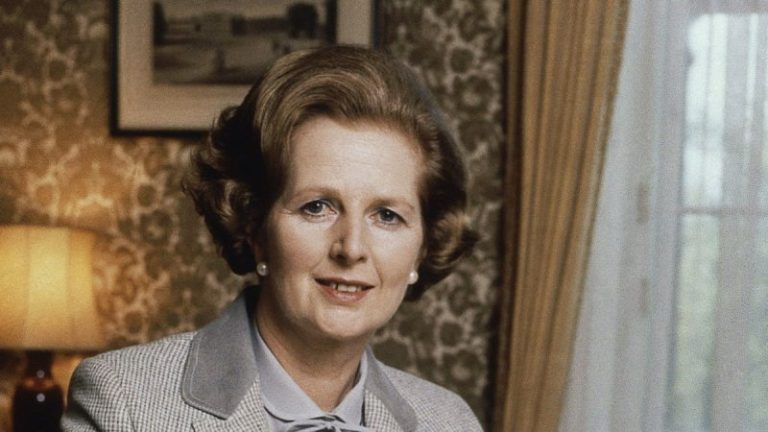
Monday marks the 100th anniversary of Margaret Thatcher’s birth – an occasion that brings together leaders and supporters from across the Atlantic to pay tribute to her life.
We at the Ronald Reagan Presidential Foundation & Institute are honored to participate in the celebration, an occasion that also invites us to reflect on her legacy and connection with Ronald Reagan in the context of our modern era. Namely, what made her partnership with President Reagan so effective, and what might it teach us today about how civility can shape world affairs?
Ronald Reagan and Margaret Thatcher’s effectiveness – both in dealings with each other and in other world leaders with whom they were less naturally aligned – depended on trust and civility. In today’s divided political world, their example is one we can all learn from.
When we think of the two leaders, we tend to picture strength: two leaders who stood firm against communism, championed free markets and restored confidence in the West. But President Reagan also believed that personal relationships were central to politics. In a 1989 letter in National Review, he crystallized that sentiment as follows: ‘personal relations matter more in international politics than the historians would have us believe.’
That was the core of his approach: even the hardest negotiations work best when leaders see each other as partners, not just opponents. It doesn’t mean that personal relationships supersede national interest – great leaders have to be unwavering at times – but it does mean that a key component of good diplomacy is the ability to remain civil and acknowledge others’ humanity, be they adversaries or allies.
Margaret Thatcher and Ronald Reagan’s leadership in Soviet Union dealings demonstrates this principle in action. For instance, when Mikhail Gorbachev emerged on the world stage, Thatcher chose to approach him as a person worthy of negotiation rather than a caricature of Soviet power. ‘We can do business together,’ she pragmatically asserted. And she was right. Though their visions for their country were vastly different, grounding Soviet negotiations in respect and practical assessment made diplomacy possible.
Importantly, President Reagan and Prime Minister Thatcher never abandoned principle for politeness. They were strong leaders, firm and uncompromising in their convictions. But civility gave them the leverage to achieve what force or rhetoric alone could not.
The INF Treaty, the fall of the Berlin Wall, and the eventual end of the Cold War all depended on this kind of disciplined, strategic civility. Leaders could disagree sharply and even spar aggressively, but they never allowed that disagreement to destroy trust or get in the way of progress.
Civility is not a moral high road, it’s a tool. It allowed these leaders to be candid with each other, trusting they would be received with understanding – and creating the strong foundation which underpinned the U.S. and U.K. alliance. Then as now, civility creates space for honest conversations. It allows important initiatives to move forward without unnecessary friction.
Today, that lesson is urgent. The United States and our democratic allies face pressure from resurgent authoritarian powers, global instability and domestic polarization. The instinct to respond with anger or mistrust is strong. But history shows that enduring security and progress come from discipline, mutual respect and the ability to maintain civility even under pressure.
And in times of global tension, reinforcing alliances matters more than ever. We saw this exemplified by President Donald Trump in his recent meeting with U.K. Prime Minister Keir Starmer, where he declared, ‘We have a relationship like no other… we will always be united.’ His statement embodies the Reagan-Thatcher alliance at its best. This disposition is a precursor to any constructive discussions about advancing security and stability, especially when it comes to complex issues such as these.
President Reagan and Prime Minister Thatcher remind us that civility is not deference; rather, it is a practical strategy for getting things done. As we remember Margaret Thatcher on her 100th birthday, we should also remember the example she set. Civility enabled both leaders to be effective and, ultimately, to shape history. In a world full of uncertainty and division, their legacy remains as essential now as it was then.
Perth, Australia (ABN Newswire) – OTC Markets Group Inc. (OTCMKTS:OTCM), operator of regulated markets for 12,000 U.S. and international securities, today announced that Locksley Resources Ltd (ASX:LKY,OTC:LKYRF) (FRA:X5L) (OTCMKTS:LKYRF), an exploration and development company focused on rare earths and antimony critical minerals, has qualified to trade on the OTCQX Best Market.
Highlights
– Locksley Resources Limited has qualified to trade on the OTCQX(R) Best Market, upgrading from the OTCQB(R) Venture Market
– Trading on OTCQX enhances Locksley’s visibility and accessibility to U.S. investors, supporting its U.S. focused critical minerals strategy
– Locksley’s flagship Mojave Project in California is strategically located adjacent to MP Materials’ Mountain Pass Mine, targeting rare earth elements (REEs) and antimony as part of a fully integrated mine-tomarket strategy
– The Company’s downstream technology partnerships underpin its role in re-establishing U.S. domestic supply chains for critical materials, with a particular focus on antimony
– Rare earths and Antimony are front and center in the global race to secure critical materials, with Locksley’s Mojave Project positioned at the heart of America’s efforts to restore domestic supply independence through a 100% U.S. mine-to-market strategy
Locksley has upgraded to OTCQX from the OTCQB Venture Market, and the symbol remains as ‘LKYRF.’ U.S. investors can find current financial disclosure and Real-Time Level 2 quotes for the company on www.otcmarkets.com.
The OTCQX Market is designed for established, investor focused U.S. and international companies. To qualify for OTCQX, companies must meet high financial standards, follow best practice corporate governance, and demonstrate compliance with applicable securities laws. Graduating to the OTCQX Market marks an important milestone for companies, enabling them to demonstrate their qualifications and build visibility among U.S. investors.
Rare Earths & Antimony – Front and Centre in a Shifting Global Landscape
Locksley’s progression to the OTCQX comes amid escalating global focus on rare earth security, following new export restrictions and rising trade tensions. As nations move to safeguard access to critical materials, Locksley’s Mojave Project stands at the center of America’s effort to restore domestic supply independence. With a fully integrated mine-to-market strategy across antimony and rare earths, the Company is advancing a 100% American made approach that aligns directly with U.S. national policy priorities and the reshoring of strategic materials.
Nathan Lude – Head of Strategy, Capital Markets & Commercialisation commented
‘Graduating to the OTCQX Market in record time since our initial listing just over three months ago, is a significant milestone for Locksley as we broaden our visibility and accessibility to U.S. investors. Our Mojave Rare Earths and Antimony Critical Minerals Project are strategically located in a tier-one jurisdiction adjacent to MP Materials’ Mountain Pass Mine. Locksley is positioned to play a pivotal role in re-establishing domestic supply chains through its mine-to-market strategy for critical materials, with a particular focus on antimony.’
About Locksley Resources Limited:
Locksley Resources Limited (ASX:LKY,OTC:LKYRF) (FRA:X5L) (OTCMKTS:LKYRF) is an ASX listed explorer focused on critical minerals in the United States of America. The Company is actively advancing exploration across two key assets: the Mojave Project in California, targeting rare earth elements (REEs) and antimony. Locksley Resources aims to generate shareholder value through strategic exploration, discovery and development in this highly prospective mineral region.
Mojave Project
Located in the Mojave Desert, California, the Mojave Project comprises over 250 claims across two contiguous prospect areas, namely, the North Block/Northeast Block and the El Campo Prospect. The North Block directly abuts claims held by MP Materials, while El Campo lies along strike of the Mountain Pass Mine and is enveloped by MP Materials’ claims, highlighting the strong geological continuity and exploration potential of the project area.
In addition to rare earths, the Mojave Project hosts the historic ‘Desert Antimony Mine’, which last operated in 1937. Despite the United States currently having no domestic antimony production, demand for the metal remains high due to its essential role in defense systems, semiconductors, and metal alloys. With significant surface sample results, the Desert Mine prospect represents one of the highest-grade known antimony occurrences in the U.S.
Locksley’s North American position is further strengthened by rising geopolitical urgency to diversify supply chains away from China, the global leader in both REE & antimony production. With its maiden drilling program planned, the Mojave Project is uniquely positioned to align with U.S. strategic objectives around critical mineral independence and economic security.
Tottenham Project
Locksley’s Australian portfolio comprises the advanced Tottenham Copper-Gold Project in New South Wales, focused on VMS-style mineralisation
About OTC Markets Group Inc.:
OTC Markets Group Inc. (OTCQX:OTCM) operates regulated markets for trading 12,000 U.S. and international securities. Our data-driven disclosure standards form the foundation of our public markets: OTCQX(R) Best Market, OTCQB(R) Venture Market, OTCID(TM) Basic Market and Pink Limited(TM) Market. Our OTC Link(R) Alternative Trading Systems (ATSs) provide critical market infrastructure that broker-dealers rely on to facilitate trading.
Our innovative model offers companies more efficient access to the U.S. financial markets.
OTC Link ATS, OTC Link ECN, OTC Link NQB, and MOON ATS(TM) are each SEC regulated ATS, operated by OTC Link LLC, a FINRA and SEC registered broker-dealer, member SIPC.
Source: Locksley Resources Limited OTC Markets Group Inc.
Thousands of U.S.-bound packages shipped by UPS are trapped at hubs across the country, unable to clear the maze of new customs requirements imposed by the Trump administration.
As packages flagged for customs issues pile up in UPS warehouses, the company told NBC News it has begun “disposing of” some shipments.
Frustrated UPS customers describe waiting for weeks and trying to make sense of scores of conflicting tracking updates from the world’s largest courier.
“I’ve never seen anything like this before,” Matthew Wasserbach, brokerage manager of Express Customs Clearance, said of the UPS backlog. “It’s totally unprecedented.”
Wasserbach’s New York City-based shipping services firm helps clients move shipments through customs. He said the company has seen a spike in inquiries for help with UPS customs clearance.
A Boeing 747 operated by UPS on the tarmac at Louisville International Airport in Kentucky during a winter storm on Feb. 3, 2022.Luke Sharrett / Bloomberg via Getty Images file
More than two dozen people who are waiting for their UPS packages explained the circumstances of their shipments to NBC News.
They described shipments of tea, telescopes, luxury glassware, musical instruments and more — some worth tens of thousands of dollars — all in limbo or perhaps gone.
Others have deep sentimental value: notebooks, diplomas and even engagement rings.
The frustration has exploded online, with customers sharing horror stories on Reddit of missing skin care products, art and collectibles.
They are confused and angry, and they want answers.
“It’s almost impossible to get through to anybody to figure out what is happening,” said Ashley Freberg, who said she is missing several boxes she shipped via UPS from England in September.
“Are my packages actually being destroyed or not?”
Freberg’s boxes of journals, records and books were shipped on Sept. 18, according to tracking documents she shared with NBC News.
Over the next two weeks, she received two separate notifications from UPS that her personal mementos had not cleared customs and as a result had been “disposed of” by UPS.
Then, on Oct. 1, a UPS tracking update appeared for her packages, saying they were on the way. The tracking updates Freberg showed NBC News for that shipment revealed it was the most recent update she had received.
UPS transport jets wait to be loaded with packages at UPS Worldport in Louisville, Ky., on April 27, 2021.Timothy D. Easley / AP file
While sentimental value is impossible to measure, other customers fear they will not be able to recover financially if their goods were destroyed.
Tea importer Lauren Purvis of Portland, Oregon, said five shipments from Japan, mostly containing matcha green tea and collectively worth more than $127,000, were all sent via UPS over the last few weeks and arrived at UPS’ international package processing hub in Louisville, Kentucky. Purvis has yet to receive any of the shipments, only a flurry of conflicting tracking updates from UPS.
A series of notifications for one shipment, which she shared with NBC News, said that the shipment had not cleared customs and that UPS had disposed of it.
But a subsequent tracking update said the shipment had cleared customs and was on the way.
“We know how to properly document and pay for our packages,” Purvis said. “There should be zero reason that a properly documented and paid-for package would be set to be disposed of.”
At least a half-dozen people described an emotional seesaw they were put through by weeks of contradictory UPS tracking updates about their shipments. The updates, they said, compounded the stress of not knowing what had really happened to their possessions.
A UPS Boeing 767 aircraft taxis at San Diego International Airport, in San Diego, Calif., August 15, 2025.Kevin Carter / Getty Images file
AJ, a Boston man who asked that NBC News use only his initials to protect his privacy, said he shipped a package from Japan via UPS on Sept. 12 including Japanese language books, a pillow and a backpack.
After it sat in Louisville for nearly two weeks, AJ got a tracking update on Sept. 26, one of several that he shared with NBC News. “We’re sorry, your package did not clear customs and has been removed from the UPS network. Per customs guidelines, it has been destroyed. Please contact the sender for more information,” it read.
UPS tracking updates for a package shipped from Japan to the United States.Obtained by NBC News
Three days later, on Sept. 29, he received another, and this one read: “On the Way. Import Scan, Louisville, KY, United States.” For a moment, it appeared as though AJ’s shipment might have been found.
But less than 24 hours after his hopes were raised, another tracking update arrived: “We’re sorry,” it began. It was the same notice that his package had “been destroyed” that he had received on the 26th.
Two minutes later, he got his final update: “Unable to Deliver. Package cannot clear due to customs delay or missing info. Attempt to contact sender made. Package has been disposed of.”
International shipping was thrown into chaos after the long-standing “de minimis” tariff exemption for low-value packages ended on Aug. 29.
Packages with values of $800 or less, which were previously allowed to enter the United States duty-free, are now subject to a range of tariffs and fees.
They include hundreds of country-specific rates, or President Donald Trump’s so-called reciprocal tariffs, as well as new levies on certain products and materials.
President Donald Trump holds a chart as he speaks about reciprocal tariffs at a ‘Make America Wealthy Again’ event at the White House on April 2.Brendan Smialowski / AFP – Getty Images file
The result is that international shipping to the United States today is far more complex and costly than it was even two months ago.
The sweeping changes have caught private individuals and veteran exporters alike in a customs conundrum.
It is difficult to know the exact number of the packages that are stuck in UPS customs purgatory. Shipping companies guard their delivery data closely.
UPS reported to investors that in 2023, its international service delivered around 3.2 million packages per day.
This week, the company told NBC News that it is clearing more than 90% of the packages it handles through customs on the first day.
The rest of the packages, or less than 10%, require more time to clear customs and need to be held until they do. That could easily mean that thousands of UPS packages every day are not clearing customs on their first try.
In a statement to NBC News, UPS said it is doing its best to get all packages to their destinations while abiding by the new customs requirements.
“Because of changes to U.S. import regulations, we are seeing many packages that are unable to clear customs due to missing or incomplete information about the shipment required for customs clearance,” it said.
UPS said it makes several attempts to get any missing information and clear delayed shipments, contacting shippers three times.
“In cases where we cannot obtain the necessary information to clear the package, there are two options,” it said.
“First, the package can be returned to the original shipper at their expense. Second, if the customer does not respond and the package cannot be cleared for delivery, disposing of the shipment is in compliance with U.S. customs regulations. We continue to work to bridge the gap of understanding tied to the new requirements and, as always, remain committed to serving our customers.”
A conveyor belt carries envelopes and small packages past UPS workers to their destinations at Worldport on Nov. 20, 2015.Patrick Semansky / AP, file
NBC News asked UPS precisely what it does with packages when it tells customers their shipments have been unable to clear customs and have been “disposed of.” It would not say.
On Sept. 27, a shipper in Stockholm received a formal notification from UPS that two packages her glassware company sent to the United States — which failed to clear customs — would be destroyed.
“We are sorry, but due to these circumstances and the perishable nature of the contents, we are now required to proceed with destruction of the shipment in accordance with regulatory guidelines,” UPS told Anni Cernea in an email she shared with NBC News.
The email continued, “There is no need to contact our call center for further information or to attempt to clear this shipment.”
Cernea said, “It’s just outrageous that they can dispose of products like this without approval from either the sender or recipient.”
From now on, Cernea said, she plans to ship her products via UPS rival FedEx.
Cernea’s decision to switch carriers hints at the worst-case scenario for UPS, which is that people could abandon the company. It is a potential crisis for the roughly $70 billion company.
The company’s stock price is already down more than 30% this year, which analysts attribute to a mix of tariffs, competition and shifting shopping habits.
As she awaits her missing journals and diplomas from England, Freberg is looking ahead to the biggest shipping months of the year.
“I can’t even imagine how bad the holidays are going to be, because that’s a time where loads of people are shipping stuff overseas,” she said.
“If it doesn’t get solved soon, I can only see it becoming an even bigger issue.”
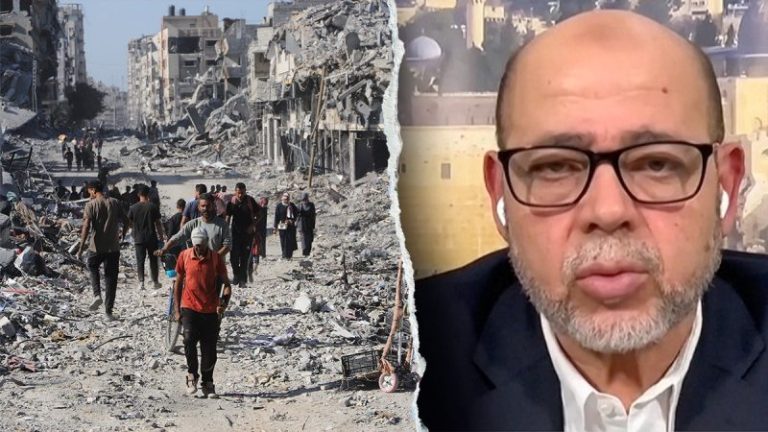
A prominent Hamas leader lost his temper and stormed off from a live interview after being pressed on the Oct. 7, 2023, attacks — and the devastating impact of the subsequent war in Gaza.
Mousa Abu Marzouk, Hamas’ longtime foreign-relations chief and a co-founder of the terror group, tried to justify his organization’s crimes by saying that Hamas ‘fulfilled its national duty’ and acted as ‘resistance to occupation’ in an interview on Arabic television.
The host shot back and questioned whether the Hamas attacks had helped the Palestinian cause and if they had achieved anything meaningful for the Palestinians, according to The Jerusalem Post.
‘Was what you did on October 7 to lead the Palestinians to liberation?’ the host asked in the Friday night interview.
Marzouk, who is based in Qatar and is one of Hamas’s founding members, bristled and insisted the question was disrespectful and that a small group of fighters could never ‘liberate’ Palestine on its own.
‘No sane person would claim that on October 7, with just a thousand or so fighters, it was possible to liberate Palestine,’ he said.
The journalist then continued, saying: ‘I am asking you the questions that are being asked on the streets of Palestine, by the residents of Gaza.’
As the exchange grew tense, Marzouk snapped.
‘These are your questions! Show some respect for yourself. I don’t want to talk to you. I don’t want to see you. Cut it out. Cut it out. Go to hell!’ he said.
Marzouk’s comments, which aired on the Egyptian-based Pan-Arab Al-Ghad’s ‘With Wael,’ quickly spread across social media and came amid growing infighting and turmoil within Hamas as the war comes to an end.
Once seen as a polished Hamas spokesperson, Arab commentators saw his on-air outburst as a signal of a widening rift among the organization’s leadership as Gaza lies in ruins.
Jamal Nazzal, a spokesperson for the Palestinian political and nationalist movement Fatah, slammed Marzouk’s remarks.
Nazzal said his comments were ‘a disgrace that exposes the moral and political bankruptcy of a crumbling group that can no longer look people in the eye,’ according to The Jerusalem Post.
Earlier this year, Marzouk expressed regret over the Oct. 7 attacks, telling The New York Times he would not have supported the attack if he had known of the havoc it would wreak on Gaza.
‘If it was expected that what happened would happen, there wouldn’t have been Oct. 7,’ he said.
Marzouk has been described in multiple reports as a billionaire, though his exact fortune remains unclear.
In a statement posted after The New York Times’ story, Hamas said that the comments were ‘incorrect’ and taken out of context.
The Israeli government approved and signed the first phase of the President Donald Trump-brokered ceasefire deal in Gaza overnight Thursday. The agreement includes the release of Israeli hostages in exchange for Palestinian prisoners.
Former President Joe Biden is entering a new phase of treatment for the prostate cancer he was diagnosed with in May.
Biden is now undergoing radiation therapy, a spokesperson for the former president told Fox News on Saturday. Previously, he had been receiving routine scans, the spokesperson added.
‘As part of a treatment plan for prostate cancer, President Biden is currently undergoing radiation therapy and hormone treatment,’ the spokesperson said.
Biden was diagnosed four months ago with an ‘aggressive form’ of metastatic prostate cancer after health officials detected a prostate nodule following increasing urinary symptoms. His office said the disease, though aggressive, is hormone-sensitive, meaning it may be effectively managed.
Biden, who turns 83 years old next month, also underwent surgery on Sept. 4 to remove cancerous skin cells through a procedure known as Mohs surgery, according to his spokesperson.
During his presidency, Biden had a cancerous skin lesion removed from his chest, the White House previously said. Former White House physician Kevin O’Connor noted in February 2023 that a biopsy of skin tissue taken during a health assessment revealed cancerous cells, all of which were successfully removed.
Biden, who became the oldest U.S. president to serve in office, had placed a major focus on cancer treatment.
While in office, he and former first lady Jill Biden revamped the ‘Cancer Moonshot’ initiative to accelerate progress in cancer research. The project aimed to reduce the cancer death rate by 50% over the next 25 years.
In 1988, Biden had two life-threatening brain aneurysms at 45 years old. Doctors said he had a 50% chance of surviving while serving as a U.S. senator for Delaware.
Biden’s surgeries were successful, and there have been no reports of an aneurysm since.
The news of Biden’s radiation treatment comes as President Donald Trump was reported to be in ‘excellent overall health,’ according to a memo released by the White House on Friday.
Trump underwent a routine semiannual physical last week at Walter Reed National Military Medical Center.
In the evaluation summary, the president’s physician, Navy Capt. Sean P. Barbabella, stated that Trump, ‘remains in exceptional health, exhibiting strong cardiovascular, pulmonary, neurological, and physical performance.’
Fox News Digital’s Stepheny Price and Peter Doocy contributed to this report.
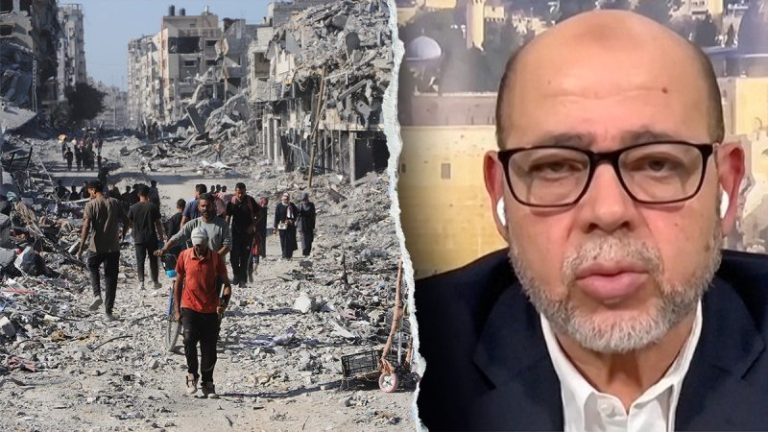
A prominent Hamas leader lost his temper and stormed off from a live interview after being pressed on the Oct. 7, 2023, attacks and the devastating subsequent war in Gaza.
Mousa Abu Marzouk, Hamas’ longtime foreign relations chief and a co-founder of the terror group, tried to justify his organization’s crimes by saying Hamas ‘fulfilled its national duty’ and acted as ‘resistance to occupation’ in an interview on Arabic television.
The host shot back and questioned whether the Hamas attacks had helped the Palestinian cause and if they had achieved anything meaningful for the Palestinians, according to The Jerusalem Post.
‘Was what you did on Oct. 7 to lead the Palestinians to liberation?’ the host asked in the interview Friday night.
Marzouk, who is based in Qatar and is one of Hamas’s founding members, bristled and insisted the question was disrespectful and that a small group of fighters could never ‘liberate’ Palestine on its own.
‘No sane person would claim that on Oct. 7, with just a thousand or so fighters, it was possible to liberate Palestine,’ he said.
The journalist then continued, saying, ‘I am asking you the questions that are being asked on the streets of Palestine by the residents of Gaza.’
As the exchange grew tense, Marzouk snapped.
‘These are your questions. Show some respect for yourself. I don’t want to talk to you. I don’t want to see you. Cut it out. Cut it out. Go to hell,’ he said.
Marzouk’s comments, which aired on the Egyptian-based Pan-Arab Al-Ghad’s ‘With Wael,’ quickly spread across social media and came amid growing infighting and turmoil within Hamas as the war comes to an end.
Once seen as a polished Hamas spokesperson, Arab commentators saw his on-air outburst as a signal of a widening rift among the organization’s leadership as Gaza lies in ruins.
Jamal Nazzal, a spokesperson for the Palestinian political and nationalist movement Fatah, slammed Marzouk’s remarks.
Nazzal said his comments were ‘a disgrace that exposes the moral and political bankruptcy of a crumbling group that can no longer look people in the eye,’ according to The Jerusalem Post.
Earlier this year, Marzouk expressed regret over the Oct. 7 attacks, telling The New York Times he would not have supported the attack if he had known of the havoc it would wreak on Gaza.
‘If it was expected that what happened would happen, there wouldn’t have been Oct. 7,’ he said.
Marzouk has been described in multiple reports as a billionaire, though his exact fortune remains unclear.
In a statement posted after The New York Times’ story, Hamas said that the comments were ‘incorrect’ and taken out of context.
The Israeli government approved and signed the first phase of the President Donald Trump-brokered ceasefire deal in Gaza overnight Thursday. The agreement includes the release of Israeli hostages in exchange for Palestinian prisoners.