
Author

admin

Browsing

Statistics Canada released August’s gross domestic product (GDP) data on Friday (October 31). The numbers showed a 0.3 percent decline in real GDP overall, with declines seen in many sectors of the Canadian economy.

The mining, quarrying, and oil and gas sector was down 0.7 percent during the month after increasing in June and July. This was led by a 5 percent decrease in support activities and a 1.3 percent drop in mining and quarrying, including a 1.2 percent decline in metal ore mining, while oil and gas extraction increased by 0.2 percent.

Likewise, the manufacturing sector was down 0.5 percent, with durable goods manufacturing weighing heavily with a decrease of 0.8 percent. One spot of good news is that primary metal manufacturing rose 3.7 percent, which was headlined by a 9.6 percent increase in aluminum production and processing.

The report also included an advance estimate for September, predicting a 0.1 percent increase, as well as increases in the resource sector. Overall, this would mean Q3’s real GDP also increased by 0.1 percent, avoiding a recession following a 0.4 percent decline in the second quarter.

These figures, along with the consumer price index edging up to 2.4 percent in September, may also have played into the Bank of Canada’s decision on Wednesday (October 29) to cut its benchmark interest rate by another 25 basis points to 2.25 percent.

In its announcement, the central bank noted that the Governing Council sees the policy rate at the right level to maintain inflation close to its 2 percent target, but it would be prepared to respond if the outlook changes.

Bank Governor Tiff Macklem once again stressed that “monetary policy cannot undo the damage caused by tariffs.” However, while the central bank expects the economy to remain weak through the end of 2025, it was also expecting modest growth.

Meanwhile, the United States Federal Reserve also announced on Wednesday that it would cut its Federal Funds Rate by 25 points to the 3.75 to 4 percent range. In its statement, the Federal Open Market Committee discussed slowing job growth and rising inflation, which has moved away from its 2 percent target.

The next meeting of the Fed is scheduled for December 9 and 10; however, concerns remain about data availability, as a shutdown of the US federal government has affected agencies’ ability to deliver critical economic and job data, leaving the Fed to rely on private-sector research.

Markets and commodities react

Canadian equity markets were mixed this week.

The S&P/TSX Composite Index (INDEXTSI:OSPTX) gained 0.04 percent over the week to close Friday at 30,260.74.

On the other hand, the S&P/TSX Venture Composite Index (INDEXTSI:JX) ended the week down 0.49 percent at 957.88. The CSE Composite Index (CSE:CSECOMP) also fell this week, shedding 1.21 percent to close out the week at 175.27.

The gold price was down 3.08 percent this week, closing at US$4,001.76 per ounce. The silver price also fell but fared better, dropping just 0.52 percent to US$48.57 by 4:00 p.m. EDT Friday.

Meanwhile, in base metals, the copper price shed 1.5 percent to US$5.16 per pound.

The S&P Goldman Sachs Commodities Index (INDEXSP:SPGSCI) fell 0.79 percent to end Friday at 557.01.

Top Canadian mining stocks this week

How did mining stocks perform against this backdrop?

Take a look at this week’s five best-performing Canadian mining stocks below.

Stocks data for this article was retrieved at 4:00 p.m. EDT on Friday using TradingView’s stock screener. Only companies trading on the TSX, TSXV and CSE with market caps greater than C$10 million are included. Mineral companies within the non-energy minerals, energy minerals, process industry and producer manufacturing sectors were considered.

1. MAX Power Mining (CSE:MAXX)

Weekly gain: 82.5 percent
Market cap: C$56.01 million
Share price: C$0.73

MAX Power is a hydrogen exploration and development company advancing its natural hydrogen properties in Saskatchewan, Canada.

In total, the company holds permits for 1.3 million acres of land across the province, with an additional 5.7 million under application. Its primary site is focused on the Genesis Trend, a 200 kilometer by 75 kilometer area near the Regina-Moose Jaw Industrial Corridor, a proposed hydrogen hub.

On October 24, the company announced it received a drilling license for its first hydrogen well within the Genesis Trend, which will also be Canada’s first deep well dedicated to natural hydrogen.

The company said operations at its Lawson well will commence on or about November 7. The program will include the use of gas chromatographs to sample for helium, nitrogen and methane and another mass spectrometer specifically to detect hydrogen.

Then, on Monday (October 27), MAX Power reported that it had identified the Bracken target in Southwest Saskatchewan along the border with Montana. It marks the company’s first high-priority target outside of the Genesis Trend, lying within the 120,000 acre Grasslands project. The next step will be to acquire proprietary 2D seismic data, which it anticipates will be completed in Q4 of 2025.

On Tuesday (October 28), MAX announced the development of the MAX Power Large Earth Model Integration, which combines datasets from government and commercial sources to create maps that enable the evaluation of hydrogen prospectivity and more.

The company said that in version 2 of the technology, it will integrate machine learning into the process to better understand the data at a granular level and will eventually be able to apply it to any jurisdiction in the world.

The most recent news came on Thursday (October 30), when MAX appointed Ranjith Narayanasamy, who is President and CEO of the Petroleum Technology Research Centre, as its new CEO effective December 8. Current CEO Mansoor Jan will be transitioning to the CEO of the company’s US critical minerals subsidiary, which it is eyeing for a potential spin-out.

2. Manganese X Energy (TSXV:MN)

Weekly gain: 57.89 percent
Market cap: C$25.75 million
Share price: C$0.15

Manganese X Energy is an exploration and development company focused on its flagship Battery Hill project in New Brunswick, Canada, from which it plans to produce high-purity battery grade manganese for lithium-ion batteries.

The property consists of 55 claims covering an area of 1,228 hectares in Carlton County, and hosts five primary manganese-iron zones: Iron Ore Hill, Moody Hill, Sharpe Farm, Maple Hill and Wakefield.

A June 2021 technical report demonstrated a measured and indicated resource of 34.86 million metric tons of ore grading 6.42 percent manganese and 10.67 percent iron, and an inferred resource of 25.9 million metric tons grading 6.66 percent manganese and 10.92 percent iron.

On September 9, Manganese X announced it was advancing to the third and final phase of battery testing with US battery company Charge CCCV. Phase 2 testing results showed 70 percent capacity retention after 4,600 cycles, which the company said is more than double the cycle life of conventional nickel-manganese-cobalt batteries.

As for this week, on Thursday the company announced the appointment of Desmond Tranquilla to its board of directors. Tranquilla has more than 32 years of experience in the mining industry and is currently vice president of projects with Canada Nickel Company (TSXV:CNC).

3. Copper Quest Exploration (CSE:CQX)

Weekly gain: 48.15 percent
Market cap: C$10.23 million
Share price: C$0.2

Copper Quest Exploration is an exploration company building a portfolio of prospective copper properties in North America, including the Stars and Stellar copper projects in British Columbia, Canada.

It recently acquired two new projects. The first, announced on September 22, is the Nekash copper-gold porphyry project in Idaho, US. The asset lies in the Idaho-Montana porphyry belt and consists of 70 unpatented lode claims covering 585 hectares.

Historic exploration and recent work has confirmed the presence of copper and gold quartz veins, according to the release, with rock chip samples at porphyry style veins revealing grades up to 6.6 percent copper and 0.6 grams per metric ton (g/t) gold.

The second came this Thursday, when the company acquired the 2,954 hectare Kitimat copper-gold project in the Skeena Mining Division of Northwest British Columbia. Situated in the prolific Stikine Terrane, the project has a history of exploration dating back to the 1960s.

In 2010, diamond drilling across 16 holes returned a highlighted assay of 1.03 g/t gold and 0.54 percent copper over 117.07 meters from surface.

4. Liberty Stream Infrastructure Partners (TSXV:LIB)

Weekly gain: 42.22 percent
Market cap: C$105.49 million
Share price: C$0.64

Liberty Stream is a lithium development company advancing its direct lithium extraction technology in the US.

The company is working on a pair of projects — one in Texas’ Permian Basin and the other in North Dakota’s Bakken Oil Field — aimed at extracting lithium from brines used in oil and gas production.

On October 7, the company entered site preparations for the final installation and commissioning of its bulk lithium refining unit in Texas, which will allow it to convert lithium chloride eluate into commercial-grade lithium carbonate. It expects to begin producing lithium carbonate from the unit in the second half of Q4, and launch full-scale operations in 2026.

The most recent news came on October 23, when it announced that it was awarded a US$500,000 grant from the State of North Dakota for the development of lithium carbonate production to supply a battery cell manufacturing facility in the state.

5. Signature Resources (TSXV:SGU)

Weekly gain: 40 percent
Market cap: C$10.69 million
Share price: C$0.07

Signature Resources is a gold exploration company focused on its Lingman Lake gold project in Ontario, Canada.

The property consists of 1,274 unpatented single-cell mining claims and 13 multi-cell claims covering more than 24,000 hectares in Northwest Ontario. Airborne geophysical surveys completed in 2021 identified 14 high-value targets with the potential for multiple gold occurrences.

On September 25, the company announced plans for a six hole, 3,000 meter diamond drill program, which it expects to complete this fall. Signature used combined data from its 2024 drill campaign, historical workings and the results from a 2021 3D induced polarization survey to refine targets for the diamond drilling.

This Thursday, the company closed an upsized non-brokered private placement and issued 23 million charity flow-through units, 10.46 million flow-through units, and 18.53 million non-flow-through units, generating proceeds of C$3.42 million.

Funds will be used for exploration activities at Lingman Lake, including the diamond drill program, and for general working capital.

FAQs for Canadian mining stocks

What is the difference between the TSX and TSXV?

The TSX, or Toronto Stock Exchange, is used by senior companies with larger market caps, and the TSXV, or TSX Venture Exchange, is used by smaller-cap companies. Companies listed on the TSXV can graduate to the senior exchange.

How many mining companies are listed on the TSX and TSXV?

As of May 2025, there were 1,565 companies listed on the TSXV, 910 of which were mining companies. Comparatively, the TSX was home to 1,899 companies, with 181 of those being mining companies.

Together, the TSX and TSXV host around 40 percent of the world’s public mining companies.

How much does it cost to list on the TSXV?

There are a variety of different fees that companies must pay to list on the TSXV, and according to the exchange, they can vary based on the transaction’s nature and complexity. The listing fee alone will most likely cost between C$10,000 to C$70,000. Accounting and auditing fees could rack up between C$25,000 and C$100,000, while legal fees are expected to be over C$75,000 and an underwriters’ commission may hit up to 12 percent.

The exchange lists a handful of other fees and expenses companies can expect, including but not limited to security commission and transfer agency fees, investor relations costs and director and officer liability insurance.

These are all just for the initial listing, of course. There are ongoing expenses once companies are trading, such as sustaining fees and additional listing fees, plus the costs associated with filing regular reports.

How do you trade on the TSXV?

Investors can trade on the TSXV the way they would trade stocks on any exchange. This means they can use a stock broker or an individual investment account to buy and sell shares of TSXV-listed companies during the exchange’s trading hours.

Article by Dean Belder; FAQs by Lauren Kelly.

Securities Disclosure: I, Dean Belder, hold no direct investment interest in any company mentioned in this article.

Securities Disclosure: I, Lauren Kelly, hold no direct investment interest in any company mentioned in this article.
This post appeared first on investingnews.com

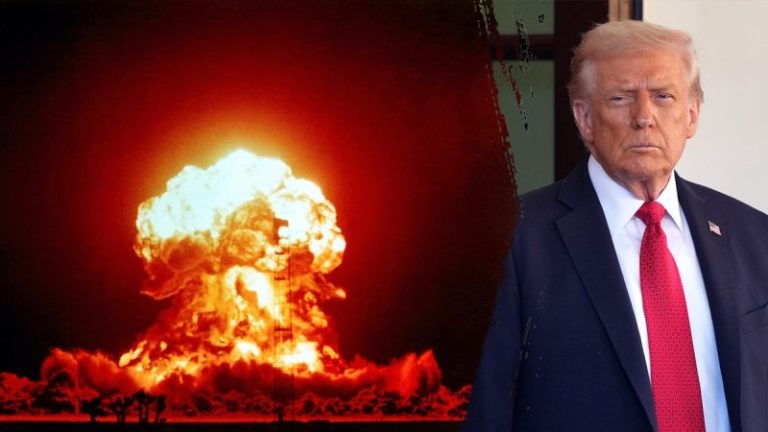
President Donald Trump’s announcement that the United States will resume nuclear weapons testing for the first time in more than three decades has sent shockwaves through both Washington and world capitals. He argues the move is necessary to ‘keep pace’ with Russia and China, whose programs he claims are active, and to ensure that America’s deterrent remains credible. We will not be outmatched, Trump declared, ordering the Pentagon to ‘immediately’ begin preparations.

That declaration reverberated across the globe. To some, it signals renewed American strength — proof that Washington will no longer rely on self-imposed restraints while adversaries modernize unencumbered.

The rationale: deterrence and parity

Trump’s rationale rests on deterrence. If Russia or China are conducting secret or low-yield tests in violation of international norms, then the U.S., he argues, cannot appear constrained.

That logic has merit in theory. Yet in practice, there is no publicly verified evidence that Moscow or Beijing have conducted full-scale nuclear explosions in recent years. Both remain bound, at least politically, to the global testing moratorium.

America, for its part, has maintained a robust and credible deterrent through its Stockpile Stewardship and Management Program — using advanced supercomputing, materials science and subcritical testing to ensure our arsenal’s reliability without detonating a single weapon since 1992. However, Russia’s 2023 de-ratification of the Comprehensive Nuclear-Test-Ban Treaty (CTBT) signals potential erosion of that restraint.

In short, our nuclear arsenal works. Our delivery systems are being modernized.

A brief history: lessons written in fire

To understand what is at stake, it helps to recall how we got here. The U.S. conducted its first nuclear test — the ‘Trinity’ explosion — on July 16, 1945, in New Mexico. Over the next half-century, America performed more than 1,000 nuclear detonations, first in the atmosphere, later underground and underwater. Each test expanded our understanding of the bomb’s formidable power and devastating potential — but the environmental and human toll, from the Pacific islands to Nevada, was staggering.

By the early 1960s, public outrage and the Cuban Missile Crisis convinced world leaders that unrestrained testing endangered humanity itself. The Limited Test Ban Treaty of 1963 banned explosions in the atmosphere, outer space, and underwater. The final U.S. test occurred on Sept. 23, 1992, after which Washington joined a global moratorium pending ratification of the CTBT — still unsigned by a few key states, including ours. Nevertheless, the norm held. For 33 years, no nation except North Korea has crossed that line and, perhaps, South Africa, in 1979.

That moratorium has been one of the quiet triumphs of post-Cold War diplomacy: a restraint observed not out of naiveté, but wisdom born of horror. It allowed nations to modernize defensively while preserving the taboo against nuclear explosions, the ultimate boundary between deterrence and apocalypse.

The risks: moral, strategic and existential

To resume testing now risks unraveling that fragile consensus. Once the U.S. breaks the silence, others will follow. Russia could justify its own tests as reciprocal. China, already expanding its arsenal to 600 warheads, is expected to reach about 1,000 nuclear warheads by around 2030 and might accelerate that program. India and Pakistan could feel emboldened. North Korea would seize the moment to demonstrate ‘parity.’ Within years, the world could witness a cascade of underground detonations from East Asia to the Middle East. The psychological barrier separating possession from use would erode.

From a moral perspective, this is not a step to take lightly. Theologians and strategists alike have long argued that nuclear weapons pose unique ethical dilemmas.

From a policy standpoint, the cost-benefit calculus is equally stark. Resuming tests would erode U.S. moral authority in arms-control negotiations, undermine the CTBT and alarm allies who rely on America’s extended deterrence. It would also hand propaganda victories to adversaries eager to paint Washington as reckless. The environmental, safety and political costs of reopening test sites would be significant, and the scientific benefit — according to our own laboratories — minimal.

As the International Campaign to Abolish Nuclear Weapons (ICAN) warns, renewed testing would undermine decades of global norm-building around restraint and open the door to new proliferation.

A better path: lead, don’t imitate

Rather than igniting a new nuclear competition, the U.S. should seize this moment to lead the world toward restraint. Trump’s instinct to project strength is understandable; deterrence remains vital in a world of aggressors. But true strength includes moral leadership.

If the president genuinely wishes to reassert American primacy, he could do so not by detonating weapons, but by convening a global summit of nuclear-armed states — the U.S., Russia, China, France, the United Kingdom, India, Pakistan, Israel and North Korea — to renew or formalize a universal moratorium on nuclear testing. Such a proposal could leverage the CTBTO’s Article XIV Conference mechanism for enhanced verification and transparency.

Such a summit would accomplish three things:

  1. Reestablish dialogue among powers that rarely sit at the same table, easing nuclear tensions.
  2. Reaffirm deterrence without destruction, updating verification mechanisms and transparency measures using modern technology.
  3. Restore moral leadership, demonstrating that America’s power is disciplined by conscience, not driven by fear.

By proposing such a gathering — perhaps under United Nations auspices or as a U.S.-hosted initiative at the Nevada National Security Site — President Trump could transform a provocative decision into a statesmanlike opportunity. He could remind the world that American strength serves peace, not annihilation.

Conclusion: the test before us

For decades, humanity has lived under the shadow of weapons too powerful to use. Their silence has been our safety. Breaking that silence risks inviting a new arms race and edging civilization closer to the brink. History’s lesson is clear: once the nuclear threshold is crossed, even in testing, it becomes easier to cross again.

President Trump has proven that boldness can reset stagnant debates. But boldness without wisdom can also destabilize the world we seek to defend. The real test before us is not of plutonium or warheads, but of leadership — whether we will master our power, or once again let our power master us. True leadership demands the courage to combine military readiness with moral restraint, ensuring that power serves peace rather than pride.

This post appeared first on FOX NEWS

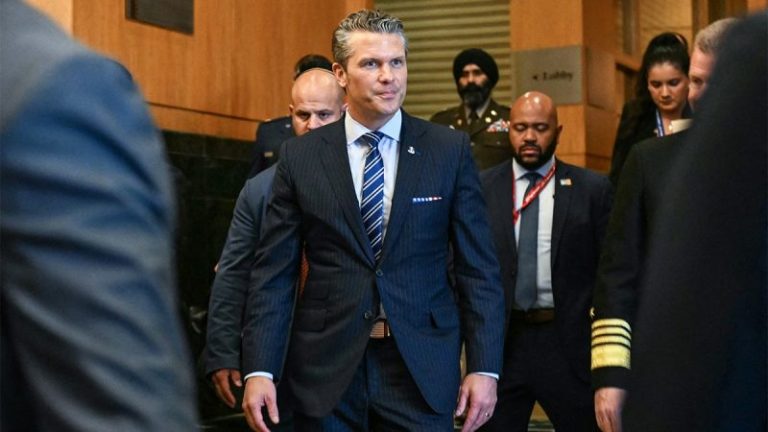
U.S. Defense Secretary Pete Hegseth on Friday met with his Chinese counterpart in Kuala Lumpur, using the high-profile encounter to reaffirm that the United States will ‘stoutly defend’ its interests in the Indo-Pacific region.

Hegseth characterized the session with Chinese Admiral Dong Jun as ‘good and constructive.’ The pair met on the sidelines of the Association of Southeast Asian Nations (ASEAN) defense summit, which convened top military officials from across the region. 

The Pentagon chief said he raised concerns about China’s growing aggression in the South China Sea and around Taiwan – as well as its posture toward American allies and partners.

‘I highlighted the importance of maintaining a balance of power in the Indo-Pacific,’ Hegseth wrote on X. ‘The United States does not seek conflict, but it will continue to stoutly defend its interests and ensure it has the capabilities in the region to do so.’

China’s Defense Ministry responded in measured terms, reiterating Beijing’s long-held stance that Taiwan’s reunification with the mainland is an ‘unstoppable historical trend.’

The meeting face-to-face marked the first in-person meeting between the two defense leaders since a video call in early September. It signaled continued efforts on both sides to manage a tense relationship even as disputes over Taiwan, maritime boundaries and navigation rights persist.

Hegseth said the U.S. will ‘continue discussions with the People’s Liberation Army on matters of mutual importance.’

Hegseth also announced a 10-year defense cooperation framework with India following talks with Defense Minister Rajnath Singh — part of Washington’s push to expand security and technology ties with New Delhi as a counterweight to Beijing’s influence.

The secretary later met with Malaysia’s defense minister, reaffirming the two nations’ commitment to upholding maritime security in the contested South China Sea, where China’s expansive territorial claims overlap with those of several Southeast Asian countries.

ASEAN defense ministers will continue talks Saturday with dialogue partners including the United States, China, Japan, India, Australia, South Korea and Russia.

The Associated Press contributed to this report.

This post appeared first on FOX NEWS

President Donald Trump on Thursday called for Republicans to end the filibuster in order to end the month-long government shutdown.

In a late-night Truth Social post, Trump argued that Democrats had sought to eliminate the Senate procedure when they had control of both chambers of Congress and the White House during the Biden administration, but then-Sens. Joe Manchin and Kyrsten Sinema helped block the effort.

Trump suggested using the ‘nuclear option,’ following his return to the U.S. after his trip to Asia.

‘The one question that kept coming up, however, was how did the DemocratsSHUT DOWN the United States of America, and why did the powerful Republicans allow them to do it? The fact is, in flying back, I thought a great deal about that question, WHY?’ Trump wrote on Truth Social.

‘Majority Leader John Thune, and Speaker of the House Mike Johnson, are doing a GREAT job, but the Democrats are Crazed Lunatics that have lost all sense of WISDOM and REALITY,’ he continued. ‘It is a sick form of the now ‘legendary’ Trump Derangement Syndrome (TDS) that only comes from losing too much. They want Trillions of Dollars to be taken from our Healthcare System and given to others, who are not deserving — People who have come into our Country illegally, many from prisons and mental institutions. This will hurt American citizens, and Republicans will not let it happen.’

Trump added that it is ‘now time for the Republicans to play their ‘TRUMP CARD,’ and go for what is called the Nuclear Option — Get rid of the Filibuster, and get rid of it, NOW!’

This post appeared first on FOX NEWS

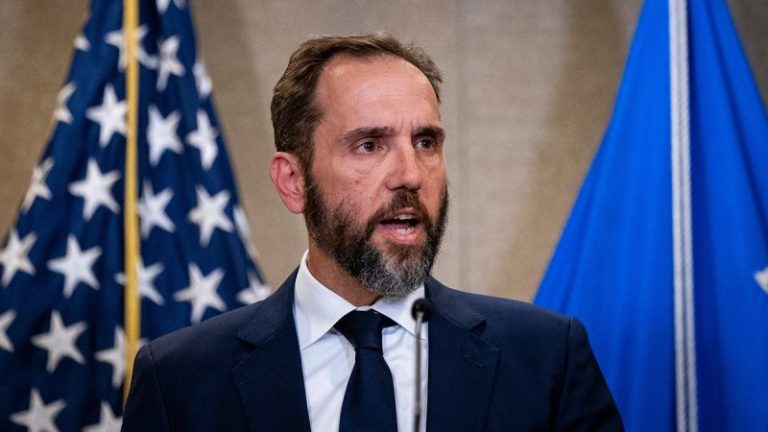
Two major phone carriers took sharply different paths when former special counsel Jack Smith’s team subpoenaed phone records tied to Republican lawmakers in 2023, according to the redacted subpoenas and letters first shared with Fox News Digital.

The documents, provided by the office of Sen. Chuck Grassley, R-Iowa, reveal Verizon’s compliance and AT&T’s resistance when faced with Smith’s requests, which were part of Arctic Frost, the FBI probe that led to Smith bringing election charges against President Donald Trump.

The 12 phone numbers on the subpoena to Verizon are redacted and replaced by Grassley’s office with the names of the lawmakers associated with them. They include one House member and 10 senators, including Sen. Rick Scott, R-Fl., whose name was not previously reported.

AT&T received a similar request, according to a second subpoena. The company told Grassley the subpoenaed phone records were associated with two lawmakers, including Sen. Ted Cruz, R-Texas, according to a source directly familiar with the matter. The source said AT&T declined to disclose the second person.

Accompanying the two subpoenas were gag orders, signed by U.S. District Judge James Boasberg of Washington, D.C., that directed the two phone companies not to disclose the subpoenas to the lawmakers for one year. Prosecutors can seek such gag orders to temporarily keep investigative matters confidential.

The phone companies also wrote letters to Grassley, first shared with Fox News Digital, explaining how they handled the subpoenas they received, revealing two different approaches.

Verizon justified complying with the subpoenas, saying they were ‘facially valid’ and contained only phone numbers, not names. Verizon said that with the ‘benefit of hindsight’ and recent discussions with the Senate Sergeant at Arms, which handles congressional phone services, it has modified its policies so that it puts up more of a challenge to law enforcement requests pertaining to Congress members.

AT&T, meanwhile, did not comply with the subpoenas.

‘When AT&T raised questions with Special Counsel Smith’s office concerning the legal basis for seeking records of members of Congress, the Special Counsel did not pursue the subpoena further, and no records were produced,’ David Chorzempa, general counsel for AT&T, wrote.

The release of copies of the subpoenas and new details from phone companies comes after Grassley published earlier this month a one-page FBI document that said eight senators and one House lawmaker had their phone data subpoenaed. They included Republican Sens. Marsha Blackburn, Josh Hawley, Lindsey Graham, Bill Hagerty, Dan Sullivan, Tommy Tuberville, Ron Johnson and Cynthia Lummis.

Cruz later revealed that he was in the mix, and Scott announced on Thursday that he too was a target.

Grassley said in a press conference Wednesday that Smith’s subpoena to Verizon included Cruz’s office’s landline. In Verizon’s letter to Grassley, it noted that there were no records to give Smith pertaining to that landline.

The two subpoenas to Verizon and AT&T sought toll records for a four-day period surrounding the Jan. 6 Capitol riot. They did not include the contents of phone calls or messages, which would require a warrant, but they did include ‘[call] detail records for inbound and outbound calls, text messages, direct connect, and voicemail messages’ and phone number subscriber and payment information.

News of the subpoenas sparked outcry from the senators, who claimed Smith improperly spied on them and that Arctic Frost was ‘worse’ than the Watergate scandal. They have raised numerous constitutional concerns, including claims that the subpoenas violated the speech and debate clause, which gives lawmakers an added layer of immunity from investigations.

Smith, in response, said in a letter through his lawyers that he mentioned subpoenaing senators’ phone records in his public, final special counsel report and that the subpoenas were narrowly tailored to a four-day period surrounding the Jan. 6 riot and ‘entirely proper.’

Smith has asked House and Senate lawmakers to allow him to testify before them in a public hearing to speak about his special counsel work. House Judiciary Committee Chairman Jim Jordan, R-Ohio, however, wants to question Smith behind closed doors and Grassley has said he needs more information before he hosts Smith in a public setting.

The DOJ has issued subpoenas for lawmakers’ information in the past, but former inspector general Michael Horowitz cautioned against it in most circumstances in a report published last year, saying that doing so ‘risks chilling Congress’s ability to conduct oversight of the executive branch.’

Horowitz’s warning came in response to the first Trump administration subpoenaing phone records of Rep. Eric Swalwell, D-Calif., and then-Rep. Adam Schiff, D-Calif., and dozens of congressional staffers from both parties as part of an investigation into classified information being leaked to the media.

Despite enjoying additional constitutional protections, members of Congress are not immune from investigation and prosecution. Former Democratic Sen. Bob Menendez’s phone records were seized while he was serving in office. Menendez is now serving in prison after being found guilty by a jury last year of corruption charges.

Read copies of the letters from Verizon and AT&T and the subpoenas below. 

App users: 

Click to read the Verizon letter

Click to read the Verizon subpoena

Click to read the AT&T letter

Click to read the AT&T subpoena

This post appeared first on FOX NEWS

A former spokesperson for then-President Joe Biden admitted to Congress in August testimony, which surfaced on social media Wednesday, that he had only met with the aging president between one and five times in over two years despite previously claiming he was ‘sharp’ ‘every single day.’

In a July 2, 2024, interview on MSNBC, then-Biden spokesperson Ian Sams said of the former president that ‘When I deal with him, he is sharp, he is asking tough questions, that’s the President Biden that so many of us experience every single day.’

Pressed by the House Committee on Oversight and Government Reform on how many times he had met with Biden, Sams admitted that he had ‘interacted with him pretty infrequently’ and ‘met with the president a handful of times during my tenure in the White House.’

He further admitted that some of these interactions were online or over the phone. During his testimony he recalled two in-person meetings with Biden.

Sams worked in the White House from 2022 to 2024, serving in the roles of special assistant to the president, spokesperson and senior advisor in the White House Counsel’s Office.

Sams was pressed on whether the basis of his statements on Biden’s mental fitness was from his ‘handful’ of interactions with the former president.

‘You said that you met him personally maybe a handful of times. Are those the interactions that you were discussing when you say, ‘I deal with him’?’ a committee staff member asked, to which Sams responded, ‘Yes.’

‘Do you think that’s a bit misleading?’ Sams was asked.

He answered, ‘I think it was pretty direct and honest and said that when I do deal with him, he’s, you know, sharp and he was asking incisive questions during my meetings with him.’

‘But you dealt with him five times in 24 months. That’s not exactly a large scope of knowledge on how he interacts with staff,’ the committee staffer pressed, adding, ‘Do you think that statement suggests that you deal with him more than you did?’

Sams shot back, ‘I don’t think so. I mean, I spoke about my own interactions with him.’

Despite this, Sams maintained that though he ‘definitely noticed some aging’ in Biden, ‘I had no reason to think that he was anything other than capable of being the president and executing his duties.’

The House Oversight Committee GOP posted on its official X account, ‘Ian Sams, one of Joe Biden’s spokespersons, met with him only TWICE in over TWO YEARS. Then he would go on live television and say he interacted with him EVERY SINGLE DAY.’

‘He was LYING to the American people to cover up for Biden’s decline,’ the GOP account wrote.

Committee Chair James Comer, R-Ky., also posted on X, writing, ‘Biden’s top spokesman, Ian Sams, admitted to Congress he met Joe Biden only twice in two years. But that didn’t stop him from loudly insisting Joe was ‘fit.’’

‘Ian was just reading from a script written by Biden’s handlers,’ added Comer.

In a statement released by the Oversight Committee, Comer went on to say, ‘The Biden Autopen Presidency will go down as one of the biggest political scandals in U.S. history. As Americans saw President Biden’s decline with their own eyes, Biden’s inner circle sought to deceive the public, cover-up his decline, and took unauthorized executive actions with the autopen that are now invalid.’

‘Our report reveals how key aides colluded to mislead the public and the extraordinary measures they took to sustain the appearance of presidential authority as Biden’s capacity to function independently diminished,’ he went on, adding, ‘Executive actions performed by Biden White House staff and signed by autopen are null and void. We are calling on the U.S. Department of Justice to conduct a thorough review of these executive actions and scrutinize key Biden aides who took the Fifth to hide their participation in the cover-up.’

Fox News Digital reached out to Sams for comment but did not immediately receive a response.

This post appeared first on FOX NEWS

Steve Barton, host of In It To Win It, weighs in on the pullback in gold and silver prices, sharing where the floors could be for both precious metals.

In his view, the correction is healthy and will lead to higher levels in the future.

Securities Disclosure: I, Charlotte McLeod, hold no direct investment interest in any company mentioned in this article.

This post appeared first on investingnews.com

(TheNewswire)

Brossard, Quebec TheNewswire – le 31 octobre 2025 CORPORATION CHARBONE (TSXV: CH,OTC:CHHYF; OTCQB: CHHYF; FSE: K47) (« CHARBONE » ou la « Société »), un producteur et distributeur nord-américain spécialisé dans l’hydrogène propre Ultra Haute Pureté (« UHP ») et les gaz industriels stratégiques, a le plaisir d’annoncer qu’elle a retenu les services de la société de communication corporative américaine RB Milestone Group LLC (« RBMG ») pour ses relations aux investisseurs. Ces services comprennent le conseil en communications corporatives, l’organisation de tournée promotionnelle hors transaction, la veille concurrentielle et la mise en relation de partenaires commerciaux potentiels aux dirigeants de la Société. RBMG a été mandatée pour une durée initiale de six mois, à compter du 20 octobre 2025. Le montant total de la prestation, d’un montant de 59 500 USD, est payable en argent et facturé mensuellement. À l’issue de cette période, le contrat est reconduit automatiquement chaque mois jusqu’à sa résiliation. RBMG est une entité indépendante de la Société. La présente entente est soumise à l’approbation des autorités réglementaires compétentes.

Dave B. Gagnon, PDG de CHARBONE , a commenté : « Nous sommes ravis d’accueillir l’équipe de RBMG, un atout majeur pour notre stratégie de communication et de relations avec les investisseurs aux États-Unis et au Canada. Leur expertise reconnue des marchés financiers, leur visibilité corporative et leurs conseils stratégiques seront essentiels pour CHARBONE qui entame sa prochaine phase de croissance et d’expansion en Amérique du Nord. Cette collaboration renforce notre engagement en faveur de la transparence, du dialogue avec nos actionnaires et de la création de valeur à long terme . »

À propos de RB Milestone Group LLC

Fondée en 2009, RB Milestone Group LLC (« RBMG ») est une agence de communication américaine spécialisée dans le conseil en relations aux investisseurs. Elle possède des bureaux à New York et à Stamford (Connecticut). Son pôle de conseil américain propose des programmes de relations aux investisseurs sur mesure aux entreprises émergentes, qu’elles soient privées ou cotées sur les marchés NYSE, NASDAQ, OTCQB, OTCQX, TSX, TSXV, CSE, ASX et AIM. RBMG affine les stratégies de communication, analyse les données et conseille ses clients sur la manière de pénétrer de nouveaux marchés. Elle les aide à cibler et à nouer des relations avec des acteurs clés aux États-Unis et des acteurs stratégiques de leur secteur à l’échelle mondiale. Grâce aux techniques numériques, à l’intelligence artificielle (IA) et à l’apprentissage automatique, RBMG a développé des méthodes qui optimisent les initiatives traditionnelles de relations aux investisseurs de ses clients afin de maximiser leur retour sur investissement. RBMG collabore avec des clients issus de nombreux secteurs d’activité, notamment : le cannabis, les technologies propres, les biens de consommation, les cryptomonnaies, la fintech, la santé, les métaux et l’exploitation minière, les services professionnels, les énergies renouvelables et les technologies. Pour en savoir plus sur RBMG, veuillez consulter le site : www.rbmilestone.com .

Mise à jour des termes d’un règlement de dette par actions

CHARBONE annonce une mise à jour de son règlement de dette par actions, précédemment divulgué et daté du 14 août 2025. À la suite de discussions avec la Bourse de croissance TSX, notamment un examen des restrictions imposées aux opérations d’échange d’actions contre dettes dans le contexte des services de tenue de marché, la Société a révisé le montant total et le nombre d’actions à émettre dans le cadre du règlement. Selon les modalités révisées, CHARBONE réglera 30 000 $ du montant initial de 118 095 $ payable à un teneur de marché indépendant par l’émission d’actions ordinaires. La Société a négocié avec succès que le solde restant sera réduit de la valeur des actions au cours actuel du marché. À la clôture de l’opération, CHARBONE émettra 500 000 actions ordinaires. Le règlement fera l’objet d’une entente formelle et demeure assujetti à l’approbation finale de la Bourse de croissance TSX. Les actions ordinaires émises seront assujetties à la période de détention légale de quatre mois.

À propos de CORPORATION CHARBONE

CHARBONE est une entreprise intégrée spécialisée dans l’hydrogène propre Ultra Haute Pureté (UHP) et la distribution stratégique de gaz industriels en Amérique du Nord et en Asie-Pacifique. Elle développe un réseau modulaire de production d’hydrogène vert tout en s’associant à des partenaires de l’industrie pour offrir de l’hélium et d’autres gaz spécialisés sans avoir à construire de nouvelles usines coûteuses. Cette stratégie disciplinée diversifie les revenus, réduit les risques et augmente sa flexibilité. Le groupe Charbone est coté en bourse en Amérique du Nord et en Europe sur la bourse de croissance TSX (TSXV: CH,OTC:CHHYF) ; sur les marchés OTC (OTCQB: CHHYF) ; et à la Bourse de Francfort (FSE: K47) . Pour plus d’informations, visiter www.charbone.com .

Énoncés prospectifs

Le présent communiqué de presse contient des énoncés qui constituent de « l’information prospective » au sens des lois canadiennes sur les valeurs mobilières (« déclarations prospectives »). Ces déclarations prospectives sont souvent identifiées par des mots tels que « a l’intention », « anticipe », « s’attend à », « croit », « planifie », « probable », ou des mots similaires. Les déclarations prospectives reflètent les attentes, estimations ou projections respectives de la direction de Charbone concernant les résultats ou événements futurs, sur la base des opinions, hypothèses et estimations considérées comme raisonnables par la direction à la date à laquelle les déclarations sont faites. Bien que Charbone estime que les attentes exprimées dans les déclarations prospectives sont raisonnables, les déclarations prospectives comportent des risques et des incertitudes, et il ne faut pas se fier indûment aux déclarations prospectives, car des facteurs inconnus ou imprévisibles pourraient faire en sorte que les résultats réels soient sensiblement différents de ceux exprimés dans les déclarations prospectives. Des risques et des incertitudes liés aux activités de Charbone peuvent avoir une incidence sur les déclarations prospectives. Ces risques, incertitudes et hypothèses comprennent, sans s’y limiter, ceux décrits à la rubrique « Facteurs de risque » dans la déclaration de changement à l’inscription de la Société datée du 31 mars 2022, qui peut être consultée sur SEDAR à l’adresse www.sedar.com; ils pourraient faire en sorte que les événements ou les résultats réels diffèrent sensiblement de ceux prévus dans les déclarations prospectives.

Sauf si les lois sur les valeurs mobilières applicables l’exigent, Charbone ne s’engage pas à mettre à jour ni à réviser les déclarations prospectives.

Ni la Bourse de croissance TSX ni son fournisseur de services de réglementation (tel que ce terme est défini dans les politiques de la Bourse de croissance TSX) n’acceptent de responsabilité quant à la pertinence ou à l’exactitude du présent communiqué.

Pour contacter Corporation Charbone :

Téléphone bureau: +1 450 678 7171

Courriel: ir@charbone.com

Benoit Veilleux

Chef de la direction financière et secrétaire corporatif

Copyright (c) 2025 TheNewswire – All rights reserved.

News Provided by TheNewsWire via QuoteMedia

This post appeared first on investingnews.com

Falco Resources Ltd. (TSX.V: FPC) (‘ Falco ‘ or the ‘ Corporation ‘) is pleased to announce that the Corporation has entered into binding agreements (i) with OR Royalties Inc. (‘ OR Royalties ‘) in order to extend the maturity date of the Corporation’s existing convertible secured senior loan (the ‘ OR Royalties Loan ‘) from December 31, 2025, to December 31, 2026; and (ii) with Glencore Canada Corporation (‘ Glencore ‘) in order to extend the maturity date of the Corporation’s existing senior secured convertible debenture (the ‘ Glencore Debenture ‘) from December 31, 2025, to December 31, 2026.

Luc Lessard, President and Chief Executive Officer of the Corporation commented: ‘ The concurrent extensions of the Corporation’s senior debts demonstrate the strong relationship and long-standing support of OR Royalties and Glencore to Falco and the development of the Horne 5 Project. Such extensions provide the Corporation with additional flexibility to pursue the permitting and development of the Horne 5 Project.’

Amendments to the OR Royalties Loan

In consideration for the extension of the maturity date of the OR Royalties Loan, the OR Royalties Loan will also be amended effective as of December 31, 2025, in order for (i) the accrued interest on the existing OR Royalties Loan to be capitalized such that the principal amount of the amended OR Royalties Loan will be approximately $26,098,521, (ii) the conversion price to be maintained at $0.45 per Common Share, and (iii) the interest rate to be maintained at 9% (collectively, the ‘ OR Royalties Loan Amendments ‘). The 17,690,237 warrants of the Corporation currently held by OR Royalties (the ‘ Existing OR Royalties Warrants ‘), each exercisable for one Common Share at an exercise price of $0.58 per Common Share, will remain outstanding in accordance with their terms until their expiry on December 31, 2025. In consideration for the extension of the maturity date of the OR Royalties Loan, the Corporation will issue to OR Royalties, on December 31, 2025, 19,332,237 warrants (the ‘ New OR Royalties Warrants ‘), each exercisable at any time from and after January 1, 2026, for one common share of Falco (the ‘ Common Shares ‘) at an exercise price of $0.58 per Common Share and expiring on December 31, 2026.

Amendments to the Glencore Debenture

In consideration for the extension of the maturity date of the Glencore Debenture, the Glencore Debenture will also be amended effective as of December 31, 2025 (the ‘ Amended Glencore Debenture ‘) in order for (i) the accrued interest on the existing Glencore Debenture up to December 31, 2025, to be capitalized such that the principal amount of the amended Glencore Debenture will be approximately $15,433,754, (ii) the conversion price to be maintained at $0.37 per Common Share, and (iii) the interest rate to be maintained at 10% (collectively, the ‘ Glencore Debenture Amendments ‘). The 19,424,944 Common Share purchase warrants currently held by Glencore (the ‘ Existing Glencore Warrants ‘) will remain outstanding in accordance with their terms until their expiry on December 31, 2025. In consideration for the extension of the maturity date of the Glencore Debenture, the Corporation will issue to Glencore, on December 31, 2025, 21,381,422 warrants (the ‘ New Glencore Warrants ‘), each exercisable at any time from and after January 1, 2026, at an exercise price of (i) $0.38 per Common Share for 15,061,158 of the New Glencore Warrants and (ii) $0.42 per Common Share for the remaining 6,320,264 New Glencore Warrants, and expiring on December 31, 2026.

The OR Royalties Loan Amendments and the issuance of the New OR Royalties Warrants (the ‘ OR Royalties Transactions ‘) are considered ‘related party transactions’ under Regulation 61-101 respecting Protection of Minority Security Holders in Special Transactions (‘ Regulation 61-101 ‘). The OR Royalties Transactions are exempt from the requirements to obtain a formal valuation pursuant to section 5.5(b) of Regulation 61-101. However, Falco is required to obtain minority approval for the OR Royalties Transactions as none of the exemptions contained under Regulation 61-101 are currently available to the Corporation.

Closing of the OR Royalties Transactions is conditional upon (i) obtaining minority approval of the shareholders of the Corporation, excluding the Common Shares held by the directors and officers of OR Royalties, to be sought at the special meeting of shareholders of the Corporation to be held on December 15, 2025 (the ‘ Shareholders’ Meeting ‘), (ii) approval of the TSX Venture Exchange, and (iii) concurrent closing of the Glencore Debenture Amendments and the issuance of the New Glencore Warrants on the terms described herein.

Closing of the Glencore Debenture Amendments and the issuance of the New Glencore Warrants is conditional upon (i) approval of the TSX Venture Exchange, and (ii) concurrent closing of the OR Royalties Transactions on the terms described herein. Subject to satisfaction of such conditions, closing of the OR Royalties Loan Amendments and the Glencore Debenture Amendments, and closing of the OR Royalties Transactions is expected to occur concurrently on December 31, 2025. Additional information will be included in the management proxy circular to be filed at www.sedarplus.ca.

Prior to the transactions contemplated by this press release, OR Royalties held the OR Royalties Loan in the principal amount of $23,881,821, which is convertible into 53,070,713 Common Shares and also held 17,690,237 Existing OR Royalties Warrants, representing approximately 17.01% of the issued and outstanding Common Shares on a partially diluted basis assuming the conversion in full of the OR Royalties Loan and the exercise in full of the 17,690,237 Existing OR Royalties Warrants. Immediately following closing, on a partially diluted basis assuming the conversion in full of the OR Royalties Loan and the exercise in full of the New OR Royalties Warrants, OR Royalties would have beneficial ownership of, or control and direction over 77,328,950 Common Shares, representing approximately 18.30% of the Common Shares issued and outstanding.

About Falco

Falco is one of the largest mineral claim holders in the province of Québec, with an extensive portfolio of properties in the Abitibi-Témiscamingue greenstone belt. Falco holds rights to approximately 67,000 hectares of land in the Noranda Mining Camp, which represents 67% of the camp as a whole and includes 13 former gold and base metal mining sites. Falco’s main asset is the Horne 5 project located beneath the former Horne mine, which was operated by Noranda from 1927 to 1976 and produced 11.6 million ounces of gold and 2.5 billion pounds of copper. Osisko Development Corp. is Falco’s largest shareholder, with a 16% interest in the Corporation.

For further information, please contact:
Luc Lessard
President, Chief Executive Officer and Director
514-261-3336
info@falcores.com

Neither the TSX Venture Exchange nor its Regulation Services Provider (as that term is defined in the policies of the TSX Venture Exchange) accepts responsibility for the adequacy or accuracy of this press release.

Cautionary Statement on Forward-Looking Information

This news release contains forward-looking statements and forward-looking information (together, ‘forward-looking statements’) within the meaning of applicable securities laws. Often, but not always, forward-looking statements can be identified by words such as ‘plans’, ‘expects’, ‘seeks’, ‘may’, ‘should’, ‘could’, ‘will’, ‘budget’, ‘scheduled’, ‘estimates’, ‘forecasts’, ‘intends’, ‘anticipates’, ‘believes’, or variations including negative variations thereof of such words and phrases that refer to certain actions, events or results that may, could, would, might or will occur or be taken or achieved. These statements are made as of the date of this news release. Without limiting the generality of the foregoing statements, the statements relating to the OR Royalties Loan Amendments, the Glencore Debenture Amendments, as well as the issuance of the New Glencore Warrants and New OR Royalties Warrants are forward-looking statements and will not be completed until approved by the TSX Venture Exchange and until appropriate shareholder approval is obtained with respect to OR Royalties Loan Amendments and the issuance of the OR Royalties Warrants. There is no assurance that the approval of the TSX Venture Exchange to such transactions will be obtained nor that shareholder approval with respect to OR Royalties Loan Amendments and the issuance of the OR Royalties Warrants will be obtained. Forward-looking statements involve known and unknown risks, uncertainties and other factors which may cause the actual results, performance, prospects and opportunities to differ materially from those expressed or implied by such forward-looking statements. These risks and uncertainties include, but are not limited to, the risk factors set out in Falco’s annual and/or quarterly management discussion and analysis and in other of its public disclosure documents filed on SEDAR+ at www.sedarplus.ca, as well as all assumptions regarding the foregoing. Although the Corporation believes the forward-looking statements in this news release are reasonable, it can give no assurance that the expectations and assumptions in such statements will prove to be correct. Consequently, the Corporation cautions investors that any forward-looking statements by the Corporation are not guarantees of future results or performance and that actual results may differ materially from those in forward-looking statements.

News Provided by GlobeNewswire via QuoteMedia

This post appeared first on investingnews.com

The Heliostar Metals Ltd. (TSXV: HSTR,OTC:HSTXF) (OTCQX: HSTXF) (FSE: RGG1) (‘Heliostar’ or the ‘Company’) Annual General & Special Meeting (‘AGM’) is scheduled for November 26th, 2025. The Company’s Chairman, Jacques Vaillancourt and director Ken Booth will step down at the AGM, and Mr James Perry is proposed to succeed Mr. Vaillancourt as Chairman.

Heliostar’s Chairman, Jacques Vaillancourt, commented on his retirement from the board. ‘The Company has changed immensely from my initial involvement and investment. It has grown and evolved from a portfolio of prospective exploration assets in Alaska and Nevada to now producing gold from two mines in Mexico, La Colorada and San Agustin. That alone would be a significant corporate achievement, but these producing mines are complemented by a very exciting development portfolio of 100% owned projects, which include Ana Paula, Cerro del Gallo and San Antonio. All of this is evidence of the talent, competence and the day-in and day-out diligence of the management team, led by Charles Funk. I leave a Company operationally, financially and geologically stronger than ever and in very good hands.’

Charles Funk, President and & CEO, stated, ‘I wish to thank Jacques and Ken for their leadership and guidance as we have built Heliostar over the last five years. The Company has come a long way, and their contributions to this growth have been significant. As we continue to expand production towards our goal of 500,000 ounces of annual production by the end of this decade, we look forward to welcoming James Perry to the Company’s board as Heliostar’s proposed new Chairman.’

James Perry is proposed to succeed Mr. Vaillancourt as Chairman and will be put forward for approval by the shareholders at the upcoming AGM. Mr. Perry is currently President of Sweetwater Royalties, a base metals, industrial minerals and renewable energy royalty Company based in Denver, Colorado. Sweetwater, one of the largest landowners in the United States, is a privately held company established in 2020 by Orion Resource Partners. Mr. Perry has extensive mining and resources experience across Latin America, having previously served as Business Development Manager, as well as Corporate Counsel at Newcrest Mining, one of the world’s largest gold mining companies, headquartered in Australia. Newcrest was acquired for US$19 billion by Newmont Mining in 2023. Mr. Perry attended the London School of Economics, receiving an M.Sc. in History and International Relations, as well as earning a Bachelor of Laws from Bond University.

Heliostar Annual General & Special Meeting Voting Instructions

Heliostar’s Annual General & Special Meeting will be held on November 26, 2025, at 8:00 am PST. The shareholders as of the record date of October 10, 2025, will be entitled to vote and are encouraged to vote before the proxy voting deadline on November 24, 2025, at 8 am PST. Due to the Canada Post service disruption, paper documents may take longer to arrive; however, shareholders can still vote their shares with the following instructions.

How Registered Shareholders Can Vote: Registered shareholders are shareholders who hold their shares directly in the Company, and not through a brokerage account or depository company. Registered shareholders can call Computershare Shareholder Services at 1-800-564-6253 (Canada/US) or, for overseas holders, call the direct dial number 1-514-982-7555 (Monday to Friday, 8:30 am to 8:00 pm EST) to request their voting control numbers.

How Beneficial Shareholders Can Vote: Beneficial shareholders are shareholders who hold their investment through a brokerage house, depository company or other intermediary. There are two types of beneficial owners: (i) those who object to their identity being made known to the issuers of securities which they own (‘Objecting Beneficial Owners’ or ‘OBOs’), and (ii) those who do not object to their identity being made known to the issuers of securities which they own (‘Non-Objecting Beneficial Owners’ or ‘NOBOs’). The Company is sending meeting materials directly to NOBOs. NOBOs may submit their votes by completing the Voting Instruction Form (‘VIF’) available on the Company’s website and sending the completed VIF to Computershare by email at service@computershare.com. NOBOs can also contact Computershare at 1-800- 564-6253 to request their voting control numbers and instructions.

OBOs should contact their brokerage house or other intermediary and ask to obtain their voting control number and instructions to be able to vote on the Broadridge voting site www.proxyvote.com.

About Heliostar Metals Ltd.

Heliostar is a gold mining company with production from operating mines in Mexico. This includes the La Colorada Mine in Sonora and the San Agustin Mine in Durango. The Company also has a strong portfolio of development and exploration stage projects in Mexico and the USA. These include the Ana Paula project in Guerrero, the Cerro del Gallo project in Guanajuato, the San Antonio project in Baja Sur, all in Mexico and the Unga project in Alaska, USA.

For Additional Information, Please Contact:

Charles Funk
President and Chief Executive Officer
Heliostar Metals Limited
Email: charles.funk@heliostarmetals.com
Phone: +1 844-753-0045
Rob Grey
Investor Relations Manager
Heliostar Metals Limited
Email: rob.grey@heliostarmetals.com
Phone: +1 844-753-0045


Neither TSX Venture Exchange nor its Regulation Services Provider (as that term is defined in the policies of the TSX Venture Exchange) accepts responsibility for the adequacy or accuracy of this release.

Cautionary Statement Regarding Forward-Looking Information

This news release includes certain ‘Forward-Looking Statements’ within the meaning of the United States Private Securities Litigation Reform Act of 1995 and ‘forward-looking information’ under applicable Canadian securities laws. When used in this news release, the words ‘anticipate’, ‘believe’, ‘estimate’, ‘expect’, ‘target’, ‘plan’, ‘forecast’, ‘may’, ‘would’, ‘could’, ‘schedule’ and similar words or expressions, identify forward-looking statements or information. These forward-looking statements or information relate to, among other things, the Company’s annual production goals.

Forward-looking statements and forward-looking information relating to the terms and completion of the Facility, any future mineral production, liquidity, and future exploration plans are based on management’s reasonable assumptions, estimates, expectations, analyses and opinions, which are based on management’s experience and perception of trends, current conditions and expected developments, and other factors that management believes are relevant and reasonable in the circumstances, but which may prove to be incorrect. Assumptions have been made regarding, among other things, the receipt of necessary approvals, price of metals; no escalation in the severity of public health crises or ongoing military conflicts; costs of exploration and development; the estimated costs of development of exploration projects; and the Company’s ability to operate in a safe and effective manner and its ability to obtain financing on reasonable terms.

These statements reflect the Company’s respective current views with respect to future events and are necessarily based upon a number of other assumptions and estimates that, while considered reasonable by management, are inherently subject to significant business, economic, competitive, political, and social uncertainties and contingencies. Many factors, both known and unknown, could cause actual results, performance, or achievements to be materially different from the results, performance or achievements that are or may be expressed or implied by such forward-looking statements or forward-looking information and the Company has made assumptions and estimates based on or related to many of these factors. Such factors include, without limitation: precious metals price volatility; risks associated with the conduct of the Company’s mining activities in foreign jurisdictions; regulatory, consent or permitting delays; risks relating to reliance on the Company’s management team and outside contractors; risks regarding exploration and mining activities; the Company’s inability to obtain insurance to cover all risks, on a commercially reasonable basis or at all; currency fluctuations; risks regarding the failure to generate sufficient cash flow from operations; risks relating to project financing and equity issuances; risks and unknowns inherent in all mining projects, including the inaccuracy of reserves and resources, metallurgical recoveries and capital and operating costs of such projects; contests over title to properties, particularly title to undeveloped properties; laws and regulations governing the environment, health and safety; the ability of the communities in which the Company operates to manage and cope with the implications of public health crises; the economic and financial implications of public health crises, ongoing military conflicts and general economic factors to the Company; operating or technical difficulties in connection with mining or development activities; employee relations, labour unrest or unavailability; the Company’s interactions with surrounding communities; the Company’s ability to successfully integrate acquired assets; the speculative nature of exploration and development, including the risks of diminishing quantities or grades of reserves; stock market volatility; conflicts of interest among certain directors and officers; lack of liquidity for shareholders of the Company; litigation risk; and the factors identified under the caption ‘Risk Factors’ in the Company’s public disclosure documents. Readers are cautioned against attributing undue certainty to forward-looking statements or forward-looking information. Although the Company has attempted to identify important factors that could cause actual results to differ materially, there may be other factors that cause results not to be anticipated, estimated or intended. The Company does not intend, and does not assume any obligation, to update these forward-looking statements or forward-looking information to reflect changes in assumptions or changes in circumstances or any other events affecting such statements or information, other than as required by applicable law.

To view the source version of this press release, please visit https://www.newsfilecorp.com/release/272637

News Provided by Newsfile via QuoteMedia

This post appeared first on investingnews.com