

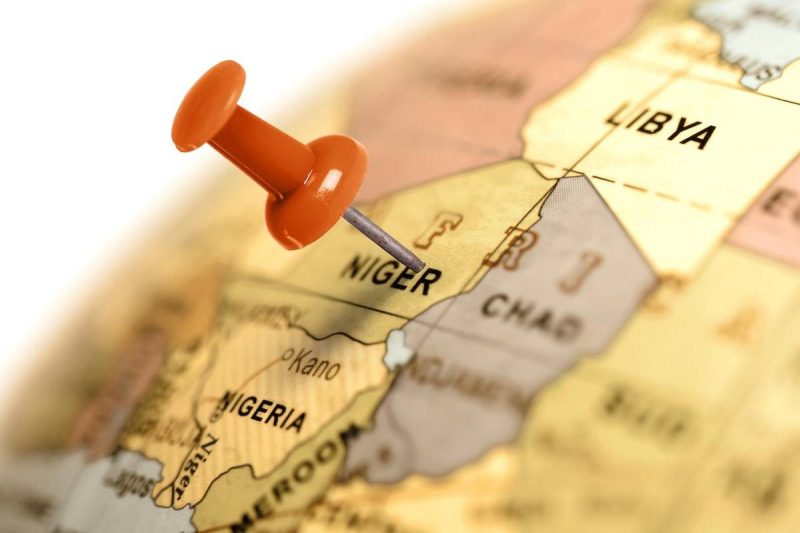
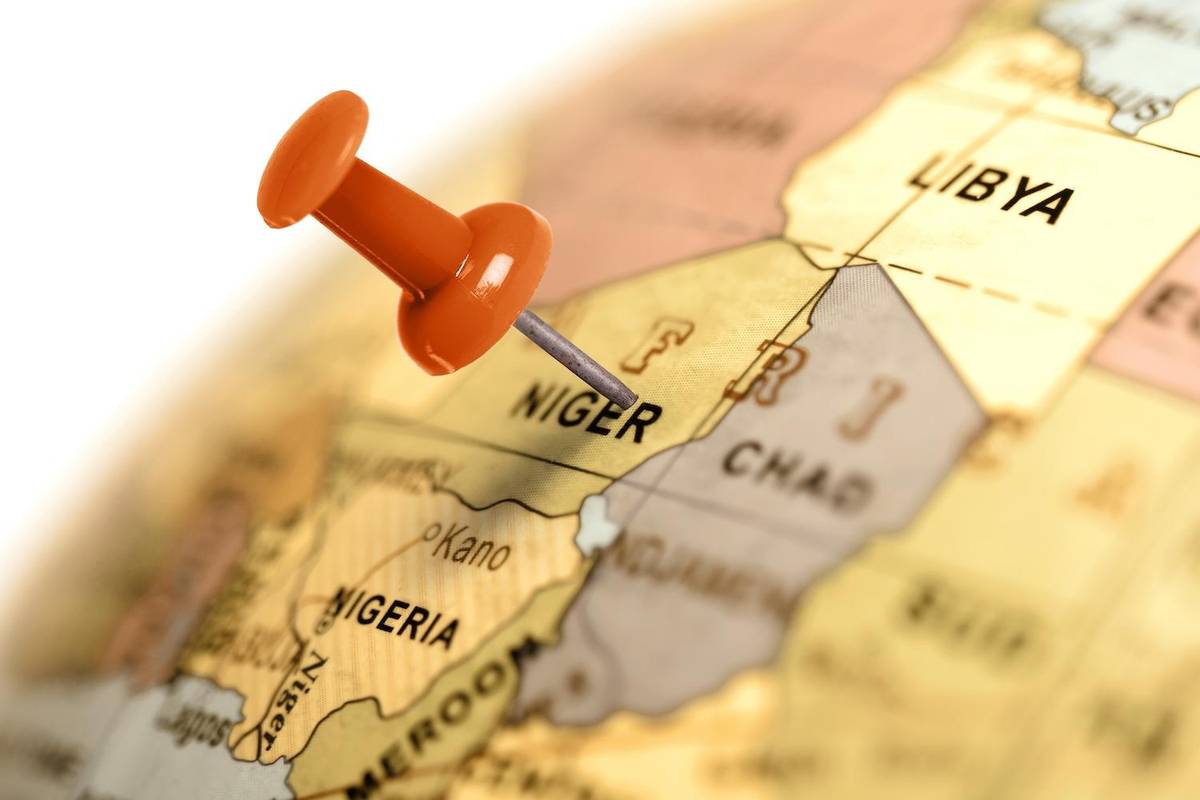
A stockpile of 1,000 metric tons of uranium seized from a French-operated mine in Niger is now sitting at a military airbase in Niamey that was recently attacked by Islamic State militants, raising fresh concerns over security and the material’s uncertain future.
The uranium, which is processed yellowcake used to fuel nuclear reactors, has been offered for sale by Niger’s military government but remains unsold.
Its current storage site, adjacent to the capital’s main international airport, became the target of a surprise assault by ISIS fighters in late January. The militant group later claimed responsibility for the attack, which appeared aimed at drones stationed at the base.
The material was transferred from the SOMAÏR mine near Arlit late last year, despite a September ruling by the International Center for Settlement of Investment Disputes (ICSID) ordering Niger “not to sell, transfer, or even facilitate the transfer to third parties of uranium produced by SOMAÏR” held in violation of Orano’s rights.
The junta that seized power in 2023 has framed control of the uranium as a matter of sovereignty. Colonel Ousmane Abarchi, Niger’s mining minister, has made clear the country intends to monetize the stockpile.
“We can sell to whoever we want,” Abarchi said as reported by the Financial Times, adding that Niger would only deal with buyers it considered responsible. “We are talking with the Russians. We are talking to the Chinese. We are talking to the Americans,” he added.
The uranium, estimated to be worth about US$240 million, was removed from the SOMAÏR mine, historically operated by French nuclear group Orano. The move followed months of escalating tensions between Niger’s junta and Paris.
The company has warned it is prepared to initiate “any and all actions” necessary, including “against third parties,” if the material is sold.
Russia is widely viewed as the most plausible candidate. Niger has deepened ties with Moscow since expelling French forces, and a small Russian military contingent is present in the country.
However, a person close to Niger’s leadership suggested that overt alignment with Moscow carries risks.
“If there was a clear American opportunity, they would jump at it,” the source said in the same FT report. “The last thing that you want to do is sell to the Russians on the dark market.”
Even if Niger secures a buyer, exporting the uranium presents another challenge. With its border with Benin largely closed since 2023, Niger has been forced to rely on a route through Burkina Faso and Togo.
Niger once supplied up to a quarter of the natural uranium used in European nuclear power plants. Since the coup, the junta has repositioned itself away from France and toward new alliances, framing control of mineral resources as an assertion of independence.
Spot uranium prices briefly surpassed US$100 per pound in late January, as nuclear demand projections continue to underscore a supply deficit. Spot prices have since pulled back slightly to the US$89 per pound range, still a historically high level.
Securities Disclosure: I, Giann Liguid, hold no direct investment interest in any company mentioned in this article.